
Integrating biostimulants to mitigate drought stress
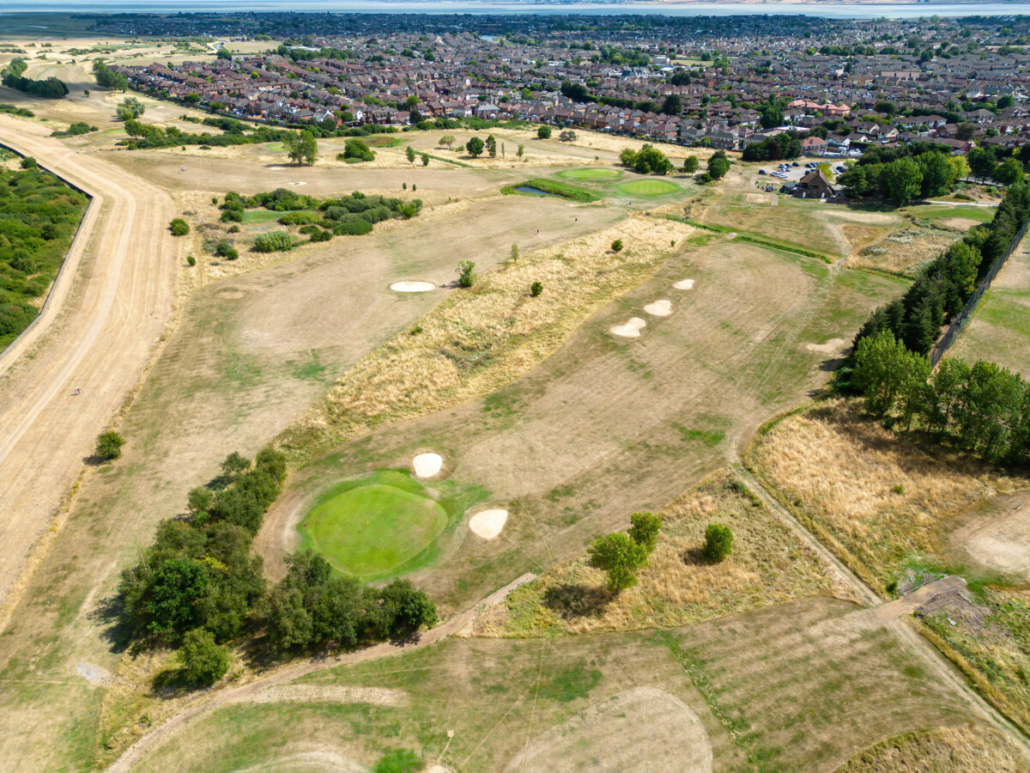
The 2025 drought left many turf managers seeking solutions to a problem when it was inevitably too late. Months without rain led to a common sight of dry, scorched and yellow playing fields and golf courses throughout the UK. Kate Finlayson, research and development agronomist at Orion Future Technologies, suggests that prevention is better than cure when it comes to mitigating drought stress.
Integrating biostimulants to mitigate drought stress
“Conditions can change quickly, but a trend for prolonged dry spells is being seen ever more frequently. Concentrating on plant resilience is an approach that has seen some turf managers withstand such conditions better than others, especially when the focus has been on grass health,” she says.
The use of silicon based biostimulants is not new. However, further research has shown that silicon can help grass to prepare for, and withstand, abiotic stress more successfully.
“Taking measures to deal with the difficulties of drought has often been reactive and unfortunately for some, too little too late. The principle of using silicon biostimulants is that turf grasses are being made ready for the stress that drought brings. With irrigation supplies being challenged in the worst droughts and fertilisers only able to provide a modicum of soft growth, the use of silicon can help bolster turf health during dry spells,” she adds.
Opting for a biological solution is more sustainable than a reliance on purely chemical solutions and can also offer cost savings. However, it is most likely to be effective in instances where it forms part of an integrated turf management system.
Silicon helps to stimulate turf grasses to grow deeper seeking roots. This enables the plant to find moisture deeper in the soil structure where it is both more available and easier to obtain.
“Minimising unnecessary disturbance, encouraging microbial activity, and gradually building organic matter all contribute to a more functional rootzone. The objective is not simply to hold water, but to create a system where water can be stored and accessed effectively,” says Kate.
Combining silicon with phosphite is one method that has seen the biostimulant Fossil become a go to for many seeking to strengthen turf and make it more resilient to drought stress. The combination supports plant structure and root function by reinforcing cell walls, improving turgor retention and sustaining root activity when moisture is hard to find.
“Efficiency of water use has become more important than simply considering volume. This is why preparing plants to deal with abiotic stresses is potentially more important than trying to find ways to keep up water application. Encouraging deeper rooting, avoiding shallow irrigation patterns, and making more informed decisions based on monitored soil moisture all contribute to better outcomes,” she adds.
Kate concludes that inevitably conditions are forcing a change of culture and that turf management will come with environmental stresses that can adversely affect the visual appearance of grass, but that there needs to be a change in mindset to overcome this.
“The opportunity now is to build systems that are designed to cope with stress, rather than look at ways to recover. Healthier soils, deeper rooting, and stronger plant physiology all play a role in that transition. There is no single solution, and no input that replaces good agronomy. But, there is a clear rationale for futureproofing and using new tools to endure perpetual problems.”
For the latest industry news visit turfmatters.co.uk/news
Get all of the big headlines, pictures, opinions and videos on stories that matter to you.
Follow us on Twitter and Instagram for fun, fresh and engaging content.
You can also find us on Facebook for more of your must-see news, features, videos and pictures from Turf Matters