
The Art of Fixture Management: Lessons from Edgbaston Stadium
Gary Barwell, Head of Sports Turf at Edgbaston Stadium, discusses how an increasingly complex cricket calendar is impacting groundcare, and offers his fixture management learnings from a 30-year career.
The Art of Fixture Management: Lessons from Edgbaston Stadium
- How would you describe the scale and complexity of managing fixtures at Edgbaston Stadium today, and how has this changed since you started the job?
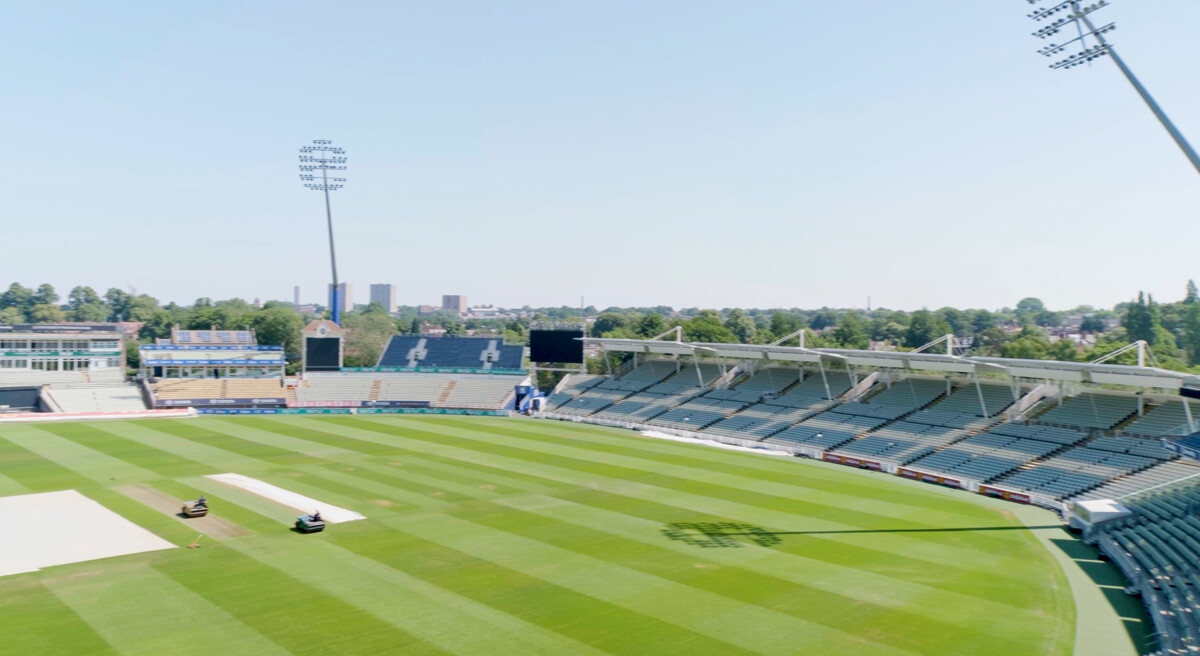
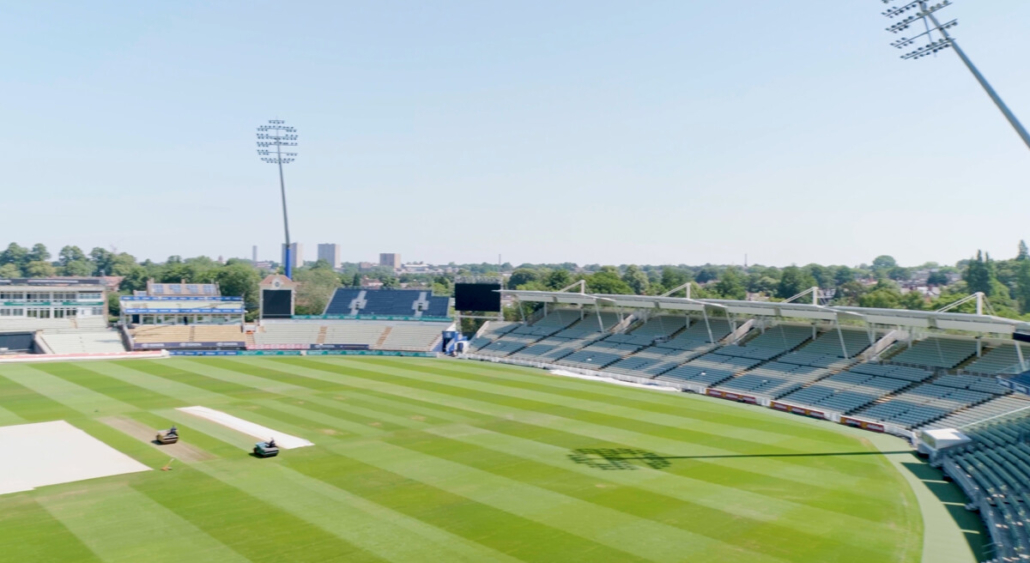
When I started at Edgbaston Stadium in 2011, we used to have 21 match days. Fast forward to 2026, and over the last couple of years we’ve consistently delivered 48 match days. To say we’ve virtually doubled – and a bit more – in just the time I’ve been here shows how unbelievably busy we are.
We now deliver tier one men’s and women’s fixtures, international men and women’s fixtures, and fixtures for The Hundred too. I think the scale of this growth and the added complexity that comes with it speaks for itself. We’ve now got less time than ever to turn around a field, while the increased usage naturally creates added stress on the plant that needs to be managed.
- With such a busy fixture calendar, how do you make sure the field remains healthy and presentable?
One of the key things that we do to ensure the field remains really healthy is extensive monitoring. We constantly monitor the field with moisture probes and Clegg readings, and we’ve also got a programme of when to fertilise, while keeping an eye on things like wetting agents and micronutrients. In my opinion, a data-driven approach should be the foundation of any good turf management strategy.
- How does preparing the field for The Hundred compare to preparing it for something like an international fixture?
It might come as a surprise, but every pitch is exactly the same. We don’t prepare anything any differently. The only thing that really changes is the height of the cut, which itself is dependent on the time of year, the weather conditions, and the type of match. We aim to maintain the same high standards regardless of the fixture or competition.
- In the 24 hours leading up to an international test match, what does your preparation look like?
The final 24 hours is all about final preparations. This is when we start to trim the pitch with the Dennis Razor Ultra, which is our fine turf mower, while one of my team will be out with a SISIS Combirake. When we’ve done all of that, depending on where the pitch is at, if we need to do that sort of process again then we will, but generally it’s about letting it dry and seeing where the pitch is ready for the following day.
- In your career, has there been a fixture or occasion that you have found particularly difficult to prepare for?
This is a question that comes up a lot for me. I remember we once played a test match, and a week later we had the England vs India one-day international (ODI). And then three days after that we had T20 finals day.
In my head at the time, because I was so tired, the T20 finals day field just wasn’t right. It didn’t look good, there was too much grass on it, and it was too green. On reflection though, I can see that it was probably one of the best T20 finals day pitches we’d ever produced.
Because I was mentally exhausted, everything that was a millimetre out of place was an inch, which I think really highlights the mental fatigue that we go under to produce a high-quality surface.
- How important is your kit in keeping to schedule, and what does your Dennis mower allow you to do that other machines can’t?
I did use a line once which was ‘behind every pitch is a person’, though I also believe that ‘behind every pitch is a piece of kit’ too. Simply put, the Dennis mowers have been amazing for the stadium.
This is firstly based on how good the staff’s feedback has been. They absolutely love the machines, and they love using them. The fact that an apprentice can join us, we can train them up over a couple of weeks, and then they’re off cutting the outfield like they’ve been doing it all their life. That’s all down to the ease-of-use of the mower.
More importantly, the level and quality of service is great – always delivered on time, and generally just a really professional company to work with.
- With the cricket calendar continuing to evolve, what fixture-management challenges do you see on the horizon?
Pitch performance is one of the highest priorities for cricket, and having a quality pitch to have quality games on is important. Currently, I think cricket around the country is at saturation point. We need to have a complete reset of how the summer looks so that we can deliver everything for everyone, but in a more manageable way. That goes for the players, ground staff, operations staff, and spectators that are coming to view the game.
Find out more about Dennis mowers.
For the latest industry news visit turfmatters.co.uk/news
Get all of the big headlines, pictures, opinions and videos on stories that matter to you.
Follow us on Twitter and Instagram for fun, fresh and engaging content.
You can also find us on Facebook for more of your must-see news, features, videos and pictures from Turf Matters