Rigby Taylor At Stinchcombe GC

Rigby Taylor At Stinchcombe GC: The word ‘steep’ and its connotations ideally describe a number of facets of Stinchcombe Hill Golf Club, located in Gloucestershire. Established back in 1889 with nine holes, which was then extended to 18 holes in 1906, the club is steeped in history with the Edwardian mansion, Stinchcombe House, which was built by the Lister family (of diesel engine fame), forming a magnificent backdrop to part of the course.

Also, the location of the course at the top of the hill near Dursley sits 219 metres above sea level on the edge of the Cotswold Escarpment above the Severn Valley, a site that although offering golfers stunning views also places particularly steep demands on the greenkeeping routines employed.

Rigby Taylor At Stinchcombe GC

“Because of our location we can sometimes quickly go from enjoying fine weather to having periods where we can’t get onto the course to undertake maintenance for two days”, says Course Manager Matt Ayres.

However, with everyone at the club looking for continual improvements in every aspect of all operations – not least in the management and maintenance of the course “which we’re always keen to develop and improve”, says Club Manager Leigh Topping – the club has become one of the most successful in the region.

A comprehensive greenkeeping regime ensures its greens are presentable and playable all-year-round and the greenkeeping team’s thoroughness and attention to detail has in turn led to a 66 per cent rise in green fees in recent years while membership numbers have remained steady at around 420.

“Of course, being open – and playable – all year round is key to our success, especially during the winter months when we enjoy a consistent level of play and usage compared to other clubs in the area,” says Leigh. “And that’s because we have invested in the greens.”

Complemented by some astute commercial thinking – for example, the pro shop is owned by the club – the club is clearly reaping the rewards of a programme of continual improvement to the course by Matt Ayres and his greenkeeping team of Brad Boon, Adam Jones and Eddie Wilcox. This has included switching the annual renovation from October to August, which sees the course recover in just 10-14 days and, thus, minimising disruption to play.

Their work is underpinned by recent investment in new machinery plus an annual programme of turf care from amenity supplier, Rigby Taylor, which combined is enabling the team “to maintain the course properly all year round”, adds Matt.

“Our priority is always the course,” affirms Leigh, “and over the past three years we’ve invested more than £190,000 in new and upgraded equipment, such as a new Procore aerator, a sander and a new sweep and fill brush, as well as improvements to the irrigation system (improved pressure and the installation of new jets, undertaken in-house).”

Continues Matt: “The addition of a Procore to our machinery portfolio means we can pencil tine at any time of the year, which is indispensable. Also proving very important is our new sprayer. Of course, being high up on a hilltop means we have to watch the weather closely in terms of the spraying regime, but the sprayer enables us now to accurately apply the correct products at the correct dosage rates.

“Aside from the challenge of selecting spraying days during the most effective weather conditions – on low/no-wind days – the use of liquid feeds and treatments, which now account for  90 per cent of applications at the club, is so much more aesthetically better. For one thing, it means golfers are not forever treading on granular treatments!”

Brad also confirms that the implementation of an annual treatment schedule has paid dividends. “Based on an agronomist’s annual report, we sit down with Rigby Taylor’s Key Accounts Director David Carvey to discuss a proposed annual schedule of treatments,” he says. “Our meeting takes into account all the latest developments, including comparing products of even different brands, as well as application methods, then together we formulate a programme to suit the soil conditions and the projected usage.”

Adds Leigh: “Although Rigby Taylor is a long-term supplier to the club and its products certainly work, we always compare David’s proposal with others for its value for money. The fact that Rigby Taylor has worked with us since 1999 speaks for itself.”

Rigby Taylor At Stinchcombe GC

The schedule includes, for example, the use of R1 (fescue and bent) and R105 (browntop bent) grass seed; Apex and Microflow-CXS fertilisers; Activate R and XL biostimulants; Magnet liquid iron; and the Greenor herbicide.

In addition, and highlighting the products regarded as ‘must-haves’, Matt lists:

  • Premier HG controlled release fertiliser containing long-lasting nitrogen and potassium for optimum feeding – “used after the annual renovation; brings back the greens very well”.
  • Rayzor, a broad spectrum contact fungicide for Fusarium Patch, Dollar Spot and Red Thread, plus the reduction of anthracnose, leaf spot and rust – “an excellent” weapon, especially against Fusarium, “although we are now moving more towards preventative management of this problem”. Rayzor is used by the club as part of a managed disease strategy, used in conjunction with Fusion and Eland product tank mixes.
  • HydroPro 2 wetting agent – “applied every month and proving especially useful on bunker (sand) areas”.

Says Adam: “All these products are scheduled on a month-by-month basis and that programme is religiously adhered to, weather permitting. The result of applying such treatments little and often means that we maintain a continual ‘standard’ of turf care and presentation, with no peaks or troughs.”

Matt adds: “Presentation and playability are key, and this even involves the club’s professional being involved in the discussions. The greens committee walks the course in March and together we highlight any changes that might be made to improve things, such as altering the width and shape of fairways, possible tee extensions, and the general presentation of the greens, aprons and semi-rough areas, for instance.

“With golfers of all abilities being members, our aim is to consistently produce a course that suits everyone, producing level speeds on greens that are maintained at 3-4 mm high in summer and 5 mm in winter. The use of an iron means we don’t have to cut as low as we used to.

“That said, we are careful not to alter the character of the course, parts of which are listed as a Site of Special Scientific Interest, and surrounded by bridleways/walkways, part of the Cotswold Way.”

For more information, visit: www.rigbytaylor.com

For the latest industry news visit turfnews.co.uk

Get all of the big headlines, pictures, opinions and videos on stories that matter to you.

Follow us on Twitter for fun, fresh and engaging content.

You can also find us on Facebook for more of your must-see news, features, videos and pictures from Turf Matters.

Cold Start Boosts Greens

Cold Start Boosts Greens: The Course Manager at Edgbaston Golf Club in Birmingham, Eddie Mills, feels that his fully integrated iTurf programme has helped him to maintain his particularly stubborn clay-based greens to an exceptional standard.

Established in 1896, Edgbaston Golf Club is considered one of the best private member golf clubs in the Midlands, with an 18 hole course designed by the legendary H.S. Colt. The challenging course includes an ornamental lake and plays through mature and extensive woodland with small greens and tight fairways.

Cold Start Boosts Edgbaston’s Greens

If there is one man who feels particularly at home within these beautiful surroundings then it is without doubt Eddie Mills. Having joined the club straight from school as an apprentice greenkeeper thirty years ago, Eddie worked his way through the ranks and now holds the position of Course Manager.

He has been in the role for the last ten years and having faced a baptism of fire with major irrigation and drainage work in his first year as Course Manager, Eddie has since reaped the rewards after embarking on a fully integrated ICL iTurf programme.

Commenting on the on-going programme Eddie said: “What we look at are the results we have achieved through products applied throughout the year and whether we think it has worked for us.

“There are always a few little tweaks here and there but on the whole we stick to what we know works best for us. If you’ve got something that works for you then I don’t think there is any point in changing that.”

Prior to the drainage work on the greens, frequent wet winters would often take up to six greens out of action at any given time. This has since changed but Eddie is keen to avoid having to move members onto temporary greens again, and although faced with problematic soil temperatures, he believes that the greens are in as good a condition as they have ever been. This is, in part, thanks to an early granular application of Greenmaster Pro-Lite Cold Start 11-5-5+8Fe.

Cold Start Boosts Edgbaston’s Greens

“We always used to get a bit of a false start here and because it is clay based, the soil temperatures take a lot longer to get to where you need them. But since we have been using Cold Start, we don’t have that problem anymore. The Cold Start kicks in immediately and gives us a great start on the greens.

“Six weeks after that one application of Cold Start, we then apply a Sierraform GT Spring Starter 16-0-16+Fe+Mn – and this technology delivers fantastic results.

“In further maintaining the greens we use SeaMax – which has been brilliant for us. We apply on the greens every month which is supported by a fortnightly application of Primo Maxx. This has been essential, especially with the amount of growth that we have here – at times the growth is quite excessive.

“We also apply Primo Maxx on the tees, approaches and surrounds and it has really ‘thickened’ those areas up – they don’t seem to burn off as much now when the weather gets hot. We have also seen strong rooting from using Primo Maxx, so it is definitely a good product for us.”

On Edgbaston’s tees, Eddie highlighted Sierrablen 27-5-5+Fe (8-9 mths) as his stand out performer.

“We use Sierrablen which goes on the tees in March or April which sits there and works away all year. We don’t have to worry about it at all and we have always seen great results. The sward is always really strong because it just sits there as a base feed and everything ticking along throughout the playing season.”

Cold Start Boosts Edgbaston’s Greens

Having been at Edgbaston for the past thirty years Eddie has seen many company representatives come and go, but for the last fourteen years he has been working closely with ICL’s Emma Kilby and he was quick to praise the support he receives from her.

“I have always had a good relationship with Emma. It is great to have  someone that you can trust and is not just here to sell you products for the sake of it. When I first started in this role I was adamant that I wanted to build  relationships with people who genuinely cared about our course. Emma does and that counts for a lot.

“Together we develop the programme, and Emma will go out and regularly look at the course, look at the products we have used, assess how things are and there is a constant stream of information between us.

“I use ICL products because we are guaranteed quality and the customer service just adds to the overall package.”

Please contact ICL on 01473 237100 or visit www.icl-sf.co.uk or www.icl-sf.ie if you are in Ireland.

For the latest industry news visit turfnews.co.uk

Get all of the big headlines, pictures, opinions and videos on stories that matter to you.

Follow us on Twitter for fun, fresh and engaging content.

You can also find us on Facebook for more of your must-see news, features, videos and pictures from Turf Matters

Pitch Renovation At Reading FC

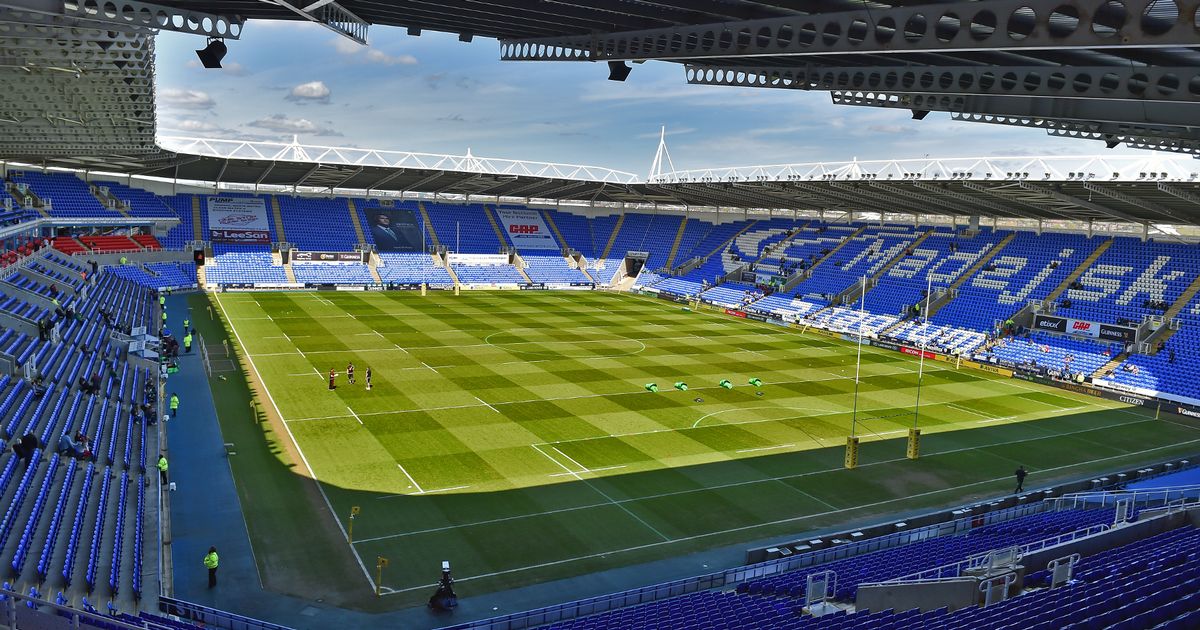
Pitch Renovation At Reading FC: The Madejski Stadium has been home to Championship club Reading FC since its construction in 1999. With the playing surface having undergone significant wear and tear over recent seasons, especially given its dual function as the home ground for London Irish RFC, Reading commissioned a full reconstruction during the summer of 2017, in preparation for a renewed promotion challenge in the 2017/18 season.

The challenge

With the new Championship season just around the corner, Reading FC had just a five-week period to remove the existing pitch, replace both the lower and upper rootzones, and then relay the grass playing surface before completing the installation of the SISGRASS hybrid pitch system. All of the work needed to be undertaken and completed in time for Reading’s first home game of the season on 8 August.

Pitch Renovation At Reading FC

Given the pitch is used by both Reading FC and long-term tenants, London Irish RFC, the playing surface is not afforded the regular ‘off-weekends’ that other non-ground sharing clubs benefit from; while the stresses and strains of hosting regular rugby fixtures further test the durability of the pitch. As such, the club identified the need for a long-lasting hybrid solution which could withstand the intensity and variety of multi-sport use, without sacrificing the playability associated with a grass pitch.

The new pitch is a 95% natural and 5% synthetic fibre surface that is able to deliver longer playing hours with fast recovery times, making it ideal for the playing demands at Madejski Stadium.

With a view to starting work as quickly as possible, Reading FC appointed specialist sports surface contractors, M J Abbott Ltd. Given the tight timescales, and having worked together before on a series of projects, M J Abbott turned to Tarmac’s Topsport team to supply the drainage gravel, lower rootzone sand and upper rootzone for the project.

The solution

As the pitch playing surface was to be completely replaced, the first task was to remove the existing playing surface, followed by the rootzones and both the sub-pitch irrigation system and heating pipe system, ahead of the sand being delivered.

“Timing was absolutely critical to the success of this project,” said Richard Goddings, Technical Sales Manager – South, for Tarmac’s Topsport division. “Given the club’s first game of the season was at home, the deadlines were completely set in stone, with no room for error.

“Sourcing the large volume of high specification material required to undertake the work was the first challenge to overcome. We were able to source 3,000 tonnes of sand from our Sevenoaks quarry, which was no mean feat given the distance between Kent and Reading. As the pitch would retain its sub-surface pitch heating system, it was essential that the sand was laid quickly so that the irrigation and heating pipes could be re-installed ahead of the upper rootzone. Our team surpassed this brief by delivering the sand, to specification, two days ahead of schedule.”

Richard continues: “As soon as the sand was in, we were then able to deliver 1,800 tonnes of Topsport Kingsley rootzone, designed to meet strict horticultural and playing performance criteria, in less than a week. The rootzone was placed out on the Friday and laid by the Sunday. It was then levelled off, graded with a laser-guided bulldozer, and then seeded.

“The rootzone is a carefully balanced combination of high quality sand blended with organic materials, which encourages the free passage of air and water to facilitate strong and natural root growth. The 20 per cent organic content of the rootzone helps to improve moisture retention, leading to a higher quality playing surface which is noticeably softer than other hybrid systems, giving the feel of a true grass pitch. The improved percolation and water retention means that water can freely flow through the composition during wet weather, yet improves water retention in drier periods.

“To complete the installation, the hybrid element of the pitch was installed using patented technology to inject fibres into the playing surface. The artificial fibres ensure the pitch maintains consistency and stability by holding the rootzone together.

“We have a great relationship with M J Abbott who contacted us about the project, knowing that we could meet the tight timescales that were required.  Opting for a hybrid pitch with an 80:20 rootzone has resulted in a stronger and healthier playing surface which should withstand the inevitable wear and tear that comes with being the home ground for Reading FC and London Irish RFC.”

Nathan George, Contracts Manager at M J Abbott, comments: “The Topsport team’s efficient supply of high specification lower rootzone sand and upper rootzone was integral to this project’s success, given the looming championship season and physically demanding use of the pitch. The quality of the material supplied by Topsport meant there were no issues with stones or grit damaging our equipment when stitching in the fibres to create the SISGRASS playing surface. Thanks to our established working relationship, the project went smoothly and we were able to deliver a pitch, on time and to the Club’s satisfaction.”

For more information on Tarmac’s range of Topsport artificial sports surface solutions, please visit www.topsport.co.uk.

For the latest industry news visit turfnews.co.uk

Get all of the big headlines, pictures, opinions and videos on stories that matter to you.

Follow us on Twitter for fun, fresh and engaging content.

You can also find us on Facebook for more of your must-see news, features, videos and pictures from Turf Matters.

Duncan Ross Ltd Reinvigorates Penrith Football Club

Duncan Ross Ltd reinvigorates Penrith Football Club with six-week pitch re-development: Penrith Football Club’s Frenchfield Park Stadium had been virtually unplayable for nine years, until recent pitch redevelopment work by Duncan Ross Ltd gave the club and their pitch a new lease of life.

The surface had been without considered maintenance before and during the current nine-year inhabitancy of Penrith FC, and without a functioning drainage system the top layer of the surface became impenetrable.

Duncan Ross were only given a six-week window to complete the operation in time for a lucrative pre-season friendly against League Two outfit Carlisle United. Within the three days of work, the top was completely stripped off using a Koro® FIELDTOP MAKER®, sand banding was introduced and the pitch was seeded.

Duncan Ross Ltd Reinvigorates Penrith Football Club

Brian ‘Billy’ Williams has had a 50-year association with the club, first as a player, owner and chairman – the role he currently holds. The importance of the pitch being prepared for the match was massive for the club, and Brian explains the before and after effects the project has had.

“The pitch wasn’t draining at all, we had drains that had been dry for the last eight-years and Duncan came down and gave us a thesis on what he thought was wrong,” Brian explained. “He presented a solution to what he thought would solve the problems and our local council along with the Football Stadium Improvement Fund got involved and funded the project.

“It’s been a pleasure for people to come along to the ground and ask what’s been going on and I tell we met a man called Duncan Ross. I’ve been in business myself for the last 50-years and I don’t think I’ve ever met a more conscientious people regarding the quality of their work.

“We played our first pre-season game against Carlisle United on 12th July, and that really put them to the test because the decision wasn’t made to bring Duncan in until the early part of May, so there was a five to six-week window to actually start doing the work, which was quite considerable.

“The game against Carlisle meant a lot to us financially for the start of the current season, so it was great that it was ready for the game. Carlisle were absolutely thrilled with the condition of it and we’ve had nothing but positive feedback.”

As Frenchfield is owned by Eden Council and leased by the club, Doug Huggon, leisure and community service manager at the council, was involved in the process. Their involvement along with the help of the Cumberland Football Association meant half the cost of reconstructing the pitch was paid for.

“Duncan Ross can only be commended in their approach to offering a solution to the drainage issue, successfully bidding for the work, undertaking the work on time and to budget,” Doug said.

“Also, for the support and assistance that has been offered to the club since the work was carried out, advising on irrigation, grass cutting and on-going maintenance.

“The council as well as the club has been impressed with the performance of Duncan Ross and hope to develop a relationship going forward that will ensure that the day to day maintenance of the pitch, undertaken by volunteers at the club as well as the annual reinstatement of the pitch allows for less matches being postponed and use of the pitch by other teams within the club.”

Allowing other teams within the club to use the pitch is a very important point for Brian, who now aims to bond the clubs 300 junior kids and four ladies’ teams together by allowing all of them to play on the stadium pitch.

This would not only have a positive effect on the players but the club’s finances at the same time. There is also a probable knock-on effect of being able to use the surface to attract new players to the club.

with six-week pitch re-development.

Penrith Football Club’s Frenchfield Park Stadium had been virtually unplayable for nine years, until recent pitch redevelopment work by Duncan Ross Ltd gave the club and their pitch a new lease of life.

The surface had been without considered maintenance before and during the current nine-year inhabitancy of Penrith FC, and without a functioning drainage system the top layer of the surface became impenetrable.

Duncan Ross were only given a six-week window to complete the operation in time for a lucrative pre-season friendly against League Two outfit Carlisle United. Within the three days of work, the top was completely stripped off using a Koro® FIELDTOP MAKER®, sand banding was introduced and the pitch was seeded.

Brian ‘Billy’ Williams has had a 50-year association with the club, first as a player, owner and chairman – the role he currently holds. The importance of the pitch being prepared for the match was massive for the club, and Brian explains the before and after effects the project has had.

“The pitch wasn’t draining at all, we had drains that had been dry for the last eight-years and Duncan came down and gave us a thesis on what he thought was wrong,” Brian explained. “He presented a solution to what he thought would solve the problems and our local council along with the Football Stadium Improvement Fund got involved and funded the project.

“It’s been a pleasure for people to come along to the ground and ask what’s been going on and I tell we met a man called Duncan Ross. I’ve been in business myself for the last 50-years and I don’t think I’ve ever met a more conscientious people regarding the quality of their work.

“We played our first pre-season game against Carlisle United on 12th July, and that really put them to the test because the decision wasn’t made to bring Duncan in until the early part of May, so there was a five to six-week window to actually start doing the work, which was quite considerable.

“The game against Carlisle meant a lot to us financially for the start of the current season, so it was great that it was ready for the game. Carlisle were absolutely thrilled with the condition of it and we’ve had nothing but positive feedback.”

As Frenchfield is owned by Eden Council and leased by the club, Doug Huggon, leisure and community service manager at the council, was involved in the process. Their involvement along with the help of the Cumberland Football Association meant half the cost of reconstructing the pitch was paid for.

“Duncan Ross can only be commended in their approach to offering a solution to the drainage issue, successfully bidding for the work, undertaking the work on time and to budget,” Doug said.

“Also, for the support and assistance that has been offered to the club since the work was carried out, advising on irrigation, grass cutting and on-going maintenance.

“The council as well as the club has been impressed with the performance of Duncan Ross and hope to develop a relationship going forward that will ensure that the day to day maintenance of the pitch, undertaken by volunteers at the club as well as the annual reinstatement of the pitch allows for less matches being postponed and use of the pitch by other teams within the club.”

Allowing other teams within the club to use the pitch is a very important point for Brian, who now aims to bond the clubs 300 junior kids and four ladies’ teams together by allowing all of them to play on the stadium pitch.

This would not only have a positive effect on the players but the club’s finances at the same time. There is also a probable knock-on effect of being able to use the surface to attract new players to the club.

For the latest industry news visit turfnews.co.uk

Get all of the big headlines, pictures, opinions and videos on stories that matter to you.

Follow us on Twitter for fun, fresh and engaging content.

You can also find us on Facebook for more of your must-see news, features, videos and pictures from Turf Matters.

Are You Ready For The Sports Turf Challenges Of 2020?

Are you ready for the sports turf challenges of 2020? The pivotal role of soil biology in sport and amenity turf health is at the heart of keynote presentations by Joel Williams, the internationally respected authority on soil science and leading edge techniques.

Harpenden Common Golf Club hosts the `Getting Ready for 2020` seminar – which attracts four BIGGA CPD credits – on 14 November amid major strides forward for soil biology in golf course management and tougher EU controls on chemical applications.

The removal of ever more chemicals permitted for use demands a radical rethink on traditional methods of course management and time is running out to put more eco-friendly practices in place.

Are You Ready For The Sports Turf Challenges Of 2020?

Outlining the principles of soil biology, Joel will discuss the functions, roles and interactions of soil life in golf greens – introducing key groups of organisms in the soil ecosystem.

He then moves on to cover how to advance soil biology and leverage the most from turf soils by understanding total, exchangeable and soluble nutrient pools – delegates also learning of the biological link to foliar-applied inputs.

After lunch, Joel tackles the future of integrated pest management (IPM) concluding with a considered view of the frontiers of soil biology, turf health and sustainable, resilient golf greens.

Rooted in results, Harpenden Common General Manager Terry Crump will reveal how the club has successfully applied soil biology within its course management strategy.

Sponsored and developed by Soil Biology Ltd, `Getting ready for 2020` will deliver `must-hear` knowledge and insight into what is a rapidly developing sector of turf care and is tailored for course managers, head greenkeepers and deputies.

Reserve your place now by contacting paul@soil-biology.co.uk or phoning 01959 564690.

For the latest industry news visit turfnews.co.uk

Get all of the big headlines, pictures, opinions and videos on stories that matter to you.

Follow us on Twitter for fun, fresh and engaging content.

You can also find us on Facebook for more of your must-see news, features, videos and pictures from Turf Matters.