
Univeristy of Bath trusts DLF to deliver elite-level performance

Univeristy of Bath trusts DLF to deliver elite-level performance

Univeristy of Bath trusts DLF to deliver elite-level performance

One of the UK’s leading sporting educational institutions has explained how mixtures from DLF are delivering proven performance across their 15-hectare site. Having joined the University of Bath in July 2025, Sports Ground Manager Andy Boyce was quick to bring in tried and trusted formulations from the Masterline and Johnsons Sports Seed ranges which has seen their sports surfaces excel – gaining recognition not just from students but from some of the world’s most elite sporting teams.

Univeristy of Bath trusts DLF to deliver elite-level performance

Univeristy of Bath trusts DLF to deliver elite-level performance

Andy was no stranger to the site or the expectations on their surfaces, having clocked up over a decade working there as a contractor but came in with a clear vision and plan for enhancing the site – centred around seed from DLF. With the advice and support of DLF’s Regional Technical Manager Ian Barnett, the pair devised a plan. “I could see the potential to bring the pitches onto that next level and knew I could rely on the DLF mixtures I’d used for many years to deliver both the reliability and the results” says Andy.

“My go to has always been PM79 from the Masterline range.” PM79 is a versatile renovation mixture, incorporating perennial ryegrass and 4turf tetraploid perennial ryegrass to deliver fast establishment, drought tolerance, nitrogen efficiency and outstanding disease resistance. “This delivers fantastic germination and some serious bang for your buck which means, with no irrigation, we can keep a good stock of PM79 and overseed when and where required to make the most of any predicted rainfall.”

On some of the heavier-use pitches, Andy is combining PM79 with J Premier Pitch from the Johnsons Sports Seed range. “This is the mix of choice for a lot of elite sporting venues so while it wasn’t a mix I’d used a lot personally, I trusted the top-rated cultivars and advice from Ian that it would give us a little extra boost in terms of wear tolerance and visual merit.” He adds, “The depth of colour we’re seeing on the surfaces is really something.”

The striking visual appeal and technical characteristics of the pitches is paying dividends both internally and externally – with the improvements in surface quality widely recognised by students, coaches and visiting teams alike. “We proudly host a few of the national governing bodies here, have close ties with Bath Rugby and are increasingly seeing EFL teams using our pitches for training camps.”

Perhaps the clearest indication of the University’s growing reputation came when one of world rugby’s most iconic teams selected Bath as a preparation venue. “We’re delighted that the All Blacks will be spending a week here before the next international series” says Andy. “For them to actively seek us out is a huge compliment and testament that the surfaces are heading exactly where we want them to go.”

For the latest industry news visit turfmatters.co.uk/news

Get all of the big headlines, pictures, opinions and videos on stories that matter to you.

Follow us on Twitter and Instagram for fun, fresh and engaging content.

You can also find us on Facebook for more of your must-see news, features, videos and pictures from Turf Matters

Glyphosate Use in the UK

Glyphosate Use in the UK

Glyphosate Use in the UK

With a GB consultation on glyphosate imminent, and growing pressure from a small cohort creating public debate about the future of vegetation management, it is important that discussions remain balanced, evidence-based and focused on practical outcomes. For the Amenity Forum, Integrated Pest Management (IPM) must remain at the heart of future decision-making across the amenity sector.

Glyphosate Use in the UK

Glyphosate Use in the UK

Recent media coverage and ongoing discussions about glyphosate have once again brought vegetation management in amenity settings into the spotlight. Public interest in how we manage our parks, highways, rail corridors, housing estates, sports facilities and public open spaces is both understandable and welcome. These spaces play an important role in our communities and there is growing expectation that they should be managed in ways that protect biodiversity, minimise environmental impact and contribute to wider sustainability goals.

However, the debate can sometimes become polarised, framed as a simple choice between chemical and non-chemical approaches. The reality is far more complex. The amenity sector is incredibly diverse. The challenges faced by a local authority managing thousands of miles of pavement are very different from those faced by a golf course, sports club, rail operator, utility company or housing provider. What they have in common is a responsibility to maintain spaces that are safe, accessible, functional and sustainable. This is where Integrated Pest Management plays a vital role.

IPM is often misunderstood as simply reducing pesticide use. In practice, it is about making evidence-based, site-specific and proportionate decisions. It encourages managers to consider a range of approaches, including prevention, design, maintenance practices, monitoring, mechanical control and biological solutions, before deciding whether intervention is required and, if so, what form that intervention should take. Importantly, IPM is not about replacing one tool with another. It is about understanding the strengths and limitations of all available options and selecting the most appropriate combination for a particular situation.

Across the amenity sector, many organisations are already making significant progress. Herbicide use is being reduced through targeted application, improved mapping technologies, revised maintenance regimes and greater tolerance of low-risk vegetation where appropriate. The sector is increasingly focused on justifying treatment decisions rather than relying on routine applications. Training, operator competence and record keeping are also becoming increasingly important in demonstrating stewardship and maintaining public confidence.

Preventative maintenance has an important role to play. Sweeping and brushing programmes can help reduce the build-up of detritus that encourages weed establishment on hard surfaces. Good design, improved drainage and proactive maintenance can all reduce the need for intervention over time.

There is also strong interest across the sector in technologies such as hot water, foam, electricity, robotics and other non-chemical approaches. Many of these have an important role to play and continue to evolve. However, their effectiveness can vary depending on timing, weather conditions, surface type, frequency of treatment and available resources. Questions also remain around scalability, consistency, cost and, in many cases, carbon impact. In most situations, particularly where invasive or injurious weeds are involved, practical alternatives remain limited. The question is therefore not whether a solution is chemical or non-chemical, but which combination of tools delivers the safest, most practical and most sustainable outcome.

The amenity sector also faces the challenge of balancing environmental ambition with operational and financial realities. Local authorities, contractors and land managers are under increasing pressure to deliver high standards of maintenance while managing constrained budgets and growing public expectations. Experience across the sector has shown that there is no single solution suitable for every location. While some organisations have successfully reduced glyphosate use, others have reported increased costs, greater resource requirements and less effective vegetation control, highlighting the importance of retaining flexibility to use the most appropriate combination of tools for individual sites.

It is also worth remembering that glyphosate remains one of the most extensively studied and scrutinised plant protection products in the world. Its approval is subject to rigorous scientific assessment by independent regulatory authorities, which continually review evidence relating to human health and environmental safety. As the industry prepares for the forthcoming GB glyphosate consultation, the Amenity Forum believes future decisions must be informed by robust evidence, practical experience and operational data. Environmental considerations are critically important, but they must be considered alongside public safety, accessibility, affordability and long-term sustainability.

These themes will be explored further at the Amenity Forum Annual Conference and Dinner on 7–8 October at Ashorne Hill & British Motor Museum, Warwickshire, where delegates will discuss the future of Integrated Pest Management and consider how the sector can continue to evolve in a responsible and practical way.

The Amenity Forum looks forward to engaging constructively with the consultation process and helping to ensure that the sector’s practical experience, commitment to professional standards and adoption of Integrated Pest Management are reflected in future policy discussions.

For the latest industry news visit turfmatters.co.uk/news

Get all of the big headlines, pictures, opinions and videos on stories that matter to you.

Follow us on Twitter and Instagram for fun, fresh and engaging content.

You can also find us on Facebook for more of your must-see news, features, videos and pictures from Turf Matters

Can-Am challenges farmers to rethink ATV safety

Can-Am challenges farmers to rethink ATV safety

Can-Am challenges farmers to rethink ATV safety

On farms, there’s no such thing as ‘just a quick ride’ as every journey on an all-terrain vehicle (ATV), whether across the yard or out in the field carries risk. As Farm Safety Week encourages the industry to put safety first, the message from Can-Am is clear; responsible riding is critical. Safety first is highlighted in Can-Am’s Responsible Rider Charter, which has been developed using the knowledge and experience of the Can-Am off-road team.

Can-Am challenges farmers to rethink ATV safety

Can-Am challenges farmers to rethink ATV safety

Can-Am’s user guidance reinforces the importance of wearing the correct protective equipment, such as wearing a helmet, carrying out essential vehicle checks and using ATVs as they are designed to be used. Following these simple processes reinforces best practice and Can-Am is challenging users to rethink how they approach rider safety and safety on site, sparking discussions from all age groups in the industry about the importance of responsible riding.

Mike Loach, BRP commercial manager, says, “We believe no job is so urgent that it should come at the expense of rider safety. This is why we’re committed to giving riders the knowledge and confidence to make safer decisions every time they get behind the handlebars. Through our Responsible Rider Charter, practical safety guidance and by encouraging users to complete recognised training with ATVEA or EASI, we’re helping to build a stronger culture of responsible riding across agriculture. If every rider takes safety seriously and passes these habits on to colleagues, friends and family, we can make a real difference in reducing avoidable accidents and saving lives.”

Can-Am off-road rider safety top tips: 

Load it right. Ride it right – Secure and evenly balance everything you are carrying on the ATV, never exceed the ATV’s load capacity and always follow the manufacturer’s recommendations that are in the handbook.

Stay alert as hazards can appear in a split second – Keep scanning your surroundings for livestock, obstacles, uneven ground and other people and vehicles.

A two-minute check could prevent a serious incident Before you start your ATV, inspect it to make sure it’s safe, roadworthy and ready for the job at hand. In addition, preventative maintenance leads to safer machinery and less downtime due to breakdowns

Smooth is safe – Avoid sudden acceleration or harsh manoeuvres as rapid changes in speed are a common cause of rollovers.

Dress for the ride, not the weather – Every ride should start with the right PPE, including a helmet, sturdy boots, long sleeves and long trousers.

Let your body work with the terrain – Shift your weight to stay balanced, lean forward when ascending slopes, move back when descending, select a low gear and use engine braking to maintain control.

Walk it before you ride it – If you’re working in unfamiliar ground, check the route or location on foot to identify hidden hazards, ruts, ditches or obstacles that could be an issue.

Expect the conditions to change – Weather can turn quickly. Be prepared to adapt your riding as changing ground conditions can affect grip, stability, towing and carrying loads.

Know your machine – Your owner’s manual is one of the most valuable safety tools you have. Read it, understand it and refer back to it regularly.

Set a top speed – Use the DESS key to set a top speed for your ATV that is relevant to the job being carried out.

Get trained and ride with confidence – Professional training gives you the skills to handle your ATV safely, make better decisions in challenging conditions and reduce the risk of incidents. If you’re new to ATVs or even an experienced rider, completing accredited training through LANTRA, EASI or other accredited training providers is one of the best investments you can make to ensure your safety.

For more information about responsible riding visit – https://www.brp.com/en/sustainability/responsible-rider.html

For the latest industry news visit turfmatters.co.uk/news

Get all of the big headlines, pictures, opinions and videos on stories that matter to you.

Follow us on Twitter and Instagram for fun, fresh and engaging content.

You can also find us on Facebook for more of your must-see news, features, videos and pictures from Turf Matters

STIHL introduces high-performance, low-weight chainsaw

STIHL introduces high-performance, low-weight chainsaw

STIHL introduces high-performance, low-weight chainsaw

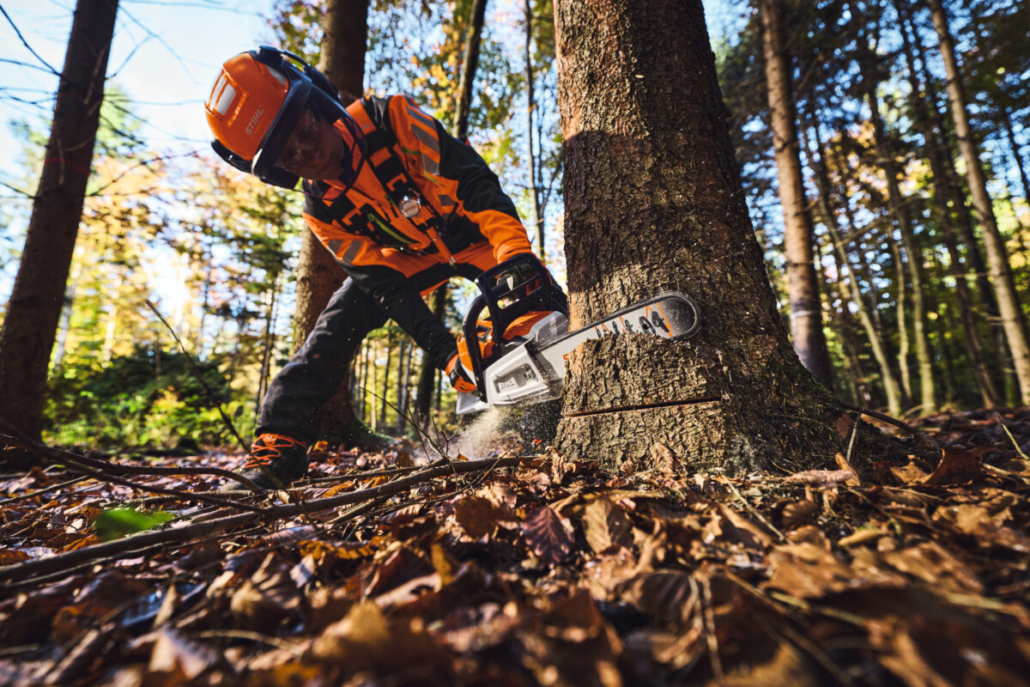
STIHL has launched the MSA 260 C-O, a lightweight, powerful battery chainsaw engineered to reduce operator fatigue during thinning and maintenance tasks. The new chainsaw, which offers 2kW of mechanical power at an operating weight of under 6KG, pairs high cutting power with a compact build, making it easier for professionals to manoeuvre when delimbing, felling small trees and processing timber.

STIHL introduces high-performance, low-weight chainsaw

STIHL introduces high-performance, low-weight chainsaw

More Cutting Time for Busy Professionals 

To minimise downtime for busy professionals, the saw’s interchangeable sprocket allows for quick switching between chains (with 3/8‘P and .325’ pitch), making it easy to swap out components on the job, with minimal disruption.

Smart Lubrication for Simple Tasks 

To support cost efficiency, for simple delimbing tasks, the MSA 260 C-O integrated oil pump’s flow rate can be adjusted to suit the user’s requirements, reducing oil consumption. This offers professionals control of the saw’s operation for managing running costs.

Proven STIHL Technology for Professional Reliability

Tried-and-tested STIHL features, such as side chain tensioning and a captive nut, also make changing the saw’s chain easy for users, and the saw’s externally mounted filter allows for simple cleaning, for maximum productivity.

Smart STIHL Controls and All-Weather Performance

The new MSA 260 C-O comes with an LED display built in to monitor machine status while on the job.  To further support professionals, the tool’s splash-proof design makes it ideal for use in all weather conditions.

STIHL’s ALLPRO System for Fast Flexibility 

The new chainsaw is recommended for use with STIHL’s AP 200 P battery, powered by STIHL’s new ALLPROsystem. When combined with STIHL’s new AL 1802 MO High-Speed Dual Charger, it can be charged to 80% in just nine minutes, even when working remotely, by combining with the STIHL PS 2000 power bank.

STIHL at 100 

The new design arrives as STIHL celebrates its 100th anniversary. Since 1926, STIHL has defined the global standard for battery and petrol-powered forestry, landscaping, and residential gardening equipment for professional and domestic users.

For more information on STIHL products, visit www.stihl.co.uk or contact your nearest STIHL Approved Dealer.

Find out more about STIHL’s historic milestone, here: https://100.stihl.com

For the latest industry news visit turfmatters.co.uk/news

Get all of the big headlines, pictures, opinions and videos on stories that matter to you.

Follow us on Twitter and Instagram for fun, fresh and engaging content.

You can also find us on Facebook for more of your must-see news, features, videos and pictures from Turf Matters