Redexim Overseeder Helps Pollok Golf Course

Redexim Overseeder Helps Pollok Golf Course

Redexim Overseeder Helps Pollok Golf Course

When Chris McGhee took over as Course Manager at Pollok Golf Club in January, one of the first things he identified was the need to improve the heavily worn areas around the course.
Redexim Overseeder Helps Pollok Golf Course

Redexim Overseeder Helps Pollok Golf Course

Founded in 1892 and situated on the south side of Glasgow, Pollok Golf Club is a traditional, tree-lined members’ course with design influences from both James Braid and Alister MacKenzie. While its rich history is part of its charm, it also presents modern-day maintenance challenges.

“Being designed so long ago, the spaces between greens and tees are quite small,” explains Chris. “On newer courses you might walk 20, 50 or even 100 yards to the next tee. Most of our tees are right beside the greens, so those areas get heavily worn, especially through the winter.”

With an active membership that continues to play throughout the colder months, alongside increased traffic from trolleys and ride-on buggies, maintaining grass cover in these high-traffic areas is a constant battle.

“It was one of the main reasons I wanted an overseeder,” he says. “I wanted something that would help bring these areas back quicker and improve the quality and density of the turf.”

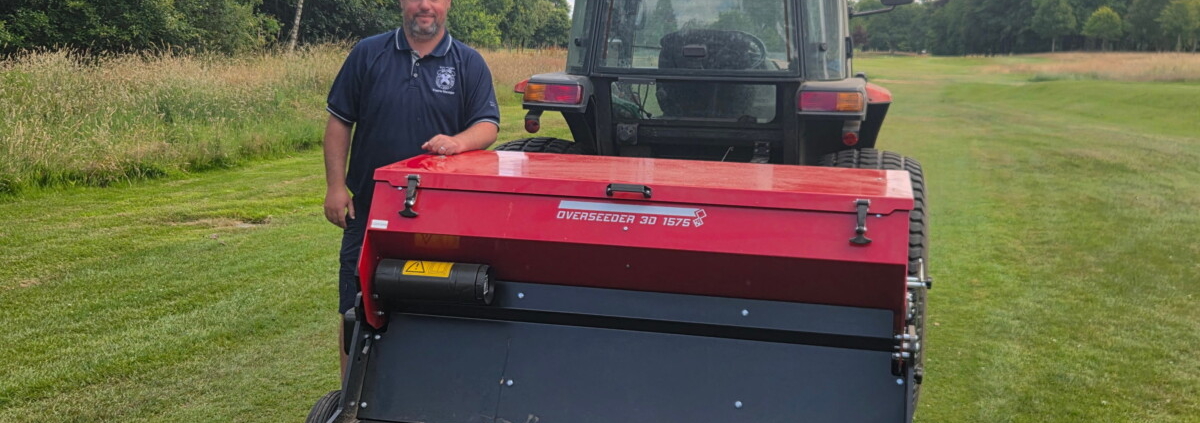
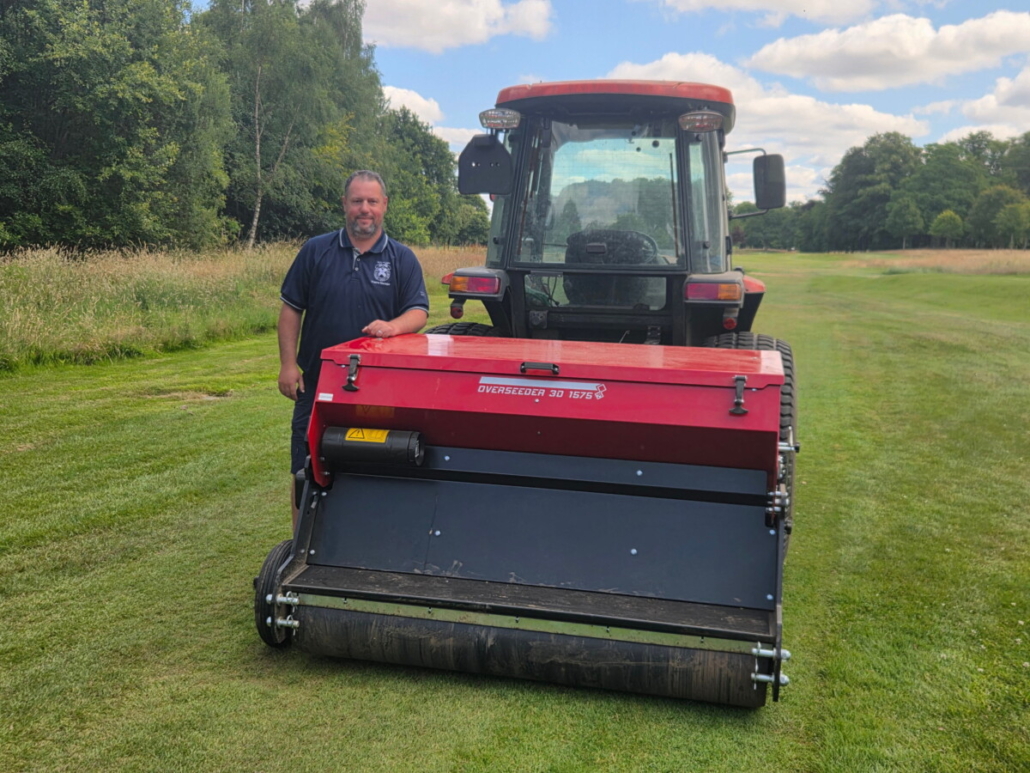
That search led Chris to the Redexim Overseeder 3D 1575.

Having previously used Redexim equipment, including a Verti-Drain and a Redexim dimple seeder during his time working in Norway, Chris already had confidence in the brand.

“I’d worked with pretty much all of the disc seeders on the market,” he says. “For me, the Redexim offered the right balance of ease of use, practicality and price. We have a lot of trees and a lot of manoeuvring to do around the course, and I felt the 1575 was the best fit for our needs.”

Purchased in March this year, the Overseeder 3D 1575 has quickly become a regular part of Pollok’s maintenance programme.

Designed for use across a wide range of surface types, the machine features a seed delivery mechanism with single-point adjustment, while durable discs cut precise grooves into the soil before a rear roller closes the groove and covers the seed. The result is accurate seed placement, excellent seed-to-soil contact and consistently strong germination rates. An adjustable seed aperture accommodates a variety of seed types, which can be easily adjusted to accommodate a variety of different seeds.

At Pollok, the machine has been deployed extensively across tees, aprons, walk-off areas, grass pathways and other worn sections of the course.

“In all honesty, we’ve used it everywhere apart from the greens,” says Chris. “The walk-off areas and paths have probably been the biggest focus because they’re the areas that suffer most from wear, but we’ve used it across the course.”

The results have been immediate.

“It’s been a really good investment,” he says. “The strike rate has been brilliant. We’re mainly using ryegrass in these areas to improve wear tolerance and the germination has been excellent. You can see the lines very clearly and they establish quickly. There’s very little seed waste as well.”

Ease of operation has also been a major advantage.

“We’ve all used it,” says Chris. “Everyone in the team has had a go setting it up and adjusting the sowing rates. The instruction manual includes a table that makes calibration very straightforward.

“The hopper size is another big benefit. It holds around three full bags of seed, which means we’re not constantly stopping to refill or carrying bags around the course.”

The improvements haven’t gone unnoticed by club members either.

“The members have definitely commented on it,” he says. “They like seeing the seed lines because it gives them a visual indication of what’s being done and where the investment is going. We regularly share photos of the germination and recovery work through our WhatsApp updates, and people have been really positive about the results.”

Support from local dealer Hamilton Ross Group and Redexim also helped ensure a smooth introduction to the machine.

“Allen Whellans from Redexim came out with Paul Johnstone when it was delivered,” says Chris. “The training was excellent. It was thorough, easy to understand and focused on exactly what we needed to know. We were confident using it straight away. We always get great support from Hamilton Ross.”

After several months of use, Chris has no hesitation in recommending the Overseeder 3D 1575 to other turf professionals.

“The ease of use, the strike rate, the hopper capacity and the compact storage all stand out,” he says. “It’s very well built, very well made and it does exactly what it’s meant to do. That’s the most important thing.”

For more information, visit https://www.redexim.com/uk/

For the latest industry news visit turfmatters.co.uk/news

Get all of the big headlines, pictures, opinions and videos on stories that matter to you.

Follow us on Twitter and Instagram for fun, fresh and engaging content.

You can also find us on Facebook for more of your must-see news, features, videos and pictures from Turf Matters
GroundTech automation delivers new levels of efficiency

GroundTech automation delivers new levels of efficiency

GroundTech automation delivers new levels of efficiency

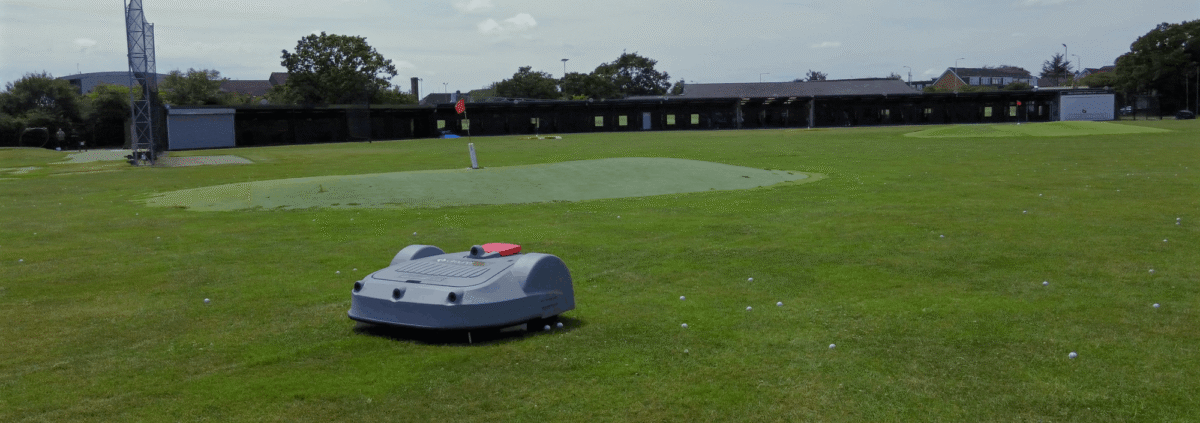
Romford’s Whalebone Golf Club is discovering the many benefits of automous maintenance following the installation of a completely automated driving range system from GroundTech. Director Ed Blacker notes that the combination of ECHO robotics and the innovative Drop Pit wash return system has been pivotal to consistent presentation of the range and central to the venues wider growth and development.

GroundTech automation delivers new levels of efficiency

GroundTech automation delivers new levels of efficiency

Acquired by its current owners in September 2025, Whalebone Golf Club is currently undergoing an exciting period of investment, with the aim of creating an inclusive and welcoming environment for golfers of all ages and abilities. Central to achieving that ambition is maintaining a well-presented driving range and optimising the utilisation of the club’s greenkeepers.

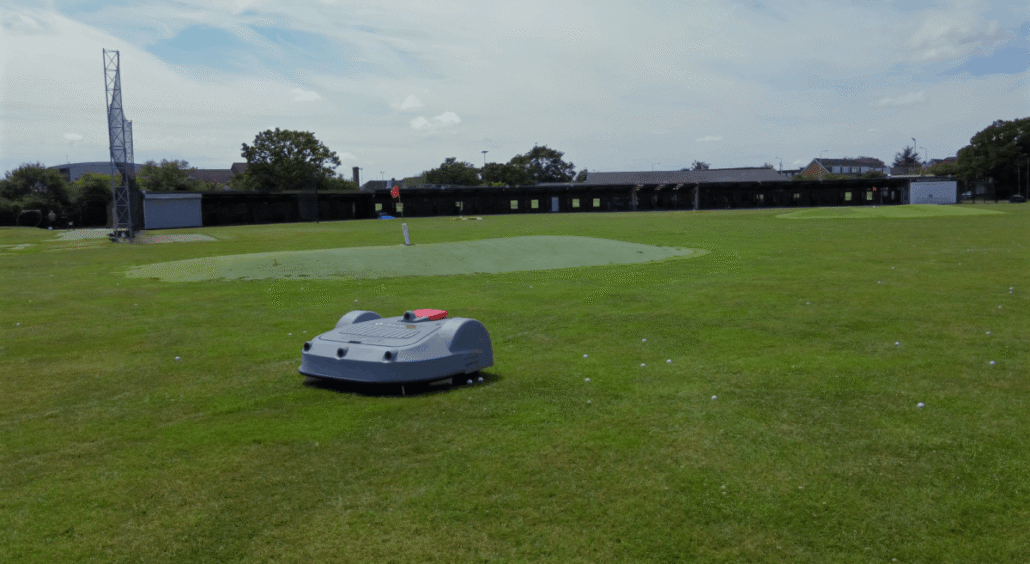
“Our previous range set up presented a number of challenges” says Ed. “The entire range needed to be cleared before we could cut the grass, with the whole process taking valuable time away from the greenkeeping team’s daily responsibilities on the golf course.” After exploring available alternatives, Whalebone appointed robotic specialists GroundTech to install an ECHO RP1250 robotic ball picker, ECHO TM-1050 mower complete with deflection kit and the revolutionary Drop Pit wash return system – enabling ball collection and grass cutting to take place simultaneously and maintaining a constant supply of clean golf balls for the range.

A few short months after the installation, Ed says the set-up has transformed the upkeep of the busy range, which can see as many as 15,000 golf balls used in a single day. “We estimate we’re saving four or five hours of labour each day which can be redirected into more valuable work elsewhere around the site.”

The finish of the ECHO TM-1050 has also impressed. “We can cut in all conditions, maintaining presentation throughout the year which is vital for creating a good first impression. It makes a real difference to the customer experience hitting into an outfield that is well manicured and not covered in golf balls.”

Ed also praised the installation and support provided by the GroundTech team. “They offered a complete solution, from consultation and planning through to installation and full training. The team were efficient and friendly and, with minimal construction and groundworks needed, the whole project was completed very quickly, and we’re pleased with the outcome.”

For the latest industry news visit turfmatters.co.uk/news

Get all of the big headlines, pictures, opinions and videos on stories that matter to you.

Follow us on Twitter and Instagram for fun, fresh and engaging content.

You can also find us on Facebook for more of your must-see news, features, videos and pictures from Turf Matters
Meet Jim Croxton, Director on the Amenity Forum Board

Meet Jim Croxton, Director on the Amenity Forum Board

Meet Jim Croxton, Director on the Amenity Forum Board

As part of the ongoing Meet the Board series, Jim Croxton, Director of the Amenity Forum and Chief Executive Officer of the British & International Golf Greenkeepers Association (BIGGA), shares his passion for professional recognition, education and helping to raise the profile of the amenity sector.

Meet Jim Croxton, Director on the Amenity Forum Board

Meet Jim Croxton, Director on the Amenity Forum Board

For more than 15 years, Jim has worked to champion the greenkeeping profession, supporting the education, development and recognition of those responsible for maintaining the UK’s more than 2,600 golf courses. Through BIGGA, he has helped promote continuous professional development, innovation and the sharing of best practice across the industry.

As environmental expectations continue to evolve and the management of green spaces comes under increasing scrutiny, Jim brings a strong commitment to professionalism, collaboration and evidence-based decision making to the Amenity Forum Board.

We spoke to Jim about the importance of professional standards, the future of green space management and why collaboration across the amenity sector has never been more important.

Q&A: Jim Croxton

What attracted you to the Amenity Forum and the opportunity to join its Board?

The Amenity sector is extremely complex, with many distinct subsectors within it – golf, local authority landscapes, sports turf, highways, public spaces etc. Whilst a much smaller sector than agriculture it is critically important to business, travel, leisure and recreation so it is vital that it has a strong representative body that can present a coherent message to regulators and stakeholders.

The opportunity to help ensure we collaborate effectively and are well represented is important to my part of the industry and to me. Coming from a committee-based organisation I felt I had something to offer.

Why are professional standards and education so important to the amenity sector?

Professional standards underpin everything we do. The decisions made by practitioners managing our green spaces have long-term implications for the environment, public expectations and the quality of the landscapes we all enjoy.

Education gives professionals the confidence to make informed decisions based on evidence rather than habit. It encourages continual improvement, supports responsible management and helps ensure that our industry is recognized for the expertise it brings.

Investing in training and continuous professional development is one of the best ways we can strengthen the future of the amenity sector and demonstrate to regulators the professionalism inherent in our approach to landscape management.

What are the biggest challenges facing golf course management today?

Golf courses are expected to deliver exceptional playing surfaces whilst responding to increasing golfer and environmental expectations, climate change and evolving regulation.

Greenkeepers are continually balancing turf quality, resource management, biodiversity, water use and financial pressures. Meeting all of those expectations requires highly skilled professionals who understand both the science and the practical realities of managing living landscapes.

How is the profession responding to changing environmental expectations?

The profession has embraced innovation and continuous improvement. Golf course managers have always adopted Integrated Pest Management practices but the options for this are increasing all the time as technology and understanding improve.

In recent years I’m delighted that golf clubs are seeing the importance of investing in staff development to enable them to make more informed management decisions.

Climate change is also bringing new challenges, particularly around water availability. Longer periods of dry weather mean that making the best use of water resources is becoming increasingly important. The industry is responding by improving irrigation practices, selecting more resilient turf species and taking a more strategic approach to water management, helping courses adapt while maintaining high standards.

There is also a growing recognition that golf courses provide valuable habitats for wildlife, support biodiversity and make an important contribution to environmental sustainability when managed responsibly.

What role does Integrated Pest Management play in the future of golf course management?

Integrated Pest Management is fundamental to turf management. It encourages practitioners to understand the causes of problems before deciding on the most appropriate course of action.

By combining prevention, monitoring, cultural practices and targeted interventions, IPM supports healthier turf, more resilient landscapes and responsible use of plant protection products. It is about making informed decisions rather than relying on any single solution.

Why is continuous professional development so important?

Knowledge never stands still. New research, changing regulations, evolving technologies and different environmental pressures mean that professionals need opportunities to keep learning throughout their careers.

Continuous professional development helps individuals build confidence, improve competence and share experience with colleagues across the sector. Ultimately, it benefits everyone who uses and enjoys our managed green spaces.

What do you hope to achieve as a Director of the Amenity Forum?

I would like to see the Amenity Forum continue to strengthen its position as the collective voice of the amenity sector.

By bringing organisations together, promoting professional competence and encouraging constructive dialogue with policymakers and regulators, the Forum can help ensure that future decisions are informed by practical experience and sound science.

Most importantly, I hope we continue to champion the professionalism of those working across the sector. Our industry is full of highly skilled people who care deeply about the environments they manage, and that expertise deserves to be recognised.

The Board of Directors comprises representatives from a broad range of organisations and disciplines, reflecting the diversity of the amenity sector. Further profiles of Board members will be published over the coming months.

For further information about the Amenity Forum, visit: www.amenityforum.co.uk

For the latest industry news visit turfmatters.co.uk/news

Get all of the big headlines, pictures, opinions and videos on stories that matter to you.

Follow us on Twitter and Instagram for fun, fresh and engaging content.

You can also find us on Facebook for more of your must-see news, features, videos and pictures from Turf Matters

UK turf industry at ‘defining moment’

UK turf industry at ‘defining moment’

UK turf industry at ‘defining moment’

The UK turf industry is facing a defining moment as extreme weather, rising production costs and increasing climate-related risks place unprecedented pressure on growers, the Turfgrass Growers Association (TGA) has warned.

UK turf industry at ‘defining moment’

UK turf industry at ‘defining moment’

Figures released by the Government on 10 August show that 71.3% of England is experiencing drought conditions, following an exceptionally hot and dry summer and the driest July on record for England. For turf growers, the prolonged lack of rainfall and extreme temperatures have meant sharply higher irrigation costs, crop damage, increased waste and lengthy recovery programmes. In one reported case, irrigation costs have risen by around 40%, while drought-related damage could result in waste levels reaching around twice their normal level, even after extensive restoration work. These are significant costs in a sector where margins are already under intense pressure.

The TGA warns that these pressures do not end when rainfall returns, with consequences for turf availability, lead times and the economics of production creating the prospect of reduced availability and shorter supply across the turf market.

Richard Owens, chair of the Turfgrass Growers Association, said: “With more than two-thirds of England now officially in drought, the scale of the challenge facing turf growers has never been clearer. This is not an isolated problem affecting one part of the country or one difficult growing season. The economics of turf production have changed, with growers facing substantially higher costs and greater production risk than in previous years. Individual businesses will need to assess those pressures within their own operations and make their own commercial decisions accordingly.”

“For landscapers and contractors, a healthy domestic turf-growing sector is essential. If growers are unable to maintain economically viable production, capacity will come under pressure and that could ultimately affect the availability of turf in the market.”

The current drought is the third experienced in England in five years, following droughts in 2022 and 2025, underlining the increasing frequency of extreme conditions.

Turf production is particularly exposed because of the length of the growing cycle. Damage sustained during drought can delay maturity and harvesting, reduce yields and tie up land that would otherwise be used for future production.

Stuart Ridd-Jones, director at Harrowden, a member of the TGA, said: “As growers, we have seen the impact of this summer in the field every day. Prolonged dry weather puts pressure on every part of turf production. Irrigation demand rises quickly, heat and drought stress can damage crops, and getting those fields back to where they need to be takes time, labour and investment.

“Rain doesn’t simply reset the clock. We can still be dealing with poor yields, renovation work and delayed harvests months after the weather has changed. These are real costs and real risks that have a direct impact on the economics of producing turf and on our ability to maintain the reliable levels of supply that customers expect.”

Where water is available, irrigation can protect crops but brings significant additional energy, labour and infrastructure costs. Where turf has suffered more severe damage, growers may need to overseed and renovate before crops can return to saleable condition. These pressures come on top of sustained increases in the cost of fertiliser, seed, machinery, labour, transport and energy.

The TGA says the combination of rising costs and more frequent extreme weather is placing increasing pressure on the long-term economics of turf production and the sector’s ability to maintain reliable supply.

David Waring, from Sovereign Turf, a member of the TGA, said: “We cannot remember a year as challenging as this one. The scale of the cost increases facing growers like us is significant. Reports suggest that, as of April 2026, the price of red diesel had risen by 79% compared with the 2025 average, leaving UK farmers facing an estimated £337 million in additional red diesel costs this year as a result of the Iranian conflict.[1] With 2026 proving to be one of the most extreme weather years on record, further significant pressure has been applied. Demand for irrigation, and in turn diesel, is off the scale. Even with good water security, wastage is likely to be significantly above normal and supply pressures are becoming increasingly likely. These additional costs and production risks underline the level of investment now required to maintain a reliable supply of quality turf.”

The TGA stresses that maintaining a resilient and economically viable sector is not simply about recovering the costs associated with one exceptionally hot, dry summer. Growers also need to invest in water storage, irrigation, machinery and crop management to build resilience against conditions that are becoming increasingly frequent.

Richard said: “We also recognise that businesses throughout the landscaping and horticultural supply chain are facing their own cost pressures. That is why constructive conversations between individual growers and their suppliers and customers are so important. We need a supply chain that recognises the pressures facing all parts of the market and supports long-term resilience.”
Production decisions made now can influence turf availability many months or even years ahead. Reduced investment or lower production acreage could create future capacity constraints and leave the market more vulnerable during periods of high demand.

The TGA is calling on customers to work closely with growers and plan requirements as early as possible, particularly where significant volumes are required. Individual growers remain responsible for determining their own prices and commercial terms.

Richard concluded: “The events of this year have highlighted how exposed turf production can be to prolonged extreme weather, but this is bigger than just 2026. The climate and cost environment in which we are growing turf has changed. If we want a resilient UK turf industry that can continue supplying landscapers, horticultural businesses and domestic customers with quality turf, the sector needs to remain economically viable and capable of investing for the future.”

For the latest industry news visit turfmatters.co.uk/news

Get all of the big headlines, pictures, opinions and videos on stories that matter to you.

Follow us on Twitter and Instagram for fun, fresh and engaging content.

You can also find us on Facebook for more of your must-see news, features, videos and pictures from Turf Matters

Amenity Forum brings Integrated Pest Management to life at GroundesFest

Amenity Forum brings Integrated Pest Management to life at GroundesFest

Amenity Forum brings Integrated Pest Management to life at GroundesFest

The Amenity Forum will feature a new Integrated Pest Management (IPM) in Practice Showcase at GroundsFest 2026, bringing together member organisations to demonstrate how different technologies, products and approaches contribute to sustainable amenity management.

Amenity Forum brings Integrated Pest Management to life at GroundesFest

Amenity Forum brings Integrated Pest Management to life at GroundesFest

Rather than focusing on individual products or organisations, the showcase will take visitors on a journey through the key stages of Integrated Pest Management – from prevention and monitoring through to targeted intervention, application and review.

The interactive display will demonstrate that effective IPM is not a single solution, but a combination of knowledge, planning, technology, cultural practices and responsible decision-making.

The first organisations confirmed to contribute to the showcase include:

  • Complete Weed Control – demonstrating precision weed detection and targeted herbicide application technology that enables treatments only where weeds are present, helping to reduce pesticide use.
  • DLF – showcasing sports turf and wildflower solutions that demonstrate how healthy, resilient surfaces and enhanced biodiversity form important components of Integrated Pest Management.
  • NOMIX – demonstrating the role that residual herbicides can play within a long-term weed management strategy, reducing weed emergence and supporting a reduction in treatment frequency over successive seasons.
  • National Sprayer Testing Scheme (NSTS) – demonstrating spray application technology and the importance of nozzle selection in achieving accurate and responsible application.

Ian Graham, Chair of the Amenity Forum said:

“Integrated Pest Management is about making informed decisions, using the right intervention at the right time and considering the full range of tools available. No single product, technology or technique delivers effective IPM on its own.

The IPM in Practice Showcase at GroundsFest will bring together examples of how different organisations are helping to deliver more sustainable vegetation management. By demonstrating practical solutions side by side and the journey from manufacture to application of the Plant Protection Products that often form an essential part of integrated techniques, we hope visitors will leave with a better understanding of how prevention, monitoring, biological approaches, targeted application and professional competence all have a role to play.

The Amenity Forum is delighted to be working with its members to bring this showcase to GroundsFest and we look forward to welcoming industry professionals to see Integrated Pest Management properly represented.”

Additional Amenity Forum members joining the showcase will be announced over the coming weeks, highlighting further innovations in biological control, stewardship, monitoring and non-chemical weed management.

Industry professionals will be able to explore how each element contributes to the wider IPM process, reinforcing the message that sustainable vegetation management relies on informed decisions and the integration of multiple approaches rather than any single intervention.

Visitors can experience the IPM in Practice Showcase on Stand OSA812 throughout GroundsFest 2026, where the Amenity Forum and participating members will demonstrate how different technologies and approaches work together to deliver effective Integrated Pest Management. They will also be able to collect BASIS Knowledge Trail CPD points.

For further information about the Amenity Forum, visit: www.amenityforum.net

For the latest industry news visit turfmatters.co.uk/news

Get all of the big headlines, pictures, opinions and videos on stories that matter to you.

Follow us on Twitter and Instagram for fun, fresh and engaging content.

You can also find us on Facebook for more of your must-see news, features, videos and pictures from Turf Matters