
A practical guide to synthetic turf maintenance in the post-rubber crumb era
Jason Briggs, of SISIS, looks ahead to the abolition of rubber crumb and what will be the consequences for synthetic pitches.
A practical guide to synthetic turf maintenance in the post-rubber crumb era
Rubber crumb infill – the umbrella category for materials such as StyreneButadiene Rubber (SBR), Ethylene Propylene Diene Monomer (EPDM), and Thermoplastic Elastomer (TPE) – has been a mainstay of synthetic football, rugby, and multiuse pitches for longer than many have been in the industry.
The material has long been the most popular infill option for these pitches – and for good reason – boasting excellent shock absorption, durability, and playability at a cost-effective price point.
Despite this, its role and reputation in professional sport is one of the hottest topics for discussion in the industry, though the side on which readers stand has now been rendered a moot point. As part of a wider move to restrict the use of microplastics across a number of product categories, the sale of rubber crumb infill is set to be outlawed across all EU member states from October 17, 2031 onwards.
While this ban does not apply to non-member states, like the UK, it’s important to recognise the effect that this will have on global supply chains, which are more interconnected and interdependent than ever.
The feeling from many in the industry – myself included – is that regardless of whether a strict ban on rubber crumb is imposed in the UK, we are likely to see a de facto phaseout of the material as supply from the continent wanes.
“But what does this mean for fields already using rubber crumb?” I hear you ask. The good news is that the use and maintenance of fields already using rubber crumb will be permitted after this date. Grounds people will even be able to top-up their fields with existing rubber crumb stocks, provided they can prove the material was purchased before the cutoff date if necessary.
The bad news is that this is not an effective long-term strategy. While stockpiling is certainly an option, the average 3G pitch is topped up with between one and five tonnes of rubber crumb every year, meaning this strategy will quickly run aground. Regardless of whether grounds people live and work in the UK or EU, now is the time to assess current stocks and begin planning for the transition.
Fortunately, new environmentally friendly infills are entering the market every year. From rice husks, wood chip, and coconut fibre through to cork, olive pits and walnut shells, grounds people will certainly be able to find a new material that fits the needs of their field.
However, it’s important to recognise that while every effort has been made to find alternatives that can replicate the performance of rubber crumb, finding a like-for-like replacement is nigh on impossible. While both rubber and natural infills serve the same purpose, there are some broad performance differences to be aware of before buying:
• Durability – as organic matter is prone to do, natural infills will break down over time. This means that more frequent top-ups will likely be necessary, particularly for high-use pitches.
• Moisture retention – unlike rubber crumb, many natural infills will soak up moisture, putting them at risk of microbial growth, freezethaw damage, or compaction once dried.
• Migration risk – by and large, natural infills are much lighter than their rubber crumb counterparts, meaning that more material may be lost through play, and during periods of heavy winds.
A practical guide to synthetic turf maintenance in the post-rubber crumb era
There are also unique performance differences between different types of natural infill, with each suited to different sports, climates, and levels of play. For instance, cork is excellent at regulating heat, but can freeze in cold temperatures, making it the better choice for pitches in warmer regions. Other factors, such as durability, cost and shock absorption, can also vary from infill to infill. For this reason, consulting both the original turf manufacturer and infill supplier for guidance on selection is essential when looking to make the changeover from rubber crumb.
This bring us to the question – what does synthetic turf maintenance look like in the post-rubber crumb era? To the relief of grounds people, the broad strokes of maintenance look very much the same, with initial tests with SISIS equipment showing that both current equipment and techniques remain just as effective as ever.
However, it should be noted that this is not necessarily true of other manufacturers, and there is still more research to be done in this area. Moreover, while the general process remains the same, some steps now demand more time, attention, and consideration to ensure that the inherent traits of natural infills are being catered to.
With that out of the way, here are six steps to success for maintaining a synthetic turf pitch using natural infill:
1. Visual inspection and sweeping – first and foremost, walk the pitch on foot to identify any litter or detritus. The removal of these before proceeding with later maintenance steps is essential to avoiding damage to both the pitch itself and maintenance equipment. While this can be done by hand, using a tractor-mounted sweeper such as the Litamina 1200 is the most efficient approach here, with the sweeper collecting debris such as leaves, twigs, and litter, while allowing infill to fall back through. With the surface clear, walk the pitch again, looking for frayed seams or lifted edges, and repair as necessary. This task should be completed weekly.
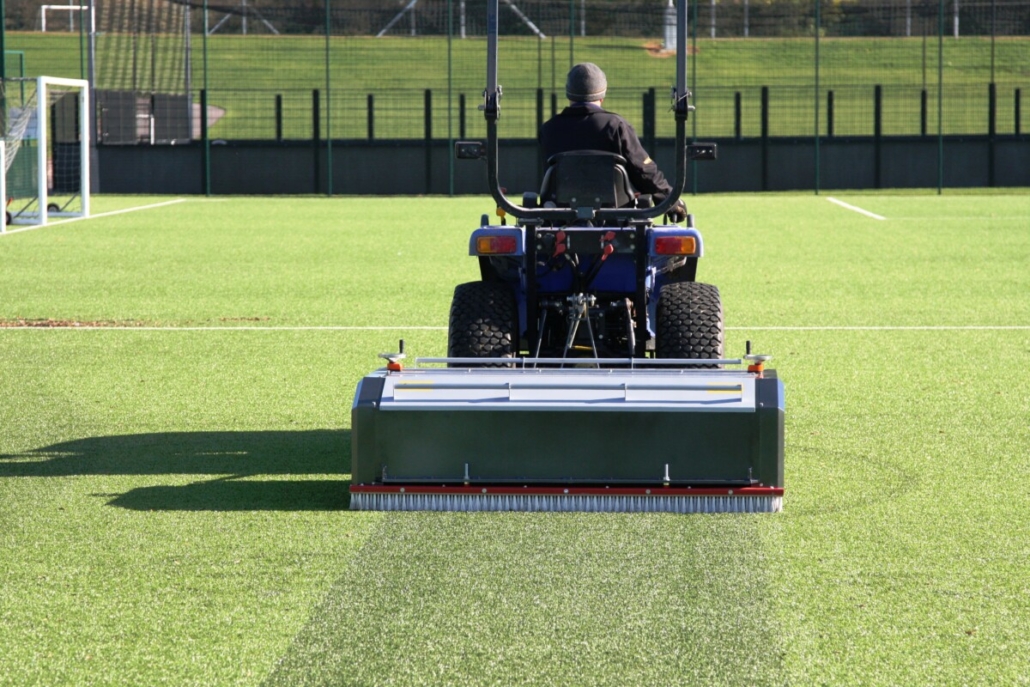
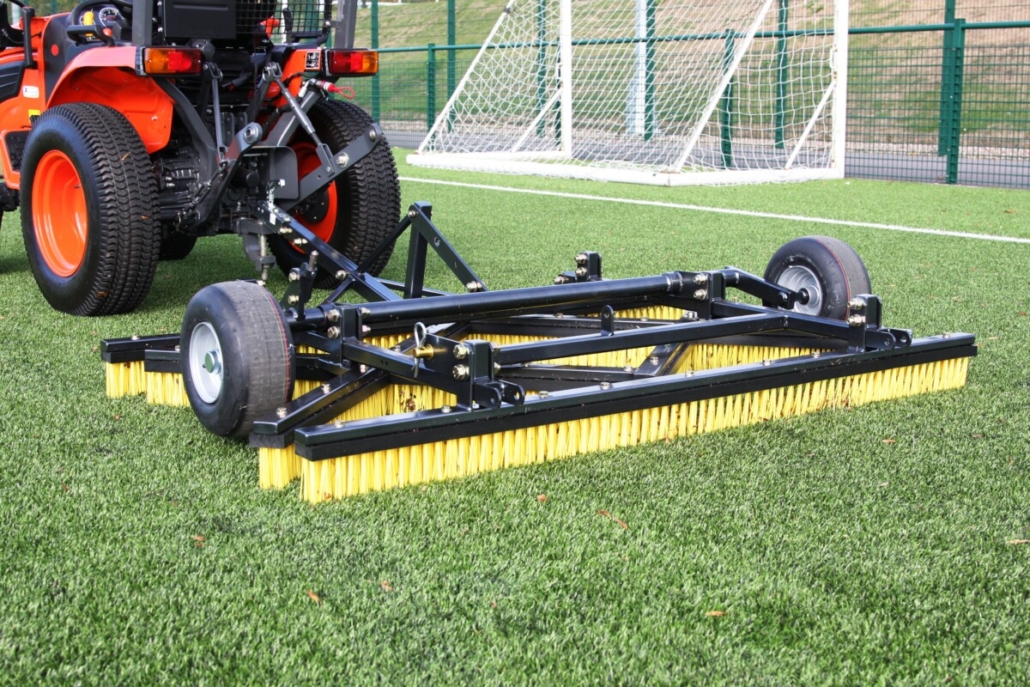
2. Light brushing – the surface can now be brushed using hand tools, or again more efficiently using tractor mounted tools such as the Syn-Pro Triangular Brush. Try to engage in the opposite direction to the pile as much as possible – this helps to stand it up, while taking different routes each time helps minimise fibre lean. This task should be completed weekly.
3. Topping up infill – measure infill depth across the pitch to assess where top-ups are necessary, and then action with a spreader or top dresser such as the Powaspred. Due to the breakdown of natural infills, greater top-ups will likely be necessary, particularly around high-traffic areas such as the goal mouth, penalty spot, and corners. This task should be completed monthly.
4. Power brushing – with fresh infill on the field, more aggressive brushing can be undertaken using an OSCA 3 or similar. This step is crucial for natural infills, as it agitates the upper infill layer to reduce compaction, while also reducing the risk of microbial growth. This task should be completed monthly.
5. Infill decompaction – using purpose-made rakes or tines, decompact the infill, taking care to do so only after power brushing to avoid driving contaminants into the pile. This loosens the infill without the risk of damaging backing or seams, which is essential due to the greater compaction of natural infills. This task should be completed monthly.
6. Deep cleaning – the final step is to conduct a deep clean of the pitch, which is best carried out in dry but fair conditions, such as the spring or autumn. Here, specialist equipment, like the SVR 1500, raises infill through an airstream system, stripping out dust particles and contaminants before evenly brushing the cleaned material back into the pile. This is the most effective method of removing bacterial threats and reducing dust build-up with natural infills. This task should be completed annually, or every six months if possible.
As outlined, while maintenance regimes may look similar at first glance, each step now contains new levels of nuance which may only become apparent during the process itself. The onus on getting maintenance right is also greater than ever, with the risk of microbial growth, infill breakdown, and compaction all increased.
For the best guidance, it’s always wise to speak to the original turf manufacturer, alongside your infill provider, to identify the best approach for your specific field, infill, and climate. Regardless of these differences, groundspeople can rest assured that their existing SISIS maintenance equipment will still be up to the task, and that no substantial new investments will be necessary to adjust to the post-rubber crumb era.