
Keeping Warwick Racecourse race-ready with Mansfield Sand

Keeping Warwick Racecourse race-ready with Mansfield Sand

Keeping Warwick Racecourse race-ready with Mansfield Sand

For Guy Woodward, Head Groundsman at Warwick Racecourse, maintaining a safe and consistent racing surface is a year-round challenge. From heavy winter rainfall to prolonged dry spells, the demands placed on a jumps track require products that can be relied upon in all conditions.

Keeping Warwick Racecourse race-ready with Mansfield Sand

Keeping Warwick Racecourse race-ready with Mansfield Sand

That is why Mansfield Sand products have become an integral part of Warwick Racecourse’s maintenance programme. Having used the company’s materials throughout much of his career, Guy trusts Mansfield Sand’s rootzone and fibre-reinforced products to help deliver the performance, drainage and recovery needed to keep the track in prime condition.

Guy’s career in turf management spans almost three decades. After starting in racing at Sandown in 1997 as Assistant Groundsman, he progressed to Head Groundsman roles at Nottingham, Great Yarmouth and Newcastle before arriving at Warwick.

“It’s the weather that’s the biggest challenge,” he explained. “We’re either pumping water off or pumping water on to get a consistent racing surface. All the way through the winter we were battling huge amounts of rain, and then the taps turned off in March and we started watering.”

To help manage these changing conditions, Guy relies on Mansfield Sand’s 70/30 Sand Soil Rootzone during the winter months, and the company’s 60/40 Sand Compost Rootzone throughout the spring and summer.

The 70/30 Rootzone Mix combines 70% premium silica sand with 30% screened topsoil to create a stable, free-draining growing medium, while the 60/40 Sand Compost Rootzone blends premium quality Mansil 40 silica sand with PAS 100 certified green compost, providing enhanced moisture retention and nutrient availability during the growing season.

“We use the 70/30 and the 60/40 after every race meeting,” said Guy. “Our season starts in September, and we’ve just finished our last meeting. They’re used for repairs after every race day, and on heavy ground we can use up to 50 tonnes.”

The different characteristics of the two rootzones allow Guy and his team to adapt to changing seasonal conditions.

“The 70/30 Sand Soil is what I use in the winter because it doesn’t hold moisture,” he explained. “When the ground freezes, one of the problems you can have is repairs freezing into lumps, which can stop racing. The 70/30 Sand Soil is free draining, so it gives us better recovery and a better chance of racing in cold conditions.

“When I switch to the 60/40 Sand Compost, it holds moisture, which is exactly what you want in warmer temperatures. It helps retain moisture for seed germination and recovery, so it all helps the track recover faster.”

Alongside the rootzone products, Guy has also been a long-term user of Mansfield Sand’s fibre-reinforced materials.

“I’ve used the Fibresand and 70/30 Fibre Rootzone Landscape for many years, going back to my time at Nottingham and Newcastle,” he said. “We use the Fibresand on footpaths and canter-downs, and in extreme conditions we’ll repair problem areas with the 70/30 Fibre Rootzone Landscape to make sure we can continue to race.

When asked why he continues to choose Mansfield Sand products, Guy’s answer is simple.

“It’s the quality and consistency, It’s always spot on. I’ve used products from all over the country and Mansfield has always been superior. There just isn’t anything that can compare.

“With some products I have used in the past, you’d find stones, bits of debris, lumps of clay or weed seeds. Suddenly your track starts looking like a meadow. You don’t get any of that with Mansfield products. They’re weed-free and you know exactly what you’re getting every time.”

The dependable quality also helps improve efficiency for Guy’s team.

“It definitely makes the lads’ lives easier,” he said. “Instead of having to sort through product or remove stones and debris, they can just get on with the job.”

Equally important is the confidence that materials will arrive when required, particularly during a busy racing season when repairs need to be completed quickly.

“You can rely on it,” said Guy. “Whenever you need a delivery, it turns up. There’s never any doubt that you’re going to get what you need, when you need it.”

After many years of using Mansfield Sand products across several racecourses, Guy has no hesitation in recommending them to others.

Reflecting on the relationship, he added: “Mansfield Sand has been there as long as I’ve been doing the job and it’s always been a very, very good product. If I’ve got any questions to ask, my rep Louise Barrington-Earp is always there. She’s brilliant.”

For Warwick Racecourse, where track quality and safety are paramount, the combination of product performance, consistency and dependable service continues to make Mansfield Sand an essential part of maintaining racing standards throughout the year.

For more information, visit www.mansfield-sand.co.uk, follow them on X at @MansfieldSand, or connect on Facebook and Instagram at Mansfield Sand Sport Surfaces.

For the latest industry news visit turfmatters.co.uk/news

Get all of the big headlines, pictures, opinions and videos on stories that matter to you.

Follow us on Twitter and Instagram for fun, fresh and engaging content.

You can also find us on Facebook for more of your must-see news, features, videos and pictures from Turf Matters
A practical guide to synthetic turf maintenance in the post-rubber crumb era

A practical guide to synthetic turf maintenance in the post-rubber crumb era

A practical guide to synthetic turf maintenance in the post-rubber crumb era

Jason Briggs, of SISIS, looks ahead to the abolition of rubber crumb and what will be the consequences for synthetic pitches.

A practical guide to synthetic turf maintenance in the post-rubber crumb era

A practical guide to synthetic turf maintenance in the post-rubber crumb era

Rubber crumb infill – the umbrella category for materials such as StyreneButadiene Rubber (SBR), Ethylene Propylene Diene Monomer (EPDM), and Thermoplastic Elastomer (TPE) – has been a mainstay of synthetic football, rugby, and multiuse pitches for longer than many have been in the industry.

The material has long been the most popular infill option for these pitches – and for good reason – boasting excellent shock absorption, durability, and playability at a cost-effective price point.

Despite this, its role and reputation in professional sport is one of the hottest topics for discussion in the industry, though the side on which readers stand has now been rendered a moot point. As part of a wider move to restrict the use of microplastics across a number of product categories, the sale of rubber crumb infill is set to be outlawed across all EU member states from October 17, 2031 onwards.

While this ban does not apply to non-member states, like the UK, it’s important to recognise the effect that this will have on global supply chains, which are more interconnected and interdependent than ever.

The feeling from many in the industry – myself included – is that regardless of whether a strict ban on rubber crumb is imposed in the UK, we are likely to see a de facto phaseout of the material as supply from the continent wanes.

“But what does this mean for fields already using rubber crumb?” I hear you ask. The good news is that the use and maintenance of fields already using rubber crumb will be permitted after this date. Grounds people will even be able to top-up their fields with existing rubber crumb stocks, provided they can prove the material was purchased before the cutoff date if necessary.

The bad news is that this is not an effective long-term strategy. While stockpiling is certainly an option, the average 3G pitch is topped up with between one and five tonnes of rubber crumb every year, meaning this strategy will quickly run aground. Regardless of whether grounds people live and work in the UK or EU, now is the time to assess current stocks and begin planning for the transition.

Fortunately, new environmentally friendly infills are entering the market every year. From rice husks, wood chip, and coconut fibre through to cork, olive pits and walnut shells, grounds people will certainly be able to find a new material that fits the needs of their field.

However, it’s important to recognise that while every effort has been made to find alternatives that can replicate the performance of rubber crumb, finding a like-for-like replacement is nigh on impossible. While both rubber and natural infills serve the same purpose, there are some broad performance differences to be aware of before buying:

• Durability – as organic matter is prone to do, natural infills will break down over time. This means that more frequent top-ups will likely be necessary, particularly for high-use pitches.

• Moisture retention – unlike rubber crumb, many natural infills will soak up moisture, putting them at risk of microbial growth, freezethaw damage, or compaction once dried.

• Migration risk – by and large, natural infills are much lighter than their rubber crumb counterparts, meaning that more material may be lost through play, and during periods of heavy winds.

A practical guide to synthetic turf maintenance in the post-rubber crumb era

A practical guide to synthetic turf maintenance in the post-rubber crumb era

There are also unique performance differences between different types of natural infill, with each suited to different sports, climates, and levels of play. For instance, cork is excellent at regulating heat, but can freeze in cold temperatures, making it the better choice for pitches in warmer regions. Other factors, such as durability, cost and shock absorption, can also vary from infill to infill. For this reason, consulting both the original turf manufacturer and infill supplier for guidance on selection is essential when looking to make the changeover from rubber crumb.

This bring us to the question – what does synthetic turf maintenance look like in the post-rubber crumb era? To the relief of grounds people, the broad strokes of maintenance look very much the same, with initial tests with SISIS equipment showing that both current equipment and techniques remain just as effective as ever.

However, it should be noted that this is not necessarily true of other manufacturers, and there is still more research to be done in this area. Moreover, while the general process remains the same, some steps now demand more time, attention, and consideration to ensure that the inherent traits of natural infills are being catered to.

With that out of the way, here are six steps to success for maintaining a synthetic turf pitch using natural infill:

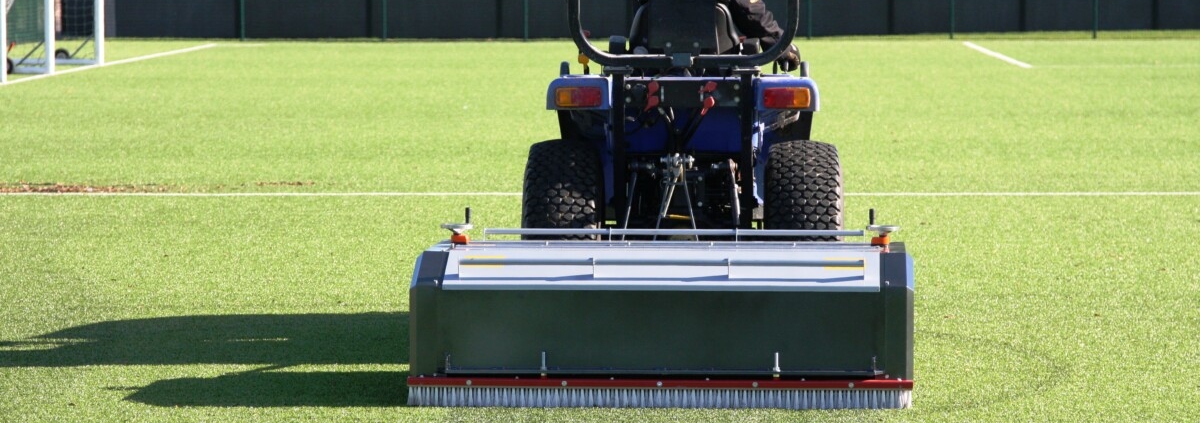
1. Visual inspection and sweeping – first and foremost, walk the pitch on foot to identify any litter or detritus. The removal of these before proceeding with later maintenance steps is essential to avoiding damage to both the pitch itself and maintenance equipment. While this can be done by hand, using a tractor-mounted sweeper such as the Litamina 1200 is the most efficient approach here, with the sweeper collecting debris such as leaves, twigs, and litter, while allowing infill to fall back through. With the surface clear, walk the pitch again, looking for frayed seams or lifted edges, and repair as necessary. This task should be completed weekly.

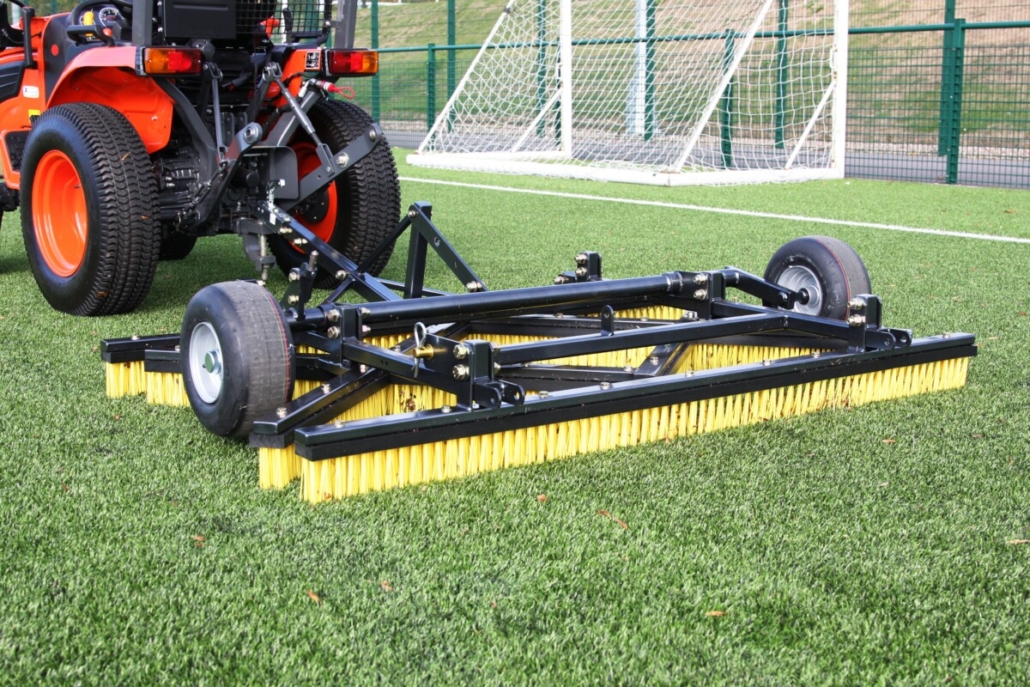
2. Light brushing – the surface can now be brushed using hand tools, or again more efficiently using tractor mounted tools such as the Syn-Pro Triangular Brush. Try to engage in the opposite direction to the pile as much as possible – this helps to stand it up, while taking different routes each time helps minimise fibre lean. This task should be completed weekly.

3. Topping up infill – measure infill depth across the pitch to assess where top-ups are necessary, and then action with a spreader or top dresser such as the Powaspred. Due to the breakdown of natural infills, greater top-ups will likely be necessary, particularly around high-traffic areas such as the goal mouth, penalty spot, and corners. This task should be completed monthly.

4. Power brushing – with fresh infill on the field, more aggressive brushing can be undertaken using an OSCA 3 or similar. This step is crucial for natural infills, as it agitates the upper infill layer to reduce compaction, while also reducing the risk of microbial growth. This task should be completed monthly.

5. Infill decompaction – using purpose-made rakes or tines, decompact the infill, taking care to do so only after power brushing to avoid driving contaminants into the pile. This loosens the infill without the risk of damaging backing or seams, which is essential due to the greater compaction of natural infills. This task should be completed monthly.

6. Deep cleaning – the final step is to conduct a deep clean of the pitch, which is best carried out in dry but fair conditions, such as the spring or autumn. Here, specialist equipment, like the SVR 1500, raises infill through an airstream system, stripping out dust particles and contaminants before evenly brushing the cleaned material back into the pile. This is the most effective method of removing bacterial threats and reducing dust build-up with natural infills. This task should be completed annually, or every six months if possible.

As outlined, while maintenance regimes may look similar at first glance, each step now contains new levels of nuance which may only become apparent during the process itself. The onus on getting maintenance right is also greater than ever, with the risk of microbial growth, infill breakdown, and compaction all increased.

For the best guidance, it’s always wise to speak to the original turf manufacturer, alongside your infill provider, to identify the best approach for your specific field, infill, and climate. Regardless of these differences, groundspeople can rest assured that their existing SISIS maintenance equipment will still be up to the task, and that no substantial new investments will be necessary to adjust to the post-rubber crumb era.

Wildflowers from DLF help wildlife to flourish

Wildflowers from DLF help wildlife to flourish

Wildflowers from DLF help wildlife to flourish

Perched on the Northumberland coastline, Alnmouth Golf Club offers members a challenging mix of seaside and parkland play in a designated area of outstanding natural beauty. Head Greenkeeper Jim Storey has spent the last 27 years finessing that natural beauty, employing maintenance that supports both the long-term course management and local wildlife. For the last decade this work has included establishing wildflower areas and, more recently with the help of DLF Seeds, he says these have delivered both visual impact and ecological value.

Wildflowers from DLF help wildlife to flourish

Wildflowers from DLF help wildlife to flourish

“Creating habitats and supporting wildlife has been one of our major objectives for the last 10 years” says Jim, who heads up a greenkeeping team of seven. “Using our collective knowledge and experience, the team and I have thinned out the roughs and created new spaces to support insects, pollinators, small mammals and birds. Our wildflower areas have become a really important part of that.”

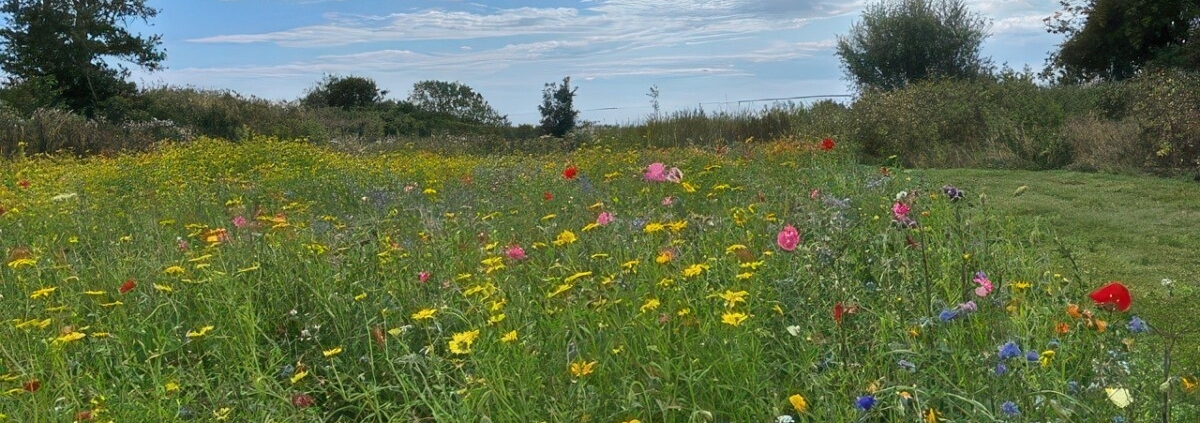
Jim has worked with various mixtures from DLF’s Pro Flora and Colour Boost ranges to establish five wildflower areas, most recently adding a burst of colour and broad variety of flowering species with the Carnival mix. “We’ve selected spaces where we can compliment the surrounding landscape and really add to the experience for the golfers, especially on a nice sunny day!”

Another of the recent projects sits close to the first tee, where wildflowers have been established among areas of fine fescue and yellow rattle – creating a vibrant focal point adjacent to newly planted fruit trees. “We’ve now got pollinators working between the flowers and the fruit trees which is exactly what we hoped to achieve” he adds.

It’s not just pollinators enjoying the new wildflower areas. Jim continues, “We’ve definitely seen an increased in the number and variety of animals we’re seeing since the introduction of the wildflower. We’ve got all sorts of insect, voles and field mice which means, in turn, we’re also seeing barn owls. It’s been really fantastic to see.”

“We’ve also enjoyed speaking with agronomists and fellow greenkeepers about the project, learning about different flowers and getting ideas together to discuss with our DLF Regional Technical Manager Ben Morgan.” He concludes, “Every year we’ll look to add another area if we see an opportunity, which is only going to help us get richer in biodiversity with every passing season.”

For the latest industry news visit turfmatters.co.uk/news

Get all of the big headlines, pictures, opinions and videos on stories that matter to you.

Follow us on Twitter and Instagram for fun, fresh and engaging content.

You can also find us on Facebook for more of your must-see news, features, videos and pictures from Turf Matters
Automated robotic technology at the heart of Belfry preparations

Automated robotic technology at the heart of Belfry preparations

Automated robotic technology at the heart of Belfry preparations

Husqvarna technology is playing a crucial role in preparing The Belfry’s iconic Brabazon Course for the 2026 Husqvarna British Masters hosted by Sir Nick Faldo, as the venue builds towards the arrival of the DP World Tour’s leading players from 26–30 August.

Automated robotic technology at the heart of Belfry preparations

Automated robotic technology at the heart of Belfry preparations

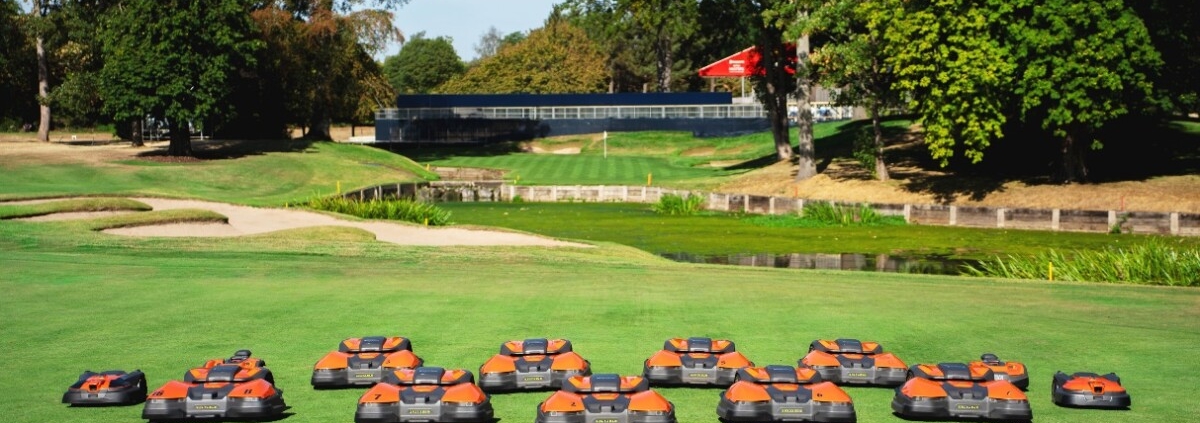
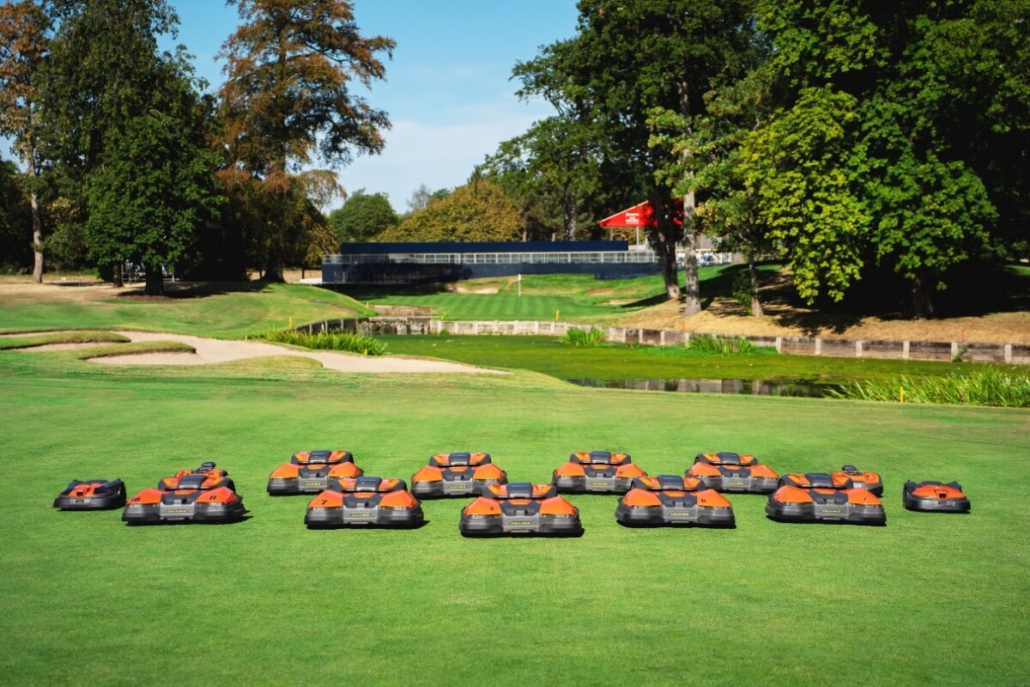
In the build-up to the championship, seven Husqvarna CEORA robotic mowers are maintaining the fairways of the four-time Ryder Cup venue, working consistently across the course to help produce the exacting standards required for elite tournament golf.

During the tournament week, Husqvarna will expand its operation considerably. A fleet of 15 CEORA robotic mowers will cut the championship fairways overnight, supported by a dedicated Husqvarna team working from 8pm until 6am. The team will transport the mowers to their designated fairways, oversee the overnight operation and collect the machines at the end of each shift.

Husqvarna CEORA, Automower® 580L and RELOX technology will also be deployed on the driving range, while a Husqvarna 535 AWD EPOS is maintaining the short game area to ensure the rough is always at optimal height for practice. Every machine used during the championship will be cleaned and calibrated daily, with blades changed each day to maintain consistent cutting performance throughout the event. The Belfry’s greenkeeping team is also using a comprehensive fleet of Husqvarna battery-powered handheld equipment, including leaf blowers, grass trimmers and hedge trimmers throughout its preparations. The brand-new Husqvarna 570iBT battery backpack blower will play an important role with 10 units being used to clear tees, bunkers and general course detailing.

The installation brings together autonomous mowing and professional battery technology as part of a modern, integrated approach to golf course maintenance. While robotic mowers deliver frequent and consistent cutting across large areas of turf, the handheld equipment supports the detailed work undertaken by the greenkeeping team around course furniture, including trees, bunkers and other areas that require a more precise finish.

The deployment also reduces reliance on conventional fossil fuel-powered equipment and provides the team access to quieter machinery with no direct exhaust emissions during use. This can help work to continue around golfers and other course operations with less disruption.

For Husqvarna, the installation provides a powerful demonstration of the company’s technology in action at the tournament for which it is Title Partner. Rather than being limited to branding around the event, Husqvarna products are directly supporting both the advance preparation of the course and its presentation throughout championship week. The dedicated overnight operation will put Husqvarna technology and technical expertise at the heart of maintaining the surfaces on which the tournament will be decided.

Andrew Lees, Global Segment Manager for Professional Robotics at Husqvarna, said: “The Husqvarna British Masters gives us an outstanding platform, but the most important story is what our technology is delivering on the ground. Our products are not simply being displayed at The Belfry, they are working every day alongside an exceptional greenkeeping team to help prepare one of the world’s most famous tournament courses.

“Following the success of our operation at Royal Porthcawl during the 2025 AIG Women’s Open, we are proud to bring the same level of tournament support to a very different venue. Every machine will be cleaned and calibrated and its blades changed daily, helping The Belfry present The Brabazon to a global audience at the first Husqvarna British Masters.”

Designed for large-scale professional turf management, CEORA uses satellite-based EPOS navigation to operate systematically within virtual boundaries. This produces accuracy to just 1cm, meaning fairways perimeters are delivered with high definition and confidence that the integrity of the fairway shape is maintained. CEORA’s autonomous operation allows mowing schedules and designated work areas to be managed digitally, giving course teams the flexibility to adapt cutting programmes around weather, playing schedules and operational requirements.

In the build-up to the event, the seven CEORA units at The Belfry regularly maintain the fairways without the need for a driver, supporting consistent turf presentation while freeing members of the greenkeeping team to concentrate on agronomic and detail-focused tasks elsewhere on the course. During the championship itself, fairway mowing will become a managed overnight tournament-support operation. Fifteen CEORA units will be transported to and from the fairways and overseen by Husqvarna personnel, allowing the fairways to be maintained outside playing hours while giving the tournament team daily oversight of machine condition and performance.

Husqvarna became Title Partner of the British Masters through a multi-year agreement announced earlier this year. The company is also the Official Robotic Mowing Partner of the DP World Tour, building on a partnership that has already demonstrated autonomous mowing technology on some of golf’s most prominent stages.

At the 2025 AIG Women’s Open at Royal Porthcawl, 15 Husqvarna CEORA robotic mowers cut the championship’s playing surfaces, marking the first time Husqvarna robotic mowers had performed this role at a major golf championship in the United Kingdom.

Hosted by six-time Major champion and Husqvarna Brand Ambassador Sir Nick Faldo, the 2026 Husqvarna British Masters will begin with the celebrity pro-am on Wednesday 26 August, followed by four days of championship play from Thursday 27 to Sunday 30 August.

For the latest industry news visit turfmatters.co.uk/news

Get all of the big headlines, pictures, opinions and videos on stories that matter to you.

Follow us on Twitter and Instagram for fun, fresh and engaging content.

You can also find us on Facebook for more of your must-see news, features, videos and pictures from Turf Matters