

IOG Pilots New Framework

IOG Pilots New Framework: The leading membership organisation for people involved in the management and maintenance of sports pitches, landscape and amenity facilities in the UK, The IOG, is piloting a new framework to the ‘measurement’ of the standard of football pitches at grassroots level.

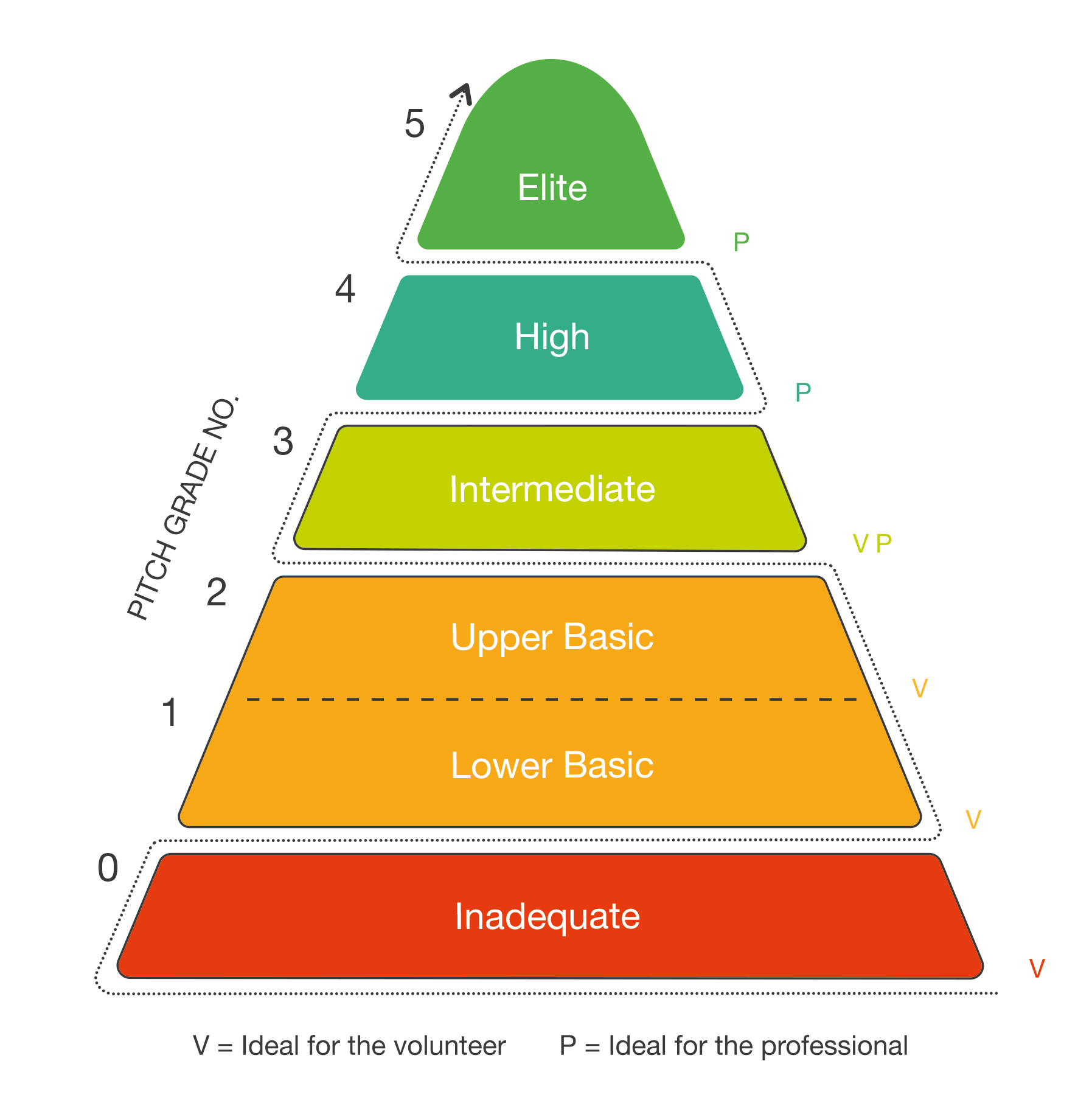
The new Pitch Grading Framework will not only highlight the level of an individual playing surface quality but also the appropriate training and education, and the recommended levels of qualifications needed by those who maintain it.

IOG Pilots New Framework

In terms of calculating the standard of a pitch, each level of the Framework has certain parameters and, after measurement, the overall result/level of a pitch will be calculated. It is a system that has been used successfully within cricket by the IOG and the England and Wales Cricket Board for over ten years.

The recommended appropriate training and education will match each level of the Framework. For instance, for pitch maintenance at the Basic level (volunteer), an IOG Level 1 course (or equivalent) would be the minimum training recommended. Training/education would increase through the levels with IOG Level 5 (or equivalent) being recommended for individuals maintaining pitches at the Elite level. At all levels, the experience of those in situ will be taken into account and catered for individually.

Working closely with the Football Foundation and Football Association Pitch Improvement Programme, regional pitch advisers from the IOG-led Grounds and Natural Turf Improvement Programme (GaNTIP) are now piloting the Framework to identify any potential improvements before the scheme’s full implementation in November, when it is envisaged that each grass sport will have its own specific pyramid.

A range of highly-experienced people have been consulted leading up to the pilot, including Sport England’s Framework Agronomists as well as leading professionals, volunteers and organisations attached to the groundscare industry.

Commenting on the development, GaNTIP director Jason Booth, said: “This really is an exciting time for the future of groundsmanship and to be part of it at the beginning is great for GaNTIP and the programme’s team.

“The system is not designed to identify what is missing; it is to identify where support and development is required, and the initial feedback from the National Governing Bodies of Sport which have viewed the concept has been nothing but positive.”

Geoff Webb, IOG chief executive, added: “The roll out of this revised framework for natural turf will bring much needed clarity to what constitutes a surface that’s fit for play, and it will lead to advanced knowledge and understanding of what input and experience is required to improve the quality of a playing surface and the enjoyment of sports in general.”

For more information, visit: www.iog.org

For the latest industry news visit turfnews.co.uk

Get all of the big headlines, pictures, opinions and videos on stories that matter to you.

Follow us on Twitter for fun, fresh and engaging content.

You can also find us on Facebook for more of your must-see news, features, videos and pictures from Turf Matters.

Locust World Cup Fears

Locust World Cup Fears: A plague of locusts could “disgrace” Russia by destroying World Cup pitches, claims The Russian government.

Locusts often feast on crops in southern Russia and Pyotr Chekmaryov, who oversees plant protection at the agriculture ministry, says they could descend on stadiums, too.

In comments reported by state news agencies, Chekmaryov says ‘we’ve more or less learned how to deal with locusts, but this year I’m afraid we could end up in an international locust scandal.’

He adds that ‘locusts like places where there is a lot of green,’ and says that it is important ‘not to disgrace ourselves in front of global society, especially where we will have guests from all over the world.’

Chekmaryov pointed out the Volgograd region, situated more than 600 miles south of the capital Moscow, as a particular concern.

This summer’s finals will run between June 14 and July 15, with matches being played in 12 stadiums across 11 host cities.

Click here to read the original article

For the latest industry news visit turfnews.co.uk

Get all of the big headlines, pictures, opinions and videos on stories that matter to you.

Follow us on Twitter for fun, fresh and engaging content.

You can also find us on Facebook for more of your must-see news, features, videos and pictures from Turf Matters
Groundsman Award Nominations

Groundsman Award Nominations: Cambridgeshire FA are looking for nominations for this season’s Groundsman of the Year award.

Member clubs at Step 7 and below are invited to nominate their grounds people who give up hours of their time to provide the best pitches possible, often using very few resources. This competition is a great way for these volunteers to get recognition for their time and efforts on a local and national level whilst also having the opportunity to meet and talk with the professional groundsmen who conduct the judging.

The first ranked Cambridgeshire club groundsman will go forward to the national judging stage and undergo independent adjudication.

To nominate your groundsman please compete and return the form (click here to download) to Joanne Bull, Facilities and Participation Manager, by email: joanne.bull@cambridgeshirefa.com

Postal nominations:

Cambridgeshire FA
Bridge Road
Impington
Cambridgeshire
CB24 9PH

The closing date for nominations is Thursday 22nd February 2018.

Click here to read the original article

For the latest industry news visit turfnews.co.uk

Get all of the big headlines, pictures, opinions and videos on stories that matter to you.

Follow us on Twitter for fun, fresh and engaging content.

You can also find us on Facebook for more of your must-see news, features, videos and pictures from Turf Matters
Golf Course ‘Abandoned’

Golf Course ‘Abandoned’: It is the harsh and unpredictable conditions on the seaside that have traditionally made links golf such an enticing endeavour.

But for England’s oldest course, at least, they are proving too much of a challenge.

The Royal North Devon Golf Club has accused the Government of “abandoning us to the ocean” after Storm Eleanor prompted the collapse of part of its eighth tee and high tides expected next week threaten the demise of the seventh.

Designed by the famous Victorian golfer “Old” Tom Morris, the course at the mouth of the Taw-Torridge Estuary is renowned as the “St Andrews of the South” and one of the UK’s toughest.

The historic lay-out now faces permanent disfigurement, however, due to the brutal coastal erosion.

More than 50 yards of the championship course has been lost as a result of the “preventable” collapse, with boulders strewn across one of the fairways.

The disruption places in jeopardy two major upcoming amateur competitions.

Yet Natural England, the body responsible for the stretch of coast near Westward Ho!, appears content to let the sea reclaim the land, according to the club.

The agency last night insisted no suggestions were ruled out, but a statement explaining that “the dunes and shingle ridge are naturally dynamic coastal features and subject to constant change” have been seized on by local golfers as evidence civil servants are determined to let “mother nature take its course”.

Mark Evans, the club’s general manager, said: “By allowing this collapse we are tampering with history.

“There’s no plan at the moment – it’s a disgrace.”

Founded in 1864, the club quickly gained national status thanks to the patronage of the then Prince of Wales, later Edward VII, who bestowed the royal title two years later.

Believed to be substantively unchanged since the original Tom Morris design, the course is the oldest in continuous use in England.

While other land is available which would allow the club to reconfigure the course away from the coastal collapse, this would make the golf “not anything like as interesting”, according to Mr Evans.

Natural England said it would permit the club to build two new greens, providing it relinquished the two existing ones threatened by erosion.

The collapse and subsequent flooding have also provoked fears over the security of a nearby landfill site containing hospital waste and other toxic material such as asbestos.

The club says wrangling between the local Torridge District Council and Devon County Council has so far held back action to address the problem, although last night Torridge said the two authorities were “working well”.

It is understood that to adequately protect the golf course, and by extension the landfill site, from the sea erosion would require a costly project of installing “rock amour” along the coast.

“They’ve got to look at the bigger picture,” said Mr Evans

“Yes they might be saving England’s oldest golf course but they’re saving an environmental disaster that’s just waiting to happen.”

He said both Natural England and local council officers were “burying their heads in the sand”.

However, a meeting has been scheduled for January 29 to discuss the landfill site.

“Natural England is working with Devon County Council, Torridge District Council , the Environment Agency and the golf club to consider options and agree the longer term management of coastal change at Northam Burrows,” a spokesman for the agency told The Daily Telegraph.

“The dunes and shingle ridge are naturally dynamic coastal features and subject to constant change, a characteristic that makes this stretch of coast so special for wildlife and its wonderful wild landscape.

“As a Site of Special Scientific Interest any works would need the consent of Natural England and having an agreed longer term approach to coastal management in place will enable the golf club to plan for the future.”

Jane Whittaker, leader of Torridge District Council, said: “Following recent storms and their impact we have already had initial meetings to discuss both the old Devon County Landfill site and how the Golf Club can be supported into the future.”

Click here to read the original article

For the latest industry news visit turfnews.co.uk

Get all of the big headlines, pictures, opinions and videos on stories that matter to you.

Follow us on Twitter for fun, fresh and engaging content.

You can also find us on Facebook for more of your must-see news, features, videos and pictures from Turf Matters

Pershore Groundsman Praised

Pershore Groundsman Praised: Pershore Town groundsman Tim Phillips was singled out as an unlikely man of the match after ensuring that the club yet again avoided the wipeout of fixtures last weekend.

After snow and then rain, only three fixtures were played in Midland League Division One – and one of those on an artificial pitch.

Despite being next to the river and the soggy conditions, the King George V Stadium was playable and Phillips’ hard work was rewarded with Town’s best league win of the season as they defeated Chelmsley Town 4-0.

Phillips, a former referee, was runner-up in the league’s groundsman of the year competition and his expertise has been visible again.

“Our groundsman has done another great job. The game was never in doubt and that was down to Tim’s hard work,” said manager Quentin Townsend. “Despite all the rain, there was nothing wrong with the pitch.

“We spent quite a lot of money on the pitch in the summer, a four-figure sum, and we’ve turned down offers from clubs to groundshare to protect the pitch. We’ve put the pitch first and foremost.”

Click here to read the original article

For the latest industry news visit turfnews.co.uk

Get all of the big headlines, pictures, opinions and videos on stories that matter to you.

Follow us on Twitter for fun, fresh and engaging content.

You can also find us on Facebook for more of your must-see news, features, videos and pictures from Turf Matters