All applications covered with Kubota’s bigger zero-turn range

All applications covered with Kubota’s bigger zero-turn range: The recent expansion of the Kubota zero-turn mower range has made the line-up one of the most comprehensive in the market – and one of many highlights in the Kubota groundcare portfolio. Responding to market demand, the range has increased from two to seven models offering a variety of working widths, discharge options and fuel types to suit all domestic and commercial applications.

Kubota’s zero-turn offering combines unbeatable manoeuvrability with accurate, quality cut performance making them a popular choice for local authorities and professional landscapers as well as residential users. With the addition of five new models in recent years, the range now offers more versatility than ever before.

All applications covered with Kubota’s bigger zero-turn range

All applications covered with Kubota’s bigger zero-turn range

Highlights of the established petrol models are the Z1-421 and Z2-481, which feature a 42” and 48” side discharge cutting deck respectively, with optional mulching kits available.

Launched in summer 2024 is the Z4-541 – a 54” petrol model which boasts a larger chassis to offer even greater productivity to the pro-consumer market. Hot on its heels was the rear discharge Z4-541RD model, introduced later in 2024, to meet customer requirements.

In the diesel range, the well established ZD-1211 provides comfort and fast working with excellent fuel efficiency, meeting all the needs of the professional operator.

Those looking to meet productivity requirements with a sustainable power source can find the answer in Kubota’s Ze electric zero-turn range. Offering new levels of user comfort through reduced noise and vibration during operation, the Ze-421 and larger Ze-481 are designed to exceed the expectations of environmentally conscious customers such as contractors and local authorities whilst still maintaining the performance expectations of conventional fuels.

For the latest industry news visit turfmatters.co.uk/news

Get all of the big headlines, pictures, opinions and videos on stories that matter to you.

Follow us on Twitter and Instagram for fun, fresh and engaging content.

You can also find us on Facebook for more of your must-see news, features, videos and pictures from Turf Matters.

GKB Combitool delivers year round excellence

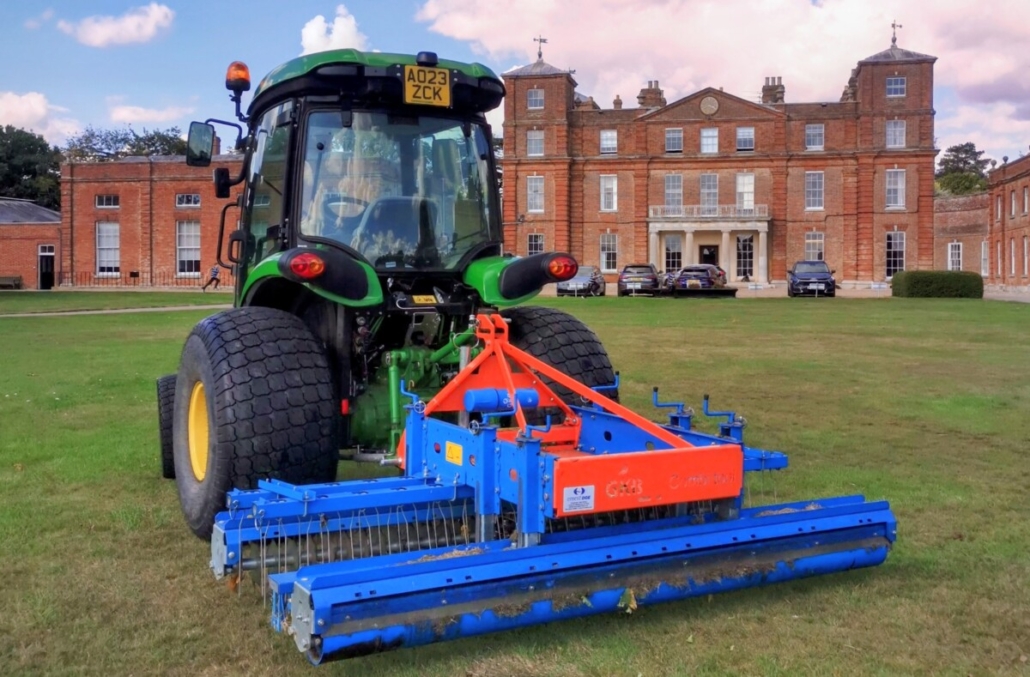
GKB Combitool delivers year round excellence: A GKB Combitool has proven the solution to improving surface quality, and reducing reliance on hired equipment, at Norfolk’s Langley School.

Senior Groundsman Phil Cook leads a team of four in maintaining 19 hectares of school grounds – made that much easier with the versatility of the 4-in-1 implement which has taken presentation of the sports pitches to new heights.

GKB Combitool delivers year round excellence

GKB Combitool delivers year round excellence

When Phil joined the co-educational day and boarding school 18 months ago, most of the maintenance machinery was hired in. Notification followed shortly after that prices were due to increase so a change of tact was needed. “It made sense to look at what we were using most often, and as a versatile all-rounder, we knew something like the GKB Combitool would make a big difference across multiple areas of the site” Phil explains.

Working closely with Stuart Paterson at Ernest Doe & Sons, the school built a package of machines – including the GKB Combitool – for delivery in October 2024.

“I hadn’t had any previous experience of GKB, but when I saw the brochure and the build quality of the unit, it was an easy decision. In practice, it has more than lived up to expectations. It’s incredibly solid, reliable and easy to use enabling us to brush, rake, roll and spike our 10 winter sports pitches year-round and, in springtime, our cricket outfields on a weekly basis.” He adds, “Because of the size of the site, we sometimes used to struggle with moving clippings. Now, we can follow the mower with a single pass of the GKB Combitool, rake the clippings up and leave an immaculately presented surface in its wake.”

The delivery also couldn’t have been better planned for Phil and the team, with the Combitool landing just in time for Langley’s annual rugby festival which attracts teams from across the UK. “With so many spectators and matches in a condensed period, presentation really matters. Running the Combitool between games was a real eye-opener. It lifted the grass, left a brilliant finish and helped us retain superb surfaces for the duration of the event.”

The quality and value delivered by the GKB Combitool has certainly left a strong impression, leading Phil to look at other areas of their maintenance programme. “The Combitool has become our go-to implement, and is raising standards so much, we’d like to see about adding more GKB Machines to our armoury to bring other areas up to a similar level – ensuring the facilities continue to meet the high expectations of our students, visiting clubs and national tournaments alike.”

For the latest industry news visit turfmatters.co.uk/news

Get all of the big headlines, pictures, opinions and videos on stories that matter to you.

Follow us on Twitter and Instagram for fun, fresh and engaging content.

You can also find us on Facebook for more of your must-see news, features, videos and pictures from Turf Matters.

First club in UK invests in Toro robotic mowing

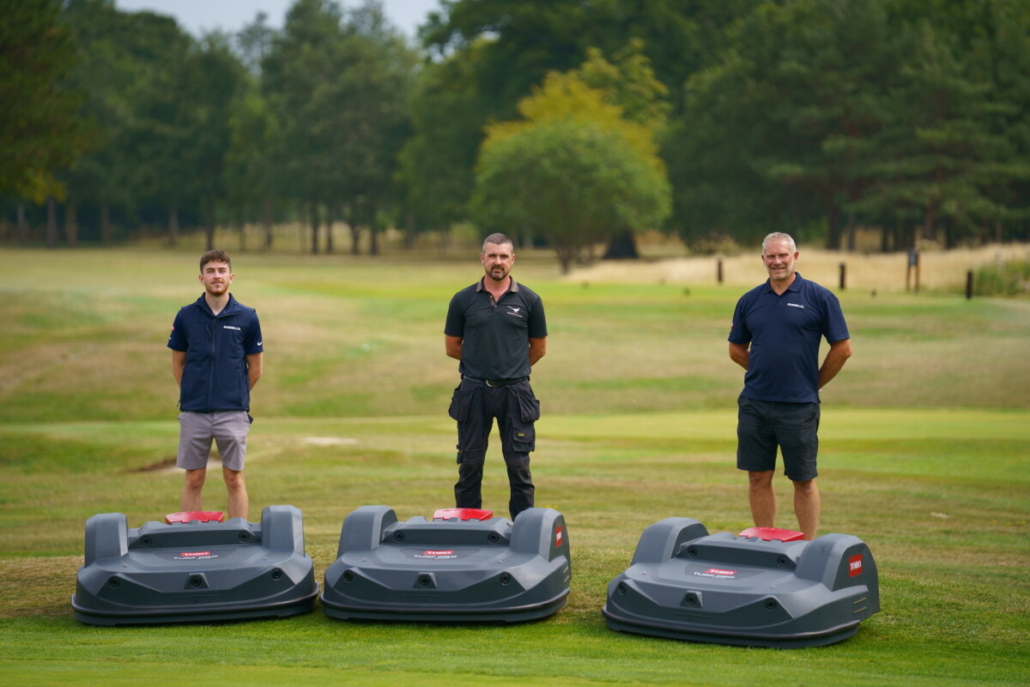
First club in UK invests in Toro robotic mowing: Thonock Park in Lincolnshire is the first club in the UK to invest in Toro’s Turf Pro autonomous mowers.

Having made the decision to move to autonomous mowing at the beginning of the year, the club was introduced to Toro’s new Turf Pro mowers at the BTME launch and has subsequently purchased five from local Toro dealer, Russells Groundcare.

First club in UK invests in Toro robotic mowing

First club in UK invests in Toro robotic mowing

The five Turf Pro 500 mowers are being used to cut both fairways and rough of 18 of the club’s 36 holes. According to General Manager Benjamin Hatch: “Our robot mowers are now cutting the fairways and rough for 18 holes on the Thonock Park course, and we are exceptionally pleased with their quality of cut and the definition between fairway and rough grasses.”

Thonock Park and Russells have had two comprehensive training sessions post-install from Lee Rowbotham, GeoLink and Digital Specialist at Reesink UK.

Lee explains the process: “We were there at the point of delivery to install the chargers and base station. The mowers are blind out of the box, so training involves telling them everything they need to know, like where the charging station is, the route to the fairways, what the safe areas, and not safe areas are. And of course, for the team to understand the operation and the terminology involved.”

Once set up, Course Manager Rob Acheson was shown how to control all five mowers through the Smart App. Operation is something Lee likens to how irrigation sprinklers are controlled.

“They are controlled individually, one at a time, and can be set up in advance,” he says. “Just like you can set a sprinkler to come on at 5am, you can set the Turf Pros to start mowing at 10pm once everyone has gone home if you wish.”

This provides a big advantage in getting course maintenance ahead of play. All fairway mowing can be completed before the course opens, supported by “the almost non-existent noise levels” as confirmed by Benjamin.

Another added benefit of these mowers comes from how the club has been able to redefine the job requirements of the team and can guarantee all-year round value.

“Very importantly, these mowers have enabled us to reassign some of our skilled greenkeeping team to other tasks on the course that require more specialist work,” Benjamin says. “During the wetter months, we expect to keep using these mowers, when ordinarily we would struggle to use the much heavier diesel machines. All in all, it has been a very positive investment for us and one that we believe we will continue to benefit from year after year.”

Just as Reesink sees the value in providing dedicated support for this new technology with the new digital specialist role created for Lee, so too do Russells who have recruited two dedicated employees to demonstrate and install Russells’ autonomous mowing offerings to customers, including private properties, estates, schools, golf courses and other sporting venues.

Mark Willerton, Groundcare Sales Manager at Russells, says: “Russells see autonomous mowers as an important part of our future business, it’s something we’re investing heavily in with dedicated specialist staff and demonstration machines.

“Working alongside Thonock Park and Reesink to understand this next generation of mowing and how to maximise the potential and efficiency of the mowers has been a great learning experience. We look forward to continuing working with the team at Thonock Park to ensure they always have the best turfcare options available.”

For the latest industry news visit turfmatters.co.uk/news

Get all of the big headlines, pictures, opinions and videos on stories that matter to you.

Follow us on Twitter and Instagram for fun, fresh and engaging content.

You can also find us on Facebook for more of your must-see news, features, videos and pictures from Turf Matters.

Kirkcaldy GC’s Jacobsen duo

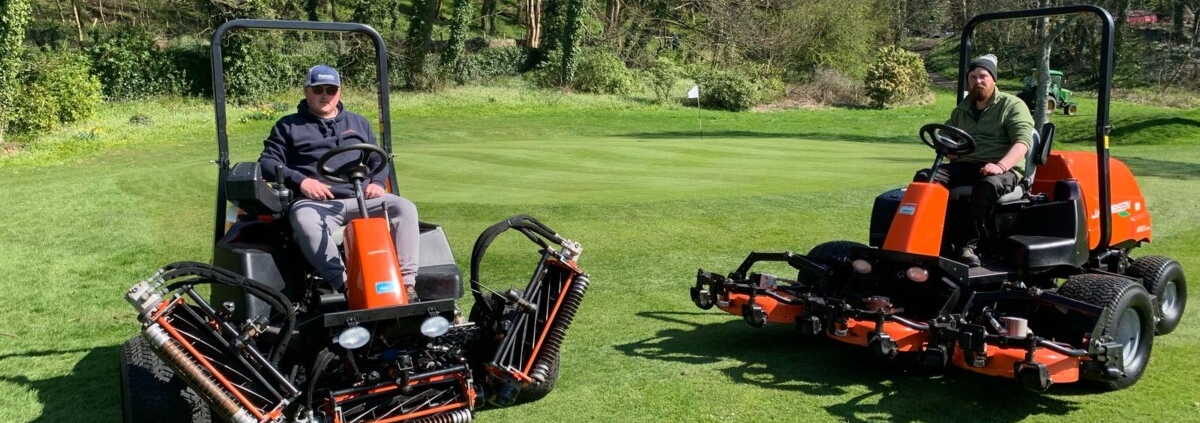
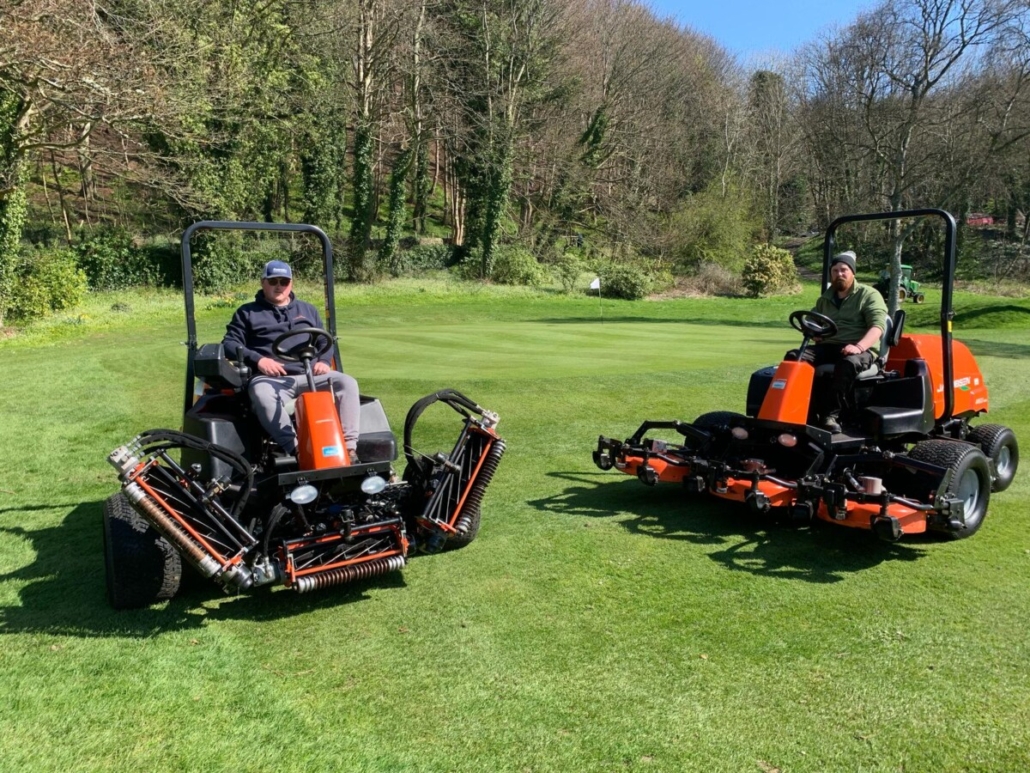
Kirkcaldy GC’s  Jacobsen duo: Kirkcaldy Golf Club’s greenkeeping team have seen an instant lift in course presentation thanks to the arrival of two Jacobsen machines — an LF570 fairway mower and an AR522 rotary mower.

Head Greenkeeper Callum White, who joined the Fife club in April 2024 from nearby Charleton GC, says the pair have already changed daily routines for himself, deputy Mark Hood and trainee Finn Wallace.

Kirkcaldy GC’s  Jacobsen duo

Kirkcaldy GC’s Jacobsen duo

“We’ve had them since April, just as the warm weather arrived,” says Callum. “They’ve slotted into our programme perfectly, and the improvement to presentation was immediate.”

Securing reliable mowing equipment was one of Callum’s first priorities on taking up the post. Familiar with Jacobsen’s reputation for quality of cut, he turned to Fairways GM Area Sales Manager, Mike Lindsay, who was able to highlight two refurbished models about to land. The club committee quickly approved the deal.

One of Callum’s main aims was to raise the standard of the rough — both in quality and appearance.

“The Jake cut is very precise and much healthier for the grass than what we had been using. I also really wanted to show definition across the course and have the ability to stripe,” he explains.

Deputy Course Manager Mark Hood has taken ownership of the AR522, which has proven indispensable. “On our steeper holes — notably the 1st and 17th, which play straight up and down — that 4WD is essential. Without it, you simply wouldn’t get up there.”

It now takes Mark around three days to cut the rough each week at 39 mm. “It’s so much faster than what we used before, and it keeps the finish more uniform. Our golfers really appreciate the upgrade as it speeds up play.”

Callum manages the fairways himself with the LF570, delivering a healthier, more precise cut. Fairways are also cut weekly at 12 mm, taking around 1.5 days to complete.

“We haven’t had much rain in four weeks, so they’ve dried out, but once they get moisture they really bounce back — and the machine shows that improvement immediately.”

The reaction from members has been overwhelmingly positive.

“Everyone is really pleased with the progress we’re making. The close, crisp finish gives better playability and really enhances presentation.”

Kirkcaldy is a fine example of a classic parkland course — and it has a special place in golfing history as the final course designed by Old Tom Morris.

For the latest industry news visit turfmatters.co.uk/news

Get all of the big headlines, pictures, opinions and videos on stories that matter to you.

Follow us on Twitter and Instagram for fun, fresh and engaging content.

You can also find us on Facebook for more of your must-see news, features, videos and pictures from Turf Matters.

How Oundle School’s Grounds Team Met Record Demands

How Oundle School’s Grounds Team Met Record Demands: With 257 matches and extreme weather to contend with, the team share how planning, machinery choice and adaptability kept standards high.

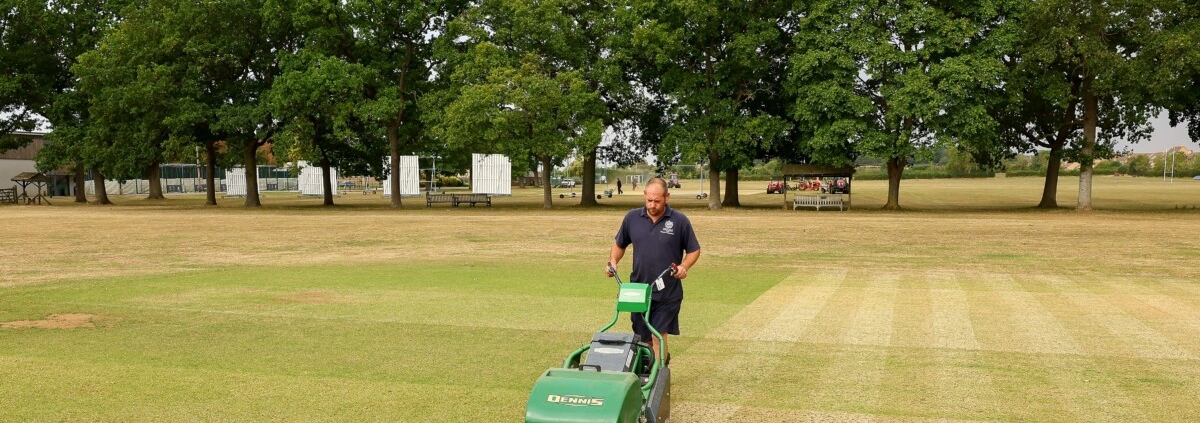
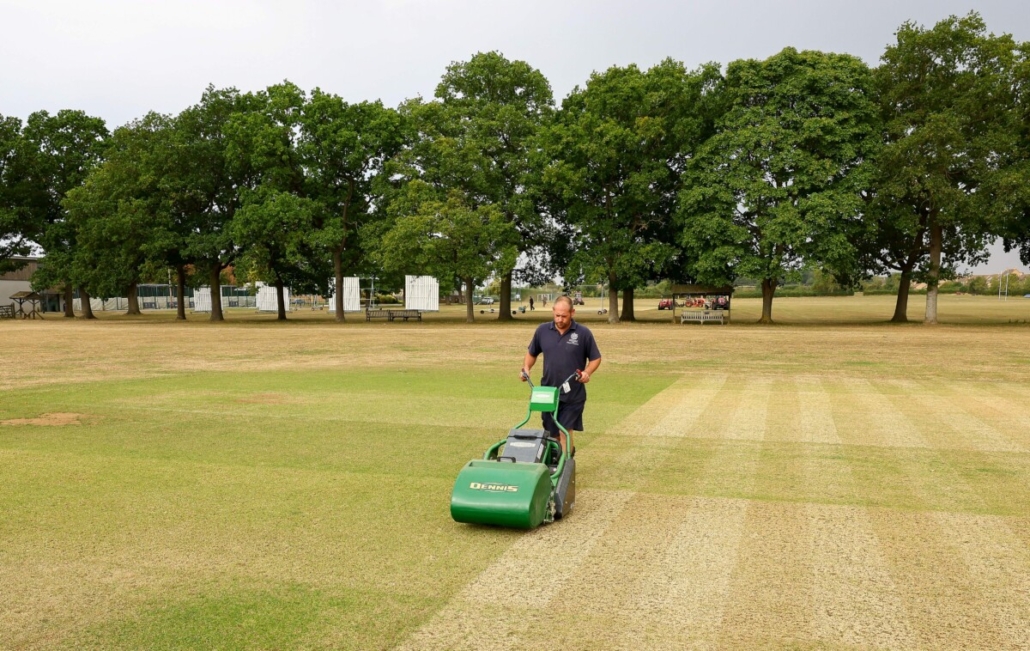
 It has been a season like no other at Oundle School. The grounds staff not only prepared surfaces for the school’s extensive fixture list, but also supported Northants Cricket Academy, a testament to the quality and reputation of the school’s facilities.
How Oundle School’s Grounds Team Met Record Demands

How Oundle School’s Grounds Team Met Record Demands

The workload placed on the team has been immense:

  • 257 cricket matches hosted,
  • 60 pitches prepared across eight squares,
  • plus ongoing upkeep of 11 rugby and football pitches.

These achievements came against the backdrop of one of the most challenging starts to the year for grounds professionals nationwide. The first half of 2025 was marked by prolonged dry spells, minimal rainfall and increased pressure on irrigation resources. Across the sector, grounds teams have reported increased difficulty in maintaining turf quality under these conditions, with fixture demands often compounding the pressure.

To help meet these challenges, the Oundle team reviewed their equipment and invested in a new battery-powered mower to support both performance and sustainability.

For Sam Wyles, who has been part of the grounds team for over a decade, the season highlighted just how important reliable and versatile machinery was in coping with demand.

“I’ve been here for 10 years and we’ve always had a lot to manage, but with 257 matches this summer, it was on another level. We knew early on we needed a mower that could handle long days, give us flexibility and help us reduce the strain on the team. The ES-510 hasn’t disappointed.”

The decision to switch from petrol-powered equipment to a battery-powered mower was not made lightly. The team carried out research, spoke to colleagues at other schools and tested options. After a successful demonstration from Dennis’ sales manager, Jason Briggs, the school chose the ES-510.

“We did some research and found that the ES-510 had a really good battery life. We’ve had friends and colleagues in other schools that have used the machine and it came highly recommended; it hasn’t disappointed. It’s built to last and robust.”

For the team, the benefits quickly became clear: low noise, zero emissions, reduced HAVs and long-lasting battery power.

“We use a lot of petrol-powered machinery and we’re finding that we need to reduce HAVs wherever we can. So, we’ve moved to battery-powered equipment and this has not disappointed. The ES-510 doesn’t need much of a grip to hold onto it, so there’s less strain on your wrists and the reduced handle arm vibration levels have really been noticeable.”

Noise reduction has been another benefit in a busy school environment.

“Noise levels are an issue for us. The quieter machine has made it a lot easier. We can start a bit earlier without affecting anyone else around us.”

With zero emissions and a full day’s battery life, the mower supported the school’s sustainability ambitions as well as its practical needs.

“We’ve been using this mower to prep our cricket wickets. We used to use petrol equipment, but we found that we can get a full day’s running out of this with the batteries.”

Time was at a premium all season and versatility quickly became one of the mower’s standout strengths.

“The versatility of the ES-510 has made a real difference. We can quickly swap between cassettes, brushing wickets one moment, then switching back to a cylinder the next, which means we need fewer machines to do the same range of jobs. The ability to adjust the cylinder or the cutting height without tools is really easy and saves time. Importantly, we can set the walking speed and the clip rate separately and the machine automatically keeps the clip rate consistent even if the speed changes. That gives us a better, more uniform finish while ensuring everyone on the team can work at the same pace.”

Even with the packed schedule, standards were never allowed to slip. The built-in back-lapping feature in the controls allowed the team to keep the mower and grass in peak condition all through the season.

Grounds Manager Gary Peden reflected on the decision to invest:

“The school is deeply committed to becoming more environmentally friendly and sustainable. After chatting with Richard at Oakham School, who uses this particular model, we went for the Dennis ES-510. It has given us the confidence to maintain the highest standards across every cricket pitch and square while using electric power. Its battery performance, low noise and versatility have allowed the team to work more efficiently; it’s been a huge step forward for us.”

Looking back, Peden says the investment has given the team confidence to maintain the highest standards across every pitch, while also moving towards more sustainable working practices. For schools and clubs facing similar fixture pressures, he believes the lessons learned this season will be invaluable.

For the latest industry news visit turfmatters.co.uk/news

Get all of the big headlines, pictures, opinions and videos on stories that matter to you.

Follow us on Twitter and Instagram for fun, fresh and engaging content.

You can also find us on Facebook for more of your must-see news, features, videos and pictures from Turf Matters.