The ‘Point’ Picks Toro

The ‘Point’ Picks Toro: It’s out with the old and in with the new for the Old Loop, New Loop and Front Loop courses at Nefyn Golf Club. Toro was chosen for its power and green credentials by a course which bases its machinery choices solely on individual merit.

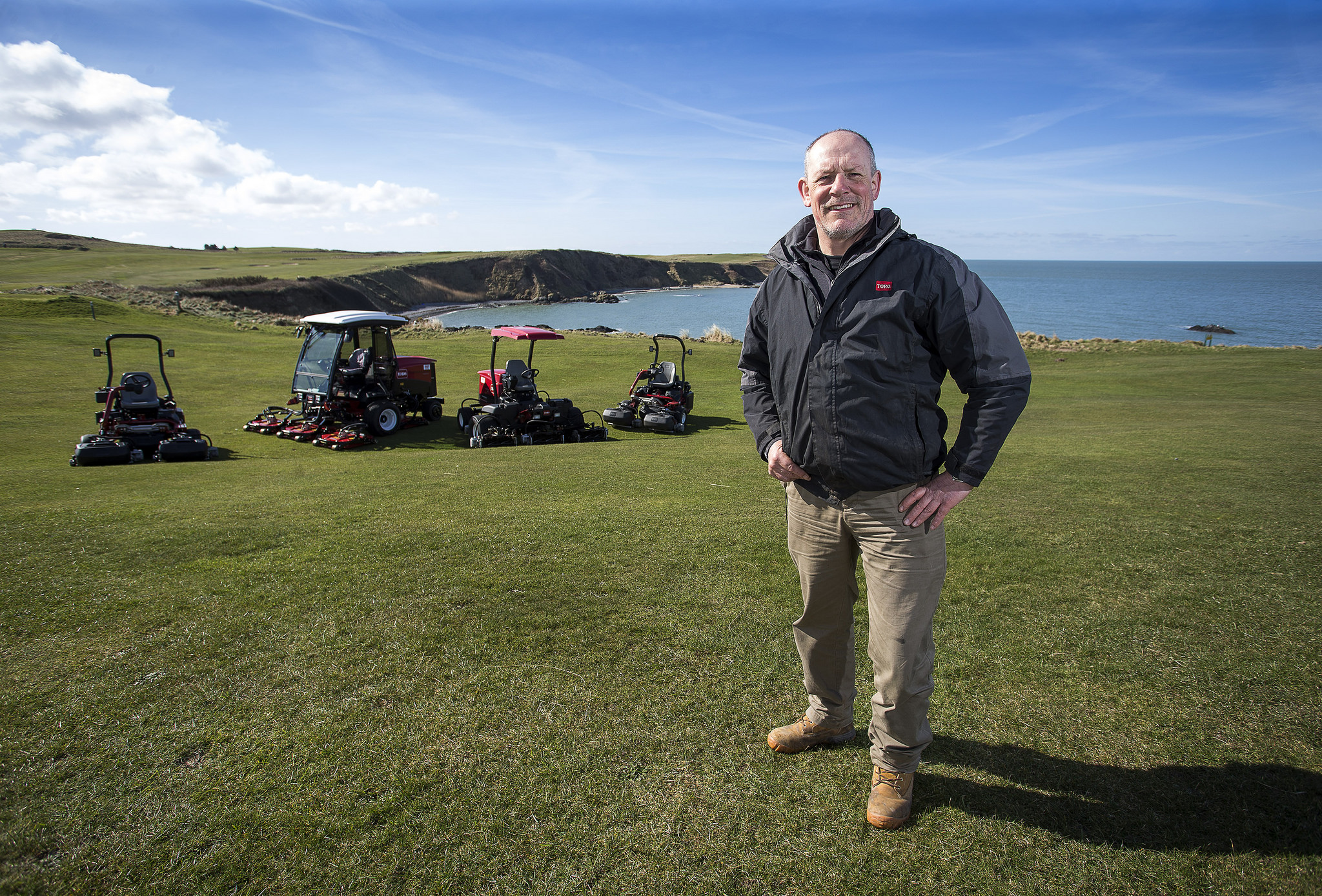
Bringing in a Toro Reelmaster 5010-H, a Groundmaster 4500-D and two Greensmaster TriFlex Hybrid 3420 mowers, head greenkeeper Richard Lloyd Jones explains what it is about these mowers that secured their place at the Championship club near Pwllheli in Wales.
The 'Point' Picks Toro

“We’re making a concerted effort to be more green. We’ve been running the risk of hydraulic leaks with the old machines, having had four or five over the last couple of years. Repairing the turf after one of those is time consuming and negates all the hard work that was put in to getting it to the standard it was. So, we’re eliminating that risk with Toro.

“We’ve got both ends of the spectrum covered with these two machines. The TriFlexes bring green precision to our greens mowing, while we can rely on the RM5010-H to deliver up to 40hp of green power to the fairways. We’re very pleased with the performance of these mowers so far, they’re coping with the size of the course and the demands we place on them with ease.”

The demands Richard refers to come from the course inhabiting over 200 acres and being exposed to the elements on the Welsh peninsular. This is a particular issue for the Old Loop course, the world-famous ‘Point’, so named for its situation on top of a high point of land jutting out into sea on which its nine holes are situated.

Frequent waves hit the rocks, splash the greens and the salt water scorches the grass. “The weather is definitely our biggest challenge,” says Richard. “We’re prone to being windswept and water damaged. In fact, this winter we had four greens lost due to sea water damage, so renovation takes up a lot of our time.”

It’s important then to have machines that can deal with the challenges, and as well as choosing Toro for its green credentials, Richard has also chosen the brand for its unadulterated power. As Richard says the Groundsmaster 4500-D is a ”big old beast of a machine! 200 acres doesn’t faze it.”

This is far from the first time Toro has been at Nefyn, but a five-year lease deal with another brand has come to an end meaning the club is making its machinery replacement choices on a case-by-case basis, each decision made purely on performance and merit.

Richard says: “Working with our local dealer, Major Owen, we make our choices based on what will bring the best results to the course, and we’re delighted to have Toro back at Nefyn.”

For more information, visit: reesinkturfcare.co.uk

For the latest industry news visit turfmatters.co.uk/news

Get all of the big headlines, pictures, opinions and videos on stories that matter to you.

Follow us on Twitter for fun, fresh and engaging content.

You can also find us on Facebook for more of your must-see news, features, videos and pictures from Turf Matters.

SISIS Flexicomb Perfect For UKC

SISIS Flexicomb Perfect For UKC: Lee Ballard, senior groundsperson at the University of Kent (UKC) in Canterbury, believes that his newly purchased SISIS Flexicomb is the perfect tool to help extend the life of one of the synthetic sports surfaces at the University.

Canterbury in Kent may well be known predominantly as the place of Thomas Becket’s murder at Canterbury Cathedral or for Geoffrey Chaucer’s 14th-century literary classic The Canterbury Tales, but it also boasts an internationally recognised university.

SISIS Flexicomb Perfect For UKC

Ranked in the top 10 in the UK in a national student survey, with over 5,000 students from different nationalities, the University of Kent has a reputation for academic excellence. It also has outstanding sports facilities, which includes two grass football pitches, two grass rugby pitches and synthetic sports surfaces.

Overseeing the maintenance of the sports pitches is Lee Ballard, who admits that one of the synthetic surfaces requires extra special attention due to its age and heavy usage.

“We’ve had one of the pitches for nearly 12 years now and that houses full-size football games, four five-a-side pitches and lacrosse games. It gets a lot of usage and is used from 5pm until 10pm seven days a week. You have the students who use it as well as local sports clubs and Gillingham FC’s academy teams.

“The pitch has had years of not having the best machinery to get deep enough to give it a good clean and we are trying to extend the life of the surface as much as we can,” he said.

The common misconception is that synthetic surfaces are maintenance free. Just like natural turf surfaces, synthetic surfaces require maintenance as soon as they are constructed if they are to perform to the standard expected of them. Regular brushing along with periodic aggressive brushing and maintenance is required to ensure that the playing surfaces achieve their full life expectancy, and to help Lee with this task he chose to purchase the SISIS Flexicomb.

“When I first started in this role my aim was to improve the synthetic surfaces. Previously we were using a machine which just had tines on it and it never seemed to do a very professional job. So, we started looking around and I saw an online video of the Flexicomb being used at Tottenham Hotspur. It looked great so I took all the details down, passed it further up the chain to say this was the machine we needed, and luckily there was money in the budget to purchase it.

“We obviously had a demonstration before we bought it but if I’m honest I knew that it was the tool we wanted because when I saw the video it just ticked all of the boxes.”

Designed primarily for use on synthetic surfaces, the Flexicomb ensures even distribution of infill materials and lifts the pile. The adjustable setting ensures the effect of a rake, but with the softness of a brush, reducing the risk of damage to the fibres. The bristle sections are replaceable and the Flexicomb is designed for a long working life with minimal maintenance.

SISIS Flexicomb Perfect For UKC

Furthermore, it can be used with SISIS Singleplay, Twinplay or Quadraplay mounting frames, which can all be connected to any tractor with 3 point linkage and utility trucks with suitable frames.

“We tend to use the Flexicomb three times a week depending on the maintenance schedule and make sure we give the surface a good brush after every ten hours of usage,” says Lee. “Sometimes we will double brush it both ways if time allows.

“It has so many good features – I like how easy it is to set-up and how simple it is to use. It does such a good job and leaves you with a great finish which is important because presentation is key. I also like how you can be slightly more aggressive on the ground and get in and move some of the crumb about and get rid of some of that compaction.

“The pitch is our front window so we try to look after it as much as possible and the more you put into it the more rewards you reap. The SISIS Flexicomb plays an integral part in helping us to achieve this.”

For further information or a no obligation demonstration, please contact SISIS on 01332 824 777 or visit www.sisis.com

For the latest industry news visit turfmatters.co.uk/news

Get all of the big headlines, pictures, opinions and videos on stories that matter to you.

Follow us on Twitter for fun, fresh and engaging content.

You can also find us on Facebook for more of your must-see news, features, videos and pictures from Turf Matters.

Cub Cadet’s EFI Engines

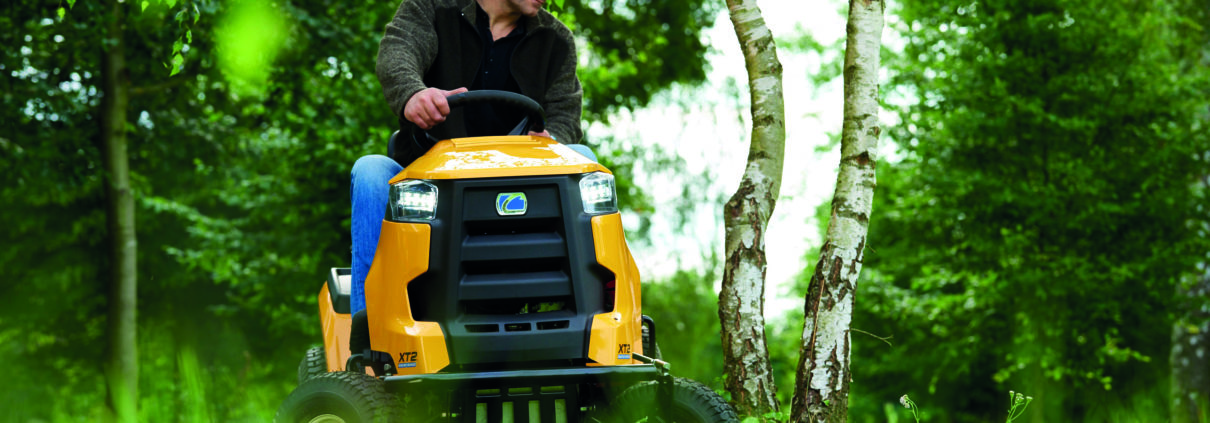
Cub Cadet’s EFI Engines: Cub Cadet’s new fuel-injected engine boasts serious strength, offering the kind of high-performance power you’d expect from Cub Cadet.

EFI uses up to 25% less fuel, which means fewer emissions and fewer fill-ups. Less time needs to be spent on maintenance as it has no carburettor and requires fewer oil changes.

Cub Cadet's EFI Engines

To become Cub Cadet certified, engines are evaluated using a rigorous process to ensure they have been built to uphold our standards of strength, high performance and premium quality. Going to extremes, Cub Cadet engines are field tested in the most challenging environments to ensure dependable all-temperature starting.

EFI FREQUENTLY ASKED QUESTIONS

WHAT IS EFI?

Electronic Fuel Injection (EFI) is a high-pressure fuel management system. Just like on today’s cars, EFI uses an onboard computer, injector nozzle, and multiple sensors to reliably deliver exactly the right amount of fuel to get the most performance and efficiency out of your engine. Cub Cadet EFI engine is an advanced electronically controlled “Closed Loop” system that uses real time feedback to sense the usage conditions and instantly optimize combustion to give you smooth running, and exceptional starting you can count on… no matter what.

HOW DO EFI ENGINES WORK?

EFI, or any Fuel Injection system, utilizes a special high-pressure fuel delivery nozzle to inject an ultra-fine mist of fuel into the engine. An electronic control unit uses sensors around the engine to deliver the precise amount of fuel the engine needs, improving response, efficiency and starting. Cub EFI adjusts the fuel metering on-the-fly to compensate for variations in load, speed, fuels, temps, and pressures to always feed your engine the perfect charge that it needs for maximum performance at any task.

DO EFI ENGINES REQUIRE LESS MAINTENANCE?

Yes. EFI systems produce cleaner combustion resulting in a cleaner engine. Clean engines can go longer between regular oil changes and required major maintenances. We do still recommend a fuel stabilizer for long term storage to make sure the fuel in the tank stays fresh and you’ll be ready to mow with a push of button next spring.

ARE EFI ENGINES EASIER TO START?

A major benefit of EFI systems is the greatly improved cold and hot starting performance. Even after a long period of no use, during Winter for example, the EFI engine is much more likely to start first time.

ARE EFI ENGINES MORE RESISTANT TO FUEL SYSTEM CORROSION AND “ETHANOL DAMAGE” SO OFTEN SEEN TODAY?

The fuel system is ethanol resistant and compatible with ethanol fuel blends.

For the latest industry news visit turfmatters.co.uk/news

Get all of the big headlines, pictures, opinions and videos on stories that matter to you.

Follow us on Twitter for fun, fresh and engaging content.

You can also find us on Facebook for more of your must-see news, features, videos and pictures from Turf Matters.

The Polaris RANGER Story

The Polaris RANGER Story: It’s been two decades since the RANGER® 6×6 vehicle was introduced and revolutionised the side-by-side category back in 1998. Mitchell Johnson, son of David Johnson – one of the founders of Polaris in the 1950s – was vital to the conception of the iconic machine and discusses how the RANGER® rode to market…

“When discussing the beginning of the RANGER®, we first have to think about the vehicle in the context of what Polaris was doing at that time. In the 1990s, the Sportsman ATVs were Polaris’ only Off-Road Vehicle and was selling well.”

The Polaris RANGER Story

Polaris’ reputation for being one of the fastest developing companies in the powersport industry held true, RANGER® went from initial development to production line in just two years.

“We had talked from time-to-time about making a side by side ATV for a driver and passenger. Every Friday we had a staff meeting in the morning and then in the afternoon, we’d go out and ride ORVs. We always took at least one 6×6 ATV to carry everything. We would try and ride around with one person sitting on each fender to see what it was like. One day, Edgar Hetteen [one of our founders] came to my office and said we should make a 6×6 in a side-by-side configuration, he loved the machine but wanted to ride beside his wife Hannah.”

Major decisions about the new model were all made as ‘gut calls’.

“Edgar mocked up side-by-side seating on a 6×6 in his workshop, we spent an hour or so sitting in it to see what it was like – should it have handlebars or a steering wheel? Should it be ride-on or ride-in? These are all things that are gut calls and we made using our experience. With brand new products like the RANGER®, you never know if you’re going to hit the bullseye with customers – the customers themselves don’t envision how the product will or can be used. Take the microwave for example, it hasn’t replaced the oven like the developers thought it would, but has instead created a new market.”

The key in developing the RANGER® in Mitchell’s opinion was to keep the team and investment small.

“I’m not sitting here saying that we knew it was going to be a success but we knew we had to get something out there. If we had identified a need, then we needed to find out. I worked with Edgar, Chuck Baxter – who was the VP of engineering – and James Bergman at BEAMCO in Alvardo, MN, to see if he would do the initial concept work. The idea was to keep investment small, so that if we didn’t hit the bulls eye, we could adjust the sights easily to get on closer to the target centre.”

During early conversations, the main characteristics that the new machine had to have were fairly clear.

“Good speed, great ride and handling with excellent off-road capability, plus a greater payload than any of the utility haulers on the market were all attributes we wanted the vehicle to have. Most of all, it had to be a lot of fun to drive and ride like the already popular Sportsman line.”

“The initial prototype was received well by management. And the first production made a small profit in the first year. We also achieved ‘off-road’ status for the vehicle – which was essential.”

The RANGER® is testament to the Polaris culture – innovation and development, moving with the times and trusting staff to make decisions. Even the name of the new model was helped decided by employees.

“We’d been playing around with names. One of the early Polaris products was a RANGER® snowmobile, when this model was discontinued, so was the name – which I always thought was a shame and I wanted to bring it back. We went out to the employees to ask them to think of a name and said we’d give $100 if their name was chosen. Mike Trihey and Donny Whiteman submitted RANGER® name and were given $100 each.

“The RANGER® name represents the category – it’s fun to ride and that’s one of the most important elements for us. That’s the history of Polaris throughout the years, people realise how much fun they are to ride and the volume grows, plus the RANGER® does a lot of work.

“The RANGER® was a team effort. This stuff doesn’t happen without the people on the team – contributing, listening and pushing, we don’t know for sure what is wrong or right – that’s what has made this successful. The culture at Polaris is one full of passion and an overwhelming desire for the products and people to succeed.”

Polaris celebrated rolling the one-millionth RANGER® machine off the production line in 2017 and 2018 marks two decades since the utility vehicle was introduced to the Polaris line-up. Forming a key part of the Polaris product line, the RANGER® is used all over the globe for a variety of tasks – with the RANGER® Diesel and RANGER® 570 variants being international best sellers.

The RANGER® legacy gets stronger every year, with the RANGER® XP 1000, the latest addition 2018, setting a new industry standard and boasting over one hundred user-inspired improvements. The model has class-leading power (82hp) and torque (61lb-ft), industry-leading towing (over 1100 Kg) and ground clearance (330mm) – making it the hardest working, smoothest riding SXS built.

For the latest industry news visit turfmatters.co.uk/news

Get all of the big headlines, pictures, opinions and videos on stories that matter to you.

Follow us on Twitter for fun, fresh and engaging content.

You can also find us on Facebook for more of your must-see news, features, videos and pictures from Turf Matters.
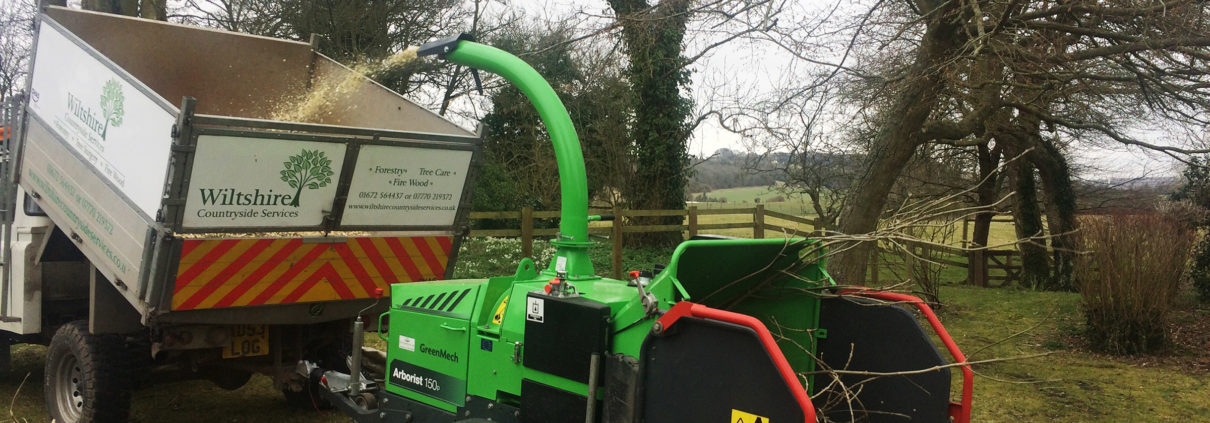
Arb150 Ticks All The Boxes

Arb150 Ticks All The Boxes: Wiltshire Countryside Services have become the latest company to purchase an Arb 150p from GreenMech. For Owner Adam Lonsdale, his decision was made easier not only by the build quality and back-up service that GreenMech provides compared to the alternatives available in the current market, but also by the superior performance of this petrol version.

Founded in 2014, Wiltshire Countryside Services provide a variety of arboricultural and forestry services to domestic and commercial customers alike. “We were getting more and more problems with our previous chipper and ended up spending out more than what the machine was worth!” explains Adam. When his local dealer GA Groundcare took on the GreenMech franchise last year, Adam went with his wish-list and was excited to see what was available. “I told Ashley at GA Groundcare what I wanted, and the budget, and was pleased to see that the GreenMech machines satisfied more of my needs and wants than other manufacturers could.”

Arb150 Ticks All The Boxes

“We’d had a demo of both the diesel and petrol Arborist 130 machines, when Ashley mentioned that a 38hp petrol model was then about to launch. After seeing the Arborist 150p at the Arb Show I knew that was the one I wanted and bought it without even having a demo.” In addition to the significant cost saving over the diesel equivalent, Adam was particularly impressed with the output performance achieved whilst still keeping the unit under 750kg. “The sub 750kg weight means my colleague or anyone else can tow it without a special license. Also, because the majority of our work is domestic tree surgery, it can be towed by a Land Rover, quadbike or alternative right to the spot where it’s required, leaving a minimal footprint on lawns and gardens.”

The superior build quality was another box ticked for Adam. “Some chippers we’ve looked at have fibreglass bonnets – in this industry things get bumped and dropped and a fibreglass bonnet is asking for trouble. The GreenMech machines seem to consist of more strong, hardwearing metal components. It’s easy to use, simple to maintain and all backed up with reliable back up support from GreenMech and their dealer network.”

For the latest industry news visit turfmatters.co.uk/news

Get all of the big headlines, pictures, opinions and videos on stories that matter to you.

Follow us on Twitter for fun, fresh and engaging content.

You can also find us on Facebook for more of your must-see news, features, videos and pictures from Turf Matters.