Transforming Repton School’s Grounds with MM Seed

Transforming Repton School’s Grounds with MM Seed: Repton School in Derbyshire is a well-known institution which mixes tradition with new ideas.

Behind the scenes, Andrew Butler, the Head of Grounds and Gardens, is the man responsible for ensuring the grounds are not just aesthetically pleasing but also resilient to the rigours of year-round sporting activities. That’s where MM Seed comes in.
Transforming Repton School's Grounds with MM Seed

Transforming Repton School’s Grounds with MM Seed

After working at Repton for twelve years Andrew became the Head of Grounds and Gardens in 2022. Upon assuming his role, he faced a daunting challenge: the need for a grass seed capable of withstanding the constant onslaught of sporting activities across Repton’s extensive grounds.

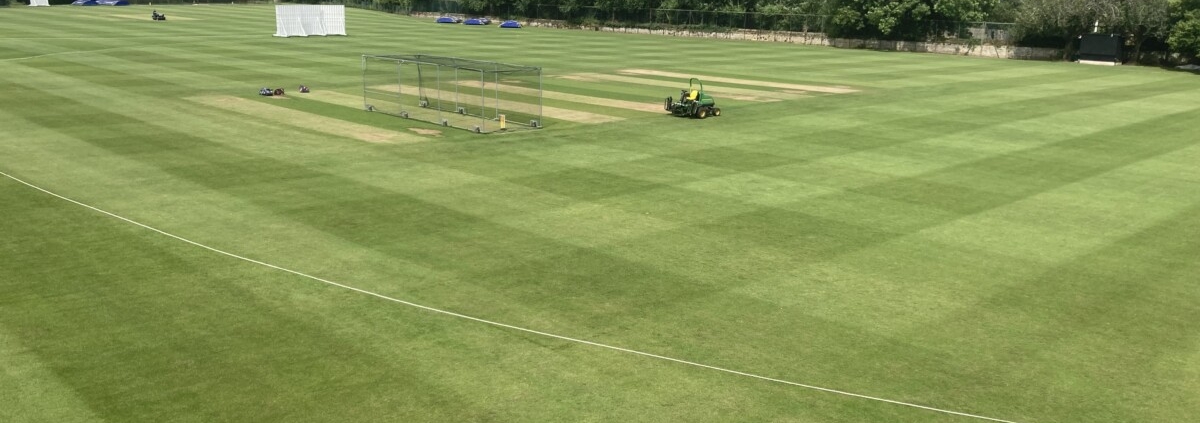
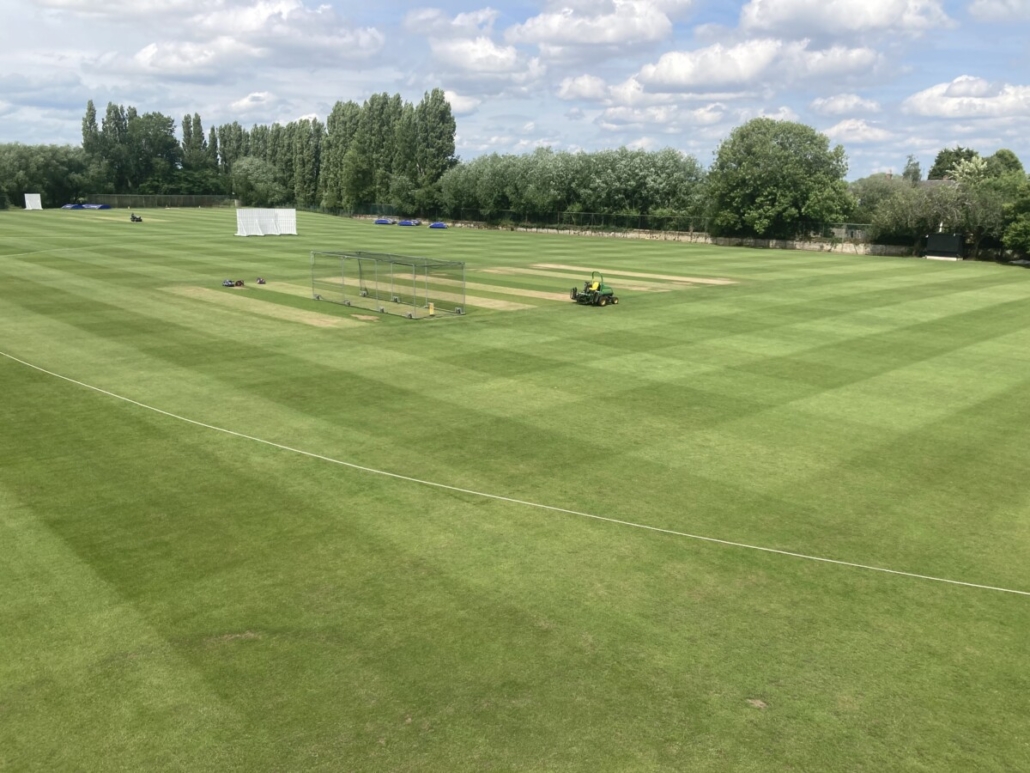
Repton’s vast expanse, spanning over 100 acres, hosts a variety of sporting fields, including football pitches, rugby pitches, hockey pitches, athletic tracks, and cricket squares, each demanding its own maintenance. Additionally, the school boasts formal gardens and orchards, adding further complexity.

Reflecting on this challenge, Andrew says, “We are on such a heavy clay-based site, and with it being a multi-sport site, it is pretty much used 12 months a year…so therefore we needed a seed with a lot of durability.”

Enter MM Seed, a name synonymous with excellence in the UK sports turf and amenity industries.

“I didn’t feel that the seed which was being previously used was giving us the durability we needed,” says Andrew. “I started looking at different options, did a lot of research and we gave MM Seed a trial on our first-team football pitch. It just showed us what we were missing. Firstly, the take-up was fantastic, secondly, the durability of it was great, and the fact that it got growing well in the heavy clay-based soils we have here was very impressive.”

Andrew’s decision to switch to MM Seed, particularly utilising MM Tetra Sport and MM50, proved to be a pivotal moment.

MM Tetra Sport, a versatile blend of Diploid and Tetraploid Ryegrass, emerged as the solution for Repton’s winter pitches and cricket outfield. Its ability to improve sward composition and recover from scarring perfectly complemented the school’s diverse sporting calendar.

The inclusion of Tetraploids also improved drought resistance during the summer months which is important on the cricket outfields. Meanwhile, MM50, with its fast germination, establishment and ability to withstand heavy wear plus its ability to recover quickly after use found its role on Repton’s cricket squares, ensuring optimal playing conditions season after season.

Transforming Repton School's Grounds with MM Seed

Transforming Repton School’s Grounds with MM Seed

Andrew elaborates further on the durability of MM Seed, “With us going from different sports throughout the year, it means we have to give the grass different heights of cut – so when you go from the height of cut on a rugby pitch down to a football pitch, down to a cricket pitch and then back up again, you are putting a lot of stress on it, but the seed copes incredibly well.”

What sets MM Seed apart is not just its performance on the field but also its commitment to innovation. Treated with HEADSTART® GOLD, a unique seaweed-based seed treatment, MM Seed ensures rapid and even germination, laying the foundation for a resilient and vibrant turf. Andrew confirms this, stating, “I think it is down to HeadStart in the mixture which gives it that extra boost.”

Transitioning to a new seed variety is not without its challenges, yet Andrew found support in Agrovista Amenity, a trusted distributor of MM Seed. “Agrovista Amenity are great – I know I can ring up and have a pallet of seed here in 48 hours,” he remarks, underlining the importance of reliable partnerships. He also praised the advice he received from Matt Gresty, MM Sales and Marketing Manager, “Matt came in and explained everything about the seed. I have been carrying out exactly what he said to do, and the results have been superb ever since.”

The results do indeed speak for themselves. Repton’s grounds now boast not only durability but also supreme aesthetics. “The definition of stripe the seed gives us is first-class,” Andrew proudly states.

Andrew’s success story highlights the importance of strategic decision-making in the turf management industry. With MM Seed, he has improved the quality of the grounds, and will continue to do so for years to come.

For further information, please contact MM Sports Seed on 01386 791102 or visit the company’s website www.mm-seeds.co.uk.

You can also follow the company on Twitter: @MM_Seed.

For the latest industry news visit turfmatters.co.uk/news

Get all of the big headlines, pictures, opinions and videos on stories that matter to you.

Follow us on Twitter and Instagram for fun, fresh and engaging content.

You can also find us on Facebook for more of your must-see news, features, videos and pictures from Turf Matters.
Pleasington Golf Club’s transformation

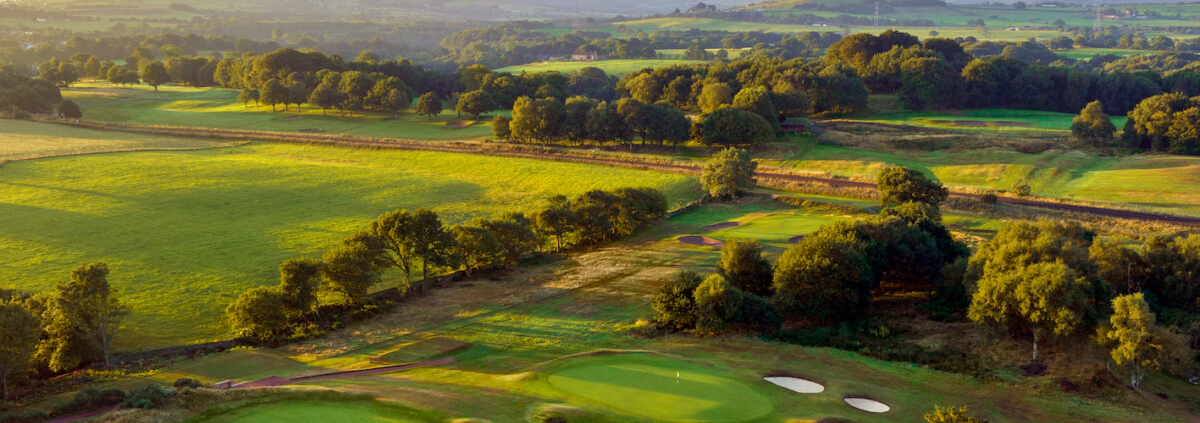
Pleasington Golf Club’s transformation: Pleasington Golf Club, Lancashire, has revealed the latest results of its £1 million course transformation.

Rated the No.1 heathland course in Lancashire, the 12-time Open qualifying venue is upgrading its course as part of a long-term ‘Good to Great’ plan.

Pleasington Golf Club’s transformation

Pleasington Golf Club’s transformation

Just an hour from Manchester, Liverpool and Leeds, the club is already a popular destination with players heading to three nearby Open links, as well as golf travellers stopping off on route to and from Scotland via the M6.

Pleasington Golf Club is aiming to secure its position as one of the finest courses in the UK.

“This has been an important and exciting journey for the club,” said General Manager, Mark Bleasdale. “While the course has always been recognised as an outstanding layout, hosting Open qualifying and prestigious amateur events including the Pleasington Putter for elite amateur women, we wanted to restore its natural character and return it to its very best.

“Now, after major works over the past three winters, including the regeneration of heathland, the course has been transformed.”

The course upgrade has included:

  • Making the course visually stronger with new and renovated bunkers
  • Creating firmer, faster greens with enhanced drainage and disease resilience
  • Strategic design changes making the course fairer to higher handicap players and more challenging for low handicappers and elite golfers.

The work has been overseen by respected golf course architect Ken Moodie of Creative Golf Design.

The project is part of the club’s ‘Good to Great’ plan, which aims to make the venue among the best golf courses in the UK, as well as being an inclusive club at the heart of the community, encouraging golf for all and restoring the landscape’s natural environment.

Visitor bookings are now open for the 2024 season, as well as a series of open competitions and a new Sunday Driver stay-and-play golf package, with accommodation at The Dunkenhalgh Hotel & Spa.

For the latest industry news visit turfmatters.co.uk/news

Get all of the big headlines, pictures, opinions and videos on stories that matter to you.

Follow us on Twitter and Instagram for fun, fresh and engaging content.

You can also find us on Facebook for more of your must-see news, features, videos and pictures from Turf Matters.

GKB launch new Combislit aerator

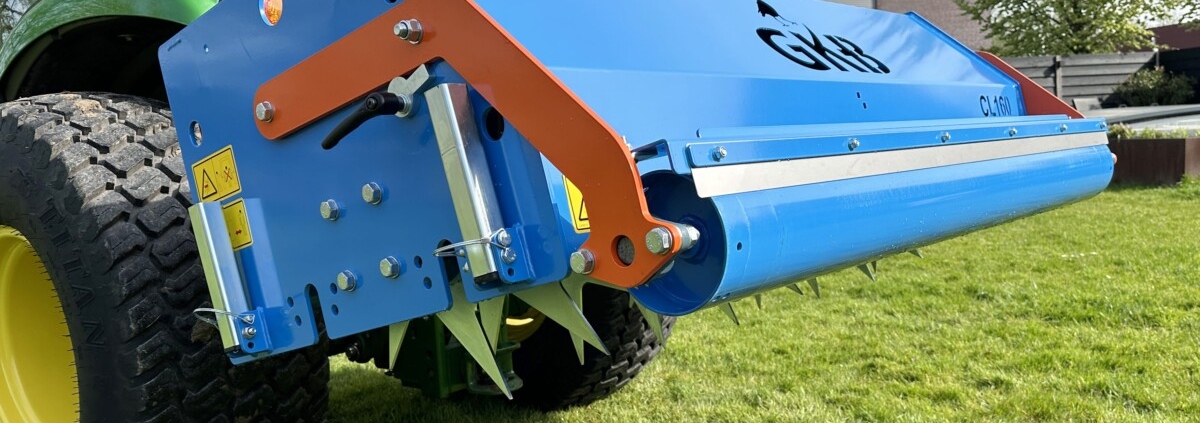
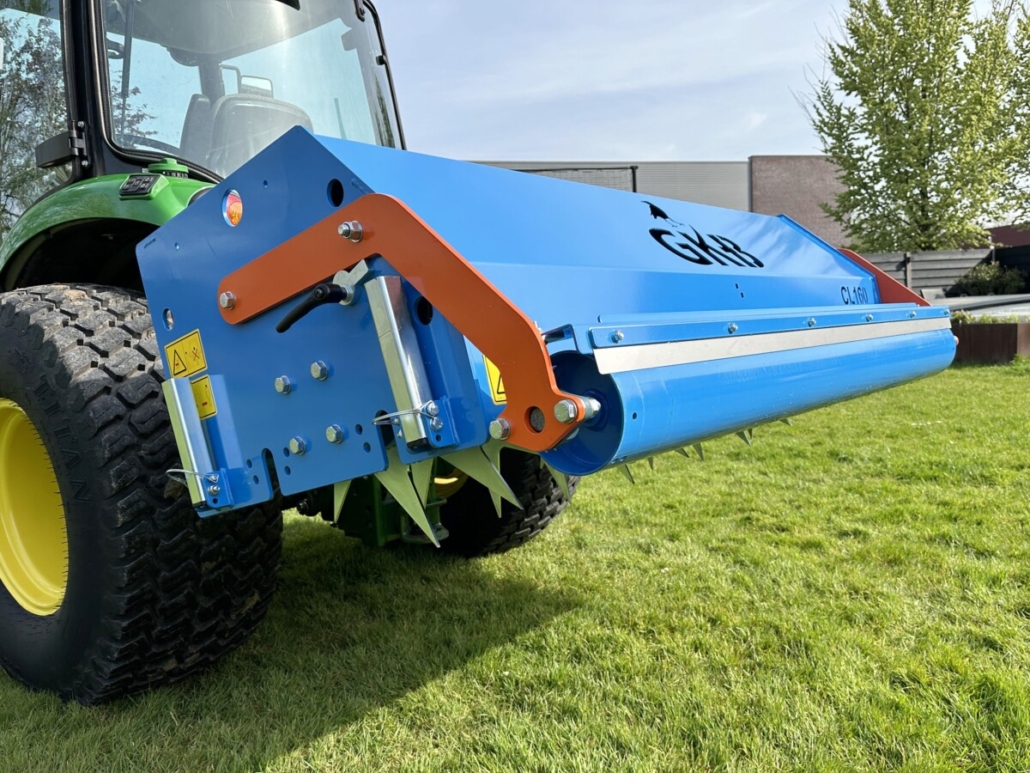
GKB launch new Combislit aerator: Recognising that aeration is at the forefront of every turf professional’s maintenance plans, GKB Machines have announced the launch of the Combislit – a new, fast and effective solution to low-disruption aeration.

Available in 1.6m and 2.0m working widths, the Combislit uses GKB’s unique Evolvente® blades to spike and open all types of natural and hybrid surface to depths of up to 15cm (6”).

GKB launch new Combislit aerator

GKB launch new Combislit aerator

The GKB Combislit allows for effective aeration of the top layer with minimal friction and disruption, ensuring optimal oxygen and moisture movement and linking up with deeper decompaction work conducted throughout the season. The successor to the popular GKB Topair, the Combislit combines solid and robust design with simplicity of operation making it a go-to for regular passes on all type of sports and fine turf surfaces including fairways and greens.

GKB’s Evolvente® blades are designed to pierce the ground without disturbing or prying the topsoil. The result is a level surface, boosted with the many, well-documented benefits of regular aeration and able to be back in play almost immediately.

The Combislit’s frame ensures sufficient weight to penetrate compacted upper layers, with the option to add additional weight to the top of the unit if required. A rear-mounted pressure roller can also be specified to deliver extra precision to the end result. In addition, the blades can be swapped for cutting discs for linear aeration and non-chemical weed control.

Commenting on its introduction, GKB UK Operations Manager Tom Shinkins said, “We are all too aware of the prolonged wet conditions facilities around the country have had to endure, which just serves to reiterate why regular aeration is so important. When ground conditions rule out heavier or more intensive methods, GKB now have a fast and effective tool to keeping the profile open, bringing benefit to players and plant health alike. We are excited to add this to our portfolio, with stock now available via our UK dealer network.”

For the latest industry news visit turfmatters.co.uk/news

Get all of the big headlines, pictures, opinions and videos on stories that matter to you.

Follow us on Twitter and Instagram for fun, fresh and engaging content.

You can also find us on Facebook for more of your must-see news, features, videos and pictures from Turf Matters.
STIHL GB unveils Contra House

STIHL GB unveils Contra House: STIHL GB proudly announces the grand opening of its new, purpose-built head office and state-of-the-art distribution centre named Contra House, ushering in a new chapter of innovation and service excellence for the business. 

Dr. Nikolas Stihl, Chairman of the Supervisory Board of the STIHL Group, presided over the opening ceremony, marking a significant milestone in the company’s long history. Named Contra House in homage to the iconic STIHL Contra chainsaw invented by STIHL founder Andreas Stihl, this expansive 11,500m2 facility reflects STIHL GB’s dedication to providing unparalleled support to its dealers and end users.

STIHL GB unveils Contra House

STIHL GB unveils Contra House

Home to more than 100 staff, Contra House is meticulously designed to enhance operational efficiency, customer service, and employee well-being. The new site features best-in-class dealer training facilities and a studio, collaborative workspaces, an on-site restaurant, and a fully-fitted technical workshop, ensuring seamless support for STIHL GB’s 700-strong Approved Dealer network.

At the heart of the operation lies the 9,000m2 distribution centre, which boasts next-generation picking and storage systems. This consolidation of logistics onto one site enables STIHL GB to streamline operations, resulting in a speedier and more efficient delivery service.

Kay Green, Managing Director of STIHL GB, said: “The unveiling of Contra House symbolises a significant step forward in our commitment to product innovation and providing exceptional service to our customers and dealer network. We are thrilled to unveil the new facility, which not only embodies our rich heritage but also stands as a testament to our vision for the future.”

Contra House distinguishes itself not only through its modern design and functionality but also its dedication to sustainability. The facility has proudly achieved BREEAM Certification, with features such as photovoltaic solar panels covering two-thirds of its roof area and 21 electric vehicle charging points, aligning with STIHL GB’s commitment to responsible business practices.

The official opening event, attended by more than 160 guests, also outlined STIHL GB’s partnership with Perennial, the UK’s only charity dedicated to helping people in horticulture. The STIHL team will volunteer in a wide range of fundraising activities to help the charity provide free and confidential advice, information and support to people working in, or retired from, horticulture and their families.

For more information, please visit www.stihl.co.uk.

For the latest industry news visit turfmatters.co.uk/news

Get all of the big headlines, pictures, opinions and videos on stories that matter to you.

Follow us on Twitter and Instagram for fun, fresh and engaging content.

You can also find us on Facebook for more of your must-see news, features, videos and pictures from Turf Matters.
No Mow May? Or mix up the monocrop lawn?

No Mow May? Or mix up the monocrop lawn?: The popularity of the environmental movement ‘No Mow May’ is growing like a damp lawn in the summer sun.

According to organisers Plantlife, the annual movement is aimed at providing a feast for pollinators, tackling pollution, reducing urban heat extremes, and sequestering atmospheric carbon in the soil.

No Mow May? Or mix up the monocrop lawn?

No Mow May? Or mix up the monocrop lawn?

As well as those vital pollinators, the campaign attracts its fair share of supporters, celebrity and otherwise.

Chris Packham recently took to social media to encourage his followers to buy his No Mow May t-shirts, and councils the length and breadth of Britain are clamouring to highlight their involvement with the initiative to bolster their environmental credentials with an easy win.

But does the annual campaign actually do any good for the environment and encourage an increase in pollinator numbers? Or is it just another example of greenwashing, something that makes people think they are doing good but in reality, has little real impact?

What’s in a lawn?

As someone who has specialised in growing turf for almost 40 years, grass is something of an obsession for me.

What I have learned in that time is that just letting a lawn grow out for a few weeks in spring rarely, if ever, leads to the ‘wildflower’ effect Plantlife seems to suggest in the images on its website.

So, what actually happens if you don’t cut your grass during May? The answer to this depends largely on what’s in your lawn to begin with.

If it’s been there a very long time and has not been treated to remove ‘weeds’, there is a chance that other species will emerge as a result of reduced mowing, leading to an increase in biodiversity in your lawn.

This, in turn, may well increase the number of insects that visit your garden during May, including those all-important pollinators.

However, even if this is the case, do not expect the emergence of a bright, multi-coloured, wildflower meadow effect, as so much of the marketing material appears to imply.

A few dandelions and daisies might come through, adding a welcome splash of colour, as well as some clovers, but anything beyond this is unlikely to materialise simply by leaving your grass alone.

This scenario also doesn’t represent the majority of lawns in the UK. Most are established by laying a modern cultivated turf that contains a dense mixture of dwarf perennial ryegrasses and fescues. Left to grow out, they simply get longer and stragglier while trying to put up seed heads.

Not a pretty sight and no biodiversity increase at all. After all, these turf mixtures are designed to be mown regularly and look neat and pristine with perfect stripes, not to increase insect numbers.

Raising awareness?

Of course, many might argue that despite creating few tangible benefits for wildlife, No Mow May drives awareness of biodiversity loss and that has to be a good thing.

Well, perhaps, but by positioning it as the solution, it may well do the opposite of what it is trying to achieve.

After all, those taking part will get to the end of May thinking they have done their bit for wildlife when in fact nothing significant has been achieved. Worse still, they then cut the lawn, immediately undoing any benefits that were achieved.

Improve biodiversity by improving biodiversity

So, if it’s time to say no to No Mow May, what can people do to improve biodiversity in their gardens and provide a home for wildlife?

The answer is in the question. If you want to increase the variety of creatures attracted to your garden, start by increasing the variety of plants in your garden.

Use the margins of your lawn to produce a full wildflower effect, which can be achieved via a wildflower turf or by sowing wildflower seeds. Or, for those who want to go a step further, replacing your lawn with a species-rich turf that includes a blend of hardy grasses and wildflowers to create a truly biodiverse area.

Not only will this be great for pollinators, but it will still stand up to the daily rigours of being walked on and having children ride bikes and play on it.

Time to mix up the monocrop lawn?

So, while no more No Mow May might be a good first step, perhaps a better one would be to mix up the monocrop lawn and replace parts of it with a richer variety of species. You can still have your strips, but giving over part of your garden to an area rich in plants will attract pollinators throughout the whole of the summer.

If everyone with a garden were to do this, perhaps we might truly start to reverse the worsening biodiversity crisis and turn our outdoor spaces into the wildlife havens they have every potential to be.

But that will never be achieved within the tight confines of a single month.

For the latest industry news visit turfmatters.co.uk/news

Get all of the big headlines, pictures, opinions and videos on stories that matter to you.

Follow us on Twitter and Instagram for fun, fresh and engaging content.

You can also find us on Facebook for more of your must-see news, features, videos and pictures from Turf Matters.