
RHS disease ranking highlights top 10 gardening problems

RHS disease ranking highlights top 10 gardening problems: The Royal Horticultural Society (RHS) has published its annual disease ranking, revealing the top ten problems for gardeners in 2023.

Damp conditions in spring and summer were the driving influence in the prevalence of certain diseases, with the following four new entrants to the top ten list: blossom wilt of fruit trees, pocket plum, tulip fire and slime flux. Fruit trees continued to be under threat from disease, with apples, pears, and Prunus among the top five hosts and collectively resulting in over 1,000 enquiries to the RHS advisory service, a 50% increase on the previous year.

RHS disease ranking highlights top 10 gardening problems

RHS disease ranking highlights top 10 gardening problems

The top diseases for 2023 are:

1. Honey fungus
2. Apple and pear scab
3. Rose black spot
4. Pear rust
5. = Blossom wilt of fruit trees
= Bacterial leaf spot and canker of Prunus
7. Phytophthora root rots
8. Pocket plum – Taphrina pruni
9. Tulip fire
10. Slime flux

Wet weather last spring provided perfect conditions for tulip fire – which produces brown spots and twisted, withered leaves – to take hold, seeing the disease make a return to the top 10 for the first time in several years. The damp spring conditions are also likely to blame for high cases of pocket plum, which causes elongated, hollow fruits with no stone on plums and damsons, as well as some ornamental Prunus, rendering the fruit inedible.

Slime flux, which affects a wide range of trees and shrubs, was another new entrant to the list. It is thought that the bacteria colonises trees via their roots, so the increase in cases may be a result of the wet winter in 2022/ 2023 and associated waterlogged soils. In addition, there was a rise in reports of rose black spot and pear rust, which can both likely be attributed to the warm and wet weather conditions during the summer.

Honey fungus topped the list for the 28th year running, having held the top spot since the list was first published in 1995. The fungus has a large host range of more than 140 garden plants, with the most common hosts in 2023 being privet, rose and viburnum, and results in dramatic symptoms, including death, cracked and bleeding bark and failure to flower.

To minimise plant disease this year gardeners are advised to apply mulch to improve drainage, while ground that has been laid sodden should be lightly pricked with a fork and spread with an organic mulch such as well-rotted manure, so plants grow with improved health and disease is less likely. Now is also a good time to prune out any diseased and damaged material before it can spread spores when the temperature is warmer.

Liz Beal, RHS Plant Pathologist, said: “Unusually wet weather in 2023 had a significant effect on plant health across the UK, with the prevalence of tulip fire and pocket plum demonstrating the impact of prolonged damp conditions. Following the extreme drought of the previous year, many gardeners are left wondering how to prepare for unpredictable weather patterns. Understanding the conditions of your garden is key in deciding which plants will thrive where; the right plant in the right place will always have a better chance of fighting off infection. Additionally, gardeners can help combat many of the most common diseases in our ranking by practising good hygiene, keeping tools clean and removing – and safely disposing of – diseased plant material from their gardens.”

The RHS Plant Health team uses the disease ranking to inform their research and advice. Current research at RHS Wisley’s Hilltop: Home of Gardening Science includes investigating the effective management of Phytophthora in gardens, examination of different methods for managing rose black spot and characterising the dispersal mechanisms and variation of honey fungus populations.

RHS members get free access to the charity’s Gardening Advice Service, available by phone or email. Find out more about becoming a member at: www.rhs.org.uk/join

RHS advice pages are available for everyone, for further information, visit: www.rhs.org.uk/advice

For the latest industry news visit turfmatters.co.uk/news

Get all of the big headlines, pictures, opinions and videos on stories that matter to you.

Follow us on Twitter and Instagram for fun, fresh and engaging content.

You can also find us on Facebook for more of your must-see news, features, videos and pictures from Turf Matters.

GreenMech welcomes PS Marsden to network

GreenMech welcomes PS Marsden to network: GreenMech are delighted to announce the addition of PS Marsden (Lawnmower Services) Ltd to their nationwide dealer network – appointed as sales, service and support partners for the counties of Nottinghamshire, Leicestershire, Derbyshire and the borders of East Staffordshire. 

Effective immediately, PS Marsden (Lawnmower Services) Ltd will be adding the GreenMech range of towed, tracked and tractor-mounted woodchippers to their already extensive portfolio of Groundcare and arboricultural machinery. An established dealer of over 45 years, their Nottingham depot is home to a number of well-respected and recognised franchises including Toro, Husqvarna and Kioti Tractors.

GreenMech welcomes PS Marsden to network

GreenMech welcomes PS Marsden to network

Commenting on their appointment, Iain Marsden, Director of PS Marsden (Lawnmower Services) Ltd said, “PSM are excited to be working with the team at GreenMech. They have a proven product range and we look forward to delivering sales, service and spares to new and existing customers across our area.“

“We are delighted be adding the knowledge and experience of the PS Marsden team to our network of nationwide experts” adds Martin Lucas, GreenMech Sales Director. “With a bustling arb offering already in their showroom we know that our chipper range, and customers, will both be in safe hands!”

For the latest industry news visit turfmatters.co.uk/news

Get all of the big headlines, pictures, opinions and videos on stories that matter to you.

Follow us on Twitter and Instagram for fun, fresh and engaging content.

You can also find us on Facebook for more of your must-see news, features, videos and pictures from Turf Matters.

Advancing Golf Course Management

Advancing Golf Course Management: An educational event, organised by ICL and Syngenta, brought together over 50 greenkeepers from seven different counties for a day filled with insightful presentations and valuable networking opportunities at Burnham and Berrow Golf Club in Somerset.

Liam Rowlands, the ICL Technical Area Sales Manager in the southwest and the driving force behind the event, emphasised the event’s core objective: to educate greenkeepers, facilitate knowledge sharing, and promote professional growth within the turf industry.

Advancing Golf Course Management

Advancing Golf Course Management

The event featured presentations by Liam, Henry Bechelet, ICL Technical Manager, and Sean Loakes, Technical Manager for Syngenta.

Henry shared his extensive expertise in agronomy, focusing on strategies to improve sward species progression in golf greens through ‘The Disturbance Theory’, alongside the importance of water management techniques.

Sean addressed the challenges of controlling Dollar spot, particularly prevalent in the southwest, and discussed disease management strategies and programmes. He highlighted the importance of understanding regional challenges and tailoring solutions through ongoing trials and development.

Attendees, such as Liam Pigden, Deputy Course Manager at Burnham and Berrow, and Richard Ponsford, Course Manager at Clevedon Golf Club, echoed the sentiment that education is the cornerstone of professional development in turf management. Liam noted, “The water management presentation was very interesting, and it was great to see the data and the trials rather than us just putting products on the course and assuming they are going to work. Education is key.”

Richard added, “I’ve come away with more ideas on how to deal with Dollar Spot, and I’ll be looking at a couple of greens a bit differently in terms of moisture management. No matter what line of work you are in, education is useful because the day you stand still is the day you get left behind. It’s been a fascinating event.”

Eddie Cambell, Head Greenkeeper at Ogbourne Downs Golf Club, found the event an excellent opportunity to stay abreast of industry advancements and connect with fellow greenkeepers facing similar challenges. The discussions on water management and the prevalence of Dollar Spot were particularly beneficial, offering insights into proactive strategies for turf maintenance.

This insightful education day exemplifies a commitment to advancing turf management practices through knowledge sharing, networking, and ongoing research. By providing a forum for industry professionals to exchange ideas and stay informed, events like these play a vital role in shaping the future of turf management, ensuring that the industry continues to evolve and adapt to meet emerging challenges.

Please contact ICL on 01473 237100 or visit www.icl-growingsolutions.uk and icl-growingsolutions.ie if you are in Ireland.

For more news and insightful views, you can follow ICL on Twitter @ICL_Turf

For the latest industry news visit turfmatters.co.uk/news

Get all of the big headlines, pictures, opinions and videos on stories that matter to you.

Follow us on Twitter and Instagram for fun, fresh and engaging content.

You can also find us on Facebook for more of your must-see news, features, videos and pictures from Turf Matters.

Diligent synthetic regimes key to mitigating microplastics concerns

Diligent synthetic regimes key to mitigating microplastics concerns: Users of synthetic turf are being encouraged to show a much greater commitment to ongoing maintenance requirements to enable both the sports and landscaping sectors to mitigate concerns about microplastic contamination, according to ESTC (EMEA Synthetic Turf Council).

Having seen a European report suggest that synthetic turf fibres pose a seawater contamination risk, the trade association for the synthetic turf industry has highlighted the considerations and maintenance requirements users need to be aware of in order to maximise sustainability.

Diligent synthetic regimes key to mitigating microplastics concerns

Diligent synthetic regimes key to mitigating microplastics concerns

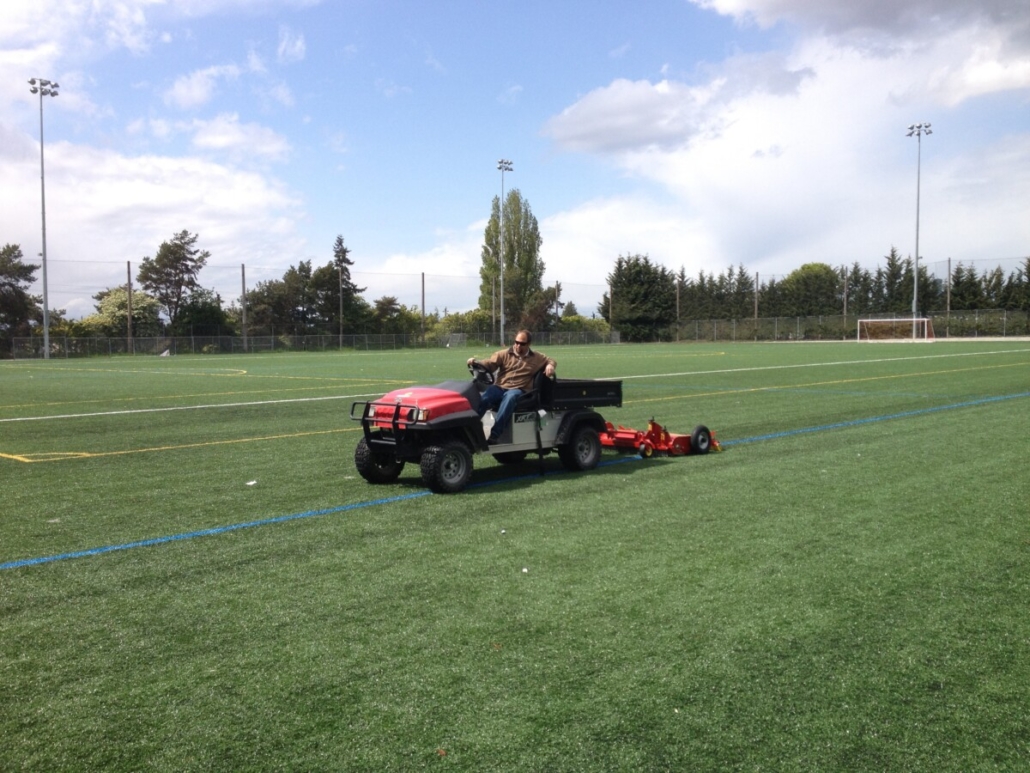
ESTC recently commissioned a preliminary study on yarn wear with the University of Osnabruck. The study found frequently used synthetic sports pitches generally start to weaken and wear in the second half of their service life, primarily due to sustained exposure to the sun. As the surfaces weaken, they become more susceptible to wear, especially in high-use areas such as goalmouths on sports fields and under play equipment in landscape and recreational applications.

As a result, Professor Alastair Cox, Technical Director at ESTC has reminded synthetic turf users of their maintenance obligations throughout the full lifespan of their surface.

Professor Cox said: “As an industry, we’re very aware that for the many benefits synthetic turf brings to communities, it is a plastic-based product that will degrade over time just like many other man-made products. It is imperative that those installing the surfaces remember that while synthetic turf has much lower maintenance requirements than natural grass, it is not completely maintenance-free. As a result, owners should be fully committed to implementing measures which ensure good performance and minimal environmental impact, as well as protecting user welfare and product warranties.”

“The first step is to identify high-wear areas – which will vary from field to field – and anticipate where and when they are most susceptible to the wearing of the turf fibres. From there, the owners should have a duty of care to maintain the surface in the correct manner. By investing in, and regularly using, specialist maintenance equipment that is capable of capturing loose fibres and fibre debris, synthetic turf owners are able to capture and dispose of them in a responsible way that prevents them from escaping into the environment and becoming microplastic pollution.”

The advice from ESTC follows its pledge to support sustainable alternatives to granular rubber infill (polymeric infill) as the synthetic turf industry navigates the EU restrictions set to be imposed on the product category. The European Commission’s decision to prohibit the sale of intentionally added microplastics including synthetic and recycled infill (polymeric infill) such as Styrol Butadiene Rubber (SBR) will come into effect from 2031. The Commission will prohibit the sale of microplastics and products to which microplastics have been deliberately added which could release those microplastics when used.

Professor Cox added: “Sustainable infills such as cork, wood, chip and natural plant mixes, as well as non-infill turf systems, have been available to buy for a number of years now, but we recognise the need to educate the marketplace on how important it is to look beyond the price of infill and consider environmental impact in order to establish these as the preferred options.

“As an industry, we will be working together closely to raise the profile of more sustainable infills and responsible maintenance regimes to ensure the market continues to reduce its environmental impact as quickly and as smoothly as possible.”

For more information on ESTC, visit www.estc.info.

For the latest industry news visit turfmatters.co.uk/news

Get all of the big headlines, pictures, opinions and videos on stories that matter to you.

Follow us on Twitter and Instagram for fun, fresh and engaging content.

You can also find us on Facebook for more of your must-see news, features, videos and pictures from Turf Matters.

Russells Groundcare visit Toro U.K.

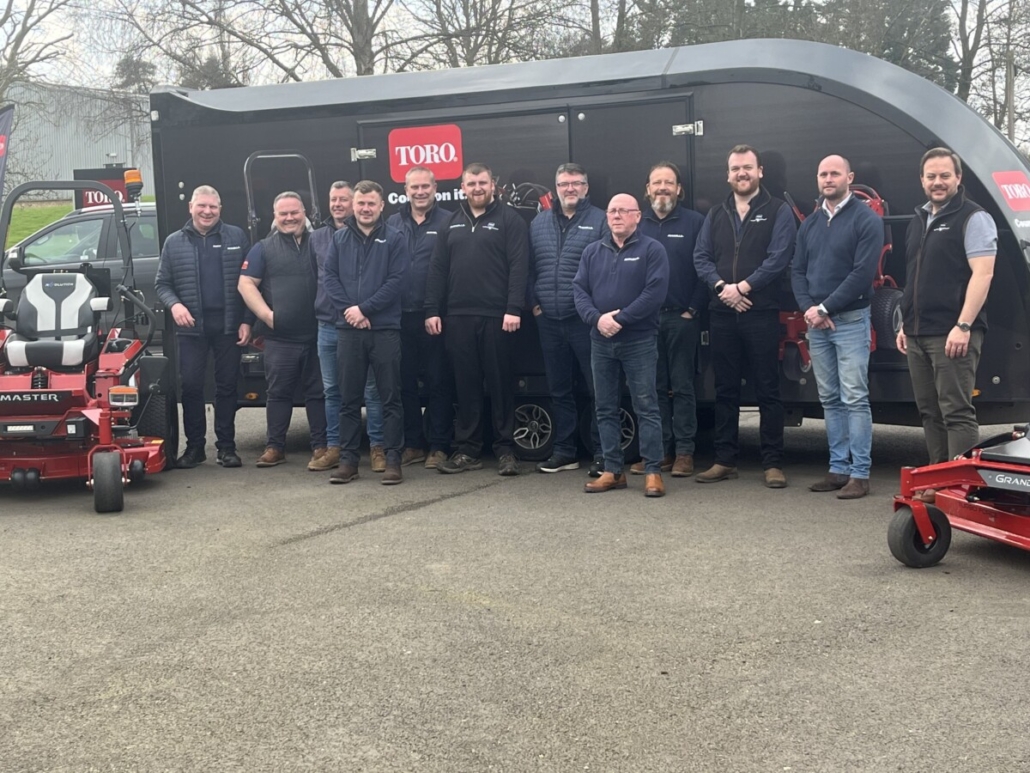
Russells Groundcare visit Toro U.K: The Sales Team at Toro U.K. Limited were proud to host Russells Groundcare Ltd at the Spellbrook, Hertfordshire Head Office this month.

The two-day Sales and Product training focused on predominantly the Landscape Contractor & Site Works portfolios. Despite the inclement weather conditions, the team managed to view a number of products from the Grandstand Revolution stand-on mower to the new Toro Dingo® TX700, Compact Utility Loader.

Russells Groundcare visit Toro U.K.

Russells Groundcare visit Toro U.K.

Matthew Coleman, Sales Manager, Professional Landscape Contractor & Site Works Equipment – UK Direct Market shared his feedback on the days. “I am proud to be able to host this training for our long-established Dealer, Russells Groundcare. The training made for a great opportunity to focus Russells’ Pro Sales Team on the extensive Toro portfolio. The visit covered the benefits and features of Toro products for the commercial customer; a tour of our Spellbrook factory; an insight into future developments and the chance for Toro U.K and Russells to spend invaluable time together as a team.

For the latest industry news visit turfmatters.co.uk/news

Get all of the big headlines, pictures, opinions and videos on stories that matter to you.

Follow us on Twitter and Instagram for fun, fresh and engaging content.

You can also find us on Facebook for more of your must-see news, features, videos and pictures from Turf Matters.