Good news for JCB academy

Good news for JCB academy: The region’s most over-subscribed school, The JCB Academy, has achieved top-class results in its latest Ofsted report.

The Academy achieved a ‘Good’ rating from Government inspectors who visited the Rocester-based school at the end of January, citing its excellent connections with industry and the outstanding employability skills of learners.  The report maintains the JCB Academy’s unbroken record of ‘Good’ ratings from Ofsted since its first in May 2014.

Good news for JCB academy

Good news for JCB academy

The specialist engineering and business Academy, which is sponsored by digger giant JCB, was praised for its teaching in close collaboration with prestigious employer partners such as JCB, Toyota, Bosch Rexroth, Rolls-Royce, National Grid, and Harper Adams University.

Chair of Governors and JCB Group HR Director, Max Jeffery, said: “The educational experience at The JCB Academy is second to none and provides an outstanding platform for students to not only excel academically but also prepare for their future careers. This report reflects the Academy’s unwavering commitment to providing a nurturing and supportive learning environment, alongside a rigorous and ambitious curriculum tailored to meet the needs of all learners.”

The JCB Academy Principal Jim Bailey, said: “We are immensely proud of our learners, staff, and the strong support from our industry partners. This report is a testament to our collective hard work and dedication to not only meet, but exceed, the educational standards expected of us.”

Hydraulic Training Manager at Bosch Rexroth Limited, Jim Malin added: “The Ofsted rating is no surprise, and a well-deserved recognition of overall excellence. Learners’ readiness for the industry is a testament to the Academy’s high standard of teaching and the employability skills instilled in learners.

Based in a historic 18th Century former cotton mill, the Academy is a non-selective school for 13-to-18-year-olds within an 18-mile radius – with its 810 students travelling from the Staffordshire Moorlands, Burton, Derby, Ashbourne, Stoke-on-Trent, Stafford and Stone.

For Years 9 and 10, 645 applicants applied for the 210 places on offer, indicating the Academy will again become the most over-subscribed educational establishment in both Staffordshire and Derbyshire.

For more information on The JCB Academy visit www.jcbacademy.com

For the latest industry news visit turfmatters.co.uk/news

Get all of the big headlines, pictures, opinions and videos on stories that matter to you.

Follow us on Twitter and Instagram for fun, fresh and engaging content.

You can also find us on Facebook for more of your must-see news, features, videos and pictures from Turf Matters.

A new era for electric loaders

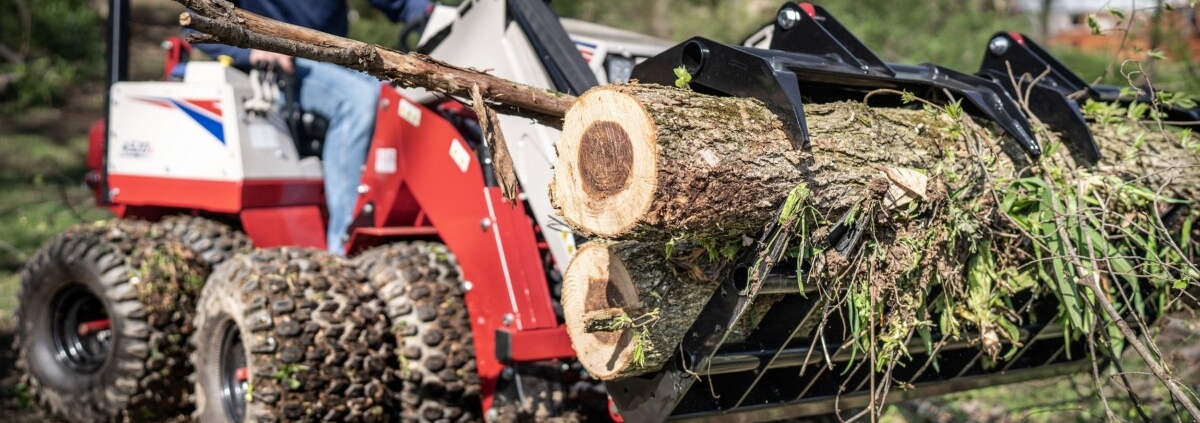
A new era for electric loaders: Working with an electric loader is now more efficient than ever – even in extremely cold conditions. Avant Tecno presents the renewed e series and the third generation of fully electric loaders, whose unique battery technology further improves the capacity, pricing, safety, working time, durability, and lifespan of electric loaders. With a fully charged Avant e527, you can work all day.

Finnish compact loader manufacturer Avant Tecno has been at the forefront of the development of electric loaders for decades. Now, Avant is launching two next generation fully electric loader models, the Avant e513 and Avant e527, which will renew the Avant e series and replace their predecessors, the Avant e5 and e6 models. The new loaders will enter production in January 2024.

A new era for electric loaders

A new era for electric loaders

Unique battery technology

The new loaders are equipped with Avant OptiTemp® battery packs (13 kWh and 27 kWh) manufactured by Avant Tecno’s subsidiary Avant Power. The globally unique battery technology brings capacity to a whole new level, and the energy density of the batteries is among the best in the world. The thermal management system of the patented lithium-ion batteries guarantees the same capacity in hot and extremely cold temperatures. Multi-level protection makes Avant OptiTemp® batteries very safe.

Power for demanding professional use

The new Avant e513 and Avant e527 loaders are almost identical, but the only difference lies in the capacity of the batteries. The Avant e513 (13 kWh) is a good choice for short-term continuous use on cattle farms, horse stables, greenhouses or DIY and leisure time, for example. The Avant e527 loader (27 kWh) with a larger battery is ideal for demanding professional use. Construction and demolition contractors will benefit from this model.

The fully electric Avants are ideal for working in confined spaces and on construction sites that have strict limits on noise and emissions.

A full workday on a single charge

When fully charged in the morning, the Avant e527 loader (27kWh) can be used for a whole working day. The maximum operating time of the machine is about 6 hours for medium-duty work, whereas for Avant e513, it is about 3 hours. The battery of both loaders can be fully charged with a fast charger in under 1.5 hours, allowing for long working days.

A new era for electric loaders

A new era for electric loaders

“For years, the market has been longing for fully electric loaders that would be more like diesel loaders in terms of functionality. Until now, operating time and pricing have been key issues related to electric loaders, but with Avant’s new e series, we solve them both”, says Jani Käkelä, CEO of Avant Tecno.

The renewed Avant e series

  • Fully electric loader series. Zero-emission, very quiet. Low operating and maintenance costs.
  • Two models: Avant e513 (battery capacity 13 kWh) and Avant e527 (battery capacity 27 kWh).
  • Excellent capacity in hot conditions and severe frosts.
  • Fast charge in under 1.5 hours. Type 2 charging, built-in 3 kW battery charger. The maximum charging current has been increased by 50% compared to previous Avant electric loaders.
  • Two electric motors: one for driving hydraulics, and one for auxiliary hydraulics, boom, and steering. Thanks to the electric motor, maximum torque is immediately applied, which ensures excellent thrust.
  • The further improved cooling system in the engine package keeps the machine’s heat under control even in soft terrain. Increased load resistance in short-term hard work.
  • The updated multifunction display provides information on battery status, temperature, power consumption, operating hours, auxiliary hydraulics output, maintenance needs, and more.
  • Same appearance as in Avant’s diesel-powered 500 and 600 series loaders.

Technical Information:

Technical information: Model Avant e513 Avant e527
Voltage 44 V 44 V
Capacity 13 kWh 27 kWh
Operating time* 3 hours 6 hours
Lift capacity 900 kg 900 kg
Li height, max. 2 790 mm 2 790 mm
Drive speed, max. 10 km/h 10 km/h
Weight 1420 kg 1500 kg
Auxiliary hydraulics 30 l/min 30 l/min

*In medium duty loading work; no hydraulic attachments used.

Charging Times:

Charging times: Loader model Avant e513 Avant e527
Onboard charger 3 kW (standard) 2 h 50 min 5 h 40 min
Rapid charger 400 V / 16 A (option) 1 h 10 min 2 h 20 min
Rapid charger 400 V / 32 A (option) 1 h 10 min

*Charging time is affected by prevailing conditions and temperature. The charging times are indicated from 10% to 80% of the battery’s available charge level (SOC).

For more information, please visit www.avant.co.uk 

For the latest industry news visit turfmatters.co.uk/news

Get all of the big headlines, pictures, opinions and videos on stories that matter to you.

Follow us on Twitter and Instagram for fun, fresh and engaging content.

You can also find us on Facebook for more of your must-see news, features, videos and pictures from Turf Matters.

Spraying simplicity best for Huntercombe

Spraying simplicity best for Huntercombe: Grant Stewart, course manager at Huntercombe Golf Club, knew that as soon as a new sprayer was required at the Oxfordshire course, there was only one way to go and that was to hit repeat on his last order of a Toro Multi Pro 1750.

Grant says: “I need a sprayer to be reliable in its ease of use. I appreciate the technological capabilities and all the extras it can have, but ultimately what works for us is a simple but efficient sprayer.”

Spraying simplicity best for Huntercombe

Spraying simplicity best for Huntercombe

Grant’s requirements are perfectly matched in the Multi Pro 1750 from Reesink Turfcare. This sprayer has been designed with all the technology required for spraying accuracy and precision but wrapped up in an uncomplicated easy to use system.

“We’ve had our last sprayer for seven years and it’s never failed us. I couldn’t have a better template to go from than that,” he says. “We mark out the edge of the spray pattern and spray, it’s as simple as that. It’s easy to maintain and there’s no spray lag. The system, the features and benefits it offers and the price point combine to make it the ideal sprayer for an 18-hole course like ours.”

Grant explains how he’s using his sprayer on the course that recently won the prestigious Syngenta Operation Pollinator Award at the Golf Environment Awards: “In the 1980s golf courses had a bad reputation for heavy use of pesticides and chemicals. Now, that’s changed. Spraying is essential to keep the course in top playing condition, but we use nature to solve problems in turf management too.

“With the technology and accuracy in the Multi Pro we can be exact with the areas we spray – everything is controlled and there’s no wastage or spraying of unnecessary areas. We use our sprayer for wetting agents, biostimulants and fertilising in a low regime.”

The Multi Pro 1750 is designed to deliver accurate application rates from start to finish. Its six-diaphragm pump is an industry exclusive, producing ample pressure and up to twice the flow of two-diaphragm pumps for aggressive mixing and thorough agitation. When the pump is engaged, it’s always on so there’s virtually no spray lag – as Grant noticed and appreciates. It also delivers a full spray pattern immediately, so it’s possible to back up to a bunker and spray accurately as soon as it starts.

In addition to exceptional spray accuracy, the Multi Pro 1750 provides 99 percent spray-out, which means almost no products are wasted, which again is better for the environment.

For further information contact Reesink Turfcare, the sole Toro distributor for golf and sports fields equipment in the UK, on 01480 226800 or visit reesinkturfcare.co.uk.

For the latest industry news visit turfmatters.co.uk/news

Get all of the big headlines, pictures, opinions and videos on stories that matter to you.

Follow us on Twitter and Instagram for fun, fresh and engaging content.

You can also find us on Facebook for more of your must-see news, features, videos and pictures from Turf Matters.

DSV Eurograss: Revolutionising the UK Turf Market

DSV Eurograss: Revolutionising the UK Turf Market: In the world of turf grass breeding, one name stands out as a beacon of innovation and excellence – Deutsche Saatveredelung AG, otherwise known as DSV.

With a rich history spanning over six decades, DSV has been at the forefront of cultivating and refining turf grass varieties that have featured in Europe’s most prestigious stadiums. Now, with a renewed focus on conquering the UK market, DSV introduces Eurograss, a testament to their commitment to superior quality and unmatched performance.

DSV Eurograss: Revolutionising the UK Turf Market

DSV Eurograss: Revolutionising the UK Turf Market

The journey of Eurograss traces back to the humble beginnings of turf grass breeding at DSV. Established in 1965 with the merger of Nordwestdeutsche Futtersaatbaugesellschaft in Bremen (NFG), DSV laid the foundation for a legacy of excellence in turf grass cultivation. Over the years, meticulous breeding programmes at DSV’s state-of-the-art stations in Asendorf, Germany, and Les Rosiers, France, have produced a diverse range of turf grass varieties tailored to meet the varying needs of different regions and usage patterns.

Tailored Excellence: DSV’s Turf Grass Breeding Philosophy

At the heart of DSV’s success lies a relentless pursuit of perfection in turf grass breeding. The breeding objectives are finely tuned to cater to specific usage directions, whether it be for home lawns, ornamental purposes, sports arenas, or landscape applications. This bespoke approach ensures that each turf species meets the exact standards of durability, density, and resilience required for its intended purpose.

A hallmark of DSV’s turf grass breeding programme is its unwavering commitment to innovation and adaptability. In response to evolving environmental dynamics, such as climate change, DSV has proactively integrated traits like drought tolerance and disease resistance into its breeding objectives. This forward-thinking approach has led to the development of groundbreaking varieties like Europitch, Eurobeat, Eurocarina, Tasida and Regenerate which excel under the toughest conditions, ensuring lush greenery even in the face of adversity.

DSV Eurograss: Revolutionising the UK Turf Market

DSV Eurograss: Revolutionising the UK Turf Market

Testing the Limits: Striking the Right Cord

Central to DSV’s success is its rigorous testing regime, overseen by leading experts like Cord Schumann, the head DSV turf breeder in Asendorf. Each candidate undergoes comprehensive evaluations over several years to assess its suitability for different applications. From deep cutting assessments to cleat roller simulations mimicking the wear and tear of sports activities, every aspect of turf performance is scrutinised with meticulous precision. Cord’s unique sensory test, where he walks barefoot over the turf plots, epitomises DSV’s hands-on approach to quality assurance, ensuring that only the finest varieties make it to market.

Setting the Standard: Eurograss in the Global Arena

The culmination of over a decade of breeding and testing is evident in Eurograss. With over 90 DSV turf varieties approved worldwide, Eurograss has firmly established itself as the gold standard in turf grass quality. Notably, Eurograss varieties feature prominently in prestigious recommendation lists like the British Society of Plant Breeders Limited (BSPB) list, reaffirming their status as industry leaders in turf innovation.

As Eurograss sets its sights on the UK market, it brings with it a legacy of excellence and a promise of unparalleled quality. With a comprehensive range of cultivars tailored to suit every need and environment, Eurograss is poised to revolutionise the UK turf industry, one blade at a time.

For the latest industry news visit turfmatters.co.uk/news

Get all of the big headlines, pictures, opinions and videos on stories that matter to you.

Follow us on Twitter and Instagram for fun, fresh and engaging content.

You can also find us on Facebook for more of your must-see news, features, videos and pictures from Turf Matters.

RHS disease ranking highlights top 10 gardening problems

RHS disease ranking highlights top 10 gardening problems: The Royal Horticultural Society (RHS) has published its annual disease ranking, revealing the top ten problems for gardeners in 2023.

Damp conditions in spring and summer were the driving influence in the prevalence of certain diseases, with the following four new entrants to the top ten list: blossom wilt of fruit trees, pocket plum, tulip fire and slime flux. Fruit trees continued to be under threat from disease, with apples, pears, and Prunus among the top five hosts and collectively resulting in over 1,000 enquiries to the RHS advisory service, a 50% increase on the previous year.

RHS disease ranking highlights top 10 gardening problems

RHS disease ranking highlights top 10 gardening problems

The top diseases for 2023 are:

1. Honey fungus
2. Apple and pear scab
3. Rose black spot
4. Pear rust
5. = Blossom wilt of fruit trees
= Bacterial leaf spot and canker of Prunus
7. Phytophthora root rots
8. Pocket plum – Taphrina pruni
9. Tulip fire
10. Slime flux

Wet weather last spring provided perfect conditions for tulip fire – which produces brown spots and twisted, withered leaves – to take hold, seeing the disease make a return to the top 10 for the first time in several years. The damp spring conditions are also likely to blame for high cases of pocket plum, which causes elongated, hollow fruits with no stone on plums and damsons, as well as some ornamental Prunus, rendering the fruit inedible.

Slime flux, which affects a wide range of trees and shrubs, was another new entrant to the list. It is thought that the bacteria colonises trees via their roots, so the increase in cases may be a result of the wet winter in 2022/ 2023 and associated waterlogged soils. In addition, there was a rise in reports of rose black spot and pear rust, which can both likely be attributed to the warm and wet weather conditions during the summer.

Honey fungus topped the list for the 28th year running, having held the top spot since the list was first published in 1995. The fungus has a large host range of more than 140 garden plants, with the most common hosts in 2023 being privet, rose and viburnum, and results in dramatic symptoms, including death, cracked and bleeding bark and failure to flower.

To minimise plant disease this year gardeners are advised to apply mulch to improve drainage, while ground that has been laid sodden should be lightly pricked with a fork and spread with an organic mulch such as well-rotted manure, so plants grow with improved health and disease is less likely. Now is also a good time to prune out any diseased and damaged material before it can spread spores when the temperature is warmer.

Liz Beal, RHS Plant Pathologist, said: “Unusually wet weather in 2023 had a significant effect on plant health across the UK, with the prevalence of tulip fire and pocket plum demonstrating the impact of prolonged damp conditions. Following the extreme drought of the previous year, many gardeners are left wondering how to prepare for unpredictable weather patterns. Understanding the conditions of your garden is key in deciding which plants will thrive where; the right plant in the right place will always have a better chance of fighting off infection. Additionally, gardeners can help combat many of the most common diseases in our ranking by practising good hygiene, keeping tools clean and removing – and safely disposing of – diseased plant material from their gardens.”

The RHS Plant Health team uses the disease ranking to inform their research and advice. Current research at RHS Wisley’s Hilltop: Home of Gardening Science includes investigating the effective management of Phytophthora in gardens, examination of different methods for managing rose black spot and characterising the dispersal mechanisms and variation of honey fungus populations.

RHS members get free access to the charity’s Gardening Advice Service, available by phone or email. Find out more about becoming a member at: www.rhs.org.uk/join

RHS advice pages are available for everyone, for further information, visit: www.rhs.org.uk/advice

For the latest industry news visit turfmatters.co.uk/news

Get all of the big headlines, pictures, opinions and videos on stories that matter to you.

Follow us on Twitter and Instagram for fun, fresh and engaging content.

You can also find us on Facebook for more of your must-see news, features, videos and pictures from Turf Matters.