The NEW Pellenc Helion 3 is here

The NEW Pellenc Helion 3 is here: Pellenc, the world’s leading expert in battery-powered tools, has announced the launch of the new Helion 3 hedge trimmer.

Over recent years the Pellenc Helion hedge trimmer has been meeting and exceeding the needs of professionals in terms of power and trimming quality. Lightweight, quiet, and with odourless operation, it has allowed users to work comfortably when trimming hedges, ornamental trees or pruning.

The NEW Pellenc Helion 3 is here

The NEW Pellenc Helion 3 is here

This innovative trimmer has now just got better with the launch of the Helion 3.

Ultra-versatile with its three cutter blades which can be changed in under a minute, the new Helion 3 guarantees a perfect finish every time. Its exceptional cutting capacity allows operators to cut sections up to 3cm in diameter in complete safety. It can also be used all day no matter what the weather.

Here is a glimpse of some the key features of the new Helion 3:

Ultra-robust cutting blades

The Helion 3 boasts a blade guard, an aluminium stiffener, carbon steel blades and a stainless-steel anti-kickback guard.

Anti-locking blade system

The Helion 3 incorporates an exclusive device that reverses the direction of rotation if the cutting bar gets stuck in vegetation.

Speed select button

The four cutting speeds of the Helion 3 make it possible to adapt to the type of species to be trimmed or pruned.

Quick switch system for changing blades

The different sized hedge trimmer blades can be mounted and dismounted in under a minute.

New ergonomic design for safety

The new ergonomic design of the blade guard provides additional safety for the user against the risk of cuts.

Fast connector system

The Helion 3 allows quick connection and disconnection of the tool to the battery to get out of any risky situation fast.

Pellenc UK offers an industry leading four-year commercial warranty for all its batteries and a three-year warranty for all it tools.

Pellenc is distributed exclusively in the UK by Etesia UK.

For further information, please contact Etesia UK on 01295 680120 or visit www.pellencuk.com

You can also follow Pellenc on Twitter, Facebook and Instagram @PellencUK for much more news, reviews and insightful views.

For the latest industry news visit turfmatters.co.uk/news

Get all of the big headlines, pictures, opinions and videos on stories that matter to you.

Follow us on Twitter and Instagram for fun, fresh and engaging content.

You can also find us on Facebook for more of your must-see news, features, videos and pictures from Turf Matters.

Keeping garden bugs at bay

Keeping garden bugs at bay: Green fingered homeowners falling victim to destructive garden bugs are being given advice on how to keep them away.

The team of outdoor experts at GardenBuildingsDirect.co.uk have provided some cheap and easy solutions on how to tackle these bugs.

Keeping garden bugs at bay

Keeping garden bugs at bay

As the sun starts to come out, Brits are making the most of their outdoor space and making them look as beautiful as possible.

Unfortunately, the likes of moths, slugs and snails also come out in the sun and can do a lot of damage to gardens.

A spokesperson for GardenBuildingsDirect.co.uk said: “It is inevitable that garden bugs will cause a bit of disruption, whether you’re out relaxing, planting your own veg or growing your own garden.

“This guide is full of some of the most destructive garden bugs and the top tips to help keep these at bay, so the outdoors can be stress-free.”

Slugs and Snails

Slugs and snails are some of the most common yet destructive garden pests. Not only do they leave a sticky trail behind them, but they also love to munch through leaves and vegetables. This can be particularly problematic on vegetable patches if you are growing plants like lettuce and cabbage.

Salt has always been a fool proof way of killing slugs and snails, but if you want to stop them in their tracks, copper tape acts as a great deterrent, giving them electric shocks.

Caterpillars

Caterpillars love to nibble their way through fruits, vegetables, and plants. They are also detrimental to some flowers too, with the buds and seeds often all destroyed.

One of the most natural and inexpensive ways to rid your plants of these pesky bugs, is to spray them with hot soapy water. This can then be poured into a spray bottle and used as many times as necessary.

Moths

This type of garden bug can be especially damaging in the summer months. They love cotton and wool fibres so homeowners need to be aware that leaving outdoor cushions and furniture in the garden could be targeted by moths.

An easy solution for deterring them is to use herbal sprays in the areas you want to protect. Herbs like lavender and rosemary are not loved by these bugs, and they also smell nice too.

May Bugs

Usually seen around May-time (up until July), which is how it earned its name, May Bugs can cause considerable damage to gardens. In their early years they live under the soil and feed off the roots of plants and flowers.

As there are not a lot of homemade options available to keep these bugs away, the best option is to use an insect killer.

For the latest industry news visit turfmatters.co.uk/news

Get all of the big headlines, pictures, opinions and videos on stories that matter to you.

Follow us on Twitter and Instagram for fun, fresh and engaging content.

You can also find us on Facebook for more of your must-see news, features, videos and pictures from Turf Matters.

Attraxor astounds at the birthplace of Rugby

Attraxor astounds at the birthplace of Rugby: The sports pitches at Rugby School in Warwickshire are benefitting from a stronger sward after Attraxor plant growth regulator was recommended and supplied by Agrovista Amenity.

In 1823, student William Webb Ellis, took a football in his arms and ran with it, originating the game of rugby. Today, innumerable tourists visit the ‘home of the game’ and rugby teams from all over the world can be seen training at Rugby School. It certainly makes Grounds Manager, James Mead a busy man.

Attraxor astounds at the birthplace of Rugby

Attraxor astounds at the birthplace of Rugby

“There can’t be any sort of downtime for the team, and I can be taken aside at any time,” he said. “There could be a TV crew, very important persons or tourists that have made a rugby pilgrimage and want to stand on the turf where the game began. We can never afford to have an off-day here.”

James admits that he is fortunate to have a close-knit team around him; one that has been together for an astonishing amount of time.

“We have a smashing team that has always been together – in fact no one has left in 18 years,” he said. “It helps enormously because we are a very focussed group. Everyone gets a say – decisions and discussions are a collective. This way the whole team gets on-board with ideas, and everyone understands why we are doing something.”

Three years ago, the team decided to incorporate Attraxor plant growth regulator into their maintenance programme. It was a decision which has proved to be considerably successful.

“We had just Koro’d off all of the cricket outfield and were starting fresh,” explained James. “Following this we needed a product that would stick and would help to thicken the sward. Mark Allen from Agrovista Amenity recommended Attraxor and we are pleased he did – it made a huge difference to the strength and playability of the grass.”

Attraxor, a BASF product, is a plant growth regulator containing the active substance, prohexadione and can be used to regulate growth of all managed amenity turf. This active substance inhibits the Giberrelic acid pathway, which results in a reduction of turf height and turf biomass. Root growth is promoted whilst turf colour and quality are maintained.

Based on its initial success, James and the team decided to further utilise Attraxor and it is now an integral product throughout the growing season.

“Attraxor was perfect for the cricket outfield and so we then used it on our two gold standard rugby pitches – which are the ones that all the visitors come to see. Again, it made a big difference.

“We do a lot of liquid spraying and Attraxor goes nicely into our tank mixes,” he continued. “What we mix it with largely depends on the time of the year, but we will start applying Attraxor in March, as soon as the plant is up taking, and we continue to put it down every month throughout the growing season.

“In terms of cutting, we no longer have clippings to contend with and if we have had bad weather and can’t cut, then it is no longer an issue.

“I have been very impressed with Attraxor. Not only has the sward improved, but growth rates across a range of grass species have been regulated equally. I’m especially pleased to see that the strength and vigour of less desirable Poa annua plants has diminished.”

As well as reporting excellent results, James is also of the opinion that his formidable team has gained an extra member.

“Mark Allen is a very hands-on, amenable person to work with – he is a friend as well as a professional colleague. We bounce ideas off one another and it is a good collaboration. He gets on well with all the other members of staff and if anyone has any questions, he is always available to answer them.”

For more information about Agrovista UK, visit www.agrovista.co.uk/amenity

For the latest industry news visit turfmatters.co.uk/news

Get all of the big headlines, pictures, opinions and videos on stories that matter to you.

Follow us on Twitter and Instagram for fun, fresh and engaging content.

You can also find us on Facebook for more of your must-see news, features, videos and pictures from Turf Matters.

Rugby pitch damaged ahead of charity match

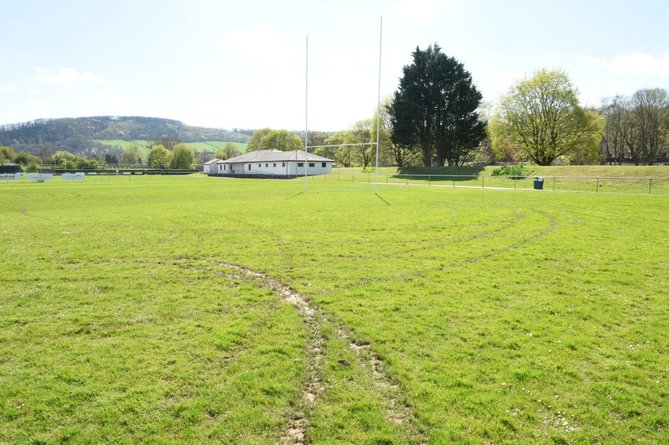
Rugby pitch damaged ahead of charity match: On the eve of a charity match on the Sportsground, mindless motorists took the opportunity to race around the town’s rugby pitch in the early hours of Friday April 15.

Read the full article from Monmouthshire Beacon here

Rugby pitch damaged ahead of charity match

Rugby pitch damaged ahead of charity match

For the latest industry news visit turfmatters.co.uk/news

Get all of the big headlines, pictures, opinions and videos on stories that matter to you.

Follow us on Twitter and Instagram for fun, fresh and engaging content.

You can also find us on Facebook for more of your must-see news, features, videos and pictures from Turf Matters.

AMS Robotics working to improve turf health

AMS Robotics working to improve turf health: Sports facilities, large gardens and businesses across the UK have seen improved turf health with AMS’s robot technology. Clients both old and new have recognised the significant differences and improvements it has made to their outfields and maintenance methods. With the mowing capacity increased to up to 75,000m2, the sky’s now the limit for robotic turf care.

The lightweight Belrobotics mower provides frequent grass cutting, rain or shine, which minimises the impact on the turf. The tiny quick-composting clippings provide a constant source of fertilisation and moisture, resulting in beautifully dense turf. For sports facilities in particular, this improves the pitch’s overall ability to withstand a busy match schedule and hours of use.

Pictured are two examples of areas in which you can see the comparison of the areas that the AMS robots manage and the areas which they don’t. Stirling university has one of the original large models, BigMow Connected, which has a mowing capacity of up to 24,000m2. These mowers work on a random cutting pattern and will mow the total area 3-5 times per week. This picture demonstrates the quality of the turf on the right managed by robots compared to the turf on the left which is not.

Another example of where the AMS robots have enhanced the quality of the grass is in this private client’s garden. The right hand side is managed by the AMS Robots and the left is not.

This area is managed by the smaller robot, ParcMow, which has a mowing capacity of up to 14,000m2 3-5 times per week on a random mowing pattern. However, this robot is kitted with the latest GPS RTK technology which allows the robot to work on pattern and stripe mode, therefore the mowing capacity is increased up to 40,000m2 5-7 times per week – making the process smarter and more efficient.

University Of Stirling

AMS Robotics working to improve turf health

AMS Robotics working to improve turf health

Private client

AMS Robotics working to improve turf health

AMS Robotics working to improve turf health

AMS Robotics are pleased to announce their latest partnership at Highfield Rangers FC. AMS are thrilled to be supporting such a brilliant project.

For all enquiries contact AMS on 01462 676 222 or sales@amsrobotics.co.uk

For the latest industry news visit turfmatters.co.uk/news

Get all of the big headlines, pictures, opinions and videos on stories that matter to you.

Follow us on Twitter and Instagram for fun, fresh and engaging content.

You can also find us on Facebook for more of your must-see news, features, videos and pictures from Turf Matters.