Colour Boost brings conservation closer to home

Colour Boost brings conservation closer to home: Providing a new home, rest and rehabilitation for rescued animals from across the globe, the Wildheart Animal Sanctuary (formally the Isle of Wight Zoo) have, for the last twelve months, been working on a project to support species much closer to home.

With flower mixtures and support from DLF Seeds, the work at the sanctuary and at local schools has been hailed a great success – with Chief Operating Officer Lawrence Bates noting both the improvements in bio-diversity and awareness of the issues affecting our native habitats.

Colour Boost brings conservation closer to home

Colour Boost brings conservation closer to home

Lawrence began planning the habitat creation with the help of DLF’s Paul Hadley in a previous role a few years ago and saw the opportunity to resurrect it upon joining the Wildheart Animal Sanctuary in July 2019. “It can be difficult for people to understand how important our behaviour and efforts are for supporting our own native species that are under threat, when a lot of the media focus is on animals on the other side of the globe. Our vision with this project is to look at spaces closer to home, increase the bio-diversity to provide habitats, shelter and food for invertebrates which, in turn, helps animals further up the food chain.”

“Paul visited the island and advised on the most suitable species for our new flower meadow on site, but also what would work for projects at some local schools, which weren’t going to be maintained by experts!” Selected were Colour Boost 1, a mixture containing quick-to-establish, high impact annuals and Colour Boost 6, comprising of over 40 different species and subspecies, the appearance of which is constantly changing throughout the growing season.

Four flower meadows were sown at the schools on the island prior to the lockdown in March 2020, with the Sanctuary’s own meadow then planted in June 2020. “The result from these two Colour Boost mixtures was phenomenal! Not only did the students benefit from the educational programme around wildflowers and conservation, but it completely transformed previously neglected areas of the school sites, and our own site, with hardy blooms that created a dazzling, long-lasting display of colour.”

“We received so many lovely comments from Head Teachers with numerous other schools now wanting to get involved. We’re also talking to local churches and a number of businesses through the Green Impact Group about new sponsored plots of land.” Lawrence concludes, “The programme is growing fast and the impact this will have on the wildlife is exponential! Without DLF and their ongoing support, the project wouldn’t have got off the ground.”

For the latest industry news visit turfmatters.co.uk/news

Get all of the big headlines, pictures, opinions and videos on stories that matter to you.

Follow us on Twitter and Instagram for fun, fresh and engaging content.

You can also find us on Facebook for more of your must-see news, features, videos and pictures from Turf Matters.

Cost-effective and capable irrigation

Cost-effective and capable irrigation: At the end of last year Reesink Turfcare introduced a cost-effective and uncomplicated irrigation solution to its range from SRC – the Grower 6000 D. This capable 2-wire controller provides all the control needed for easy but effective irrigation.

Decoder systems have been around for years, but in the face of new working practises they’ve seen a surge in popularity as many are now looking for a cost-effective way to upgrade and improve their irrigation system over time without disruption and big hardware changes.

Cost-effective and capable irrigation

Cost-effective and capable irrigation

Box-on-the-wall systems have lots of advantages, most of which we’re all aware of – minimal cabling setups and easy system expansion (simply splice into the communication line and add additional decoders) for example. But perhaps what’s most appealing to greenkeepers and golf club managers in 2021 is the control and independence it affords. Cable faults of such a system are easy to diagnose and there’s minimal fault-finding equipment needed. The diagnostics assist with fault-finding and reduce the time taken to pinpoint the problem.

There’s also the cost to consider. It’s got to be one of the most cost-effective irrigation solutions around. The cabling price for a box-on-the-wall system is much more affordable per metre than traditional systems and the total project costs are lower even after factoring in the decoder costs. The installation of a 2-wire system takes less time, it’s often up to a third less time-consuming than installing a multi-wire system and this also contributes to reducing the total cost.

Robert Jackson, water division sales manager for Reesink, says: “Boxes-on-the-wall offer a web-based management platform through mobile or PC devices for great results. The SRC Grower benefits from a range of features that make it the perfect solution for golf clubs needing straight forward irrigation control; knowing that your irrigation system works for you, your time, club, responsibilities and skills is really important, especially when we don’t know what’s round the corner. And with the Grower, whatever your course needs, it can accommodate easily.”

Available as a web-based management system or a stand-alone decoder based unit, the SRC Grower has a scheduling capacity of 1-200 stations, and 10 programmes, and can operate up to 15 stations alongside five pumps simultaneously. It benefits from flow sensor capability including various alarm options, flow management with the stacking of up to 10 simultaneous programmes and a 14-day calendar run of odd or even days. It’s also fully ET capable with local and remote weather stations and has built in lightening protection.

Robert continues: “Less cabling means installation is straight-forward, but there’s the option to expand later if needed giving the product longevity. For customers who need less of the reporting and detailed irrigation and are looking for a relatively simple controller that will get the job done, then this is the one for you.”

The SRC Grower 6000 is sold as seen and in stock for immediate dispatch. To find out more about contact Reesink on 01480 226800, email info@reesinkturfcare.co.uk, or visit reesinkturfcare.co.uk.

For the latest industry news visit turfmatters.co.uk/news

Get all of the big headlines, pictures, opinions and videos on stories that matter to you.

Follow us on Twitter and Instagram for fun, fresh and engaging content.

You can also find us on Facebook for more of your must-see news, features, videos and pictures from Turf Matters.

More than just sand

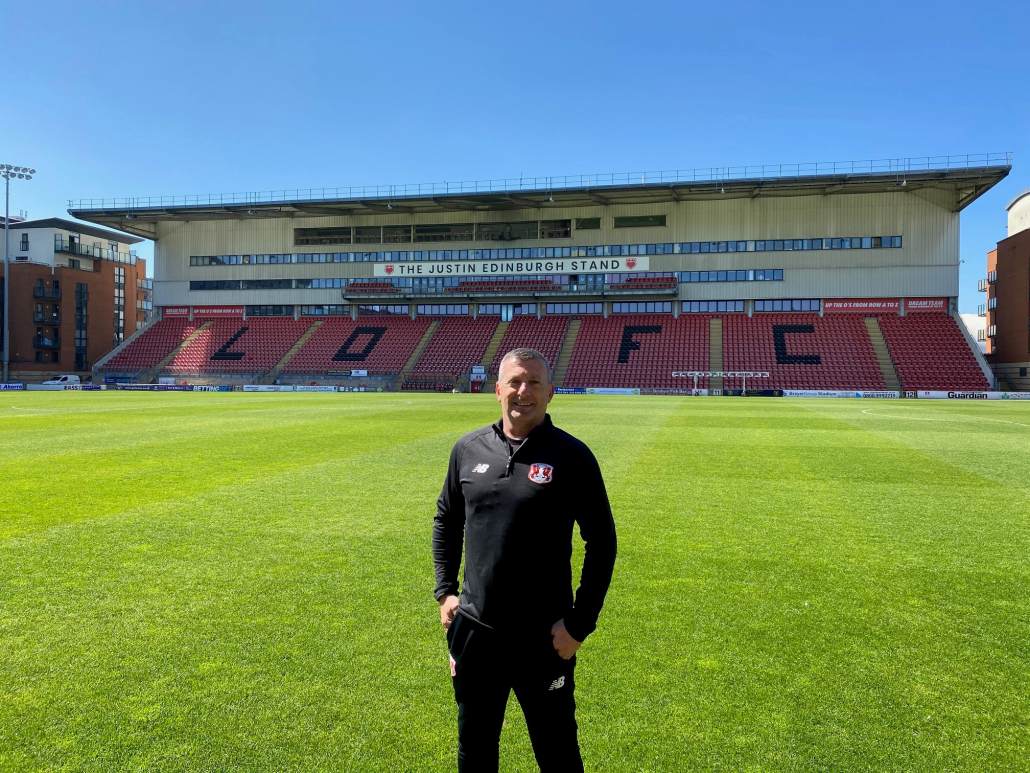
More than just sand: Colin James, Head Groundsman at Leyton Orient, claims that the products are just part of the overall package from Mansfield Sand.

“I’ve been at Orient for 14 years and have been using products from Mansfield Sand the whole time,” said Colin. “It is a product and a company that I can always rely on.”

More than just sand

More than just sand

Colin uses Mansfield Sand’s Fibre Reinforced rootzone for his end of season renovations which is an 80/20 sand soil rootzone blend and polypropylene fibre reinforcement product that is particularly advantageous when grass cover has been reduced due to heavy usage and wear during the winter period. It is incorporated into the existing fibre rootzone to compensate for any material removed during renovation, whilst maintaining the required pitch fibre content to provide a firm, stable divot-free environment.

“I like the fact that it is mixed together for me at the Mansfield Sand depot and comes straight to the stadium ready to use,” said Colin. “It is a mix which continues to work for us season after season.”

All the products are produced at the company’s Two Oaks Quarry, which has been in operation since 2015 and has the most up-to-date and advanced equipment currently in the industry. From winter sports pitches, golf courses, bowling greens and all amenity turf areas – Mansfield Sand has a solution for all no matter what the product.

How much Fibresand Colin uses can vary year to year as he explains.

“We went a couple of years where we had no renovation work on the pitch due to a change of club ownership – so during that period no fibre was put into the pitch,” he said. “That meant that the following season we had to top it up a considerable amount, so It does vary, but we very much take the advice from Mansfield Sand.

“Gary Cunningham and Sharon Morris from Mansfield Sand will come to the stadium throughout the course of the season to take some samples to see how much fibre is in there. When it comes to the renovation, myself, Gary and Sharon, and the contractor will all put our heads together to come up with a solution and work out how much Fibresand we need to apply.

More than just sand

More than just sand

“It is a great product and has never let me down in all this time. It’s essential for the pitch.”

Colin, who has been in the grounds management industry for just over 25 years, was also quick to praise the back-up he receives from Mansfield Sand.

“It is not just a case of buying sand from the company,” he said. “I find that I can always pick their brains – so if I’ve got a problem with my pitch, or just want to talk about any ideas then I find that they are people I can ring up and talk to and ask advice.

“They are knowledgeable and have a great amount of experience in the industry – you can certainly rely on Mansfield Sand.”

For more information visit www.mansfield-sand.co.uk

You can also follow the company on Twitter – @MansfieldSand and Facebook – https://www.facebook.com/MansfieldSandSportSurfaces/

For the latest industry news visit turfmatters.co.uk/news

Get all of the big headlines, pictures, opinions and videos on stories that matter to you.

Follow us on Twitter and Instagram for fun, fresh and engaging content.

You can also find us on Facebook for more of your must-see news, features, videos and pictures from Turf Matters.

Groundsmen & greenkeepers numbers decline

Groundsmen & greenkeepers numbers decline: Groundsmen and greenkeepers, painters and decorators, plumbers, heating and ventilating engineers are just a few of the trades that the UK relies on, but a new report has revealed a decline in the number of workers in these trades. 

The trade trends report 2021 released by Skills Training Group has analysed 16 years worth of data from the Office for National Statistics to assess the state of the UK workforce.

Groundsmen & greenkeepers numbers decline

Groundsmen & greenkeepers numbers decline

In the report, it revealed multiple key trades on the decline, groundsmen and greenkeepers fell by 25.85 per cent between 2004 and 2020 from 32,500 to 24,100, while plumbers and heating and ventilating engineers fell by 4.19% (157,400 to 150,800) and painters and decorators by 17.80% (138,200 – 113,600).

Steel erectors took the largest hit of all trades analysed, between 2004 and 2020 workers in the trade fell by 47.93 per cent from 12,100 workers to 6,300.

Using the data, the team at Skills Training Group were able to forecast ahead to reveal what the future may look like for these trades if the average decline continues.

By 2049, the picture for groundsmen and greenkeepers looks completely different, projecting a decrease of more than 69%:

Skilled trades Oct 2004-Sep 2005 Oct 2049-Sep 2050 (est) Year-on-year average change Potential decrease over 46 years
Profession All persons in trade All persons in trade All persons in trade All persons in trade
Groundsmen and greenkeepers 32,500 9826.935089 -0.029 -69.76%

Commenting on the research and why young people may be the key to turning the tide for these industries, Mark McShane, managing director at Skills Training Group said:

“For many industries, young people entering the workforce early in their careers means they can learn the craft and make it a long term career – with many being business owners by the time they are 30. But, in order to encourage young people to make these choices, businesses in the industry need to engage with young people, sharing their success stories to encourage a new workforce.

“While many young people may enter into a skilled trade through college and apprenticeships, a missed opportunity may be those that have opted to continue studying for A-Levels. For these students, the general direction is to head off to university, so it’s no surprise that many may not have even considered a career in specific trades – this is where recruitment outside of the usual routes can prove fruitful.

“Communication and marketing needs to be a big part of each of the different industry’s goals – young people will better engage with clear and smart communication. To attract and recruit new talent to the industry, its image needs to adapt as well. Companies and industries that make noise, engage with social media and shout about what makes their trades great will see the tide change in the amount of people wanting a job.”

It’s not all bad for every trade, the data also shows that between 2004 and 2020 some trades thrived.

Roofers, roof tilers and slaters increased by 14.06 per cent, gardeners and landscape gardeners (23.9%) and farmers (28.64%).

Read the full report and insights from it here – https://www.skillstg.co.uk/blog/the-trade-trends-report-2021/

For the latest industry news visit turfmatters.co.uk/news

Get all of the big headlines, pictures, opinions and videos on stories that matter to you.

Follow us on Twitter and Instagram for fun, fresh and engaging content.

You can also find us on Facebook for more of your must-see news, features, videos and pictures from Turf Matters.
Rain Bird offers HDF Series

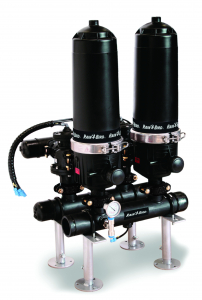
Rain Bird offers HDF Series: The use of reclaimed water or other lower quality water sources is becoming more common in irrigation projects and to ensure that systems work effectively, whatever the source,  Rain Bird now offers the HDF Series of automatic self-cleaning disc filtration equipment.

The company’s filtration products including pump suction screens, centrifugal sand separators and hydraulic suction screen filters are already available. These offer different levels of filtration and modes of operation. However, using water from canals, ponds, rivers, wells, reservoirs or waste water sources for irrigation requires a more thorough approach to filtration. It is essential that contaminants which originate from organic and inorganic matter, such as algae, sand, silt, suspended solids and microbiological growth, are filtered out. This will prevent nozzles, rotors, valves and other equipment being blocked or even damaged, resulting in efficient flow rates and optimised water usage.

Rain Bird offers HDF Series

Rain Bird offers HDF Series

Within an irrigation circuit, the HDF Series will act as a primary filter for the water source and is located after the pump. Having then passed through backflow and master valve stations, the filtered uncontaminated water is then distributed via any secondary filters to the chosen nozzles, rotors or in-line drip irrigation. The Rain Bird irrigation controller is highly flexible and allows filtration and cleaning cycles to take place without any interruption to flow to the system.

The HDF Series is specifically designed to be used within irrigation systems where manual cleaning would be difficult, time consuming or unwieldy. Three different units provide varying levels of filtration efficiency and capacity. For flexibility, they can operate with or without electricity and include control units that run on 220V AC or 12V DC. The units are manufactured from tough engineered plastics and materials  resistant to rust and corrosion from chemicals or water.

Units are pre-assembled  and wired for easy installation. All HDF units feature a patented anti-clogging device that generates a helical centrifuge effect moving a high percentage of particles that are suspended in water away from the disk. This ensures optimal performance resulting in water savings, reduced backwash frequency and minimum maintenance requirements.

Choosing the correct HDF Series unit is based on establishing the quality and dirtiness of the water source, determining the required filtration grade and then calculating the number of filters required. The filter cartridge is made up of a number of stacked discs. Water passes through small grooves between the discs which are compressed and impurities are trapped and projected away through the cyclone effect.

During back flushing, water is projected through the discs evacuating the contaminant particles through the drainage manifold. The filtration process restarts when the discs recompress. The systems automatically measure the pressure over the filters to determine when back washing and cleaning are required.

HDF 1×2, HDF 2 and HDF 4 designations refer to the size of the filters and the on-board valves. The HDF 4 is a scalable multi-filter unit with standard filtration of 100, 130 and 400 microns with custom options available. Users can add a number of filters to the specification in order to reach the desired flow rates for the application. Up to twelve, 4-inch filters can be used to achieve maximum flow rates of 575 m³ per hour. The elements inside the filter provide depth filtration across the diameter, not just at the circumference and the helical action inside ensures highly efficient cleaning.

The HDF 2 is also multi-filter and scalable, using up to eight 2-inch filters for a maximum throughput of 192m³ per hour. The single HDF 1 with a single two inch filter is designed for low flow applications and has a maximum throughput of 24 m³ per hour. Its compact design makes it ideal for fitting into tight spaces.

Rain Bird can support all customers in the selection of the optimum HDF Series automatic self-cleaning disc filtration equipment for any application. www.rainbird.eu

For the latest industry news visit turfmatters.co.uk/news

Get all of the big headlines, pictures, opinions and videos on stories that matter to you.

Follow us on Twitter and Instagram for fun, fresh and engaging content.

You can also find us on Facebook for more of your must-see news, features, videos and pictures from Turf Matters.