Trimax From The Start

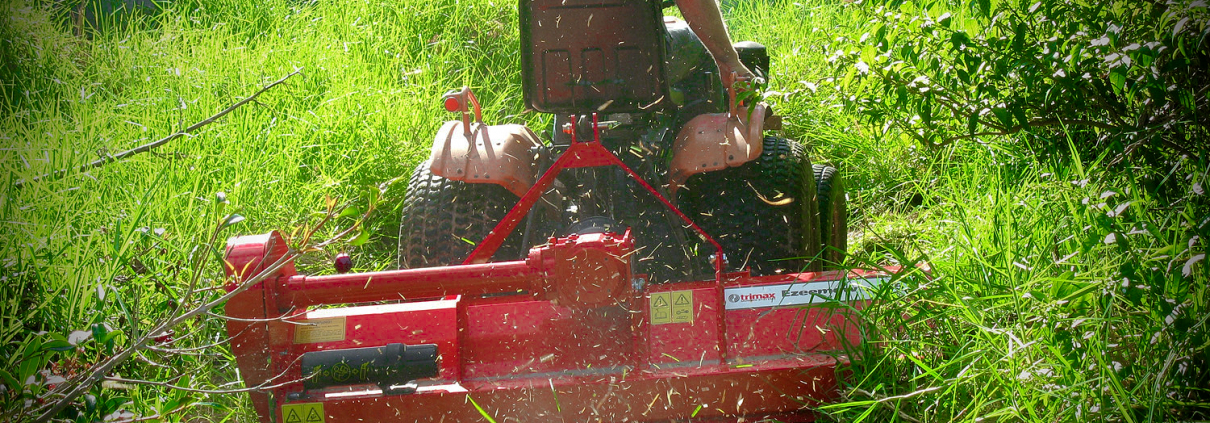
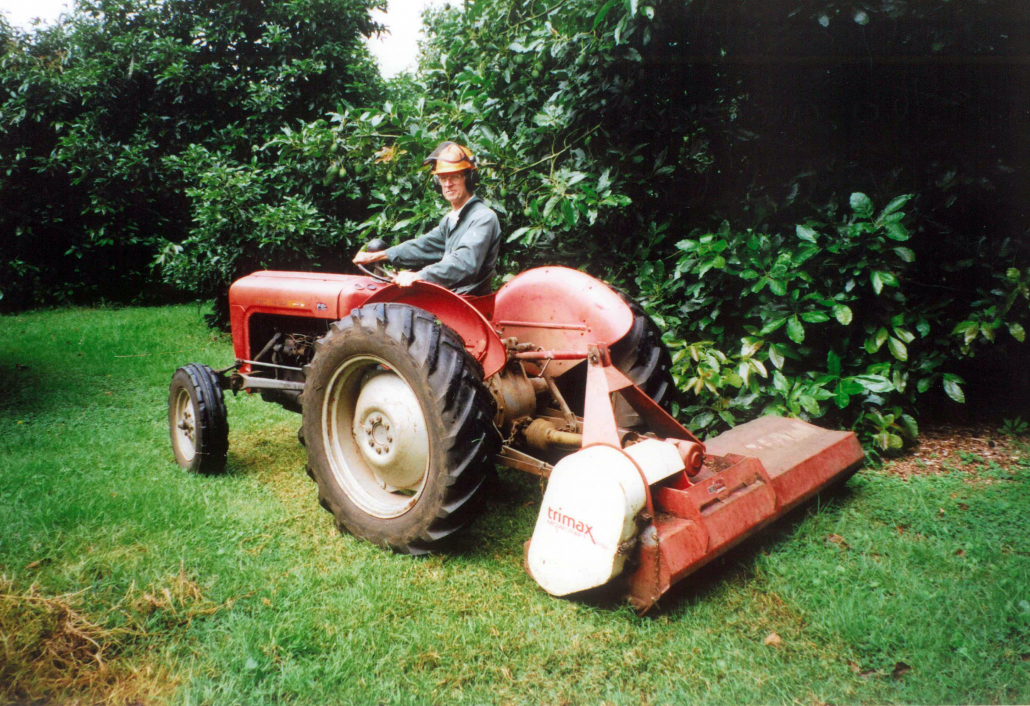
Trimax From The Start: Trimax founder and Managing Director Bob Sievwright talks to us about how far he’s brought the company from its origins in the 1980s, flail mowing the grass under kiwifruit vines in the Bay of Plenty.

Now with offices in the UK, US, Australia and New Zealand as well as distributors across Europe, Trimax has built an unparalleled reputation among turf maintenance professionals for cut quality and machine durability.

Trimax From The Start

Trimax From The Start

The Tractor Whisperer

“I’m a farmer’s son,” says Sievwright. “I grew up on a small back country cattle and sheep farm where the main challenge was converting rough scrubland into decent pasture for the animals. My siblings, my twin brother and I worked every hour available after school, weekends and holidays. Most of the pulling on the steep hills was done using horses, but it turned out I was useless on a horse; I kept falling off. So, from the age of about 12, I gravitated towards the tractor and farm machinery. The horses knew they were smarter than me but the tractor always did what I wanted!”

Always looking for a better way

That strong work ethic and an affinity with machinery were two things that would prove critical in Sievwright’s career, as well as the sudden death of his father in his last year of high school. “I realised at that point it was up to me to get going and see what I could do. I got myself an overseas scholarship as an Engineering Cadet with General Motors New Zealand and later in Flint MI, which is where I did my Engineering degree, and learned all about car manufacturing. I came back in 1974 and got the chance to start my own company.” Not Trimax. It would be another eight years before Sievwright moved into the machinery of grass cutting. Before then he would hone his business, sales, marketing and export skills making meat hooks for local abattoirs from hardened and tempered spring steel.

On one of his meat hook business trips in 1981, 33-year old Sievwright spotted a flail mower with a blade made from two steel pieces welded together. “I sat down and sketched a blade that I knew we could make from just one piece of steel and sent it to the manufacturer. He liked it and we got an order for a thousand blades: my first order for the Gamma flail!” That particular mower manufacturer bit the dust a couple of months later and Sievwright’s blade deal fell through, but he wasn’t fazed. He decided to up sticks, move his business and his young family to Tauranga, New Zealand to manufacture the mowers and the blades himself. He hired a mower engineer (Norm Miller, who still works at the company’s HQ today) and went into production. For Bob meat hooks were out and Trimax Mowing Systems was born.

Inspiring productivity

The first Trimax models on the market – Ezeemow, Mowcraft and Mulchmasta – were originally aimed at New Zealand’s booming kiwifruit farming industry. But demand soon grew from park groundsmen and reserve landscapers who had heard of the mowers’ reputation for durability, quality of cut and low maintenance. In 1985 Trimax diversified into rotary mowers and purchased a complimentary mower manufacturing business, owned by Jim McEwen. Sievwright says: “Jim had design skills that I can only describe as an art form. All his mowers looked great and mowed well, so I invited him on board; we worked well as a team and together we had easily the lion’s share of the local municipal market in New Zealand.”

Jim McEwen set up Trimax’s first Research & Development department. He explains the company’s success. “We have always challenged the status quo and offered a fresh approach to mower concept and design. We produce machines that are aesthetically pleasing, exceed the customers’ performance expectations and have a longer life.”

We see possibility

In 1985, Trimax started exporting their pioneering mowers, the Procut and the Stealth to Australia. All part of Sievwright’s vision: “I was determined we would export as I’ve spent almost half my life outside of NZ. Part of the design parameter was always that our mowers had to be internationally saleable, commercial quality products that delivered long-term value. Trimax has succeeded where others failed by offering premium products, premium service and always listening carefully to the end-customer. Jim and I have travelled overseas many times, trying to understand what users need in each market.” After rotary mower Stealth S1 set a new standard of grass cutting in Australia, it came as no surprise when Trimax started exporting to the UK. Brits loved the Stealth S1 too and by the end of the 1990s Trimax had opened their first UK office and warehouse in Northamptonshire. Trimax mowers were now being used in many prestigious locations including Windsor Castle and the ten perfect polo pitches at the nearby 130-acre Guards Polo Club.

 But not content with cutting the Queen of England’s lawns, Sievwright set his laser-sharp sights next on the USA. Trimax sold its first rotary roller mower there in 2001 and opened up a distribution warehouse in Georgia in 2005. Tinkering away with America’s grand scale in mind, the research and development team launched the X-WAM in 2009, a 10m-wide monster, like nothing else on the market. The scale, reliability and pristine cut of the X-WAM meets the needs and boosts the profits of the country’s mammoth turf farms. Just Google Trimax X-WAM and wonder at the size of it.

Marketing-led approach

Trimax had hired its first marketing executive in 2001. Before then the business attributed its two decades of growth to great salesmen. “We won a lot of customers throughout the 80s and 90s by demonstrating our products” recalls Sievwright. “When I started there were seven other mower manufacturers in NZ. We had to be different and we had to prove we were better. When you’re so sure you can outperform your competitors, you have no hesitation doing side-by-side battles. We won them all.” Sievwright’s proud of his products’ ability to perform but acknowledges that today’s business environment demands a more marketing-led approach: “We still need to demonstrate as much as possible but we do that while also sharing the Trimax story.”

Innovating with purpose

“Our approach to innovation has always been driven by customers. We listen to how they use their products and design purposeful innovations to help customers achieve their potential”. It was this approach which led to the development of one of the company’s most iconic mowers – the Snake! A fully dedicated sports turf mower, utilising 30 years of innovations and refined engineering practices all rolled into one incredible product. Released in 2014, “the Snake solved many challenges and transformed the lives of many groundsmen across the globe”.

“As a kid I always remembered our farm equipment needing lots of tedious maintenance and how frustrating and costly break downs would be”. His ability to relate and empathise with customers, coupled with his desire to push new boundaries, Sievwright says “the ultimate goal would be to produce a zero-maintenance mower”. With that in mind, Trimax went on to develop an array of innovations, such as; SteadFAST maintenance free spindles, auto-belt tensioners and the LocTEK stubless roller retention system, all focused on bringing Trimax one step closer to the ultimate goal.
Trimax From The Start

Trimax From The Start

Powering performance

With sales continuing to boom, in 2015 Trimax expanded their UK operation by purchasing a 16,279 sqft facility in Northamptonshire, and in 2019, a 25,000 sqft facility in Georgia, USA. With offices now around the world, employment numbers soring to 100, and an ever-expanding community of Trimax users – this was something Sievwright only dreamt of!

With Trimax still only scratching the surface of what the huge USA had to offer, Sievwright rooted himself in the market and made it his mission to better understand their needs. “Each market that we operate in is truly unique, as are the requirements of each individual. It’s important for us to acknowledge this so that when we are developing mowers, we can be sure they meet these requirements without compromise”. Needless to say, it wasn’t long before Sievwright identified an opportunity – an opportunity to build a new concept of a castor wheeled mower!

Not afraid to follow what the market required, Trimax and the team set about developing their first ever castor wheeled mower, later named – The Vulcan! Having only just been released in the USA market in 2019, this 7m wide mower is sure to impress!

Personal partnerships

Despite taking a step to the side and passing the reins over to the next generation (his son Michael), he still remains a very active salesman (as he describes himself) within the business. “I’m so proud when I see how much the whole Trimax team continue to fight for the customer. It’s what got Trimax this far, and it’s what will ensure we have a long and creative future”

What started out as a family-run business whose innovation was founded on culture and driven by community, is still very much that. A culture of partnerships which challenge the status quo, inspire productivity, and raise the bar on results.

Trimax is proof of what can be achieved when the right mix of culture, partnerships and innovations are put together! It’s only a matter of time before we see the next Trimax mowing innovation enter the market!!

For the latest industry news visit turfmatters.co.uk/news

Get all of the big headlines, pictures, opinions and videos on stories that matter to you.

Follow us on Twitter and Instagram for fun, fresh and engaging content.

You can also find us on Facebook for more of your must-see news, features, videos and pictures from Turf Matters.

GGM announce new Roberine partnership

GGM announce new Roberine partnership: GGM Groundscare are delighted to announce a new partnership with Roberine, the world class Dutch manufacturer of self-propelling mowing machines.

GGM has a rich heritage in the ride on commercial mower sector and as the business prepares to celebrate its 20th anniversary at its headquarters in Colne, Lancashire, the move sees it return to its roots.

GGM announce new Roberine partnership

GGM announce new Roberine partnership

Managing Director Chris Gibson explains more:

“When the business was relocated to Colne back in 2000, we were suppliers of Kubota and Hayter Professional, which was subsequently bought out by Toro. We described the brands as the right and left legs of the business – the absolute cornerstones of everything we did. Over time, we’ve explored and been extremely successful in other sectors. Now, through Roberine, we have found the perfect partner, at the forefront of the development of commercial mowing machines for local authorities and commercial landscapers”.

GGM takes on the franchise from the 1st May and becomes the supplier across the North West region as well as South and West Yorkshire for these high-quality products. The range includes the NEW High-performance ride on flail mowers in 3 and 5 unit configuration in addition to the traditional cylinder options.

Roberine were recently purchased by the multi-billion-dollar Alamo Group, world leaders in the design, manufacture, distribution and service of high-quality equipment for infrastructure and maintenance. Their business empire includes McConnel, Bomford and Spearhead among other big names in the UK. This new partnership will complement and enhance our existing franchises of Kubota, Amazone, Major and Baroness and ensures the company can offer customers a greater choice of commercial equipment, supported by awarding winning after sales and service

Managing Director Chris Gibson explains more: “We are extremely excited about adding the Roberine franchise to our portfolio, offering our customers the new generation of ride on commercial flail mowers. It is the perfect addition as we continue to grow in the commercial sectors”.

The new partnership comes after initial discussions at last year’s Saltex, when GGM learnt of Roberines’ desire to develop its UK commercial business which would ultimately prove to be mutually beneficial. The GGM team explained their business ethos and strategy and they were confident they could substantially grow the business across the North West of England and West and South Yorkshire, thanks to their experience in the commercial mowing sector. As part of this agreement GGM will take over the responsibility for the continued service and warranty of all machines supplied by the former dealers.

GGM have already added the Roberine F3 triple flail to its ever-expanding hire fleet and have several units already working in the marketplace with two local authorities, and have recently taken delivery of new F3 triple and F5 high output 5-unit flail demonstration machines.

Chris Gibson continues:

“We believe the machines offer a superior quality of cut and performance advantages over other machines on the market and we’ve already been investing in training our after-sales team and parts inventory to ensure all Roberine customers both old and new receive the award winning service GGM customers have become used to.”

“Roberine is a long-established brand and it’s history of success mirrors that of GGM Groundscare as we celebrate our 20th year at our head office in Colne. We are both committed to delivering outstanding customer service, fixed price service contracts, extended warranty packages and looking forward to demonstrating this to all our local authority and commercial customers across the region

Maarten Ponne at Roberine said,

We are delighted to have GGM Groundscare on board to represent the Roberine brand. Changing dealership representation is never an easy decision but we believe that, in GGM, we have a partner with a clear shared vision of how best to support our brand throughout the region. They have a proven track record for working closely with commercial customers and are keen to continue to invest and develop their business even in these challenging times. The appointment of GGM follows that of Lister Wilder in the South and both appointments demonstrate our commitment to grow a professional dealer network with a proven track record for customer service and support.

For now, it’s important we all stay safe, but we will continue to work in the background to develop our dealer network and work with all our partners to ensure we are ready to grow our business in the UK as soon as we are able to do so.   Our products have been engineered with optimum performance in every respect, and our manufacturing method is world class.”

For the latest industry news visit turfmatters.co.uk/news

Get all of the big headlines, pictures, opinions and videos on stories that matter to you.

Follow us on Twitter and Instagram for fun, fresh and engaging content.

You can also find us on Facebook for more of your must-see news, features, videos and pictures from Turf Matters.

JCB serves up 10,000 meals

JCB serves up 10,000 meals: JCB’s ‘Food for our Communities’ initiative today served up a major milestone as the 10,000th meal was despatched from the company’s kitchens for those in need in Staffordshire.

Since the launch of the scheme  – the idea of Carole Bamford, wife of JCB Chairman Lord Bamford –  catering staff at the World HQ in Rocester have been busily preparing cottage pies, macaroni cheese and bolognese dishes for disadvantaged families and individuals across the region during the Coronavirus crisis.

JCB serves up 10,000 meals

JCB serves up 10,000 meals

Today the 10,000th meal was cooked and despatched from the JCB kitchen – just a month after the initiative started. So far, the team has used around two tonnes of potatoes, more than one tonne of minced beef and almost half a tonne of both pasta and onions to prepare the dishes.

In India – where JCB has factories in Delhi, Pune and Jaipur – the scale of the initiative is even greater and staff there have now prepared a staggering 100,000 meals.

Carole Bamford, wife of JCB Chairman Lord Bamford, said: “I’m very proud of all the work the teams in the UK and India are undertaking. Their efforts are making a real difference to the lives of so many people in our communities.”

Thousands of the meals made in Staffordshire are being distributed across Stoke-on-Trent by the Burslem-based Hubb Foundation, to children and families in need across the city.

Founder Carol Shanahan said: “You cannot underestimate the impact the JCB ‘Food for our Communities’ initiative is having on families in our city. Those receiving the food are just so very grateful that companies like JCB are stepping in to help at this time. It’s simply amazing.”

Since launch, the project has been expanded to include sandwiches and so far, more than 2,000 have been made for distribution to the homeless in Stoke-on-Trent and for inclusion in food parcels for vulnerable people in the Uttoxeter area. JCB is also supplying St. Michael’s Church Support Group in Rocester with 100 meals a week for villagers who are in need.

JCB Chef Alastair Rowe said: “It is very rewarding for the whole team to be involved in this project. We have had some wonderful feedback which shows our communities really do appreciate what JCB is doing at this time.”

As well as providing thousands of meals, JCB has also donated vital PPE to front line workers and JCB and its employees have volunteered to produce facemasks for the NHS. Inspired by these efforts,  JCB-sponsored athletes, slalom canoeist Adam Burgess and triple jumper Ben Williams, took on a marathon weight lifting challenge and have so far raised more than £2,400 for the Royal Stoke Hospital.

JCB’s kitchens in Staffordshire are being supported with the provision of food from organic farms at Daylesford in Gloucestershire. Daylesford – founded by Carole Bamford – has supplied organic beef mince to the project, with staff working seven days a week to support the food aid initiative.

In the UK, JCB is also working with Stoke-on-Trent City Council, which is distributing JCB meals to vulnerable adults and children across the city.

For the latest industry news visit turfmatters.co.uk/news

Get all of the big headlines, pictures, opinions and videos on stories that matter to you.

Follow us on Twitter and Instagram for fun, fresh and engaging content.

You can also find us on Facebook for more of your must-see news, features, videos and pictures from Turf Matters.

The Worker Is King: GKB Sandfiller

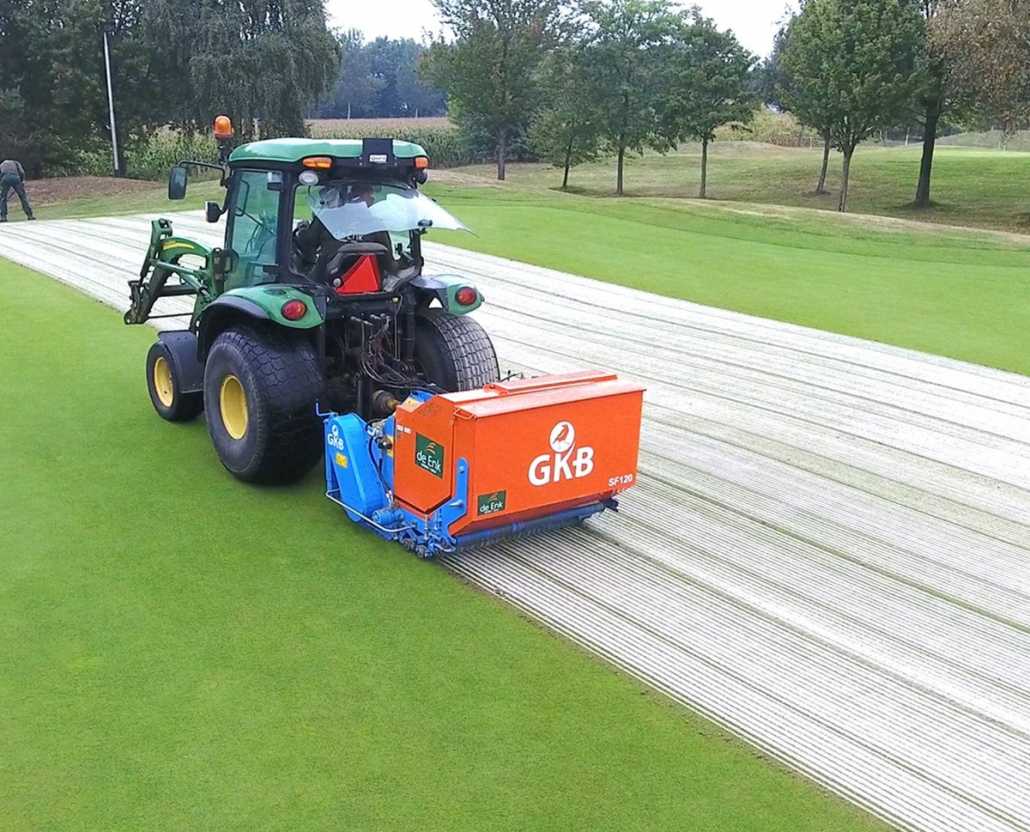
The Worker Is King: GKB Sandfiller: GKB Machines, the company behind sustainable, reliable and robust maintenance machinery for natural, synthetic and hybrid turf are offering the possibility to remove organic matter and sand-fill in just one simple and efficient operation, thanks to the GKB Sandfiller.

Understanding the primary target and aspiration of greenkeepers is to achieve perfection from tee to green, the GKB Sandfiller helps fulfil this aspiration. Combining scarifying and sand-filling in one hassle free operation, this impressive machine takes a 6-person job and allows this working method to be executed by one person. Scarifying and sand-filling in this way means the surface always remains stable and improves the drainage system.

The Worker Is King: GKB Sandfiller

The Worker Is King: GKB Sandfiller

From the foundations of the reliable and much-praised GKB Combinator, the GKB Sandfiller encompasses its robust and effectiveness to provide the ultimate renovation tool. The GKB Sandfiller features a slitting rotor which is provided with carbide scarifying blades, these blades and a unique paddle attachment create wind to lift the removed material off the surface. Offering different thicknesses of 2, 3 and 4mm blades depending on the amount of organic matter that is needing to be removed and sand to be injected. The 1.2 metre working width of the machine allows jobs to be carried out quickly and efficiently with sand being injected every 4cms’ by the sand coulters.

The scarifying blades allow the removal of organic matter up to a depth of 4cm and the sideways-tipping hopper enables the immediate removal of the scarified material. Consequently, there’s no need to remove excess material from the surface. Once the hopper has been emptied, simply refill the separate sand hopper with drainage sand.

For more on GKB Machines and their reliable and robust range of machinery for natural, hybrid and synthetic turf, please visit www.gkbmachines.com or contact Tom Shinkins on 07495 883617 to enquire about the GKB Sandfiller to help give you the best playing surfaces possible.

For the latest industry news visit turfmatters.co.uk/news

Get all of the big headlines, pictures, opinions and videos on stories that matter to you.

Follow us on Twitter and Instagram for fun, fresh and engaging content.

You can also find us on Facebook for more of your must-see news, features, videos and pictures from Turf Matters.

Bobcat dealer resurrects M-600D loader

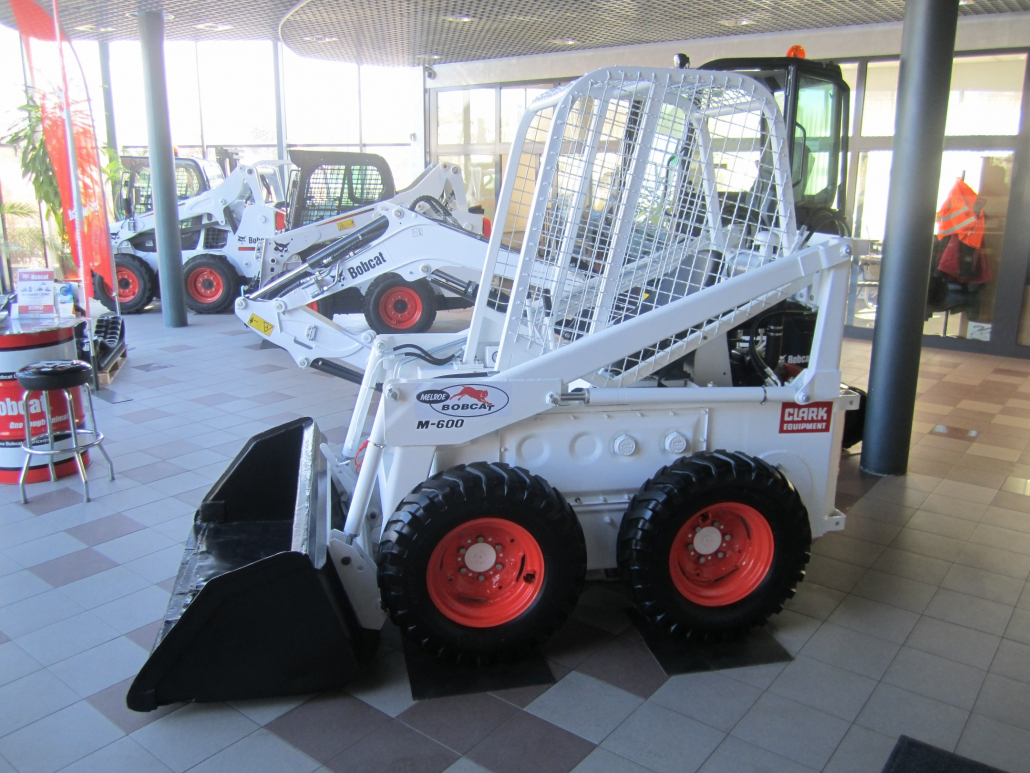
Bobcat dealer resurrects M-600D loader: Kono, the Riga-based Authorised Dealer for the Bobcat range in Latvia, has completed a project to renovate a very rare and historic Bobcat M-600D skid-steer loader that is around 50 years old and now fully working again.

The M-600D was first introduced to the Bobcat range in 1967 and what makes this refurbished M-600D such an incredibly rare find is that it was not manufactured at Bobcat’s traditional base in North Dakota in the USA, but instead under licence by Scheid Maschinenfabrik GmbH in Germany in the early 1970s. The M-600D could have been lost for all time, but was found by Ivars Gailums, a Director at Kono, buried on the internet, where it was being offered for sale by a used equipment supplier in Berlin.

Bobcat dealer resurrects M-600D loader

Bobcat dealer resurrects M-600D loader

In 2018, Bobcat celebrated the 60th Anniversary of the compact loader and a sixty year legacy second to none in the worldwide construction equipment market. After its introduction in 1967, the M-600D model was a popular model and Bobcat carried on producing it until 1975.

Bobcat Loader Manufactured in Germany in the Early 1970s

Several challenges had to be overcome to transfer the M-600D from Berlin to Riga and Ivars Gailums has paid great credit to the truck driver who finally brought the machine to Kono about two years ago, when work began on rebuilding the unit. Ivars Gailums commented: “Thanks to the efforts of the driver, we now had this M-600D delivered and it was my goal to rebuild it as authentically as we could, to keep its original parts intact as much as possible. Shortly after the M-600D arrived, I contacted Robby Bosch, who has recently retired from Bobcat in EMEA after nearly 40 years of service, hoping that his experience and knowledge would be of great use, which of course it has been.”

Calling on Expert Advice

In the EMEA region, there can be no better person to ask than Robby, who has carried out similar refurbishments himself. Prior to joining Bobcat as a Field Sales Trainer in 1981, Robby already had six years of experience as a Service Manager with a Bobcat dealer in his native Netherlands, where he worked with several customers with M-600Ds.

Ivars Gailums continued: “The first thing Robby asked me was whether or not the rear counterweight was still present, as this tends to be the first component that disappears. Fortunately it was still in place. Over the last two years, Robby has generously continued to provide valuable advice, as has Jurgen Gremez, Bobcat Institute Director for Doosan Bobcat at the EMEA headquarters in Dobris in the Czech Republic.”

The biggest challenge has been obtaining specific parts, which because of the age of the machine are obviously no longer available to order. It was also a challenge to find out what the M-600D really looked like, as there were several engine variations that affected how the overall machine appeared.

Ivars Gailums added: “I have focused on every aspect – even whether the bottom of the seat was one piece or sewn together, as well as the colour of the bucket, they are all important to me. On the internet, the book published to celebrate Bobcat’s 50th anniversary had pictures of machines with buckets painted white. Again, thanks to Robby Bosch, who was able to answer questions like this about the M-600D.”

Refurbishing in Busy Times

The duration of the project has been just over two years, but it could have been shorter except for the last winter season, when it was much busier than usual at Kono and this delayed the renovation process.

Ivars Gailums continued: “Because we were busy, we changed our plans and speeded up the process. The M-600D when it was disassembled into many parts, tended to take up a lot of space so we had to take account of this so it didn’t cause problems in our workshop. The work on the machine was mainly done by a team of three of our service engineers.

“The team was led by our most experienced engineer, Juris Gailitis. The Deutz engine was brought back to life by our youngest service engineer, Davis Graustins, who can be assigned the finest and most accurate work tasks. Last but not least, the third member of the team was Dzintars Lorencs, who performed welding and repair work on the steel components.

“Demonstrating Bobcat’s ‘One Tough Animal’ motto, several components such as the chaincase and chain had survived the years of service in pretty good condition. But the engine cooler on the Deutz engine presented a real problem as the original was heavily corroded and it was not available as a spare part. But we managed to get it from Deutz, where it was also one of the last parts of its type in their stock.

“Sandblasting and powder coating services were outsourced and the leather seat was restored by a company which specializes in restoring old motor vehicles and rebuilding expensive modern cars. I also involved family members to get some unique spare parts – including a shaft, the air filter cap and authentic Melroe Bobcat and Clark stickers from the USA. In the period when our M-600D went into service, it would have carried stickers for Melroe Manufacturing Company, the forerunner to Bobcat Company, the Bobcat ‘animal’ logo as it was then and the logo for Clark Equipment, who bought the rights in 1968 to sell Bobcat loaders outside the USA.”

Jaroslav Fišer, Product Line Director for the Bobcat compact loader range in EMEA, added: “We are very proud of what Ivars and the team at Kono have achieved with the refurbished M-600D. It is yet another episode in our story, which began over 60 years ago in North Dakota in 1958 when Melroe introduced its first compact front-end loader, with a commitment to outstanding quality, workmanship and innovation that is even stronger today. It is another tribute to the longevity and durability of the Bobcat loader range, which has seen us pass the production milestone of one million Bobcat loaders in 2014 and to strengthen our market leadership, so that one in every two skid-steer loaders sold today is a Bobcat machine.

”With the fine work carried out by Kono, their M-600D is far more than a picture in our history books, it is a real working machine again, proudly displayed in the company’s showroom in Riga, where it will be enjoyed for many years to come by visiting customers, admirers and Kono staff alike.”

For more information about Bobcat and Bobcat products, visit the website www.bobcat.com

For the latest industry news visit turfmatters.co.uk/news

Get all of the big headlines, pictures, opinions and videos on stories that matter to you.

Follow us on Twitter and Instagram for fun, fresh and engaging content.

You can also find us on Facebook for more of your must-see news, features, videos and pictures from Turf Matters.