Greenkeeper celebrates 30 years

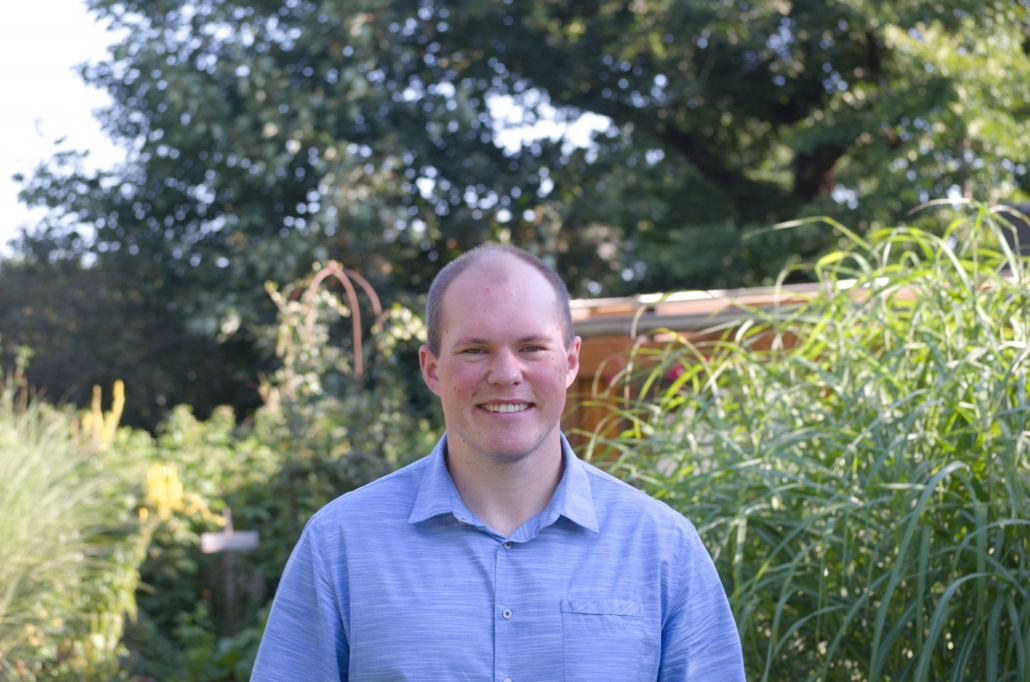
Greenkeeper celebrates 30 years: Darren Hargreaves is celebrating 30 years as the deputy head greenkeeper at Skipton Golf Club.

He has been involved in golf as an occupation virtually since leaving Greenhead Grammar School in Keighley, now University Academy Keighley – although he did initially “dabble” with a course in engineering.

“I soon realised engineering wasn’t for me as no way did I want to be tied to a bench all my life,” he said.

Darren instead teed-up a lifetime career in golf by embarking on an 18-month Youth Training Scheme at Riddlesden Golf Club.

He then became a greenkeeper at Chorley Golf Club in 1984 – following his parents, who had moved to live on the other side of the Pennines.

But Darren was keen to return closer to his roots, and secured the deputy head greenkeeper post at Skipton.

Over the past three decades, he has been involved in all aspects of course management and maintenance at the Short Lee Lane site, as well as ongoing improvements.

He and head greenkeeper Ian Brown have between them been responsible for maintaining the course in peak condition during the coronavirus lockdown.

Darren said the closure of the course had enabled them to “crack on” with work, but that they were delighted play had resumed.

Tributes to Darren and his 30-year achievement have flooded in.

Mr Brown said: “Darren is a highly-experienced and key member of the team.

“He also has a great sense of humour, which makes him popular with the other greenkeepers.

“He’s a real attribute to both course and club.”

And the club tweeted: “We want to pay tribute to Darren Hargreaves, a member of our greens team who has just completed 30 years’ service at the club. Outstanding and a great credit to his profession. Thank you Darren from all the members.”

The club’s board is planning to mark his milestone.

Darren also enjoys a round of golf himself.

He first started playing at the former Riddlesden club, winning a major trophy there as a 15-year-old.

He says he plans to play more when he retires ­– hopefully when he turns 60, in five years’ time.

Click here to read the original article

For the latest industry news visit turfmatters.co.uk/news

Get all of the big headlines, pictures, opinions and videos on stories that matter to you.

Follow us on Twitter and Instagram for fun, fresh and engaging content.

You can also find us on Facebook for more of your must-see news, features, videos and pictures from Turf Matters.

Air2G2 proves to be a ‘game changer’

Air2G2 proves to be a ‘game changer’: The Air2G2 GT Air Inject from Campey Turf Care Systems has played a significant role in transforming the greens at the La Grande Mare Golf Club in Guernsey.

When he arrived at his new job two-years ago, course manager, Rick Hamilton, spoke to the members about their main concerns and the quality and playability of the greens was top of the list.

Air2G2 proves to be a ‘game changer’

Air2G2 proves to be a ‘game changer’

Because the course is built on marshland, the soil is very silty heavy clay, making it a problematic soil profile to produce a healthy root zone. The dense profile was causing the greens to hold moisture in the winter and hardpan in the summer, meaning there was little control of how they performed throughout the year. From his previous experience in Asia, Rick knew the Air2G2 was precisely what was needed to open up the soil profile and bring life back into the greens.

“When I first analysed the greens, I knew we had to take action,” Rick explained. “It was at the point that when we tried to change the holes, we would sometimes snap the blades in the hole cutter because the greens were that hard. The greens are old, they are 25 to 30-year-old push-up greens, so there is no drainage, and the soil type doesn’t help with that.

“For me, the Air2G2 is a game changer. Every now and then over the years, different machines come into the industry, and I would say it is one of those game changing machines. I brought it over on hire from a dealer in Jersey and went out, and I could hardly get the probes to inject at first because the surface was that hard. But I managed to do it with the deep probe and close spacing to really get through into the greens and loosen them up to get water and wetting agent in.

“The first afternoon after we did it, the members came out and played and couldn’t believe there was no disruption to the surface at all, and they were surprised with how clean it was. A few weeks later on we had a bit of rain, and we had a competition and the good golfers couldn’t believe how receptive the greens were with the ball holding.

“The difference in the greens is massive in terms of playability, root development, the health in the root zone and getting the water to penetrate. And in the winter when it’s a bit wetter and softer, it helps to release some of the water and get the greens to drain.”

For Rick, the impact of the Air2G2 was immediate, and after using his own machine for a year, the difference is obvious for everyone who plays La Grande Mare. Because of the course construction and location, there is an extensive aeration programme in place that sees the Air2G2 used regularly along with needle tining, a combination that has made members the happiest they’ve ever been with the greens.

For more information about the Air2G2 or the new Air2 Hand Probe visit www.campeyturfcare.com.

For the latest industry news visit turfmatters.co.uk/news

Get all of the big headlines, pictures, opinions and videos on stories that matter to you.

Follow us on Twitter and Instagram for fun, fresh and engaging content.

You can also find us on Facebook for more of your must-see news, features, videos and pictures from Turf Matters.
Drive, determination and MM seed

Drive, determination and MM seed: Broomfield Bowls Club is considered to have one of the best surfaces, if not the best in the Midlands. The immaculate green is thanks to the drive and determination of a volunteer greenkeeper and a little help from Limagrain UK’s MM range of grass seed. 

Jonathan Blakeman has a long affinity with his beloved bowls club dating back to when father Steve joined in 1985. Steve tended the green at Smethwick Cricket Club between 1988 and 2006 with Jonathan taking the reigns during the 2008 season, he then proceeded to continue to maintain the green to the high standards that the club had come to expect.

Drive, determination and MM seed

Drive, determination and MM seed

Two years later and the club was forced to start looking for a new home. After a lengthy search they eventually moved to the nearby Mitchells & Butlers Bowling Club, Portland Road – who were more than happy to accept their neighbours. The former Cape Hill Brewery Sports Ground was opened in August 1930 and once boasted three crown green bowling greens. Broomfield was given its own green for its members but unfortunately it was not exactly at the standards they were used to.

“I think it is fair to say that the green we were given had fallen into disrepair,” said Jonathan. “The members of the club had tried their best to maintain it but unfortunately it needed a lot of work.”

Jonathan, who was also working full-time, came up with a plan. Armed with the knowledge passed onto him by dad Steve, Jonathan began working round the clock to transform the green.

Ten years later and the green is regarded as one of the best with many players praising its immaculate surface. It’s no surprise to see why the green is so widely lauded when you consider how much time Jonathan puts into maintaining it.

“In the growing season it is cut four times a week and we do verticutting once a month depending on conditions. Then there are the usual treatments and taking the dew off in the mornings.

“Rather than leaving work and doing a hobby somewhere else my interest just happens to be looking after the green for Broomfield.”

Ever the perfectionist, Jonathan decided to start looking for a grass seed which would help the green stand up to such heavy usage, and that was when he first became acquainted with Limagrain UK.

“At Broomfield we have eight league teams so that amounts to about 80 or 90 visiting clubs and that’s just competitive use. On top of that, we have internal competitions and players practicing or playing socially. It’s safe to say that the green has a lot of use between April and September.

Drive, determination and MM seed

Drive, determination and MM seed

“Historically I had always used another brand, but I eventually started looking elsewhere. I knew Mark Allen from Agrovista Amenity and he highly recommended the seed mixtures from Limagrain. That was five years ago, and I have been using the MM range ever since.”

Jonathan relies on both the MM10 and the MM11 mixtures – both of which are traditional 80:20 Fescue and Bent mixtures ideal for overseeding, renovation and construction. The cultivars used in these mixtures have low nutrient and irrigation requirements but still produce a fine, dense sward which creates a superior playing surface. The mixtures are tolerant of close mowing and have excellent disease resistance. Good tolerance to wear makes both MM10 and MM11 suitable for use in high traffic areas.

Although similar mixtures, a variance in the formulation brings out the best in Broomfield’s green according to Jonathan.

“We are always trying to introduce different cultivars and finer species into the surface and the reason for rotating between MM10 and MM11 is because each mixture has a different make-up of cultivars. I just think that the more you have in your surface, the more resilient it can be against the challenges of disease, wear, and drought tolerance. They also produce a fantastic colour all year round.

“One application of either the MM10 or MM11 is all we need and that sees us through the season. We tend to overseed with the mixtures after end of season renovations which are normally within the first ten to fourteen days in October. We’ve got a routine which has worked incredibly well. Firstly, we will scarify heavily and then we overseed with MM10 or MM11. Finally, we top dress and then we don’t have to use any more seed throughout the season because we maintain a good coverage.”

Given the level of commitment and technical excellence Jonathan has demonstrated over the past twelve years, it is obvious that he needs little guidance. However, he was still keen to praise the service and support provided by both Agrovista Amenity and Limagrain UK.

“Their collaboration makes for a great team,” he said. “I frequently see Mark from Agrovista Amenity and then twice a year both him and Matt Gresty from Limagrain will visit me at Broomfield. They will look closely at how the greens are performing and will always offer sound advice. It’s great customer service and I always receive my delivery quickly and efficiently.

“I would absolutely recommend MM10 and MM11 to other crown green bowling clubs – because they really can make a difference.”

For further information, please contact Limagrain UK on 01472 371471 or visit the company’s website www.lgseeds.co.uk/mm – you can also follow the company on Twitter: @MM_Seed

For the latest industry news visit turfmatters.co.uk/news

Get all of the big headlines, pictures, opinions and videos on stories that matter to you.

Follow us on Twitter and Instagram for fun, fresh and engaging content.

You can also find us on Facebook for more of your must-see news, features, videos and pictures from Turf Matters.

Weymouth GC greenkeeper retires

Weymouth GC greenkeeper retires: Weymouth Golf Club will wish a fond farewell to their head greenkeeper this month, as he retires after 42 years working to keep the course in tip top shape.

Rob Bayliss, 64, was appointed head greenkeeper at the club in May 1978 and many at the club will know him from his monthly newsletters.

He will leave his role to retire at the end of this month, but looks back on his time there with fond memories: “Every golfer knows that golf courses have a magic about them, each one is unique in its own way and offers challenges both to golfer and to the greenkeepers that maintain them.

“Apart from the obvious beauty of a golf course as part of the wider landscape they offer safe haven for many forms of wildlife to thrive undisturbed in what is often an urban setting. So choosing a career where you spend your working life in such a wonderful surroundings is perhaps the envy of many who like to spend their leisure time out on the course.

“I even met my wife Tina at the club when she was working in the office. She enjoys volunteering to work on the course and every weekend that I have been on duty, without missing a day she comes along to help with setting up the course for play. Such is the magic of the course she will miss working here just as much as I will.”

Mr Bayliss has faced many challenges during his long career, most notably the building of the link road for the Granby estate, which involved a complete redesign of six holes across the course and construction of new tees and greens.

More recently, he has overseen the course during the coronavirus pandemic and has managed to keep it in perfect condition while golfers were banned from the site.

Colin Huckle, president of Weymouth Golf Club, said: “Rob is a highly skilled team leader and a longstanding and loyal employee working at Weymouth Golf Club, providing members and visitors with a first class facility.

“During his career he has been responsible for implementing a number of major improvements to the course.

“All of us at Weymouth Golf Club wish Rob a long, healthy and happy retirement.”

Click here to read the original article

For the latest industry news visit turfmatters.co.uk/news

Get all of the big headlines, pictures, opinions and videos on stories that matter to you.

Follow us on Twitter and Instagram for fun, fresh and engaging content.

You can also find us on Facebook for more of your must-see news, features, videos and pictures from Turf Matters.
How much water to apply?

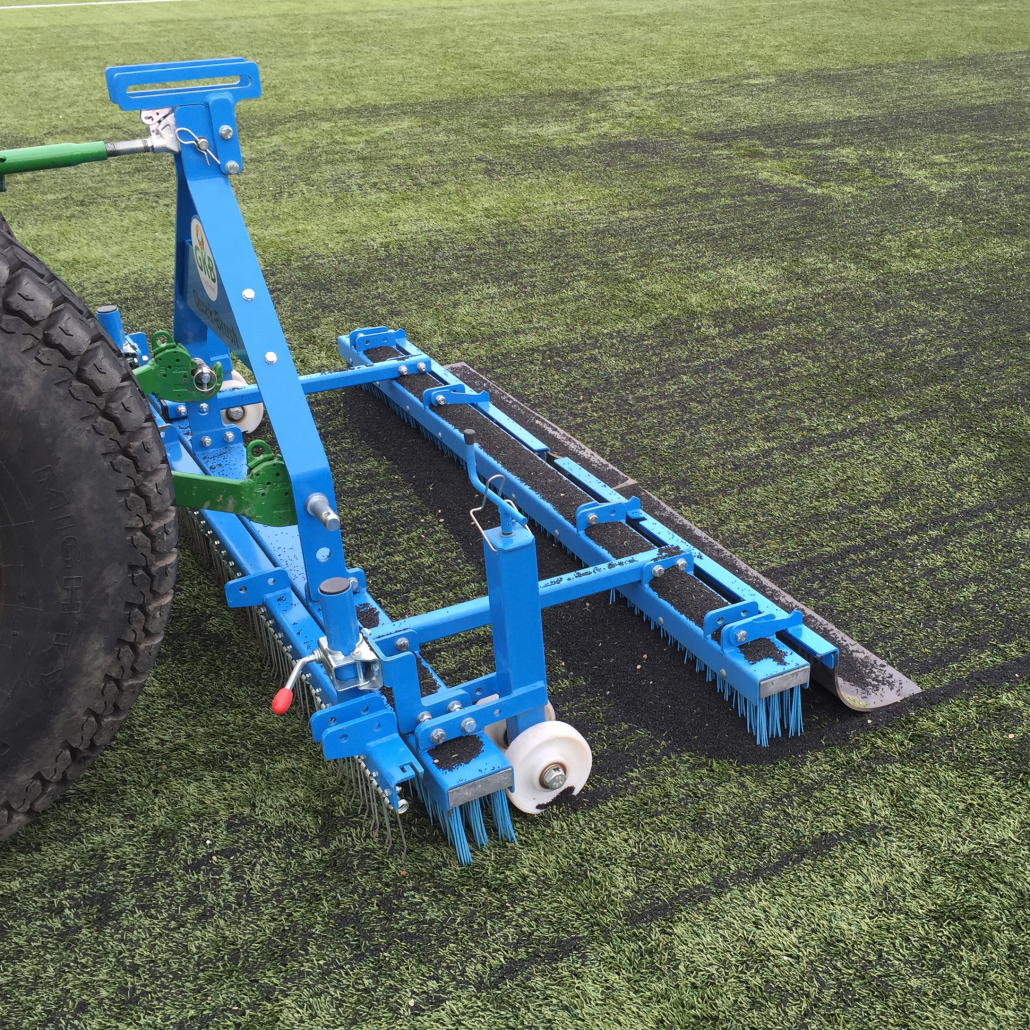
How much water to apply?: Knowing how much water to apply to turf is often seen as a matter of guesswork. Peter robin suggests that a more analytical approach is taken to irrigation.

Firstly, why do we irrigate turf? This might seem a dumb question but let’s look at it in more detail. Irrigation applies water when rain hasn’t been adequate. The roots suck up the water; this keeps the leaves turgid, and the water mobilises nutrients (your fertilisers) in the soil so they can be sucked up and used. So, no water = no nutrient uptake = an unhealthy plant.

How much water to apply?

How much water to apply?

Getting back to watering. How much water should you apply to keep your turf happy? You could make the same assumptions you made yesterday and the day before, but if you want to be more accurate then we can use daily evaporation figures from local weather stations. There are also very useful tools like the POGO if you’re lucky enough to own one (go to www.rigbytaylor. com if you want more information); this will accurately measure your soil moisture levels

These figures are useful but we need to manipulate them. Let’s start by understanding water loss by daily evaporation. A plant is not the same as a puddle of water because it has stomata that open and close according to the turgidity of the leaf. As soon as the leaf starts to lose too much water the stomata close; this reduces how much water can escape from the plant.

Therefore, while in the example of the puddle, water is still evaporating, the evaporation rate from the leaf has reduced. This ability of the stomata to control evaporation is called the Crop Coefficient.

A tropical fern dropped into the sunshine will wilt within minutes; that’s because its crop coefficient is very high. Compare that with a cactus. It can sit in the same sunshine for a month and not lose any water. Its crop coefficient is very low.

A temperate turfgrass has a crop coefficient of around 0.7 (coefficients never get above 1). This means that the amount of water lost through the leaf, called evapotranspiration (evaporation and transpiration stuck together), is the evaporation rate from the weather station x the plants’ crop coefficient. So when the weather stations’ evaporation rate is say 5mm, the amount of water the turf is likely to lose is 5mm x 0.7 = 3.5mm. This is the amount of water that you need to re-apply for the turfgrass to grow optimally.

If you apply less than 3.5mm the plant is likely to become stressed, while more than 3.5mm is just a waste of water and kilowatts from your extra pumping. However, if you apply 3.5mm, is it even going to get down into the rootzone or just sit near the surface?

This is a real concern, because the last thing most turf professionals want is a whole bunch of roots growing very close to the surface; made worse of course if you happen to be growing your turf on a sand carpet. If the main feeder roots are down an inch or two in the profile, how do we get 3.5mm of water to travel down deep enough

This brings us to how we irrigate. We need to irrigate in such a way that the water reaches the feeder roots two inches below the surface. To do this we will probably need to apply significantly more than 3.5mm. If for example we apply two days’ worth; 7mm, then that water will wash down into the soil profile much better.

To do this we need to change our irrigation to watering every two days. The problem is that you are growing the turf for reasons other than it just being healthy; it will have a ball kicked across it and players running over it. It therefore needs to take a stud, provide a consistent bounce and help create the optimum playing surface.

This perhaps can be managed by timing what day or days of the week you apply a deep irrigation. One useful process is to use your irrigation controller to apply the water in a better way

If you just dump several millimetres of water onto the surface of your pitch, some will sink in, some will puddle, some might run off, and some will travel all the way through your soil profile and into your drainage. We need to make sure as much of the water you apply stays in the rootzone. In other words we want the soil to reach Field Capacity; this is how much water the soil can actually hold. To allow the soil to reach field capacity it is important to apply the water in a few smaller doses, so each dose has the chance to be absorbed by the soil. If you are applying say 10.5mm of water (3 days’ worth assuming a 5mm evaporation each day and a 0.7 crop coefficient), then by applying 3.5mm, waiting an hour, applying another 3.5mm, waiting another hour, then finally applying the last 3.5mm, there is much more chance for the soil to have absorbed and held onto as much of the water as possible. This can be achieved by changing from having one start time on your irrigation controller to having 3 start times an hour apart; many controllers name this “Cycle & Soak”.

This is made simple because you can just tell the controller how many total minutes you want to irrigate for, and how many cycles (3 in this instance) you want. Then you can set how long you want to wait between applications, which is the “soak” part. This makes life simpler.

It is important that an irrigation change of routine is not made overnight and hope for the best; if the turf has had lots of shallow watering, its roots will be designed for shallow watering. You’ll need to “train” your turf to grow differently, and this could take a few weeks at best. However, the results should be a stronger turf plant with more resilience.

For the latest industry news visit turfmatters.co.uk/news

Get all of the big headlines, pictures, opinions and videos on stories that matter to you.

Follow us on Twitter and Instagram for fun, fresh and engaging content.

You can also find us on Facebook for more of your must-see news, features, videos and pictures from Turf Matters.