
No Excuses Now!
Scotland’s new Performance Centre gives the country’s sporting elite (and aspiring elite) the chance to maximise their potential
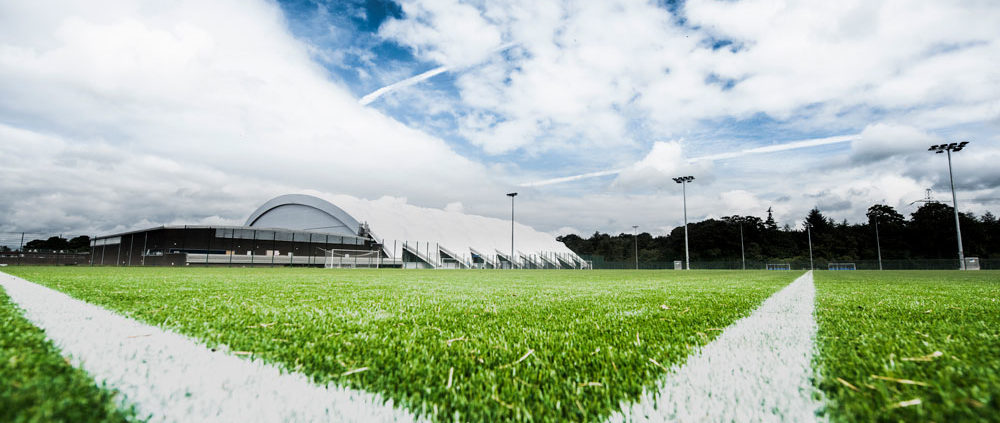
There may not be any conclusive evidence so far when it comes to the round ball game, but it would not be too much of a stret ch to attribute some of the improvement in Scotland’s oval ball performances to the wonderful new Oriam National Performance Centre, based on the Heriot-Watt University campus in Edinburgh, and opened late last summer.
There had long been a frustration among Scottish sports’ supporters that the nation which had produced the likes of Jim Baxter, Denis Law, Kenny Dalglish, Gordon Brown, Andy Irvine and Gavin Hastings was punching well below its weight when it came its national teams. Lack of high quality facilities were identified as one of the hurdles preventing genuine progress and, with envious eyes cast south of the border to the magnificent FA St George’s Park, plans were drawn up which matched the needs, within proportionate revenue restrictions, for Scottish sport.
While the £120 million St George’s Park was very much a FA complex, with opportunities for other sports, including rugby, to utilise the facilities, the new Scottish Performance Centre was always destined to be much more universal, with a number of sports having equal status, while it was also to give members of the public the opportunity to share the same facilities as that the country’s sporting heroes.
With a budget of £33 million made up largely from the Scottish Government, with valuable contributions from sportscotland, Heriot-Watt University and City of Edinburgh City Council there was a sufficient pot of money available to ensure that a facility worthy of the sport’s mad Scottish nation would be built.
Once contracts and contractor had been agreed construction work got under way in March 2015 and was finally opened in August of last year.
And what has been achieved silences those many armchair critics – Scotland has more than its fair share – who were deriding the concept as a “White Elephant” even minutes after the ink on the blueprints had had time to dry.
With the country’s dodgy weather often used to explain why silky skills are not as easily achieved in Scotland as they are in sunny Rio de Janeiro or on the hard running pitches of Australia and South Africa the key facility is the massive indoor pitch – the biggest in all of Europe.
 The 116 metre by 76 metre dimensions are the same as those at Hampden Park while the 28 metre high roof, 15 metres at its lowest, can accommodate a Stuart Hogg up and under without risking a visit from the glaziers.
Either side of the pitch there is the strength and conditioning, medical and rehab centres and hydrotherapy pool on one side and the public and student facilities on the other.
Outside there is a full sized artificial pitch and seven grass football and rugby pitches.
The team did visit St George’s Park, in Burton, Staffordshire, as well as other English Premier League clubs, to see what has been achieved but there is great pride taken from the fact that there are elements within Oriam which are superior to other facilties. Not least the indoor pitch which, in addition to being large, has been built in such a fashion that natural light is in abundance.
The new pitch came from GreenFields, who already had history with Heriot-Watt having installed two pitches on the campus, and installed by Allsports Contruction and Maintenance.
“We were delighted that Oriam selected our GreenFields woven premium product for all three of their sports pitches. GreenFields MX TriMension is a high quality 3G woven product offering exceptional playing performance and has been selected and endorsed by many top clubs around the world including Arsenal, Celtic, Charlton, PSV and Vitesse,” said Paul Milton, Commercial Director for GreenFields.
“Our triple W-weave technology results in an extremely high tuft bind making the fibres stand much straighter resulting in a highly resilient pitch. We find many more organisations are opting for our woven technology as they find the play it enables is much more natural and the pitch looks aesthetically pleasing throughout the year with long lasting upright fibres,” explained Paul.
 “GreenFields offers a full design and installation service in both England and Wales, however, in Scotland we work with our strategic partner, Allsportscm, widely known as accomplished pitch constructors, who have worked on a number of high profile projects with us.”
The various pitches were installed over a period of time, to fit around other work which was being carried out at the time.
“The pitches were installed at different times, the small indoor pitch took three weeks, the outdoor pitch took eight weeks, as that was extended, while the indoor main pitch took four weeks after the area was handed over by the main contractor,” explained Gordon Thompson, Allsports Managing Director.
“We were delighted to be associated with this project to add to our reputation of delivering high end football installations for professional teams in Scotland. Other projects we’ve worked on include Celtic’s Training Ground, Alloa and Falkirk football clubs, as well as Petershill for Glasgow Life and Kelty Hearts all of which were GreenFields MX fields.
“MX has been a well-received product and a number of clubs and facilities have shown interest in installing the product going forward. It has a reputation of being a top surface to play on and with Allsportscm relationship with GreenFields we will continue to deliver high end facilities for sport.”
The customer, Oriam, was more than satisfied with the playing surfaces produced by GreenFields and Allsportscm.
“We are absolutely delighted with the quality of the surface delivered by GreenFields. The feedback we have had from performance groups, such as Scottish Rugby and the Scottish FA, echoes our sentiments,” Ross Campbell, Director at Oriam.
“The feedback on the synthetic pitches has been excellent since opening. Feedback from all levels of play from recreational to performance has been that it is the best synthetic pitches that they have played on in the country.
We have a full range of users from the Senior National Rugby team to our local Currie FC youth groups. The range of customers has been a real benefit to the centre.
The additions of the indoor slick system and green crumb have been an excellent addition to the facility.
“We have been very pleased to work with Allsports through the installation and on-going maintenance of the facility. The service has been very professional.”
The sight of Scotland’s rugby stars training at Oriam became extremely familiar during the Six Nations and the opportunity to rehearse moves and perfect handling in perfect conditions cannot do anything but be beneficial in the long run.
It must be hoped by the Tartan Army that similar opportunities are grasped with both hands by the football team too!
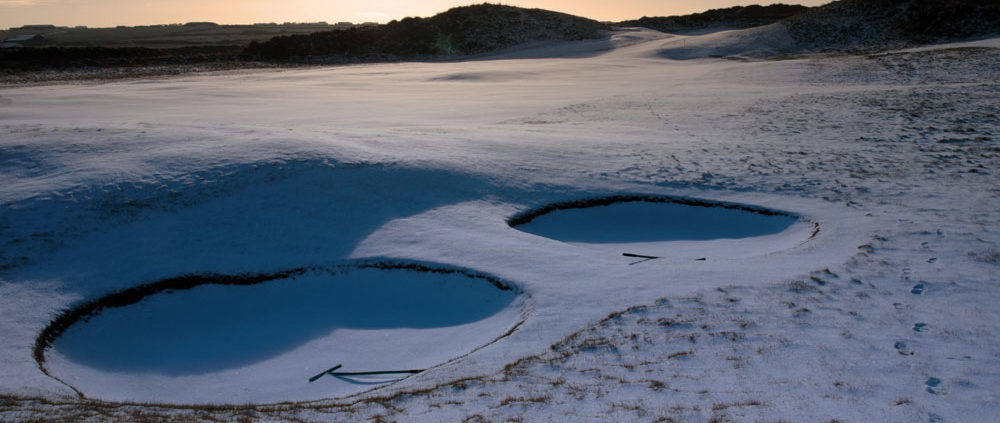
 It’s a myth which needs exploding. Sports turf professionals do not hibernate in the winter. Nor do they spend their time playing darts or three card brag in the Mess Room. Sports turf professionals do an inordinate amount of work during the winter months, work which often makes the quality of the surfaces so much better in the main playing seasons.
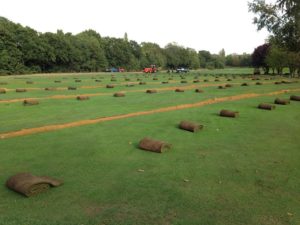 GE: I always try to have two teams going. One on projects and other focusing on the golf course. I try and give people a project. Make someone Project Manager and then keep them on that project until it is completed. We might give someone else the responsibility of the next one. When you are doing a project you do want to focus 100% and get it done.
 GE: Not really winter, funnily enough, but summer. At Ealing we did a chipping green in the summer of 2014. We hollow cored some greens and used the cores to create the rootzone for the green and it was a great success. What I stress to the guys is that every week you’ve got to make a difference. Whether that be planting a couple of trees or taking some trees out, or some drainage work. You have your winter programme and then you micro manage that down to a weekly schedule. At members’ clubs they want to see a difference. If they go out and don’t see anything happening for a couple of weeks they are going to be on your back. So keep making a difference. That has always been my philosophy in winter.
 : We have four projects lined up for the next four years, starting this year. We’ve built a brand new net area which stretches from the edge of the cricket square to the edge of the Western Side. We’ve already got eight nets either side of the First Class pitches on the square and this new facility will give us another 10.
 In a Turf Matters exclusive, Leicester City FC grounds manager John Ledwidge, speaks openly about his iconic pitch designs, raising the profile of the industry and hits back against the criticism.
  y right that groundsmanship is commended and recognised as part of the beautiful game. However, for all the positive comments about Leicester City’s pitch designs, there has also been crumbs of negativity – mainly from fellow groundsmen. Their main gripe was in suggesting that John has too much time on his hands and that perhaps the grounds team are over staffed. Others suggested that it might put un-necessary pressure on groundsmen to produce the same kind of pitch designs and there were some who even claimed that it could cause a hindrance to referees and linesmen.
 h is not helped by the club holding hospitality events on it as well as pre-season friendlies. Then there are also plenty of other integral jobs which include keeping the grass the correct length, watering and rolling it, and ensuring it doesn’t freeze or dry out. The job is as much about turf nutrition as it is anything else. Groundsmen need to have the ability to know when and what fertiliser to use, aeration, microbial activity and grass seeds – to name but a few. Unfortunately Mark Perrin’s comment hits the nail on the head and perhaps more work is needed to show that being a groundsman is as much about being a scientist as he is a ‘grass-cutter.’
 department and then in turn, do it for the industry.”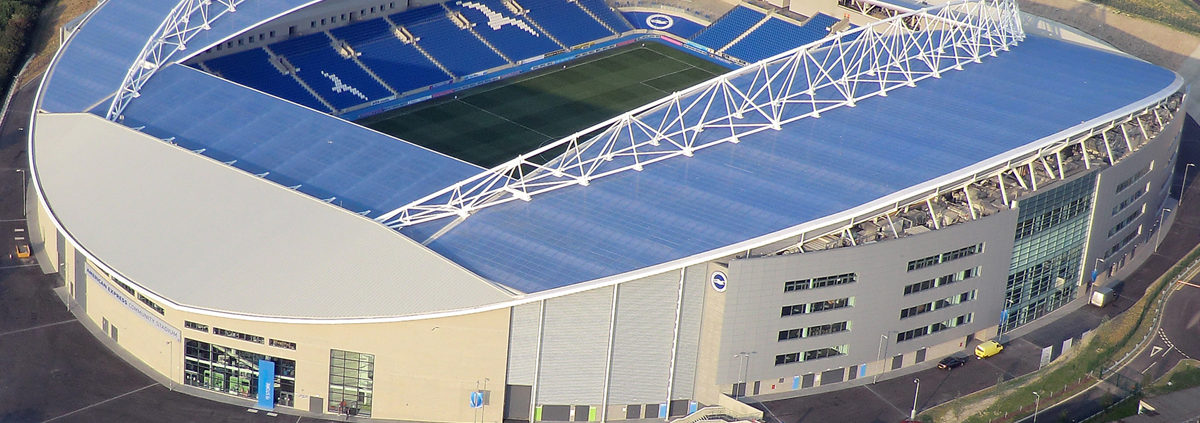
 We look at the development of the all-purpose, multi-use stadium, and how they have become part of the fabric of modern day society.
 Organised by Bob Geldoff, acts including Queen, U2, Phil Collins, David Bowie, Paul McCartney and The Who. It was the first of what has become many charity inspired music events all over the world which have raised millions for diverse causes.
 From day one the Olympic Park showed its versatility with the mind blowing 2012 Opening Ceremony, complete with giant chimney stacks and parachuting monarchs, preparing the way for Usain Bolt and his colleagues to showcase their sporting prowess to the world. With spectator seats equipped with flashing lights a stadium is now expected to play a full interactive role in proceedings and the Olympic Park did that.
 Every part of the county is now catered for and the names, if not exactly tripping off the tongue, becoming more and more familiar to us. The Riverside Stadium; The Ricoh Arena; The Amex Stadium; the Macron Stadium; the Vitality Stadium; the Ipro Stadium; the Keepmoat Stadium; the KC Stadium’ the King Power Stadium; the Ethiad Stadium; the Kassam Stadium; St Mary’s Stadium; the Britannia Stadium; the Stadium of Light and the DW Stadium are just a few, and all in England. Add to that those in other parts of the UK – Murrayfield, in Edinburgh, to name but one – and add in the cricket grounds which are now authentic options for rock concerts and, in the case of Lords, wonderful archery venues, and you have a plethora of multi-use venues which didn’t exist 20 years ago (excluding Lords, of course!).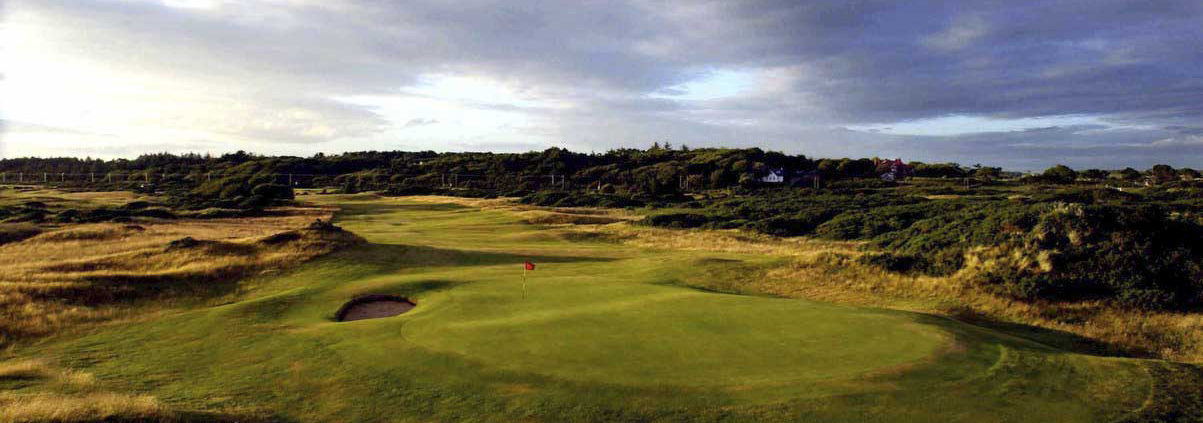

 When it got to February with no improvement Billy and his team decided that drastic times required drastic measures and they started pumping.
 “He has been here on a number of occasions and has gone on the official course walks to see how preparations are progressing.”
 Speaking six weeks before the first tee shot is hit in the Open, Billy was deep in preparation mode and keen to ensure every base was covered.