Tag Archive for: Action

Training Helps Professionals Deliver on National Action Plan

Training Helps Professionals Deliver on National Action Plan: The UK National Action Plan (NAP) for the sustainable use of plant protection products calls on everyone involved in weed, pest, and disease control to adopt integrated management strategies and develop plans often referred to as IPM plans. Whilst still not a requirement, it is at the core of the NAP and the sector needs to fully understand what IPM is and how to develop and implement IPM plans.

To support this, BASIS offers a dedicated course providing practical, easy-to-access online training tailored specifically for the amenity sector. The course entitled ‘Planning Integrated Approaches in Amenity Situations’ guides users step-by-step through developing and implementing effective, environmentally responsible management plans.

Training Helps Professionals Deliver on National Action Plan

Training Helps Professionals Deliver on National Action Plan

This course is part of a set of five within the Principles of Sustainable Amenity Management series, created with input from industry experts including former Amenity Forum Chair John Moverley. The full series covers key topics such as navigating policy, enhancing biodiversity, and managing water and air quality in amenity environments.

Designed for busy professionals, the courses are interactive and self-paced, allowing learners to fit training around their work. Real-life case studies and expert insights ensure the knowledge gained can be applied immediately on site. Whether you work for a local authority, manage grounds, consult on environmental issues, or contract on site, this training is relevant and accessible, with no prior qualifications required.

Each course costs £50, or the full five-part series is available for £200 + VAT, providing great value for anyone committed to sustainable amenity management. More information and enrolment is through the link  basis-classroom.co.uk/courses/amenity.

There’s never been a better time to develop or refresh your approach to integrated weed control

For the latest industry news visit turfmatters.co.uk/news

Get all of the big headlines, pictures, opinions and videos on stories that matter to you.

Follow us on Twitter and Instagram for fun, fresh and engaging content.

You can also find us on Facebook for more of your must-see news, features, videos and pictures from Turf Matters.
Wellbeing Research Findings emphasise urgent need for action

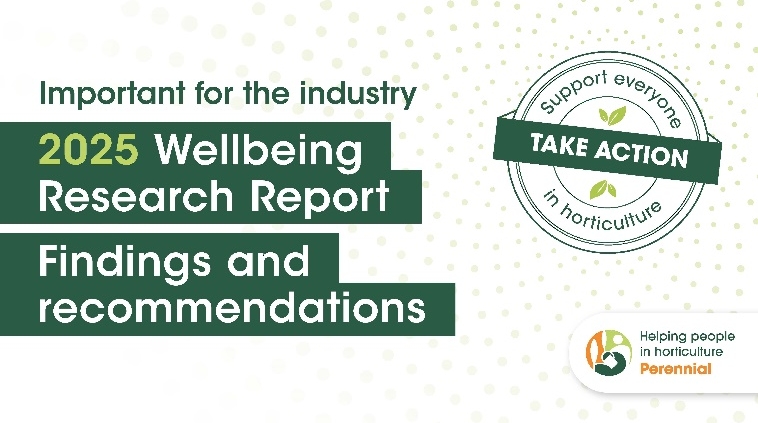
Wellbeing Research Findings emphasise urgent need for action: In Spring 2024, Perennial partnered with the University of Exeter’s Social Innovation Group (SIG) to conduct a major new study to better understand the emotional, physical and financial wellbeing of those who work with plants, trees, flowers and grass, and the ways they can be better supported.  

Building on the findings of the 2021 survey, this new research gives an updated, and more in-depth view of the challenges people in horticulture are facing, many of which will come as no surprise to those working in the industry.

Wellbeing Research Findings emphasise urgent need for action

Wellbeing Research Findings emphasise urgent need for action

The findings are clear 

Horticulture professionals continue to experience serious and sustained wellbeing challenges. The research, based on a comprehensive survey of people working across the sector, highlights worrying trends in physical discomfort, mental wellbeing, and financial confidence.

Key statistics include:

52% of people have a health condition that is expected to last more than 12 months – 12% higher than in 2021

84% of people told us that they had experienced back and joint pain in the last 6 weeks and 51% of people didn’t seek advice

83% of people within horticulture scored low or average for their wellbeing using a recognised scale 1

And 32% stated they do not have an emergency fund, with 1 in 10 saving no money at all, pointing to the persistent financial stress faced by many across the industry.

These results highlight the urgent need for action across the industry, as Julia Hayne, Director of Services at Perennial explains:

“The scale of the very real challenges those working in horticulture are facing will not surprise people across the industry. We are living through a period of significant social and political change that has the potential to impact us all. With uncertainties about the future, people’s ability to manage the everyday challenges is being put to the test, from rising prices, increased job insecurity and longer health care waiting lists.

“Ill health is the leading reason why people seek our help. This often means people have to take time off work, which impacts their income, their ability to pay their bills and their family life. In some cases, it means they are unable to return to the job they love.

“Our Wellbeing Research provides the industry with a clear insight into the causes and impact of poor wellbeing. It highlights how individuals across the sector feel about their wellbeing and the issues that are important to them. Over the last three years we have led targeted interventions to improve the health and wellbeing of the industry and this work is beginning to move the dial, in areas of physical and mental health. But we are aware much, much more needs to be done.

“It is essential that we develop an industry-wide understanding of the challenges people face through life and come together to identify real world solutions that make a long-term difference. As a charity we can’t do this alone – collaboration is essential if we want to achieve meaningful change.”

This is further emphasised by Prof Michael Leyshon, Professor (Associate) in Social Geography and Dr Shukru Esmene, Research Fellow, both from the University of Exeter.

“Perennial’s Health and Wellbeing Survey 2024 has shed light on key issues that workers in the horticulture sector experience. The issues of particular interest, which were also prominent in Perennial’s 2021 survey results, include the reporting of lower life satisfaction and higher prevalence of low or medium mental health scores compared to national averages. These areas need sector-wide action to address and will take time to solve.”

Take action now 

Perennial is committed to working in collaboration with the sector to act on these findings, but it will need everyone in the industry to take action.

Some steps to get started for a healthier, more supported horticulture community include: –

  1. Download, read and share the Wellbeing Research Report. 
  2. Hold conversations in your organisation about the ways you will take action.
  3. Join Perennial’s free Mental Wellbeing in the Workplace webinars throughout May-November.
  4. Make everyone aware of the charity’s free advice, information and support available for their health, money, career and life challenges
  5. Tell Perennial what you’re doing or plan to do to inform and inspire others. 

Visit perennial.org.uk/research for more information on all the above and take action today.

1 WEMWBS (2020). WEMWBS: 14-item vs 7-item scale. Warwick Medical School and University of Edinburgh. www.warwick.ac.uk/fac/sci/med/research/platform/wemwbs/about/wemwbsvsswemwbs/

For the latest industry news visit turfmatters.co.uk/news

Get all of the big headlines, pictures, opinions and videos on stories that matter to you.

Follow us on Twitter and Instagram for fun, fresh and engaging content.

You can also find us on Facebook for more of your must-see news, features, videos and pictures from Turf Matters.
Response to National Action Plan 2025

Response to National Action Plan 2025: The UK Pesticides National Action Plan (NAP) 2025 has been eagerly anticipated by the amenity sector. We are pleased to see that integrated pest management (IPM) is a key focus of the document, reinforcing its importance in sustainable pesticide use. Additionally, the plan acknowledges the necessity of access to pesticides, which remains a critical factor for the sector.

The Amenity Forum has long emphasised the importance of regulatory compliance within the industry. In this context, two key introductory paragraphs in the NAP are particularly significant:

Pesticides play an important role in protecting crops to support domestic food production, preserving natural landscapes, and maintaining vital public spaces, such as road, rail networks, and sports pitches.

Response to National Action Plan 2025

Response to National Action Plan 2025

However, overuse or incorrect use of pesticides can contribute to biodiversity loss and unacceptable human exposure levels. Prolonged use of pesticides can also lead to pesticide resistance as has been identified in the case of black-grass herbicides (Varah A and others, 2020).

The Forum agrees that pesticides serve an important function, and it is essential to distinguish between their responsible use and the issues arising from misuse and overuse.

For years, the Forum has advocated for stronger enforcement within the industry. One measure we would have liked to see in the NAP is the mandatory adoption of the Amenity Standard. While this has not been included, we welcome the reference in Annex 1 to the need for effective inspection, enforcement, and control activities and will continue to engage with ministers of all the nations to lobby for the adoption of the Amenity Standard as a mandatory requirement.

Among the 18 actions outlined in the NAP, Action 5 calls for the gathering of more data on IPM and pesticide usage in the amateur and amenity sectors to better understand use, how these contribute to overall pesticide load and potential IPM approaches. The Forum recognises the existing knowledge gap regarding plant protection products (PPPs) and agrees that any future actions should be based on a clear assessment of both the benefits and potential risks of alternative practices.  The Forum and its members are keen to assist in gathering data to enhance understanding and support informed decision-making.

While the Forum welcomes the NAP’s publication, much of its content reiterates long established regulations, with several actions lacking defined timelines. The amenity sector plays a vital role in UK communities, and as such, decisive, science-led change should be at the forefront of government policy.

For the latest industry news visit turfmatters.co.uk/news

Get all of the big headlines, pictures, opinions and videos on stories that matter to you.

Follow us on Twitter and Instagram for fun, fresh and engaging content.

You can also find us on Facebook for more of your must-see news, features, videos and pictures from Turf Matters.

Action required to solve golf’s diversity challenge

Action required to solve golf’s diversity challenge: Golf continues to experience unprecedented demand, but it is yet to persuade the public it is a game for all, a new social listening report from Syngenta and Ipsos has found. 

Golf & Social Media: Diversity, published today, is part of a landmark study analyzing 16.1 million social media posts, shares, comments and blogs over a three-year period to help businesses understand what is being said about golf online and respond with customer-centric solutions.

Action required to solve golf’s diversity challenge

Action required to solve golf’s diversity challenge

Despite highlighting successful projects that are making golf more diverse and inclusive, such as Black Girls Golf in the US and the UK-based Muslim Golf Association, the report confirms more work is required to overcome golf’s reputational issues and successfully welcome a wider audience.

Since the pandemic, just 5% of new golfers in the UK are non-white, the R&A’s Post Covid Opportunity Report previously found.

Similarly, in the United States, African American golfers make up just 5% of the country’s 25 million players, yet contribute $4 billion of the total market value.

Claire Martin, Ipsos Social Intelligence Researcher, said: “Golf is aware of its image problem and is trying hard to diversify, but the messages are not always reaching wider audiences and people outside the sport.

“Remarkably, two percent of all mentions in our sample related to Donald Trump and Republicans playing golf. This association does not help dispel the notion that it is a sport for older, white males.”

While the findings underline the challenge golf faces, the report offers solutions and case studies, including Black Girls Golf, founded by Tiffany Mack Fitzgerald, which has built a network of more than 4,000 female players in the United States.

And in a recent podcast interview with Syngenta, Jim Beatty, Executive Editor of African American Golf Digest, said the number of African American golfers could be doubled or tripled, significantly adding to the value of golf and the bottom lines of golf clubs and courses.

Brandon Bell, Syngenta People and Organizational Development Lead, Syngenta North America, offers advice to golf venues looking to build diversity and inclusive into their businesses and making golf welcoming to all: “As a starting point, use local demographic data to better understand the scale of the opportunity to engage with underrepresented groups, then invite these groups to take a survey or join a focus group so you can learn more about their wants and needs – and how you might address those.

“By creating an environment and experience where minority groups feel welcome and valued, and this is reflected in your club imagery and communications, this will help other diverse groups understand that this is a place where they could belong.”

WATCH: Brandon Bell on How to Make Your Golf Club More Diverse

Mark Birchmore Syngenta Global Head of Marketing, Turf and Landscape, who commissioned the report, said: “Golf has long been associated with exclusivity, and this study confirms that it is still widely viewed as a sport for a limited demographic.

“However, there are many examples of golf organisations and businesses making great progress in diversity. Now the sport needs to get better at communicating this progress beyond the industry itself in order to change wider perceptions.”

Data for the report was provided by Ipsos, with 16.1 million mentions of golf on social media in the United States and UK analyzed over a three-year period (2019-2022).

To download this report and all previous Syngenta market studies, visit: www.syngentagolf.com/golf-industry-reports

For the latest industry news visit turfmatters.co.uk/news

Get all of the big headlines, pictures, opinions and videos on stories that matter to you.

Follow us on Twitter and Instagram for fun, fresh and engaging content.

You can also find us on Facebook for more of your must-see news, features, videos and pictures from Turf Matters.

Campey’s leading machines in action at GroundsFest

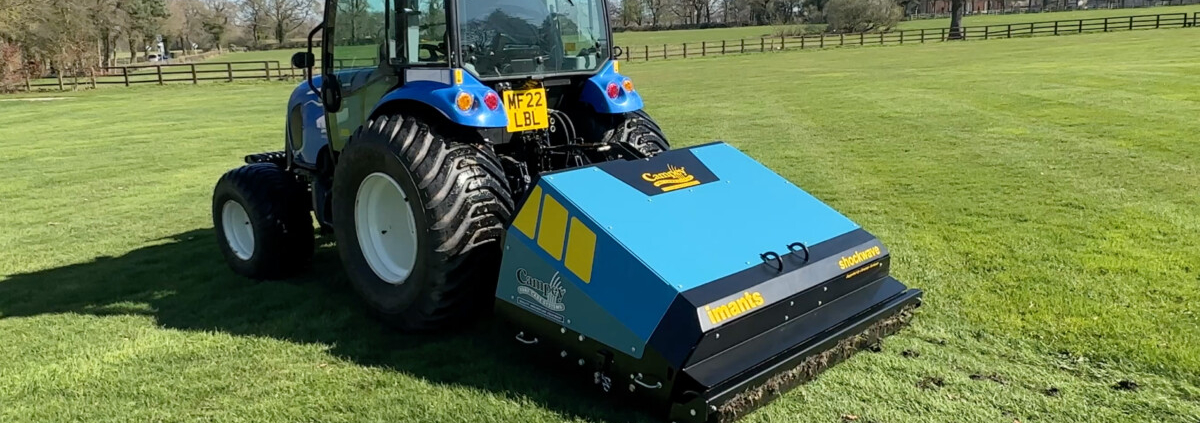
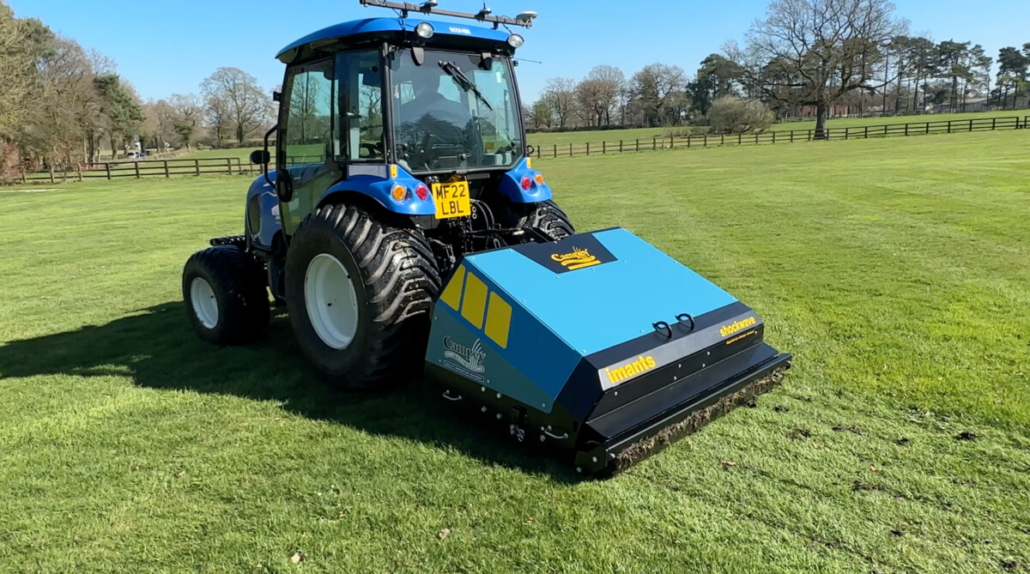
Campey’s leading machines in action at GroundsFest: Campey Turf Care Systems is ready to take full advantage of the outdoor demonstration space at GroundsFest, with the Imants ShockWave, Dakota Turf Tender, Foley Company Air2G2 336 and Campey UNIRAKE© all prepared for action on stand OSA460.

The combination of outdoor and indoor stands has made GroundsFest the perfect event for Campey to give visitors valuable in-action insights into machines, how they work and the difference they can make.

Campey's leading machines in action at GroundsFest

Campey’s leading machines in action at GroundsFest

Speaking about the inaugural event, Campey Turf Care Director Lee Morgado said: “GroundsFest is a new concept which puts the visitors at the forefront of the experience. One of those aspects is live demos, which makes the event more valuable to us as a company.

“As a machinery dealer and manufacturer, it is invaluable to show people exactly what the equipment can do, how it operates, and the results they can expect. It also allows us to answer questions in greater detail which benefits our customers, and that is what it’s all about.”

Campey has chosen machines that encompass a range of maintenance practices for the show. For variable organic matter removal, the UNIRAKE© is the perfect choice. Users can adjust the severity of grooming to remove a varying amount of organic matter or simply stand the sward up to encourage growth. Altering the severity of grooming is quick and easy and can be done in no less than 30 seconds.

The latest re-designed Imants ShockWave sporting its new livery, will be on show for wide area aeration, proving in person why it is the best linear compactor for heavily used areas where play can’t stop. It is designed to revitalise fine turf and sports fields by relieving soil compaction, improving aeration, and removing surface water, all whilst causing minimal surface disruption so play can resume quickly and safely.

In smaller or tighter areas, the Foley Air2G2 336 remains the industry’s finest pedestrian aerator. Instant results and the immediate continuation of play have set this machine apart since its release, making it a mainstay across most sports.

Completing the line-up of must-see machinery is the Dakota Turf Tender. The topdresser offers an impressive level of consistency with electric control boxes allowing users to set their width of spread an infinitely variable amount while ensuring that it can be changed and returned to that width at any time

Campey’s team of product specialists will be demonstrating the machinery and will be available throughout the two days to provide advice, answer questions or have a catch-up over a coffee.

For the latest industry news visit turfmatters.co.uk/news

Get all of the big headlines, pictures, opinions and videos on stories that matter to you.

Follow us on Twitter and Instagram for fun, fresh and engaging content.

You can also find us on Facebook for more of your must-see news, features, videos and pictures from Turf Matters.