Tag Archive for: At

GrasPro vital at Forest Green

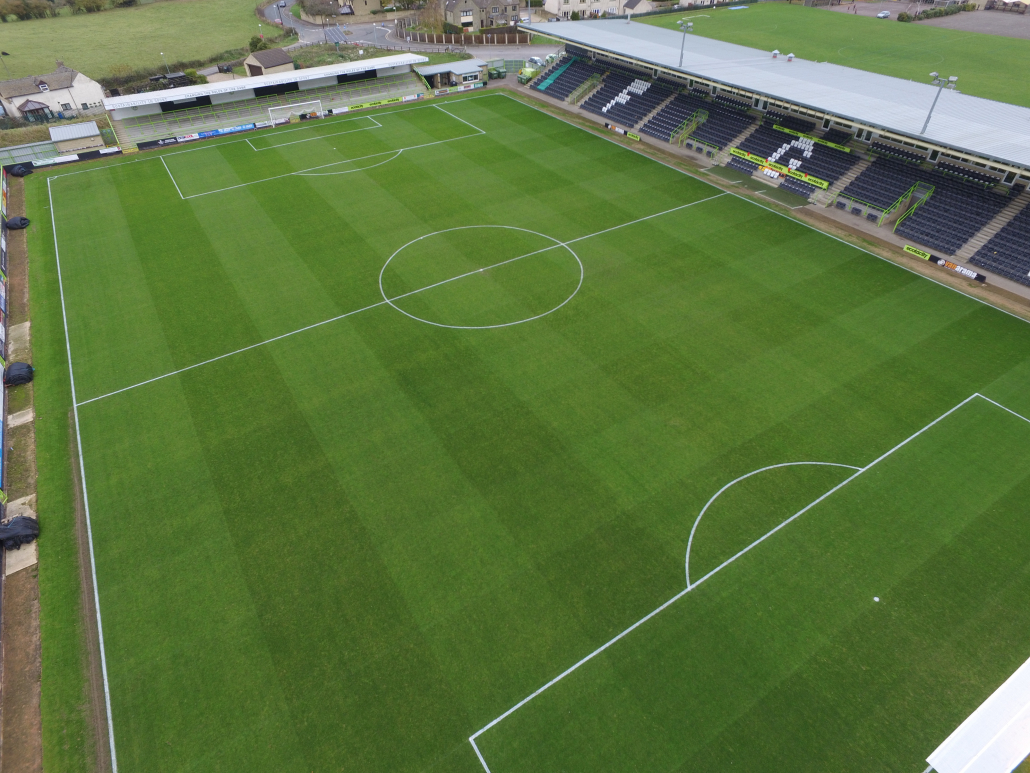
GrasPro vital at Forest Green: GrasPro Pitch Management System has become a vital data collection tool for Forest Green Rovers head groundsman, Adam Witchell.

Adam is into his fourth season with the League Two football club, and he has used GrasPro throughout that time to record data from the club’s stadium pitch and training pitch. The system has helped him save time recording data and generating reports, allowing him to concentrate on doing the work that is needed.
GrasPro vital at Forest Green

GrasPro vital at Forest Green

“I think it’s wonderful, it’s one of my main tools as a head groundsman, and I use it to manage a different site as well, I find it one of the most beneficial things I have,” Adam began. “When I first went to Forest Green Rovers, it was one of the first things that I got because I needed a data management plan.

“I’ve trialled other data collection systems and for me this is the best one. I was looking for a management system, and I was trialling a few, but really it was the ease of use because some data collection systems can take a while. It takes away data recording in the evening because it doesn’t take long to put it into the GrasPro system, so it saves me time and energy that I can concentrate on other parts of my job.

“I use it for all of my monthly reviews and daily and weekly plans. And I can look back on things that worked and didn’t work by doing PQS’s on the pitch. For me, it’s massively helpful to be able to do that. I think I’m the only person in the world working with an organic vegan pitch and it’s very a difficult pitch. It’s a very heavy clay pitch, it has its problems, but with the weather that’s added to it, you can look at when disease might be in and then you can look at how the pitch performs with some of the products you’ve used and how it’s performed in the games in that month.

“And then at other times when it might not be performing as well you can look back and think ‘ah, I didn’t do that when I’ve done that before.’ Also, when we’ve had disease, I can record the humidity, the temperature and things like that to so I can see if disease is coming. With the weather we’ve had, I can think I need to start using this product or feeding it a certain way because disease will be rife soon.

“Another part of it was getting to speak to Einar Brynjarsson at GrasPro. We were looking at how we could improve the system for the future, and how it would best work with the systems I use already, which was very good and very detailed.

Working closely with Einar means if there are bits that aren’t in the system, then I can contact him. We’ve spoken about machinery because it didn’t have that before and I said I needed something for it. Now I can record the hours every month, and I can see when the next service is, when it’s due an oil change or maybe it’s time for machines to be ground or start looking at how the batteries are doing.

“There wasn’t anything like that initially, and it was something I felt like I wanted, I discussed it with them, and they’ve come up with an excellent machinery section of the system which takes a lot of headache away. I have a lot of plate spinning in my job, and it’s something that I don’t have to worry about now, I don’t need to keep checking if it’s time for this to be serviced or putting lots of bits of paper down or notes all around my whiteboard.”

GrasPro has been built by groundsmen for groundsmen. It has been developed as a time effective tool to help speed up data collection and allow users to quickly use and analyse data from their surfaces and machines to make informed statistical decisions.

For a free demonstration of the GrasPro Pitch Management System, visit https://www.gras.pro.

For the latest industry news visit turfmatters.co.uk/news

Get all of the big headlines, pictures, opinions and videos on stories that matter to you.

Follow us on Twitter and Instagram for fun, fresh and engaging content.

You can also find us on Facebook for more of your must-see news, features, videos and pictures from Turf Matters.
New drainage at Cleator Moor

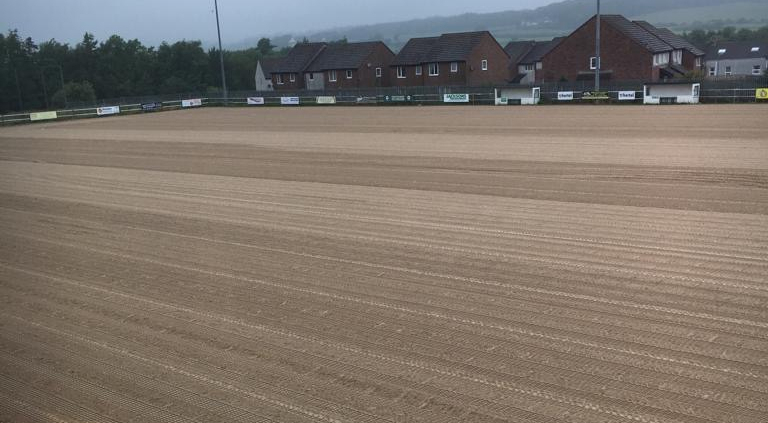
New drainage at Cleator Moor: Cleator Moor Celtic Football Club has employed Duncan Ross Ltd to complete the first of two stages of drainage work as the club aims to increase the usage of their stadium pitch.

The North West Counties Football League (NWCFL) Division One North side gained promotion to the league in the 2017/18 season and took the additional funding opportunities available to a Step 6 football team to improve their pitch.

New drainage at Cleator Moor

New drainage at Cleator Moor

In the past five seasons the club – like other teams in the area – struggled with postponements during the winter, limiting the opportunities for 14 teams outside their first team to play on the stadium pitch.

Promotion meant the money available to them from the Football Stadium Improvement Fund increased from £20k to £100k. This was combined with grants from the Copeland Enabling Fund, Copeland Community Fund, United Utilities Legacy Funding and money raised by the club, all of which has already begun to make a difference.

“Drainage has been a big issue for us because we’re in one of the wettest parts of the country you could be in,” Cleator Moor Celtic FC committee member, David Graham explained. “The pitch was predominately clay, so the drainage was really, really poor. Going back five years or so before we got involved with the pitch improvement programme, we could go weeks on end without playing games, particularly in the worst parts of the winter, so we could go three or four weeks at a time without playing a home game.

“Being able to get more of our teams playing on the main pitch is what we wanted. We’re also hoping to prevent fixture congestion like we’ve had in previous seasons where our first team would get to April and play Saturday, Monday, Wednesday and again on Saturday.

New drainage at Cleator Moor

New drainage at Cleator Moor

“We’ve wanted to improve the pitch for some time, and we’ve been working towards it for five years. Initially we sought advice from Craig Lewis at the Cumberland FA who put us in touch with Ian Mather-Brewster from the IOG, and he’s been a massive part of this project since getting us started on the Football Association’s Pitch Improvement Programme five seasons ago.

“He, along with Dale Firth from Professional Sportsturf Design and Duncan Ross, have been instrumental in putting the two-stage drainage plan together and we’re hoping to see a big improvement during this season after having the pitch levelled and the primary piped drainage installed. We’re 100% happy with the drainage and construction work Duncan and his team have done, and we’re looking forward to completing the project in the summer.”

Stage one was completed 10th July 2019 after 320 ton of sand, and 200 ton of soil were used to level the field in preparation for the primary piped drainage to be installed. A soakaway was also constructed by the Duncan Ross team as part of this stage before stage two commences in May 2020.

For the latest industry news visit turfmatters.co.uk/news

Get all of the big headlines, pictures, opinions and videos on stories that matter to you.

Follow us on Twitter and Instagram for fun, fresh and engaging content.

You can also find us on Facebook for more of your must-see news, features, videos and pictures from Turf Matters.

New Toro system at Kings GC

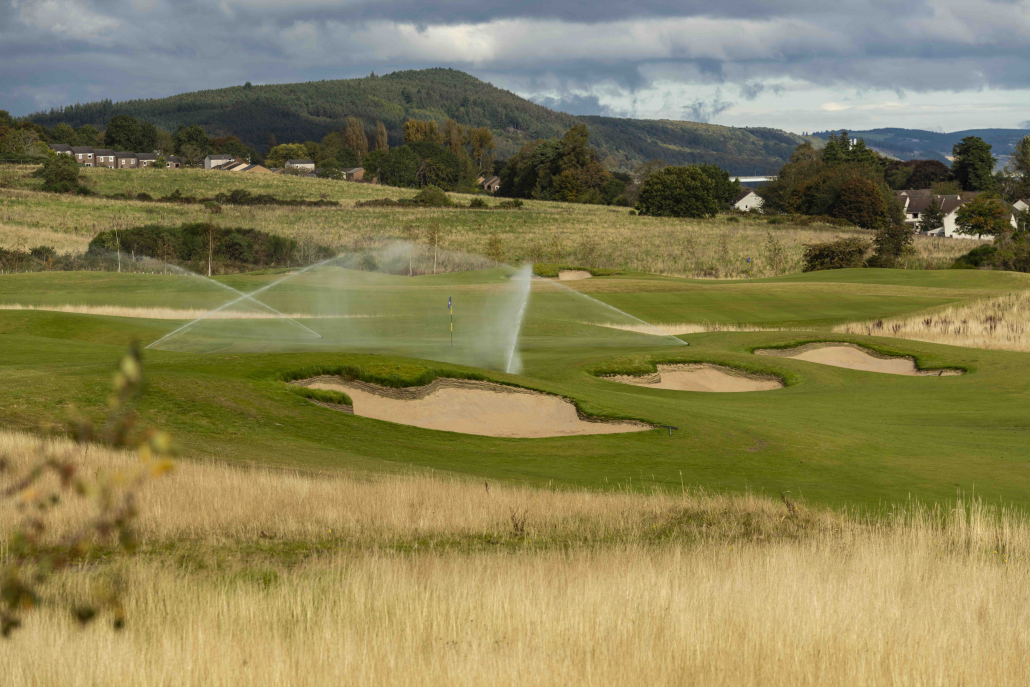
New Toro system at Kings GC: Kings Golf Club in Inverness has relocated with a brand new 18-hole, 6,600-yard, par 70 layout and a new Toro Lynx central control system and sprinklers to take the club into the next phase of its life.

When the ‘gateway for the Highlands’, the West Link by-pass around Inverness, was routed straight through the existing course, Kings Golf Club, then known as Torvean Golf Club and renamed in 2019, knew it was going to benefit from a new home from the Highland Council who owns the land, and in the summer of 2019, the course, designed by Scottish golf architect Stuart Rennie, opened to great acclaim.

New Toro system at Kings GC

Stevie McIntosh, course manager, says: “The new course is a real accomplishment to all involved. While it was a challenge to get to this point, it’s been well worth it. Throughout construction, which involved creating 16 new holes and completely renovating two from the existing course, we had to ensure there were always 18 holes open for play and timing was tight in accordance to the deadline of phase two of the road construction.”

The new site is located on undulating land to the North West of the existing site and modern day design characteristics have been incorporated, biodiversity has been improved and it benefits from a new layout.

The greens and tees are built on 92 percent sand and 8 percent soil, plus it’s in an open, exposed, breezy location, which gives it characteristics more in line with a links course than inland like it is. That will always be a challenge when it comes to irrigation, but having given the Toro Lynx central control system and Infinity sprinklers on all but the tees, which benefit from the Flex 800 sprinklers, a good run since it was switched on last summer, it’s one which Toro has sailed through.

Stevie continues: “I’m really impressed with the system. It could not be more different to the system on the old course and using it is a real pleasure. An irrigation system is the lifeblood of a course and it’s so important to get it right, you only get one shot! We put our trust in Stuart as well as Declan O’Malley from contractors European Golf Services, and they couldn’t have chosen better. It’s delivered all I would expect and want from a system; it’s easy to use, accurate and we’re getting uniform coverage.”

And with Toro on board, the next phase of the club’s life is off to a good start.

For the latest industry news visit turfmatters.co.uk/news

Get all of the big headlines, pictures, opinions and videos on stories that matter to you.

Follow us on Twitter and Instagram for fun, fresh and engaging content.

You can also find us on Facebook for more of your must-see news, features, videos and pictures from Turf Matters.

New Bayer launch at BTME

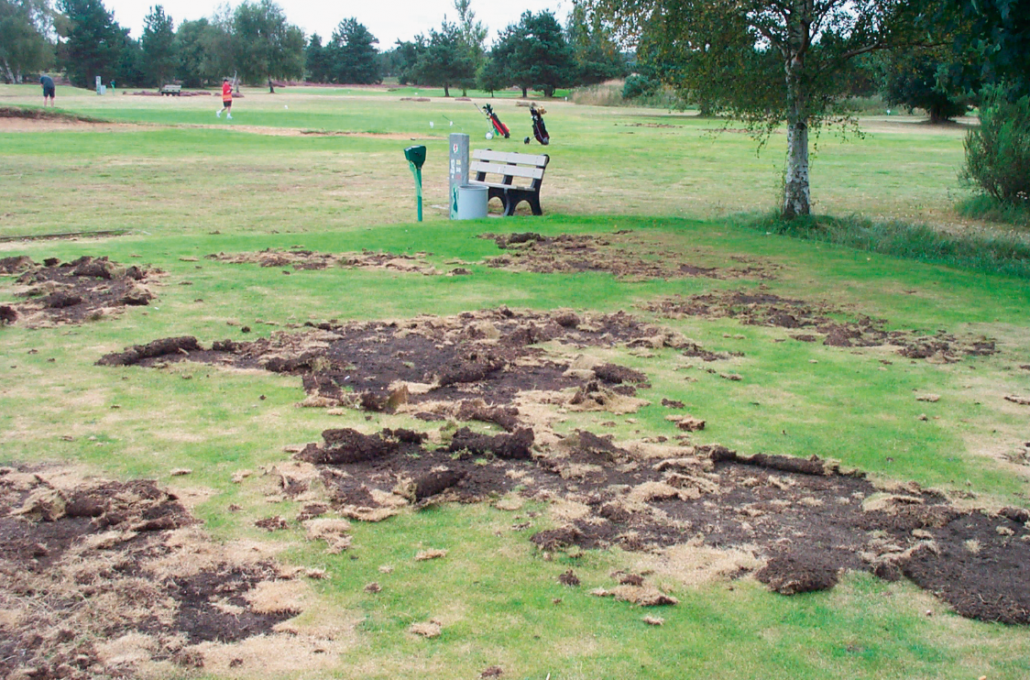
New Bayer launch at BTME: Bayer has launched a new unique patent protected biological nematode control to help greenkeepers and groundsmen to maintain quality playing surfaces.

Harmonix Tri-Nema brings together the latest nematode technology to effectively tackle leatherjackets and chafer grubs.

New Bayer launch at BTME

Neil Pettican, Bayer head of sales, says the unique solution targets the damaging pests during two critical periods of the greenkeeping season. The treatment contains three specifically selected nematode species, which each use a different method to control turf pests.

“Additionally, they become more aggressive as they try to out compete each other to become the dominant species, increasing the effectiveness of the application and its capability to control the pests.

“Over recent years, chafer grub and leatherjacket populations have been on the rise, resulting in significant damage to turf playing surfaces. But Harmonix Tri-Nema provides one solution with three different modes of activity.

“Collectively the three species provide more effective distribution through the soil profile, leading to more consistent results,” he says.

“With regulatory changes putting pressure on chemical solutions, alternative options will be fundamental in maintaining high quality turf. However, this nematode control solution will slot into an integrated approach, while helping reduce pesticide applications and therefore resistance.”

Pest activity

Neil explains that both chafer grubs and leatherjackets have different peak seasons, due to their lifecycles, so it’s important to monitor for activity carefully to ensure infestations are identified and treated at the right timing, before significant damage is done.

“Chafer grubs emerge from their eggs in the summer months, so treatment for this pest is recommended between May and August.

However, to achieve successful control over leatherjackets, the best application window is between late August and November, whilst the leatherjackets are still at a juvenile stage, ,” he says.

Application method

He adds that it is important to consider application conditions as well as recommended timings.

“Our research for both chafer grub and leatherjacket control shows that for heavy infestations the best results are seen when 250,000 nematodes/m2 are applied to the affected area, with a follow up treatment two weeks later. This maximises the ability for the nematodes to penetrate, attach and infect newly hatched eggs.

“For areas that are not severely infested, one application at the normal rate of 500,000 nematodes per m2 would be sufficient.”

Neil adds that it’s also important to apply nematodes in moist conditions, and in low light so ideally this should be early in the morning or the evening when soil temperatures are above 12⁰C.

“With limited chemical options available for controlling these pests, this new biological solution provides an alternative tool for greenkeepers that fits within an integrated approach.

“It helps avoid turf damage from pests during peak seasons, improving turf consistency and playability,” he concludes.

For more information, head to stand 338 in the green hall at BTME and speak to the Turf Solutions Team or email turfsolutions@bayer.com.

For the latest industry news visit turfmatters.co.uk/news

Get all of the big headlines, pictures, opinions and videos on stories that matter to you.

Follow us on Twitter and Instagram for fun, fresh and engaging content.

You can also find us on Facebook for more of your must-see news, features, videos and pictures from Turf Matters.
World’s widest Sarel Roller at BTME

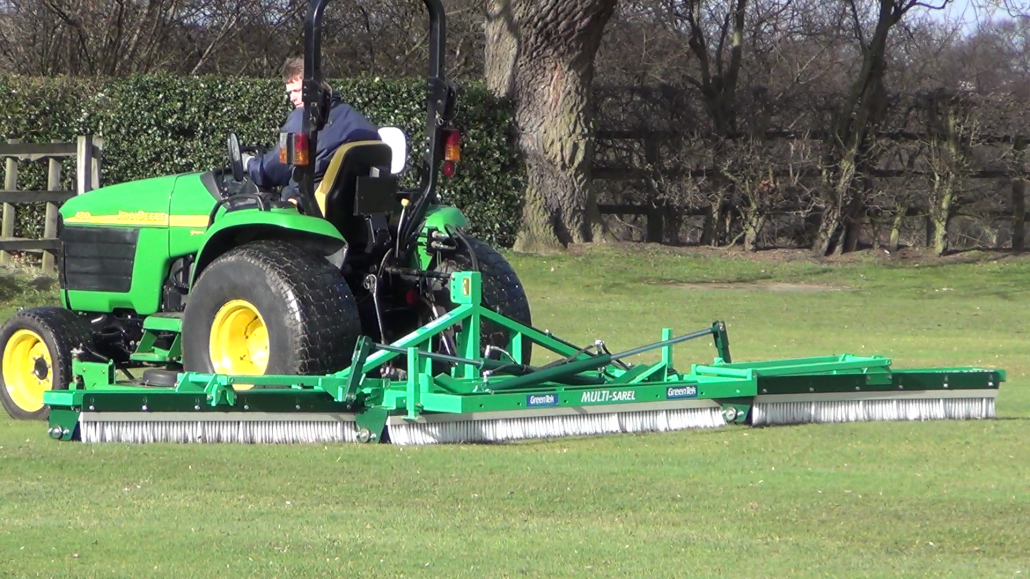
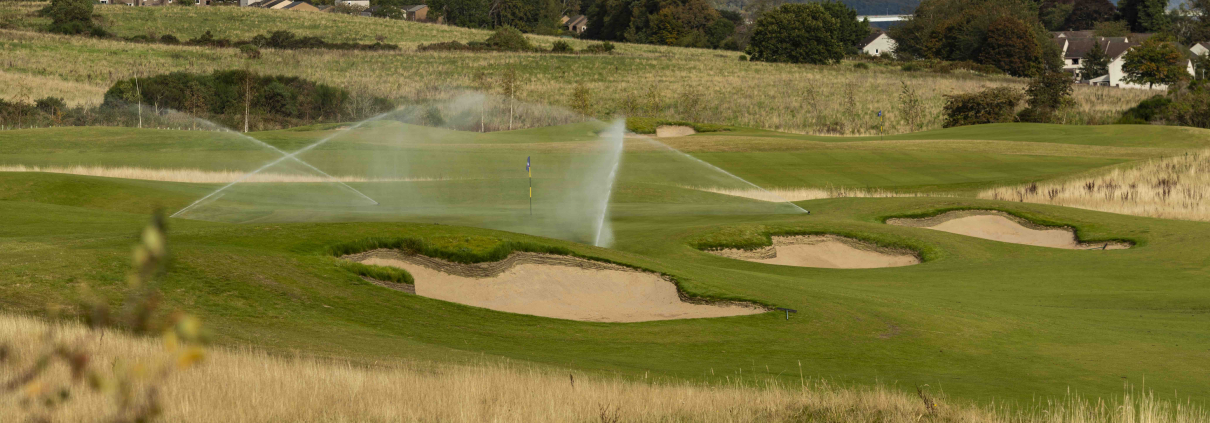
World’s widest Sarel Roller at BTME: GreenTek will be displaying their 5.4m wide Multi-Sarel at the BTME show in Harrogate.

In recent years, golf courses have been working hard to raise the turf quality of their fairways.  This follows a similar pattern to the great advances in greens care equipment, and consequently turf quality, that have been made on golf greens since the 1980’s and 90’s.

World’s widest Sarel Roller at BTME

Many greenkeepers will remember the launch of the Vertidrain, followed by various greens rollers, the Greens Groomer zig-zag brush and the Sweep N Fill rotary brushes which superseded drag mats, plus the universally popular Thatch-Away greenscare cassette system.

Now, in the face of extreme weather in recent years, golfers are looking for improved turf quality on fairways.  Having suffered from both drought and prolonged rain, many courses have struggled to maintain acceptable playing conditions, and are consequently looking at implementing some of the techniques previously reserved for greens, on their fairways.

Cultural practices such as brushing to disperse dew and worm casts, grooming to reduce thatch, rolling to improve trueness, and sarel rolling to improve percolation and reduce run-off, are all now viable treatments for fairways.

GreenTek are once again leading the way, with ultra-wide versions of the type of equipment that was formally only found on greens.

World’s widest Sarel Roller at BTME

Their Multi-Brush, Multi-Roller, and Multi-Sarel all have massive 5.4m working widths, and the new Fairway Groomer, also on display at BTME, is 3.6m wide.  Working on lightweight compact tractors or utility vehicles this equipment is suitable for high frequency use to maintain pristine fairways on a weekly basis.

Visit the GreenTek team in Red Hall South, Stand 200 to see this equipment in the flesh!

For the latest industry news visit turfmatters.co.uk/news

Get all of the big headlines, pictures, opinions and videos on stories that matter to you.

Follow us on Twitter and Instagram for fun, fresh and engaging content.

You can also find us on Facebook for more of your must-see news, features, videos and pictures from Turf Matters.