Tag Archive for: At

Rigby Taylor At Stinchcombe GC

Rigby Taylor At Stinchcombe GC: The word ‘steep’ and its connotations ideally describe a number of facets of Stinchcombe Hill Golf Club, located in Gloucestershire. Established back in 1889 with nine holes, which was then extended to 18 holes in 1906, the club is steeped in history with the Edwardian mansion, Stinchcombe House, which was built by the Lister family (of diesel engine fame), forming a magnificent backdrop to part of the course.

Also, the location of the course at the top of the hill near Dursley sits 219 metres above sea level on the edge of the Cotswold Escarpment above the Severn Valley, a site that although offering golfers stunning views also places particularly steep demands on the greenkeeping routines employed.

Rigby Taylor At Stinchcombe GC

“Because of our location we can sometimes quickly go from enjoying fine weather to having periods where we can’t get onto the course to undertake maintenance for two days”, says Course Manager Matt Ayres.

However, with everyone at the club looking for continual improvements in every aspect of all operations – not least in the management and maintenance of the course “which we’re always keen to develop and improve”, says Club Manager Leigh Topping – the club has become one of the most successful in the region.

A comprehensive greenkeeping regime ensures its greens are presentable and playable all-year-round and the greenkeeping team’s thoroughness and attention to detail has in turn led to a 66 per cent rise in green fees in recent years while membership numbers have remained steady at around 420.

“Of course, being open – and playable – all year round is key to our success, especially during the winter months when we enjoy a consistent level of play and usage compared to other clubs in the area,” says Leigh. “And that’s because we have invested in the greens.”

Complemented by some astute commercial thinking – for example, the pro shop is owned by the club – the club is clearly reaping the rewards of a programme of continual improvement to the course by Matt Ayres and his greenkeeping team of Brad Boon, Adam Jones and Eddie Wilcox. This has included switching the annual renovation from October to August, which sees the course recover in just 10-14 days and, thus, minimising disruption to play.

Their work is underpinned by recent investment in new machinery plus an annual programme of turf care from amenity supplier, Rigby Taylor, which combined is enabling the team “to maintain the course properly all year round”, adds Matt.

“Our priority is always the course,” affirms Leigh, “and over the past three years we’ve invested more than £190,000 in new and upgraded equipment, such as a new Procore aerator, a sander and a new sweep and fill brush, as well as improvements to the irrigation system (improved pressure and the installation of new jets, undertaken in-house).”

Continues Matt: “The addition of a Procore to our machinery portfolio means we can pencil tine at any time of the year, which is indispensable. Also proving very important is our new sprayer. Of course, being high up on a hilltop means we have to watch the weather closely in terms of the spraying regime, but the sprayer enables us now to accurately apply the correct products at the correct dosage rates.

“Aside from the challenge of selecting spraying days during the most effective weather conditions – on low/no-wind days – the use of liquid feeds and treatments, which now account for  90 per cent of applications at the club, is so much more aesthetically better. For one thing, it means golfers are not forever treading on granular treatments!”

Brad also confirms that the implementation of an annual treatment schedule has paid dividends. “Based on an agronomist’s annual report, we sit down with Rigby Taylor’s Key Accounts Director David Carvey to discuss a proposed annual schedule of treatments,” he says. “Our meeting takes into account all the latest developments, including comparing products of even different brands, as well as application methods, then together we formulate a programme to suit the soil conditions and the projected usage.”

Adds Leigh: “Although Rigby Taylor is a long-term supplier to the club and its products certainly work, we always compare David’s proposal with others for its value for money. The fact that Rigby Taylor has worked with us since 1999 speaks for itself.”

Rigby Taylor At Stinchcombe GC

The schedule includes, for example, the use of R1 (fescue and bent) and R105 (browntop bent) grass seed; Apex and Microflow-CXS fertilisers; Activate R and XL biostimulants; Magnet liquid iron; and the Greenor herbicide.

In addition, and highlighting the products regarded as ‘must-haves’, Matt lists:

  • Premier HG controlled release fertiliser containing long-lasting nitrogen and potassium for optimum feeding – “used after the annual renovation; brings back the greens very well”.
  • Rayzor, a broad spectrum contact fungicide for Fusarium Patch, Dollar Spot and Red Thread, plus the reduction of anthracnose, leaf spot and rust – “an excellent” weapon, especially against Fusarium, “although we are now moving more towards preventative management of this problem”. Rayzor is used by the club as part of a managed disease strategy, used in conjunction with Fusion and Eland product tank mixes.
  • HydroPro 2 wetting agent – “applied every month and proving especially useful on bunker (sand) areas”.

Says Adam: “All these products are scheduled on a month-by-month basis and that programme is religiously adhered to, weather permitting. The result of applying such treatments little and often means that we maintain a continual ‘standard’ of turf care and presentation, with no peaks or troughs.”

Matt adds: “Presentation and playability are key, and this even involves the club’s professional being involved in the discussions. The greens committee walks the course in March and together we highlight any changes that might be made to improve things, such as altering the width and shape of fairways, possible tee extensions, and the general presentation of the greens, aprons and semi-rough areas, for instance.

“With golfers of all abilities being members, our aim is to consistently produce a course that suits everyone, producing level speeds on greens that are maintained at 3-4 mm high in summer and 5 mm in winter. The use of an iron means we don’t have to cut as low as we used to.

“That said, we are careful not to alter the character of the course, parts of which are listed as a Site of Special Scientific Interest, and surrounded by bridleways/walkways, part of the Cotswold Way.”

For more information, visit: www.rigbytaylor.com

For the latest industry news visit turfnews.co.uk

Get all of the big headlines, pictures, opinions and videos on stories that matter to you.

Follow us on Twitter for fun, fresh and engaging content.

You can also find us on Facebook for more of your must-see news, features, videos and pictures from Turf Matters.

Irrigation At St Andrews

Irrigation At St Andrews: The Castle Course at St Andrews Links is benefitting from an upgrade of Toro irrigation. Switching from Toro Site Pro to Lynx GAC software and from Flex to Infinity sprinklers, the upgrade brings the most modern technology available on the market to this majestic clifftop golf course.

Forming the first irrigation deal since the Home of Golf reached a long-term agreement with The Toro Company to ensure Toro equipment and irrigation will maintain the seven courses for many years to come, Director of Greenkeeping Gordon Moir says: “The Site Pro system has served us well for many years, although we did suffer a severe lightning storm on one particular occasion, which over time has caused decoder failures. It was also time to extend and enlarge the pipework for an increase in flow, so the timing was right on all fronts. It was an easy decision to choose Lynx from the Toro range. It’s the newest system on the market and its features will make life easier from an operational point of view.”

Irrigation At St Andrews

Course manager Jon Wood confirms: “Many features stand out with the Lynx software, but especially the mapping and testing capabilities. From behind the desk you can narrow down the problems quickly, so by the time you go out on the course you have a pretty comprehensive idea of what the issue might be. Plus, there’s no need for endless sheets of paper, the mapping feature gives you all the site info you need on screen.

“While the software will make a big difference to how we run the irrigation on The Castle Course, making the biggest difference are the Infinity sprinklers. The ground here is different to the other six courses in that it’s more soil with a little bit of sand rather than sand-based and that makes it much tougher going when digging up sprinklers for maintenance and repairs. To know that we don’t have to do that anymore thanks to the fact that they are accessible from the top is fantastic for the team.”

As well as extending and enlarging the pipework, the opportunity was also taken to audit the site and make water savings where possible. That’s why the decision was made to break up some of the pairs of sprinklers running down the fairways, as Jon explains: “Out of the 300-400 pairs of sprinklers we have on the course we have split 100 for more effective water consumption. This will prevent over-watering the same area or areas we don’t need to water.”

The next step in the irrigation upgrade is to move to Toro B-series sprinklers on the tees over winter 2018. This will make all the sprinklers on the course interchangeable so the Trust won’t need to hold as much spare stock.

Jon concludes: “We were in America at the Toro headquarters earlier this year and we were talking about upcoming irrigation developments and basically the future is interchangeable. With this combination of Infinity and B-series sprinklers we’re not only taking the irrigation on The Castle Course to where it needs to be now, but we’re making it future proof, too. From now on, we’ll be able to leave the externals and just change out the internals such as the nozzles when required.”

And this progressive approach and attitude toward sustainability validates the reasons why St Andrews Link Trust entered into the long-term partnership with Toro this time last year. Not only was it felt that Toro was the best choice to maintain the playing conditions required now, but also gave the best fit for the club’s vision for the future, which is nicely illustrated here.

For more information, visit: reesinkturfcare.co.uk

For the latest industry news visit turfnews.co.uk

Get all of the big headlines, pictures, opinions and videos on stories that matter to you.

Follow us on Twitter for fun, fresh and engaging content.

You can also find us on Facebook for more of your must-see news, features, videos and pictures from Turf Matters.

TYM Compact At LAMMA

TYM Compact At LAMMA: Reesink Turfcare will be showcasing all that is new to TYM Tractors at LAMMA 2018. The new T393 compact tractor will be on show, as will a pick of the new range of attachments, all of which offer even more versatility and value to every tractor.

Bridging the gap from the compact utility range into the mid-duty range is the T393. With a 38hp Yanmar engine it’s powerful but compact, and more than capable of managing the small and large jobs. It has one of the highest lift capabilities in its class with a lift capacity of 1200kg and has one of the highest hydraulic flow rates with a maximum output of 42 litres per minute.

TYM Compact At LAMMA

There are two transmission options including a three range HST option which comes equipped with a new ‘Auto Throttle’ function, linking the HST pedals to the engine throttle to synchronise the tractor’s speed and engine rpm. This simplifies tractor operation and reduces fuel consumption.

Tractors are of course designed as implement carriers. Making use of attachments rather than bringing in additional machines for mowing, tilling and shredding saves space in the shed and is far more economical. New to TYM, and the show, is a range of attachments designed to bring even more value, versatility and productivity to the machine. At LAMMA there will be a finishing and flail mower attachment and two rotary tillers.

Completing the line-up are the stablemates: TS25, TE40, T433, T503, T654 and, finally, the T754, giving visitors to stand B118 a look at the smallest to the largest horsepower and plenty in between.

Steven Haynes, TYM sales manager, says: “Reesink Turfcare introduced the TYM brand to the UK six years ago and it’s been very well received by the market in that time. Brand development has been progressive and we’re now in the perfect position to enhance our focus on the opportunities for our dealers across the country.”

With the experienced Reesink Turfcare TYM team on stand, including new recruit John Addy who is the brand’s northern regional sales manager, to advise on everything from the most suitable machine for your specific jobs, to all the optional extras, it’s the stand that should be high on all visitors’ itineraries.

For more information, visit: reesinkturfcare.co.uk

For the latest industry news visit turfnews.co.uk

Get all of the big headlines, pictures, opinions and videos on stories that matter to you.

Follow us on Twitter for fun, fresh and engaging content.

You can also find us on Facebook for more of your must-see news, features, videos and pictures from Turf Matters.

Pitch Renovation At Reading FC

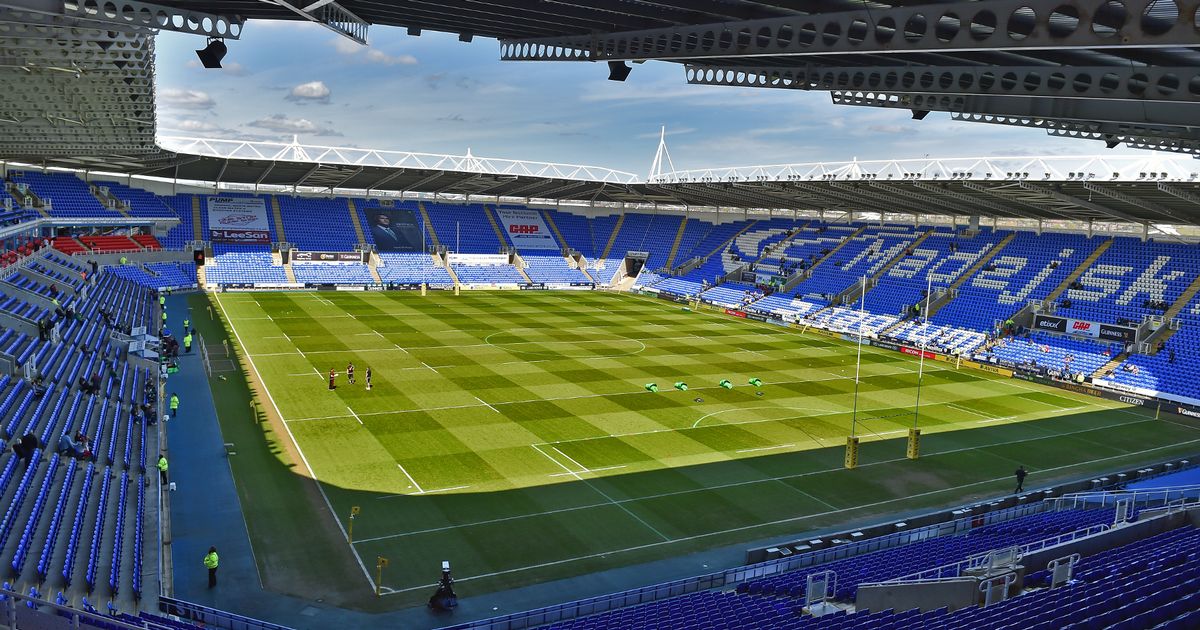
Pitch Renovation At Reading FC: The Madejski Stadium has been home to Championship club Reading FC since its construction in 1999. With the playing surface having undergone significant wear and tear over recent seasons, especially given its dual function as the home ground for London Irish RFC, Reading commissioned a full reconstruction during the summer of 2017, in preparation for a renewed promotion challenge in the 2017/18 season.

The challenge

With the new Championship season just around the corner, Reading FC had just a five-week period to remove the existing pitch, replace both the lower and upper rootzones, and then relay the grass playing surface before completing the installation of the SISGRASS hybrid pitch system. All of the work needed to be undertaken and completed in time for Reading’s first home game of the season on 8 August.

Pitch Renovation At Reading FC

Given the pitch is used by both Reading FC and long-term tenants, London Irish RFC, the playing surface is not afforded the regular ‘off-weekends’ that other non-ground sharing clubs benefit from; while the stresses and strains of hosting regular rugby fixtures further test the durability of the pitch. As such, the club identified the need for a long-lasting hybrid solution which could withstand the intensity and variety of multi-sport use, without sacrificing the playability associated with a grass pitch.

The new pitch is a 95% natural and 5% synthetic fibre surface that is able to deliver longer playing hours with fast recovery times, making it ideal for the playing demands at Madejski Stadium.

With a view to starting work as quickly as possible, Reading FC appointed specialist sports surface contractors, M J Abbott Ltd. Given the tight timescales, and having worked together before on a series of projects, M J Abbott turned to Tarmac’s Topsport team to supply the drainage gravel, lower rootzone sand and upper rootzone for the project.

The solution

As the pitch playing surface was to be completely replaced, the first task was to remove the existing playing surface, followed by the rootzones and both the sub-pitch irrigation system and heating pipe system, ahead of the sand being delivered.

“Timing was absolutely critical to the success of this project,” said Richard Goddings, Technical Sales Manager – South, for Tarmac’s Topsport division. “Given the club’s first game of the season was at home, the deadlines were completely set in stone, with no room for error.

“Sourcing the large volume of high specification material required to undertake the work was the first challenge to overcome. We were able to source 3,000 tonnes of sand from our Sevenoaks quarry, which was no mean feat given the distance between Kent and Reading. As the pitch would retain its sub-surface pitch heating system, it was essential that the sand was laid quickly so that the irrigation and heating pipes could be re-installed ahead of the upper rootzone. Our team surpassed this brief by delivering the sand, to specification, two days ahead of schedule.”

Richard continues: “As soon as the sand was in, we were then able to deliver 1,800 tonnes of Topsport Kingsley rootzone, designed to meet strict horticultural and playing performance criteria, in less than a week. The rootzone was placed out on the Friday and laid by the Sunday. It was then levelled off, graded with a laser-guided bulldozer, and then seeded.

“The rootzone is a carefully balanced combination of high quality sand blended with organic materials, which encourages the free passage of air and water to facilitate strong and natural root growth. The 20 per cent organic content of the rootzone helps to improve moisture retention, leading to a higher quality playing surface which is noticeably softer than other hybrid systems, giving the feel of a true grass pitch. The improved percolation and water retention means that water can freely flow through the composition during wet weather, yet improves water retention in drier periods.

“To complete the installation, the hybrid element of the pitch was installed using patented technology to inject fibres into the playing surface. The artificial fibres ensure the pitch maintains consistency and stability by holding the rootzone together.

“We have a great relationship with M J Abbott who contacted us about the project, knowing that we could meet the tight timescales that were required.  Opting for a hybrid pitch with an 80:20 rootzone has resulted in a stronger and healthier playing surface which should withstand the inevitable wear and tear that comes with being the home ground for Reading FC and London Irish RFC.”

Nathan George, Contracts Manager at M J Abbott, comments: “The Topsport team’s efficient supply of high specification lower rootzone sand and upper rootzone was integral to this project’s success, given the looming championship season and physically demanding use of the pitch. The quality of the material supplied by Topsport meant there were no issues with stones or grit damaging our equipment when stitching in the fibres to create the SISGRASS playing surface. Thanks to our established working relationship, the project went smoothly and we were able to deliver a pitch, on time and to the Club’s satisfaction.”

For more information on Tarmac’s range of Topsport artificial sports surface solutions, please visit www.topsport.co.uk.

For the latest industry news visit turfnews.co.uk

Get all of the big headlines, pictures, opinions and videos on stories that matter to you.

Follow us on Twitter for fun, fresh and engaging content.

You can also find us on Facebook for more of your must-see news, features, videos and pictures from Turf Matters.

Sam Green At BTME

Sam Green At BTME: The Chief Operating Officer at Aqua-Aid, Sam Green, will be presenting ‘Thatch Reduction and Root Mass Development using WormPower’ as part of BIGGA’s renowned Continue to Learn at the upcoming BTME exhibition in Harrogate.

The presentation takes place on Wednesday 24th January from 16.00 to 16.45 and is free to all who are attending the exhibition. Sam will be focusing on the effect vermicompost and microbes have on thatch reduction and root development, as well as how to select the correct micro-organisms.

Sam Green At BTME

Sam is a graduate of Virginia Tech University with a Degree in Crop and Soil Environmental Sciences and has 27-years experience in the turf industry. He has been on the superintendent side of the business most of his career and was most recently Golf Course Superintendent for Eagle Point Golf Club in Wilmington, NC. Eagle Point was ranked in Golf Digest as a Top 100 course three consecutive times during his tenure.

He is now the Chief Operating Officer for Aqua Aid Incorporated, Aqua Aid is the parent company of Aqua Aid Wetting Agents, Verde Cal Calcium and Potassium products, WormPower Turf Extract, and the North American importer for Campey Imants equipment lineup.

WormPower has been a massive success in America and Sam has been an instrumental part of that, with his experience using the product greatly contributing to its growing use on golf courses across the USA.

A large part of using WormPower is understanding how it works, and the aim of the presentation is to focus on what the product is, the effects it has on the root zone and soil composition and what the results of using it are.

For anyone desiring to learn about WormPower before the seminar, information is available at www.aquaaid.eu and on the Aqua-Aid EU stand B37.

For more information on the range of products please visit the www.aquaaid.eu

For the latest industry news visit turfnews.co.uk

Get all of the big headlines, pictures, opinions and videos on stories that matter to you.

Follow us on Twitter for fun, fresh and engaging content.

You can also find us on Facebook for more of your must-see news, features, videos and pictures from Turf Matters.