Tag Archive for: Could

Could grass intruder cause the trend of plastic carpet?

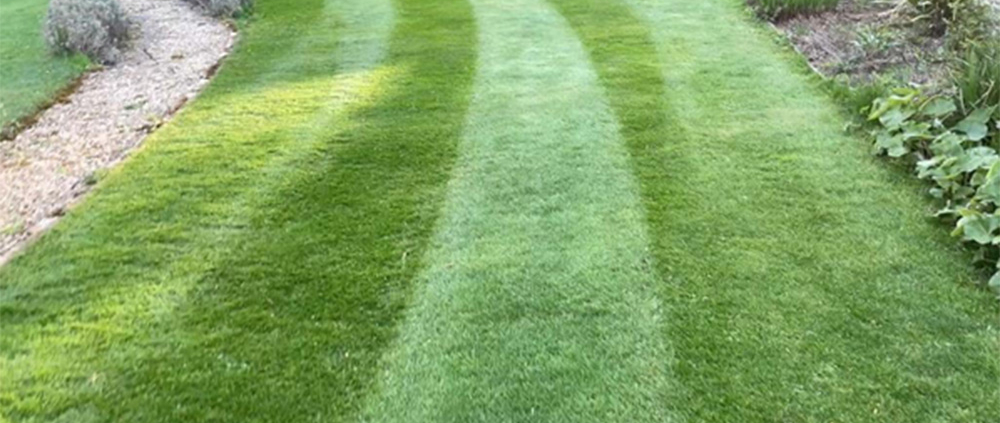
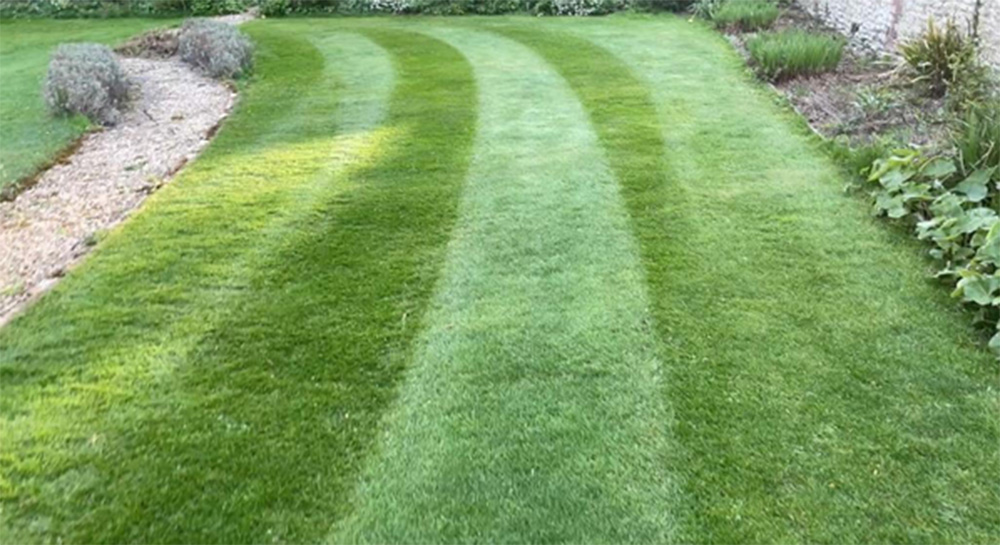
Could grass intruder cause the trend of plastic carpet?: Look all around you and there is grass thriving everywhere – on road verges, in parks and on hillsides. And 40 years ago, it was the same in our gardens. Back then, your average lawn was an amazing thing. It might not always have been in tip-top condition, but it soldiered on, year after year.

So why do so many modern lawns fail? Why is failure almost built-in?
Could grass intruder cause the trend of plastic carpet?

Could grass intruder cause the trend of plastic carpet?

Welcome to one of the biggest mistakes or cons in the history of lawn care.

The idea is brilliantly simple – sell a product you know will eventually fail, let the users blame themselves for not doing things right – and they’ll keep coming back to buy some more. And what is that product?  Ryegrass; is a grass sold for its strength, its fast germination and its good colour. But ryegrass was never intended for lawns and wasn’t used in lawns before the 1990s. And it has NO place in them today.

Let me tell you about this ‘apparent ‘wonder grass…

Some say it is a native species, having been around since at least the 1600s. But back then this coarse perennial grass was sown and grown as cattle feed. Yes, you read that right!  Fast-forward to the 1980s and some enterprising seed breeders created a much finer ryegrass specifically for use on winter sports grounds. It’s a tough grass, just what’s needed to cope with the rough and tumble of football.

Just ten or so years later, in the 1990s, this wonder grass suddenly starts to flood our gardens, added to our native fescue seed mixes.  Hurrah, they cry, it’s just what gardeners have been asking for, a tough and fast-growing grass that can withstand the rigours of modern family living!  And a drought-tolerant species too. That’s all true, but…

… it’s what they didn’t tell you that counts.
In the 1600s, farmers were sowing new ryegrass each and every year. And today the footie pitch maintenance crews are sowing new pitches each and every year. Because if they didn’t, they would soon have bare soil.

The science is really simple to understand. All grass plants have a finite life and need replacing. But our traditional grasses do most of that all by themselves. A brand new bent or fescue plant grown from seed will grow more plants (sideways) through shoots and stolons, and these in turn will grow more plants sideways, and so on – hence, a healthy native lawn is pretty much self-sustaining.

Ryegrass doesn’t do this. One plant is only ever one plant. When it dies, that’s it, no little baby grasses to carry on the family line. No, the only option is to go out and spend more money on more seed and start again.

That’s why the grass is killing your lawn

Keeping a ryegrass or majority ryegrass lawn thick and lush requires repeated reseeding. So, as your lawn starts to look thin and bare, you go off to buy some more of this “wonder grass” seed. Ker-ching go the shop tills, and up go the shareholder dividends as gardeners buy more grass seed than ever before.

So, avoid the ‘failure’ seed and buy instead what has always worked.

What about those hillsides, mountains, parks, road verges and all those houses pre-dating 1990? Why aren’t those grasses dying off each year? It’s because they are predominantly traditional British bents and fescues and other native species– the same grasses we always had in our lawns until the great ryegrass robbery took off.

Don’t let your lawn fail!

We need healthy living lawns. They oxygenate the air we breathe. They remove CO2. They support biodiversity. They play a key role in our collective battle to stop killing the world and everything that lives on it.  Listen to what nature tells you!

And it’s so easy! All you have to do is read what it says on the packet. If the seed includes ryegrass, we’d suggest to put it back on the shelf.

For the latest industry news visit turfmatters.co.uk/news

Get all of the big headlines, pictures, opinions and videos on stories that matter to you.

Follow us on Twitter and Instagram for fun, fresh and engaging content.

You can also find us on Facebook for more of your must-see news, features, videos and pictures from Turf Matters.

FairWays Foundation could fund your next project

FairWays Foundation could fund your next project: The FairWays Foundation is not-for-profit organisation dedicated to supporting and promoting conservation, stewardship and education within the turf industry and beyond.

The foundation supports environmental projects; both big and small by granting funds to successful applicants globally. The projects funded help to preserve the environment we live and work in whilst also encouraging education and stewardship; not only within our own industry but also within wider communities. The FairWays Foundation believes that environmental stewardship is not an initiative; it is a long-term investment into our future and the future of our industry.

FairWays Foundation could fund your next project

FairWays Foundation could fund your next project

Since being founded in 2019, The FairWays Foundation has granted over $440,000 to 29 projects across the USA, Canada and UK. Now in its 4th grant cycle, The FairWays Foundation is currently accepting applications until April 30, 2023.

Projects that have been funded to date include a Great Salt Lake Field Trip program, the expansion of the Irvine to Girvan Nectar Network, an on-course vegetable garden to serve the golf club restaurant, the installation of bat boxes, restoring an agricultural field to prairie, invasive specied removal, canal bank restoration and more. It does not have to be a golf-related project to be considered.

On average, golf courses range in size between 100 to 190 acres. With nearly 7,000 golf courses in Europe alone, that is a lot of nature to have a potential impact on. Golf courses have the opportunity to make a positive impact within their communities by providing shelter to wildlife, supporting native wildlife and plants, promoting positive stewardship to the public, and more. However, The FairWays Foundation understands that a lot of those things require additional time and resources that are not always feasible within a course’s budget. That’s exactly why The FairWays Foundation was created. The foundation funds projects and activities that impact communities within the turf industry for the better. Some examples of this are conservation-based projects, community education, and the enhancement of environmental stewardship practices.

Conservation-based Projects

These projects can be described as work that would conserve or safeguard the environment and natural resources on course or within the community. Please note that course-based projects that would be considered capital improvements to the course are excluded from funding.

Examples of Conservation-based-Projects:

  • Pollinator Gardens
  • Wildlife and Habitat Management
  • Bird Boxes
  • Duck Houses
  • Bug Houses
  • Composting Vegetative Waste

Community Education

An important part of safeguarding the environment is educating others on how and why they should do so. Golf courses are full of learning opportunities for this and the foundation wants to help provide the resources needed in order to spread environmental knowledge around the course and community.

Examples of Community Education:

  • Monitoring Nest Boxes with a Local Scouting Group
  • Environmental Workshops at Your Local School or Library
  • Engaging Members in an Ongoing Wildlife Species Inventory

Environmental Stewardship Practices

The large footprint of a golf course helps to maintain green spaces for native flora and fauna, and offers incredible potential for positive environmental impact. While regular maintenance practices may be implemented in an environmentally conscious manner, other beneficial projects may fall beyond the scope of what the annual budget would allow.  The FairWays Foundation can help provide funds to implement projects and practices that promote greater environmental stewardship.

Examples of Environmental Stewardship Projects:

  • Installing Natural Buffer Strips Near Waterways
  • Management of Native Negation
  • Heather Management
  • Creating Rain Garden Wash Pad Area
  • Creating/Maintaining Wildlife Corridors

The above are just a few examples of what The FairWays Foundation can fund. All are welcome to submit grant applications for projects that fall within these over-arching categories during the grant submission period which opens annually between February 1 and April 30. Questions or concerns regarding the foundation or how to apply for grants can be directed to the foundation team at info@thefairwaysfoundation.com.

Matt Foster, CEO & President of Aquatrols and President of The FairWays Foundation said, “We understand making a difference locally takes tremendous grit from a local champion.  It might be a green keeper or parks manager or a program volunteer.  Regardless, without their will, these projects would never move forward.  Our message to those individuals out there with a wish for a healthier environment is The Fairways Foundation can help with the way to get there.”

For news and to learn more, follow The FairWays Foundation on Twitter: @TheFairWaysFdn

For the latest industry news visit turfmatters.co.uk/news

Get all of the big headlines, pictures, opinions and videos on stories that matter to you.

Follow us on Twitter and Instagram for fun, fresh and engaging content.

You can also find us on Facebook for more of your must-see news, features, videos and pictures from Turf Matters.

Microclover could prove key

Microclover could prove key: As drought conditions continue and more restrictions come into force around water usage over the coming weeks, it is hard not to notice that many local authority sports grounds, gardens and public spaces have fallen victim to heat, particularly in terms of visual merit.

However, you may have noticed that amongst the current brown and baron land, patches of green remain – clover – which, as DLF explain, generates its own nitrogen from the atmosphere making it one of the most tolerant varieties to drought and other high stress environments.

Microclover could prove key

Microclover could prove key

Alongside more frequent periods of sustained hot and dry weather, the rise in fertiliser prices is driving seed producers to look for varieties that can be maintained with a more sustainable nitrogen programme. The unique root nodules on clover are formed by the Rhizobium bacteria, capable of converting atmospheric nitrogen into a natural fertiliser available for the clover as well as the companion grasses. Sourced in this way, the supply will also be gradual and ongoing, contributing to more sustained growth when compared to the ‘flush’ that can occur when larger quantities of nitrogen are applied as part of a managed feeding programme.

Microclover is a special bred dwarf white clover which joins in well with other turf species. The smaller leaves and lower growth habit contribute to a dense, uniform appearance as well as delivering strong wear qualities and heat/drought tolerance. All of this means that the inclusion of Microclover can result in a sward that suffers from less weed and disease invasion, and one that requires less water, fertiliser and ultimately cost, to sustain. In trials conducted by the STRI, Microclover is proven to deliver enhanced coverage and improved colour when compared to pure grass swards.

Masterline’s PM82 Microclover Sport mixture from DLF, has been specifically blended with these benefits in mind. PM82 improves turf quality whilst being kinder to the environment thanks to its reduced requirements for herbicide and fertiliser. Alongside Microclover, PM82 also features 40% Double 4turf® tetraploid perennial ryegrass. The deeper rooting nature of DLF’s 4turf® varieties means it can better withstand drought-like conditions and remains green even when the plant above ground is starved of water.

For the latest industry news visit turfmatters.co.uk/news

Get all of the big headlines, pictures, opinions and videos on stories that matter to you.

Follow us on Twitter and Instagram for fun, fresh and engaging content.

You can also find us on Facebook for more of your must-see news, features, videos and pictures from Turf Matters.

Pitches down to -6֯c? TGC could help

Pitches down to -6֯c? TGC could help: With vast swathes of the country once again experiencing bitter winter temperatures, if you’re going to ‘get the game on’, you need a proven frost protection solution.

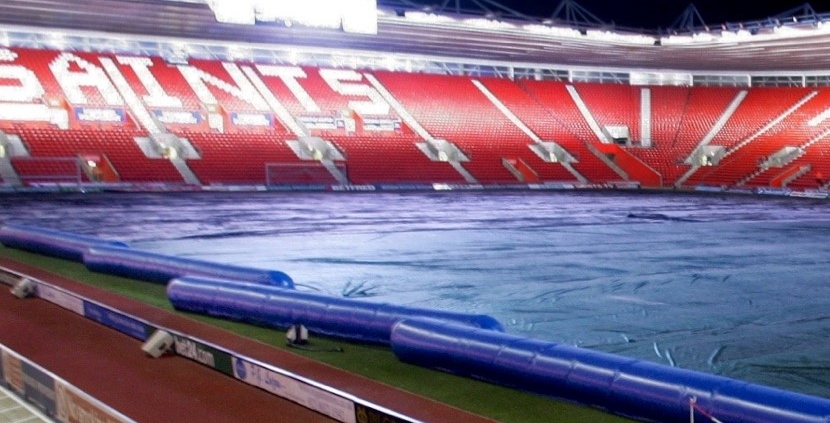
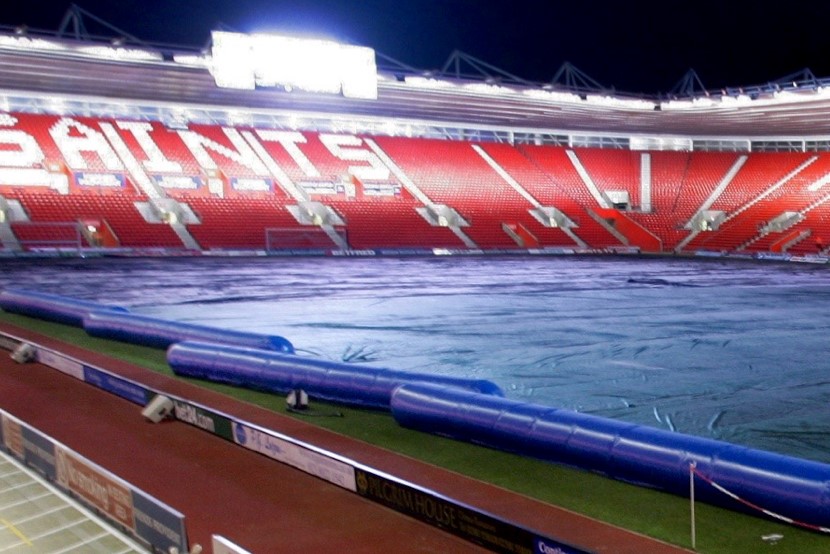
total-play’s TGC winter sports cover offers this and more – combining frost protection down to temperatures as low as 6֯c whilst actively encouraging germination of the grass plant. The result – healthy winter sports pitches that are ready for action, pretty much whatever winter throws our way.

Pitches down to -6֯c? TGC could help

Pitches down to -6֯c? TGC could help

In use by clients that include Premier League football grounds, Premiership Rugby Union grounds, the IRFU (Irish Rugby Football Union), National Hunt race courses and the Lawn Tennis Association, TGC is the result of rigorous research and development by experienced groundscare operatives in  conjunction with scientists; acting as an effective insulation blanket and retaining ground temperature while also allowing the circulation of air and water to create a proven germination and propagation environment.

And, while the covers are usually made to order, clubs looking for a quick-fix solution in the current challenging weather conditions could snap up a full pitch cover, ready for immediate dispatch, for just £9,999 + VAT & delivery*. Carrying a 5-year warranty for the fabric, this robust frost protection is suitable for manual deployment but also has optional inflation tubes to enable fast and easy deployment by a single grounds operative. MD at total-play, David Bates says:

“This is a truly rare opportunity – normally the covers would require a lead time of several weeks from point of order to deliver, but we unexpectedly have a single full pitch cover ready to go at a very keen price. This means a club could reap the benefits or TGC within a matter of days and, with the outlook looking so wintry, it could mean the difference between matches going ahead and costly cancellations.”

To find out more head to https://total-play.co.uk/products/climate-cover-pitch-protection/tgc/frost/ – alternatively, email info@total-play.co.uk or call 01604 864 575

*RRP £15,060 +del&vat. Cover only; does not include inflation tubes as per image.

For the latest industry news visit turfmatters.co.uk/news

Get all of the big headlines, pictures, opinions and videos on stories that matter to you.

Follow us on Twitter and Instagram for fun, fresh and engaging content.

You can also find us on Facebook for more of your must-see news, features, videos and pictures from Turf Matters.

Could you be the new BASIS FACTS Chairperson?

Could you be the new BASIS FACTS Chairperson?: BASIS is seeking to recruit a new Chairperson for the BASIS FACTS Advisory Committee, starting in March 2020.

The FACTS Committee comprises of representatives from a range of academic, advisory and commercial organisations, which the new Chair will oversee.

Could you be the new BASIS FACTS Chairperson?

BASIS CEO, Stephen Jacob, explains the FACTS Committee is taking forward some important changes to the FACTS scheme, to ensure professional standards are kept up to date and aligned with developments in the technical, regulatory and policy environment.

“We’re looking for a Chair that can manage robust debate around the ever-changing landscape and gain buy-in from members, as well as the bodies they represent,” says Stephen.

“The Chair will be responsible for setting the agenda, liaising with the BASIS team and ensuring that Committee members views are heard and acted upon.”

He says the Board is looking for an independent candidate who is not involved in the industries which BASIS serves.

“The new Chair needs to be an experienced manager who can demonstrate being a team player. It would also be beneficial to have experience of land-based or related industries, but this isn’t vital,” he adds.

The role requires chairing a minimum of two meetings a year, which are held in Peterborough, but the candidate can be based anywhere in the UK. In addition, the successful individual will be appointed as a Trustee of BASIS. This involves joining a further three Board meetings each year.

The FACTS Chair will be appointed by the BASIS Board of Trustees for an initial three-year term, which can be renewed annually for a further four years.

Outgoing FACTS Chair, Susannah Bolton, says she has thoroughly enjoyed the role.

“I have relished working with an engaged, expert Committee and a dedicated team at BASIS, in an area where I feel we can really make a difference and build trust in our industry,” says Susannah.

For an informal and confidential discussion to learn more about the position, please email Stephen Jacob on stephen@basis-reg.co.uk to arrange a mutually convenient time.

For the latest industry news visit turfmatters.co.uk/news

Get all of the big headlines, pictures, opinions and videos on stories that matter to you.

Follow us on Twitter and Instagram for fun, fresh and engaging content.

You can also find us on Facebook for more of your must-see news, features, videos and pictures from Turf Matters.