
Tag Archive for: Greener

The Grass People’s Expert Tips for a Greener Winter Lawn

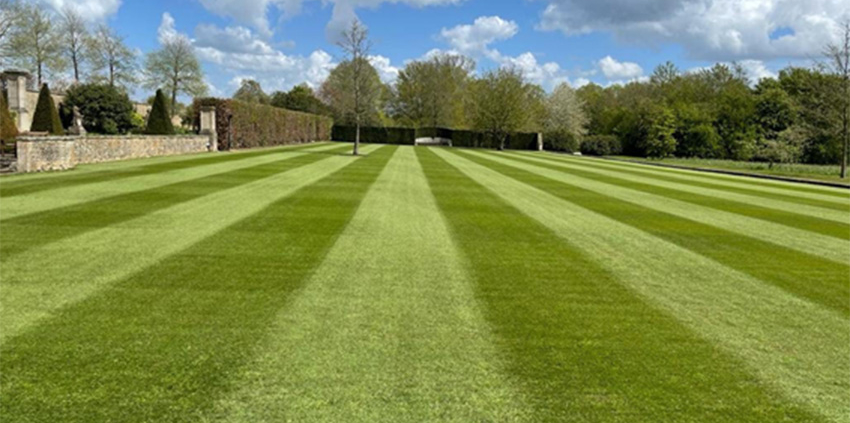
The Grass People’s Expert Tips for a Greener Winter Lawn: As temperatures drop and frost sets in, many UK homeowners assume their lawns must go dormant until spring. But according to Chris McIlroy, Lawn Expert at The Grass People, “winter is not the end it’s the preparation stage”.

Their winter lawn-care products gives gardeners the right tools to keep lawns nourished, moss-free, and healthy all season long ensuring a strong, vibrant return in spring.

The Grass People’s Expert Tips for a Greener Winter Lawn

The Grass People’s Expert Tips for a Greener Winter Lawn

Step 1: Spread precisely don’t waste your effort

Even the best fertiliser underperforms if it’s applied unevenly. The Grass People’s range of professional-grade lawn spreaders ensures consistent, controlled application across lawns of any size. From lightweight handheld spreaders for smaller gardens to broadcast options for larger areas, even coverage means better results and no patchy regrowth.

“A spreader may seem simple, but it’s the secret to consistency,” says Chris McIlroy, Lawn Expert at The Grass People. “Every handful applied evenly saves you from patchy growth and wasted product.”

Step 2: Feed for the season, not the week

Winter lawncare is about slow, steady nourishment not quick fixes. The Grass People’s SLOW RELEASE: Autumn/Winter Fertiliser provides up to four months of feeding in a single treatment. With an NPK of 8-0-6 plus added magnesium and iron, it strengthens grass against frost and disease, helping roots stay active through the colder months.

Apply in late autumn while the soil is still workable to lock in nutrients before growth slows.“Our slow-release formulas mean fewer applications and less waste, ideal for time-poor gardeners who still want results,” says Chris McIlroy.

Step 3: Control moss while you feed

Moss thrives in damp, shaded lawns when grass weakens during winter. The SLOW RELEASE: Winter Feed & Moss Control takes a dual-action approach, feeding the grass while discouraging moss growth.
With an NPK of 5-0-8 and 9 % iron, it delivers colour, strength, and up to eight weeks of moss protection.

“Winter can be tough on lawns, but it doesn’t have to be the season of damage,” adds Chris McIlroy. “By feeding your lawn and keeping moss in check now, you’re setting yourself up for a healthier, greener spring.”

When to act

  • October – December: Apply Autumn/Winter Fertiliser to strengthen before frost.
  • January – March: Use Winter Feed & Moss Control to protect and maintain colour.
  • Year-round: Use spreaders for precision, for fertiliser, seed, or even grit salt in icy conditions.

Why it matters

A strong, nourished lawn over winter:

  • Prevents bare patches and moss invasion
  • Reduces disease risk and frost stress

Requires less renovation in spring

For the latest industry news visit turfmatters.co.uk/news

Get all of the big headlines, pictures, opinions and videos on stories that matter to you.

Follow us on Twitter and Instagram for fun, fresh and engaging content.

You can also find us on Facebook for more of your must-see news, features, videos and pictures from Turf Matters.
Trilo M10 delivers cleaner, greener grounds

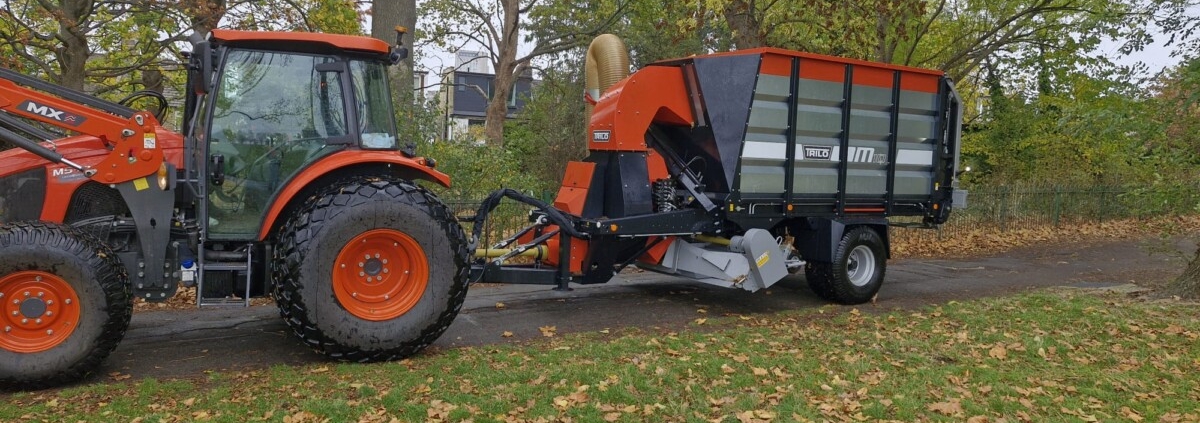
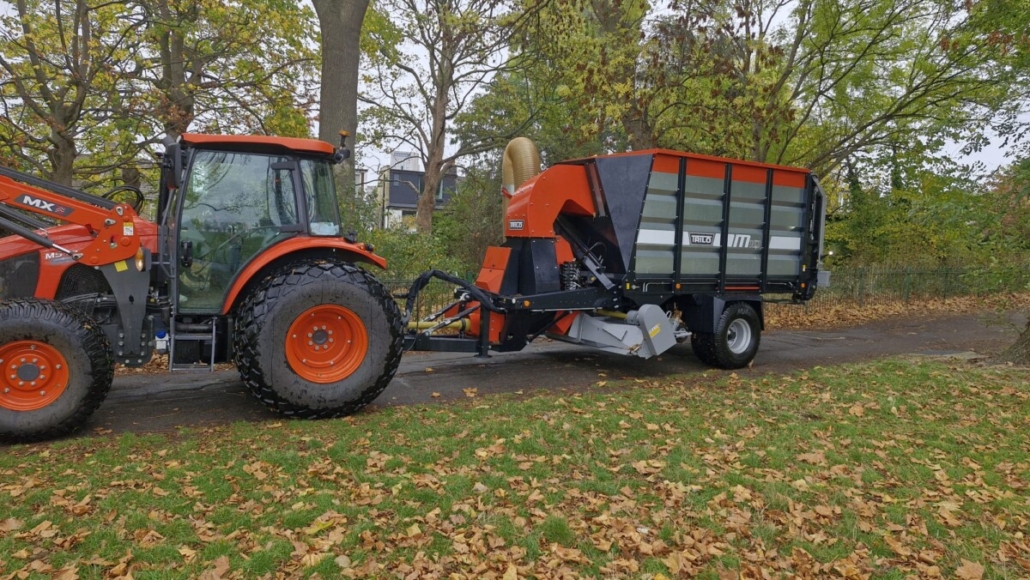
Trilo M10 delivers cleaner, greener grounds: Glendale Services, one of the UK’s leading national grounds maintenance contractors, has strenghtened a longstanding relationship with Trilo by investing in a new Trilo M10 vacuum collector – supporting large-scale grass, leaf and debris collection operations across London and the South of England.

A vast and varied fleet of equipment facilitates Glendale’s work on contracts around the country, with around 1500 staff spanning their grounds maintenance, corporate and arboricultural divisions. The company has relied on Trilo equipment for much of their three decades in business, using a wide range of models including the M10, M12 and numerous SU40’s to meet the demands of its large-scale operations.

Trilo M10 delivers cleaner, greener grounds

Trilo M10 delivers cleaner, greener grounds

“We’ve used Trilo machines for basically as long as they’ve been available in the UK” said Neal Harper, Group Machinery Manager at Glendale Services. “Some of our units have given us more than 20 years of reliable service, so when it came to investing in something reliable, efficient and built to last to support a new, long-term contract, the M10 was the natural choice.”

The 10m3 capacity Trilo Multipurpose replaces a long-serving predecessor and was specifically selected for its combination of high productivity and compact dimensions, suiting the access requirements of key urban and parkland sites. “We looked at larger models, but our work often involves navigating tight paths or gateway so the M10 was the perfect fit – literally!”

Among its many applications, the M10 is equipped with a flail shaft for meadow cut and collect, and easily swapped to the brush attachment for grass and leaf collection and major event clear-ups, including post-race operations for the London Marathon. Equipped with an electronically controlled Wonder Hose, the new model enables single-person operation, improving efficiency and reducing staffing requirements on certain jobs. “This feature makes a huge difference on big clearance jobs, meaning one person can work quickly and safely” he adds.

Neal went on to praise the consistent customer support from Trilo’s Jeremy Vincent. “Jeremy knows the machines inside out and always finds an answer to our questions – even arranging for us to have a demonstration of the M10 with another customer when the demo unit was out of the country.”

For the delivery of the M10 Jeremy was supported by established Trilo dealer, and trusted partner for Glendale’s operations across the South, Lister Wilder. Neal concludes, “We couldn’t be happier with the service and performance of the M10. Our Trilo machines of all sizes and configurations continue to give us exactly what we need and deliver outstanding results for our clients on every job.”

For the latest industry news visit turfmatters.co.uk/news

Get all of the big headlines, pictures, opinions and videos on stories that matter to you.

Follow us on Twitter and Instagram for fun, fresh and engaging content.

You can also find us on Facebook for more of your must-see news, features, videos and pictures from Turf Matters.
Hibernian FC Goes Greener with Dennis ES-860’s

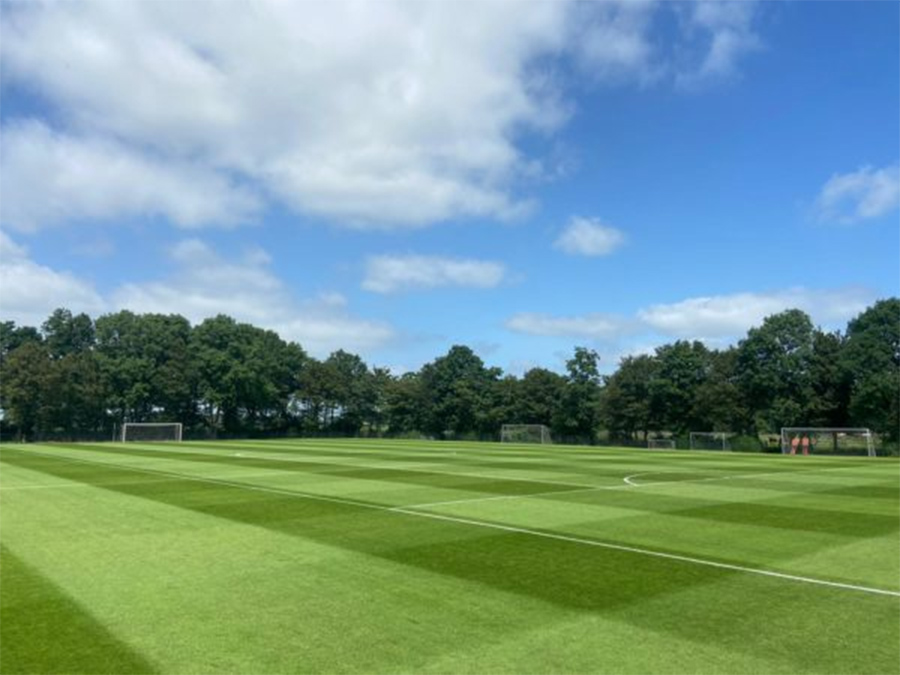
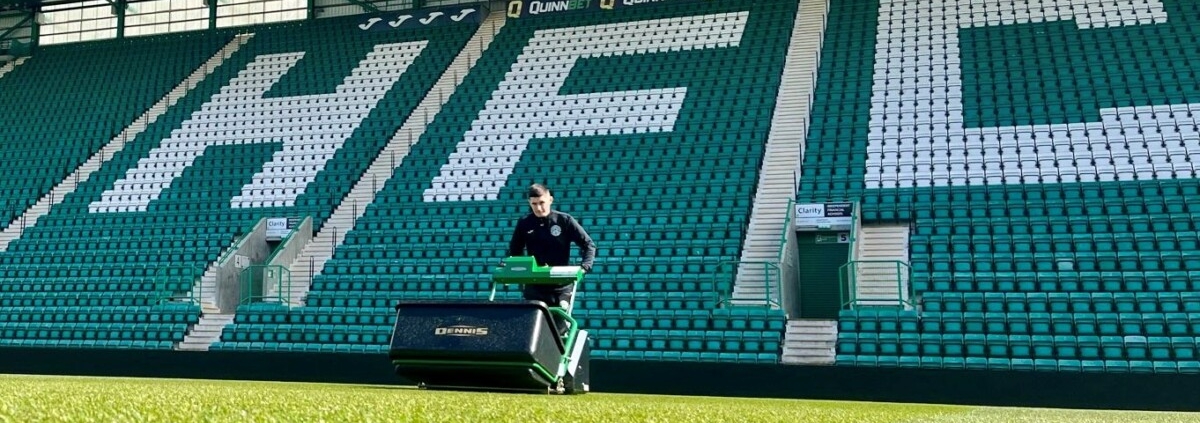
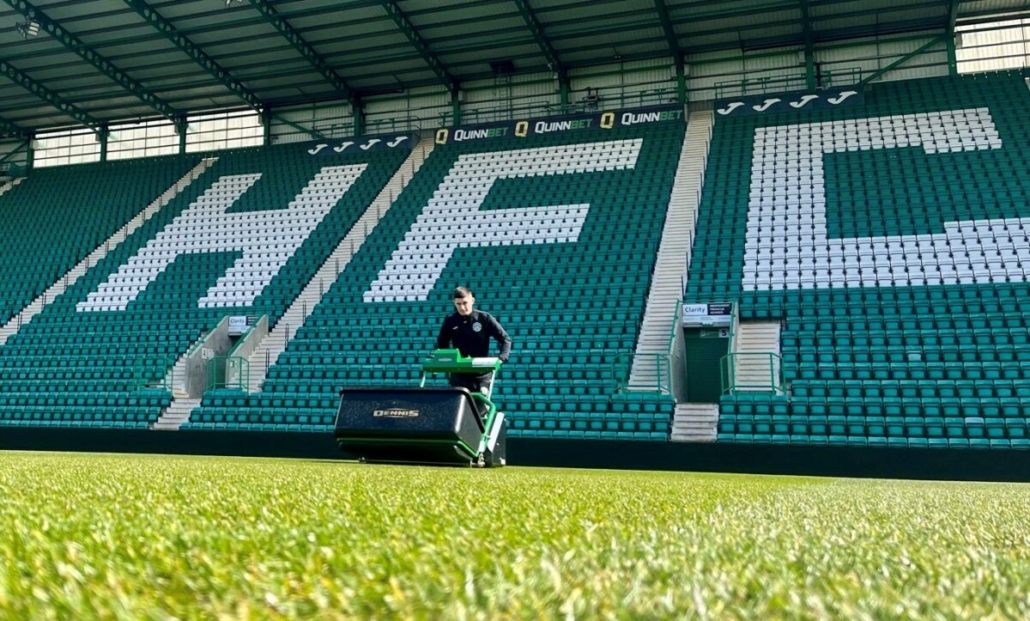
Hibernian FC Goes Greener with Dennis ES-860’s: Hibernian Football Club, celebrated as Scotland’s greenest football club, has made significant strides in sustainable grounds management with the purchase of the Dennis ES-860 battery-powered mower.

Head Groundsman Steven Thomas has found the ES-860 invaluable for its maintenance efficiency, environmental benefits, and ability to meet early game day demands, reinforcing the club’s commitment to top-tier pitch quality and sustainability.

Hibernian FC Goes Greener with Dennis ES-860’s

Hibernian FC Goes Greener with Dennis ES-860’s

The Dennis ES-860 is a 34-inch battery-powered turf management system, renowned for its versatility, with 13 interchangeable cassette options that handle a wide array of essential tasks like cutting, scarifying, brushing, and verticutting. For Steven, this level of flexibility has been transformative in his approach to maintaining the stadium pitch at Hibernian.

“We’ve had the ES-860 for almost twelve months, and it’s exceeded all of my expectations,” Steven explains. “When I joined the club, we had limited machinery, and upgrading it was a priority. After testing a few brands, the difference with the ES-860 was night and day. As soon as I tried it on the pitch, I knew it was the one for us. The ease of use was far superior to anything we tried.”

Switching to battery power was also a strategic choice, aligning with the club’s environmental goals. As the first Scottish football club to join the UN Sports for Climate Action Framework, Hibernian is deeply committed to sustainability. “When I first started, Hibs had recently won an award for being the greenest football club in Scotland, and so getting the ES-860 was a no-brainer—it aligned perfectly with that recognition.”

The ES-860 has made a considerable difference in daily routines for Steven and his team. With its low noise level, the ES-860 enables the grounds team to start work earlier without disturbing nearby residents. “Where we store the equipment, there are adjacent houses,” says Steven. “Starting petrol mowers at 7 a.m. is challenging due to noise regulations, so having the ES-860 lets us get an early start without disturbing anyone.”

This quiet operation is invaluable for early kick-off days, especially when games are scheduled at 12 p.m. on Sundays. “For Sky Sports games, we often need the pitch ready by 8 a.m., which means cutting at 4 a.m. The ES-860 lets us meet this demand. It’s been a game-changer for those high-pressure mornings.”

This mower has become central to Hibernian’s daily maintenance, used up to twice a day in the summer and at least once a day during the winter. “The quality of cut and the quality of finish is first-class,” Steven adds.

The battery life of the ES-860 is another highlight. “After a year of use, the battery performance remains exceptional. Our rule of thumb is that it should be able to handle a full pitch cut once or twice, and it consistently does that without any issues. The battery life hasn’t dipped, which is key for me.”

Working with Dennis has also proved valuable beyond the machine itself. “The support from Dennis has been fantastic. In the past, I’ve had new machinery where, once sold, you never hear from them again. Dennis is different—the team is always on hand, ready to help, and go out of their way if I need them.”

With features that support both environmental initiatives and practical day-to-day demands, the Dennis ES-860 has become indispensable at Hibernian FC.

For further information or a no obligation demonstration, please contact Dennis 01332 824 777 or visit www.dennisuk.com

For more news, reviews and insightful views, you can follow Dennis on Twitter and Instagram @DennisMowers and like the company’s Facebook page – www.facebook.com/DennisMowersUK. You can also view the latest Dennis videos by visiting www.youtube.com/DennisMowers

For the latest industry news visit turfmatters.co.uk/news

Get all of the big headlines, pictures, opinions and videos on stories that matter to you.

Follow us on Twitter and Instagram for fun, fresh and engaging content.

You can also find us on Facebook for more of your must-see news, features, videos and pictures from Turf Matters.
UK grass about to get greener

UK grass about to get greener: Each year gardeners up and down the UK throw tonnes of powerful herbicides onto their lawns to try and kill weeds. But David Hedges-Gower, Lawn Association Chairman, explains why this is often a waste of time and money – and dangerous!

“Let’s be clear; a herbicide – that ‘harmless’ addition to many commercial or retail lawn fertilisers for apparently killing weeds – is a powerful and toxic chemical. Despite this, thanks to a shameful lack of regulation in lawn care and incredibly poor advice, our gardeners have for decades been encouraged to buy and spread these ‘convenience’ products. They are promised the benefits but are not told of the environmental impacts.

UK grass about to get greener

UK grass about to get greener

“However, grass isn’t just the most widespread and diverse plant group on the planet – it’s also one of the greenest, being perfectly able to adapt to the most extreme of conditions all by itself.

“So our lawns should be one of the most natural parts of the garden – all that’s needed is to maintain healthy grass the way nature intended. A good native sward, nurtured through basic modern lawn care, simply won’t leave enough room for a serious lawn weed problem.

And using herbicides is not just wasteful – it’s risky too, as David explains:

“In other sectors, all kinds of potentially dangerous chemicals have been removed from general sale. Here at the LA (Lawn Association) we believe it is time to ban the sale of lawn herbicides to the general public. Asking gardeners to use these chemicals responsibly is like asking all motorists to be able to service their own cars safely. Herbicides should be a last resort – and only used by those with professional training and regulation(for the moment)

So, what’s changing?

Until now there simply hasn’t been adequate training – for gardeners or for lawn professionals. Even with proper City and Guilds certification many professionals remain confused about vital precision spraying. Fortunately training lies at the heart of the Lawn Association, which is helping to reduce unnecessary and reckless herbicide use on two fronts

First, through its online lawn care course, gardeners can learn how to create and maintain healthy lawns without resorting to dangerous chemicals. And second, the Association’s new Level 2 Training (coming soon) will help ensure lawn professionals can use herbicides efficiently, when necessary, with confidence, knowledge and skill.

For more information or images please contact Francijn Suermondt at rabbitattackpr@gmail.com or on 07895184395.

Our core mission at the Lawn Association is to make accurate lawn care information readily available via our website and through our Free Membership Scheme for gardening enthusiasts. Go to the @LawnAssociation Facebook page to join the Lawn Enthusiasts Group, and get free association membership via the website, www.lawnassociation.org.uk

For the latest industry news visit turfmatters.co.uk/news

Get all of the big headlines, pictures, opinions and videos on stories that matter to you.

Follow us on Twitter and Instagram for fun, fresh and engaging content.

You can also find us on Facebook for more of your must-see news, features, videos and pictures from Turf Matters.
Grass is greener at AZ Alkmaar

Grass is greener at AZ Alkmaar: The AQUA4D® system rented by Lescrauwaet BV has contributed significantly to solving turf issues at the AFAS Training Complex in Wijdewormer, home of AZ Alkmaar football club (Eredivisie). “We now have no more dead grass spots,” says groundsman Wouter Uitentuis. “That’s because the AQUA4D® water system creates smaller water clusters, so they get into the smallest pores.”

“In the first year when the training pitches were delivered, five years ago now, nobody could have foreseen how badly the grass would grow. There were a lot of bare patches of grass, especially near the overlap of the sprinklers,” explains says the groundsman, who manages the training fields. After the first season, 2 cm of the grass layer was milled off with a fieldtop maker, reseeded and fertilised. Due to the hot and dry summer the following year, the emerging grass burned immediately. Uitentuis: “We wondered what was causing this and started looking. We found out that it had to do with the salinity in the irrigation water. With this knowledge, we started spraying the fields much more to push away the salt, sometimes as much as 40 to 50 ml/m2 per night. Normally we give between 10 and 15 ml/m2 depending on the time of year.”

Grass is greener at AZ Alkmaar

Grass is greener at AZ Alkmaar

Getting the ball to roll faster

After a large amount of water, there was no watering for a few days until the turf dried out. That was the moment to start watering again. “As a result, it took longer than desired, also from the club’s point of view, before there was a reasonable grass surface. But at the overlap spots of the sprinklers we saw that the grass didn’t want to grow because of the salinized soil,” explains Uitentuis.

AZ Alkmaar turf, before AQUA4D

There was a second problem: AZ requested that the pitches should also be wet during the day, to help the ball speed. “In order to make the grass wet, we had to spray water in small doses even on a sunny summer day. This keeps the salty water on the blades of grass. The result was that the salt residue in particular burned into the leaves, causing the grass to turn yellow and die.” Later in the season, more rain did turn the grass green again. “As soon as the grass received fresh rainwater, the grass was back to its normal green colour within a week.”

The search for innovative irrigation technology

In order to remove the salt from the irrigation water (with an EC of 7.0), a Reverse Osmosis system was considered. But this system could not handle the amount of water from the pump, which has a capacity of 60 m3/hour. Tap water was not an option either, because there was no adequate connection to be made, and using drinking water would be expensive.

Two years ago, the groundsman called in Westhoven Agro Advies who put him in touch with AQUA4D® BeNeLuxDu importer Lescrauwaet BV in Hilversum for treatment of the surface water. With the AQUA4D® water system, the irrigation water is treated with resonance fields, which improves or refines the structure of water clusters.

The Swiss-based firm have more than 4,200 water systems operational in 40+ countries, in horticulture, sports fields, landscapes, and sustainable buildings.

A test was Conducted by connecting and disconnecting sprinklers to the AQUA4D® water system. “At first we were sceptical, because we thought that no system could do it properly,” explains Uitentuis. But we soon saw a difference with AQUA4D. With the sprinklers whose water had not been treated, the grass quickly burned.”

Smaller droplets roll off leaves

According to the groundsman, this watering system has the required capacity, is affordable, and has a positive effect on bare grass areas. “The water surface tension is lower, so the water droplets are smaller and less spherical. We can also see this in the water that is sprayed more when watering the grass. Due to the change in water clusters, the water droplets no longer remain on the leaf. Because they roll off, we also no longer have any salt residue. As a result, the grass no longer burns.”

A new approach to water management

The AQUA4D® system has made a significant difference to the grass patches that refused to grow. “Every year is different here – it can be warmer or colder, more or less sunlight and drier or wetter. Water is one facet of the whole picture, but the most important one. In summer, we now have a different fertilisation policy with more coated fertilisers, which are released slowly, and we spray urea fertiliser on the leaves,” says Uitentuis.

“We are pleased with the beautiful green turf this summer. It really is a picture,” he concludes.

Find out more about sustainable water management for football: https://www.aqua4d.com/news/sustainable-football-irrigation/

For the latest industry news visit turfmatters.co.uk/news

Get all of the big headlines, pictures, opinions and videos on stories that matter to you.

Follow us on Twitter and Instagram for fun, fresh and engaging content.

You can also find us on Facebook for more of your must-see news, features, videos and pictures from Turf Matters.