Tag Archive for: How

How Oundle School’s Grounds Team Met Record Demands

How Oundle School’s Grounds Team Met Record Demands: With 257 matches and extreme weather to contend with, the team share how planning, machinery choice and adaptability kept standards high.

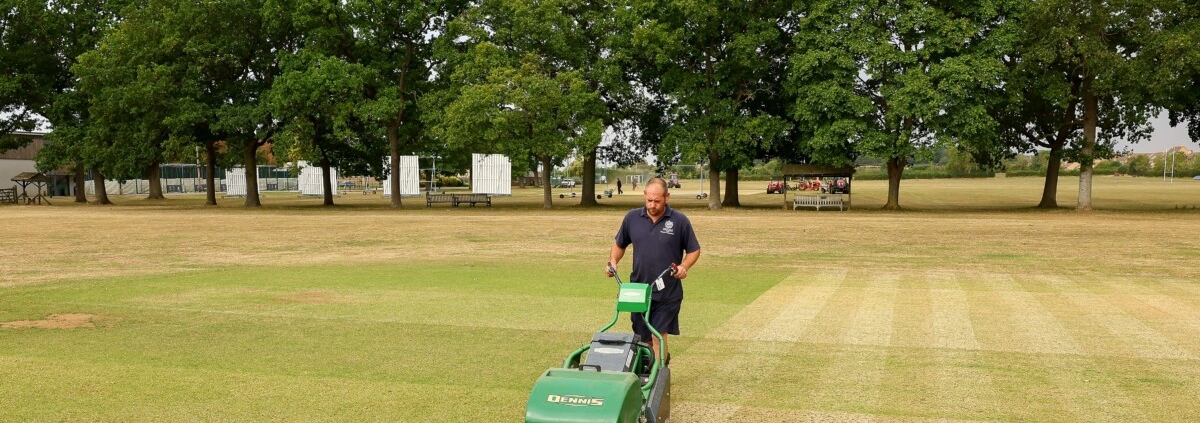
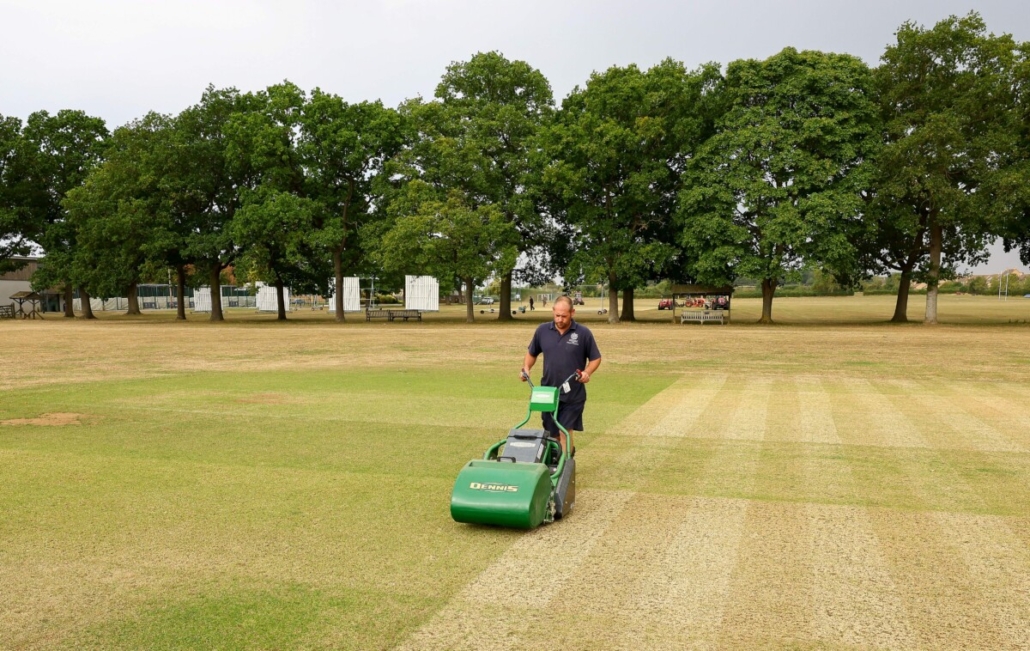
 It has been a season like no other at Oundle School. The grounds staff not only prepared surfaces for the school’s extensive fixture list, but also supported Northants Cricket Academy, a testament to the quality and reputation of the school’s facilities.

How Oundle School’s Grounds Team Met Record Demands

How Oundle School’s Grounds Team Met Record Demands

The workload placed on the team has been immense:

  • 257 cricket matches hosted,
  • 60 pitches prepared across eight squares,
  • plus ongoing upkeep of 11 rugby and football pitches.

These achievements came against the backdrop of one of the most challenging starts to the year for grounds professionals nationwide. The first half of 2025 was marked by prolonged dry spells, minimal rainfall and increased pressure on irrigation resources. Across the sector, grounds teams have reported increased difficulty in maintaining turf quality under these conditions, with fixture demands often compounding the pressure.

To help meet these challenges, the Oundle team reviewed their equipment and invested in a new battery-powered mower to support both performance and sustainability.

For Sam Wyles, who has been part of the grounds team for over a decade, the season highlighted just how important reliable and versatile machinery was in coping with demand.

“I’ve been here for 10 years and we’ve always had a lot to manage, but with 257 matches this summer, it was on another level. We knew early on we needed a mower that could handle long days, give us flexibility and help us reduce the strain on the team. The ES-510 hasn’t disappointed.”

The decision to switch from petrol-powered equipment to a battery-powered mower was not made lightly. The team carried out research, spoke to colleagues at other schools and tested options. After a successful demonstration from Dennis’ sales manager, Jason Briggs, the school chose the ES-510.

“We did some research and found that the ES-510 had a really good battery life. We’ve had friends and colleagues in other schools that have used the machine and it came highly recommended; it hasn’t disappointed. It’s built to last and robust.”

For the team, the benefits quickly became clear: low noise, zero emissions, reduced HAVs and long-lasting battery power.

“We use a lot of petrol-powered machinery and we’re finding that we need to reduce HAVs wherever we can. So, we’ve moved to battery-powered equipment and this has not disappointed. The ES-510 doesn’t need much of a grip to hold onto it, so there’s less strain on your wrists and the reduced handle arm vibration levels have really been noticeable.”

Noise reduction has been another benefit in a busy school environment.

“Noise levels are an issue for us. The quieter machine has made it a lot easier. We can start a bit earlier without affecting anyone else around us.”

With zero emissions and a full day’s battery life, the mower supported the school’s sustainability ambitions as well as its practical needs.

“We’ve been using this mower to prep our cricket wickets. We used to use petrol equipment, but we found that we can get a full day’s running out of this with the batteries.”

Time was at a premium all season and versatility quickly became one of the mower’s standout strengths.

“The versatility of the ES-510 has made a real difference. We can quickly swap between cassettes, brushing wickets one moment, then switching back to a cylinder the next, which means we need fewer machines to do the same range of jobs. The ability to adjust the cylinder or the cutting height without tools is really easy and saves time. Importantly, we can set the walking speed and the clip rate separately and the machine automatically keeps the clip rate consistent even if the speed changes. That gives us a better, more uniform finish while ensuring everyone on the team can work at the same pace.”

Even with the packed schedule, standards were never allowed to slip. The built-in back-lapping feature in the controls allowed the team to keep the mower and grass in peak condition all through the season.

Grounds Manager Gary Peden reflected on the decision to invest:

“The school is deeply committed to becoming more environmentally friendly and sustainable. After chatting with Richard at Oakham School, who uses this particular model, we went for the Dennis ES-510. It has given us the confidence to maintain the highest standards across every cricket pitch and square while using electric power. Its battery performance, low noise and versatility have allowed the team to work more efficiently; it’s been a huge step forward for us.”

Looking back, Peden says the investment has given the team confidence to maintain the highest standards across every pitch, while also moving towards more sustainable working practices. For schools and clubs facing similar fixture pressures, he believes the lessons learned this season will be invaluable.

For the latest industry news visit turfmatters.co.uk/news

Get all of the big headlines, pictures, opinions and videos on stories that matter to you.

Follow us on Twitter and Instagram for fun, fresh and engaging content.

You can also find us on Facebook for more of your must-see news, features, videos and pictures from Turf Matters.

How Synthetic Turf is Supplying Fresh Water in South Africa

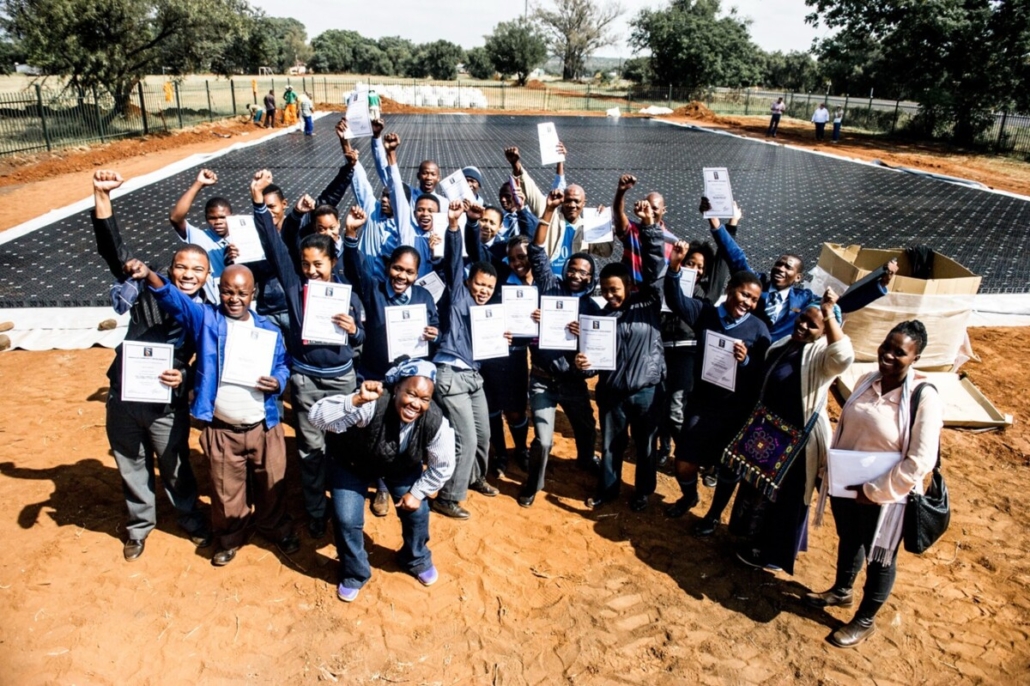
How Synthetic Turf is Supplying Fresh Water in South Africa: A landmark project in South Africa is highlighting how synthetic turf can be used to enable freshwater recycling. Two ‘Cruyff Courts’ are simultaneously providing a high-quality playing surface while integrating an advanced water collection and filtration system under the field, providing the local community with fresh potable water.

The installation of the courts is part of a wider initiative by the Cruyff Foundation, supporting various sports endeavours for children, and young people with special needs. The two new fields in Orange Farm, near Johannesburg, bring the total number of Cruyff Courts to 10 in the country.

How Synthetic Turf is Supplying Fresh Water in South Africa

How Synthetic Turf is Supplying Fresh Water in South Africa

The investment and innovation come as South Africa is currently grappling with one of the most severe droughts in recent history, affecting approximately 61 million people across Southern Africa.[1] The prolonged drought has led to significant water shortages, impacting both urban and rural communities.

The Government has launched the Water Crisis Action Plan 2025, focusing on infrastructure rehabilitation, smart metering systems, and new dam projects to mitigate the crisis. Despite these efforts, the agricultural sector faces devastating losses, contributing to widespread food insecurity. Innovative solutions, including public-private partnerships and technological advancements like the freshwater recycling beneath the Cruyff Courts, are also being implemented to address the urgent need for sustainable water management.

The project was headed up by EMEA Synthetic Turf Council (ESTC) member Dutchblue, who provided an advanced water collection and filtration system through its partners Project GreenSource SA.

The ‘Catch-Store-Reuse’ sports system captures rainwater, stores it in its subbase, and purifies it in a GreenSource container next to the field. Runoff collected by the system is filtered to remove contaminants, including bacteria and metals, before being pumped to a fountain for use as potable water. The purified water can then be used via a tap on the outside of the container.

The courts represent a significant development in the use of sports pitches to collect water. Together with the local community’s help, the project was completed in December 2024, and training is being given to maintain the pitches throughout their lifetime.

The duality of providing a high-quality sports playing field and clean water for the local community has resulted in some great benefits for the local area. These include potable water supplies for periods of prolonged drought and a recreational area for children and adults to play sports safely. The courts have also helped foster a sense of community identity, serving as a social hub as well as a sports facility.

Stefan Diderich, Director General at ESTC, said: “This project is a perfect example of how synthetic turf can operate not just as an enhanced playing surface, but also as a force for good in fighting drought and other hydrological issues around the world.

“Training the local community to maintain the pitch ensures they will have a lasting impact and can provide users with a high-quality surface as well as a source of clean drinking water for years to come.”

For the latest industry news visit turfmatters.co.uk/news

Get all of the big headlines, pictures, opinions and videos on stories that matter to you.

Follow us on Twitter and Instagram for fun, fresh and engaging content.

You can also find us on Facebook for more of your must-see news, features, videos and pictures from Turf Matters.

How Hybrids have unlocked a new era at Edgbaston

How Hybrids have unlocked a new era at Edgbaston: Hybrid pitches have emerged as a key ally in the fight to maintain top-level performance in cricket. But there’s a lot more this technology can offer the sport.

It’s no secret the cricket calendar is a lot busier than it used to be.

How Hybrids have unlocked a new era at Edgbaston

How Hybrids have unlocked a new era at Edgbaston

So busy, in fact, that we now have a term for the challenge it lays down for those playing the game and maintaining the wickets throughout the year: fixture congestion.

It’s all good for the game, though not without its challenges. Cricket is reaching more people than ever – and the diversity of formats has secured a future with new audiences across the world.  But, in the UK at least, all this growth is happening within the same stadiums, many of which have existed for decades.

For groundspeople, there is now simply too much traffic to maintain a consistent and even bounce across all competitions, especially when relying solely on all-natural turf. It was this realisation that led the team at Edgbaston to consider a new surface technology – one that has unlocked a previously unattainable level of durability and consistency.

The move has created room for more double-headers and plenty of drama for the fans – a real boon for the ‘people’s home of cricket’. It has also accommodated the growing success of the women’s game, with the Bears now boasting both men’s and women’s squads.

However, as Gary Barwell, Edgbaston’s Head of Sports Turf explains, reaching this point has been several years in the making. We caught up with Gary to get the full innings.

Left-field inspiration

Edgbaston is now one of a growing number of major cricket grounds with a SIS Grass Hybrid pitch installed on its main playing area. This work has been a huge success, allowing the stadium to better manage cricket’s increasingly busy schedule without compromising performance. It’s also provided parity, allowing the women’s teams to practice and compete on the same pitches as the men.

The stadium’s experiments with a hybrid pitch can be traced back to 2017 – and, oddly enough, because of an entirely different sport. While the technology has been around since the late ‘80s and used for elite-level cricket competition since 2019, it was the hybrid’s success in football that got the ball rolling in Birmingham: “It all started after the Champions Trophy,” says Barwell. “As one of three grounds used for the tournament, we began to see the square suffer and good playing conditions became much harder to maintain. Once it concluded, we began looking at our options. The hybrid concept emerged as a frontrunner after a visit to St. George’s Park, the FA’s national football centre.”

An interest in replicating hybrid’s successes for cricket led Barwell to SIS Pitches – and more specifically SIS Grass Hybrid. Unlike other hybrid systems that are more complicated to install, SIS Grass Hybrid uses the patented Universal machine, injecting a small percentage of polymer fibre into a stadium’s natural turf. This composition is more resilient to stresses created during play, helping to prolong the life of a playing surface, guarantee an even bounce and ease pressure on busy groundspeople. Completed installations are predominantly natural grass, with around 5% of polymer fibre used. This ensures the characteristics of an all-natural pitch are maintained.

It was this mix of convenience, resilience and playability that appealed to Barwell, with Edgbaston subsequently trialling the technology in late 2017, ahead of another major milestone for innovation in cricket. “Our first trial began with the UK’s first day-night test between England and West Indies. The bowlers had full use of it throughout, sending plenty of deliveries, and initial impressions were very positive. The players said it had a better carry and more consistent bounce, along with much less wear and tear. This was a key moment for us because player feedback really carries in this sport.”

Getting on the scoreboard

Edgbaston’s move into hybrids coincided with a growing interest in new surfaces among cricket’s elite. In 2017, the England Cricket Board signed off on two hybrid wickets at its National Performance Centre in Loughborough, another SIS Pitches installation. Much like Barwell, the ECB opted for the trial having noticed the success of hybrid surfaces in the Premier League.

In 2019, following positive feedback from county clubs, the ECB then sanctioned hybrids for use in the Royal London One Day Cup, Vitality Blast and all formats of Second XI cricket. This decision set the stage for major stadiums, like Edgbaston, to begin integrating the surface within elite-level competition. “We continued to use the technology in the intervening years,” adds Barwell. “This period allowed us to fully understand how the fibres interacted under different moisture conditions, as well as the system’s impact on natural grass growth.”

With the ECB sanction and a pause to tournament play due to the pandemic, Edgbaston found itself with a window to install its first two pitches within the main square. This work, which took place in late 2020, proved particularly effective for the shorter, more intense T20 format hosted once lockdowns eased and sport recommenced across the country. “Our main square install got off to a flying start, which was reflected in the high scoring we were seeing. If I remember correctly, the first match was 150/1 off 10 overs. That’s the type of action you want to see when fans come down for an evening,” says Barwell.

Hitting for six

For Edgbaston, the impact of SIS Grass Hybrid is best seen through the success of several major competitions, chiefly among them the Commonwealth Games held in 2022. During the games, the stadium hosted 16 international women’s matches played over a two-week period. With an all-natural pitch, this intense window of competition would typically require a high number of maintenance intervals to keep wickets up to standard. With SIS Grass Hybrid, however, the window was expanded, allowing top-level performance without major interventions so often from the grounds team.

“On traditional pitches, you see really good performance on day one, but there’s typically a steep decline once you get into days three or four,” Barwell notes. “We noticed with hybrids you could play on them over 10-12 days and not see a drop off. You only have to prepare one pitch, as opposed to two or three for the same amount of game time. This was massive for us during the games, with 60,000 people in the stadium and many more watching around the world.”

It’s often said that stats only tell part of the story in sport, but for SIS Grass Hybrid at Edgbaston the numbers really do speak for themselves. In 2024, the ground was able to facilitate 55 matches across all formats – the most of any ground in the country. To put that in context, it’s more than double the number of matches hosted at Edgbaston when Barwell first joined as Head of Sports Turf in 2012.

With hybrids now approved by the ECB for some red-ball competition, there is seemingly more to come at Edgbaston. “We’ll continue to invest in our hybrid surface because it’s proven effective at the highest level,” says Barwell. “For us, it’s about lowering the maintenance requirement while also delivering the best possible performance – for both players and fans. SIS Grass Hybrid has given us that option. Sporting theatre at its best.”

For the latest industry news visit turfmatters.co.uk/news

Get all of the big headlines, pictures, opinions and videos on stories that matter to you.

Follow us on Twitter and Instagram for fun, fresh and engaging content.

You can also find us on Facebook for more of your must-see news, features, videos and pictures from Turf Matters.

How to Stop Surface Compaction Killing Your Turf

How to Stop Surface Compaction Killing Your Turf: In drought conditions, compacted turf is your worst enemy. It seals the surface, blocking irrigation water from reaching roots, and accelerating turf stress. Then when it does rain, you get a surface full of puddles that eventually evaporate off with little benefit to the turf roots. 

Regular surface aeration is therefore crucial, and GreenTek has a wide range of specialised equipment to help with this.  Here we will look at the various options in detail.

How to Stop Surface Compaction Killing Your Turf

How to Stop Surface Compaction Killing Your Turf

Sarel Rolling

This is a long-proven technique, using spiked rollers to prick through the turf surface and enable entry of air, water, wetting agents, and nutrients into the root-zone.  GreenTek offers three Sarel-Roller options:

Triplex mounted

The Thatch-Away Supa-System units take a wide range of interchangeable turf maintenance attachments including Sarel-Roller Cassettes.  The three separate units give a working width of 1.5m, which combined with the greensmower’s speed and manoeuvrability makes this the most popular option for the majority of golf clubs.

Tractor mounted

Some golf clubs, and also other sports clubs, prefer to operate their Sarel-Roller on the back of a compact tractor or utility vehicle like the Pro Gator or Workman.  The popular 1.6m Tractor Mounted Sarel-Roller is ideal for greens and tees.

However, for larger areas such as golf fairways, and sports complexes with multiple pitches, the Multi-Sarel is ideal.  Its three hydraulically folding units give a massive 5.4m working width, enabling 18 fairways or multiple pitches to be sarel-rolled in just a matter of hours.

Alternatives for extreme conditions

If your golf greens have got so hard that not even sarel-rollers will penetrate, there are two further options from GreenTek’s Dynamics range to help solve your problem.

Dyna-Spiker

The Dyna-Spiker units fit to your greens triplex and have extra long slitting spikes which are powerfully driven into the turf.  The mower’s hydraulic or electric motors drive an eccentric camshaft, causing the spikes to vibrate and penetrate deep into the surface, breaking open compaction and allowing entry for vital water, wetting agents, and nutrients.

Dyna-Corer

The other member of the Dynamics range, the Dyna-Corer units, also fit to your greens triplex, and these have a punch action with interchangeable tines.  Most commonly used with hollow core tines for year-round micro-coring and thatch removal, in dry weather these can be swapped for solid needle tines to open the surface up without disturbance.

Survival

The key to surviving drought conditions is to take action quickly!  Don’t wait till your grass is dying before you act.  Opening up the surface is an immediate priority.  Then when heavy rain does inevitably come, your surfaces will drain freely without puddles, and the turf roots will get maximum benefit form the precious water.

Maintaining an open surface through the summer protects your turf health, and saves the need for extensive remedial and reseeding work later in the season.

GreenTek provides a full range of aeration equipment which can be viewed here.

For the latest industry news visit turfmatters.co.uk/news

Get all of the big headlines, pictures, opinions and videos on stories that matter to you.

Follow us on Twitter and Instagram for fun, fresh and engaging content.

You can also find us on Facebook for more of your must-see news, features, videos and pictures from Turf Matters.

How Groundtel’s line marking capabilities service 150 schools

How Groundtel’s line marking capabilities service 150 schools: Groundtel Ltd is a family-run business with a proud reputation for precision, reliability and service. With over 150 schools on its books, the company has become one of the region’s leading grounds maintenance providers.

At the heart of operations is Danny Perkins, Contracts Manager and member of the founding family. Danny is helping steer the business into the next generation of efficiency with robotic line marking machines.

How Groundtel’s line marking capabilities service 150 schools

How Groundtel’s line marking capabilities service 150 schools

“We were already delivering a high standard,” says Danny, “but the TinyLineMarker robots have taken us to a different level. They’ve paid for themselves ten times over.”

Each season, Groundtel’s team prepares a wide range of sports markings across school playing fields. For summer months, this includes 100m, 200m, 300m, and 400m running tracks, complete with relay boxes, rounders and softball pitches, and throwing areas for javelin, discus, and shot putt. In winter, the focus shifts to football pitches, rugby pitches, and training grids, all initially marked and then overmarked throughout the season as required.

The 20-strong grounds team has a significant workload and has a two-person team dedicated solely to line marking. Historically, that meant traditional pedestrian machines, such as push-along markers, a Fast Liner, and plenty of manual setup.

“That’s a lot of tape measures and string lines,” Danny comments. “It was time-consuming and hard to keep up when schools need everything done quickly and precisely. Once we brought in the TinyLineMarker robot, everything changed.”

Groundtel took delivery of its first TinyLineMarker Pro X in 2021, followed by a second robot 12–18 months later. Both are now integral to operations, running daily from late February to July.

“With the robots and some long hours, we have been known to overmark over 100 schools in 7 to 10 days. Before, it would take about four weeks. However, on average, we run the robots for six to eight hours daily.”

Initial marking has seen the most significant impact, with the robots removing the need for traditional set-out methods. “It’s incredibly accurate,” says Danny. “You just load the template on the tablet, and it remembers exactly where to mark, even if the lines have disappeared after cutting. Schools appreciate that kind of consistency.”

The robots’ size and weight were a major consideration. “I looked at Turf Tank, but it was too heavy. I couldn’t lift it in and out of the van alone. The Tiny robot is light, compact, and fits easily in the back of a small van, which makes life a lot easier.” Rough and uneven ground is a common challenge across school fields, particularly in the state sector. “That’s another reason the TinyLineMarker works so well for us. It’s robust and can handle bumpy surfaces where other machines might struggle.”

Groundtel uses IMPACT® Pro paint from Origin Amenity Solutions for both their robotic and two iGO Premier Pedestrian markers. Danny says, “It’s a perfect match.”

“The robot’s set to moderate speed, and the lines are bright, crisp, and clean. And because the paint’s ready-mixed, there’s no faffing around with water. It saves time and hassle, and we get a consistent finish across every pitch.”

In addition to time and paint efficiency, the robots have helped Groundtel reduce labour demand and improve safety and sustainability, which are key concerns for schools.

“The schools prefer the robots,” Danny says. “They’re small, quiet, and there are no fuel emissions. This ticks a lot of environmental boxes. From a health and safety point of view, especially during the school day, it’s a win.”

Behind the technology is a strong support system, which is something Danny values. “The training was excellent, and the support from Origin Amenity Solutions is brilliant. It’s one thing to buy a product, but having ongoing help makes a huge difference. I can ring Simon or Joe and get an answer immediately without waiting for a call-out, although that’s also available. A quick answer on the phone saves me so much wasted time.”

Origin Amenity Solutions is the sole UK distributor of TinyMobileRobots and one of the leading providers of GPS line marking. The company offers one of the most comprehensive line marking ranges in the UK and Ireland, including pedestrian and ride-on machines, ready-to-use paints, and advanced robotic technology. All paints and machines are manufactured within the Origin group, ensuring consistent, high-quality performance backed by nationwide support and product expertise.

For Danny and the team at Groundtel, the move to robotic line marking has exceeded every expectation. “We’ve saved time, reduced labour, improved accuracy and consistency. I wouldn’t go back. The robots are a vital part of how we operate now, and they’ve transformed the service we can offer our schools.”

For the latest industry news visit turfmatters.co.uk/news

Get all of the big headlines, pictures, opinions and videos on stories that matter to you.

Follow us on Twitter and Instagram for fun, fresh and engaging content.

You can also find us on Facebook for more of your must-see news, features, videos and pictures from Turf Matters.