
Tag Archive for: In

Pinehurst Cuts Water Use By Going Back in Time

Pinehurst Cuts Water Use By Going Back in Time

Pinehurst Cuts Water Use By Going Back in Time

Pinehurst No.2’s dramatic renovation in 2010 could prove to be a blueprint for future golf course sustainability, a new episode of Syngenta’s Green Report YouTube documentary series reveals.

Returning the four-time U.S. Open venue to its natural and historic characteristics, as envisaged by original designer Donald Ross, has yielded remarkable sustainability benefits, including a 50% reduction in water consumption.

Pinehurst Cuts Water Use By 50% By Going Back in Time

Pinehurst Cuts Water Use By 50% By Going Back in Time

And while the return to sandy waste areas and native wiregrass by renowned golf course architects Bill Coore and Ben Crenshaw wasn’t universally popular at first, the renovation is now being seen as a visionary ‘back to the future’ sustainability success story.

“The idea behind the renovation was to present the golf course the way Donald Ross intended it to be,” John Jeffreys, Course Superintendent, tells presenter Gary Firkins.

“It had lost its character by Bermuda grass encroaching out and becoming the predominant rough species.

“We restored and replanted 200,000 wiregrass plants and allowed the sand to present itself again outside the fairway edges. We removed 35 acres of irrigated Bermuda grass rough and restored the center-line irrigation that was present in a 1943 aerial photograph, which allowed us to reduce the number of irrigation heads from 1,500 to 500.”

Joining John on the course walk is Danesha Carley, Professor of Horticultural Science at North Carolina State University, who was advisor on the 2010 restoration.

Prof. Carley said: “Golf courses can be ecologically rich, biodiverse areas. They can be places where endangered species live, support pollinator habitats and are wonderful places for resource use such as reclaimed water, which a lot of golf courses have moved to.”

Mark Birchmore, Global Head of Marketing, Turf & Landscape for Syngenta, said: “In many ways, Pinehurst is re-pioneering golf course sustainability.

“Blending innovation and new technology with an approach that learns from natural and historical precedents creates opportunities that, in the case of Pinehurst No.2, demonstrably delivers clear sustainability benefits.”

The new episode will be released at 12PM ET / 5PM CET today, and will be free-to-watch for all golf industry professionals and stakeholders on YouTube.

To watch all episodes of The Green Report and for more news, features, videos and case studies on sustainable golf, as well as links to the Changing the Business of Golf podcast, visit Syngenta Golf.

For the latest industry news visit turfmatters.co.uk/news

Get all of the big headlines, pictures, opinions and videos on stories that matter to you.

Follow us on Twitter and Instagram for fun, fresh and engaging content.

You can also find us on Facebook for more of your must-see news, features, videos and pictures from Turf Matters

Robotic lawnmowers surge in popularity with arrival of Spring

Robotic lawnmowers surge in popularity with arrival of Spring: The global robot lawnmower market is experiencing rapid growth, projected to increase from roughly £2.3 billion in 2025 to about £2.7 billion in 2026. According to George Ren, CEO at Segway Navimow, the growth of the market is driven by a demand for affordable, timesaving, quiet, and eco-friendly autonomous yard maintenance.

Increasingly popular with UK gardeners tackling their gardens in time for summer, robotic lawn mowers offer a hands-free alternative to traditional manually operated petrol and electric mowers. The current market features a wide range of brands and models operating with the highest levels of efficiency and precision. The most advanced mowers now present use smart features like GPS tracking and obstacle navigation to tackle the challenges offered by lawns of all shapes and sizes.

Robotic lawnmowers surge in popularity with arrival of Spring

Robotic lawnmowers surge in popularity with arrival of Spring

“AI powered technology is firmly leaving our screens and entering our homes,” explains Ren. “The 2026 consumer electronics show in Las Vegas was awash with household robotics of all kinds, assisting with all kinds of daily tasks and there was no shortage of robotic lawnmowers. More broadly, the household robotics market is expected to reach approximately £18.53 billion by 2031, up from £9.27 billion in 2026.

“Rather than simply piling on features for the sake of more functionality, the best household robots truly meet consumer needs and do so with true autonomy. Technology should serve people, enabling them to live, create, and do what they truly want to do more freely.

“Robotic lawnmowers are not a new invention but continue to be adapted and refined to deliver true ‘senseless intelligence’ – that is, whether the robot can be like an invisible gardener. Today’s iterations handle and adapt perfectly to complex environments without any user intervention or worry.”

“Whether for commercial or household use, the essence is always ‘liberating time’, that is enabling the professional gardener or landscaper to tackle greater areas at scale and on the other hand, allowing household users to relax while their household tasks are taken care of.”

The core challenge Navimow faces is not a single technological breakthrough, but rather how to deeply integrate hardcore robotics technology with real user life scenarios.

“The most significant technological upgrades in the 2026 range are the ELFS™ LiDAR+ and Xero-Turn™ Zero-Turn Technology which will bring substantial improvements to the user experience,” Ren explains. “These upgrades are backed by massive algorithmic engineering with one sole objective: ensuring that users, over long-term use, hardly ever need to think about ‘localisation’.”

In March, save up to £200 on the Segway Navimow AWD and LiDAR Series. Prices start from £699 for the AWD series and from £999 for the LiDAR Series.[AH1]

For the latest industry news visit turfmatters.co.uk/news

Get all of the big headlines, pictures, opinions and videos on stories that matter to you.

Follow us on Twitter and Instagram for fun, fresh and engaging content.

You can also find us on Facebook for more of your must-see news, features, videos and pictures from Turf Matters

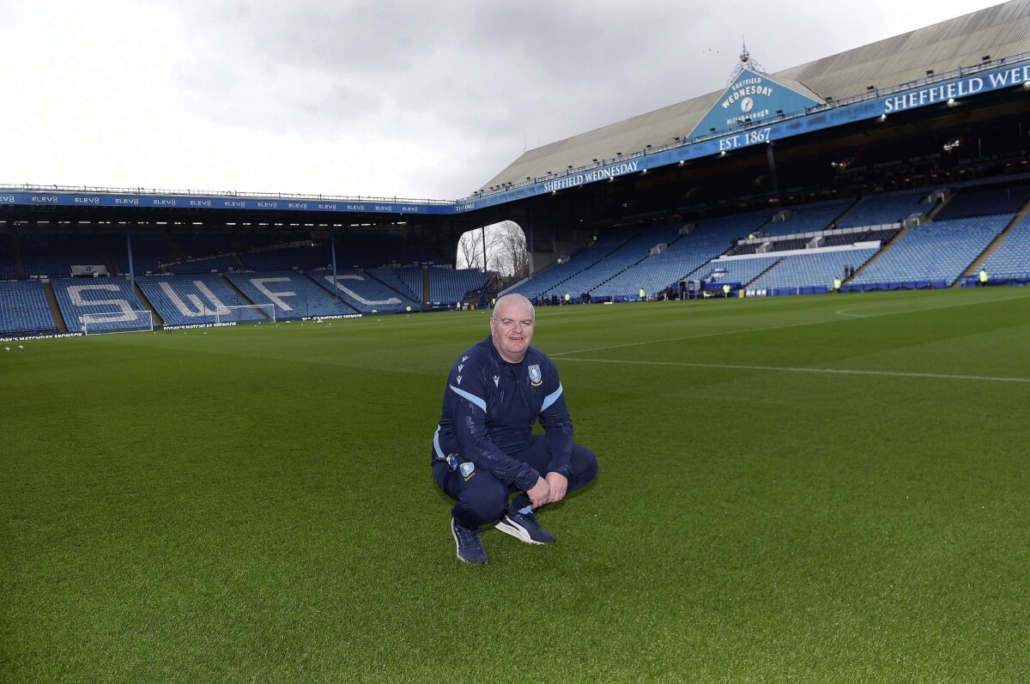
Why Sheffield Wednesday’s Pitch is One of the EFL’s Toughest Groundskeeping Challenges

Why Sheffield Wednesday’s Pitch is One of the EFL’s Toughest Groundskeeping Challenges

Why Sheffield Wednesday’s Pitch is One of the EFL’s Toughest Groundskeeping Challenges: Sheffield Wednesday’s stadium presents a challenging environment for turf, with significant shade and limited use of supplementary lighting. Alongside this, the pitch sees consistent use from first team and under-21 fixtures, as well as training sessions.

“Our biggest challenge is a very old, heavily shaded stadium with limited use of lighting rigs,” says Head Groundsman Lee Jackson. “Maintaining grass cover through the season is never straightforward.”

Maintaining Grass Cover in a Shaded Stadium

Maintaining Grass Cover in a Shaded Stadium

As part of a partial rebuild ahead of the 2025 season, ProSelect 1 Premium Pitch, a perennial ryegrass mixture designed for high-wear sports pitches, was used for renovation and overseeding.

“I’ve used ProSelect 1 for close to 10 years and have always trusted how it performs, so I had no hesitation using it again, even in a completely different environment,” Lee explains.

Establishment proved difficult initially due to high temperatures during summer 2025 and the nature of the rebuild.

“The early grow-in was tough because of the heat, but once it got going the coverage developed faster than I’ve seen for a number of years.”

Following establishment, the pitch was subjected to sustained use, particularly between December and February.

“We had eight first team games and ten training sessions on the pitch during that period, and we’re around 10% up on usage compared to last season,” says Lee.

Despite this, grass cover has been maintained through the winter months.

“We’ve kept more grass cover than many expected through that period, and recovery after use has been strong, especially considering the environment.”

Presentation and surface consistency have also improved across the season, supported by relatively low disease pressure.

“There’s been a noticeable improvement overall, and that’s been recognised by players and staff who have been here a number of years,” Lee adds.

For Lee, performance in this type of environment is the real measure.

“If you can get grass growing and maintain it in this kind of stadium, with limited lighting, it shows its value as part of the overall pitch management programme.”

Please contact ICL on 01473 237100 or visit www.icl-growingsolutions.com

For the latest industry news visit turfmatters.co.uk/news

Get all of the big headlines, pictures, opinions and videos on stories that matter to you.

Follow us on Twitter and Instagram for fun, fresh and engaging content.

You can also find us on Facebook for more of your must-see news, features, videos and pictures from Turf Matters

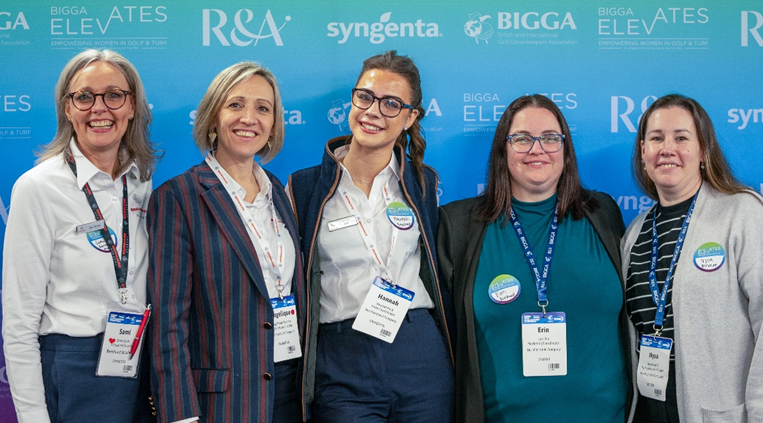
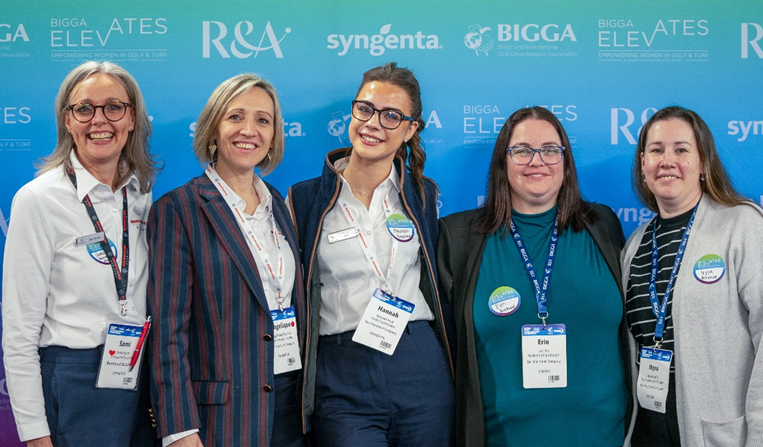
Bernhard become signatories of The R&A Women in Golf Charter

Bernhard become signatories of The R&A Women in Golf Charter: Bernhard and Company and the Bernhard Academy have become signatories of The R&A’s Women in Golf Charter, underlining their commitment to supporting greater diversity and creating more opportunities for women within the golf and turf management industries.

The Women in Golf Charter, launched by The R&A, encourages organisations across the sport to take positive action to increase the number of women and girls playing golf and working within the industry.

Bernhard become signatories of The R&A Women in Golf Charter

Bernhard become signatories of The R&A Women in Golf Charter

The move is particularly significant within the turf maintenance profession, which has historically been a male-dominated sector. By signing the Charter, Bernhard and Company and the Bernhard Academy are sending a clear signal of their commitment to encouraging greater female participation and progression within the profession.

As part of their pledge, the organisations will advocate for the Charter across the professional turf industry globally, including promoting women in the profession through all available channels, while supporting initiatives designed to encourage more women and girls to consider careers in golf course and equipment management.

Their commitments include promoting the profile of female turf professionals, supporting the recruitment and development of women within the business, providing education and training opportunities through the Bernhard Academy, and helping golf facilities around the world create more welcoming and inclusive environments. Additional initiatives include providing opportunities to attend key industry events and exhibitions to build professional networks and advocating for greater opportunities for women in governance at all levels of golf.

Steven Nixon, Managing Director of Bernhard and Company, said: “Turf management has traditionally been a male-dominated profession, but that is changing and it’s important that our industry continues to evolve. By becoming signatories of The R&A’s Women in Golf Charter, we want to demonstrate our commitment to supporting greater diversity and encouraging more women to see turf management as an exciting and rewarding career. Through the Bernhard Academy and our global network, we are proud to support initiatives that help open the doors for the next generation of professionals.”

Jackie Davidson, Director – Golf Education, The R&A, added: “We are delighted to welcome Bernhard and Company and the Bernhard Academy as signatories of the Women in Golf Charter. Their commitment to encouraging more women to pursue careers within turf management and supporting professional development across the sector is an important step in helping the golf industry become more inclusive and representative.”

Through their pledge, Bernhard and Company and the Bernhard Academy will also continue supporting initiatives that strengthen professional networks, raise awareness of turf management careers among women and girls, and encourage greater female representation across the sport.

To find out more about Bernhard and Company, visit: www.bernhard.co.uk

To learn more about the Bernhard Academy and its educational offering, visit: www.bernhardacademy.co.uk

For the latest industry news visit turfmatters.co.uk/news

Get all of the big headlines, pictures, opinions and videos on stories that matter to you.

Follow us on Twitter and Instagram for fun, fresh and engaging content.

You can also find us on Facebook for more of your must-see news, features, videos and pictures from Turf Matters
Tubex Shelters in The Carbon Community Project

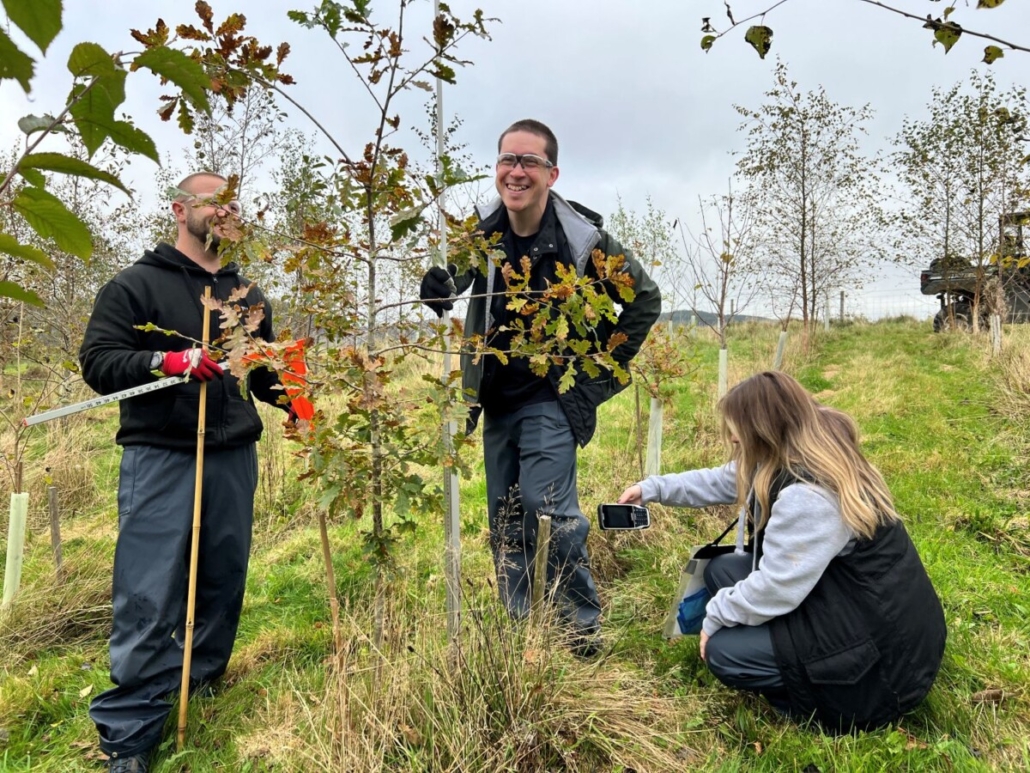
Tubex Shelters in The Carbon Community Project: One of the UK’s most significant long-term forestry research projects has used Tubex tree shelters to protect thousands of young saplings while allowing scientists easy access to measure growth.

The Carbon Community’s Glandwr Forest Carbon Study examines how trees and soil store carbon.  The project, now in its fifth year, aims to build a stronger evidence base for nature-based solutions that can increase carbon capture and improve woodland resilience.

Tubex Shelters in The Carbon Community Project

Tubex Shelters in The Carbon Community Project

Established in 2020, the 11.5-hectare study brings together scientists, forestry partners and volunteers to investigate how different tree species and soil treatments influence long-term carbon storage. More than 25,600 trees have been planted across 72 test cells, including oak, birch, cherry, alder and Sitka spruce, allowing researchers to compare growth and soil behaviours under controlled conditions.

The project focuses on approaches such as enhanced rock weathering, where crushed basalt releases nutrients and supports carbon capture, and soil microbiome inoculation, which introduces beneficial fungi from nearby healthy woodland to help young trees access nutrients more effectively. These methods together provide a growing dataset that will help clarify the role of soils and species selection in carbon sequestration.

Before the trial “we planted a few oaks grown from seed collected on site and they were eaten by rabbits within weeks,” said Heather Allen, Trustee at The Carbon Community. “When the trial was established, our forestry partner, Tilhill Forestry, strongly advised using shelters – and we agreed they were essential.”

Tubex Easywrap shelters were selected as a practical way to protect vulnerable saplings while still allowing researchers and volunteers to access each tree for measurement and monitoring. All the broadleaf trees planted use the shelters, helping maintain consistent establishment across the test cells and supporting long-term data collection.

As an environmental charity, The Carbon Community also considered the long-term implications of introducing material onto the site. The ability to collect and return the shelters for recycling once they were no longer needed was an important factor, ensuring the project could minimise waste. Each spring, volunteers remove shelters from trees that have outgrown them and collect any that have loosened during winter weather. These are returned through the Tubex recycling network, supporting a circular approach to material use. “We made a commitment to collect every single shelter when the trees were big enough,” Heather said. “We’ve been running volunteer removal days for the past couple of years – and those shelters have already made their way back for recycling.”

Community involvement has remained central throughout the project, with volunteers supporting planting, maintenance and data gathering to help researchers monitor conditions consistently across the site. “This is a long-term project,” Heather said. “We’re looking at how ecosystems can help solve the climate crisis. Good early protection has supported the research and helped us manage the site sustainably.”

Now in its fifth year, the study is beginning to analyse above-ground and below-ground data on how the treatments affect carbon capture. Strong early establishment across the site has created a stable foundation for long-term scientific assessment, with findings expected to support future woodland creation.

For Tubex, involvement in the project has centred on supplying shelters that meet the specific needs of the study. The Easywrap design has supported repeated access for measurements, helped maintain consistent establishment conditions and ensured that all used shelters could be collected and returned for recycling once no longer required. This combination of protection, practicality and material recovery has allowed the research team to manage the site effectively while maintaining the project’s sustainability commitments.

For more information about The Carbon Community and the Glandwr Forest Carbon Study, visit https://thecarboncommunity.org

For information on Tubex tree protection, visit https://tubex.com  

For the latest industry news visit turfmatters.co.uk/news

Get all of the big headlines, pictures, opinions and videos on stories that matter to you.

Follow us on Twitter and Instagram for fun, fresh and engaging content.

You can also find us on Facebook for more of your must-see news, features, videos and pictures from Turf Matters