Tag Archive for: More

Habs grounds team more efficient with Ventrac

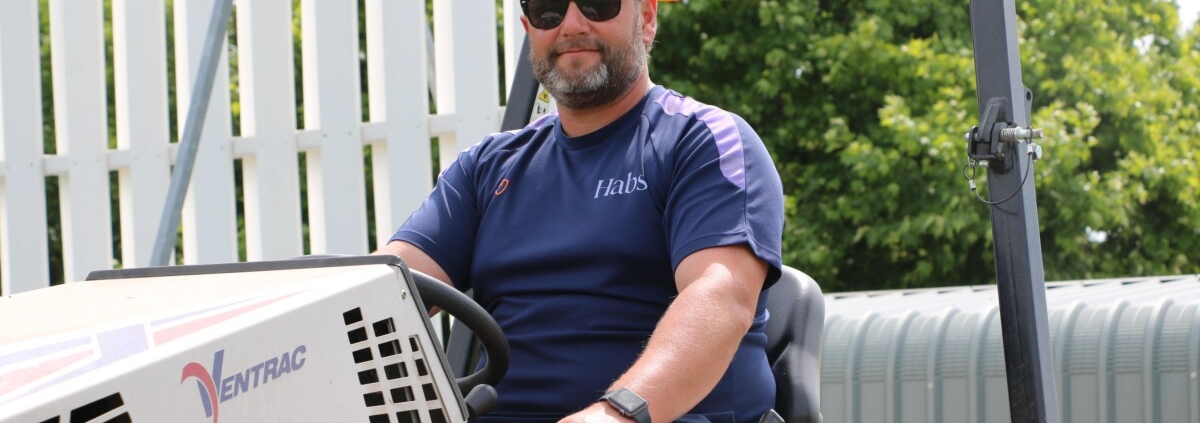
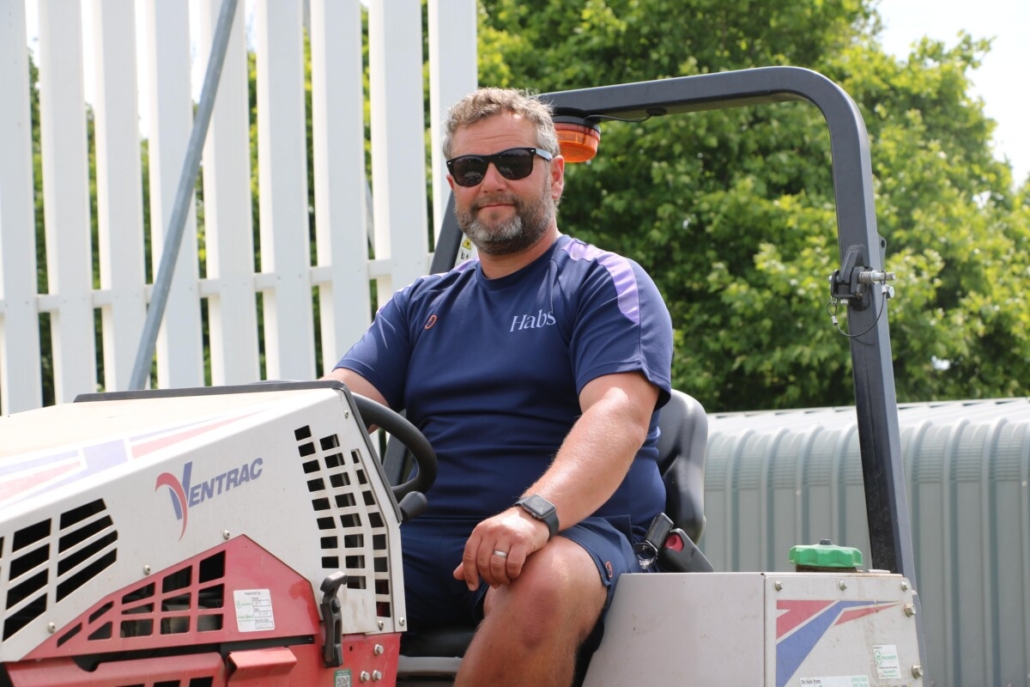
Habs grounds team more efficient with Ventrac: Habs Boys and Habs Girls are two leading independent schools, dating back to 1690, on a fabulous 104 acre, co-educational campus in Hertfordshire.

Mike Kemmett is Head of Grounds & Gardens. He and his team are responsible for maintaining the extensive grounds to a high standard. Football, rugby, lacrosse and cricket, to name a few, all have to have turf playing surfaces maintained.  As with all establishments, however, Mike’s budget needs careful control. In September 2024 Habs was reconsidering its ageing machinery fleet. It was at that time that Mike considered their first Ventrac package from RT Machinery. Versatility and multi-tasking were high on the list of requirements from new machinery and the combination had perform more efficiently than the outgoing fleet. Has the plan worked?
Habs grounds team more efficient with Ventrac

Habs grounds team more efficient with Ventrac

Mike commented that previously Habs had an out-front rider with flail mower for their rough areas, tractors with rear mounted rotaries for quick pitch recovery between games and cylinder mowers for cricket and fine turf maintenance. In fact Mike’s first experience with Ventrac was a demonstration of the 4520 tractor with a Power Rake. “A cricket net area had been let go and needed reclamation. We had concrete rubble, bits of steel and other rubbish, it was a mess” says Mike. “A demo from Ventrac restored it in a few hours to a point where we could replant the area”. Mike also commented that “In addition we saw the stump grinder and trenching attachment, both of which completed tasks that would have taken us much longer to do otherwise. I was impressed”

On the back of these demonstrations Habs purchased a Ventrac 4520, MU720 Finishing Mower, an HQ682 Rough Cut Mower and a KM500 Fore-end Loader, knowing that other accessories could be purchased or hired in future. Mike likes the one power unit, many attachments concept. One immediate advantage being it saves space in his barn. Another advantage is “One operator can swap from one attachment to another in minutes” says Mike. “The Tough Cut mower has cleared woodlands that haven’t been touched in years, we even cut twelve foot bamboo down. It was an old assault course we will now use for something else.”

The Wide Area Mower allows Mike and his team to repair divots and pitch damage even in winter. “We’re predominantly clay. Our pitches take a punishing sometimes” said Mike. “The rear roller stripes the pitches nicely and makes the pitch safer even if the pitches are over used during events like rugby sevens”. With their old fleet of tractors and mowers they would not have got onto the pitches so play would be cancelled or held elsewhere. Mike has found that the compactness, low ground pressure and articulated steering of the Ventrac allows him to turn faster at the end of each run on a pitch without turf damage. “A job that took three and half hours now takes two and half” commented Mike, a 28% improvement in efficiency.

Habs continues to expand its horizons and is introducing new facilities, planning for the future. The versatility of more than thirty two attachments will ensure the Ventracs indispensability in helping to maintain the campus to the high standard that is expected. The plan is working.

For the latest industry news visit turfmatters.co.uk/news

Get all of the big headlines, pictures, opinions and videos on stories that matter to you.

Follow us on Twitter and Instagram for fun, fresh and engaging content.

You can also find us on Facebook for more of your must-see news, features, videos and pictures from Turf Matters.
Doing more than a fraction of the job

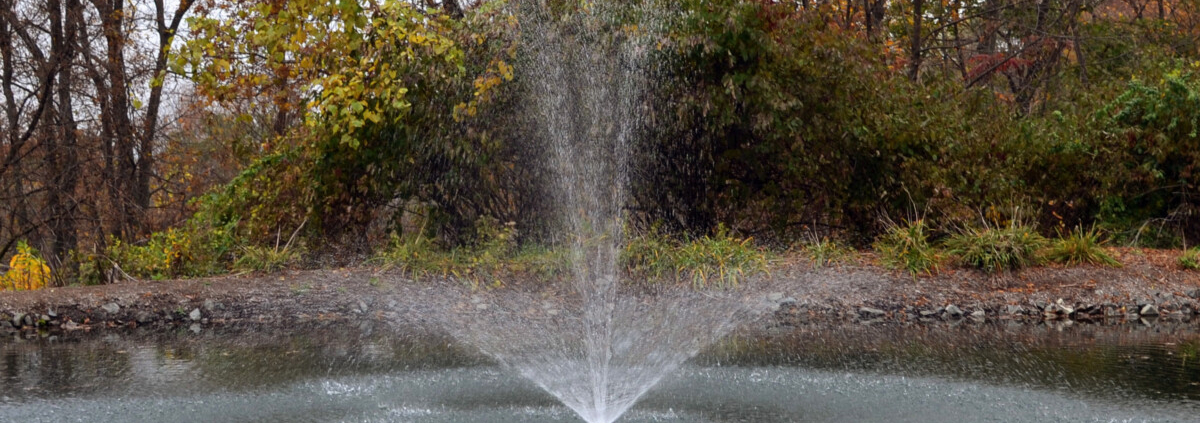
Doing more than a fraction of the job: Aerators play the central role in creating a balanced water management programme and Otterbine’s Fractional Series is now even more efficient and easy to use.

Otterbine’s Fractional Series offers the most productive, cost-effective way of ensuring the water quality of small and mid-sized ponds regardless of the weather. And when the weather conditions are already, and look set to continue being, the warmest in 70 years, it’s important not to fall foul to doing nothing – reparative maintenance is not the cheap or easy option.

Doing more than a fraction of the job

Doing more than a fraction of the job

Robert Jackson, Division Manager for Reesink Hydro-Scapes, UK distributor for Otterbine aerators, says: “So far this year, the conditions are perfect for creating water problems in ponds and lakes. The weather is warm enough and consistent enough to cause significant problems.”

Why is aeration needed?

The sun exacerbates thermal stratification, water stagnation and oxygen depletion – creating the perfect environment for algae and anaerobic bacteria. This proliferation may endanger the pond ecosystem while also leading to unpleasant smells and aesthetics that put off visitors and increase maintenance costs.

Whether you’re managing ponds in a holiday park, a golf course or a private estate, a proactive approach to water quality is the most effective way to minimise the need for reparative maintenance in the long run.

That’s where the Fractional comes in

The Otterbine Fractional Series delivers the perfect solution for ponds less than three quarters of an acre in size. With the ability to transfer 1kg (2.2 lbs) of oxygen per horsepower per hour and pump 115m³ of water per hour, they will significantly improve water circulation and oxygenation.

Using aeration, it is possible to prevent high-maintenance conditions like algal bloom and thermal stratification and ensure a thriving ecosystem.

Boasting a cost-effective design and the highest performance rate in the class, Otterbine’s Fractional Series comes complete with a manufacturer certified control panel to protect the unit, and the ability to switch between five interchangeable spray pattern configurations.

But the Fractional Series isn’t just about utility: it also provides four visually striking configuration options – plus a horizontal circulator – with different heights, diameters and patterns that can elevate the aesthetics of any pond. And for an even greater visual impact, LED and RGBW colour-changing lights can be added to create a kaleidoscopic effect that will make your water features stand out, day or night.

Rob concludes: “Offering a cost-effective alternative to large-scale aerators, the Fractional Series aerators are quick to install, easy to maintain and designed for long-term durability. They are also backed by our national network of contractors, dealers and installers, providing expert support and guidance whenever needed.”

For protecting ponds, creating scenic water features, or safeguarding the biodiversity of the site, the Otterbine Fractional Series is the smart, simple solution for cleaner, healthier water. Want to learn more? Call 01480 226800 to speak with an expert or visit reesink-hydroscapes.co.uk.

For the latest industry news visit turfmatters.co.uk/news

Get all of the big headlines, pictures, opinions and videos on stories that matter to you.

Follow us on Twitter and Instagram for fun, fresh and engaging content.

You can also find us on Facebook for more of your must-see news, features, videos and pictures from Turf Matters.

More cricket? No problem for Durham

More cricket? No problem for Durham: As the old saying goes ‘if it ain’t broke, don’t fix it’ – exactly the motto of Durham County Cricket Club’s Head Groundsman Vic Demain when it comes to his usage of Johnsons J Premier Wicket.

Now into his seventh season with the 100% perennial ryegrass mixture, he cites the early season establishment, wear tolerance and visual merit as the reasons he’s never considered changing as the club gets set for one of the longest and most intense seasons of cricket to date!

More cricket? No problem for Durham

More cricket? No problem for Durham

It’s not just the number of years clocking up for Vic at the Bank Homes Riverside Stadium, as are the demands on the playing surface – with the season extending at both ends and fixtures starting earlier every year. “The windows we have to get onto the ground have reduced significantly due to the quantity of games and training sessions meaning we rely heavily on having a well established and strong sward going into the season” he explains. “Theoretically this is not too much of a problem, except that we also have to battle the cold and dry northeastern climate!”

“Typically we won’t see consistent growth until the end of May, by which point we can be halfway through our county championship season. This makes speed of germination crucial for our autumn renovation work, achieving that germination before we lose the temperature to ensure we go into the following season with good coverage.”

Not just renowned for rapid establishment, the four top-rated cultivars in J Premier Wicket ensure outstanding wear tolerance, high disease resistance and fineness of leaf for aesthetic and play quality across squares and outfields. “It’s the only seed we use, both for renovations and in-season repairs if and when needed” Vic adds.

“Besides germination, fineness of leaf is also incredibly important to us for both play and presentation purposes. The team and I take incredible pride in how the ground looks from the stands and with J Premier Wicket we get it looking its best from every angle.” He continues, “This is assisted by the fact that we see very little in the way of disease.”

On the topic of assistance, Vic also rates the back up technical support from Martin Stephenson of Aitkens and, more recently, DLF’s Ben Morgan. “I have always had nothing but quality advice from Martin and the DLF technical team, many of whom I’ve known for a good number of years. It’s a great product, at a great price, which performs year after year. Why would I consider using anything else?!”

For the latest industry news visit turfmatters.co.uk/news

Get all of the big headlines, pictures, opinions and videos on stories that matter to you.

Follow us on Twitter and Instagram for fun, fresh and engaging content.

You can also find us on Facebook for more of your must-see news, features, videos and pictures from Turf Matters.

EcoBunker Synthetic Revetting More Sustainable than Natural Turf*

EcoBunker Synthetic Revetting More Sustainable than Natural Turf*: *A recent report by the Welsh government has found that EcoBunker synthetically revetted bunkers have a significantly lower environmental impact than naturally turfed revetted bunkers.

The report specifically cites EcoBunker’s promotion of a circular economy alongside the consumption of vast resources including water, chemicals, fertilisers, and energy associated with turf farming.

EcoBunker Synthetic Revetting More Sustainable than Natural Turf*

EcoBunker Synthetic Revetting More Sustainable than Natural Turf*

“People often ask what is ‘Eco’ about synthetic revetting,” said EcoBunker founder Richard Allen upon the release of the report by the Welsh government. “We start with the fact that an average EcoBunker saves two tons of waste astroturf from landfill. All our turf is recycled so nothing new is created. Then there’s virtually zero maintenance in comparison with natural turf revetting, so no emissions or chemicals needed for upkeep. We eliminate contamination from bunker wall erosion, reducing the need for replacement sand which brings its own environmental impact, and this is all before you consider the negative impact of turf farming.”

The report measured the use of fertilisers, pesticides, weed-killers and disease-controlling chemicals[1] in the production of farmed turf. One Hectare typically (depending on geography, soil and climate) requires 89kg Nitrogen, 12kg Phosphorous, 40kg Potassium[2] and 92kg Lime[3]. This often washes off into nearby water courses contributing to “algal blooms” and a reduction in marine bio-diversity.

The report goes on to show that intensive farming of turf removes the nutritional layer of topsoil and the soil organisms (fungi, earthworms, bacteria) leaving it largely barren. Repeated use of the land this way necessitates intensive artificial fertilising.

The various advantages of EcoBunker synthetic revetting detailed in the report align with the most recent advice from golf’s governing bodies and environmental experts. Golf Wales, England Golf and the GEO Foundation for Sustainable Golf all highlight recycling, reducing waste and reducing the use of chemicals as key targets to help bring down emissions[4].

“Turf farming does provide a vital resource to the landscaping industry, and not all natural revetted turf is intensively farmed. Where large areas of turf coverage is needed there are some superb examples of turf suppliers using sustainable practices, and quickly solving urgent landscaping challenges,” added Richard. “But with thick cut revetting turf, the evidence is clear. Not only do EcoBunkers use 100% recycled materials, the ongoing maintenance burden with the associated cost and resources, are slashed. Finally, all but the top layer of naturally turfed revetted bunkers just don’t have enough access to light and soil to maintain a root structure. So, they gradually disintegrate and, on average, have to be replaced every 5 years. The evidence for the sustainability of one EcoBunker is convincing. When you have to re-build a natural turf bunker four times in our minimum guaranteed 20 year lifespan, it really is overwhelming.”

The sustainability credentials of EcoBunker were recently highlighted when the company completed a project at Royal Ostend Golf Club. With stringent environmental regulations in place designed to protect the natural environment in coastal areas, EcoBunker was chosen as the most sustainable solution, preferred to natural revetting and surpassing all standards for use of new resources and harmful chemicals.

For more information on EcoBunker please visit www.ecobunker.co.uk

[1] Cornell University Turfgrass Program, study on cool climate turf management practices, https://turf.cals.cornell.edu/environment/
[2] Energy use and greenhouse gas emissions from turf management of two Swedish golf courses, https://doi.org/10.1016/j.ufug.2016.11.009
[3] https://www.horticulture.com.au/globalassets/hort-innovation/resource-assets/tu16000-lifecycle-assessment—goal-and-scope.pdf
[4] https://www.walesgolf.org/sustainability, https://www.englandgolf.org/sustainability, https://sustainable.golf/developments/

For the latest industry news visit turfmatters.co.uk/news

Get all of the big headlines, pictures, opinions and videos on stories that matter to you.

Follow us on Twitter and Instagram for fun, fresh and engaging content.

You can also find us on Facebook for more of your must-see news, features, videos and pictures from Turf Matters.

Mowing steep slopes even more comfortably

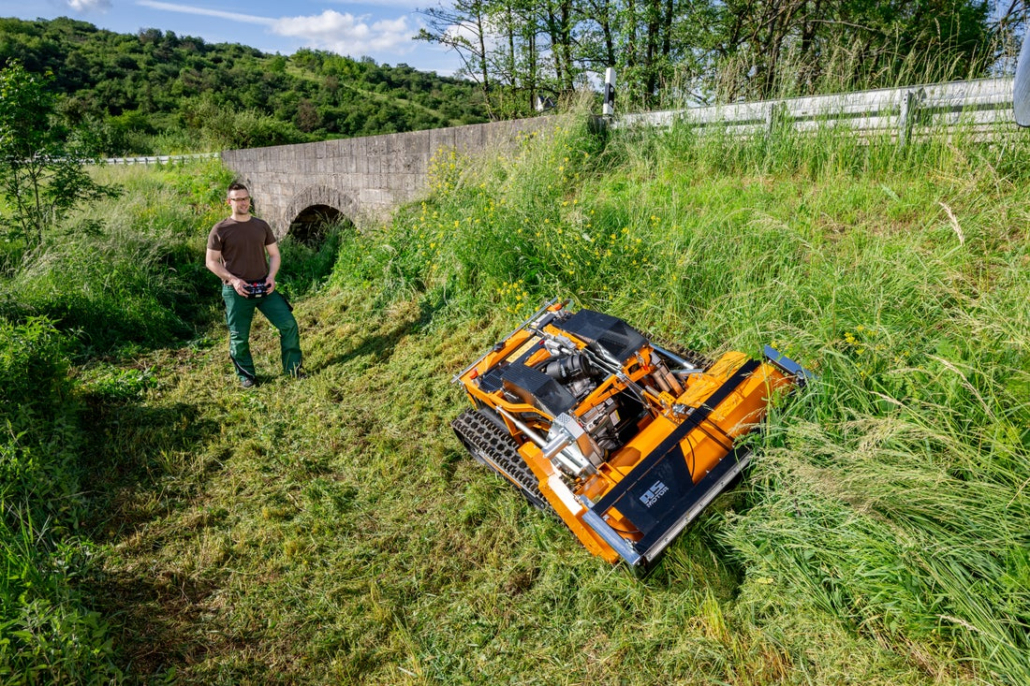
Mowing steep slopes even more comfortably: The remote-controlled AS 1000 Ovis RC is in use on steep slopes throughout Europe. The tracked flail mower with maximum mowing performance and extreme slope capability has become an integral part of the AS-Motor product portfolio.

Series production of the next development stage of the mower started at the beginning of February: the AS 1000 Ovis Evo RC offers extended RC functions and even more user comfort.

Mowing steep slopes even more comfortably

Mowing steep slopes even more comfortably

Electric cutting height adjustment from a distance

The cutting height of the AS 1000 Ovis Evo RC can be conveniently adjusted between 40 and 110 mm by remote control. Two electric servomotors move the mowing deck to the desired height.  The advantage of being able to raise the flail mower remotely is particularly useful for uneven ground or dense vegetation. This also makes it easier to drive over edges or cross roads and ditches. When approaching steep slopes directly from the front, the angle of the slope can also be better adjusted. The mechanical cutting height indicator is simple and robust. The set height can be read off in five stages via a scale on the device. The transport and service position is reached in the usual way via the hand spindle. The mowing deck continues to be mounted on a surfing bearing and thus adapts optimally to uneven ground in difficult terrain with its large pendulum path.

Remote-controlled blade clutch

The electromechanical blade clutch on the new AS 1000 Ovis Evo RC can also be operated remotely. An electric actuator switches the blade clutch. This allows the user to conveniently stop the blades with the remote control or restart the engine when crossing paths or obstacles. The developers at AS-Motor have deliberately opted for a mechanical function of the clutch itself. This is characterised by a significantly higher durability compared to purely electric variants.

Brake and hydrostatic bypass

On the new AS 1000 Ovis Evo RC, two easily accessible levers enable the mechanical unlocking of the hydrostats and the release of the brake. This makes it much easier to free the machine if it gets stuck. The mower can be towed slowly and with free-running chains. The bypass for the brake and hydrostats can be operated easily, quickly and without tools.

Technical simplicity is retained

The remote control of the new AS 1000 Ovis Evo RC differs from the basic model only by three additional toggle switches. This means that the machine can still be controlled intuitively. One of the most important objectives in the development of the basic model AS 1000 Ovis RC was technical simplicity right from the start. This also applies to the new AS 1000 Ovis Evo RC. It is also characterised by the particular simplicity of its design, easy handling and uncomplicated maintenance. Too many electrical components in a single machine can lead to complexity, which is also consistently dispensed with in the expansion model.

For the latest industry news visit turfmatters.co.uk/news

Get all of the big headlines, pictures, opinions and videos on stories that matter to you.

Follow us on Twitter and Instagram for fun, fresh and engaging content.

You can also find us on Facebook for more of your must-see news, features, videos and pictures from Turf Matters.