Tag Archive for: Research

STRI Appoints Glenn Kirby as Research Director

STRI Appoints Glenn Kirby as Research Director: STRI is pleased to announce the appointment of Glenn Kirby as its new Research Director. With more than 30 years’ experience in turf management, technical services, and digital innovation, Glenn will spearhead STRI’s next chapter in industry-leading research strategies.

Glenn joins STRI from Syngenta, where he most recently served as Technical Services Manager for Turf across Europe, Africa, and the Middle East. His leadership in digital strategy, AI implementation, and market support trials has helped shape the future of sustainable turf management globally.

STRI Appoints Glenn Kirby as Research Director

STRI Appoints Glenn Kirby as Research Director

Glenn commented, “I think this is one of the most exciting periods for turf management in the UK and across Europe that we’ve ever seen. The challenges we face around climate, sustainability, and increasing expectations make this a pivotal time – and I’m looking forward to playing my part in shaping the future of our industry with STRI Group.  Here’s to new beginnings, collaboration, and pushing the boundaries of turf research.”

Richard Stuttard, Group Director added, “With Glenn’s unique blend of technical expertise, digital innovation and industry leadership experience, he’ll be instrumental in driving STRI’s research proposition for the future, pioneering new solutions for clients and supporting the team. We’re excited to welcome Glenn to the Group.”

Glenn will lead STRI’s research initiatives, focusing on sustainable practices, digital transformation, and collaborative innovation – building on successful customer relationships and introducing the Group’s expertise to new clients.  With Glenn at the helm, and with research and innovation in its DNA, STRI is well-placed to play a pivotal role in defining the future of turf management and beyond.

For the latest industry news visit turfmatters.co.uk/news

Get all of the big headlines, pictures, opinions and videos on stories that matter to you.

Follow us on Twitter and Instagram for fun, fresh and engaging content.

You can also find us on Facebook for more of your must-see news, features, videos and pictures from Turf Matters.

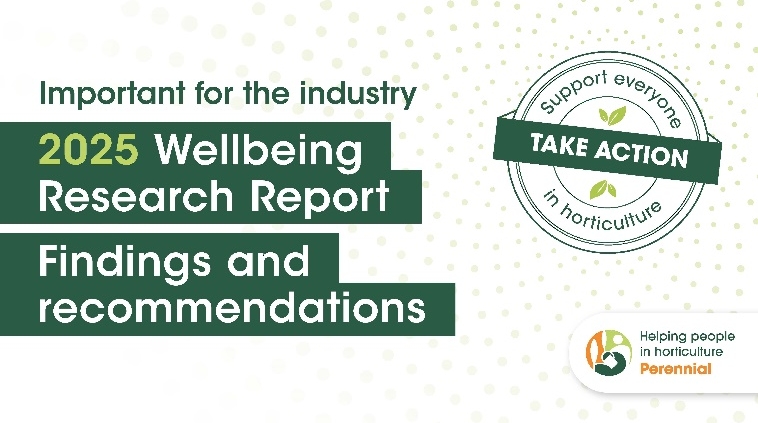
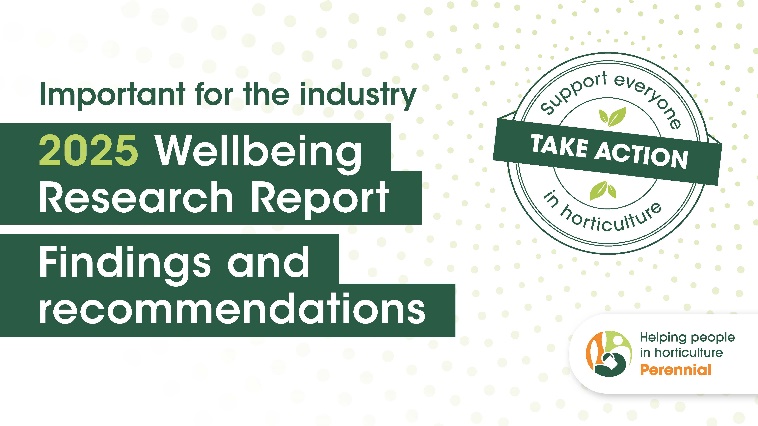
Wellbeing Research Findings emphasise urgent need for action

Wellbeing Research Findings emphasise urgent need for action: In Spring 2024, Perennial partnered with the University of Exeter’s Social Innovation Group (SIG) to conduct a major new study to better understand the emotional, physical and financial wellbeing of those who work with plants, trees, flowers and grass, and the ways they can be better supported.  

Building on the findings of the 2021 survey, this new research gives an updated, and more in-depth view of the challenges people in horticulture are facing, many of which will come as no surprise to those working in the industry.

Wellbeing Research Findings emphasise urgent need for action

Wellbeing Research Findings emphasise urgent need for action

The findings are clear 

Horticulture professionals continue to experience serious and sustained wellbeing challenges. The research, based on a comprehensive survey of people working across the sector, highlights worrying trends in physical discomfort, mental wellbeing, and financial confidence.

Key statistics include:

52% of people have a health condition that is expected to last more than 12 months – 12% higher than in 2021

84% of people told us that they had experienced back and joint pain in the last 6 weeks and 51% of people didn’t seek advice

83% of people within horticulture scored low or average for their wellbeing using a recognised scale 1

And 32% stated they do not have an emergency fund, with 1 in 10 saving no money at all, pointing to the persistent financial stress faced by many across the industry.

These results highlight the urgent need for action across the industry, as Julia Hayne, Director of Services at Perennial explains:

“The scale of the very real challenges those working in horticulture are facing will not surprise people across the industry. We are living through a period of significant social and political change that has the potential to impact us all. With uncertainties about the future, people’s ability to manage the everyday challenges is being put to the test, from rising prices, increased job insecurity and longer health care waiting lists.

“Ill health is the leading reason why people seek our help. This often means people have to take time off work, which impacts their income, their ability to pay their bills and their family life. In some cases, it means they are unable to return to the job they love.

“Our Wellbeing Research provides the industry with a clear insight into the causes and impact of poor wellbeing. It highlights how individuals across the sector feel about their wellbeing and the issues that are important to them. Over the last three years we have led targeted interventions to improve the health and wellbeing of the industry and this work is beginning to move the dial, in areas of physical and mental health. But we are aware much, much more needs to be done.

“It is essential that we develop an industry-wide understanding of the challenges people face through life and come together to identify real world solutions that make a long-term difference. As a charity we can’t do this alone – collaboration is essential if we want to achieve meaningful change.”

This is further emphasised by Prof Michael Leyshon, Professor (Associate) in Social Geography and Dr Shukru Esmene, Research Fellow, both from the University of Exeter.

“Perennial’s Health and Wellbeing Survey 2024 has shed light on key issues that workers in the horticulture sector experience. The issues of particular interest, which were also prominent in Perennial’s 2021 survey results, include the reporting of lower life satisfaction and higher prevalence of low or medium mental health scores compared to national averages. These areas need sector-wide action to address and will take time to solve.”

Take action now 

Perennial is committed to working in collaboration with the sector to act on these findings, but it will need everyone in the industry to take action.

Some steps to get started for a healthier, more supported horticulture community include: –

  1. Download, read and share the Wellbeing Research Report. 
  2. Hold conversations in your organisation about the ways you will take action.
  3. Join Perennial’s free Mental Wellbeing in the Workplace webinars throughout May-November.
  4. Make everyone aware of the charity’s free advice, information and support available for their health, money, career and life challenges
  5. Tell Perennial what you’re doing or plan to do to inform and inspire others. 

Visit perennial.org.uk/research for more information on all the above and take action today.

1 WEMWBS (2020). WEMWBS: 14-item vs 7-item scale. Warwick Medical School and University of Edinburgh. www.warwick.ac.uk/fac/sci/med/research/platform/wemwbs/about/wemwbsvsswemwbs/

For the latest industry news visit turfmatters.co.uk/news

Get all of the big headlines, pictures, opinions and videos on stories that matter to you.

Follow us on Twitter and Instagram for fun, fresh and engaging content.

You can also find us on Facebook for more of your must-see news, features, videos and pictures from Turf Matters.

EcoBunker Highlights Thought Provoking New Research

EcoBunker Highlights Thought Provoking New Research: Industry leading innovator of synthetic bunker wall technology, EcoBunker, will highlight the findings of two major research projects on stand 246 at BTME in Harrogate, from 21st January.

EcoBunker will showcase the full results of the Great British Bunker Study, a project produced with the support of the British and International Golf Greenkeepers Association (BIGGA). The study identifies significant opportunities for golf clubs to reduce bunker maintenance costs while increasing golfer satisfaction, two topics at the top of every club agenda.

EcoBunker Highlights Thought Provoking New Research

EcoBunker Highlights Thought Provoking New Research

Alongside the bunker study, EcoBunker will present new research by the Welsh government that reveals surprising insights into sustainability and bunker construction. With thought provoking results on show the EcoBunker stand should provide hot topics of discussion for anyone with an interest in turf management or sustainable practices in golf.

“We’re really excited for BTME,” said Richard Allen, inventor of synthetic bunker technology. “It’s always a fantastic experience to share and learn amongst such an informed group of people at the show. And this year we have some fascinating data that will provoke conversation and progress the understanding of sustainability and best practices in golf. Anyone who wants to find out more should visit us at stand 246”

In addition to the two research projects, the EcoBunker stand will highlight work at Royal Ostend Golf Club that shows how EcoBunker met the challenge of some of the most stringent environmental standards in Europe. The team will also showcase some of its installations of EcoTec bunker liners and their positive impact during recent turbulent weather events.

For more information, visit EcoBunker at stand 246 at BTME or visit www.ecobunker.co.uk

For the latest industry news visit turfmatters.co.uk/news

Get all of the big headlines, pictures, opinions and videos on stories that matter to you.

Follow us on Twitter and Instagram for fun, fresh and engaging content.

You can also find us on Facebook for more of your must-see news, features, videos and pictures from Turf Matters.

BASF – at the forefront of research and development

BASF – at the forefront of research and development: Professional turf care is an art form that requires skill, precision and high-performance products to be successful.

Sometimes even the most experienced and skilled greenkeepers have been let down by their products, which is why BASF invests heavily in cutting-edge technology and the best experts in the business to ensure that its solutions are ahead of the game, providing exactly what is needed and when.

BASF – at the forefront of research and development

BASF – at the forefront of research and development

Whether a golf course manager, agronomist, farmer or landscape architect, many professionals rely on effective products that keep turf free of diseases, pests and weeds through every season.

With the backing of thousands of employees worldwide, BASF is perfectly positioned to create a powerful portfolio of product solutions that can be tailored to meet the demands of every turf landscape. Effective and efficient research and development underpins every solution that BASF creates, and it is not a company that is content to rest on its laurels. It constantly invests in the growing opportunities that digitalisation and supercomputing power offers, meaning that it constantly maintains its place as an industry leader. In fact, it invested 2.1 billion euros into research and development expenses last year alone, with 1000 products being patented.

For example, brand-new product Maxtima was launched at BTME 2024 by BASF Turf, a new cutting-edge demethylation inhibitor (DMI) fungicide. This crop safe solution was devised after BASF’s scientists discovered new enzyme assays in their research.

Rob Gladwin, head of technical management for UK said: “The assays test the efficacy with which the DMI chemistry, which includes azoles, inhibit the fungal target site, CYP51 –– blocking this enzyme prevents a fungal cell from producing ergosterol causing it to die.

“Together, the team discovered a unique property of an entirely new family of triazoles –– this molecule has a ‘hook’. It’s an isopropanol linker. This moiety is a small part of the larger molecule and it’s unique for a DMI. We synthesised it and noticed very strong fungicidal effects.”

The launch of Maxtima pays testament to the cutting-edge research and development that the BASF team undertakes every day. In fact, BASF’s researchers are working on hundreds of products at any one time, with research centres in Europe, North America and Asia Pacific.

Furthermore, BASF collaborates with a global network of top universities, research institutes and companies, giving direct access to external scientific expertise, talented minds from various disciplines, as well as new technologies. This helps to quickly develop targeted, marketable innovations, strengthening its portfolio with creative new projects and reaching its targets for worldwide expertise and growth.

To find out more about BASF’s industry-leading turf products, visit https://www.pestcontrol.basf.co.uk/en/Products/Product-innovation/Turf/

For the latest industry news visit turfmatters.co.uk/news

Get all of the big headlines, pictures, opinions and videos on stories that matter to you.

Follow us on Twitter and Instagram for fun, fresh and engaging content.

You can also find us on Facebook for more of your must-see news, features, videos and pictures from Turf Matters.

Research into environmental cost of managing knotweed

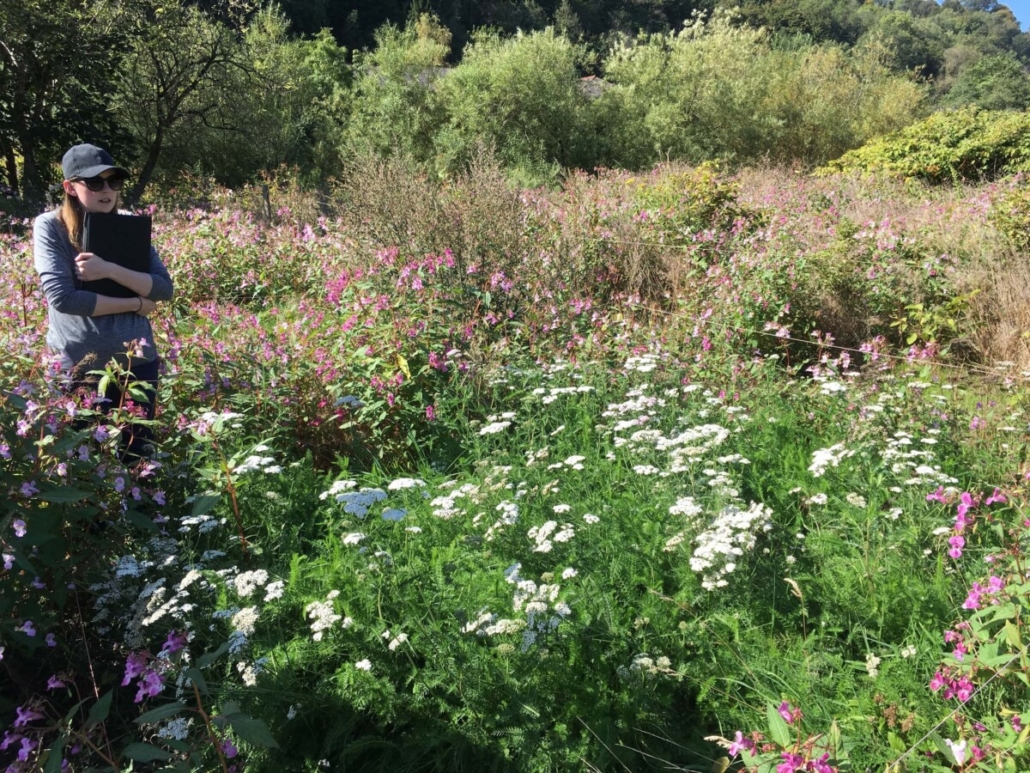
Research into environmental cost of managing knotweed: Complete Weed Control has part funded New Swansea University research that looked at the long-term environmental impact into different methods to control Japanese knotweed.

The invasive species has been calculated to cost more than £165 million to manage every year in the UK alone. Its presence can blight property purchases for households across the country.
Research into environmental cost of managing knotweed

Research into environmental cost of managing knotweed

This has led to the development of different ways of trying to control it but with sustainability becoming increasingly important, understanding the effect of these management methods is vital.

A new study, led by biosciences lecturer Dr Sophie Hocking and looking at the entire life cycle and long-term impacts of different management approaches, has just been published in online journal Scientific Reports.

Dr Hocking said: “In light of the current climate emergency and biodiversity crisis, invasive species management and sustainability have never been so important.

“Both of these are intrinsically linked – we know that invasive species can cause substantial negative ecological, social and economic impacts, and the way we manage these species should mitigate against this in a sustainable way to ensure we are not doing more harm than good.

“Although there has been more research into how we can best manage the plant, little is known about how sustainable these approaches are.”

Ian Graham, managing director of Complete Weed Control, stressed the significance of using science to inform best practice adding: “Industry is responsible not only for delivering high-quality outcomes but also for doing so in a manner that takes environmental and social factors into account. This new study will help inform us, ensuring our methods remain the most sustainable.”

Complete Weed Control played a significant role in supporting and funding prior research conducted by Professor Dan Eastwood and Dr Dan Jones, which initiated the most comprehensive knotweed control field trial globally in 2012. The trial examined the leading physical, chemical, and integrated methods of managing the knotweed species. The research was conducted in collaboration with Complete Weed Control and Advanced Invasives, a spinout company led by Dr Jones.

This field study provided valuable information for Dr Hocking’s work. Using a life cycle assessment (LCA) – a methodology for assessing environmental impacts associated with all the stages of the life cycle of a commercial process – to find out the relative environmental impacts of a range of chemical and physiochemical knotweed management methods.

The researchers went beyond a focus on the use and end-of life of these methods and assessed the environmental impacts of different management methods including the production of materials and herbicides required to achieve knotweed control; something that is often overlooked when we evaluate sustainability. For the study, the team selected methods commonly used for knotweed management and used real-world data on time consumption, amount of materials used and economic costs to evaluate their relative environmental impacts.

Of the methods tested, they found that the simplest approach – glyphosate-based foliar spray control methods – used the least materials, had the lowest environmental impacts, the lowest economic costs and is, therefore, the most sustainable approach to tackle knotweed management. The findings are of significance to those working with or are affected by the presence of Japanese knotweed on their land.

Dr Hocking added: “Currently there is a big conversation around the sustainability of herbicides and the ecological and human-health impacts of this. Social perceptions of the ways we manage invasive plants are really important, but we need our understanding of sustainability to be rooted in empirical evidence. We hope that this research will contribute to our wider understanding of the sustainability of different approaches in invasive plant management and help to inform current knotweed management practice.”

This research has been mirrored in the real world as Cardiff Council recently conducted an alternative weed control trial comparing glyphosate with the alternative methods of weed control currently available in the UK.

The scientific trial assessed the viability of two alternatives to the glyphosate-based approach used by the majority of local authorities in the UK. Complete Weed Control delivered the services using its WEEDit technology to inform the independent research which found glyphosate has a smaller overall environmental footprint than the two alternatives trialled, which were acetic acid (a highly concentrated vinegar) and a hot foam treatment (a plant-based product which combines hot water with a biodegradable foam).

Ian Graham concluded: “I am proud to say that our organisation is widely recognised for delivering the highest level of service to our customers across the UK and Ireland, with a strong commitment to continuous improvement and meeting environmental requirements.

“This latest partnership with Swansea University and Advanced Invasives aligns with our commitment to investment in research and technology and our dedication to excellence and sustainability within the industry.”

For the latest industry news visit turfmatters.co.uk/news

Get all of the big headlines, pictures, opinions and videos on stories that matter to you.

Follow us on Twitter and Instagram for fun, fresh and engaging content.

You can also find us on Facebook for more of your must-see news, features, videos and pictures from Turf Matters.