Tag Archive for: Solving

Otterbine problem solving at Hurlingham

Otterbine problem solving at Hurlingham: As a repeat Otterbine customer The Hurlingham Club in Fulham, London, has turned once again to the pond and lake aeration specialist for three new machines to tackle water quality problems in its two-acre lake.

There were three specific issues to solve: algae, water smells and noise disturbance as Tom Clarke, deputy grounds manager at the club for 11 years who manages a team of 28, explains: “The water quality was gradually deteriorating because the existing aerating units were getting old – some were upwards of 15 years old. We had algae beginning to form, there was sitting water near one of the bridges due to a lack of water circulation causing a smell and one of the units which was near the sunbathing area was beginning to create a noise disturbance.”

Otterbine problem solving at Hurlingham

Otterbine problem solving at Hurlingham

So, what was the solution to these problems? That would be Otterbine, as Simon Powell from Otterbine’s UK distributor Reesink Turfcare explains: “This project was a very thorough installation with a wide range of Otterbine solutions. We specified the 3hp C2 Sub-Triton aspirator to deal with the bad smell at one of the bridges caused by the slit layer gassing off methane; the 5HP Sunburst aerating fountain to provide well-needed aeration to keep the algae at bay and to complete the line-up the Air Flow 3 underwater diffuser to provide a silent solution for keeping the water clean and clear near the sunbathing area. This provided a complete renovation of the water body.”

Solving these issues and improving the water quality of the lake has had a wider impact on the club’s grounds, as Tom explains: “We want to create the best quality water we can for the grounds and the lake is the source of our irrigation water. We’ve got over 286 sprinklers and approximately two kilometres of dripline going round, so the improvements made to the water quality doesn’t just benefit those in the immediate vicinity of the lake but the whole 42 acres of the estate.”

And Tom confirms it’s not just the club’s members who are pleased with the new Otterbine aerators: “We have a lot of ornamental ducks using the lake. There are natural ones that come in and we also add ducks you wouldn’t see anywhere else. We’ve got a couple of black swans and different fowl and they really appreciate a better environment.”

But it’s not just the problems that Otterbine has solved, the products selected have bought additional benefits too: “We now have a much-appreciated fountain feature provided by the Sunburst which has pleased the estate’s members and committee,” says Tom.

The club has been an Otterbine customer for the past 15 years, so when the time came to renovate the lake, Otterbine was the obvious choice, Tom explains: “Our irrigation guy Andre Holt suggested Otterbine and from there it was a fairly complex job made very easy by Reesink. The machines got delivered straight away and there was great communication. Simon provided everything we needed in terms of the actual weighted tubing, the electric cable and everything else. I told him what we had power wise onsite, and he worked out everything we’d need for a contractor to just come in and install it.”

Looking to the club’s future, Tom says: “we’re taking up a masterplan plan now. The club is putting a vote out to members to see how it can reinvest to make its services better. The grounds department is well supported by the Hurlingham club. The grounds are the icon of the club, so we do whatever we can to improve standards and keep things looking as good as they can. I’d like to add a second fountain in the lake, maybe even a third. It would look great and just set off the whole lake.”

For the latest industry news visit turfmatters.co.uk/news

Get all of the big headlines, pictures, opinions and videos on stories that matter to you.

Follow us on Twitter and Instagram for fun, fresh and engaging content.

You can also find us on Facebook for more of your must-see news, features, videos and pictures from Turf Matters.
Capillary Concrete solving bunker problems

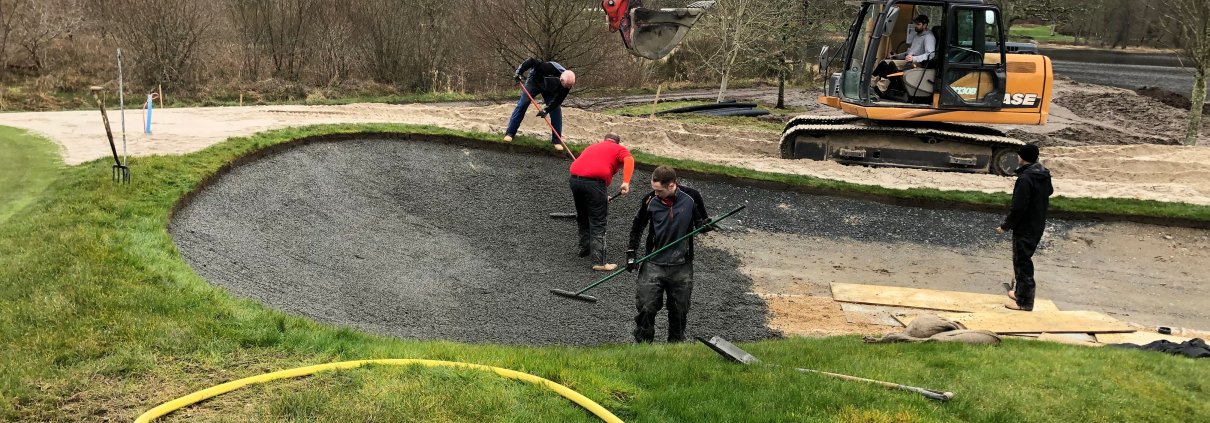
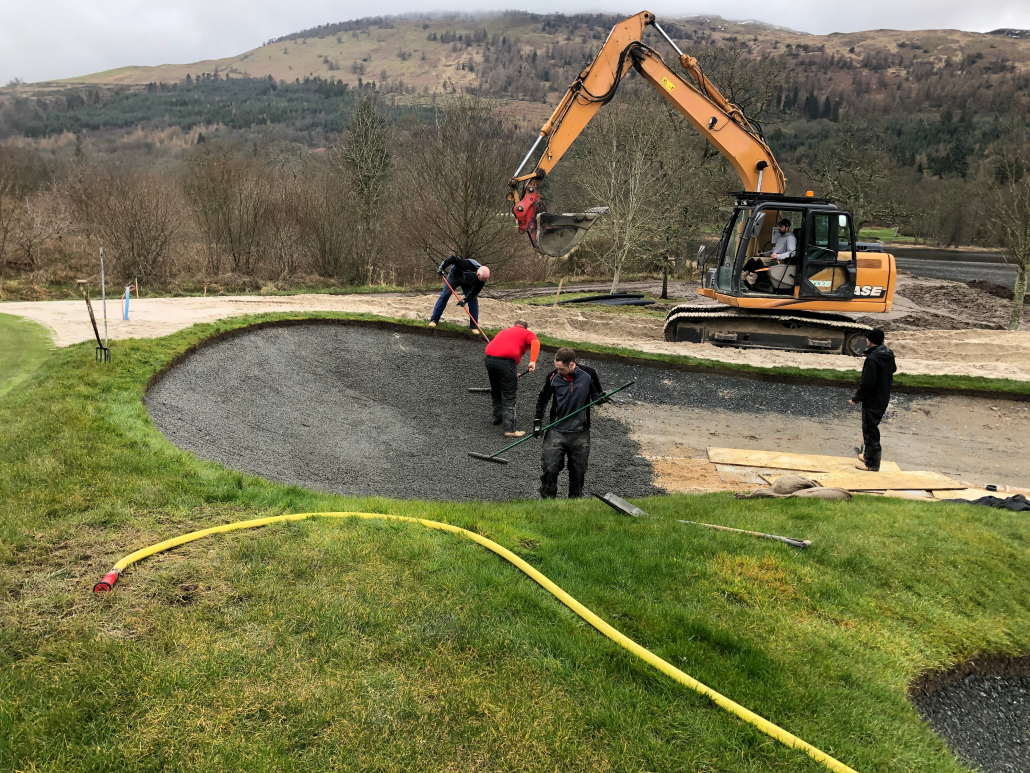
Capillary Concrete solving bunker problems: The exclusive Loch Lomond Golf Club in Scotland is coming to the end of a huge four year renovation project – at a total cost of £7.5 million, probably the most costly in the history of British golf – in which 85 per cent of the golf course has been sand-capped (apart from the USGA greens), its drainage infrastructure rebuilt, its irrigation system completely renewed and its bunkers reconstructed using the Capillary Bunkers lining system.

Surrounded by mountains and next to Britain’s largest freshwater lake, Loch Lomond has always faced huge problems caused by its environment. “We have a lot of bunkers – and a lot of rain,” says David Cole MG, the club’s director of golf course and estates. “We average around 2000mm (79 inches of rain a year), and our bunker design has some steep faces in places. As a result, we have always suffered badly from washouts and contamination. Bunker maintenance is our second largest consumer of greenkeeping resources, second to greens – due to the design, the size (8500m2), the amount, the player expectations and the environment, it takes a lot of resources to prepare the bunkers internally and externally for play on a daily basis, and it was frustrating not being able to produce a consistently good product from this valuable resource due to the ageing infrastructure and the uncontrollable element of frequent rainfall.

Capillary Concrete solving bunker problems

Capillary Concrete solving bunker problems

Cole and his team, along with contractor Esie O’Mahony of GolfLink Evolve, have rebuilt the course from the bottom up. The new drainage pipes are laid in trenches lined with geotextile to reduce the ingress of fine particles, and the pipes themselves have been resized to deal with the volume of water. The project was planned to be completed over the winter of 2019/20, but the Covid-19 pandemic meant that two holes were left unfinished. Those have been dealt with over this winter.

In among this huge quantity of construction, Cole was determined to improve the consistency of the bunker presentation and reduce the internal bunker maintenance challenge. “We wanted to try to eliminate sand contamination and washouts and ensure we give our members a quality product no matter the weather, he says. “After reviewing and trialling the options available, we selected Capillary Concrete throughout the project to line the bunkers. The product gives a lot of confidence. It’s concrete, so you know it is going to last, and the fact that you can install in wet weather situations is a huge plus for us as the renovation and installations took place throughout the wettest period of the year. The cost is obviously important – we are spending a lot of money on this project, but we are conscious that it is our members’ money, and we want to get good value for them – and Capillary Bunkers was very competitive.”

Cole says he is already seeing the benefits. “The simple fact is that we aren’t spending hours pushing sand back up bunker faces after rain. Ultimately since the liner has been installed the sand does not slip off the face after heavy rain events and daily preparations to present a good product for our members and guests is less labour intensive than previous. This allows us to focus more time on the detail work of internal bunker maintenance, and/or redirect resources to other priority areas that been neglected prior to this undertaking. Most days, three guys can deal with the internal bunker preparation, when previously it was five or six. Quantifying that isn’t easy and COVID-19 has not helped, but I think we may see a forty-fifty per cent reduction in resources we use preparing the internals of bunkers yet still producing a superior product.”

For the latest industry news visit turfmatters.co.uk/news

Get all of the big headlines, pictures, opinions and videos on stories that matter to you.

Follow us on Twitter and Instagram for fun, fresh and engaging content.

You can also find us on Facebook for more of your must-see news, features, videos and pictures from Turf Matters.
Solving The Erosion Headache

Solving The Erosion Headache: When it comes to sports ground renovations, areas that are subject to heavy use and erosion have caused headaches for greenkeepers and groundsmen for years. From sidelines and goalmouths in football, to walkways and paths in golf; public parks, playgrounds and festivals – the list goes on.

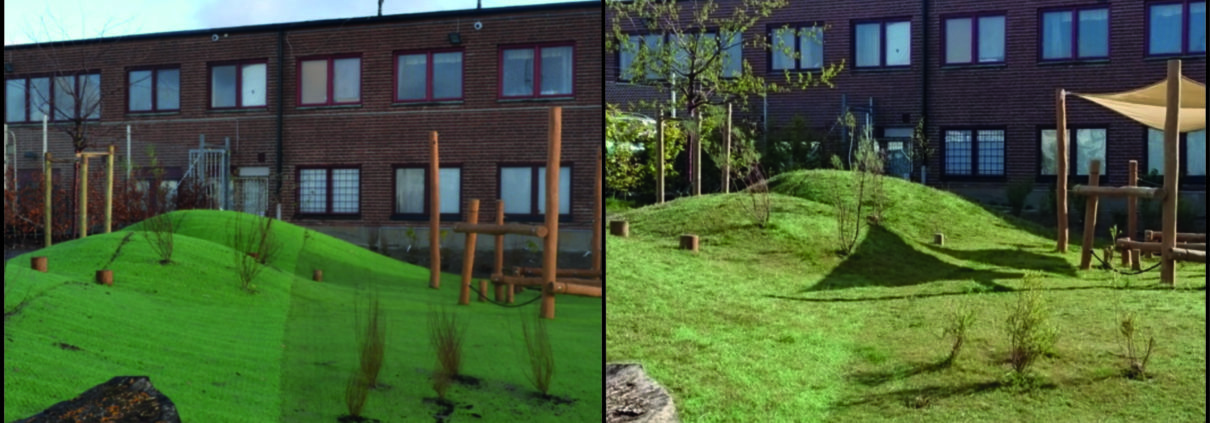
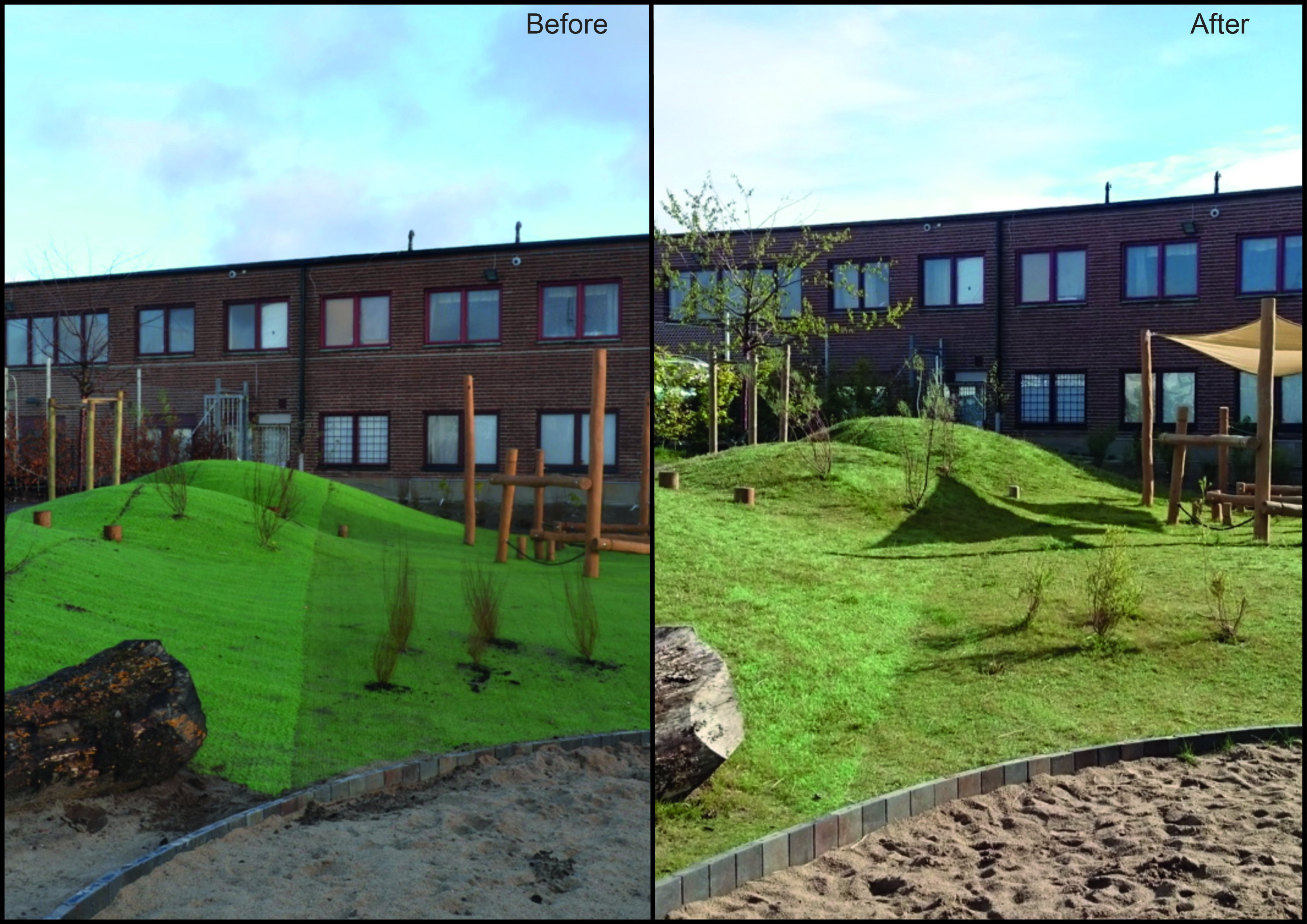
Hybrid surfaces are a new and innovative solution which are ideal for areas that suffer from heavy use and erosion. Greenacres’ hybrid surface, Coverlawn®, is available in multiple pile heights which makes it suitable for various applications. With over 1,000 installations worldwide, it has benefitted golf courses, sports pitches, children’s playgrounds, music festivals, public parks and many other high traffic areas.

Solving The Erosion Headache

As a knitted construction hybrid, Coverlawn® works in tandem with natural grass, encouraging natural growth while reinforcing and protecting the root zone with its honeycomb structure. Coverlawn® allows the natural turf to grow through and integrate completely, therefore providing a surface that is resistant to wear and tear. Coverlawn® is manufactured to allow maximum drainage, is exceptionally strong and long-lasting, and boasts anti-slip properties.

As you can see, Hybrid Surfaces remove the need for entirely artificial surfaces, or the use of gravel or rubber crumb alternatives. The popularity of Coverlawn® stems from the ability to retain the use of natural turf, which is a preference for most greenkeepers and groundsmen.

Coverlawn® is easy to install. Simply begin by measuring the area required, using as few seams as possible. Prepare the area for installation by mowing the existing grass to 20mm. Clear any debris and weeds, fill in any uneven holes with soil and seed any bare patches. Then simply lay the rolls of hybrid grass and, if necessary, cut them to size. Anchor the hybrid grass in place by burying the edges into the ground and inserting the decomposable anchor pins provided. Finally, apply a layer of top sand to the surface, and water to even out any inconsistencies. The new surface is ready to be used immediately after installation, but allow 2-3 months for complete integration.

For the latest industry news visit turfmatters.co.uk/news

Get all of the big headlines, pictures, opinions and videos on stories that matter to you.

Follow us on Twitter for fun, fresh and engaging content.

You can also find us on Facebook for more of your must-see news, features, videos and pictures from Turf Matters.