Tag Archive for: space

Ecological green space maintenance requires clear priorities

Ecological green space maintenance requires clear priorities: How can green space maintenance be made ecologically sound and practical at the same time, without losing sight of functional requirements? This question was the focus of a discussion round to which AS-Motor invited representatives from science, practice and the trade press.

The initiative was prompted by AS-Motor’s long-standing commitment to ecologically oriented green space maintenance. Since the public debate surrounding the Bavarian referendum “Save the Bees” in 2019, mulching technology has also come under increasing criticism. For AS-Motor, this was an opportunity to critically examine its own role as a equipment manufacturer and to take a closer look at the ecological impact of different maintenance decisions. The discussion panel picked up on this and brought together perspectives and experiences from science, practice and the media.
Ecological green space maintenance requires clear priorities

Ecological green space maintenance requires clear priorities

The discussion made it clear that there is no single goal for ecological green space maintenance. Instead, there are several ecological targets, including the preservation of biodiversity and the protection of biotope networks and landscape connectivity. Maintenance always takes place within clear framework conditions, for example with regard to traffic safety, legal requirements, economic efficiency and social acceptance. Prioritisation is unavoidable. Maintenance must be planned on an area-specific and target-dependent basis.

Areas with low usage but high connectivity are of particular ecological importance. These include roadside greenery, field margins, forest edges, orchard meadows, municipal green spaces and private gardens. Linear structures in particular play a central role in the biotope network.

Maintenance is essential

There was agreement that non-maintenance is not a viable option. As cultural landscapes, many areas depend on targeted maintenance to prevent scrub encroachment and loss of species and function. The timing of mowing, mowing frequency, cutting height, area division and rotating and mosaic-like maintenance approaches are crucial. Alternating maintenance was considered particularly practical: intensively maintained areas where necessary and extensively maintained, deliberately staggered sub-areas in adjacent areas.

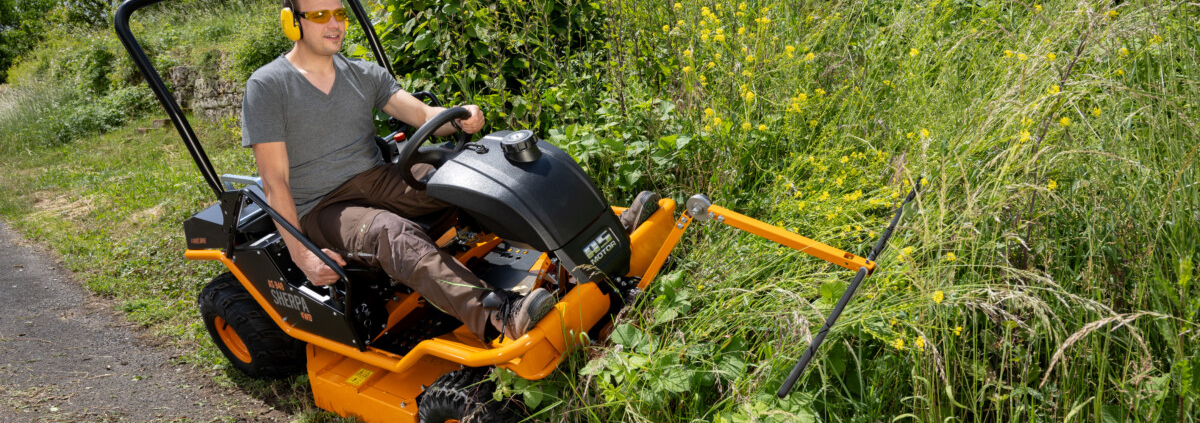
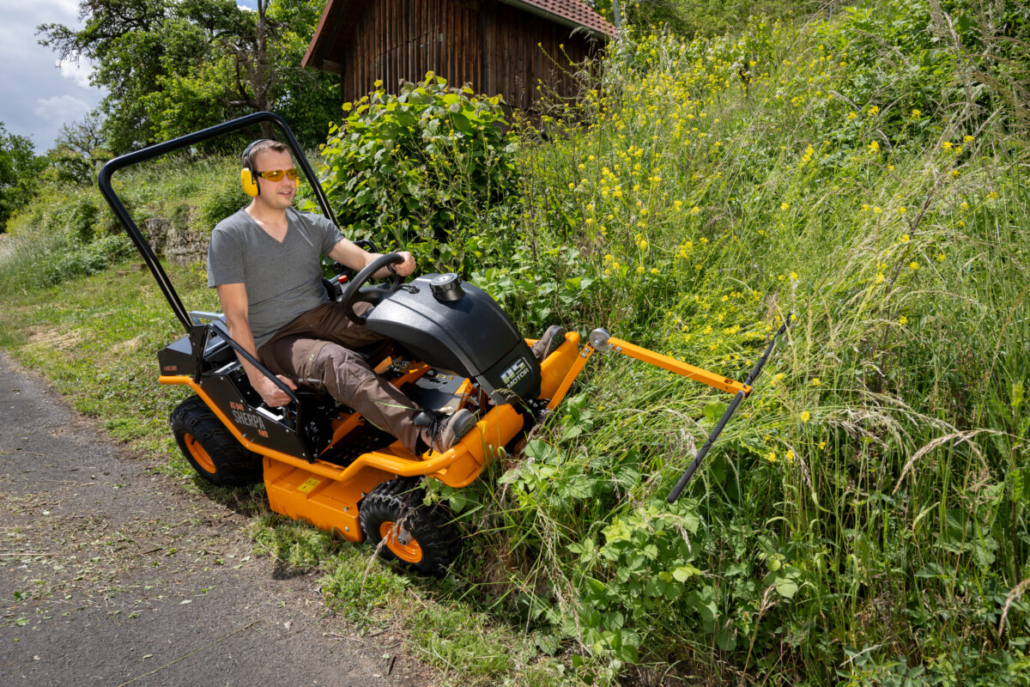
The role of technology was also considered in a differentiated manner during the round table discussion. Machines are a means to an end, not the solution itself. Bar mowers can offer advantages in terms of nature conservation, but are not economically viable or suitable for use in all areas due to terrain conditions. Mulchers and rotary mowers can be ecologically beneficial when used appropriately. It is not only the type of machine that is crucial, but the entire maintenance concept and its consistent implementation.

In practice, it has also been shown that ecologically oriented green space maintenance does not necessarily entail higher costs. Reduced mowing frequency can offset additional expenses. Challenges remain in the disposal of clippings and limited investment opportunities in new technology.

Communication is key

Communication has been identified as a key factor. Conflicts often arise less from technical reasons than from aesthetic expectations. Areas that appear unfamiliar or untidy are met with rejection without explanation. What is crucial is explanatory, continuous communication that creates understanding and highlights positive examples. The model of “orderly unrest” was mentioned several times in this context.

The role of employees is equally central. Change can only succeed with the people who carry out the maintenance. Knowledge, involvement and appreciation promote responsibility and motivation. Many practical solutions arise directly from experience in the field.

In the discussion, AS-Motor was perceived not only as a manufacturer of equipment, but also as a source of knowledge and a catalyst for professional exchange. Training courses, practical guidelines, tried-and-tested practical solutions and the further development of technology with a view to ecological application were identified as useful starting points.

For the latest industry news visit turfmatters.co.uk/news

Get all of the big headlines, pictures, opinions and videos on stories that matter to you.

Follow us on Twitter and Instagram for fun, fresh and engaging content.

You can also find us on Facebook for more of your must-see news, features, videos and pictures from Turf Matters

Fields in Trust Green Space Index launched

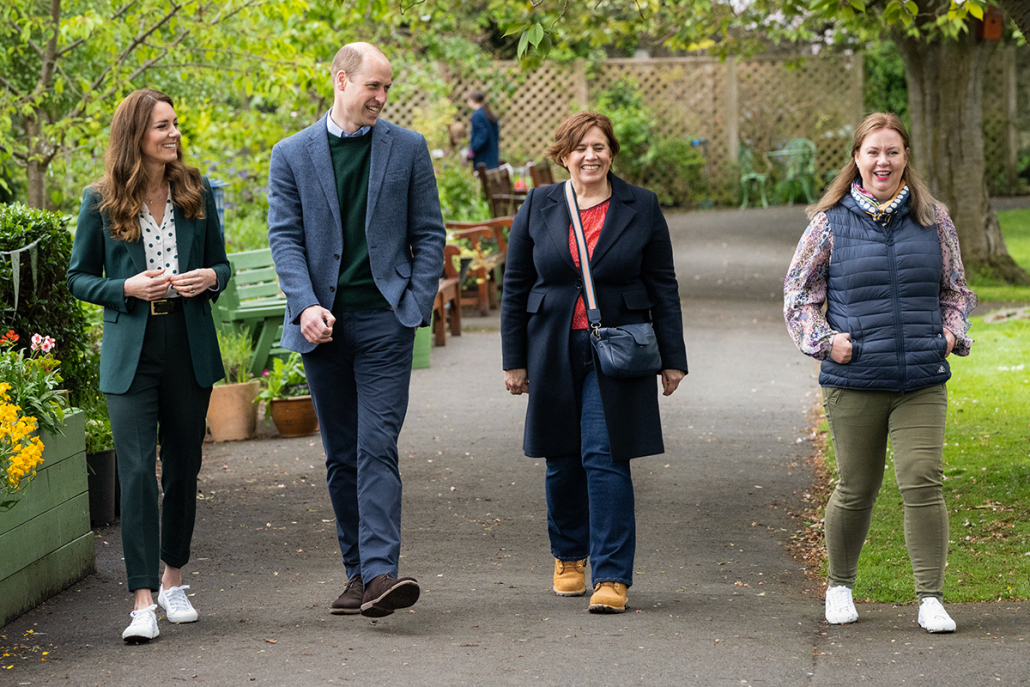
Fields in Trust Green Space Index launched: At an event in Edinburgh, Their Royal Highnesses The Duke and Duchess of Cambridge helped to launch the Fields in Trust Green Space Index which reveals that, despite their value for health, wellbeing and climate change mitigation, some parts of the UK have access to 50% less green space than others and 2.8m people in Great Britain live more than a ten-minute walk from their nearest park.

The parks and green spaces that have been so vital to the nation’s wellbeing during lockdown are not equally accessible to all, according to new data from green space charity Fields in Trust. The Green Space Index is an annual barometer of green space provision and distribution and shows that people in the most well provisioned locations have the equivalent of 45m2 of accessible parks and green space per person compared to just 19m2 per capita in others.  Areas with the least provision tend to be those with a higher incidence of deprivation – precisely the communities who benefit most from green space access.

Fields in Trust Green Space Index launched

Fields in Trust Green Space Index launched

The visit came ahead of COP26 climate change conference, which will be taking place in Glasgow later this year, with today’s event one of several projects which have a positive effect on climate change that The Duke and Duchess of Cambridge have visited across Scotland. Urban parks and green spaces boost air quality, support habitats and mitigate the effects of climate change.

At the event in Starbank Park, Edinburgh’s Lord Provost, Frank Ross, announced that the City of Edinburgh Council would be using the Green Space Index to determine strategic green space locations. He said: “Edinburgh is already a wonderfully green city, and we want to ensure it remains that way for generations to come.

“I’m extremely pleased to announce that the City of Edinburgh Council will be looking to partner with Fields in Trust in protecting in perpetuity a further 25 green spaces – adding to the 34 already protected. This will mean that almost everyone in Edinburgh will be within a ten-minute walk of a protected green space, ensuring that for years to come citizens are guaranteed a lifetime of opportunity for activity, play, learning, recuperation and community.

“Scores of volunteers across the city work alongside the Council to support our parks, green spaces and cemeteries. We are very grateful to Friends of Starbank Park their ongoing hard work and dedication and we will continue to work with them to make sure these important areas are preserved for the benefit of our future generations.”

The City of Edinburgh Council are the first Local Authority in Scotland to adopt this approach and follow the pioneering example set by Liverpool City Council in March 2021 to protect all 100 parks in the City.

During the event Their Royal Highnesses met with volunteers from the Friends of Starbank Park Group and park users of all ages who have found sanctuary in the park over the last year as a place to play, exercise, relax, and reflect.

Fields in Trust Chair of Trustees, Jo Barnett said: “Through the pandemic we’ve realised just how valuable parks and green spaces are to our health and wellbeing, yet across the UK only 6% of parks are protected and access to them is not equitable. The proven physical and mental health benefits of local parks is unchallenged. These are valuable places; places where we can all move, breathe, run and play. Fields in Trust welcome this significant commitment by the City of Edinburgh Council, we need to champion and support these precious spaces by protecting them for future generations to enjoy. Because once lost, they are lost forever.”

Full details of the Green Space Index – including an interactive web app to explore local provision can be found on the Fields in Trust website www.fieldsintrust.org

For the latest industry news visit turfmatters.co.uk/news

Get all of the big headlines, pictures, opinions and videos on stories that matter to you.

Follow us on Twitter and Instagram for fun, fresh and engaging content.

You can also find us on Facebook for more of your must-see news, features, videos and pictures from Turf Matters.

Maintaining outside space for emotional wellbeing

Maintaining outside space for emotional wellbeing: Mental Health Awareness Week, organised by the Mental Health Foundation, runs each year from the 10th to 16th of May. This year’s theme of ‘Nature’ is particularly poignant with lockdown restrictions easing and people once again allowed to socialise at both indoor and outdoor locations.

The emotional wellbeing benefits of nature have been researched extensively over the years and, as Paul Bean from grounds maintenance specialist Nurture Landscapes Group explains, it is important to keep these in mind all-year-round, especially as the world looks to recover from Covid-19.

Maintaining outside space for emotional wellbeing

Maintaining outside space for emotional wellbeing

Research[1] commissioned by the Mental Health Foundation and the UK World Wildlife Fund (WWF-UK) published ahead of Mental Health Awareness Week found that 62% of people felt that taking a walk helped improve their mental wellbeing during the pandemic.

Now that we are starting to look ahead to the post-Covid world, outside spaces will continue to be areas of comfort. That, of course, means caring for these areas so that they can provide the respite people are looking for.

‘Caring’, in this context, includes small individual actions that each person can take in their day-to-day lives, such as taking litter home, to carrying out more extensive grounds maintenance and improving sustainability practices, such as using energy-efficient equipment when tending to a park’s upkeep.

There is also a lot to be said for creating a space that the local community feel proud to have on their doorstep, achieved by hosting events around biodiversity and environmental awareness.

Urbanised areas in particular can see the benefits of opening up more natural spaces in these ways, especially as the various lockdown measures highlighted the need for improved access. According to figures from the Office of National Statistics, only 13% of residents across urban areas in England and the three most populous cities in Wales lived within a ten minute walk of a local park, and of those who did have good access, nearly a quarter (24%) suggested the park was at risk of becoming too overcrowded.[2] Yet before the first lockdown in March 2020, 93% of respondents had visited a green space in the year leading up to movement restrictions being implemented.

Improving natural areas to create a quiet haven in an otherwise stressful and at times, overwhelming setting, doesn’t happen overnight. However, choosing the right plants, flowers, and even the positioning of benches, are good first steps. Then, of course, there is the ongoing TLC which keeps the park looking at its best.

The message of taking care of the natural environment for our own emotional wellbeing is a key one for Mental Health Awareness Week this year, and something we at Nurture Landscapes take great pride in being able to facilitate. While we may not be experts in mental health, we do understand and appreciate how important it is for people to have a space where they can take some time to care for themselves.

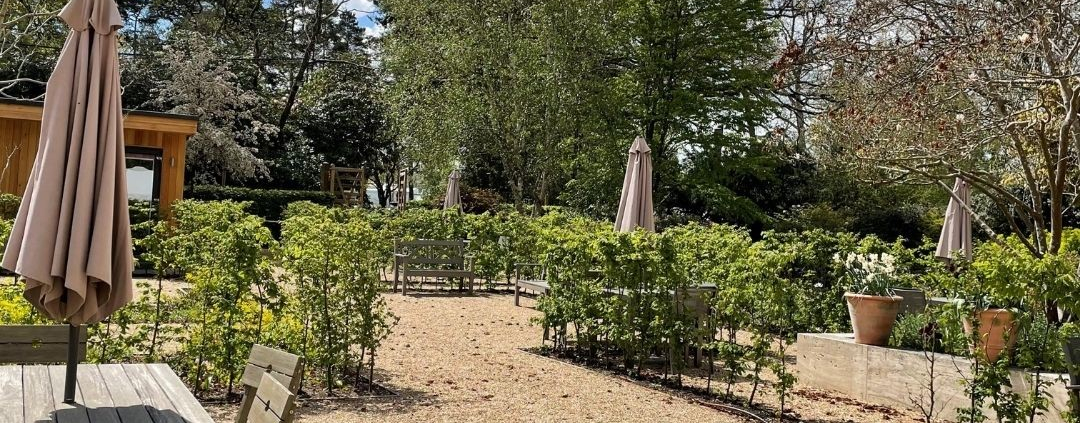
And the signs that this will continue to be the case are there already, with offices looking to utilise outdoor meeting areas, such as the one we use ourselves at our head office in Surrey (pictured), and nature charities reporting greater interest in their respective activities, according to ONS data.[3]

The same data reveals that during the summer of 2020, the use of #m_2362510770876043122__ftn3outdoor spaces surged when compared to Natural England’s baseline figures from the period 2010 to 2018, peaking at a 100% increase in August of last year. Good weather and the temporary lifting of restrictions will certainly have been key factors for this dramatic increase, but the understanding and awareness of nature that people developed in the months spent in lockdown will have also contributed.

Before the virus outbreak, when long commutes and crowded urban areas were considered ‘the norm’, going for a walk to clear the mind or get some fresh air out of a busy office provided a welcome respite from the constant pressures of modern living. Covid-19 showed us just how important those five minutes out in the fresh air truly are.

As Mental Health Foundation’s Thriving in Nature report states, “nature is for everyone [and] it is essential that everyone can access nature whatever their circumstances”.[4] To fulfil this vision, and ensure that the post-pandemic era has a strong focus on taking care of our own individual mental health needs, opening up natural spaces and maintaining them to create green oases in what can be an overwhelming world needs to be a priority, especially with nearly half of people in the UK noticing the increasing benefits of nature on their overall mental wellbeing.

For the latest industry news visit turfmatters.co.uk/news

Get all of the big headlines, pictures, opinions and videos on stories that matter to you.

Follow us on Twitter and Instagram for fun, fresh and engaging content.

You can also find us on Facebook for more of your must-see news, features, videos and pictures from Turf Matters.