Tag Archive for: Spaces

Green-tech Help Transform Basildon’s Green Spaces

Green-tech Help Transform Basildon’s Green Spaces: Basildon Borough Council has undertaken an impressive initiative to establish vibrant, impactful wildflower meadows across the borough. This ambitious project started in 2023 and remains ongoing.

The council wanted to improve public spaces by enhancing their visual appeal, creating new local habitats, and increasing biodiversity. These areas needed to support a wide range of species, particularly pollinators such as bees and butterflies. The council also wanted to improve soil health and reduce reliance on chemical treatments.

Green-tech Help Transform Basildon’s Green Spaces

Green-tech Help Transform Basildon’s Green Spaces

The council wants to create wildflower meadows in their country parks, urban parks, and new local nature reserves. It also wanted to enhance the area’s visual appeal with stunning floral displays in flower beds and roundabouts, enabling residents to appreciate its beauty and encouraging community engagement.

They wanted to replace traditional annual planting schemes with sustainable wildflower areas to reduce maintenance costs. Wildflower areas are cost-effective, requiring only annual mowing and eliminating the need for annual replanting, which was a priority for the budget-conscious council, enabling their resources to be utilised elsewhere.

The Project

Green-tech advised and supplied their market-leading John Chambers Wildflower Seeds. Known for high-quality seed mixes tailored to diverse landscapes, the John Chambers range supports large-scale biodiversity projects with seeds that contribute to long-term habitat creation and ecological enhancement.

Recognising the importance of sustainable urban greening, Basildon Borough Council integrated these wildflower meadows into parks, roundabouts, and other green spaces across the region, ensuring they deliver environmental and community benefits.

The initiative covers multiple locations, including:

  • Creation of a native wildflower meadow at Beauchamps Meadow Local Nature Reserve.
  • Planting 100% native wildflowers on roundabouts across the borough, replacing the annual seed mix the team used to sow.
  • Using the John Chambers Impact seed mix, a mix of native and non-native species in Bee Sand planters in formal parks.
  • Wildflower meadow creation in town parks using a 100% wildflower seed mix.
  • Creating wildflower meadows in amenity parks to establish small nature zones for wildlife.
  • New 1-hectare meadows created at Northlands Town Park, Victoria Town Park, and Wick Country Park.

For their meadow creation, Basildon Borough Council’s Parks and Countryside team sow wildflower seeds in the autumn, typically around September or October, allowing them to germinate in the spring, with flowers beginning to bloom from June onwards. They also sow 100% flower species mixes in the spring for flowers to appear by June. To achieve this, the team prepares the sites by lightly cultivating the top inch of soil to create a suitable seedbed, avoiding chemical treatments to eliminate existing vegetation. Seeds are then sown directly into the ground by hand or using a seed drill, a method that has proven successful once the meadow has established itself. An annual cut and collect process ensures that the wildflowers outcompete the original rank grasses.

Products Used

Green-tech supplied:

  • John Chambers 100% Pro Clay Soils and Pro Cornfield Annuals mix – a diverse selection of UK-native wildflowers to support pollinators and enhance biodiversity.
  • John Chambers Impact Wildflower Seed Mix – a vibrant mix of native and non-native species designed for high visual impact and extended flowering periods.
  • John Chambers Impact Pollinators Wildflower Mix – specifically formulated to provide a nectar-rich habitat for pollinators in urban environments.

The Outcome

The wildflower meadows have flourished, delivering a range of ecological and community benefits which include:

  • Enhanced biodiversity – significant increases in pollinators such as bees and butterflies.
  • Sustainable landscaping – reduced reliance on chemical treatments and lower maintenance requirements.
  • Community engagement –local residents have embraced the wildflower areas, with overwhelmingly positive feedback.
  • Aesthetic improvement – vibrant floral displays have transformed urban parks, roundabouts, and green spaces.

The wildflower areas are maintained through an annual cut-and-collect process, which helps maintain the balance between wildflowers and grasses, ensuring long-term sustainability.

The council has already noticed a significant increase in pollinator presence, with bees frequently observed feeding on the flowers. This biodiversity boost highlights these areas’ positive impact on local wildlife. Community feedback has been overwhelmingly positive to all wildflower areas across all settings, with many people appreciating the beauty and ecological benefits they bring to the community.

The council intends to expand this initiative by replacing traditional annual plantings with native wildflower seeds wherever possible. In more formal town parks and public spaces, annual planters will still be used to maintain seasonal visual appeal.

“Working on the wildflower projects has been incredibly rewarding. The positive impact on local biodiversity is clear, with a noticeable increase in pollinators and other wildlife thriving in these areas. Not only do these projects enhance the beauty of our public spaces, but they also offer long-term ecological benefits with minimal maintenance. We’ve had a fantastic experience working with Green-tech – they’ve made the process easy, and their support and knowledge have been invaluable. We are proud to lead an initiative that supports both nature and the local community.” Josh Childs, Parks and Countryside Biodiversity Officer at Basildon Borough Council.

For the latest industry news visit turfmatters.co.uk/news

Get all of the big headlines, pictures, opinions and videos on stories that matter to you.

Follow us on Twitter and Instagram for fun, fresh and engaging content.

You can also find us on Facebook for more of your must-see news, features, videos and pictures from Turf Matters.

Protecting Liverpool’s Green Spaces for Good

Protecting Liverpool’s Green Spaces for Good: Green Space charity Fields in Trust is inviting Liverpool residents to get involved to help them protect all the parks and green spaces across the city.

Liverpool City Council have committed to protect 100 parks, totalling over 1,000 hectares, which can never be built on or lost to development. Once completed, Liverpool will be the first city in the UK where every resident has a legally protected green space within a ten-minute walk of home.

Protecting Liverpool’s Green Spaces for Good

Protecting Liverpool’s Green Spaces for Good

The Council’s commitment ensures the positive benefits of green spaces will always be available for the city’s residents. But this is a joint effort, the Liverpool Park Friends Forum were instrumental in bringing about green space protection, working with Liverpool city council and Fields in Trust. Now Fields in Trust are inviting local businesses and the wider community to support the programme.

Over the last two years we have all relied on our local green spaces more than ever; parks are a vital part of the local environment helping us rebalance and recover. Alongside their value for health and wellbeing, urban parks increasingly have a role to play in environmental improvements including air quality and biodiversity.

Fields in Trust Chief Executive Helen Griffiths said: “We have seen a major shift in the way people talk about, visit and value their local parks. Our parks have provided a lifeline throughout lockdown and now, coming out of the pandemic, we can all play our part to make sure local green spaces will remain a healthy part of the local environment contributing to our wellbeing, our community connections and mitigating the impact of climate change. We are working with the city council to ensure all Liverpool parks will be protected and available for the whole community, for future generations. As a charity we need support from the communities and businesses in Liverpool to help turn this vision into a reality.”

Councillor Dan Barrington, Liverpool City Council Cabinet Member for Climate Change and Environment said: “We are delighted to work with Fields in Trust to protect the city’s parks and green spaces. This is a practical example of Liverpool City Council’s strategic Triple Lock: People, Planet, Equality. I encourage local community organisations and businesses to step-up and get involved with Fields in Trust, supporting them to protect more green spaces for good”

A series of posters will be going up around Liverpool parks in the forthcoming weeks inviting park users to sign-up for regular updates on the progress of the programme and help bring about a fundamental change by future-proofing Liverpool’s much-loved parks – securing green spaces for good. Find out more at the Fields in Trust website: www.fieldsintrust.org/liverpool

For the latest industry news visit turfmatters.co.uk/news

Get all of the big headlines, pictures, opinions and videos on stories that matter to you.

Follow us on Twitter and Instagram for fun, fresh and engaging content.

You can also find us on Facebook for more of your must-see news, features, videos and pictures from Turf Matters.

Crucial year for parks and green spaces

Crucial year for parks and green spaces: Green Space charity Fields in Trust has published a 2021 Impact Report detailing their work to champion, support and protect parks and green spaces across the UK.

It was a significant year for Fields in Trust, a pioneering partnership with Liverpool City Council was announced in March 2021. The council are legally protecting all the city’s parks and green spaces, forever. Securing 100 parks, totalling over 1,000 hectares, Liverpool will become the first city in the UK where everyone lives no more than a ten-minute walk from a legally protected green space.  Partnerships with the City of Edinburgh Council and the County Borough of Wrexham have also secured multiple green-space portfolios for the communities in those cities.

Crucial year for parks and green spaces

Crucial year for parks and green spaces

Over the last two years we have relied on our local green spaces more than ever; a vital part of the local environment helping us rebalance and recover. Alongside their value for health and wellbeing, urban parks increasingly have a role to play in the mitigation of climate change, but parks and green spaces are not equally distributed across the UK. In May, Fields in Trust President, HRH The Duke of Cambridge launched the 2021 edition of the Green Space Index – Fields in Trust’s pioneering initiative to quantify and analyse inequality of access to local green space. The visit took place as part of the royal visit to Scotland in advance of the COP26 climate change conference in Glasgow.

Fields in Trust Chief Executive Helen Griffiths said: “We have seen a major shift in the way people talk about, visit and value their local parks. Our parks have provided a lifeline throughout lockdown and now, coming out of the pandemic, we can all play our part to make sure local green spaces will remain a healthy part of the local environment contributing to our wellbeing, our community connections and mitigating the impact of climate change. We must make sure they will be protected and available for the whole community and for future generations”

The Fields in Trust Impact Report is presented as an online interactive resource including maps video and photographs and infographics.

Explore the Fields in Trust 2021 Impact Report www.fieldsintru.st/ir2021

For the latest industry news visit turfmatters.co.uk/news

Get all of the big headlines, pictures, opinions and videos on stories that matter to you.

Follow us on Twitter and Instagram for fun, fresh and engaging content.

You can also find us on Facebook for more of your must-see news, features, videos and pictures from Turf Matters.
94% of green spaces on endangered list

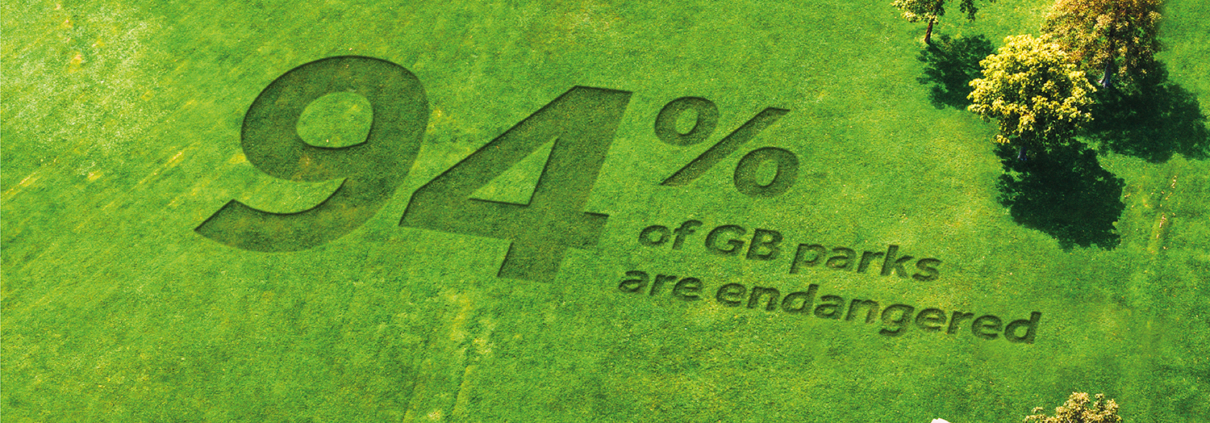
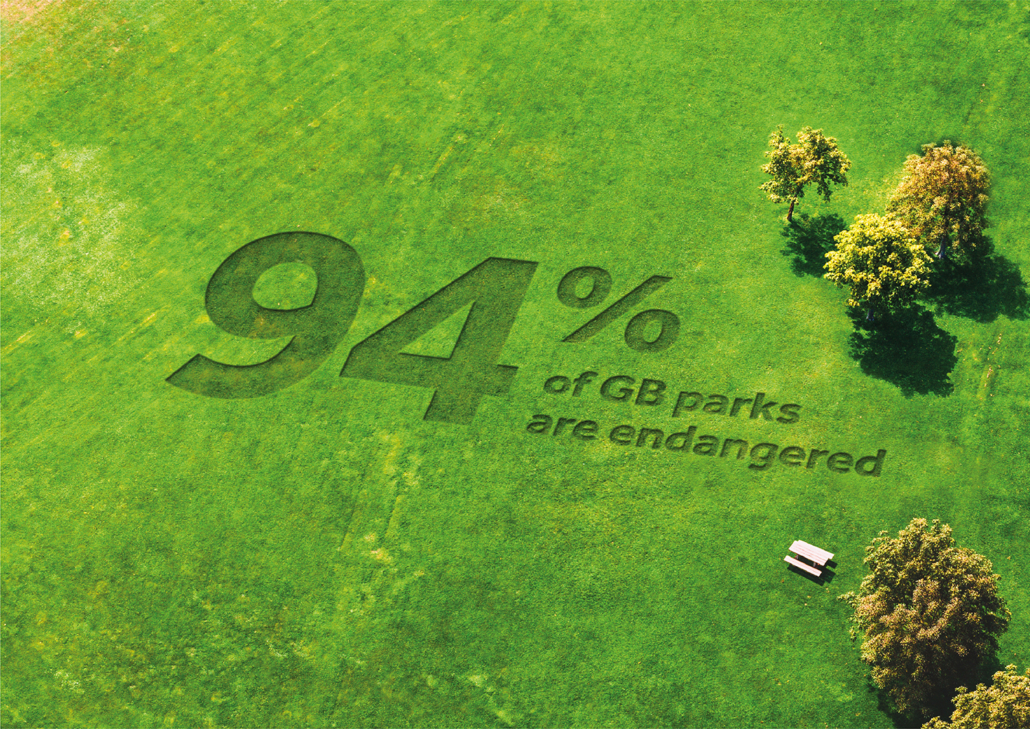
94% of green spaces on endangered list: Is your local green space or park one of the 94% (over 20,000) that could disappear tomorrow? Green open spaces and parks across Great Britain, equivalent to twice the size of London could be lost forever, unless communities proactively encourage their local authorities and park owners to step up and protect today.

Green space charity Fields in Trust is urging everyone to get behind its ParkXtinction campaign which aims to protect those parks that are currently endangered, before it’s too late and they are lost to building development, forever.

94% of green spaces on endangered list

94% of green spaces on endangered list

Consider the local park where you walk your dog, take your children to the swings, or just enjoy a walk around regularly for fresh air.

With the COP26 conference in full swing, the charity is urging everyone to check if their local park is one of those on the endangered list by visiting www.parkxtinction.org. For those that are in danger, action can be taken to protect them. Green spaces can be legally protected via a deed of dedication, by forming a binding legal commitment, requiring owners to preserve sites for recreational use forever.

Research from Fields in Trust finds that Britain’s parks and green spaces capture 402,000 tonnes of carbon annually, the equivalent of taking 320,565 cars off the road every single year.

Fields in Trust President, The Duke of Cambridge, launched the charity’s Green Space Index of Parks provision back in May 2021. The Green Space Index is Fields in Trust’s annual barometer of publicly accessible park and green space provision. Through the Green Space Index, Fields in Trust is taking stock of the nation’s quantity of local parks and green spaces and providing analysis on their impact.

Aiming to positively change the dial on climate change, the Duke of Cambridge said during a visit earlier this year with Fields in Trust: “The Green Space Index will provide a key tool for Local Authorities to identify inequity of access to green spaces, and to protect them for communities, now and in the future.”

Among the countless messages of feedback received by the charity during the unprecedented 18 months during a global pandemic, one person commented: “During lockdown, the park was probably a lifesaver for me in terms of my mental health.”

The Climate Change Committee (CCC) has identified that the total proportion of urban green space in England declined between 2001 and 2018 from 63% to 55% of urban areas. The most recent CCC report to Government ([i]i) recommends that an urban greenspace target should be introduced by 2022 to reverse this decline and ensure towns and cities are more climate resilient.

Helen Griffiths, Chief Executive, Fields in Trust said: “My hope for COP26 is that the bold actions that are needed to meet the challenges ahead are recognised.

“Local response to climate action is crucial, and parks can play an important role in creating a greener and fairer economy. They can help tackle health and opportunity inequalities among communities and we must, without question, commit to preserving the green lungs of our towns and cities.

“This all sits within the powers of our local leaders, and this is an opportunity now to change the way we think about the contribution local green spaces make to our health, our wellbeing, our environment, and ultimately our futures.

“These parks and green spaces are under threat today, from financial and development pressures and it is up to all of us to stem this cycle of disappearance and decline. Our children and grandchildren deserve to have the same green space opportunities that we did, so we need to act today before it’s too late.

“I call upon local authorities, private landowners and members of the public to check if the local park you enjoy today is endangered via this ParkXtinction link.”

Without urgent action, Britain’s public green space is set to decrease, putting more pressure on fewer green spaces to support the health and wellbeing of communities, now and in the future.

Helen continued: “A recent community campaign led to 100 parks and green spaces in Liverpool becoming legally protected, Wrexham County Borough has committed to protect ten country parks as part of a drive to carbon neutral operations, and the City of Edinburgh Council is also protecting the majority of its urban green space. So, the appetite for protecting green spaces is there, we need civic leaders and local councillors to come on board urgently.  The Fields in Trust website provides information on endangered green spaces in your area. Click here to check your local green space, and if it isn’t protected find out how you can help us reduce the gap quickly.”

Visit the dedicated website to make a positive change today and protect your local park www.parkxtinction.org

For the latest industry news visit turfmatters.co.uk/news

Get all of the big headlines, pictures, opinions and videos on stories that matter to you.

Follow us on Twitter and Instagram for fun, fresh and engaging content.

You can also find us on Facebook for more of your must-see news, features, videos and pictures from Turf Matters.

Future proof the UK’s green spaces

Future proof the UK’s green spaces: There is an urgent need to recruit young volunteers to care for and maintain UK parks if they are to meet the needs of current and future generations, according to Future Proof Parks – a partnership between Groundwork, Fields in Trust and National Youth Agency.

They say it is vital that we act now to recruit the next generation of volunteers, representative of the communities that enjoy and benefit from the UK’s parks and green spaces. A new series of free How-To guides have been published supporting friends of parks groups to recruit more young volunteers.

Future proof the UK’s green spaces

Future proof the UK’s green spaces

Our parks are amazing places. Across the country, volunteers work tirelessly to care for and protect their local green spaces, improving our towns and cities. They have been crucial as places to exercise, meet friends and relax during the Coronavirus pandemic. As council funding becomes further stretched, more work maintaining and improving our precious parks is being picked-up by friends of parks groups. However, these volunteers are not always representative of the whole local community that use the park – and they could benefit from a wider range of volunteers to support their growing workload.

Future Proof Parks is a National Lottery Heritage Fund programme – part of the £10m ‘Kick the Dust’ initiative –which aims to get more young people involved in preserving their local park and green space heritage. Throughout the programme young people have learned about their local historic parks and have been encouraged to join their local ‘friends of’ groups, volunteering to preserve the local spaces that matter to the communities they live in.

The project is also working with friends’ groups to give them the tools, encouragement, and support to get more local young people involved in their work and benefit from cross-generational working. To support volunteers inexperienced at involving young people, a series of How-To guides has been published introducing Friends of Parks working with young people in green spaces. The in-depth How-To-Guides which look at key areas including Recruiting young volunteers, safeguarding young people and how to fundraise with young people.

Fields in Trust Chief Executive Helen Griffiths said: “We are all thankful to the volunteers who helped maintain our parks throughout lockdown and now, coming out of the pandemic, we can all play our part to make sure local green spaces will remain a healthy part of the local environment contributing to our wellbeing, our community connections and mitigating the impact of climate change. Local parks have been vital over the last year, we must make sure they will always be there for the whole community and for future generations – helping to restore the natural world and providing safe places to meet friends and neighbours. To make that happen we have to ensure the next generation of volunteers are included and empowered to get involved now and become future leaders”

The wellbeing value associated with frequent use of parks and green spaces is worth £34.2 billion per year to the UK adult population and is estimated to save the NHS around £111 million per year through a reduction in GP visits. Parks are one of the most universal of our public services used by all members of our communities and multiple generations – so it is important that they deliver something for all the groups that use them.

Earlier this year, a report published by Groundwork drawing on contributions from 23 organisations recognising the need to reimagine parks for the 21st century, found major inequalities in people’s ability to access parks and other open spaces.

The ‘Out of Bounds’ report demonstrated the extent to which certain groups are not getting the benefit of regularly accessing ‘urban nature’ – citing evidence that girls and young women feel unsafe in public spaces, some disabled people feel uncomfortable in parks and young people from minority ethnic backgrounds have fewer opportunities to connect with green spaces.

The How-To Guides are available for free download www.fieldsintrust.org/future-proof-parks

For the latest industry news visit turfmatters.co.uk/news

Get all of the big headlines, pictures, opinions and videos on stories that matter to you.

Follow us on Twitter and Instagram for fun, fresh and engaging content.

You can also find us on Facebook for more of your must-see news, features, videos and pictures from Turf Matters.