
Tag Archive for: Spring

Spring into the first cut with Countax

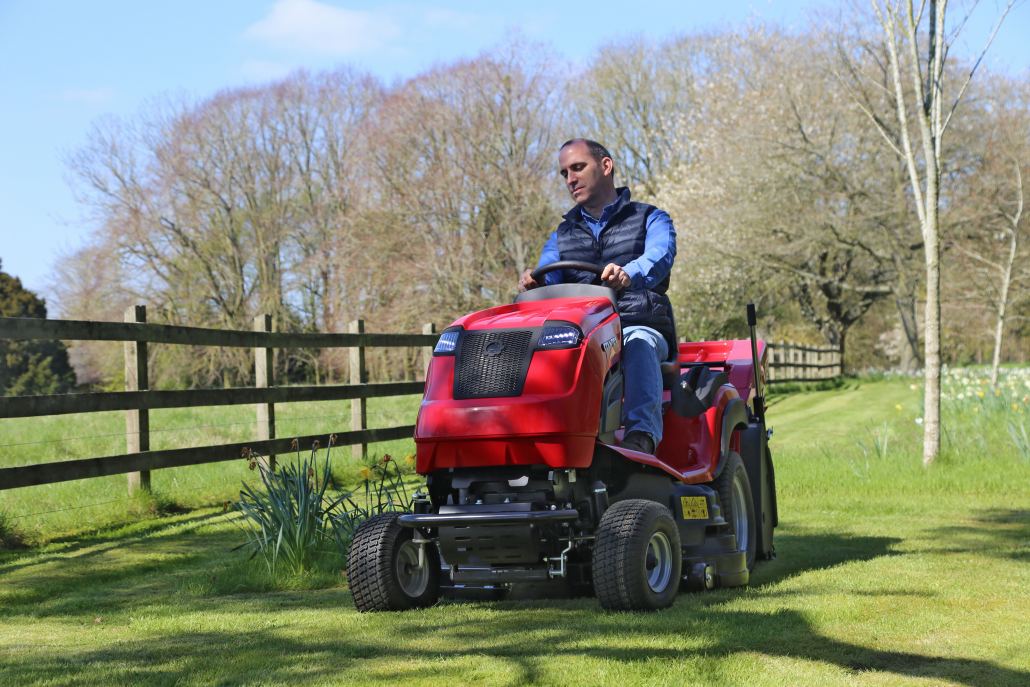
Spring into the first cut with Countax: As soon as the ambient soil temperature rises in spring our British lawns put on a growth spurt and it is time for the first cut. Which could mean considering a new mower or, if you have a large grass area or even a paddock, a ride-on garden tractor.

Making the sizeable investment in one needs careful consideration. Will your choice of ride-on be used only for mowing? Or could it be an all-year-round workhorse, performing a wide variety of garden tasks from spring through to winter? To make the most of your investment it is worth looking at a Countax garden tractor to fit the bill in all respects.
Spring into the first cut with Countax

Spring into the first cut with Countax

Firstly, it is designed for the British garden and built in Britain for the vagaries of our weather. Secondly, it will make gardening life a whole lot easier. The first spring mow needs to be at a high height, gradually lowering the cutting deck as the season progresses. This is easily done with the Countax deck height setting ranging from 101mm/4” down to 12mm/1/2”. There is a choice of cut and collect, mulching using an optional mulching kit or a High Grass Mulching deck for rougher areas. For those of you who like a striped lawn, you cannot better the Countax Powered Grass Collector (PGC) and roller system, powered by the tractor’s Power Take-Off (PTO). Which brings us to the PGC+, the accessory that transforms a Countax C or B Series into that multi-use, year-round workhorse.

The PGC+ is a cassette system that allows you to quickly and easily switch accessories. It means you only need one machine to maintain the lawn, paddock, drive, path and other garden areas. The Grass Sweeper cassette comes as standard and clicks into place with brushes that rotate at over 1100rpm to sweep grass clippings, fallen leaves and other debris into the hopper, even when the grass is wet.

Spring is also a good time to scarify the lawn to rid it of winter accumulated moss and thatch and that is simply done by switching to the easy-to-insert Scarifier cassette. Which means you don’t need to spend money on a separate scarifier.

So, all-round a Countax will work for you through the seasons. Using the PTO you can also drive other accessories such as a powered broadcast spreader, which is ideal for spreading salt and grit on paths and drives to keep them ice-free. Choose a B Series Countax and you have the benefit of the unique 4TRAC four-wheel-drive system giving you a ‘go anywhere, mow anywhere’ garden tractor capable of tackling slopes, mud and rough ground. It also makes the perfect partner for a snowblade to clear your way in the depths of winter. Find out more by contacting Countax on 01844 278800 or visit www.countax.co.uk/find-a-dealer/ to find your local dealer.

For the latest industry news visit turfmatters.co.uk/news

Get all of the big headlines, pictures, opinions and videos on stories that matter to you.

Follow us on Twitter and Instagram for fun, fresh and engaging content.

You can also find us on Facebook for more of your must-see news, features, videos and pictures from Turf Matters.

Spring into action with Makita

Spring into action with Makita: Leading power tool manufacturer Makita UK has launched a new garden machinery redemption scheme. From 1st February 2021, consumers can claim free 18V LXT lithium-ion batteries or body only LXT blowers with the purchase of selected 18V and Twin 18V (36V) machines.

The demand for cordless products is ever growing – and with its new redemption scheme, Makita is helping end users expand their collection of cordless garden machinery for a safer, more efficient job site. With the purchase of selected 18V RT, RTE, RT8 and RTX models, customers can claim a free 5.0Ah lithium-ion battery or 18V LXT blower (DUB185Z – body only). The offer is further extended with purchases of Twin 18V (36V) PT2, PT4, PG2 and CT2 machines, where consumers may redeem either two 5.0Ah 18V LXT batteries, an 18V LXT blower (DUB184Z – body only) or a Twin 18V LXT blower (DUB362Z – body only).

Spring into action with Makita

Spring into action with Makita

The exciting offer is available to consumers who purchase from a wide selection of eligible cordless models, including hedge trimmers, linetrimmers, brush cutters, blowers, chainsaws, lawn mowers and split shafts, as well as the DDG460T2X7 earth auger.

Kevin Brannigan, Marketing Manager at Makita said: “The future of garden machinery is shaping up to be a cordless one and this is no surprise given the improved safety, ease of maintenance and high power that our cordless models offer. With our LXT range of products, users benefit from industry-leading run times, reduced charge times and improved on-site efficiency as they can easily change between tasks and equipment with over 270 LXT products from garden machines, power tools and many personal items that work using the same batteries. With our Spring 2021 redemption scheme, end users can expand their cordless range with an additional battery or tool for ultimate flexibility across a variety of tasks and projects.”

Makita’s redemption scheme launches on 1st February 2021 and will run until 31st May 2021. Customers who purchase any of the qualifying models will have 28 days to register their purchase and claim their free battery or tool within this time period.

For more information on the promotion and terms and conditions, visit: www.makitauk.com/redemption

For the latest industry news visit turfmatters.co.uk/news

Get all of the big headlines, pictures, opinions and videos on stories that matter to you.

Follow us on Twitter and Instagram for fun, fresh and engaging content.

You can also find us on Facebook for more of your must-see news, features, videos and pictures from Turf Matters.

Spring spraying tips

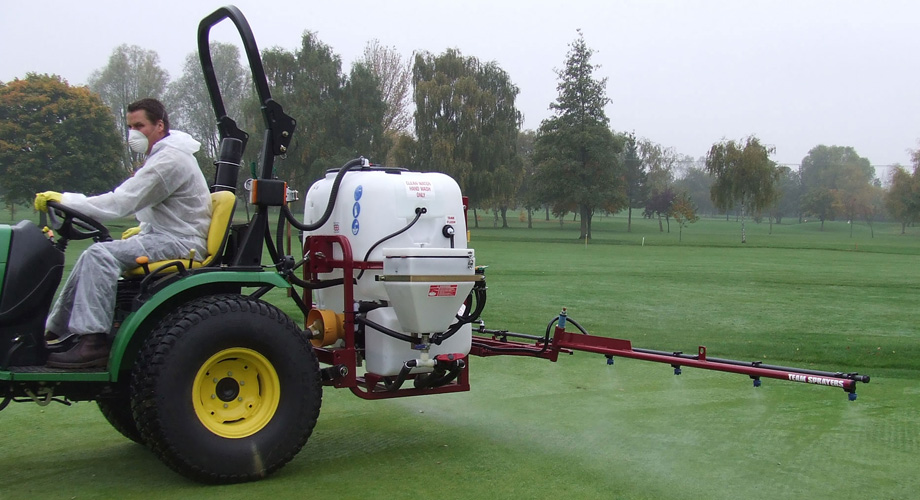
Spring spraying tips: With Spring soon upon us, now is the time that equipment is being prepared for the busy period ahead.

Along with the usual maintenance and service schedules, you will probably already have in place, I want to focus your mind on sprayers to help ensure they are in top condition before use, and which in turn will help reduce downtime during the season and keep you within the law.

Spring spraying tips

Spring spraying tips

The Sustainable Use Directive (SUD) is a legal requirement and must be met by everyone using and applying professional pesticides. This includes completing an Integrated Pest Management (IPM) plan, operator training and qualifications and the testing of all pesticide application equipment. I am sure you are aware of the requirements but the SUD, which came to force in 2012, brought in mandatory testing from 2016 of all machines over 5 years old.

When the Directive was introduced, sprayers over 3 metres wide had to have a re-test every 5 years. From November this year they must be tested at least every 3 years. It is important to remember this move to more frequent testing to ensure you do not get caught out. Along with boom sprayers there is the need for boat mounted equipment, weed wipers and seed treating equipment, as well as other types, to be tested by the relevant dates – see the decision tree to check when your equipment needs testing.

Equipment that does not require a National Sprayer Testing Scheme (NSTS) test are knapsack, handheld and pedestrian sprayers. The minimum obligation here is that they are inspected on a regular basis, repairs are made as necessary and that a record should be kept of the checks carried out – a checklist is available from the NSTS website. Having said this, several knapsack sprayers are NSTS tested, especially where they are used in areas with high public access.

The National Action Plan (NAP) is currently under its 5-year review and it has widely been expressed there is a need to show far more determination within the new document. Because the plan covers all areas of pesticide use, we do not know what changes will be made but I believe IPM will feature heavily, with protecting the environment and watercourses at the forefront. Protecting British waterways is becoming increasingly important and with regular monitoring of water quality already being carried out we need to ensure that pesticides are applied safely and accurately to help avoid any exceedances, which in turn will help ensure that we retain the pesticides currently available.

We always advocate best practice and would always recommend annual testing of sprayers. We have an operator check sheet available on the NSTS website to download and use, both during the spraying season and in preparation for an NSTS test. Included in the 50 checks carried out on each machine is the condition of hoses, leaks and drips and the accuracy of gauges and nozzles, to name a few. Over application must be avoided; not only does it risk crop damage to the area being sprayed but it is expensive. With some tank mixes costing in the region of £1,000 each, if nozzles are worn by 10% the maths are easy to see.

The NSTS test, which is carried out by qualified examiners, not only gives peace of mind that you are operating your sprayer within the law but also that safe and accurate applications are being made, potentially saving you money from over application, and reducing downtime on the few ideal spray days available.

For the latest industry news visit turfmatters.co.uk/news

Get all of the big headlines, pictures, opinions and videos on stories that matter to you.

Follow us on Twitter and Instagram for fun, fresh and engaging content.

You can also find us on Facebook for more of your must-see news, features, videos and pictures from Turf Matters.

Tackle Spring Pests With Nemaslug and Nemasys

Tackle Spring Pests With Nemaslug And Nemasys: As spring edges closer, now is the time of year dedicated to patrolling your garden to make sure no pests take over. If steps are not taken to tackle your pests now, they can become damaging to plants and vegetables as we move into the warmer months. Taking action now will ensure your time and hard effort is not lost.

But as the weather starts to warm up, which pests do I need to tackle first? Over the autumn and winter months, vine weevil larvae stay beneath the soil and feed on roots, causing plants to wilt and die, and if they survive, the grown adult weevils then eat plant leaves during spring and summer, resulting in irregular-shaped notches on the leaves. Also, slugs begin to make an appearance from March as the British climate makes the perfect breeding ground for them.

Tackle Spring Pests With Nemaslug and Nemasys

Nemasys and Nemaslug offer the perfect solutions to pest control, and the various species grown by BASF, in the only specialist nematode production facility in Britain, can protect your plants from a variety of pests.  BASF grow six different nematodes, all of which are simply mixed with water and either applied from a watering can with a coarse rose or sprayed onto the foliage and soil, depending on the variety. There is no need to keep children or pets away from treated areas and the whole programme is entirely biological so that all the Nemasys products can be used by organic gardeners.

Nemasys Vine Weevil Killer: apply from March to October

Vine weevils are beetles with a long, thin snout. It is actually the larvae of the weevil that causes the main damage to plants, as they remain in the soil and eat the roots. Nemasys Vine Weevil Killer targets the larvae while they are still in the soil and kills them before they have a chance to cause damage.

A regular regime of using Nemasys Vine Weevil Killer every four weeks throughout the growing season is the best way to control the pets.

Nemaslug: apply from March to October

With each slug laying up to 300 eggs, in up to 50 separate batches during a season – that’s a lot of slugs! It is estimated that each cubic metre of soil can contain around 200 grown slugs. The best time to target slugs is when they are newly hatched, so the period between March – October is ideal. As nematodes are able to travel through the soil, to where the newly hatched and young slugs’ dwell, they are able to attack them before they are even in sight, unlike slug pellets.

A regular regime of using Nemaslug every six weeks throughout this period, from March to October, is the most effective way to keep slugs controlled throughout the growing season which will help keep your plants safe.