Tag Archive for: Style

Ecobunker enables Sandbelt style bunkers

Ecobunker enables Sandbelt style bunkers: The famous courses of the Melbourne Sandbelt, notably Royal Melbourne and Kingston Heath, are distinctive for many reasons, but one of the most important is the characteristic bunker style created by Dr Alister MacKenzie and his collaborators Alex Russell and Mick Morcom. 

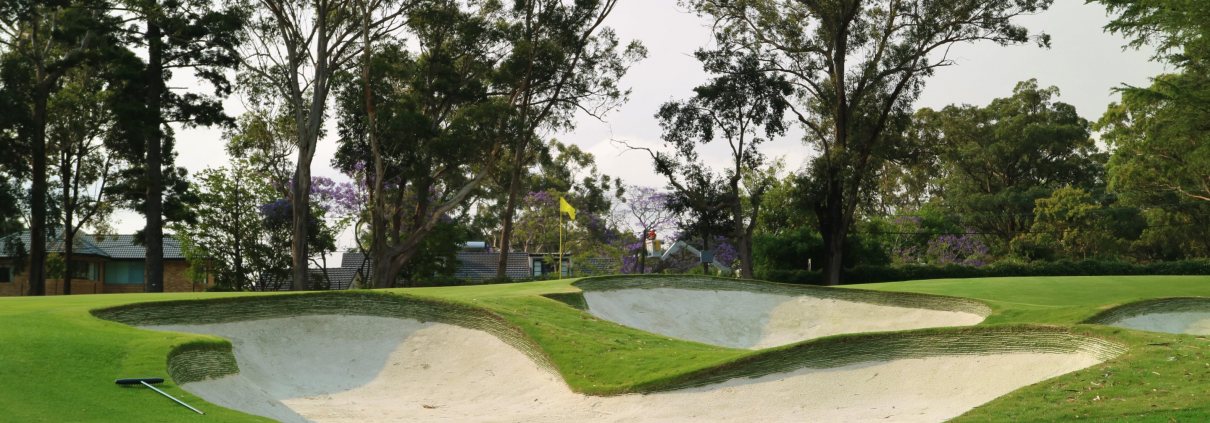
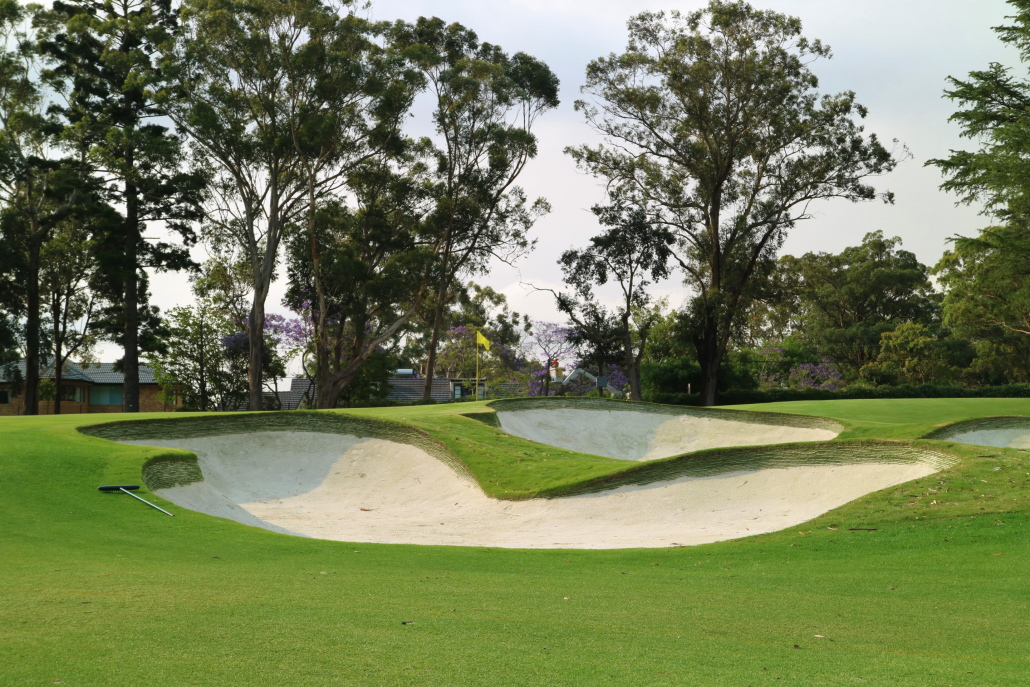
Sandbelt bunkers are characterised by their size, by their swooping shape, with capes and bays dividing them up into different compartments, by their flashed sand faces, and by the fact that they cut so deeply into fairways and greens – and are typically presented with short grass – fairway or even green cut – right up to the edge of the bunker, with no collar of longer grass that can interfere with the architect’s desired short game playability, and create visual interference in an otherwise extremely ‘clean’ look.
Ecobunker enables Sandbelt style bunkers

That look has been enormously influential around the world of golf. Gil Hanse’s Olympic course in Rio de Janerio and Tiger Woods’ first American design, Bluejack National in Texas, are only two in a long list of courses said by their designers to be influenced by the Sandbelt look. But replicating those trademark Melburnian bunkers is hard. The soil on the Melbourne courses, though sandy, contains a lot of fine particles and grey organic matter that mean it binds together to create a hard surface. Coarser sand – and even more so, clay soil – does not bind the same way, and creating that hard, vertical lip so characteristic of Melbourne is basically impossible; the soil gets wet and crumbles away.

The recent President’s Cup at Royal Melbourne showed very well how the Sandbelt bunkers work. As well as the clean edge, the sand packs down so hard that Melbourne clubs do not rake their bunker faces, rather using a ‘flat rake’ to create extremely firm conditions on the bunker faces, ensuring that all balls that enter the bunker run down to the prepared base, removing the problem of plugged lies.

So Sandbelt bunkers are desirable, but they depend completely on the particular conditions on the Sandbelt to make them possible. Sydney-based golf architect Harley Kruse has found a way round this problem. At Killara Golf Club, in the northern suburbs of Sydney, a successful 1800 member club whose golf course was basically untouched since the 1960s, Kruse was hired to do a significant course renovation. After careful planning, the works were agreed: reconstruction of all eighteen green complexes, reversing two holes, rebuilding some fairway bunkers and eliminating one par three while bringing a spare hole into the normal rotation.

“Greens were suffering; the rootzone wasn’t good and they were all poa,” Kruse says. “They were small, averaging 370 sq, and basically flat, with very limited strategic value. We have increased them to an average size of 500-550 sq m, with lots more interest; we’ve also taken out 300 big trees and opened up the vistas.”

Kruse and the club wanted sandbelt-inspired bunkers, but the clay soil at Killara meant that was going to be difficult. However, they found a solution via a good friend, Rod Hinwood, course manager at the exclusive Ellerston GC in rural New South Wales. Hinwood demonstrated the successful results that EcoBunker was delivering on his pronounced bunker edges, which had previously been vulnerable to erosion. “It occurred to me that we might be able to do something similar at Killara, and thus be able to get the edging treatment that we wanted,” said Kruse.

The new bunkers are lined with Capillary Concrete, and feature a 40cm high lip constructed using EcoBunker Advanced patented synthetic bunker edging system. The sand is then flashed up the EcoBunker wall – and is held in place by the Capillary Concrete – and the bunker surrounds can be mowed short right to the edge, because of the strength the EcoBunker and Capillary Concrete underpinnings provide.

“EcoBunker was designed from the outset to give architects the maximum freedom to create the bunker shapes they wanted,” says EcoBunker inventor and CEO Richard Allen. “The work that Harley has done at Killara is a classic example of that. When I first went to Melbourne last year, the principal reason was to see the Sandbelt bunkers up close; the fact that our product has allowed a great architect to create similar bunkers on unsuitable soil is fantastic. This style of bunker has long been something of a ‘holy grail’ for a lot of golf courses that simply haven’t been able to implement it because of their soil conditions. Now, they can see a proven solution that will allow them to do so.”

“If we had tried to do that edge using the site soils, it would crumble away,” says Kruse. “Getting that stable lip in clay soils is very difficult to achieve. But EcoBunker allows us to do it.”

For the latest industry news visit turfmatters.co.uk/news

Get all of the big headlines, pictures, opinions and videos on stories that matter to you.

Follow us on Twitter and Instagram for fun, fresh and engaging content.

You can also find us on Facebook for more of your must-see news, features, videos and pictures from Turf Matters.

Dennis & SISIS Seminars End In Style

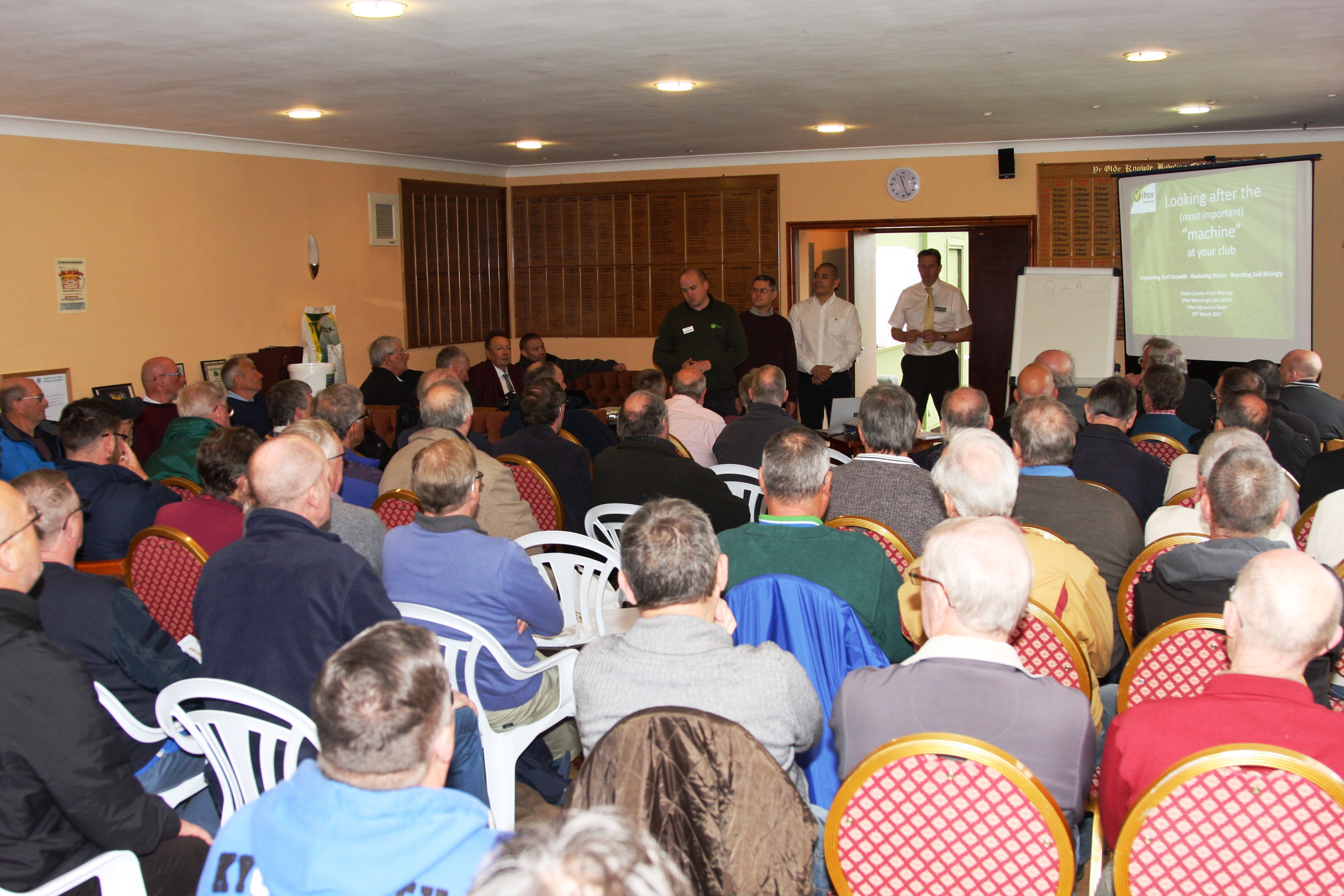
Dennis & SISIS Seminars End In Style: The 2018 Dennis and SISIS Spring / Summer series of bowling green maintenance seminars finished in style with over 350 people in attendance across the eight venues and an overwhelming number of greenkeepers wanting to attend the educational events.

“The seminars are about attendees getting as much information as they can and making the day enjoyable. They can go away with some excellent knowledge which they can then put into practice on their own greens. The 2018 events have been a tremendous success,” said Roger Moore, sales and marketing manager for Dennis and SISIS.

Dennis & SISIS Seminars End In Style

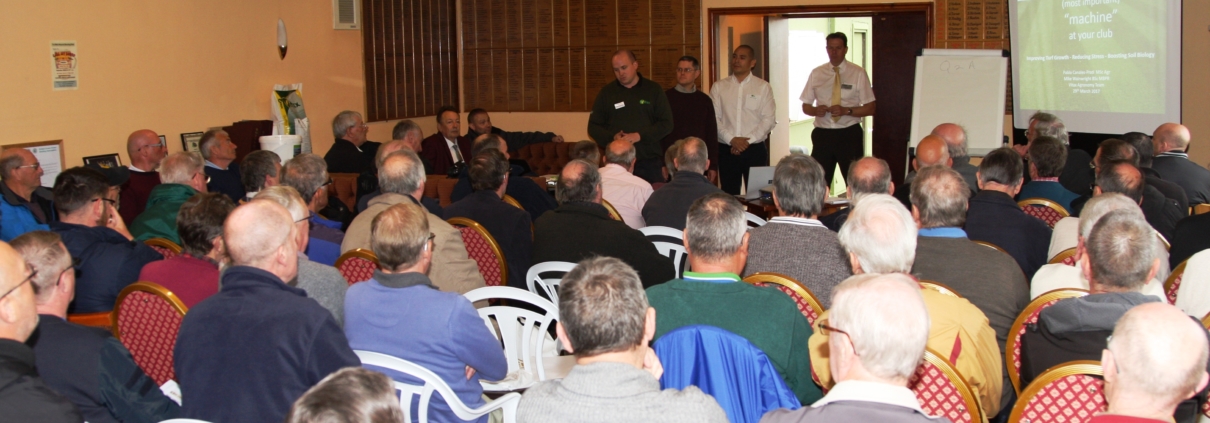
The informative, educational and interactive seminars combine insightful seminars and practical tips while a number of industry experts also take to the stage to discuss a wide range of key topics.

Attendees are able to gain tips on the maintenance of bowling greens, grant funding support, choosing the correct grass seed and the usage of chemicals. A complimentary lunch, which signals the halfway point, offers great networking opportunities before attendees make their way outside to an on-the-green demonstration.

The demonstration not only provides a perfect opportunity to see some of the sport’s best maintenance equipment in action but also brings together the morning education with the practical elements of applying it to the greens.

Dennis & SISIS Seminars End In Style

To find out more about these FREE and highly informative seminars, please contact Roger Moore on 01332 824777 or email roger.moore@dennisuk.com.

Further information about the range of bowls maintenance products available can be found by visiting www.dennisuk.com / www.sisis.com

For the latest industry news visit turfmatters.co.uk/news

Get all of the big headlines, pictures, opinions and videos on stories that matter to you.

Follow us on Twitter for fun, fresh and engaging content.

You can also find us on Facebook for more of your must-see news, features, videos and pictures from Turf Matters.
Golf Club Ends 2017 In Style

Golf Club Ends 2017 In Style: Modry Las Golf Club has ended the year in style after picking up a top award at a gala evening which celebrated the very best of international golf tourism. The West Pomerania Gary Player-designed course was named Poland’s best golf course at the World Golf Awards in Spain after a series of exciting developments at the resort and a bumper year on the course.

It is the latest in a line of awards secured by Modry Las since it was officially opened by Player in 2009. Earlier this year Modry Las received one of Poland’s top honours for its nine-hole championship course in miniature; Orli Las. This latest accolade from the World Golf Awards points towards ongoing improvements that have been supported by an internationally recognised design.

Golf Club Ends 2017 In Style

“Over the last eight years, Modry Las has been on a journey which has been underpinned by Gary Player’s fabulous design,” said Arthur Gromadzki, chairman of Modry Las. “That has been the foundation on which we have grown the resort. We have used the momentum created by Mr Player’s fantastic layout to develop the resort through on-site accommodation options, property opportunities and our wonderful nine-hole course. Modry Las has grown into an internationally recognised resort, but it all began with his vision.”

As Chris Frost, managing director of the World Golf Awards, noted, this latest honour confirms worldwide recognition for the resort. “Well-deserved congratulations to Modry Las on its success at the 2017 World Golf Awards,” he said. “Poland’s Best Golf Course is a prestigious international award that places Modry Las firmly at the top of the golf tourism industry.”
As well as picking up awards, Modry Las has also seen substantial increases in the number of rounds played, especially by visiting golfers. For instance, the number of green fees sold grew by a healthy 22% in 2017 while the number of rounds played as part of a stay-and-play package soared by 73%.

The impetus generated by the 18-hole signature course at Modry Las shows no sign of slowing down, especially during 2018 which is set to be another decisive year for the Polish resort. “The progress made at Modry Las has been significant and has resulted in us welcoming more golfers to play our courses,” continued Gromadzki. “Nonetheless, I am particularly looking forward to 2018 and the opening of our clubhouse. This is the next stage in the evolution of Modry Las and a pivotal point in its development.”

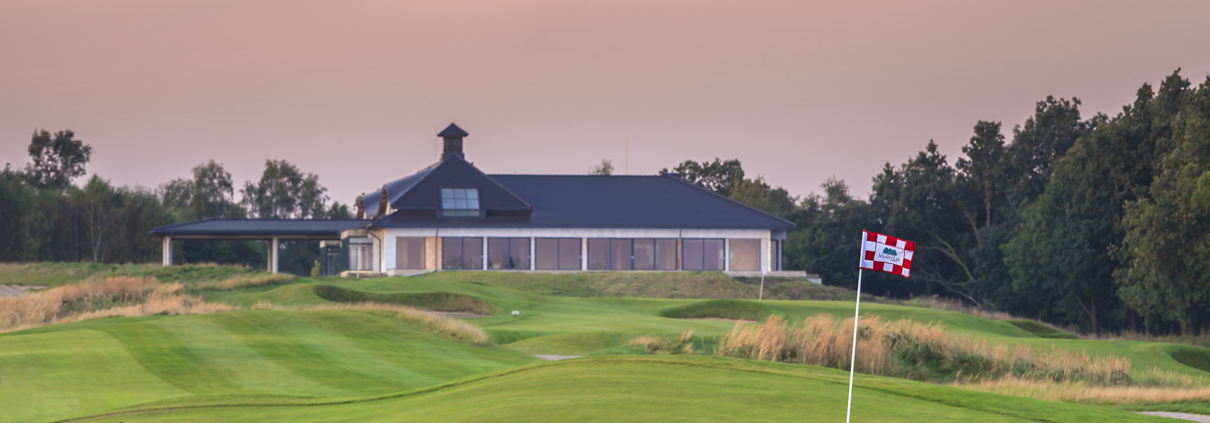
The clubhouse is due to open during the summer of 2018 and will act as a focal point for members, visitors and corporate clients with spacious reception areas and panoramic views. A sports bar, lounge areas, extensive changing facilities and a specialist golf boutique will elevate service levels once again, while 11 luxurious guest suites will provide additional accommodation just yards from the first tee and last green.

The contemporary country lodge will include an indoor golf practice studio, private-dining room as well as a 70-cover restaurant and terrace featuring international cuisine served with the best of Polish hospitality.

“This exciting project has been in the pipeline for a number of years,” said Gromadzki. “We wanted to get the feel of the place just right so that members and guests would feel at home, but also indulged. Our temporary clubhouse has been a great asset, but the new clubhouse will take the experience at Modry Las to another level.”

A number of smaller, but no-less important projects have preceded the clubhouse development, including the installation of a dedicated Tesla charging station at the West Pomeranian resort, which is now part of the Tesla Destination Programme. Elsewhere, the resort’s facilities have been photographed by award-winning photographer Mark Alexander who has not only captured the beauty of the championship course but has also taken the first images of the highly-anticipated clubhouse.

“It is always a great privilege to photograph Modry Las,” said Alexander. “The course has matured well and is looking terrific. The new clubhouse provides a fantastic backdrop to the closing hole, which was part of this year’s brief.”

Gromadzki agreed. “The photography taken by Mark has been viewed around the world, and I think his new set of images will generate even greater interest in Modry Las. In particular, he has used the light to capture views of the course that have never been seen before and reveal for the first time the new clubhouse.”

For more information, visit: www.modrylas.pl

Get all of the big headlines, pictures, opinions and videos on stories that matter to you.

Follow us on Twitter for fun, fresh and engaging content.

You can also find us on Facebook for more of your must-see news, features, videos and pictures from Turf Matters.