
Tag Archive for: water

Pinehurst Cuts Water Use By 50% By Going Back in Time

Pinehurst Cuts Water Use By 50% By Going Back in Time: Pinehurst No.2’s dramatic renovation in 2010 could prove to be a blueprint for future golf course sustainability, a new episode of Syngenta’s Green Report YouTube documentary series reveals.

Returning the four-time U.S. Open venue to its natural and historic characteristics, as envisaged by original designer Donald Ross, has yielded remarkable sustainability benefits, including a 50% reduction in water consumption.

Pinehurst Cuts Water Use By 50% By Going Back in Time

Pinehurst Cuts Water Use By 50% By Going Back in Time

And while the return to sandy waste areas and native wiregrass by renowned golf course architects Bill Coore and Ben Crenshaw wasn’t universally popular at first, the renovation is now being seen as a visionary ‘back to the future’ sustainability success story.

“The idea behind the renovation was to present the golf course the way Donald Ross intended it to be,” John Jeffreys, Course Superintendent, tells presenter Gary Firkins.

“It had lost its character by Bermuda grass encroaching out and becoming the predominant rough species.

“We restored and replanted 200,000 wiregrass plants and allowed the sand to present itself again outside the fairway edges. We removed 35 acres of irrigated Bermuda grass rough and restored the center-line irrigation that was present in a 1943 aerial photograph, which allowed us to reduce the number of irrigation heads from 1,500 to 500.”

Joining John on the course walk is Danesha Carley, Professor of Horticultural Science at North Carolina State University, who was advisor on the 2010 restoration.

Prof. Carley said: “Golf courses can be ecologically rich, biodiverse areas. They can be places where endangered species live, support pollinator habitats and are wonderful places for resource use such as reclaimed water, which a lot of golf courses have moved to.”

Mark Birchmore, Global Head of Marketing, Turf & Landscape for Syngenta, said: “In many ways, Pinehurst is re-pioneering golf course sustainability.

“Blending innovation and new technology with an approach that learns from natural and historical precedents creates opportunities that, in the case of Pinehurst No.2, demonstrably delivers clear sustainability benefits.”

The new episode will be released at 12PM ET / 5PM CET today, and will be free-to-watch for all golf industry professionals and stakeholders on YouTube.

To watch all episodes of The Green Report and for more news, features, videos and case studies on sustainable golf, as well as links to the Changing the Business of Golf podcast, visit Syngenta Golf.

For the latest industry news visit turfmatters.co.uk/news

Get all of the big headlines, pictures, opinions and videos on stories that matter to you.

Follow us on Twitter and Instagram for fun, fresh and engaging content.

You can also find us on Facebook for more of your must-see news, features, videos and pictures from Turf Matters

STRI launches Racecourse Water Management guide

STRI launches Racecourse Water Management guide: STRI Group has launched a new Racecourse Water Management: Best Practice Guide, providing practical, evidence-led guidance to support consistent, high-quality racing surfaces in an increasingly unpredictable climate.

The guidance was officially launched at the RCA Vets Medical Turf Management Conference on 28th January and has been developed by STRI in partnership with the Racecourse Association (RCA) and the Horse Welfare Board (HWB), with support from the RCA Ground and Going Group and funding from The Racing Foundation.

STRI launches Racecourse Water Management guide

STRI launches Racecourse Water Management guide

As historic climate trends become less reliable, racecourses face growing challenges from drought, intense rainfall and drainage pressures. The new guide supports a proactive, data-driven approach to water management, helping racecourses make informed decisions that protect surface performance and welfare.

Primarily aimed at Clerks of Course and grounds teams, the guide is also relevant for racecourse executives and decision-makers responsible for planning, investment and risk management. Designed to be accessible to both technical and non-technical audiences, it also serves as a valuable training resource for staff new to racecourse operations.

The guidance builds on STRI’s Performance Quality Standard (PQS) framework for turf horse racing, translating improved data measurement and understanding of the relationship between soil moisture and Going into clear, practical advice. It covers soil–water interaction, irrigation demand, calculating water requirements and the importance of measuring soil moisture.

Dr Christian Spring, Principal Scientist at STRI Group commented, “In sport, we can no longer rely on historic climate trends alone to guide how natural turf courses are managed. The impacts of prolonged drought, intense rainfall and poor drainage can be significant, affecting both surface performance and welfare. To meet these challenges, racecourses must be adaptive, flexible and prepared, with the right infrastructure in place and teams who can make informed, confident decisions about their tracks. The document also provides a valuable training resource for staff who are new to racing or racecourse management and at its core, the guide prioritises the welfare of horses and jockeys.”

The guide can be downloaded on STRI’s website here: https://strigroup.com/racecourse-water-management-best-practice-guide-launched-download-here/

For the latest industry news visit turfmatters.co.uk/news

Get all of the big headlines, pictures, opinions and videos on stories that matter to you.

Follow us on Twitter and Instagram for fun, fresh and engaging content.

You can also find us on Facebook for more of your must-see news, features, videos and pictures from Turf Matters

Winter Water Feature Maintenance

Winter Water Feature Maintenance: Leading water feature specialist Waterscapes highlights the importance of consistent winter care to protect investments and ensure spring readiness.

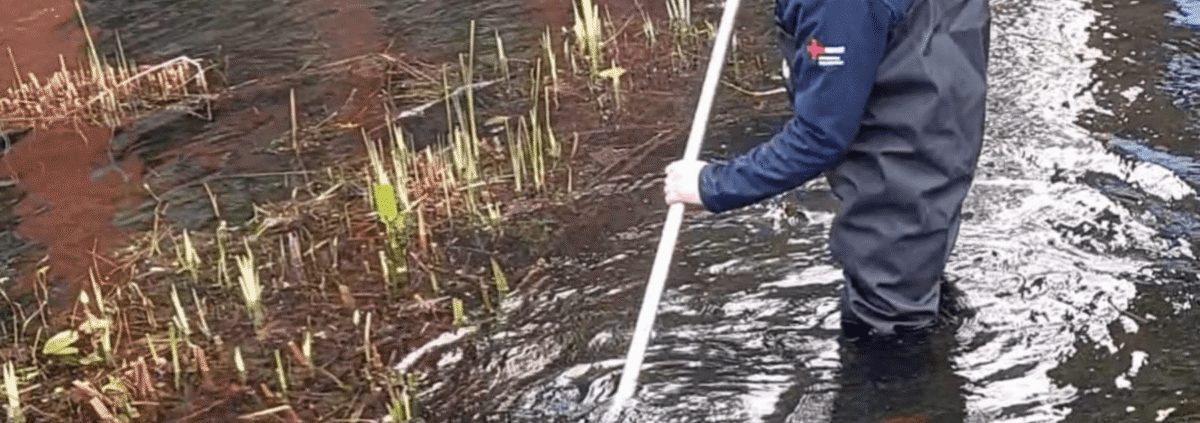
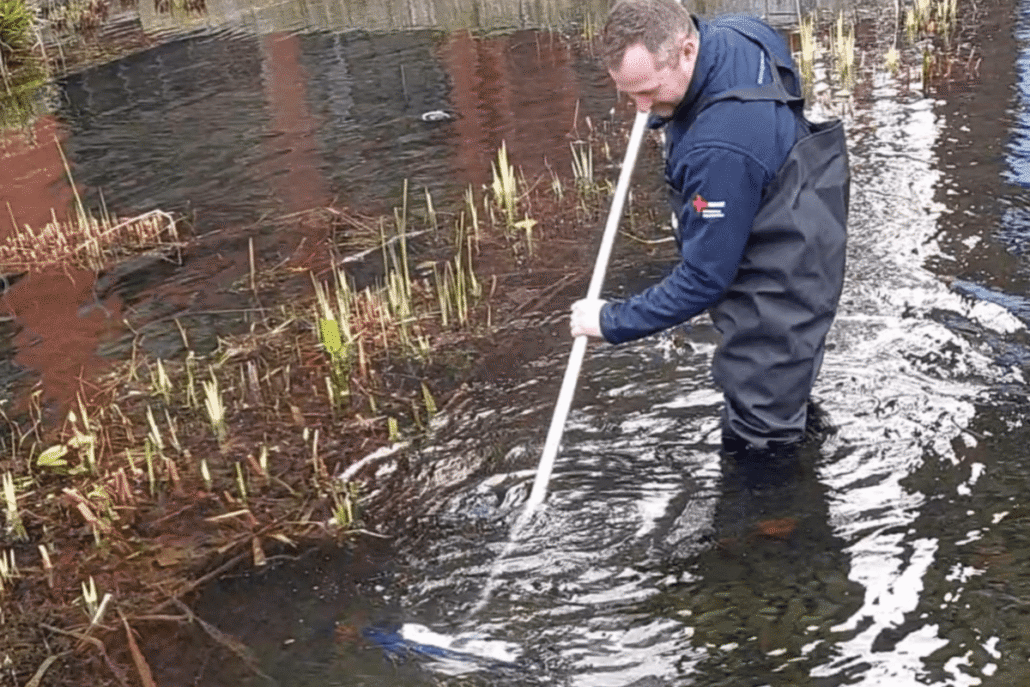
As temperatures drop and winter sets in, many facilities teams assume water feature maintenance requirements decrease. However, leading water feature specialist Waterscapes is highlighting that winter creates different, not fewer, maintenance priorities.

Winter Water Feature Maintenance

Winter Water Feature Maintenance

“Winter doesn’t mean your water feature maintenance stops,” explains Ed Harwood, Maintenance Contracts Manager at Waterscapes. “We consistently see that features receiving regular winter care experience fewer problems, require less intensive spring work, and maintain better overall performance. The facilities teams that maintain consistent inspection and care routines through winter report significantly fewer problems and lower costs.”

The Winter Maintenance Challenge

Neglecting winter maintenance leads to deteriorating water quality that’s harder to correct in spring, equipment wear that goes unnoticed until failure occurs, build-up of debris and contaminants that damage surfaces, increased chemical costs when rebalancing water, and shortened equipment lifespan.

Winter brings significant changes to water feature behaviour. Cooler temperatures and reduced sunlight mean lower algae formation, though the risk isn’t eliminated entirely. Cold water holds more dissolved oxygen and experiences slower biological activity, affecting how treatments work and how quickly water quality can deteriorate.

Essential Winter Care Areas

Water chemistry: For chemically treated features, continue regular water testing throughout winter. Weekly or fortnightly testing catches problems early. Chemical effectiveness changes with water temperature—chlorine works more slowly in cold water, requiring adjusted dosing strategies.

Plant room equipment: Pre-filters require weekly inspection, pumps need continuous monitoring for performance changes, and media filters benefit from backwashing every 2-4 weeks. Regular pipework checks identify leaks or joint movement before they escalate in cold conditions.

Surface care: Regular brushing prevents biofilm and mineral deposit build-up, while netting at least twice weekly removes wind-blown debris before it decomposes and affects water quality.

“The most successful approach combines consistent in-house daily and weekly care with periodic specialist inspections and support,” adds Harwood. “Your team handles routine maintenance whilst specialists provide expertise, equipment servicing, and problem-solving.”

Sustainability Benefits

Consistent winter maintenance delivers environmental and financial benefits. Features receiving regular care require fewer repairs and replacements, reducing waste and resource consumption. Proper chemical management reduces environmental impact, whilst well-maintained equipment lasts longer.

“Every problem prevented through regular maintenance saves resources, reduces waste, and lowers costs,” notes Harwood. “Winter maintenance is an investment in sustainability and spring readiness.”

Professional Support Available

Waterscapes provides comprehensive winter maintenance support including professional water testing, equipment servicing, maintenance training, and complete winter care contracts. With over 20 years of experience across corporate, municipal, and private water features, the team understands the challenges facilities managers face.

Read the full guide: For comprehensive step-by-step guidance on winter water feature maintenance, read the complete article at – https://waterscapes.co.uk/blog/winter-water-feature-maintenance 

For the latest industry news visit turfmatters.co.uk/news

Get all of the big headlines, pictures, opinions and videos on stories that matter to you.

Follow us on Twitter and Instagram for fun, fresh and engaging content.

You can also find us on Facebook for more of your must-see news, features, videos and pictures from Turf Matters.

STIHL unveils WSA 40 battery-powered water supply unit

STIHL unveils WSA 40 battery-powered water supply unit: STIHL has introduced the WSA 40, a compact battery-powered pressurised water container engineered to provide a reliable, hassle-free water feed for cut-off machines. By removing the need for manual pumping, the WSA 40 helps professionals work faster and with less effort on site.

Part of the STIHL AS System and operating at a consistent pressure of 1.5 to 2.5 bars, the unit ensures a steady water flow to support dust suppression and cooling during cutting. With one AS battery, the WSA 40 can deliver water continuously for up to 30 minutes or the equivalent of seven full tanks, giving operators excellent runtime for day-to-day tasks. With a 10-litre capacity, it is designed to handle demanding applications with ease.

STIHL unveils WSA 40 battery-powered water supply unit

STIHL unveils WSA 40 battery-powered water supply unit

The system has been designed with practicality front of mind. Automatic shut-off conserves energy and extends battery service life by stopping operation when the tank runs empty or the container is no longer in use. A transparent fill-level indicator, variable pressure control and clear battery status display further support easy and efficient operation.

At just over 3kg, the container is lightweight to carry and simple to manoeuvre around site. Supplied with a four-metre hose and standard coupling, the WSA 40 provides the reach needed to cover larger working areas without repeatedly relocating the unit, enhancing convenience on the job.

To learn more about the STIHL WSA 40 pressurised water container, visit www.stihl.co.uk.

For the latest industry news visit turfmatters.co.uk/news

Get all of the big headlines, pictures, opinions and videos on stories that matter to you.

Follow us on Twitter and Instagram for fun, fresh and engaging content.

You can also find us on Facebook for more of your must-see news, features, videos and pictures from Turf Matters.

Water feature specialists reveal autumn maintenance steps

Water feature specialists reveal autumn maintenance steps: Waterscapes Ltd shares critical seasonal care guidelines as UK landscapes face debris and temperature challenges.

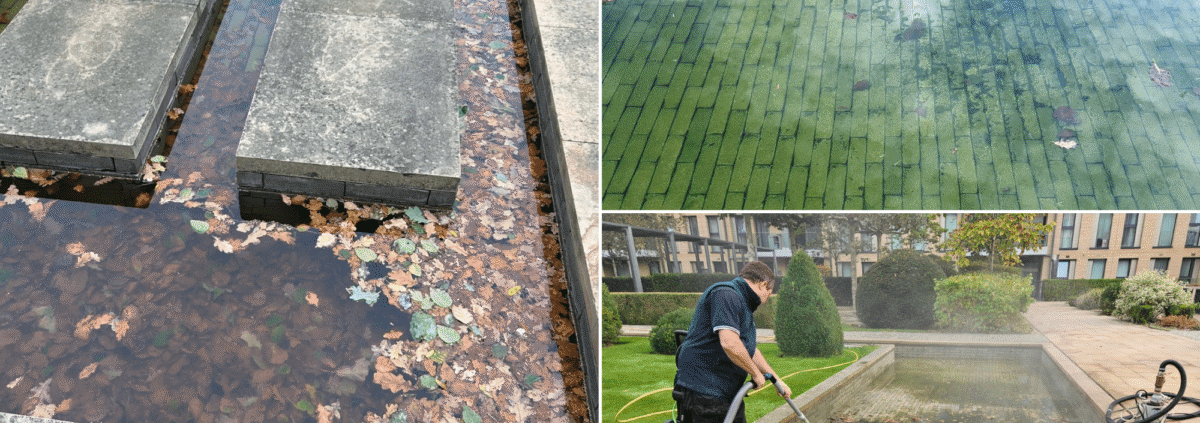
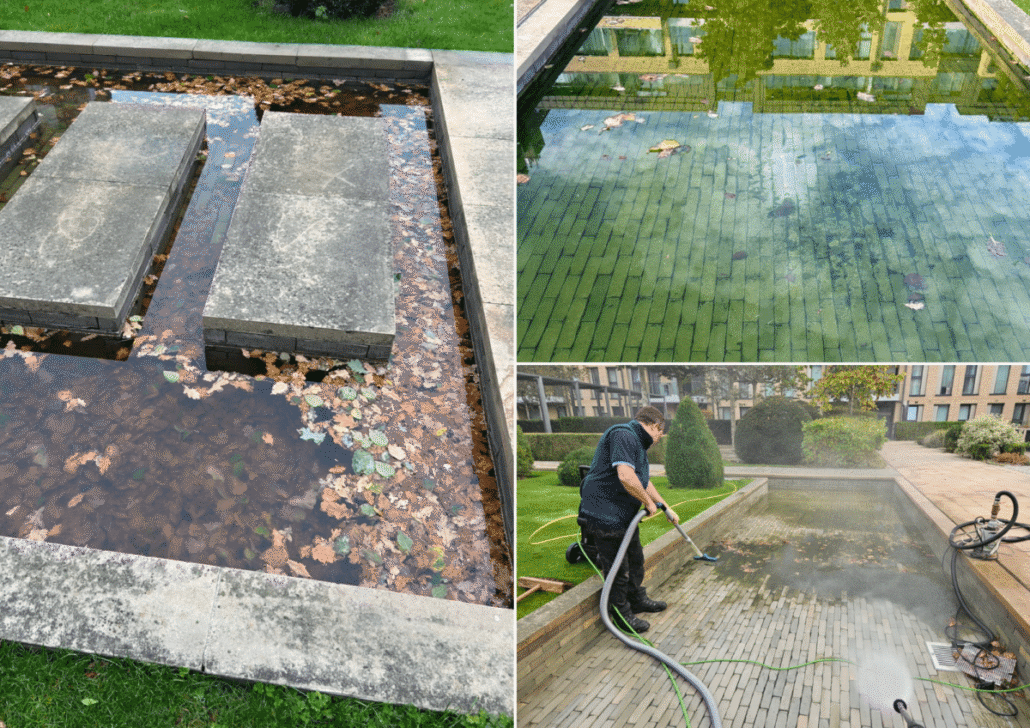
As autumn conditions intensify across the UK, water feature specialists are sharing essential maintenance steps to prevent costly winter damage and protect landscape infrastructure investments. The combination of falling leaves, dropping temperatures, and changing water chemistry creates unique challenges that demand immediate attention from facilities managers and landscape contractors.

Water feature specialists reveal autumn maintenance steps

Water feature specialists reveal autumn maintenance steps

“Autumn represents a critical transition period for water features,” said Ed Harwood, Maintenance Contracts Manager of water feature specialists Waterscapes Ltd. “Left unmanaged, this season’s combination of organic debris and cooling water can trigger equipment failures, structural damage, and costly water quality issues that become apparent too late to prevent.”

The guidance comes as property managers prepare outdoor spaces for winter, when inadequate seasonal maintenance can compromise valuable landscape amenities and lead to expensive emergency repairs.

Critical Autumn Challenges

According to Waterscapes, leaf fall presents the most immediate challenge for water features. Decomposing organic matter affects water quality, clogs filtration systems, and can damage pumps if left unmanaged. Physical barriers such as netting provide essential protection, but require regular inspection and clearing during peak leaf fall periods.

“Even small amounts of debris create problems when they settle and break down,” explains Ed. “Professional maintenance schedules typically increase frequency during autumn, with some features requiring attention several times weekly to prevent filtration system damage.”

About Waterscapes Ltd
Waterscapes Ltd specialises in irrigation and bespoke water feature solutions for complex landscapes. The company provides technically reliable, sustainability-led water management systems for landscape architects, urban designers, and infrastructure teams across the UK.

For the latest industry news visit turfmatters.co.uk/news

Get all of the big headlines, pictures, opinions and videos on stories that matter to you.

Follow us on Twitter and Instagram for fun, fresh and engaging content.

You can also find us on Facebook for more of your must-see news, features, videos and pictures from Turf Matters.