
Tag Archive for: water

How Synthetic Turf is Supplying Fresh Water in South Africa

How Synthetic Turf is Supplying Fresh Water in South Africa: A landmark project in South Africa is highlighting how synthetic turf can be used to enable freshwater recycling. Two ‘Cruyff Courts’ are simultaneously providing a high-quality playing surface while integrating an advanced water collection and filtration system under the field, providing the local community with fresh potable water.

The installation of the courts is part of a wider initiative by the Cruyff Foundation, supporting various sports endeavours for children, and young people with special needs. The two new fields in Orange Farm, near Johannesburg, bring the total number of Cruyff Courts to 10 in the country.

How Synthetic Turf is Supplying Fresh Water in South Africa

How Synthetic Turf is Supplying Fresh Water in South Africa

The investment and innovation come as South Africa is currently grappling with one of the most severe droughts in recent history, affecting approximately 61 million people across Southern Africa.[1] The prolonged drought has led to significant water shortages, impacting both urban and rural communities.

The Government has launched the Water Crisis Action Plan 2025, focusing on infrastructure rehabilitation, smart metering systems, and new dam projects to mitigate the crisis. Despite these efforts, the agricultural sector faces devastating losses, contributing to widespread food insecurity. Innovative solutions, including public-private partnerships and technological advancements like the freshwater recycling beneath the Cruyff Courts, are also being implemented to address the urgent need for sustainable water management.

The project was headed up by EMEA Synthetic Turf Council (ESTC) member Dutchblue, who provided an advanced water collection and filtration system through its partners Project GreenSource SA.

The ‘Catch-Store-Reuse’ sports system captures rainwater, stores it in its subbase, and purifies it in a GreenSource container next to the field. Runoff collected by the system is filtered to remove contaminants, including bacteria and metals, before being pumped to a fountain for use as potable water. The purified water can then be used via a tap on the outside of the container.

The courts represent a significant development in the use of sports pitches to collect water. Together with the local community’s help, the project was completed in December 2024, and training is being given to maintain the pitches throughout their lifetime.

The duality of providing a high-quality sports playing field and clean water for the local community has resulted in some great benefits for the local area. These include potable water supplies for periods of prolonged drought and a recreational area for children and adults to play sports safely. The courts have also helped foster a sense of community identity, serving as a social hub as well as a sports facility.

Stefan Diderich, Director General at ESTC, said: “This project is a perfect example of how synthetic turf can operate not just as an enhanced playing surface, but also as a force for good in fighting drought and other hydrological issues around the world.

“Training the local community to maintain the pitch ensures they will have a lasting impact and can provide users with a high-quality surface as well as a source of clean drinking water for years to come.”

For the latest industry news visit turfmatters.co.uk/news

Get all of the big headlines, pictures, opinions and videos on stories that matter to you.

Follow us on Twitter and Instagram for fun, fresh and engaging content.

You can also find us on Facebook for more of your must-see news, features, videos and pictures from Turf Matters.

Seven Solutions for Water Sustainability

Seven Solutions for Water Sustainability: Syngenta Golf has published a new in-depth feature on the critical challenge golf course businesses face to become water sustainable.

Featuring seven solutions and case studies from Arizona and California to Spain and Italy, leading voices and superintendents share their insights.

Seven Solutions for Water Sustainability

Seven Solutions for Water Sustainability

With 2025 already set to be one of the three warmest years on record, global water scarcity is now an existential threat to many golf businesses.

And with AI (Artificial Intelligence) expected to double or quadruple its demand for water to cool thermoelectric power plants by 2028, industry and agriculture will be the big users competing for supplies.

Mark Birchmore, Global Head of Marketing, Turf & Landscape for Syngenta, said: “We know from our groundbreaking global social media study analyzing 16.1 million social media posts and comments worldwide that the perception of golf courses in relation to sustainability is highly negative, especially when courses are irrigating during heat waves and droughts.

“What this feature highlights are both the misconceptions and misinformation surrounding golf and sustainability, but also how golf course businesses need to better communicate their irrigation strategies and actions – as well as the wider sustainability benefits they bring to communities, including economic and social benefits.

The new feature follows the launch of Syngenta’s mini-documentary series The Green Report, showcasing leading golf courses’ approach to environmental sustainability around the world.

The series begins with a compelling three-part feature at this year’s Ryder Cup host venue, Bethpage State Park in New York, where water collected from an old landfill site is treated and used to supplement irrigation.

Explore New Feature: How Golf Can Become Water Sustainable

For the latest industry news visit turfmatters.co.uk/news

Get all of the big headlines, pictures, opinions and videos on stories that matter to you.

Follow us on Twitter and Instagram for fun, fresh and engaging content.

You can also find us on Facebook for more of your must-see news, features, videos and pictures from Turf Matters.

Water Savings and wash-off

Water Savings and wash-off: Thetford Golf Club is a free draining course set in a wonderful part of Heathland in East Anglia. The Breckland Forest where the course is located, winds its way through many variations of trees and heathland, sets the perfect scene for any golfer to enjoy.

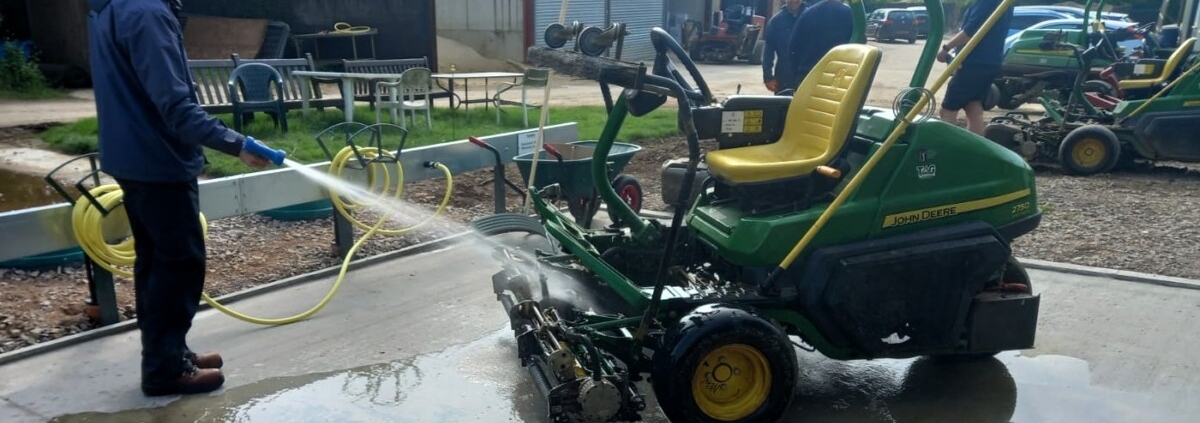
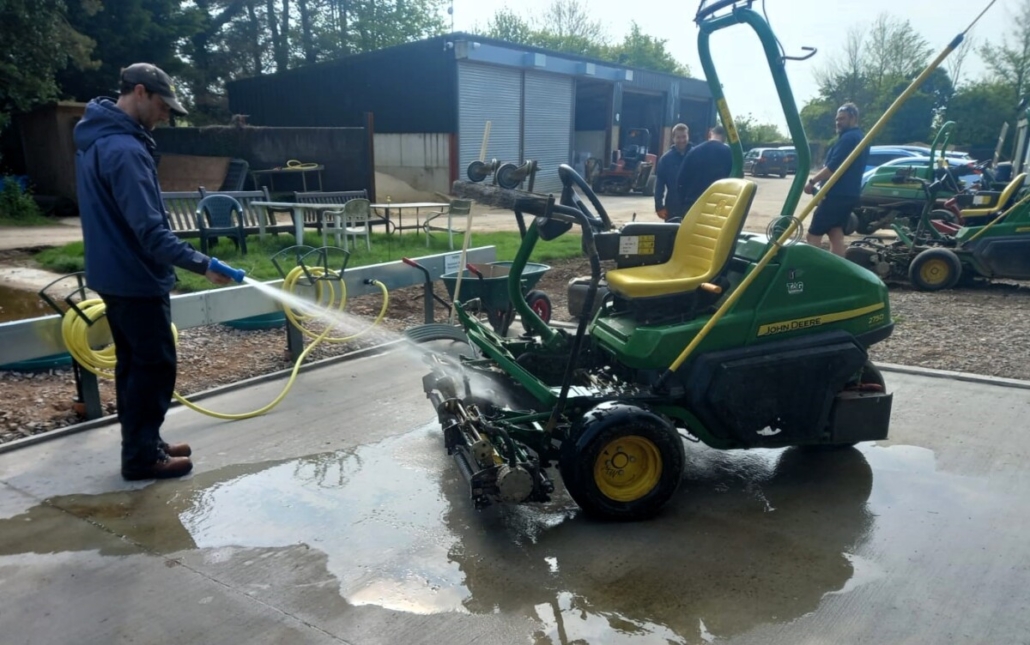
After joining the club in the early part of 2024 Course Manager, Matt Perks and the club had ambitious plans to drive the course condition forwards by improving water security resources and irrigation. Part of this included upgrading the wash facility in the greenkeeper’s facilities. However aware of the impact on the environment that washing off so many machines could have, his and the club’s attention focused to address the issue. Two matters high on the agenda 1) The conservation of water and obligation to sustainability  and 2) Prevent pollution of the ground water ensuring compliance with current Groundwater Regulations. Matt believed that a new wash-off facility with water recycling was the way forward and researched suitable solutions.

Water Savings and wash-off

Water Savings and wash-off

A ClearWater wash pad recycling system from Acumen Waste Services looked to be the ideal solution for the club and a site meeting was arranged. Following this visit by the company, specifications were drawn up and a quotation provided.

Matt wanted to make use of existing concrete in the yard and amend this to ensure budgets could be achieved, this was no problem for ClearWater.

Matthew Mears ClearWaters director explained: “With sustainability being a major factor in business now and multiple machine washing at one time, ClearWater’s 5,000 litre (1320 gallon) capacity with two powerful hoses is more than adequate and also allows sufficient dwell-time for the biological treatment.” Thetford chose a turnkey package quoted by Acumen ClearWater and all work was carried out within a week schedule.

What was it that made ClearWater the choice for the club? The club takes their environmental responsibilities seriously and sustainability is key, so is a compliant washpad and water savings became a must. Matt Perks said; “ClearWater was the best choice after seeing that it could be installed below ground and that we could utilise an existing redundant area.” ClearWater does provide advantages over other solutions: there’s no noise as the system is below ground, all you will hear is the wash water jet leaving the water guns! Also, the system recycles treated water with very little loss, as the dedicated wash pad with it low curb surround is constructed in such a way as the waste wash water is discharged through grass traps and into the underground tank by gravity for treatment. Some water loss will occur through evaporation, particularly in hot weather. However, the system is topped up by rainwater falling on the wash pad , so no mains water feed needed.

Machinery wash-off for many has clearly demonstrated huge water consumption and wastage for many years at an ever-increasing cost, financially and environmentally. Water has become an increasingly valuable resource. Washpad water recycling is the way forward for those in the turfcare maintenance sector and other business needing wash off. With water savings in excess of 90% achievable.

For the latest industry news visit turfmatters.co.uk/news

Get all of the big headlines, pictures, opinions and videos on stories that matter to you.

Follow us on Twitter and Instagram for fun, fresh and engaging content.

You can also find us on Facebook for more of your must-see news, features, videos and pictures from Turf Matters.

Water Savings and wash-off

Water Savings and wash-off: Minchinhampton Golf Club has three exceptional golf courses, all of which are renowned for their year-round immaculate presentation and excellent drainage.

Keeping all courses in such condition involves a dedicated team of greenkeepers and an expanding fleet of machinery and kit. Course Manager, Adam Matthews, can be justifiably proud of his team’s achievements. However aware of the impact on the environment that washing off so many machines could have, his and the club’s attention focused to address the issue. Two matters were of important consideration: 1) The conservation of water and obligation to sustainability  and 2) Prevent pollution of the ground water ensuring compliance with current Groundwater Regulations. Adam believed that a new wash-off facility with water recycling was the only way forward and researched suitable solutions.

Water Savings and wash-off

Water Savings and wash-off

A ClearWater washpad recycling system from Acumen Waste Services looked to be the ideal solution to him and a site meeting was arranged. Following this visit by the company, specifications were drawn up and a quotation provided.

As there is a rather large fleet to maintain, a larger dedicated washpad was agreed upon and, instead of a 5000-litre standard system, one of ClearWater’s 10,000 litre capacity recycling systems with a four-hose wash-off facility was agreed upon and an order was placed. ClearWater’s Matthew Mears explained: “With sustainability being a major factor in business thoughts and multiple machine washing at one time, ClearWater’s 10,000 litre (2640 gallon) capacity is more than adequate and also allows greater dwell-time for the biological treatment.” Minchinhampton chose a turnkey package quoted by Acumen ClearWater and all work was carried out within a week schedule.

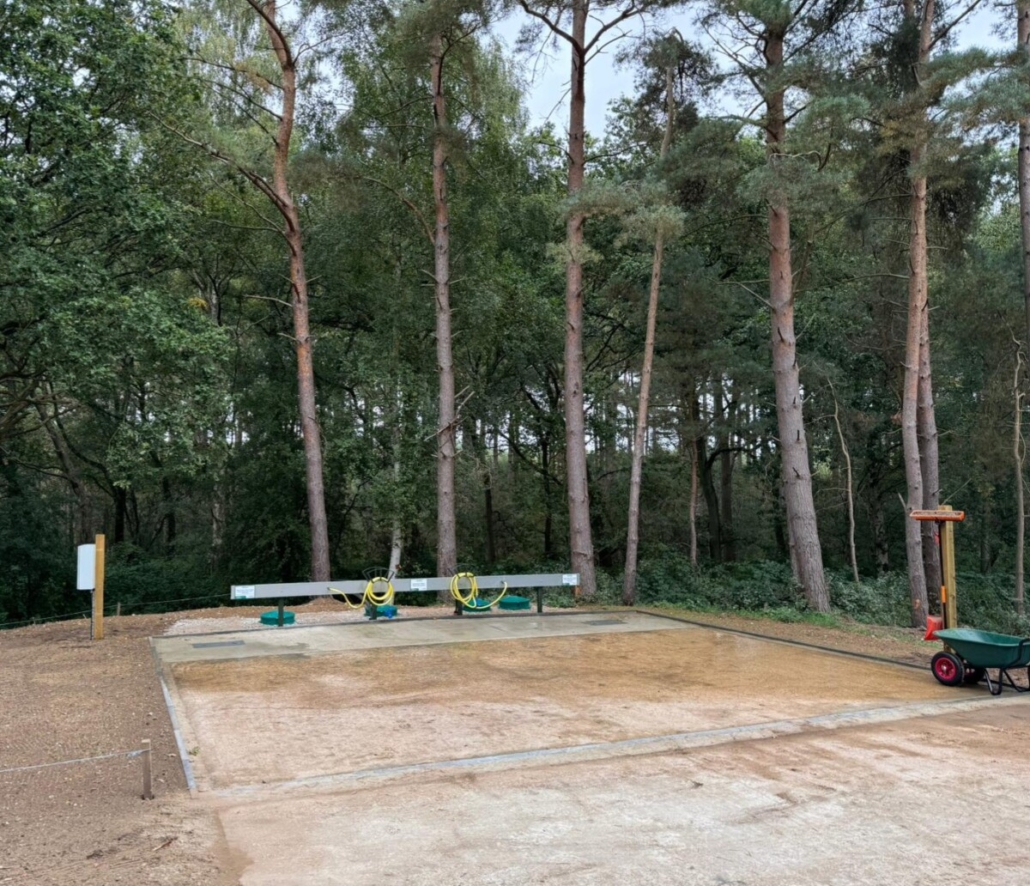
So, what made ClearWater the choice for the club? The club takes their environmental responsibilities seriously and sustainability is a major concern, so a compliant washpad and water savings became a must. Adam Matthews said; “ClearWater fitted the bill! It’s great to ensure we are doing our bit for sustainability and efficient wash-off” ClearWater does provide certain advantages over other solutions however: The system is located adjacent to one of the fairways and, as ClearWater is a below ground system is most unobtrusive, just turret tops at ground level may be visible! There’s no noise either, all you will hear is the washwater jet leaving the water guns! Also, the system recycles treated water with very little loss, as the dedicated washpad with it low curb surround is constructed in such a way as the waste wash water is discharged through grass traps and into the underground tank by gravity for treatment. Naturally, some water loss will occur through evaporation, particularly in hot weather. However, the system is topped up by rainwater falling on the washpad (not an uncommon site these days!); sustainability at its best and at no cost!

Machinery wash-off for many has clearly demonstrated huge water consumption and wastage for many years at an ever-increasing cost, financially and environmentally. Water has become an increasingly valuable resource. Washpad water recycling is the way forward for those in the turfcare maintenance sector and other business needing wash off. With water savings in excess of 90% possible, sustainability really does then become a meaningful word!

For the latest industry news visit turfmatters.co.uk/news

Get all of the big headlines, pictures, opinions and videos on stories that matter to you.

Follow us on Twitter and Instagram for fun, fresh and engaging content.

You can also find us on Facebook for more of your must-see news, features, videos and pictures from Turf Matters.
The R&A Sustainable Agronomy Services to tackle golf’s water security issues

The R&A Sustainable Agronomy Services to tackle golf’s water security issues: The R&A Sustainable Agronomy Service team has announced a collaboration with The Environment Partnership (TEP), extending their service offering to golf facilities in the UK and Ireland.

The partnership will see The R&A Sustainable Agronomy Service and TEP collaborate to offer clubs consultancy on specific environmental concerns pertaining to water security, water sourcing and site water management.

The R&A Sustainable Agronomy Services to tackle golf’s water security issues

The R&A Sustainable Agronomy Services to tackle golf’s water security issues

The partnership underlines The R&A’s commitment to providing the most comprehensive sustainable agronomy solutions using best practice management to safeguard water security and surface performance.

“Joining forces with TEP will give R&A Sustainable Agronomy Service customers the opportunity to gain detailed insight from industry experts into the key issue of water security.  Clients can have the confidence that The R&A will be on-hand to provide additional support and to ensure integration with best practice agronomy plans,” comments Alistair Beggs, Head of Agronomy at The R&A.

Paul Woodham, from The R&A Sustainable Agronomy Service, adds: “Golf courses will need support when assessing the future implication of the changing climate and the anticipated constraints which will reduce access to water sources commonly used today.  Golf needs to work proactively with water companies and agencies which safeguard the environment.”

TEP will develop an initial water security feasibility study in collaboration with the golf facility.  This includes a review of existing water sources, how water is used across the site and current drainage infrastructure.  This feasibility study then explores water sourcing and storage opportunities across the site, bringing these together into an initial masterplan that can be used as the basis for future integrated facility planning.  The process includes input and support from The R&A Sustainable Agronomy Service team; ensuring clients have the opportunity to digest and understand the recommendations compatible with their facility.

The partnership combines leading water management proficiency with in-depth agronomic awareness, resulting in a long-term vision for sustainable golf.

“The opportunity to work with the sustainable agronomic expertise at The R&A, allows TEP to tailor water security advice so it is targeted to the specific needs of the golf industry.  We are very excited about working alongside The R&A as partners on the vital issue of long-term water security of the sector”, comments Nicola Hancock, Director at TEP.

To enquire about these services e-mail sustainableagronomy@randa.org

For the latest industry news visit turfmatters.co.uk/news

Get all of the big headlines, pictures, opinions and videos on stories that matter to you.

Follow us on Twitter and Instagram for fun, fresh and engaging content.

You can also find us on Facebook for more of your must-see news, features, videos and pictures from Turf Matters.