Tag Archive for: With

Aylesbury Vale Dynamos score with Automower

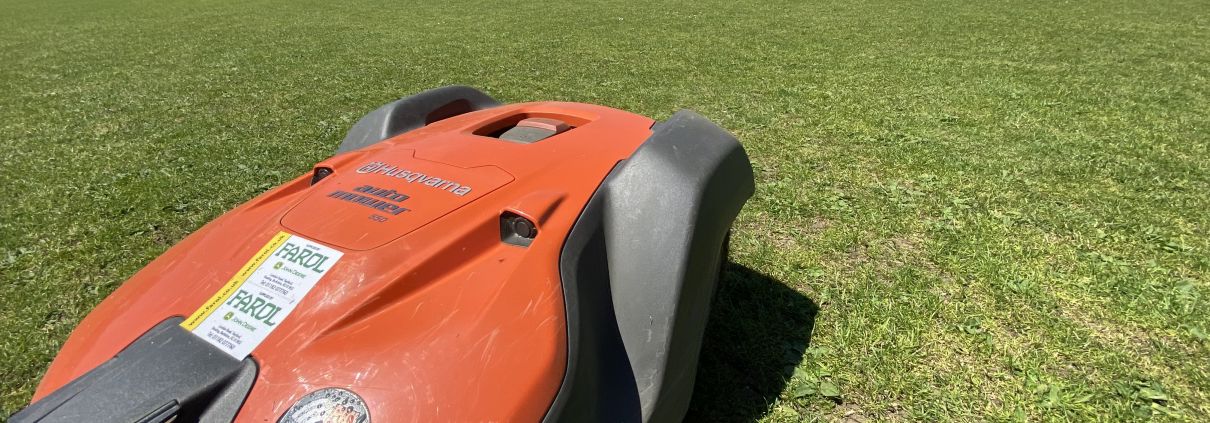
Aylesbury Vale Dynamos score with Automower: With a large football pitch to maintain, Aylesbury Vale Dynamos, with 32 teams under its belt, has turned its attention to autonomous mowing, to help the growing club maintain its vast football pitch. Crediting Husqvarna Automower® Club Solution, the club has noted great benefits of Automower®, in just three months.

With a stadium pitch to maintain, the Aylesbury Vale Dynamos team and its chairman, Mike Borrett, discussed moving to Husqvarna Automower® Club Solution, following a recommendation from Farol Ltd, which is a specialist dealer with a dedicated Automower® sales and installation team. Their recommendation would allow two Automower® 550 to work simultaneously alongside each other, now using just one boundary wire.

Aylesbury Vale Dynamos score with Automower

Aylesbury Vale Dynamos score with Automower

With a pitch and stadium to maintain, Aylesbury Vale Dynamos relies heavily on volunteers to help run and sustain the club, which has always brought about its own set of challenges, including limited time, resource and finance. Thanks to their two Automower® 550 and the use of Automower® Club Solution, installed in April 2021, the football club has been able to combat many of their previous challenges.

Mike Borrett, chairman of Aylesbury Vale Dynamos, discussed the club’s switch to Automower®: “Making the move to Automower® has been a brilliant decision for the club, that has paid off multiple times over. Following discussions with Husqvarna and our Automower® dealer, Farol Ltd, it quickly became evident that Automower® Club Solution could solve many of the challenges we were facing.

“Like many football clubs, we rely heavily on the assistance of volunteers to maintain our grounds and stadium. We’re incredibly grateful to all our volunteers, but it does provide its own set of challenges. Whether it’s raining or beaming with sunshine, the grass requires twice-weekly cutting, and if no one is able to do it, we end up with grass that’s too long and debris on the pitch, both of which cause problems when the teams go out to play.

“Thanks to Automower® we’re able to redeploy our volunteers to more skilful tasks, saving ourselves hours of time each week, and with Automower® being battery powered, we’ve also been able to eliminate the need for petrol, which has been great for reducing our CO2 emissions, and the club’s finances.”

Ever since the first Automower® was introduced in 1995, Husqvarna has been known as the world leader in robotic mowing. With over 2 million sold worldwide, Automower® is renowned for its low energy consumption, zero emissions, low noise and high productivity, whilst featuring the ability to withstand a busy match schedule and hours of intense training.

As Automower® cuts the grass every day, the impact on the turf and ground is minimal. The very small, quick-composting clippings provide a constant source of fertilisation and moisture, creating greener and denser turf. Research also shows that the constant cutting allows grass roots to grow 25% deeper, resulting in a healthier and stronger pitch.

Mike discussed the club’s use of Club Solution: “Automower® Club Solution has continuously impressed us with its innovation. The system has allowed our two 550 mowers to be used simultaneously on one pitch, without wires intersecting the playing surface.”

With Automower® Club Solution, two or three mowers are able to mow the pitch simultaneously, with only a single boundary wire outside the playing surface, eliminating the risk of a damaged boundary wire during turf treatment such as aeration or scarification.

Mike continued: “In just three months we can already see the difference Automower® has made to our turf quality, with turf professionals even commenting that they can’t believe how well and healthy the grass looks.

“Thanks to the Automower® Connect app we’re able to control the mowers no matter where we are, which is a great benefit when the weather isn’t pleasant or when we’re away from the stadium. From the app we’re able to programme them to park at the side of the stadium when a match is on and redeploy once it’s finished.

“The Dynamo’s team are big fans of the mowers, naming them ‘Dyna’ and ‘Mo’, and the fans are even more so. Each match spectators ask us about them, and we can’t blame them, they really are fascinating, and we can’t imagine switching back to manual stadium mowing.”

For more information on Husqvarna Automower®, visit: https://www.husqvarna.com/uk/products/robotic-lawn-mowers/

For the latest industry news visit turfmatters.co.uk/news

Get all of the big headlines, pictures, opinions and videos on stories that matter to you.

Follow us on Twitter and Instagram for fun, fresh and engaging content.

You can also find us on Facebook for more of your must-see news, features, videos and pictures from Turf Matters

Anthracnose: Interactions with the disease triangle

Anthracnose: Interactions with the disease triangle: Anthracnose of turf is caused by the pathogen Colletotrichum cereale. The disease primarily affects intensely managed turf surfaces because of the considerable stresses that these environments place on the host plants.

This article describes phases within the lifecycle of anthracnose of turf (figure 1) in the context of the three aspects of the disease triangle; pathogen, host and environment.

Biotrophic phase

Simplified lifecycle of Colletotrichum cereale, the anthracnose pathogen that affects turfgrass.

Simplified lifecycle of Colletotrichum cereale, the anthracnose pathogen that affects turfgrass.

The pathogen establishes within the host without causing symptoms of disease.

  • Pathogen

During the biotrophic phase of the anthracnose lifecycle, the pathogen establishes itself within the host plant without alerting the plant to the requirement to respond defensively. It does this by extending primary hyphae, root-like filaments, between the plant cells without actually entering the cells. The pathogen further disguises its presence from the plant using a process called deacetylation, in which chitin on the hyphae is converted to chitosan (Muench, et al., 2008).

  • Host

The plant does not respond defensively to the pathogen because the hyphae do not enter the plant cells and the presence of chitin, which primes plants to activate defensive mechanisms, is hidden. However, even at this early stage of infection, the pathogen may affect its host negatively by creating a nutrient sink at the site of infection; thus, increasing the nutrients availability for the pathogen whilst reducing the nutrients that are fulfilling plant functions.

  • Environment

Extended periods of leaf wetness allow the pathogen to penetrate the host plant and for the biotrophic phase of development to commence. Practices that reduce leaf wetness; such as use of surfactants and physical removal of dews will help to reduce pathogen establishment at this stage.

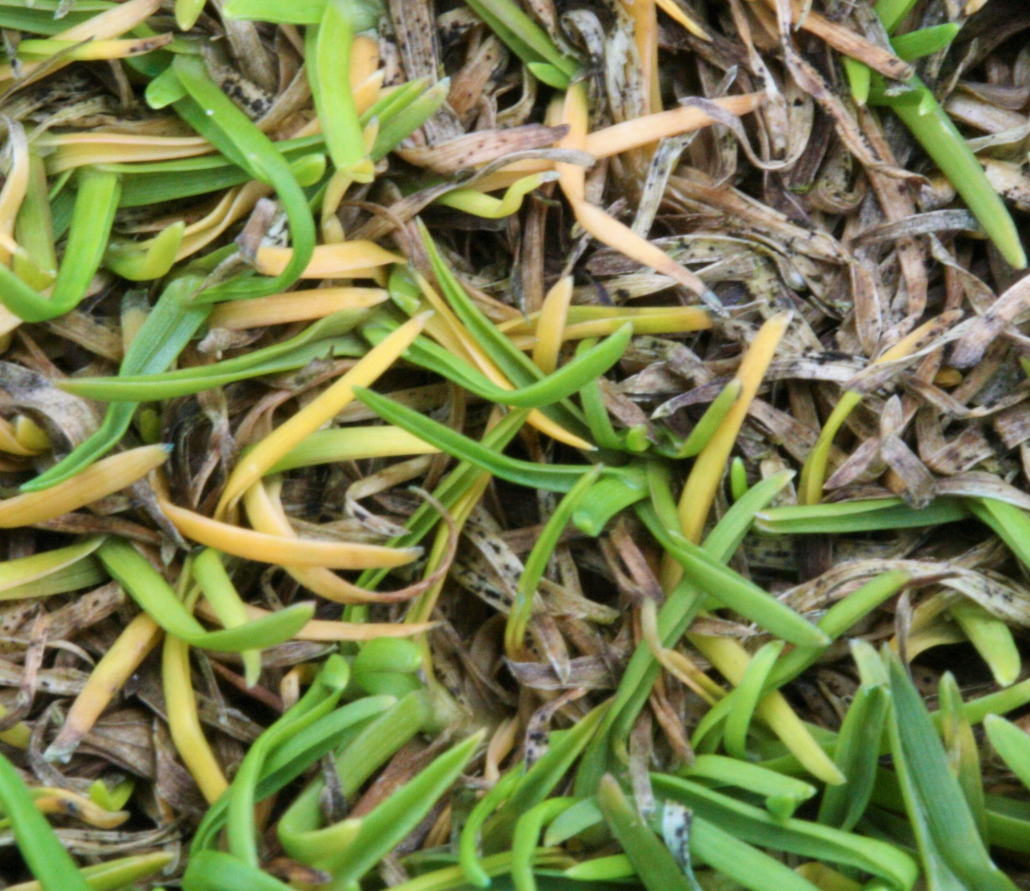
Foliar blight on a Poa annua sward showing the characteristic yellowing of leaves and diagnostic black setae.

Foliar blight on a Poa annua sward showing the characteristic yellowing of leaves and diagnostic black setae.

Necrotrophic phase

The pathogen penetrates into plant tissues and disease symptoms are observed

  • Pathogen

Necrotrophic growth is characterised by the development of secondary hyphae which penetrate into plant cells. This growth is accompanied by the production of phytotoxins which degrade plant tissue, providing the fungi with a further nutrient source. This phase of growth for anthracnose pathogens which affect other plants typically occurs within 72 hours after the initiation of the biotrophic phase  (Mims & Vaillancourt, 2002). The exact timing is not yet known for Colletotrichum cereale, the pathogen that infects turfgrass.

  • Host

There are two distinctive forms of anthracnose infection during the necrotrophic phase; basal rot and foliar blight (figure 2). It is likely that this symptomatic variance is caused by infection occurring in different parts of the plant.

Foliar blight is characterised by yellow (Poa annua) or reddish (Agrostis stolonifera) lesions on leaves and a water-soaked appearance.

Basal rot is characterised by symptoms in the lower stem or root. The infected tissue at the base of the plant appears dark brown to black with the leaf sheaths above appearing orange to yellow but without foliar lesions.

  • Environment

Development of the disease into the necrotrophic phase is favoured by conditions that put the grass plant under abiotic stress; including low fertility, close mowing, compaction, heat, drought, low light levels and poor drainage. Historic records and weather forecasts are essential to determining when to undertake actions which will minimise the impacts of potential stressors on the plant.

Relevant stresses may be current or historical. For example, the considerable metabolic requirement in spring of Poa annua to produce seedheads takes photosynthate away from roots and shoots prior to a stressful time in the growing season and could weaken the host increasing its susceptibility to infection.

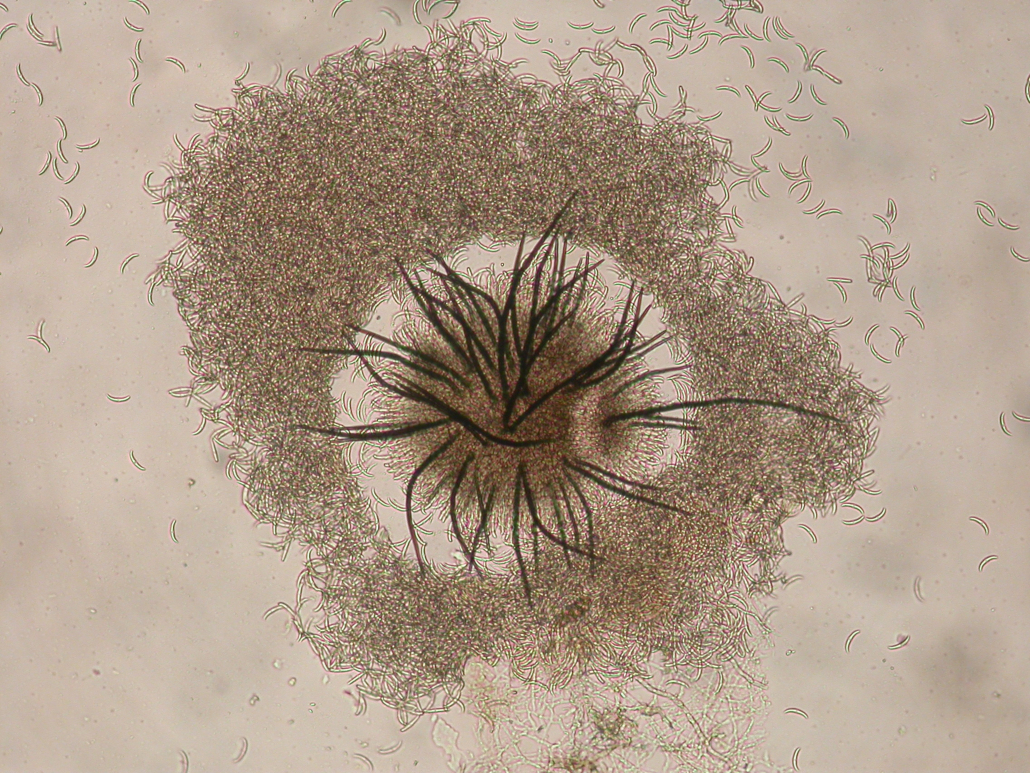
Colletotrichum spp grown in laboratory conditions on potato dextrose agar showing acervuli with diagnostic black setae producing conidia.

Colletotrichum spp grown in laboratory conditions on potato dextrose agar showing acervuli with diagnostic black setae producing conidia.

Reproductive phase

The pathogen spreads infective material to other areas

  • Pathogen

The reproductive phase begins with the development of fruiting bodies called acervuli within which the conidia, or spores, are produced (figure 3). Conidia can be transported on the wind or mechanically. Following contact with another susceptible plant, they can adhere to it by producing a suction cup called an appressorium. The pathogen then forces a highly specialised hyphae called a penetration peg into the plant resulting in the initiation of the biotrophic phase.

  • Host

During the reproductive phase black hair like structures known as setae which project from the acervuli on infected plant tissues are visible with a x10 hand lens. These structures are key diagnostic features for this pathogen when it develops as foliar blight (figure 2 & 3).

  • Environment

Warm, humid weather and increased light intensity are the primary environmental factors controlling the development of conidia. Laboratory studies indicate that Colletotrichum cereale produces conidia at temperatures between 24-32°C with increased maturity of conidia observed at 28°C compared with lower temperatures (Wang & Kerns, 2017). Once conidia have been excreted from the acervuli in a water-soluble matrix they can be spread by wind, water, or human activity but need continued leaf surface moisture to establish.

Research shows that wounding of the host plant through maintenance practices such as verticutting, top dressing and rolling does not increase the incidence of disease as the pathogen does not rely upon entry through wounds or weakened tissues due to its ability to develop a penetration peg.

This article has been written in conjunction with Dr Abigail Graceson and Tom Wood.

Dr Abigail Graceson

As a Technical Manager within the Agrovista Amenity Technical Department, Dr Abigail Graceson draws upon both her practical skills and academic research experience. In addition to her eight years’ experience as a professional gardener & horticulturalist; Dr Graceson spent nine years as a researcher specialising in horticulture, growing media and green roofs.

Tom Wood

Amenity specialist for the Yorkshire region, Tom Wood holds a first class bachelor’s degree in Sportsturf Science and Management (UCLan) which he combines with over ten years’ practical turf management experience. Over this time Tom has amassed a broad range of knowledge and skills sourced from a variety of fields including education, golf courses and technical sales.

References

Mims, C. W. & Vaillancourt, L. J., 2002. Ultrastructural characterization of infection and colonization of maize leaves by Colletotrichum graminicola, and by a C. graminicola pathogenicity mutant. Genetics and resistance, 92(7), pp. 803-812.

Muench, S. et al., 2008. The hemibiotrophic lifestyle of Colletotrichum species. Journal of plant physiology, Volume 165, pp. 41-51.

Wang, Y. & Kerns, J. P., 2017. Temperature effects on formation of appressoria and sporulation of colletotrichum cereale on two turfgrass species. International Turfgrass Society Research Journal, Volume 3, pp. 123-132.

More information on this subject can be found on the Agrovista Amenity Academy. The Agrovista Amenity Academy is an online learning resource with courses and lessons created on a range of areas of turf management and for all products sold by Agrovista Amenity.

For more information about Agrovista UK, visit www.agrovista.co.uk/amenity

For the latest industry news visit turfmatters.co.uk/news

Get all of the big headlines, pictures, opinions and videos on stories that matter to you.

Follow us on Twitter and Instagram for fun, fresh and engaging content.

You can also find us on Facebook for more of your must-see news, features, videos and pictures from Turf Matters.

Putting service first with Makita

Putting service first with Makita: In a move that reaffirms its commitment to delivering outstanding customer service, leading power tool manufacturer, Makita UK is delighted to unveil its new Factory Service Centre (FSC) in Blakelands, Milton Keynes.

Makita UK has relocated its Milton Keynes Factory Service Centre site (located at the company’s headquarters), to a new, larger location to house regional servicing activity. The new 20,000-sqft premises in Blakelands, which is scheduled to officially open on April 6th, will enable Makita to bolster its customer repair and service support commitments and completes a portfolio of three dedicated centres in London, Glasgow and Milton Keynes.

Putting service first with Makita

Putting service first with Makita

Makita’s Factory Service Centres deliver an exceptional service and repair offering for end-users. Products covered under the company’s warranty agreement can be posted (by arranging a collection) or dropped off (with prior booking), at each FSC for Makita’s technical experts and engineers to perform product servicing, detailed diagnostics and high standards of repair work when needed.

With a focus on improving levels of technical knowledge across the construction sector, the new larger premises in Blakelands will also be used to host Makita UK accredited service training, as well as Authorised Service Agents (ASA) workshops and seminars. Furthermore, Makita will use the new site to host apprenticeship training sessions focusing on the electrical and mechanical service requirements of Makita tools.

Speaking on the FSC opening, Tony Coleman, Technical Manager at Makita UK commented: “Opening this new, larger site is testament to the growing popularity of our tools, as well as our long-lasting commitment to delivering exceptional customer support. We’re now in a better position than ever to deal with service and repair demands, as well as to promote high-quality industry training. The spacious new centre also provides us with ample opportunity to continue growing our operations as we look to develop into new sectors and industries.”

All three of Makita’s FSC sites are currently following COVID-19 guidelines and customers are advised to follow the most up-to date guidance on arranging servicing or repairs, published on the company’s website.

For more information about Makita’s FSC sites, services and procedures please visit: www.makitauk.com/factory-service-centres

For the latest industry news visit turfmatters.co.uk/news

Get all of the big headlines, pictures, opinions and videos on stories that matter to you.

Follow us on Twitter and Instagram for fun, fresh and engaging content.

You can also find us on Facebook for more of your must-see news, features, videos and pictures from Turf Matters.

Wet Sand no issue with the Dakota 412

Wet Sand no issue with the Dakota 412: As the most northern links golf course on the United Kingdom mainland, having a top dresser that can spread wet sand like the Dakota 412 from Campey Turf Care Systems is a must at Scotland’s Reay Golf Club. 

The James Braid designed course is positioned on the edge of Sandside Bay with views of the Pentland Firth and the North Atlantic from every hole. The course and its stunning views have been under the control of Head Greenkeeper Jason Norwood, since March 2021, with the new man aiming to put his stamp on the course, starting with the greens.

Wet Sand no issue with the Dakota 412

Wet Sand no issue with the Dakota 412

As the sole full-time member of staff for the main 18-hole course and junior three-hole, Jason’s priority is the greens, with volunteers giving up two days a week to assist with the fairways and roughs. The limited time available to Jason needs to be spent working, and with the Dakota 412, he’s able to top-dress as and when he needs to regardless of the sand moisture.

“I’ve tried to put my own stamp on things here with different types of machinery and different ways of working, and the club has really been on board with that, and one of those things has been buying the new Dakota top dresser,” Jason explains.

“The equipment we originally had couldn’t cope well with wet sand; it was more of a large-scale fertiliser spreader. As you can imagine at the top of Scotland, there’s a lot of rain about so any sand that we do have is normally quite wet, so that was one of the main features of the Dakota for us because it can deal with that quite easily and we still get a good even spread with it.

“We really want to push forward and make use of the North Coast 500 tourist route, which is literally on our doorstep; it passes directly in front of us, so we get a lot of passing visitors now, and I think all year-round performing greens are the main thing golfers are after on a golf course so it’s making sure that we can provide that for them.

“We’ve had the machine since the middle of April, but because of the weather chances to get it out have been limited. I’ve trialled different settings on our junior course greens to get what we want for the main course, and it’s been good so far.

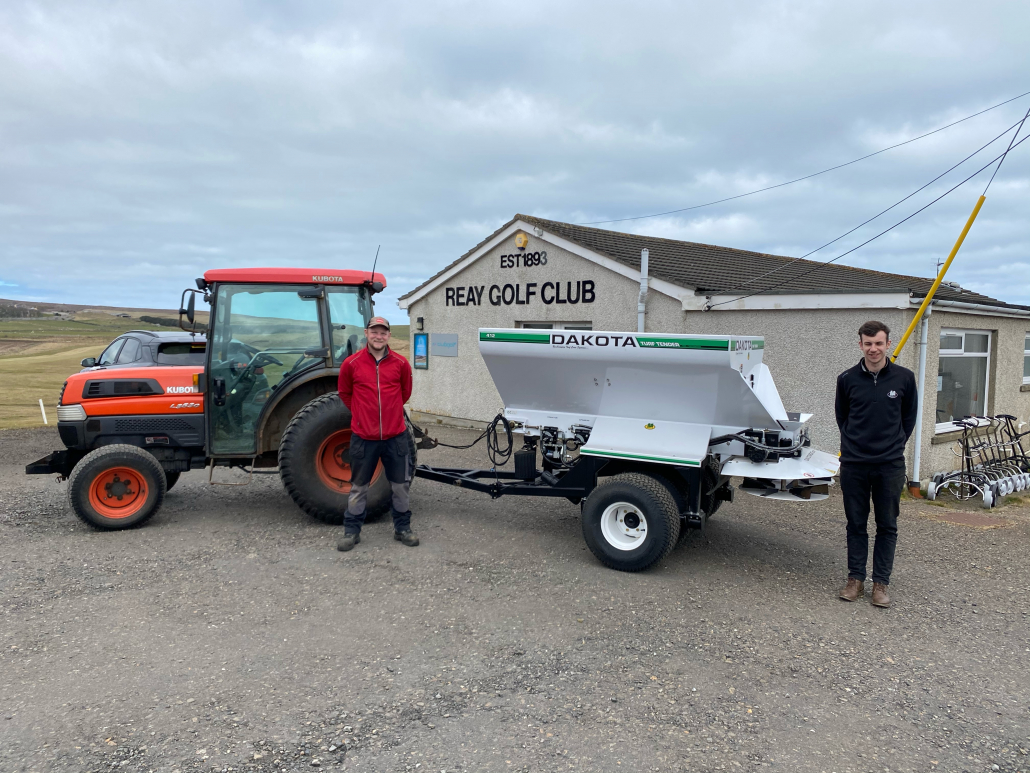
“With it having four wheels the weight is distributed incredibly well, so it doesn’t leave a mark on the greens, and the first time I used it you’d have no idea that anything had been done or any heavy equipment had been over the greens it because the footprint was minimal.”

The Dakota 412 features accurate and easy to operate calibration with no manual adjustment and has four Ultra-Trac turf tyres on independent floating beam axels for maximum weight distribution, allowing Jason to work without causing viable disruption to the surface.

As part of Campey’s installation, and to help Jason get the most out of the machine, Campey Product Specialist, Richard Heywood, walked him through the various settings and features, which Jason views as an invaluable experience.

Jason explains: “Because we are so far north, there is a lot more to consider when ordering machinery. Something that was great for me was being supplied through my machinery dealer Double A with support from Campey by sending Richard to demonstrate how to use the top dresser to the best of its abilities. This proved invaluable to me not having used one before.

“He went through it all, explained what all the different settings were, how to adjust it all, and that was vital. Having someone who knows how to operate it fully really maximises its performance and helps us get the best out of the machine.”

For the latest industry news visit turfmatters.co.uk/news

Get all of the big headlines, pictures, opinions and videos on stories that matter to you.

Follow us on Twitter and Instagram for fun, fresh and engaging content.

You can also find us on Facebook for more of your must-see news, features, videos and pictures from Turf Matters.

Summer is mowing with a Countax

Summer is mowing with a Countax: There is nothing like having a well-cared-for lawn to enjoy in the height of summer. Whether you’re just sitting out and relaxing in the sunshine or playing games with the kids, a neat lawn makes all the difference.

Even better if you have that very British finish with perfect stripes. The trouble is the lawn takes a lot of punishment through the year and needs a regime of care to maintain its good looks. Part of that comes from nourishing the grass with fertiliser at the right times, de-thatching and removing moss and aerating. The other part is mowing. Cutting the grass regularly and to the right height makes a real difference to its growth. That brings you to the type of mower you use, especially if you have extensive areas of lawn and even a paddock. Then you will probably look at a ride-on mower or garden tractor. If it does more than simply mow, performing a host of other tasks including scarifying and collecting leaves, that is a bonus.

Summer is mowing with a Countax

Summer is mowing with a Countax

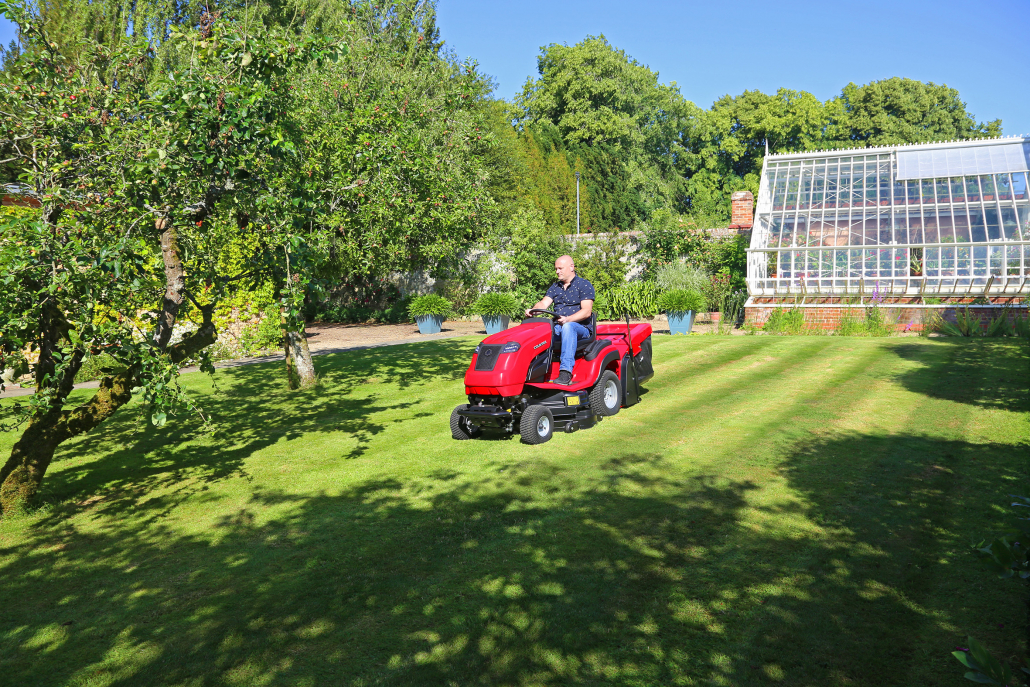
One such garden tractor is the Countax, built in Britain for British gardens for over thirty years and developed around the experience and feedback of customers and dealers. What you get with a Countax is a machine that is built to manage all the British climate throws at you and work for you all year round. It may surprise you how versatile the latest model is with the ability to cut and collect grass at virtually any time, even in the wet, and lay down a striped lawn. Cutting to the right height is very precise by raising or lowering the cutter deck between 12mm and 101mm.

While most ride-on lawnmowers rely on the air from their spinning blades to blow the grass through a chute and into a hopper, the Countax cut and collect system uses a clever brush system to sweep even wet cuttings into a collector. There’s no clogging and the action of the sweeper also removes dead grass and debris, helping to reduce thatch for a healthier lawn. In the autumn, the system can be used effectively to sweep up leaves as well. The grass collector is powered by the tractor’s engine and driven by the Power Take-Off (PTO) that is also used to drive a range of accessories and powered attachments, including a broadcast spreader for spreading rock salt on ice in the winter.

The most recent addition to the Countax range of accessories is the PGC+. Driven by the PTO it’s a cassette system that allows you to switch accessories and transform a Countax C or B Series garden tractor into a year-round workhorse. The grass sweeper cassette comes as standard with the PGC+ and there’s an optional scarifier cassette to make removing thatch and moss easier come early spring or autumn. Even better is the fact it scarifies and collects the debris simultaneously. They build Countax garden tractors tough and versatile to work all year, and you can enhance the enjoyment of your garden throughout the summer.

You can find out more by contacting Countax on 01844 278800 or visit www.countax.co.uk/find-a-dealer to find your local dealer.

For the latest industry news visit turfmatters.co.uk/news

Get all of the big headlines, pictures, opinions and videos on stories that matter to you.

Follow us on Twitter and Instagram for fun, fresh and engaging content.

You can also find us on Facebook for more of your must-see news, features, videos and pictures from Turf Matters.