ECHO Launch New Chainsaw

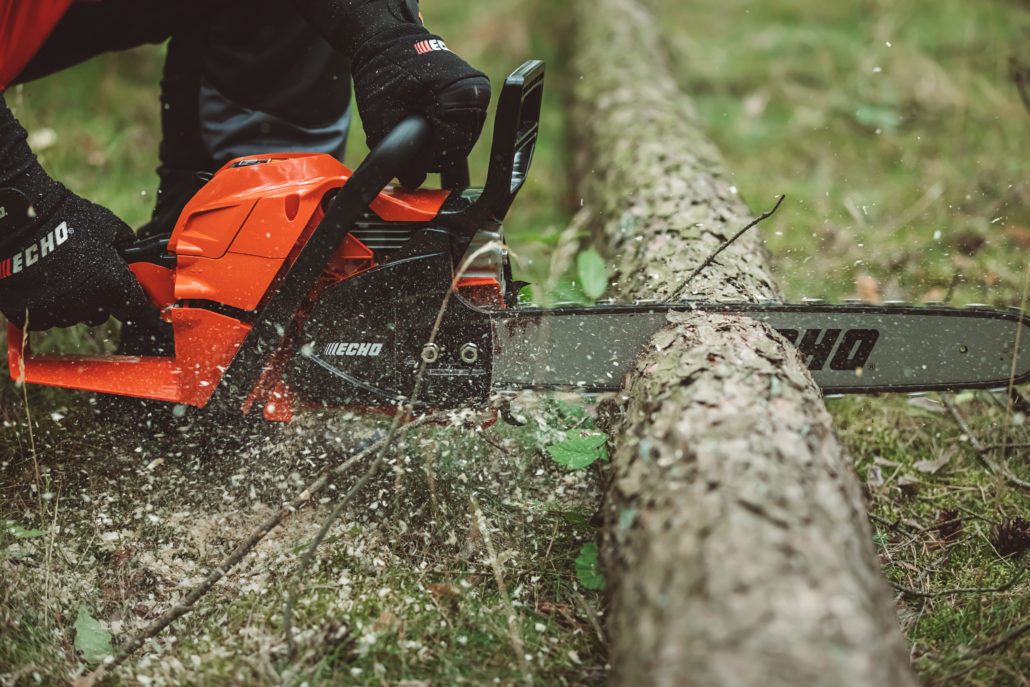
ECHO Launch New Chainsaw: ECHO is setting a benchmark for rear handle chainsaws with the launch of the new CS-4510ES. It packs a real punch with its 45cc two-stroke stratified scavenging engine and the power-to-weight ratio makes it more powerful yet lighter than previous models. This is a chainsaw loaded with new features but still built to exacting ECHO standards. It offers a better output of 2.3kW and yet weighs in with a dry weight of just 5.0kg.

Lift the CS-4510ES and you immediately feel how light it is. Start cutting logs or use it for felling small trees and you realise it is no ordinary chainsaw. You know instinctively the moment you start work it’s been designed by engineers who understand what the operator needs in terms of performance, durability and ergonomics. The Stage II emission compliant engine is one of ECHO’s new engine platforms. The two-stroke has a piston operated scavenging system in which a layer of fuel-free air is created between the burnt charge in the combustion chamber and the fresh charge in the crankcase. The buffer reduces the fuel laden losses during the cycle.

ECHO Launch New Chainsaw

This translates into a chainsaw that generates more torque to cut faster and more efficiently through harder wood. Add in features such as the new air filter design which shields the engine from dust intake, the drop-out prevention nuts, translucent fuel tank, and the ES Easy Start system, and it’s easy to see why this very different looking chainsaw is going to be much in demand with a wide range of users.

The ECHO CS-4510ES is a machine that not only increases productivity and reduces downtime in maintenance, it also comes with a two-year professional warranty or five-year domestic warranty.

For the latest industry news visit turfmatters.co.uk/news

Get all of the big headlines, pictures, opinions and videos on stories that matter to you.

Follow us on Twitter for fun, fresh and engaging content.

You can also find us on Facebook for more of your must-see news, features, videos and pictures from Turf Matters.

Scottish Plastic Pitch Debate

Scottish Plastic Pitch Debate: It’s a debate that rages on constantly among Scottish football followers: Is it right that 13 of the professional senior clubs in the top four divisions play on artificial pitches?

Despite there seemingly being an overwhelming majority of managers, players and fans who reckon the controversial surfaces can cause injury, adversely affect the standard of play or give an unfair advantage to home teams, there are now more of them than ever as clubs seek to guarantee games being on during the often torrid weather we endure throughout the season.

So we sought the opinion of award winning groundsman Paul Matthew, whose sterling work helping create a pristine surface at Motherwell FC’s Fir Park saw it win the 2017-2018 Scottish Premiership ‘Best Pitch’ award.

Paul (46), who works between 50 and 60 hours a week to keep the Fir Park surface perfect, said: “I think the artificial pitches for the clubs in the lower leagues are absolutely fine.

“But I’m not a fan of them being in the Scottish Premiership. And I think if you asked any professional footballer, especially as you go up the levels, they would absolutely never want to play on one if they could avoid it.

“You get nothing but complaints from players when they’ve played on it.

“It is a very unnatural game. Players get aches, pains, lower back pain.

“Grass football pitches are inconsistent, yes we know that.

“But the astro pitches are massively inconsistent in terms of the supplier of the carpet, the company that builds them, has it got a shock pad under them?

“All these things.

“I’m not a physio and I’m not a sports scientist, but I think if you’re speaking to professional footballers then they would probably say they have sustained injuries on a synthetic pitch more than a grass pitch.

“And I have my reasons for it as well. One of the reasons is there’s very little give in an astro pitch.

“If they are dry, the rubber crumb creates such a heat on the sole of your foot.

“It’s a synthetic carpet that doesn’t move. Grass has got moisture in it, so therefore gives, the surfaces give, it’s soil.

“I just feel in our top flight football, if we are wanting to push forward with our football as a product, one of the massive selling points of the English Premier League is the quality of their surfaces.

“In Scotland, if we want to be taken seriously as a nation of football – which we always were but it seems to be diminishing by the year – we have got to address the surfaces we play on in my opinion.

“And they have to be natural grass or hybrid, as Hearts and Celtic have installed.”

So Paul – who has been a groundsman for 18 years – is very much against current top flight outfits Hamilton Accies, Livingston and Kilmarnock playing on astroturf. But he doesn’t have a problem with Championship sides Falkirk, Queen of the South and Alloa Athletic, League One teams Raith Rovers, Airdrieonians, Stenhousemuir, Forfar Athletic and Montrose or League Two outfits Annan Athletic and Clyde playing on them.

He added: “Artificial pitches have their uses, community: 100 per cent, training facility to take a wee bit of pressure off grass: 100 per cent.

“And to help the groundsman even, taking the pressure off during the winter months with a couple of days’ training on the astro, absolutely.

“But in the top flight of our game, I’m not a fan of it.

“The overall unnatural nature of the astro pitches is the difference between the two.”

It would be remiss not to point out that there are many players in Scottish football who support playing matches on synthetic surfaces.

A recent Professional Player and Artificial Turf Survey showed that 42.5 per cent of respondents supported the use of synthetic surfaces in competitive matches.

In addition, 52 per cent of respondents supported the use of synthetic surfaces for training on a regular basis.

All 3G pitches require to be annually certified to FIFA’s highest test standard, 2 star, to satisfy SPFL rules on the use of artificial surfaces and the Scottish FA’s Club Licencing process.

But there is no need for such testing at Fir Park, where the bowling green-like surface is reminiscent of the idyllic pitches on offer throughout the English Premier League.

And – as Paul pointed out – the current lush surroundings are a far cry from the mud spattered, unsightly surface which was often presented before he arrived at Motherwell in May 2015.

“To win a Best Pitch award, given the historic problems the pitch has had over the years, I think it’s a bonus. Not only just for me, but every other person who’s been involved with making the pitch that way.

“Support from the club – guys like Alan Marshall, Alan Burrows and the board of directors because ultimately these are the guys that say if they’re going to support you or not.

“It’s a big feather in the cap for these guys. These guys have been here when the pitch was poor. So for them to have something like that happen to our pitch, I’m presuming that they’ll feel very proud about that themselves.

“I’m proud of it, but I’m not what I would call a trophy groundsman. I do the work and hopefully let the work speak for itself.”

Paul stressed it was not an individual award for him; he praised Jamie Semple, Stuart Harker, Stuart Spiers and Robert Kirk for their help at Fir Park over the years.

And he then explained exactly how he’s been able to help transform the Fir Park pitch from what was once regularly reminiscent of a muck heap into something now resembling a fairway at Augusta National Golf Club.

“The success of the pitch is because of the grow lights,” said Paul, who earlier in his working life worked at two golf courses, Rangers and Wolves football clubs before landing a sales role at John Deere.

“They are a supplementary lighting system which give off rays from the sun that grow grass. I’ve had them here since my very first year.

“When I arrived here initially I quickly realised that the machinery being used on the pitch here was incorrect.

“It was a heavy pitch, one that didn’t drain and was all very heavy. It was all conducive to having a poor pitch as the winter months came in.

“The pitch needed to be drained. But it only has six inches of root zone, about half the normal depth of what it needs.

“It has an old pitch underneath that is rock hard and doesn’t drain, two sets of undersoil heating pipes – one dead and one live.

“We had to have channels for water to run into so in my second year we put gravel trenches in them, every one metre across the pitch, full length of the pitch.

“These trenches are the absolute lifeline of that pitch.

“They take the moisture from the six inches of root zone, they then go into the gravel trenches, which are basically a reservoir to hold moisture and take it to the lateral drainage.”

Click here to read the original article

For the latest industry news visit turfmatters.co.uk/news

Get all of the big headlines, pictures, opinions and videos on stories that matter to you.

Follow us on Twitter for fun, fresh and engaging content.

You can also find us on Facebook for more of your must-see news, features, videos and pictures from Turf Matters.

Master Green Keeper Helps Oxford GC

Master Green Keeper Helps Oxford GC: Renowned Agronomist Greg Evans has taken the lead a two-year turf maintenance programme that has transformed the historic Oxford Golf Club.

Oxford Golf Club recruited Mr Evans on a consultancy basis to help create and implement a detailed green keeping improvement and maintenance strategy at the 18-hole course. The programme of focused activity has enhanced the greens, tees and approach areas. Mr Evans help devise the bespoke strategy and worked in partnership with Head Green Keeper Doug MacGregor. The Green Keeping team all welcomed the new philosophy and worked together to transform the course.

Master Green Keeper Helps Oxford GC

Mr Evans said: “Oxford Golf Club is a fantastic course and has always been well regarded. Following the implementation of a targeted agronomy plan it now has perfect greens and the rest of the course is of a very high standard.

“The club was really supportive and allowed us to close the competition greens for a tight maintenance window to enable us to really focus on a big agronomy programme. The greens have a good sand profile and so we carried out deep aeration activity and then followed a strict maintenance plan. This included targeted hard watering and tight cutting to produce faster, smoother greens. Within nine months the greens were performing very well, and they are the jewel in the crown of the course.”

The green-keeping team also focused on tees and approaches as part of the wider agronomy plan. Mr Evans added: “As with a lot of older clubs the Oxford Golf Club was built before irrigation systems were introduced and so the course tends to hold water. We hired in a verti-drainer to fully drain the course and changed the fertility programme to add small amounts of nutrients every ten days.”

Head Green Keeper Doug MacGregor said: “The introduced and continuation of the intense agronomy plan has been fantastic for the course, members and staff. It has been an excellent experience for the green keeping team and we can all take great pride in the enhancements we have made to the course.”

Stephen Nicholson, General Manager at Oxford Golf Club, said: “As a club we are committed to continually improving the course and the agronomy plan has formed a key part of our strategy. The club has really reaped the rewards of this intensive activity and our members and visitors alike have commented on the quality of our greens and tees. The Green Keeping team have all embraced the change in philosophy and done a fantastic job.”

Oxford Golf Club is the oldest course in Oxfordshire and features a Harry Colt designed 18-hole course, putting green, practice area and coaching school. It is located on Hilltop Road, Oxford. The club’s head professional is Joe Pepperell, brother of European Tour player Eddie.

For the latest industry news visit turfmatters.co.uk/news

Get all of the big headlines, pictures, opinions and videos on stories that matter to you.

Follow us on Twitter for fun, fresh and engaging content.

You can also find us on Facebook for more of your must-see news, features, videos and pictures from Turf Matters.

Educating Scientists For The Future

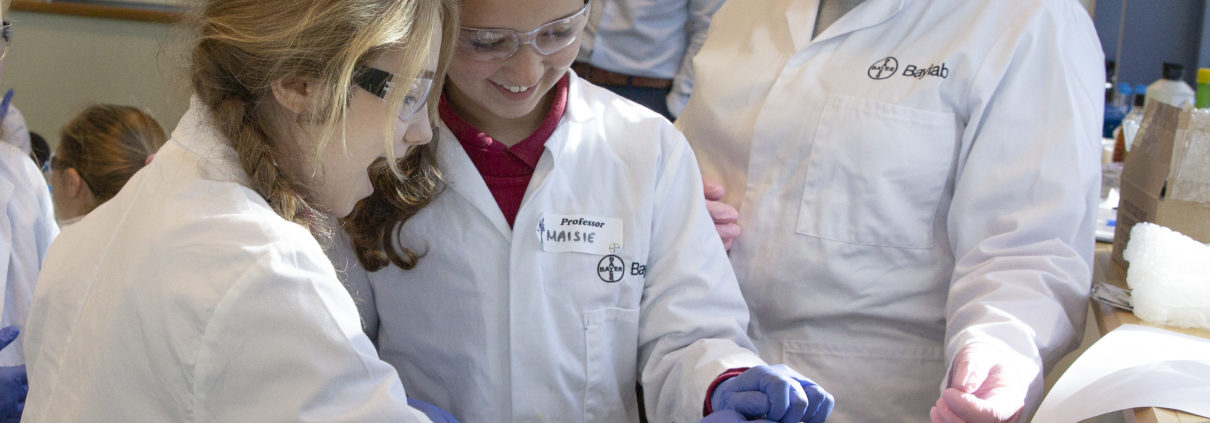
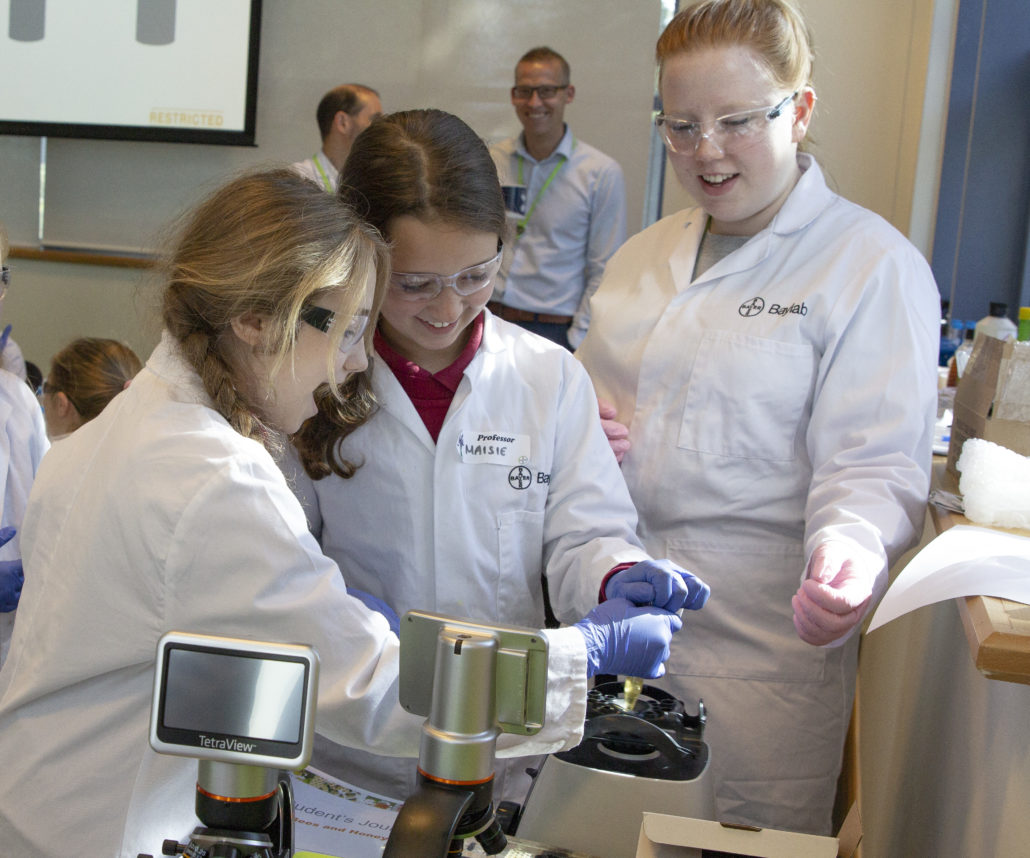
Educating Scientists For The Future: With the rising importance of educating children in scientific subjects and encouraging practical learning, Bayer is helping pupils learn about some of the basic scientific principles that underpin many turf management practices.

From 1 to 5 October, over 100 local primary school children and teachers visited the Bayer Environmental Science headquarters in Cambridge, for practical science lessons from using a microscope and testing honey, to the role of bees and their life cycles, delivered by the ‘Baylab’.

Educating Scientists For The Future

Steve Bishop, Bayer group product manager, explains that the ‘Baylab’ provides an enhanced learning facility, that is normally based in Reading. “The roadshow has been a huge success, with students and teachers alike.

“The wider context for the turf management industry is an increasing pressure from the regulatory authorities. Not only have we lost key management products, but greenkeepers are being challenged to maintain quality playing surfaces.

“Therefore, the industry needs a steady stream of new professionals to continue and build on the research and development that’s required to support turf management for years to come,” he says.

“This is why we’re so passionate about awakening an interest in science among young people from all backgrounds at an early age, to boost their confidence, provide inspiration and aid in development.

“It’s all about capturing the imagination of children today, to make them the scientists of tomorrow.”

Steve explains that he hopes the children and teachers went away with a positive attitude, not only towards science, but to the work that goes into maintaining the environments in which they work, rest and play.

For more information about the Baylab, please visit www.bayer.co.uk/en/baylab/ or the Bayer Environmental Science website www.environmentalscience.bayer.co.uk.

For the latest industry news visit turfmatters.co.uk/news

Get all of the big headlines, pictures, opinions and videos on stories that matter to you.

Follow us on Twitter for fun, fresh and engaging content.

You can also find us on Facebook for more of your must-see news, features, videos and pictures from Turf Matters.
Duchy College Student Joins Vincent Tractors & Plant

Duchy College Student Joins Vincent Tractors & Plant: A Duchy College Rosewarne student has been awarded a scholarship with Fraddon based machinery dealership, Vincent Tractors & Plant.

This years’ recipient, Barnaby Hills has already started his work placement at the Cornwall and Devon Kubota franchise as part of his scholarship package as he works towards his Level 2 land-based engineering certificate at Duchy College.

Duchy College Student Joins Vincent Tractors & Plant

It is the third year in a row that Vincent Tractors & Plant have offered this scholarship to a Duchy College Rosewarne student as part of its ongoing commitment to encourage new entrants into the engineering industry.  Paul Vincent, Managing Director at Vincent Tractors & Plant recognised that there was a shortfall in engineers and provided the scholarship as a means of encouraging youngsters into the industry.

16 year old Barnaby said “I was really surprised and pleased to receive the scholarship.  It’s really interesting working on all the different machines.  The team at Vincents are great fun to work with and the staff at the college are really helpful“.

As part of the application process, candidates had to complete an application form, attend an interview and carry out work experience with the dealership.

Service Manager, Andrew Hoddinott said “Barnaby is the third recipient of the scholarship in partnership with Duchy College.  The other two recipients have both gone onto an apprenticeship within the company.  As a business we are keen to invest in the future and this scholarship is our way of encouraging new people into the industry.  We are training up local engineers to provide a good quality local service”.

Danny Sellors, Program Manager Land-Based Engineering at Duchy College, Rosewarne commented “Barnaby is settling in well to college life.  The last month he has had a lot of new experiences and is coping really well.  The health and safety unit is finished and we have moved onto engine technology, stripping down and assembling Perkins four and six cylinder Phaser Engines.  They are now learning about engine components, two and four stroke cycles, the differences between indirect and direct diesel engines, cooling and lubrication.  After half term the Level 2 students will be taking the first of three examinations, the health and safety exam”.

For the latest industry news visit turfmatters.co.uk/news

Get all of the big headlines, pictures, opinions and videos on stories that matter to you.

Follow us on Twitter for fun, fresh and engaging content.

You can also find us on Facebook for more of your must-see news, features, videos and pictures from Turf Matters.