
Groundsman Pleas To Dog Owners

Groundsman Pleas To Dog Owners: A football club groundsman has slammed irresponsible dog owners for not picking up their pets’ faeces, which has been left scattered across a village field which is used to host matches.

Long Ashton Football Club stalwart Davy McGimpsey believes the amount removed by players is ‘nothing short of disgraceful’ and it is a problem the club faces ‘every week’.

He said the issue at Long Ashton’s Community Centre, where the club plays and trains, is ‘major and dangerous’ and he is urging people to ‘clean-up their act’.

Davy said: “The problems with dog poo left on the pitch is worse now than it has ever been.

“It has become an issue before training and we have to pick up a lot of the waste before we can even attempt to play.

“We have had to stop matches due to faeces being left on the field, and I couldn’t count the amount we had to pick up on one hand before a game in July.

“Genuine dog walkers clean up, but this is an epidemic.

“We’ve invested in a shovel to get it all up and ‘no dog fouling’ signs have been installed at the centre to help tackle the problem.”

Davy first took to social media to address the issue in April, but some owners have paid scant regard to his plea.

This prompted Davy to question if dogs should be banned from the field.

The football club’s players, aged 16-60, compete with clubs from across the West Country, and members practice on Tuesday evenings at the centre during the summer.

He continues: “The other issue is dog poo is normally left right by the community centre’s play area.

“People need to understand how dangerous this is, especially if children end up picking it up.

“There are dog bins dotted around the centre, and, for whatever reason, some people don’t think about using them.

“It’s just not nice, and there are now people in the club who just refuse to pick it up.

“It annoys us, this group is something great which runs in the community, and it is not the centre’s problem to deal with.

“It’s simply unacceptable, and it begs the question, should dogs be allowed on the village field at all?”

In addition to its pleas to dog owners, the club has also put a ban on plastic bottles in an attempt to reduce waste on the pitch.

Click here to read the original article

For the latest industry news visit turfmatters.co.uk/news

Get all of the big headlines, pictures, opinions and videos on stories that matter to you.

Follow us on Twitter and Instagram for fun, fresh and engaging content.

You can also find us on Facebook for more of your must-see news, features, videos and pictures from Turf Matters.

Syn-Pro Thrives At Beaumont

Syn-Pro Thrives At Beaumont: A range of Syn-Pro equipment by SISIS is helping to keep the synthetic surfaces in impeccable condition at De Montfort University at Beaumont Park, according to head groundsman Cameron Flitten.

With the emergence of synthetic surfaces becoming more common over the years in a wide range of sports, the SISIS brand has continued to go from strength to strength with its impressive Syn-Pro portfolio. Today synthetic surfaces are playing such a large role in a groundsman’s overall responsibilities, many have turned to the reliable and efficient Syn-Pro range and Cameron is no exception.

Syn-Pro Thrives At Beaumont

Originally from New Zealand, Cameron’s career in sports turf started with an apprenticeship on a golf course before landing a role working on the cricket squares at Loughborough University and then progressing to being in charge of the rugby and football pitches.

Three years ago, he became the head groundsman for De Montfort University, which coincided with the university agreeing to lease the vast playing fields at Beaumont Park. The site received a multi-million pound investment and transformed the facilities into some of the best in the county. Along with seven other members of staff, Cameron maintains the wide array of sports surfaces at Beaumont Park which now includes two recently built all-weather 3G synthetic pitches.

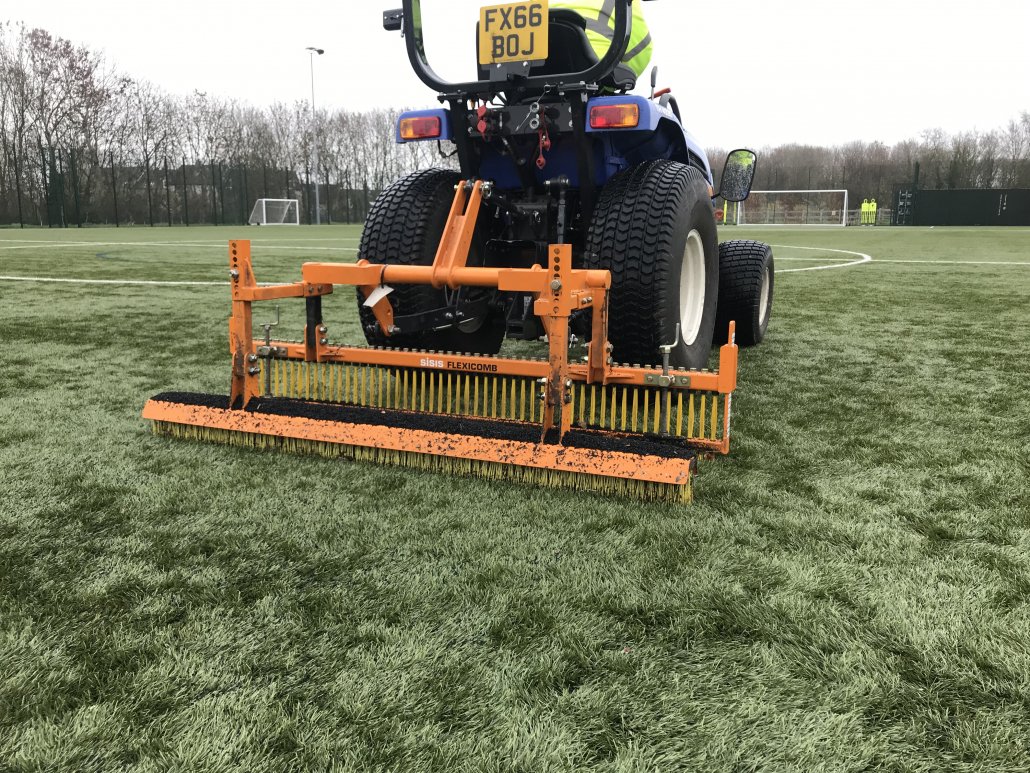
To maintain these two pitches, Cameron chooses to use the Litamina 1200 and a combination of the Flexicomb fitted with straight and zigzag brushes.

The Litamina 1200 is a compact sweeper for efficient collection for unwanted debris from sand filled or rubber crumb synthetic surfaces. With its spiral design brush helping to stand up the pile and improve collection, and a large capacity mesh hopper collecting debris but allowing infill to be returned to the surface, the Litamina 1200 is ideal for helping to keep surfaces free of contamination and harmful debris.

Designed primarily for use on synthetic surfaces, the Flexicomb ensures even distribution of infill materials and lifts the pile. The adjustable setting ensures the effect of a rake, but with the softness of a brush, reducing the risk of damage to the fibres. The bristle sections are replaceable and the Flexicomb is designed for a long working life with minimal maintenance. For greater results, Cameron attaches either the zigzag or straight brush to the Flexicomb which helps to even out the rubber crumb.

“We use the Flexicomb with the zigzag or straight brush three times a week, especially now with the high usage the pitches get. It helps to de-compact all of the rubber, levels it all off and stands all of the grass fibres back up.

“The Litamina is an essential piece of equipment and this is used at least once a month, sometimes more if there are a lot of leaves on the surface. It is perfect for removing all of the rubbish and debris from the surface.

“These two pieces of equipment are all I need for my synthetic surface maintenance and you can always rely on them to do a brilliant job. I like that they are solidly built but I also like the simplicity of them. You can tell that SISIS have thought a lot about the groundsmen using them because they are easy to set-up and are generally very user-friendly. They also never break down either.”

For further information or a no obligation demonstration, please contact SISIS on 01332 824 777 or visit www.synprobysisis.com

For more news, reviews and insightful views, you can follow SISIS on Twitter & Instagram @SISISMachinery and like the company’s Facebook page – www.facebook.com/SISISMachinery. You can also view the latest SISIS videos by visiting www.youtube.com/SISISMachinery

For the latest industry news visit turfmatters.co.uk/news

Get all of the big headlines, pictures, opinions and videos on stories that matter to you.

Follow us on Twitter and Instagram for fun, fresh and engaging content.

You can also find us on Facebook for more of your must-see news, features, videos and pictures from Turf Matters.
Farmers Tackle Giant Hogweed

Farmers Tackle Giant Hogweed: Bayer is supporting a community project in Scotland to tackle Giant Hogweed, with equipment and labour supplied free of charge by local farmers.

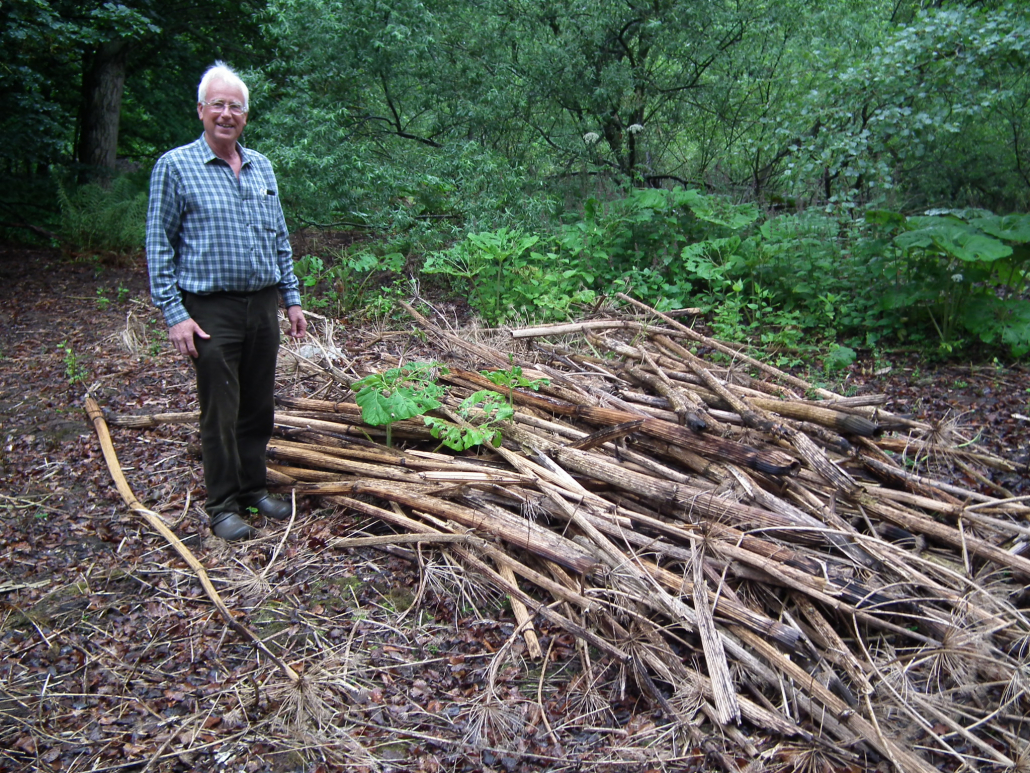
Giant Hogweed hits the headlines each summer as members of the public are injured by its poisonous sap, which can cause painful blisters and severe skin irritation when enjoying the great outdoors, but it is also an invasive plant which has a serious impact on the biodiversity of the riparian and aquatic environment.

Farmers Tackle Giant Hogweed

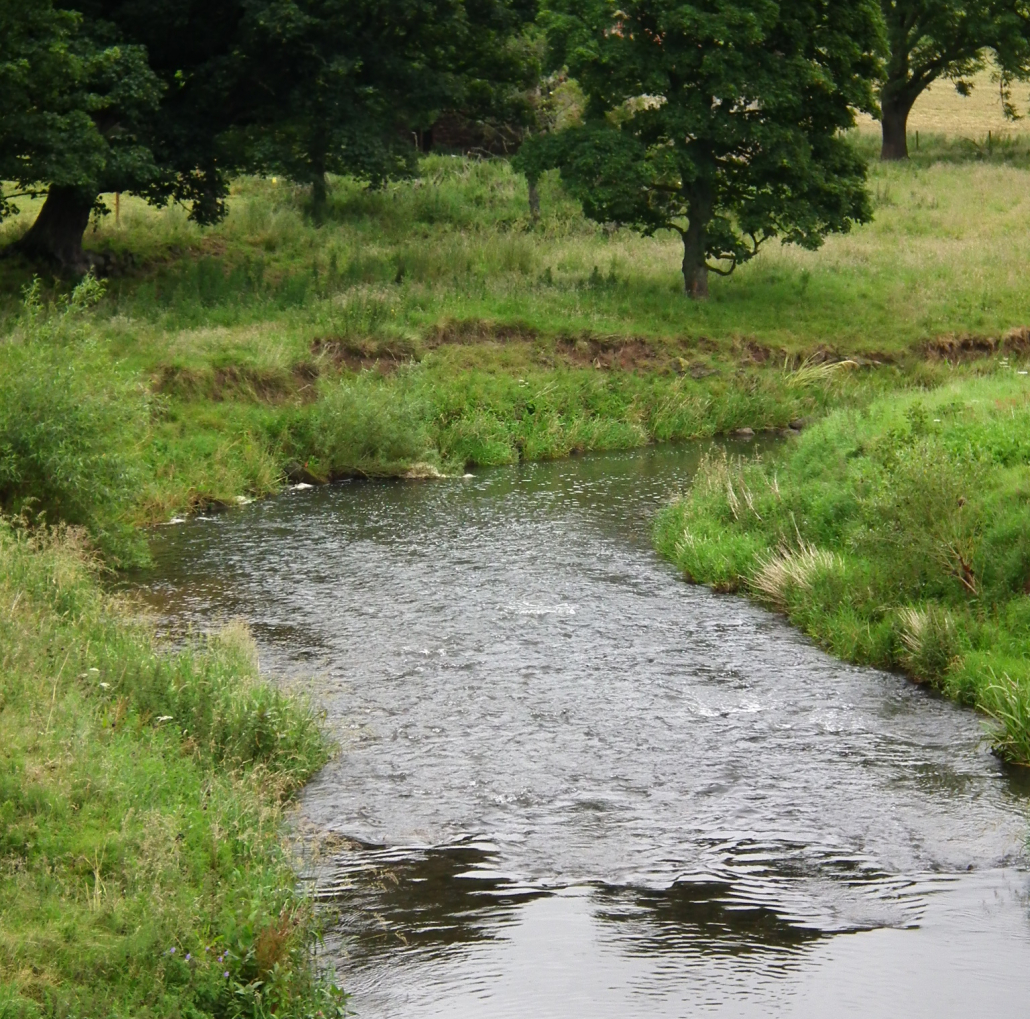
Managed by the East Lothian Countryside Volunteers (ELCV), the project is based at Haddington, East Lothian, at the centre of an area through which the River Tyne flows, with Giant Hogweed growing on its banks.

Local farmers have joined forces to combat the weed, using the highly effective glyphosate herbicide Roundup, some of which has been donated to the project by manufacturer Bayer.

Spraying started in March, with 50 qualified farmer operators using knapsack sprayers to apply Roundup alongside the river, with help from an online dynamic map created by the ELCV which pinpoints the worst affected areas using reports from volunteer spotters, and allows them to be ticked off as they are treated.

Local farmer James Wyllie was asked to co-ordinate the initiative, having previously led a campaign to control Giant Hogweed on an eight mile stretch of the Biel and Whittingehame Water in East Lothian.

He explained: “The original proposal was for 10 miles of the River Tyne, but there was such a high level of support from the landowners to participate in a project where all the riparian owners were acting together that it has expanded way beyond the original plan. It now covers about 48 miles of the River Tyne from A68 to the sea and including two major tributaries, Birns Water and Colstoun Water in an area with around 75 riparian landowners participating.”

While the main focus is on Giant Hogweed, Japanese Knotweed and Himalayan Balsam are also being targeted by operators as they spray.

Mr Wyllie added: “It’s going to take five years to see a real difference, due to Hogweed seeds which are embedded in the soil and will germinate in future years. We aim that no plant should be allowed to flower, as each can produce 10,000 seeds, and any flower heads that are produced need to be removed and disposed of safely.”

“The open access dynamic map is key because farmers can see exactly where plants have been observed along the river and when overlayed on a satellite map helps to pinpoint areas to inspect. Later in the season where there are no flowering plants left it is marked with a green tick.”

Farmers Tackle Giant Hogweed

In small areas of non-agricultural land, removal of any odd Giant Hogweed plants are tackled by the ELCV volunteers to ensure that there are no gaps.

Bayer’s Roundup Technical Development Manager Barrie Hunt explained: “This is a unique project in that it attempts to treat an almost complete river catchment area, which gives the best chance of tackling the weed. Where only part of the catchment is treated, there is always the risk of plant material being washed down river and Giant Hogweed re-establishing itself. We have been pleased to work with the ELCV and Mr Wyllie on such a worthwhile operation.”

As the growing season drew to a close at the end of July, Mr Wyllie commented that he has been overwhelmed with the positive response to the project. “Every farmer approached has offered to support the work – labour contributed by farmers free of charge will be worth around £100,000 over a 10 year period – and we are very grateful for the sponsorship from Bayer and backing from Scottish Natural Heritage.”

He added that Roundup has been key to the success of the project.

“I’ve used it for 25 years and it is one of very few products that is approved for aquatic use; there are no ground residues and it works by contact onto the leaves only. It’s also very effective on Japanese Knotweed and Himalayan Balsam.”

“This is a long term project on a large scale, which demonstrates East Lothian farmers and the local community working together to achieve a common goal.”

For the latest industry news visit turfmatters.co.uk/news

Get all of the big headlines, pictures, opinions and videos on stories that matter to you.

Follow us on Twitter and Instagram for fun, fresh and engaging content.

You can also find us on Facebook for more of your must-see news, features, videos and pictures from Turf Matters.

Bunker Washouts Destroying Morale

Bunker Washouts Destroying Morale: The greatest challenge that has faced golf course superintendents over the past several years has been the difficulty of recruiting and retaining staff.

All courses – regardless of budget – are impacted by this labor shortage, but those hit worst are struggling to simply keep up with mowing the entire golf course each week. Unfortunately, Mother Nature isn’t cutting them any breaks this summer.

Common pop-up thunderstorms throughout the Southeast are making it more difficult to complete daily maintenance with an undersized staff. These storms pack heavy winds and significant rain amounts in a short time span – washing out bunker sand, spreading debris throughout the golf course, knocking down trees, breaking irrigation pipe with lightning strikes, saturating soils and much more.

Out of all these challenges, repairing bunker washouts may be the most hated task among golf course superintendents and crew members. Repairing washouts is slow, back-breaking work and the staff could easily be out the next day repairing the very same bunker if another pop-up storm strikes. Simply put, frequent heavy rain events each summer can be a morale killer for a fully staffed maintenance crew and the straw that broke the camel’s back for undersized crews.

Bunker washouts also impact the consistency of bunker sand. The constant movement of sand can create overly soft conditions in the short term, and contamination from washouts can negatively impact playability and sand drainage in the long term. Perhaps the most significant impact to golfers is the logistical challenge that bunker washouts present to the maintenance team. Superintendents must choose which tasks will be performed each day. When bunkers get washed out by a storm, some other aspect of course management must be skipped to repair the bunkers.

What can golfers do to help? Every course’s design and available maintenance resources are different, which greatly impacts a maintenance team’s ability to address issues like washouts. It is important to understand that the maintenance team is doing their best to maintain the golf course with the resources available. Given the current labor shortage, being understanding, patient, and offering a quick “thank you” is the best way to support those who work hard maintaining our golf courses.

What can superintendents do? Document labor-hour allocation to communicate the impact of bunker washouts on course maintenance. This data can be used to communicate the need for a bunker renovation, higher wages or more employees. Also, temporary labor services are a good resource for washout repairs.

Click here to read the original article

For the latest industry news visit turfmatters.co.uk/news

Get all of the big headlines, pictures, opinions and videos on stories that matter to you.

Follow us on Twitter and Instagram for fun, fresh and engaging content.

You can also find us on Facebook for more of your must-see news, features, videos and pictures from Turf Matters.