Not your run-of-the mill training centre
Scott MacCallum was afforded the opportunity to visit the AXA Training Centre, Liverpool FC’s training base in the company of Director of Grounds, Warren Scott. What he found was quite remarkable…
Not your run-of-the mill training centre
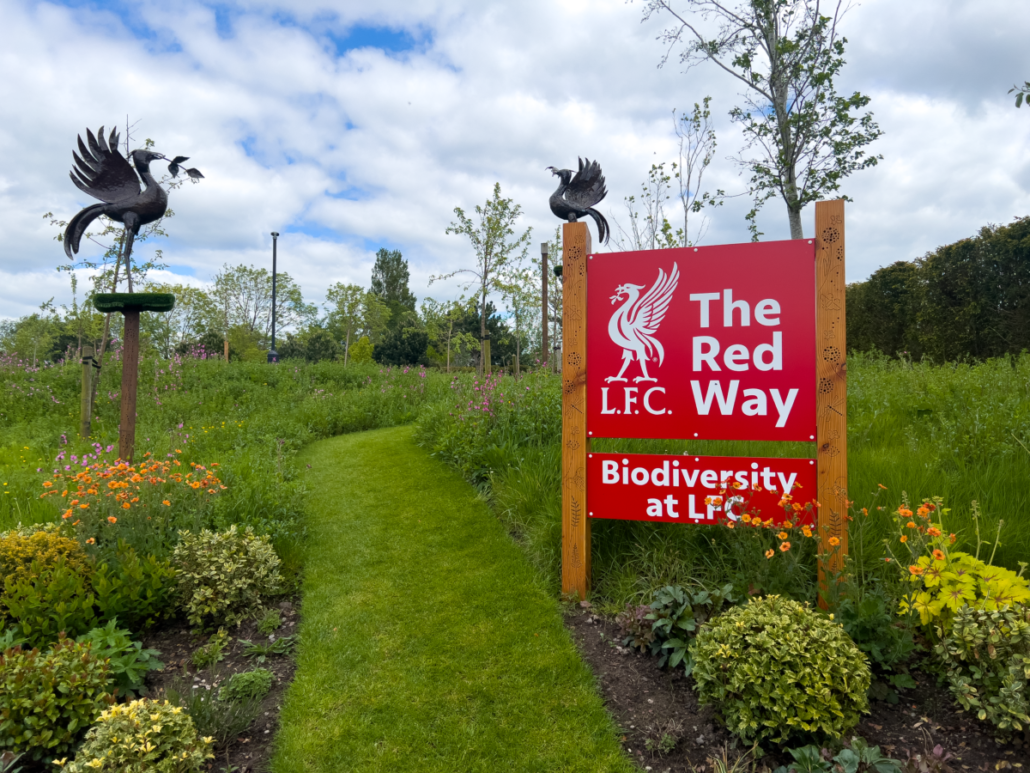
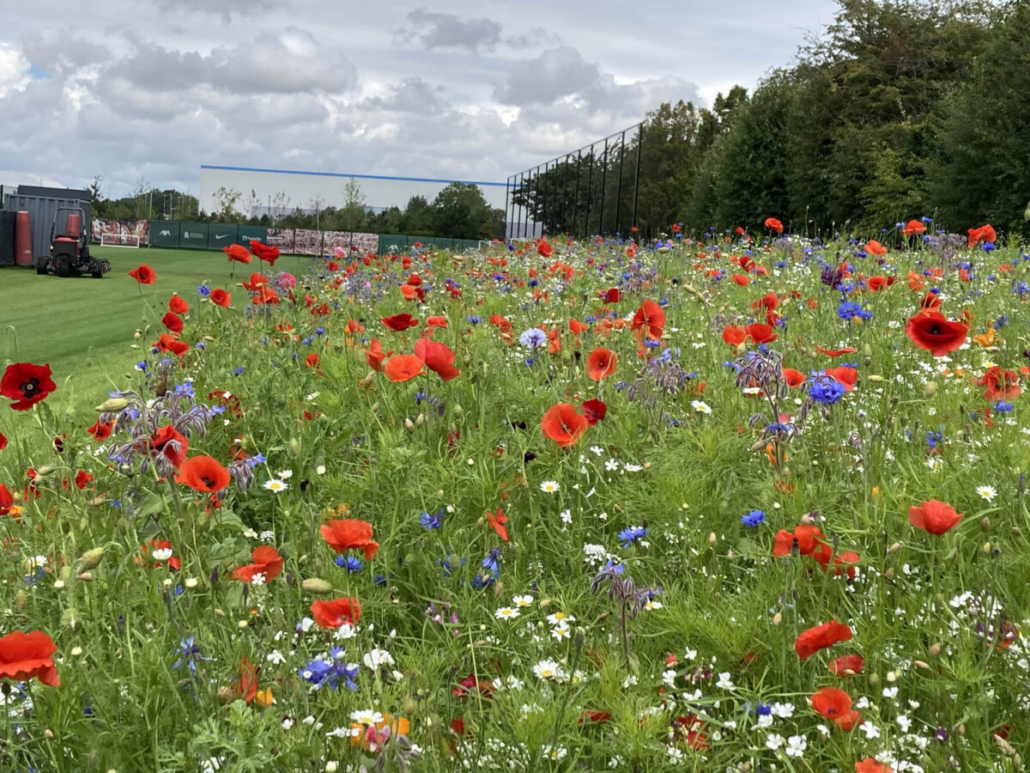
I recently enjoyed a visit where, among other things, we talked about the planting of over 1,000 trees, the acquisition of bee hives, an allotment, wild flower meadows and aspirations to be full carbon neutral by 2040.
You’d probably expect me to say that I’d been to one of the Royal Parks, or a grand estate somewhere in middle England, or perhaps a particularly progressive golf club.
So, what would you think if I told you that it was a Premier League training ground? But not just any training ground. This was, at the time of the visit if not the time of writing, the reigning Champions – Liverpool FC, and their award-winning AXA Training Centre.
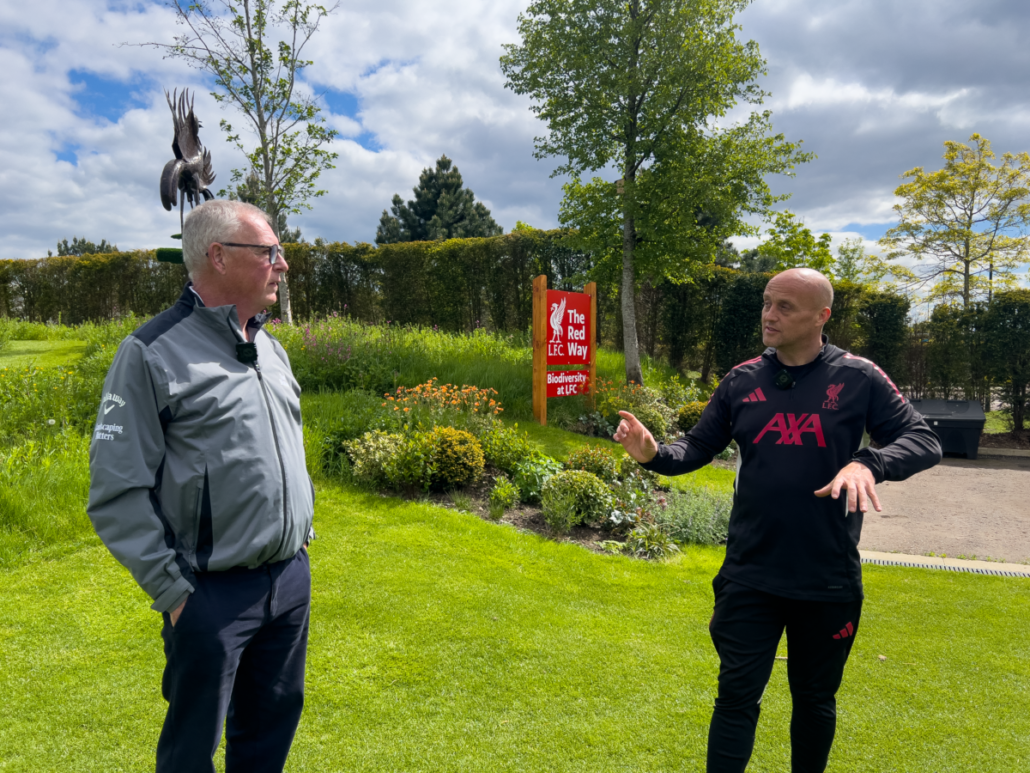
Director of Grounds, Warren Scott and his amazing team, have turned the Centre, in the Kirkby district of the city, into a sanctuary for all sorts of flora and fauna, while at the same time providing the Liverpool players with a day-to-day workplace that is a pleasure to attend.
They also collected the GMA’s Environmental and Sustainability Award at the recent ceremony at Edgbaston Cricket Ground.
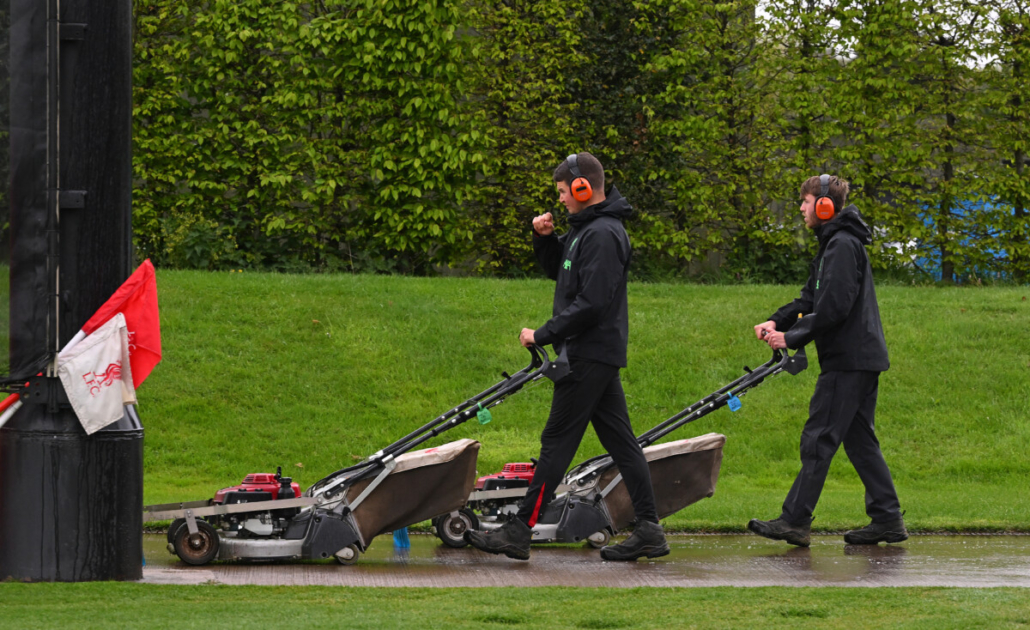
It is fair to say that for Warren and is team the job has moved a long way from merely cutting grass, marking out pitches and erecting goal posts.
The range of work that the grounds team now carries out would amaze any football grounds manager from a previous generation. That said, all of the tasks, whether it be maintaining
the living wall outside of the main building – see photograph above – to looking after the tricky par-3 golf hole, are there for the greater good and to benefit mindfulness of players and staff alike.
Not your run-of-the mill training centre
And, important to note, the core purpose of a training centre which is to provide quality surfaces for multimillion pound players train on every day has never been forgotten. Indeed, quality has risen while at the same time, through a detailed data driven approach to turf maintenance, the costs have halved in the six years since the AXA opened.
“That comes from figures taken from our last year at Melwood and even takes into account for inflation,” revealed Warren, talking about the previous training centre a few miles away and which is now home to the Liverpool Women’s team and academy.
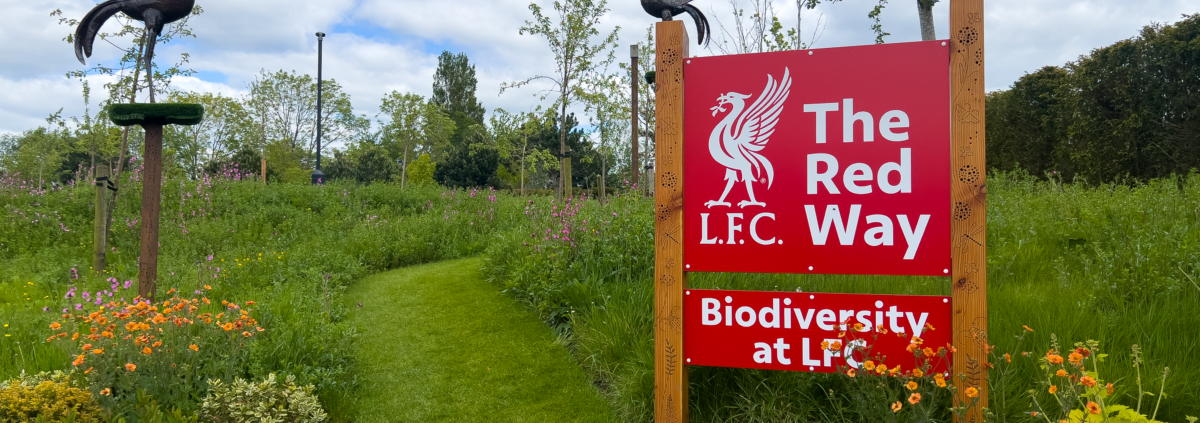
The drive to be more sustainable and eco-friendly is not just the preserve of Warren and the team. It is part of The Red Way which was launched in January 2021 as a way of tying together the good work across the entire club and providing a benchmark to measure and demonstrate progress.
There are six objectives within The Red Way, covering not just environmental sustainability but also cover improving working environments and building relationships within the local community.
“This gives us clear aims for what we want to achieve. And we are committed to continual improvement.
This is why we use an external verification system – ISO20121 – to hold us to account. We are the first major European football club to hold this certification,” said Warren.
Warren is a real driving force for a large part of the work that has been carried out. But it was not always such. While not having to be dragged kicking and screaming into a more diverse approach, he does admit that in the early days he was much more focussed on the pitch than the other areas that are now such an important element of the AXA.
“I love it all now and see the importance of everything that we do and it is great for the team that there is so much variety in the daily work that we do.”
The Liverpool grounds team is substantial, given the size of the facilities they maintain. Even the AXA itself is split into two, with the first team on one side of the site and the academy on the other.
There are 10 staff on the first team side and 11 on the academy side, seven at the women’s training ground. Then there are five at Anfield itself and one at St Helen’s Park, where the women play their matches.
Jurgen Klopp was the manager when the AXA was being developed and built and he was very keen to include Paddle courts and for everyone on the Liverpool staff, including himself and players, to play.
Not your run-of-the mill training centre
“We used to have a beach volleyball court as well,” said Warren, who is particularly proud of the golf hole the team has built in the last couple of years.
“Although it’s only 90 yards long it is a tough hole. There is a pond in front of the green and it does catch a lot of balls. So far there has been one hole-in-one, but he was playing on his own so there were no witnesses!” said Warren, adding that they are currently considering where best to add a bunker to add to the difficulty.
Having been afforded the chance to replicate the hole-in-one I’d also rather there had been no witnesses to my feeble efforts.
Just behind the tee is a wild flower meadow and their orchard, which includes a selection of tree varieties.
“We have apple, cooking apples, plum, pear, and cherry and it will be about five or six years until they’re fully taken and we start to produce large amounts of fruit. Ultimately, we’d like to produce our own cider.”
They are going to bring the club bees down from their allotments to pollinate the fruit trees.
“We’ve now got 12 trained beekeepers in the club,” explained Warren, as we drove around the site in a buggy which originally carried the numberplate “Klopp One”.
“It was donated by one of our suppliers but Jurgen always preferred to walk rather than go in his buggy so it is now ‘Groundsman One’.”
“There are not too many differences in the sports. It’s about looking after grass after all, and there’s a lot of similarities in how we maintain it and what we’re analysing.
That said there is still a place for the good old experience and intuition, and Warren is very adept with his cultured right foot.
“I kick every bit of grass I come across because it tells me how it’s going to play – how much nutrient in the leaf. If it tears easily, I know it’s too soft and I would need to see how many nutrients are in it. It also tells me If there is a lot of organic matter.”
But when it came to data collection it produced a welcome biproduct – it saved money!
“What we found was, if you analyse the leaf tissue enough, some of the times we were found we had to reduce inputs because we had already had too much in the plant. That’s where we were able to make reductions and save some money.
Not your run-of-the mill training centre
“We are also using less fungicide which is another saving. You have to be extremely open-minded as to what’s possible and what might not be.
“I’ll always ask questions. It’s not that I don’t believe people, it’s just I think as an industry we can be influenced by the person who is selling you a bag of fertiliser and you end up putting on more than you need.
“If you use data, together with your own experience you can avoid falling into those traps,” said Warren, who credits much of his success to his first boss when he started at the Liverpool Academy.
“Neil Holden was a former England Rugby League player. He was very much ahead of his time and 30% of what I do today is what learned from him.” With players now multi million pound assets and injury something that can cost a club trophies or titles, there is a great deal of pressure on grounds teams to provide surfaces which are to the liking of the coaches and medical teams.
“I have found over the years that the best thing is just be honest with them because as soon as you say that it’s not hard or it’s not soft you’ve opened yourself up.
“What, we do is provide the coaches and medical teams with the data and let them decide what they want, rather than have us make those decisions.”
But despite everything perfection is something that is not always achievable.
“You can’t make pitches perfect all year round. The weather controls a lot of what you can or can’t do and it’s not always possible to get out and work on them.”
With such a big team, communication is vitally important and there are monthly management meetings as well as regular weekly workshops with all the teams.
“That’s the opportunity for them to suggest their ideas which are then brought in to the managers’ meeting.
We discuss them all and depending on what budget we’ve got we make the decision on whether to implement them. Some of the best ideas come from the younger members of the team which is great.”
One of the other major features of the AXA Training Centre is the living wall which sits on the side of the main building.
“People absolutely love it. There are 872 plants in the wall and each one is in its own pot and they are watered by a pipe which runs straight up to the top and waters them all at the same time.”
One of the benefits of moving to a new facility is that you can influence how things are done and this is very much the case with the on-site AXA Maintenance Facility.
“It was built just exactly how we wanted it. We sat down with the developers and explained what we needed and how we’d like it to be. For example you need an area for fertiliser storage. That was a big one. We didn’t really want that in the building where all the machines were going to be stored so we have fertiliser and chemical storage outside.
Looking forward Warren is relaxed.
“I’m not big on targets because things change regularly. I’ve never been, I’m not into KPIs. All I say is we’ve got a big enough team and we just keep coming up with ideas , and being better year on year. We using our data to look at what we did one year and how we might improve for the next.”
The AXA Training Centre is a remarkable place and a far cry from a changing room and a few wind swept natural pitches which acted as the training facilities for so many teams just a few years ago and are still in place for quite a few now.
Warren and his team do a remarkable job of looking after such a special place while at the same time acquired a whole new set of skills.