Navimow Redefines the Edge Cutting Experience with H5 Pro at IFA 2026
Navimow Redefines the Edge Cutting Experience with H5 Pro at IFA 2026
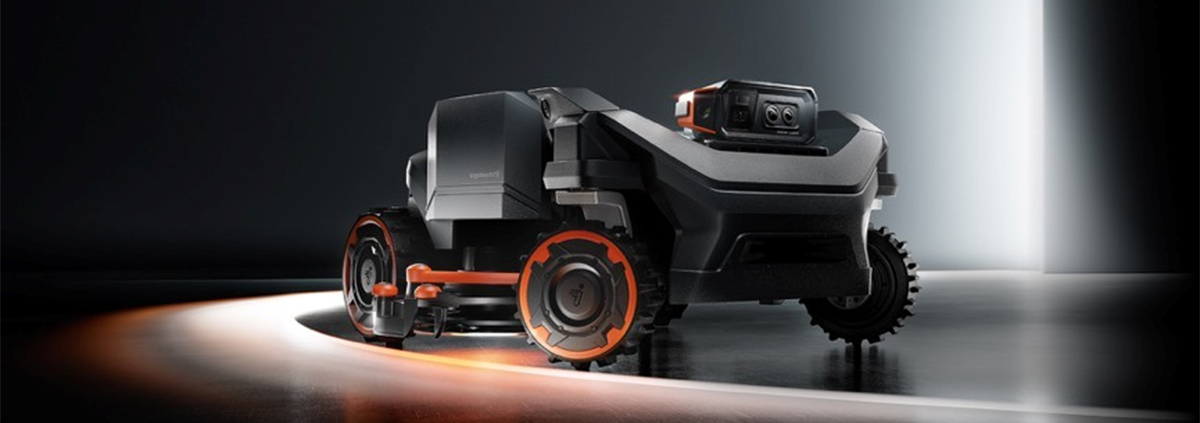
As the world’s No. 1 wire-free robotic lawn mower brand by retail sales volume for two consecutive years*, Segway Navimow has unveiled its new robotic lawn mower, the Navimow H5 Pro, a robotic lawn mower with a breakthrough EdgeMaestro™ extendable robotic arm for true zero-edge mowing. It delivers a major breakthrough in garden care, overcoming long-standing limitations in edge trimming, setting a new benchmark for fully automated mowing, and paving the way for a more seamless, hands-free lawn care experience.
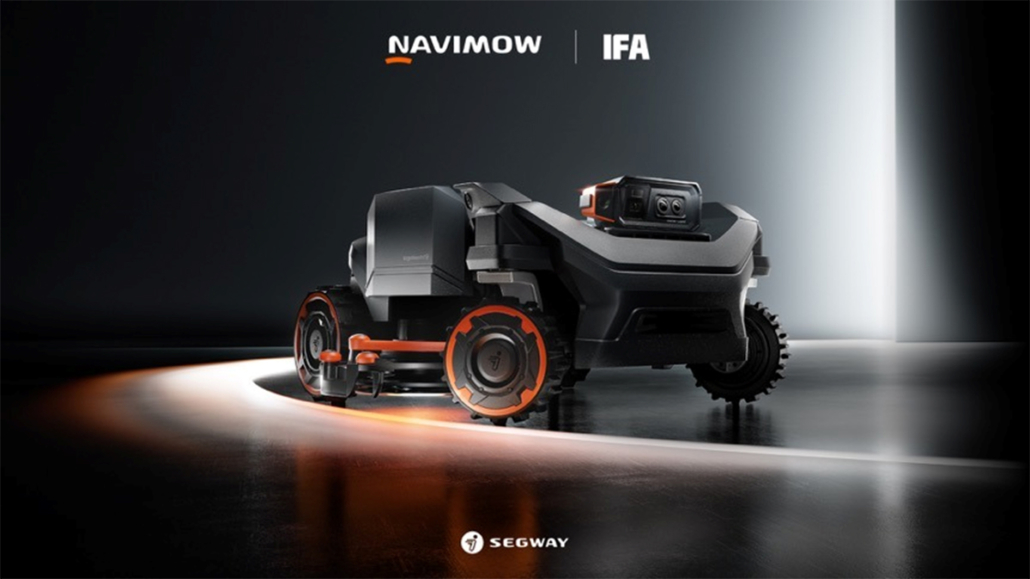
Navimow Redefines the Edge Cutting Experience with H5 Pro at IFA 2026
Alongside the X4 Series, H2 Series, i2 Series and Terranox Series, Navimow offers a comprehensive range of solutions for lawns of every size and complexity across both residential and commercial applications.
“At Navimow, our pursuit of innovation has never been limited to advancing technology,” said George Ren, CEO of Navimow. “We are here to redefine what homeowners can expect from lawn care. Today, with the zero‑edge mowing via the breakthrough EdgeMaestro™ extended robotic arm, we are doing exactly that. Technology should serve people: free up their time, simplify daily routines, and let them truly enjoy their gardens and time. And as more households embrace robotic mowers, we also embrace the responsibility to design with care for the environment and the wildlife that shares these green spaces. For us, innovation is not complete unless it is thoughtful, human‑centered, and nature‑conscious.”
Navimow H5 Pro: The Robotic Lawn Mower with EdgeMaestro™ Extendable Robotic Arm for True Zero-edge Mowing
For years, robotic lawn mowers have handled open lawn areas well — but not the edges, leaving homeowners to finish the jog with a separate trimmer. The Navimow H5 Pro changes that by eliminating manual edge trimming and delivering a truly hands-free mowing experience from center to boundary.
Built for homeowners with complex gardens, the Navimow H5 Pro delivers true zero-edge mowing through the breakthrough EdgeMaestro™ extendable robotic arm. Extending by 7.7cm, the arm allows the cutting system to reach flush against any edge with zero gap. To ensure that reach translates into real‑world consistency, the system also features an Omnidirectional Floating Arm that adapts to vertical bumps on uneven terrain and rebounds off side obstacles like ground lights, keeping the cutting disc steadily in contact with the ground. A Rake Module pulls edge grass inward toward the blade, while dual guide wheels minimise friction for smoother movement along the boundary.
The result is a clean, finished look across the entire garden without the need for a handheld trimmer. Homeowners no longer need to manually edge trimming along flower beds or wonder whether the mower has reached every edge. Even in gardens with complex layouts, tight turns, or uneven ground, the H5 Pro delivers a professional‑grade finish, every time.
Beyond performance, safety, cleanliness and quietness are prioritised. The Navimow H5 Pro features a cutting disc shield that reduces debris splashback, while intelligent drop detection helps prevent tipping when working along boundaries, making every edge‑mowing session safer. Importantly, the cutting disc used for edge mowing is the same one used for the main lawn area, not a separate add‑on attachment. This delivers a level of consistency that no attachment can match, whether along straight edges, flower‑bordered borders, or irregular zones. And with noise levels as low as 58 dB(A) during edge mowing, the Navimow H5 Pro runs quietly in the early morning or late evening without disturbing family members or neighbours, offering true peace of mind at any hour.
Powered by the upgraded EdgeSense™ 2.0 algorithm, the mower intelligently adapts to every boundary — from hard edges and soft borders to complex shapes and path transitions, with even cut and no missed grass. It delivers a clean, consistent finish across a wide range of boundary types — without the need to follow up with a handheld trimmer.
Equipped with Xero-Turn™ All-Wheel Drive (AWD), the Navimow H5 Pro is capable of climbing slopes up to 80% (38.6°). Its four-wheel independent hub motor system eliminates traditional drive shafts and differentials, enabling precise torque control. Paired with rear-wheel suspension, the wheels maintain ground contact across uneven terrain — crossing 6cm obstacles, pits, and gravel paths without getting stuck. Dual-mode steering switches between zero-turn pivoting for turf protection and automotive-grade steering for manoeuvrability, preventing ruts and grass tearing.
Deeply integrated with AI, the EFLS™ Tri-fusion system unifies LiDAR, Vision, and NRTK dynamic navigation. These three technologies collaborate dynamically to adapt to complex environments, intelligently switching to the optimal navigation strategy in different environments.
Its 360° VisionFence™ system combines optical vision with thermal infrared sensing to detect small animals and other obstacles, even in low-light and nighttime conditions. When a potential animal is identified, the mower stops and reroutes its path, helping protect local wildlife around the clock.
At Navimow, innovation is not solely about performance. It is also about responsibility. This built-in protection reflects our commitment to wildlife-conscious design, and we have now taken that commitment a step further: Navimow has partnered with a German NGO to support hedgehog protection, bridging smart technology with real-world ecological action.
Navimow x Igelhilfe Schulzendorf e.V.: Putting Wildlife Protection into Action
Beyond making lawn care more convenient than ever, Navimow is extending its commitment to the natural world through a one-year program of financial and operational support for Igelhilfe Schulzendorf e.V. The partnership will contribute to the organization’s local hedgehog rescue, rehabilitation and public education efforts, including controlled product testing at its rescue center, jointly developed educational content, and community outreach activities throughout the autumn.
As robotic lawn mowers become increasingly common, wildlife protection is an important consideration in responsible product design. Hedgehogs can be particularly vulnerable around robotic lawn mowers because their natural response to danger is to curl up rather than flee. Building on the animal detection capabilities of previous generations, the new Navimow H5 Pro combines 360° VisionFence™ AI-powered optical vision with a thermal infrared sensor. Designed to detect small animals in challenging lighting conditions, the system stops the cutting blades and reroutes the mower when a potential animal is identified. Ongoing evaluations with Igelhilfe Schulzendorf e.V. will provide expert input to help Navimow continue refining these capabilities.
“We are delighted to begin this partnership with Navimow and welcome its support for hedgehog rescue, rehabilitation and public awareness,” said Heike Kasten, Founder and Chairwoman of Igelhilfe Schulzendorf e.V. “Protecting hedgehogs depends not only on rescue efforts, but also on helping people understand how everyday garden choices affect them. Our experience using Navimow technology has reinforced our belief that convenient lawn care and consideration for animals do not have to be opposing goals. Combined with animal-friendly practices, thoughtfully designed technology can help people care for their gardens while remaining mindful of the animals that share them.”
As Kasten pointed out during the partnership discussions, leaving a small patch of grass unmown can provide a natural refuge for hedgehogs and other small creatures. Inspired by this insight, Navimow is now encouraging users to set aside a wild corner in their gardens, simply by marking it as a no‑go zone in the Navimow app. It’s a small change in settings, but a meaningful act of care for local wildlife.
For the latest industry news visit turfmatters.co.uk/news
Get all of the big headlines, pictures, opinions and videos on stories that matter to you.
Follow us on Twitter and Instagram for fun, fresh and engaging content.
You can also find us on Facebook for more of your must-see news, features, videos and pictures from Turf Matters