
John Deere launches JD™

John Deere launches JD™

John Deere launches JD™

John Deere is launching JD™, a new AI assistant designed to help farmers make better use of the data and information generated by their machines, technology and farming operations. Instead of searching across different sources for information, users can interact with JD™ using simple questions to find answers, analyse operational information and receive relevant insights. This new tool is free and, from 16 November, customers will find JD™ in their John Deere Operations Center web and mobile apps. The foundation for JD™ is the John Deere Operations Center™ which for now over a decade is the centralised platform for customers to manage their operations.

John Deere launches JD™

John Deere launches JD™

Turning farm data into useful information

Modern operations generate increasing volumes of machine, field and operational data. The challenge is to turn this data efficiently into practical insights and informed decisions. JD™ simplifies this process. It connects John Deere systems with customer-authorised operational, equipment and workflow data to provide assistance relevant to an individual operation. This distinguishes JD™ from general-purpose AI assistants that primarily rely on publicly available information, as JD provides answers based on a specific operation.

“For farmers, the real benefit of JD™ is about making the information and technology they already have on their farms easier to use,” says Maxim Zaitsev, Manager Precision Tech & Digital Solutions at John Deere in Europe. “By helping customers find answers, understand machine and operational information and identify opportunities faster, JD™ can reduce the time spent searching for information and give farmers more time to act on it.”

“Talk” to your data

JD enables farmers to have a conversation, in everyday language with the large amount of field, machine, and operational data they generate, creating the opportunity to improve yields, drive savings and strengthen farm profitability through AI. The assistant can help users to:

  • Analyse historical operational data, saving time and supporting decision-making by quickly having the right insights available.
  • Gain insights into equipment, land and work performed across their operation, enabling the identification of opportunities to improve productivity.
  • Facilitate production step or job analysis, such as the yield impact of fertiliser rates, tillage intensity or variable rate application to better understand how operational decisions affect results.
  • Learn how to complete tasks within John Deere software and equipment by quickly finding information in manuals and guides.

Protecting customer data

JD™ only uses customer-authorised data, securely and responsibly. When JD is used within John Deere Operations Center™, customer information remains inside Operations Center and is protected by the same servers and controls used to safeguard all data within it.

“Farmers can be absolutely confident that using JD as an AI assistant does not compromise their data. Our customers remain in full control of their own information and of who they choose to share it with,” says Paul Leathem, Director Region 2 Crop Care Solutions & Precision Technology. “In Europe, John Deere processes personal data in accordance with all applicable EU and national data-protection laws and regulations. This new tool will offer customers useful, context-specific assistance while continuing to safeguard their information and the permissions they set.”

JD will be available from launch to customers across a broad range of industries, including agriculture, golf and turf, construction, and road building.

For the latest industry news visit turfmatters.co.uk/news

Get all of the big headlines, pictures, opinions and videos on stories that matter to you.

Follow us on Twitter and Instagram for fun, fresh and engaging content.

You can also find us on Facebook for more of your must-see news, features, videos and pictures from Turf Matters
The toughest test of turf

The toughest test of turf

The toughest test of turf

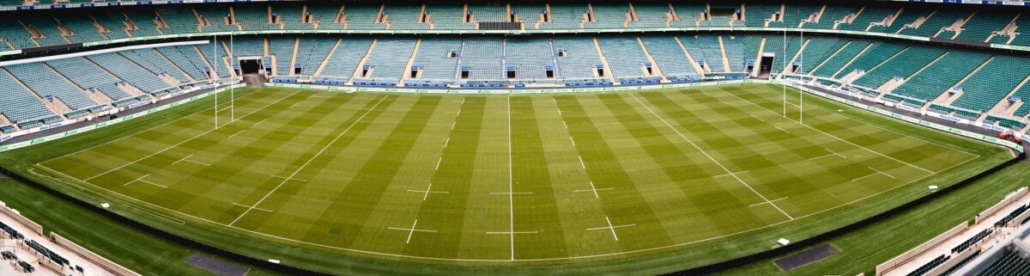
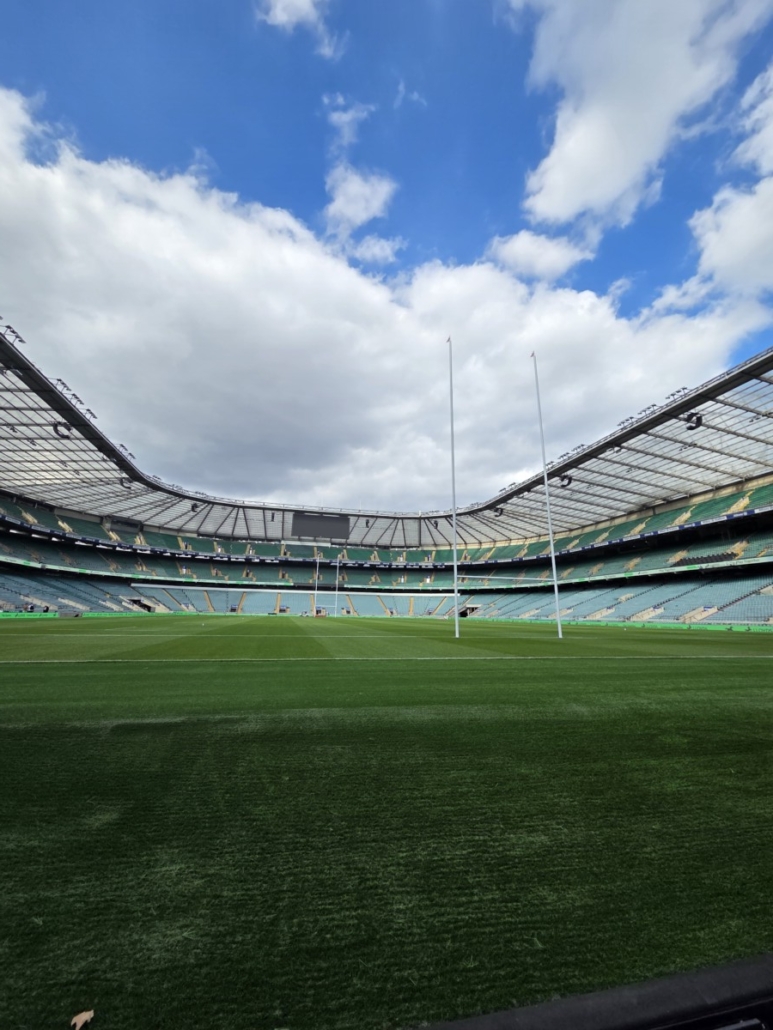
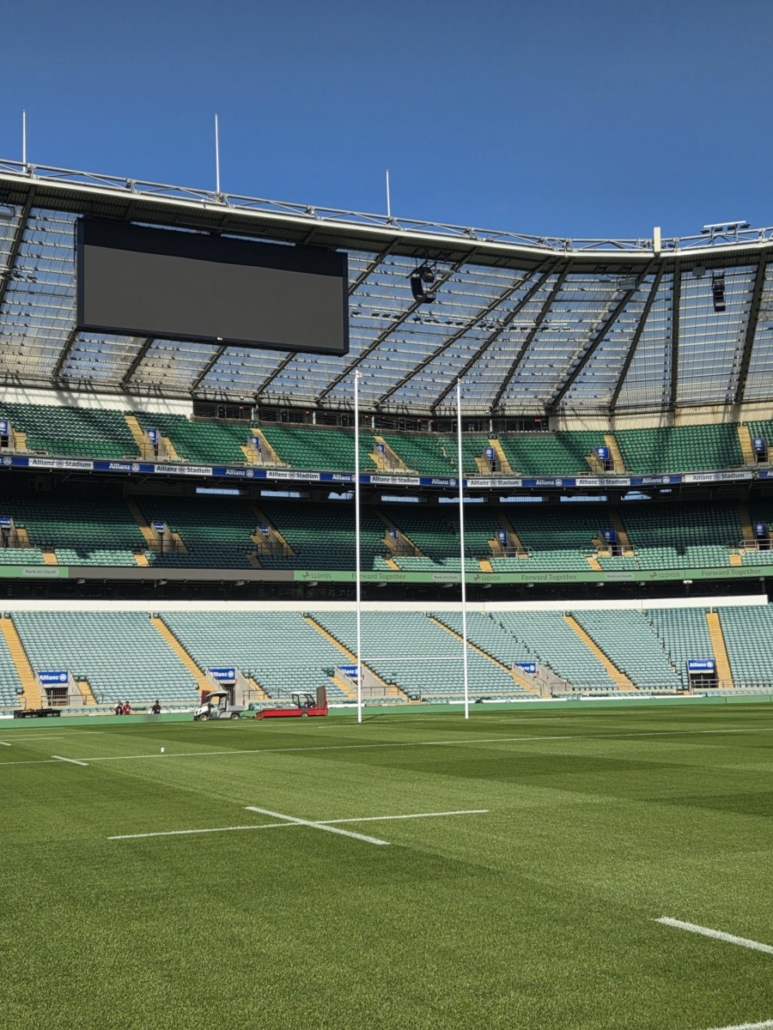
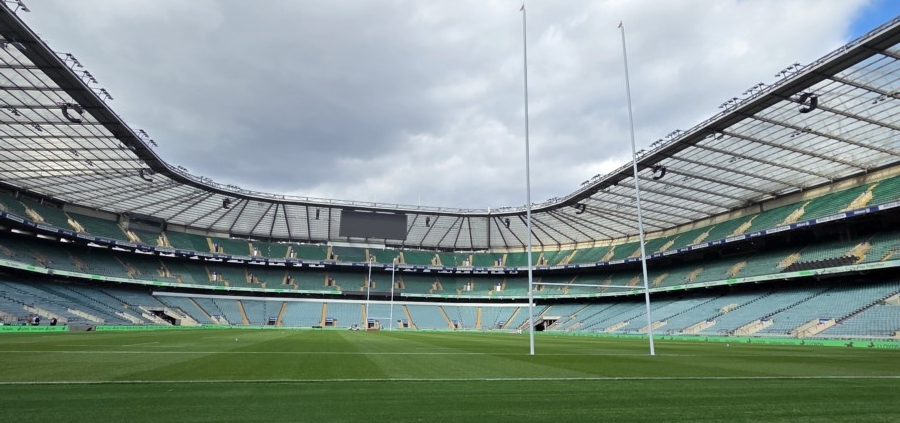
Scott MacCallum travelled to the Allianz Stadium to catch up with Jim Buttar and see the remarkable new pitch ahead of the toughest examination any sports turf could possibly get.

The toughest test of turf

The toughest test of turf

The end of November – Friday the 27th to Sunday the 29th to be precise – is an extremely important three days in the sporting calendar.

It is Finals weekend for the inaugural Rugby Union Nations Championship, which will identify the champion country in the game.

But more than that, for our industry, it is particularly important as it will see a new pitch being put under more pressure and strain than any pitch in the history of the sport.

Why? Well, the top 12 teams in the world, having played a series of qualifying games earlier in the year, will be playing off to identify their final placing and to crown the 2026 champion.

There will be six matches packed into those three days and each of the matches will be played at the Allianz Stadium – formerly known as Twickenham. That’s two matches a day for three days.

It is the rugby equivalent of playing host to the battles of Hastings, Culloden, Stamford Bridge, Bannockburn, Agincourt and Rorke’s Drift, one after another for three whole days.

That is what Jim Buttar, Head of Grounds and Technical Operations at the Allianz Stadium, is about to face later in November.

And it will all be happening on a brand new pitch, which was only laid in September.

Rugby Union is known to put the greatest of strains on turf and with 276 sets of studs, belonging to a dozen 23 man squads, twisting and gouging the most famous field in rugby, it will be getting the most rigorous of early examinations.

But when you talk with Jim you don’t find a man in search of the nearest darkened room. You find someone who knows the strength of his new pitch and is quietly confident that it will cope well with the almighty challenge.

“We were in discussions about hosting the finals well before the new pitch had even gone in. We ended up going with the Hatko system as we felt it was best suited to coping with what we would be dealing with,” said Jim, as we stood on the pitch which had been laid just 12 days before.

Six full on international matches back-to-back will test a pitch like no pitch has ever been tested before and to make matters worse, the most important of the six, the match which will decide the eventual winner, is the last one of all.

Hosting such a high profile event under the glare of the television cameras places an extra strain on the entire grounds team but again Jim is confident that everyone will take it in their stride.

“My team are such a great bunch of professionals. They’re used to hosting lots of back-to-backs, and we’ve done double headers before, but just as one-offs. This will be something special however,” he said, speaking just a few days before the pitch would receive its first test – World Champions England Women against New Zealand.

The toughest test of turf

The toughest test of turf

“Everybody knows what sort of level of commitment and work that’s going to be required. We’ve got some logistic work in terms of resourcing and bringing more people in and we do have a good group of additional workers who know what they are doing. We are happy that we’ve got the resource in place. Ultimately, as it is with every turf manager, it’s just what the weather brings.”

With each of the 12 teams expecting the very best of playing conditions the ability to work between matches is essential.

“We’re not expecting significant changes in how we operate and work. It will just be the times that we are doing it. We’re limited because we’ve got to try and get wrapped up, get changed and flip round.

“Then we do our pitch prep the following day, ready for the next pair of matches on the Saturday. Then same again on the Sunday.”

And Jim and the team have got to get to grips with their new pitch, one to which the phrase state-of-the-art barely does justice.

The new pitch is part of an on-going plan of modernising and improving the grand old lady of England Rugby, with a view to make it as sustainable as possible.

Jim works closely with Alex Cohen, the Allianz Stadium Development Director, and Alex explained that the RFU has gone with the absolute cutting-edge, best version of what they could achieve.

“It’s something that’s never before been done in rugby,” explained Alex. The old pitch, a Desso which had lasted a remarkable 14 years, well beyond its expected lifespan, was removed and the new Hatko one installed by Hewitt Sportsturf in a process which impressed all of the Allianz staff.

“There was 8,700 square metres of turf laid in two days. It was phenomenally quick operation by Hewitt Sportsturf,” said Jim.

“They removed a significant amount of the old profile construction with 9,000 tonnes of material taken out in two weeks. They went so far down that they were finding old drains from the 1960s.

“The new pitch sits in what is fundamentally an industrial pond liner produced by Permavoid. It is in effect a sealed 1,400 cubic litre reservoir.

The science doesn’t stop there. Following copious research Jim visited Holland where he met with the producers of DrainTalent which gives close control infiltration rates and allows the management of moisture.

“We have that capacity to be able to pull out water for our irrigation needs, and also push that water back in there. So, if we have a rainfall event we can extract that water and pump it back into the reservoir.

“We are hopeful that the 7 million litres that we previously put on there will be reduced by 80%, so 5.6 million litres saved and we hope that ultimately it will be completely selfsufficient and we that we never need any mains water fed into it,” explained Jim.

The toughest test of turf

The toughest test of turf

That’s all under the surface. The Allianz now boasts that lovely new Hatko carpet.

“The fibres sit at 60 mils, which has been specifically designed for us and rugby. It’s a slightly deeper profile, so we can put more material in it. It actually has more weight in it than some of the Hatko surfaces installed at the likes of Wembley, Tottenham Hotspur and Liverpool.”

Some of the stats surrounding the new pitch are startling to say the least. More than 35km of pipework has been installed beneath the pitch.

There is 6,192 metres of drainage pipes; 29,500 metres of undersoil heating pipe; 86 drainage runs and 246 undersoil heating pipes.

There were 26 lorry loads of turf required to create the new playing surface; 10,000 tonnes of turf removed; 6,500 tonnes of materials brought in.

Over 20 skips of materials sent for recycling and over 10,000 working hours delivered in just 12 weeks.

The pitch is just one element of a huge modernisation programme for the Grand of Lady of English Rugby and one which will be stage due to the enormous sums it would take to carry it out on one phase.

As Alex explained.

“The experience of a female coming here has been really challenging. The last modernisation took place in the late 90s, when there was a 90-10 ratio split of men to women. That’s absolutely nowhere near where we are at the moment.

“For a Roses game, more than half the crowd are female. Hence the reason we’re putting in more toilets, particularly with a focus on women,” said Alex, who added that the new Tottenham stadium, not too far away, had highlighted even further the need to bring the Allianz up to modern standards. But while the actual stadium up-grades – including replacing boilers with air source heat pumps – are being carried out over the course of the next few years and warmly welcomed by supporters, of both genders, all eyes will be on the new pitch and how well it performs over the toughest of initiations and onward over the next few years.

So, when you see Jim and his team out on the turf during the six half time periods, and then between games, you can be sure that they will being doing with care, admiration and respect for what their new pitch has been enduring.