Turf News is the perfect place for professionals working within the UK’s vibrant turf industry – keeping you up-to-date with topical news, latest market developments and much more across all areas of the industry.
NEWS ARTICLES
Origin Green-Tech and BHT bring complete forestry solutions to APF

Origin Green-Tech and BHT bring complete forestry solutions to APF

Origin Green-Tech and BHT bring complete forestry solutions to APF

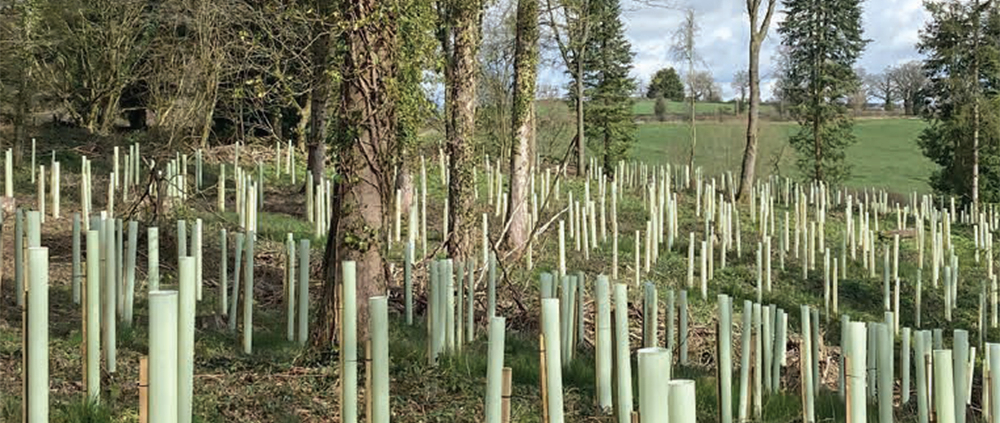
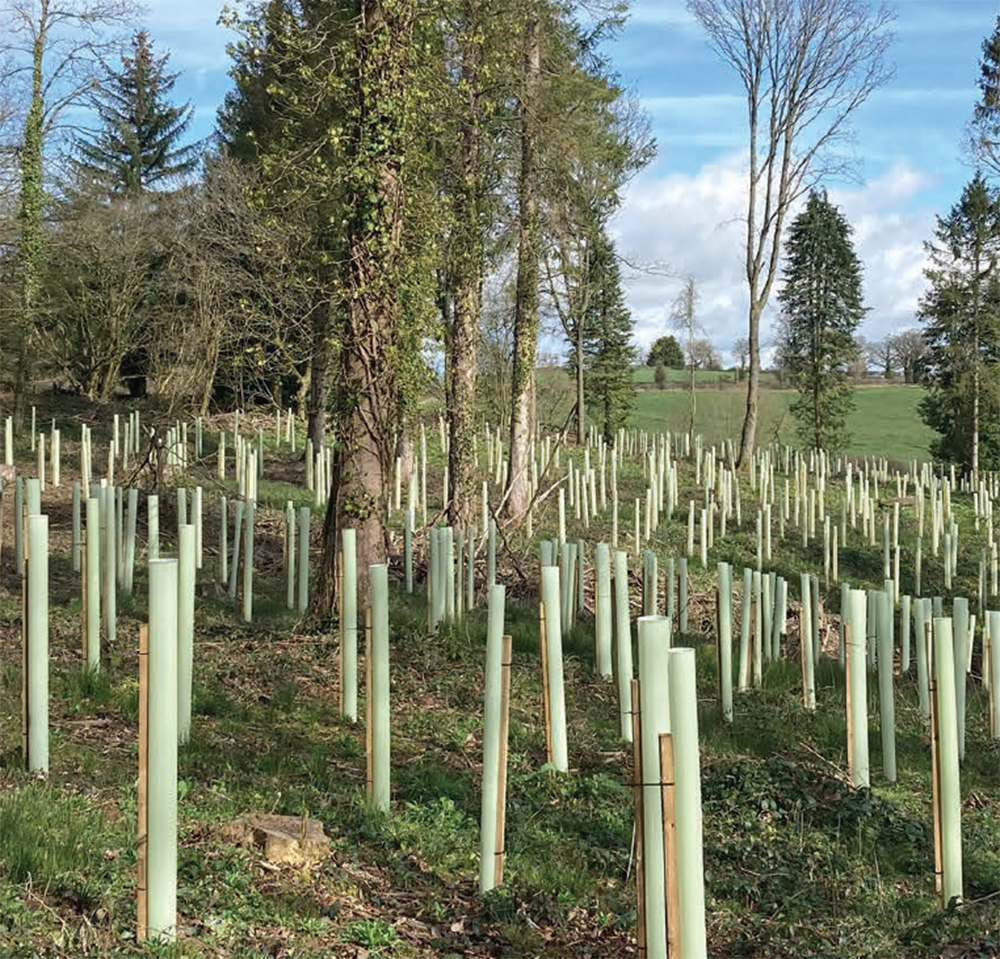
Origin Green-tech and British Hardwood Tree Nursery (BHT) will showcase their complementary forestry expertise at APF 2026, bringing together specialist tree production, planting and protection products and wider land management solutions.
Origin Green-Tech and BHT bring complete forestry solutions to APF

Origin Green-Tech and BHT bring complete forestry solutions to APF

BHT is an established specialist trading brand of Origin Green-tech, supplying high-quality, UK-grown trees, hedging and planting stock for forestry, woodland creation and environmental projects. Origin Green-tech provides the wider range of products, technical expertise and support needed to help customers establish and manage successful planting schemes.

BHT will exhibit on Stand A3, where its team will showcase its range of British-grown trees, hedging and planting stock. With decades of experience in tree production, BHT has built a strong reputation for quality, provenance and specialist knowledge, supporting customers with species selection, planting requirements and successful establishment.

On Stand D13, Origin Green-tech will showcase its extensive range of forestry and land management products, including tree protection and planting accessories, mulches, weed control, irrigation, soils and growing media, geotextiles, ground reinforcement, erosion control and other environmental products.

As the UK’s trusted partner for sustainable land management solutions, Origin Green-tech combines technical expertise, industry-leading solutions, an unrivalled understanding of the living world and dependable supply. The business works with customers across forestry, landscaping, environmental management, agriculture and the built environment, providing support from specification through to project delivery, backed by expert technical advice and reliable nationwide delivery.

The complementary offer from Origin Green-tech and BHT means customers can access specialist knowledge and products across different stages of a forestry or woodland creation project, from selecting and sourcing planting stock through to protecting trees, managing competing vegetation and addressing wider ground and site management requirements. This includes solutions for woodland creation, habitat restoration and the establishment and maintenance of healthier, more resilient landscapes.

Mark Andrews, Managing Director of Origin Green-tech, comments, “Forestry and woodland creation projects require a range of specialist products and expertise, and bringing these complementary capabilities together gives customers greater access to the support they need.

BHT brings extensive experience in tree production, provenance and planting stock, while Origin Green-tech provides a broad range of products and technical expertise to support successful establishment and ongoing land management.

APF gives us a great opportunity to showcase both businesses and talk directly to forestry professionals about the practical challenges they are facing on their projects.”

The wider Origin Green-tech portfolio also includes specialist trading brands John Chambers Wildflowers, Green-tree Soils and Groundtrax Ground Reinforcement Solutions, bringing additional expertise and products across the land management sector.

Together, the businesses provide customers with access to a broad range of products and specialist expertise, from high-quality planting stock through to tree protection, ground reinforcement, wildflower establishment, soils and growing media and wider environmental solutions.

Following the recent transition from Green-tech to Origin Green-tech, APF will also provide an opportunity for customers and industry contacts to meet the team under its new identity and discover more about the wider business and its specialist brands.

APF 2026 takes place at Ragley Estate, Warwickshire, from 24–26 September.

For the latest industry news visit turfmatters.co.uk/news

Get all of the big headlines, pictures, opinions and videos on stories that matter to you.

Follow us on Twitter and Instagram for fun, fresh and engaging content.

You can also find us on Facebook for more of your must-see news, features, videos and pictures from Turf Matters
IPM Showcase gets people talking at GroundsFest

IPM Showcase gets people talking at GroundsFest

IPM Showcase gets people talking at GroundsFest

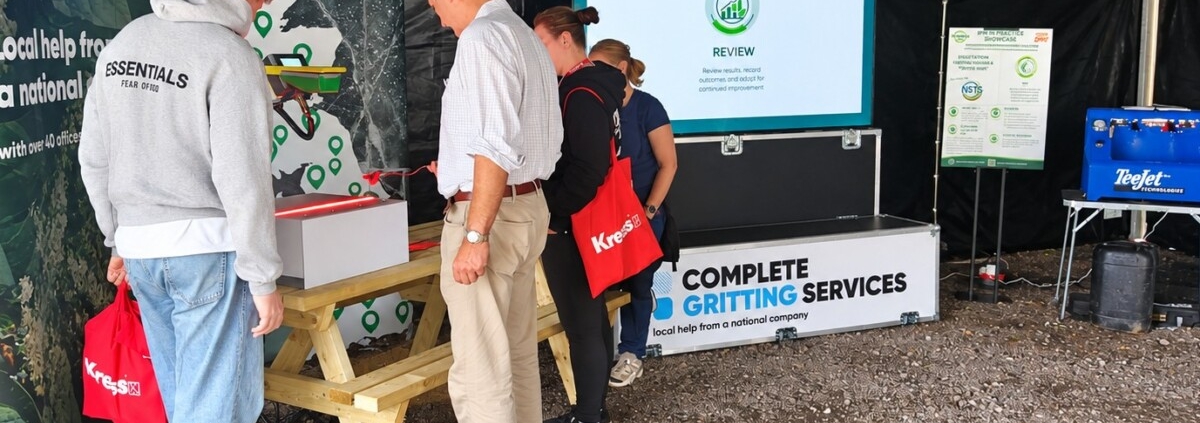
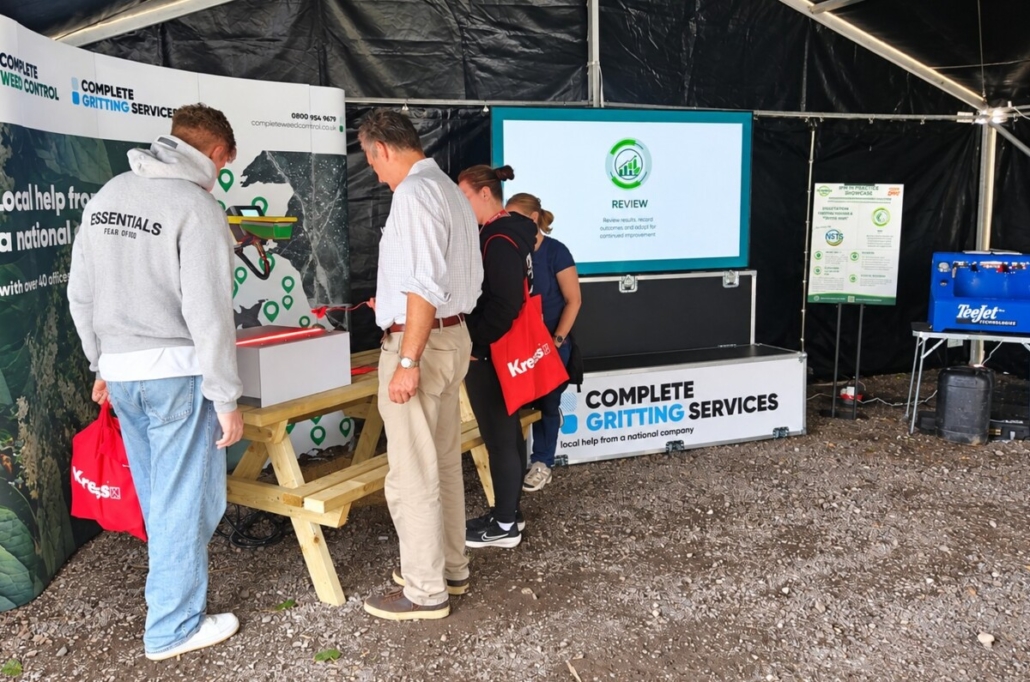
The breadth of Integrated Pest Management (IPM) across professional amenity was on display at GroundsFest, where the Amenity Forum brought together organisations, technologies and expertise from across the sector for its IPM in Practice Showcase.

IPM Showcase gets people talking at GroundsFest

IPM Showcase gets people talking at GroundsFest

Designed to provide a practical and interactive look at IPM, the Showcase gave visitors the opportunity to explore different approaches and talk directly to organisations working across a wide range of amenity settings.

From vegetation management on the rail network and weed control to machinery, application technology, sprayer testing, seed and turf management, products and stewardship, and emerging technologies, the Showcase reflected the breadth of expertise and approaches involved in professional amenity management.

Showcase partners and Amenity Forum members included Complete Weed Control, the National Sprayer Testing Scheme (NSTS), Origin Amenity Solutions, Wisdom Systems, DLF, Weedfree, Kersten and ProGreen, with Origin Amenity Solutions also sponsoring the Showcase.

Across the two days, the displays prompted engaging discussions with visitors about IPM in practice, the challenges faced in different amenity environments and the range of tools and approaches available to professional practitioners.

Collaboration was also a feature of the Showcase, with participating members and partners working together across the stand, sharing expertise and helping visitors explore the different elements of IPM in practice.

Corrina Urquhart, Executive Officer of the Amenity Forum, said:

“What really came across at GroundsFest was the breadth of our sector and how much expertise sits behind good amenity management. We wanted to make IPM practical and interactive, and it was great to see the conversations that generated over the two days.

“Everyone involved worked together, shared their expertise and engaged with visitors across the Showcase. That collaborative spirit is exactly what the Amenity Forum is about – bringing together different parts of the sector to share knowledge, experience and good practice.”

The conversations started at GroundsFest will continue at the Amenity Forum Conference next month, where speakers from across policy, regulation and industry will explore the changes affecting professional amenity management, what works in practice and how the sector can prepare for the future.

Taking place on 8 October at the British Motor Museum, the conference, Navigating Change: Regulation, Stewardship and the Future of Amenity Management, will bring together perspectives from across the sector and provide further opportunities for discussion and knowledge exchange.

For further information and to book, visit the Amenity Forum website – 2026 Annual Conference – 8 October 2026 – Tickets | Amenity Forum

For the latest industry news visit turfmatters.co.uk/news

Get all of the big headlines, pictures, opinions and videos on stories that matter to you.

Follow us on Twitter and Instagram for fun, fresh and engaging content.

You can also find us on Facebook for more of your must-see news, features, videos and pictures from Turf Matters
Adaptive Path Planning for Golf Ball Picking Robots

Adaptive Path Planning for Golf Ball Picking Robots

Adaptive Path Planning for Golf Ball Picking Robots

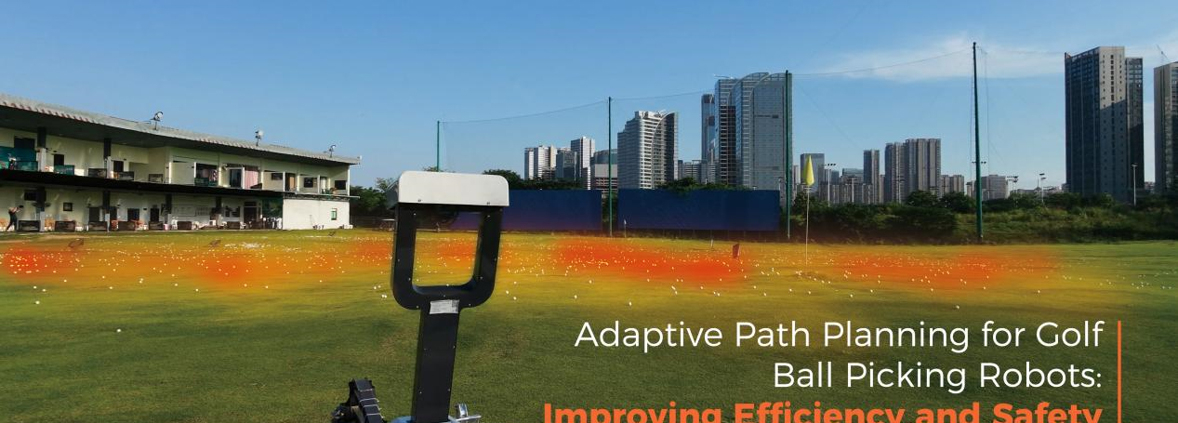
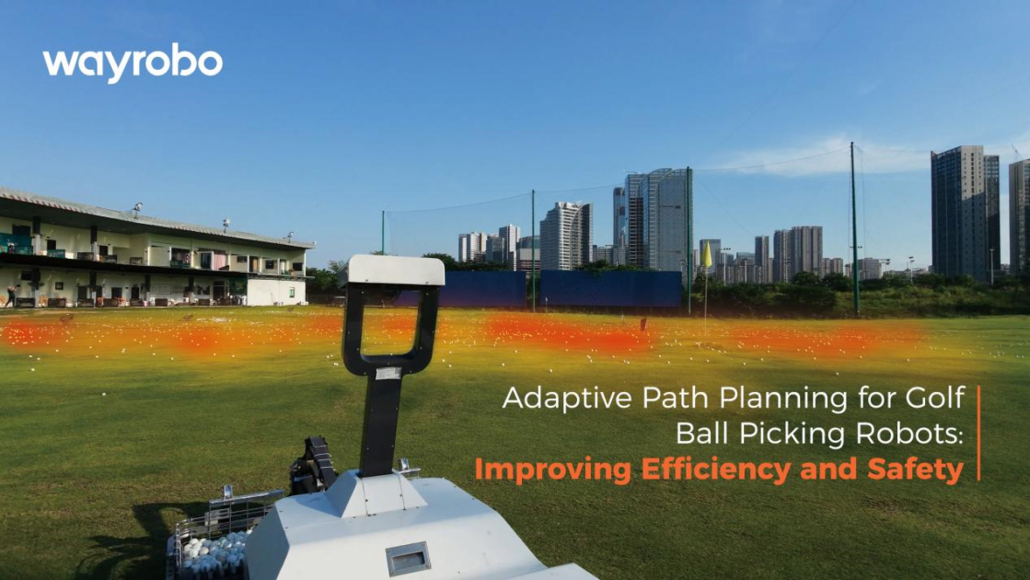
Golf driving ranges are constantly changing environments. The number and location of golf balls on the field can vary throughout the day depending on player activity, practice patterns, and operating conditions. At the same time, golfers, golf carts, maintenance teams, and temporary equipment may enter the working area and affect how robots can move safely.

Adaptive Path Planning for Golf Ball Picking Robots

Adaptive Path Planning for Golf Ball Picking Robots

For a robotic golf ball picker, following a fixed route is often not enough. A fixed path does not consider changes in ball distribution or unexpected obstacles, which may result in unnecessary travel, repeated coverage, or interrupted operation.

Adaptive path planning is the ability of a robotic golf ball picker to adjust its route based on golf ball distribution, its current position, obstacles, and other operating conditions. For the WayPick 2 robotic golf ball picker, this helps improve collection efficiency while maintaining safe and reliable operation.

Key Technologies Behind Autonomous Golf Ball Picker Navigation

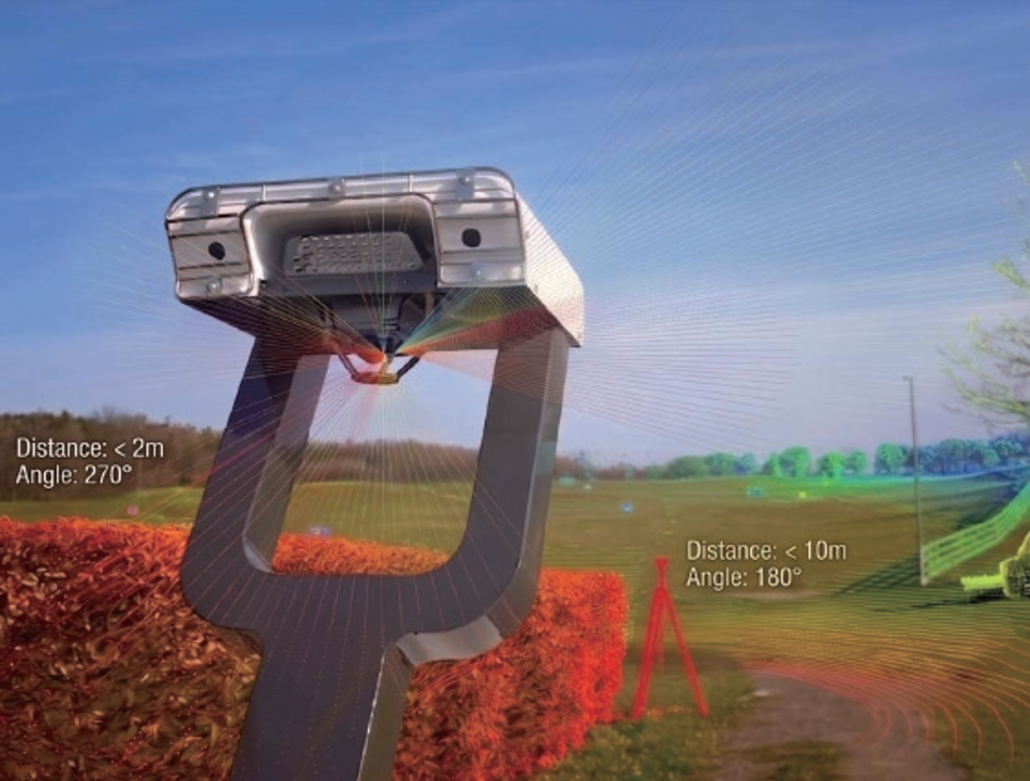
Adaptive path planning starts with understanding the environment. WayPick 2 uses AI vision, LiDAR, GNSS, and IMU technologies to collect the information needed for navigation and route planning.

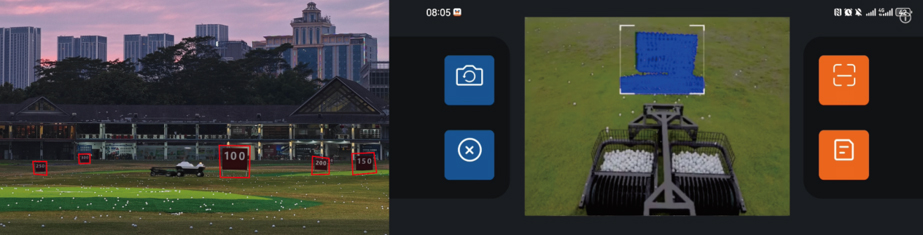
The AI camera system helps WayPick 2 identify golf balls and understand their distribution across different areas of the driving range. Instead of treating the entire field equally, the robot can gather information about where golf balls are concentrated and where collection demand is lower.

LiDAR helps detect objects around the robot and provides additional environmental information for safe navigation.

Adaptive Path Planning for Golf Ball Picking Robots

Adaptive Path Planning for Golf Ball Picking Robots

GNSS and IMU provide positioning and movement information, helping WayPick 2 understand its location and maintain accurate navigation across outdoor areas.

Together, these technologies provide the information needed for adaptive planning. They allow WayPick 2 to make route decisions based on actual field conditions rather than simply repeating a fixed path.

Improving Golf Ball Collection Efficiency Through Adaptive Route Planning

One of the main benefits of adaptive path planning is reducing unnecessary movement during golf ball collection.

Golf balls are rarely distributed evenly across a driving range. After a busy practice period, areas close to hitting zones may contain a much higher concentration of balls, while other areas may have relatively few. A traditional fixed route requires the robot to cover each section in the same sequence, even when the collection demand is different.

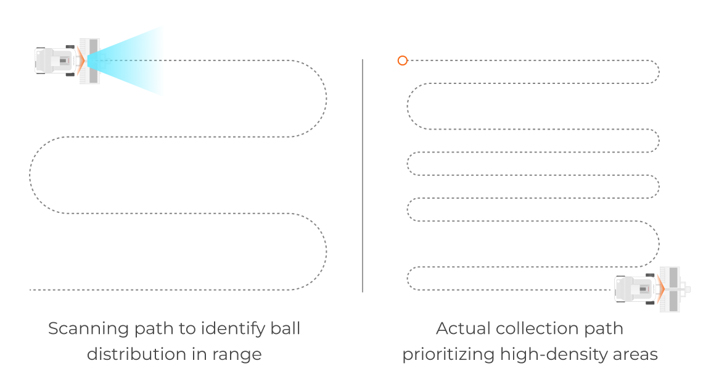
Before planning its actual collection route, WayPick 2 first performs a visual scan of the selected working area. Operators can choose to scan the entire area or focus on high-priority areas marked as hot zones on the golf range heat map.

Adaptive Path Planning for Golf Ball Picking Robots

Adaptive Path Planning for Golf Ball Picking Robots

During the scan, WayPick 2 uses its AI camera to identify golf balls and record their distribution and density. The scanning paths are spaced wider apart, allowing the robot to cover the selected area quickly and build an overview of where golf balls are concentrated.

Once the scan is complete, WayPick 2 uses this information to plan its actual collection route. The collection paths are arranged at a closer spacing for more thorough golf ball pickup, with higher-density areas given greater priority. When planning the actual collection path, the system can consider golf ball density, the robot’s current position, and the distance to different areas to determine a practical collection sequence.

Adaptive Path Planning for Golf Ball Picking Robots

Adaptive Path Planning for Golf Ball Picking Robots

This approach can reduce unnecessary travel through low-density areas, minimize repeated coverage, and increase the amount of time spent on actual golf ball collection. It also allows the robot to respond more effectively to changes in ball distribution throughout the day.

Maintaining Safe Operation Through Safety Boundaries and Obstacle Avoidance

Efficiency is important, but safety is equally critical for autonomous golf equipment operating in environments shared with people.

WayPick 2 uses both predefined safety boundaries and real-time obstacle avoidance to support safe operation.

Before deployment, golf facilities can define areas that should be avoided during operation. These may include bunkers, water hazards, course boundaries, maintenance areas, buildings, and other restricted zones. These areas act as navigation constraints, allowing the robot to consider them when planning its route rather than treating the entire field as available working space.

Adaptive Path Planning for Golf Ball Picking Robots

Adaptive Path Planning for Golf Ball Picking Robots

However, real golf environments are always changing. Unexpected obstacles may appear even when a working area has been carefully prepared, including golfers walking through the operating zone, maintenance staff, parked golf carts, or temporary objects on the field.

When WayPick 2 detects an obstacle, it can respond according to the situation by slowing down, stopping, or adjusting its route when a safe path is available. This combination of predefined safety boundaries and real-time obstacle response helps reduce interruptions while limiting the need for constant manual supervision.

Supporting Multi-Robot Operations for Larger Golf Facilities

For larger driving ranges, multiple robotic golf ball pickers may be required to cover wider areas efficiently.

Adaptive planning provides the foundation for better fleet coordination. Working areas can be divided among different robots to reduce repeated coverage and avoid unnecessary overlap.

When multiple robots share facilities such as charging areas or unloading station, coordination also becomes important. Robots need to recognize shared resource availability, maintain safe distances, and avoid conflicts during operation.

As golf facilities continue adopting golf driving range automation, coordinated operation between multiple robots will become increasingly valuable for large-scale management.

A Smarter Approach to Golf Ball Collection Automation

The WayPick 2 robotic golf ball picker shows how adaptive path planning can improve autonomous golf ball collection in real-world environments.

By adjusting routes according to golf ball distribution, responding to obstacles, and supporting multi-robot operations, adaptive navigation can help golf facilities improve efficiency, safety, and operational flexibility.

To learn more about WayPick 2, visit Wayrobo.

For the latest industry news visit turfmatters.co.uk/news

Get all of the big headlines, pictures, opinions and videos on stories that matter to you.

Follow us on Twitter and Instagram for fun, fresh and engaging content.

You can also find us on Facebook for more of your must-see news, features, videos and pictures from Turf Matters
England Golf, BIGGA and GCMA urge golf clubs to take part in water census

England Golf, BIGGA and GCMA urge golf clubs to take part in water census

England Golf, BIGGA and GCMA urge golf clubs to take part in water census

England Golf, the British and International Golf Greenkeepers Association (BIGGA) and the Golf Club Management Association are urging every golf club to contribute to a major national study that will establish the most detailed picture yet of water use and resilience across the golf sector.

England Golf, BIGGA and GCMA urge golf clubs to take part in water census

England Golf, BIGGA and GCMA urge golf clubs to take part in water census

The Golf Sector Resilience and Alternative Water Supply Options project is being led by the Retailer Wholesaler Group’s Water Efficiency Sub-Group, which brings together wholesale and retail water companies, in partnership with the Environment Agency.

Independent research agency Sporting Insights has been commissioned to conduct a water census examining how golf clubs source, store and use water, as well as the infrastructure and alternative supply options available to them.

The survey will be shared with clubs and England Golf is asking members to complete it where they hold the relevant information. Greenkeepers who are unable to answer every section themselves are encouraged to speak to their club manager, secretary, committee or other officials and ensure a response is submitted on the club’s behalf.

The census follows a State of the Nation assessment that highlighted the increasing pressure on England’s water resources and the lack of consistent, sector-wide information about golf’s current position.

Demand on public water supplies must fall as the country responds to population growth, climate change and increasingly unpredictable rainfall. The statutory target is to reduce the use of public water supply in England per head of population by 20% by 2038 against a 2019-20 baseline. Water companies are also under growing pressure to reduce non-household demand.

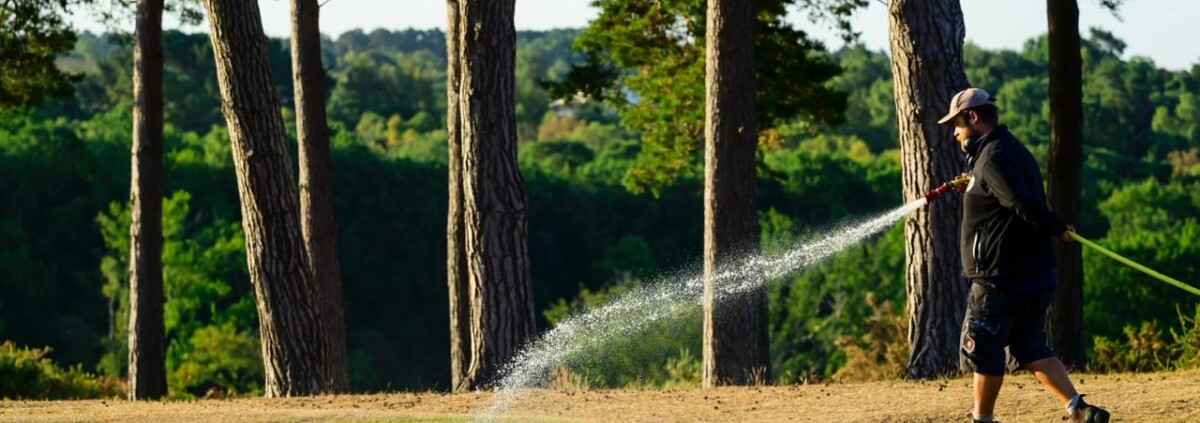
Golf clubs are already experiencing the practical effects. Drought restrictions and abstraction controls can limit access to mains water, boreholes, rivers, lakes and other sources, while prolonged dry periods place greater pressure on irrigation systems and stored supplies. The circumstances can vary significantly between clubs and water company regions.

The State of the Nation work found that detailed information is needed on the amount of water golf clubs consume, where it comes from, how it is measured and what storage or alternative sources are available. The industry also needs to understand the condition and coverage of existing infrastructure, how clubs have been affected by restrictions and what investment they are considering.

Without that evidence, it is difficult for golf’s representative bodies and the water sector to identify practical solutions, plan future support or make a robust case for the needs of golf clubs to policymakers and regulators.

BIGGA Chief Executive Jim Croxton said: “Water resilience is one of the defining challenges facing golf. Greenkeepers have dealt with an exceptionally difficult combination of prolonged dry weather, pressure on supplies and changing restrictions, and those challenges are likely to become more frequent.

“We know clubs are starting from very different positions. Some have reservoirs, boreholes or opportunities to harvest and store water, while others remain heavily dependent on the mains. Before the industry can develop effective solutions, we need reliable information showing what clubs use, what resources they have and where the greatest vulnerabilities lie.

“This census gives every golf club the opportunity to help shape that work. I would strongly encourage BIGGA members to complete it themselves where they can. If somebody else at the club holds the information, please speak to them and make sure the club takes part.

“A strong response will give the entire golf industry a much firmer evidence base when speaking to water companies, government and regulators. The findings can also help direct future guidance and investment towards the areas where they will have the greatest effect.

“We have strong evidence of the value of golf to public health, tourism, jobs and the economy, along with the incredible sporting value so brilliantly demonstrated recently with the inspiring Walker and Solheim Cup victories. Maintaining resilient water supplies in a changing climate is critical to the future of our sport.”

The project has been designed as a collaborative exercise between the water and golf sectors. Its findings will be used to examine opportunities to improve efficiency, increase resilience and develop alternative supplies, recognising that suitable options will depend on each club’s location, resources and existing infrastructure.

Participating clubs will help create a national evidence base that can inform the sector’s response to future droughts, restrictions and long-term changes in water availability. The greater the participation, the more representative and useful the findings will be.

For the latest industry news visit turfmatters.co.uk/news

Get all of the big headlines, pictures, opinions and videos on stories that matter to you.

Follow us on Twitter and Instagram for fun, fresh and engaging content.

You can also find us on Facebook for more of your must-see news, features, videos and pictures from Turf Matters
Quality equipment meets quality fuel

Quality equipment meets quality fuel

Quality equipment meets quality fuel

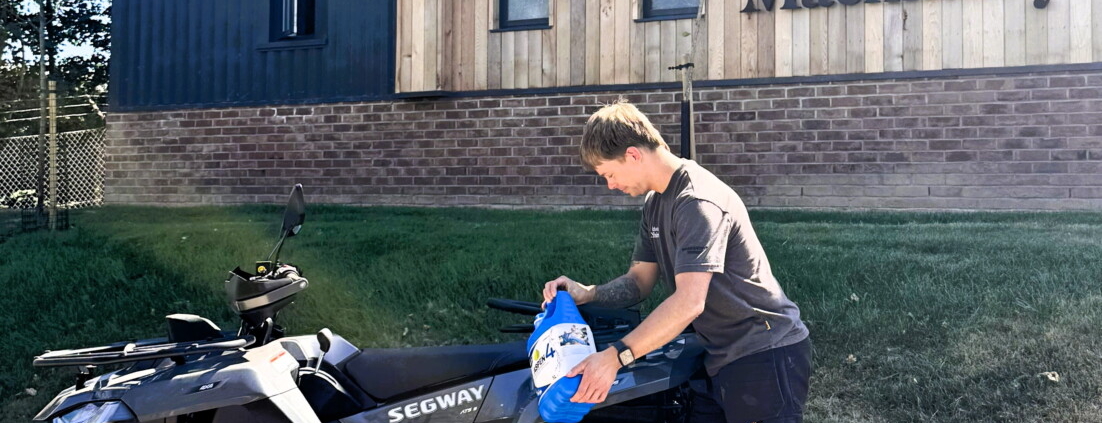
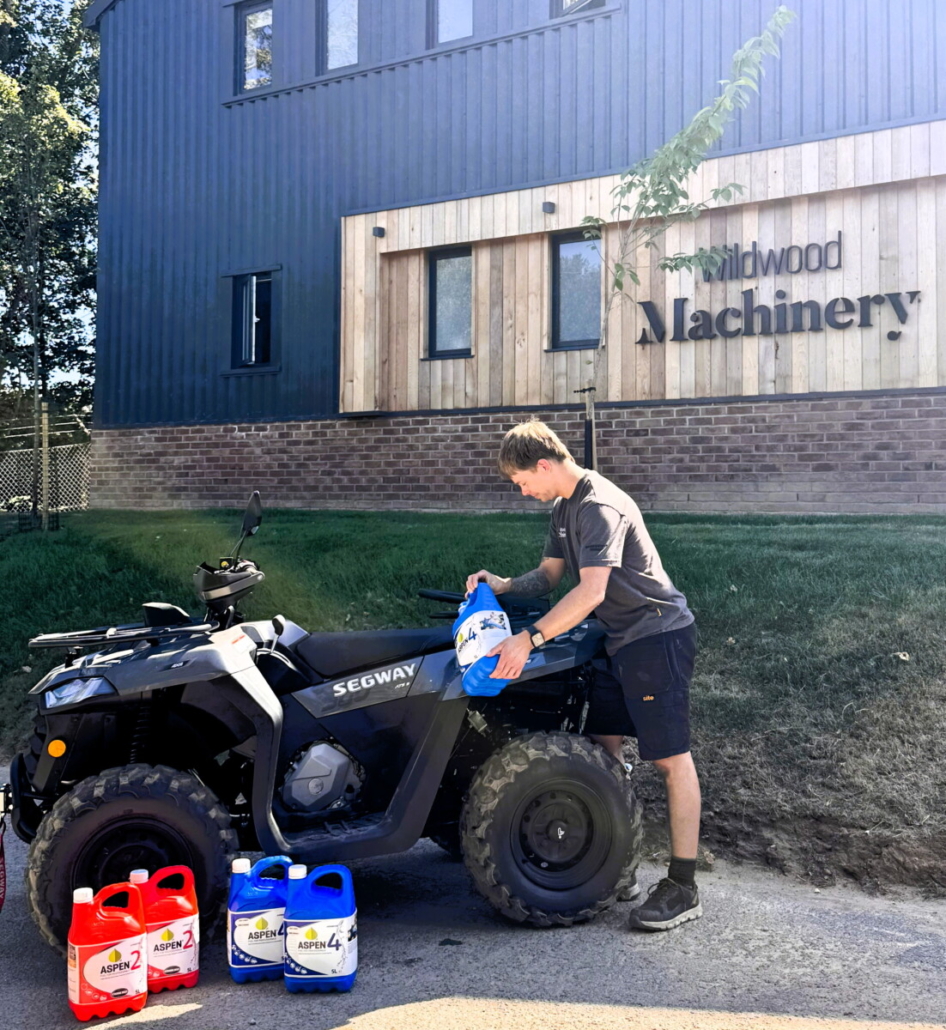
For Hampshire’s Wildwood Machinery, supplying premium groundcare equipment has always been about more than simply selling machines. It’s about providing customers with the products, advice and support they need to get the best performance from their investment – which is why the company’s partnership with Aspen Fuel has been such a natural fit.

Quality equipment meets quality fuel

Quality equipment meets quality fuel

As distributors for Aspen’s alkylate petrol for the last 18 months, Wildwood Machinery can offer customers a cleaner, high-quality fuel that complements the leading brands within the dealership’s portfolio. As Managing Director James Bastian goes on to explain, the partnership is not only delivering significant health and environmental benefits for the operator, it is also helping to reduce costly servicing and maintenance issues typically triggered by the use of conventional pump petrol.

“Being an Aspen distributor has been a fantastic fit alongside our machinery range” he says. “The fuel is safer to handle and store, delivers better engine longevity and offers our customers the convenience of not needing to source their fuel elsewhere.”

James continues, “There’s a lot to like about the Aspen product, not least the sustainability angle which ties in nicely with Wildwood’s own environmental ethos and that of the wider groundcare industry. The lower overall emissions and reduced exposure to harmful fumes is a real plus for the greenkeepers and grounds staff using this fuel day in, day out, making a real difference to operations both immediately and in the longer term.”

A key factor behind the partnership’s success over the last 18 months has been with the close working relationship between James and Aspen Fuel’s Roy Narbey, the pair working together to introduce councils, sports club and contractors to Aspen through joint demonstrations and trials. “Enabling customers to discover the benefits first-hand has been the key to encouraging people to make the switch. This collaborative approach has helped both companies to extend our reach, strengthen relationships and generate new business.”

“For clubs and contractors already investing in quality machinery, it just makes sense to pair that with a fuel that looks after both the equipment and the people using it.”

Virtually free from ethanol, aromatics and benzene, Aspen alkylate petrol is 99% cleaner than ordinary petrol in terms of the amount of hazardous hydrocarbons. Suitable for all types of modern 2-stroke and 4-stroke engines, Aspen offers better performance and a longer service life helping to maximise the return on your investment.

For more information, visit aspenfuel.co.uk

For the latest industry news visit turfmatters.co.uk/news

Get all of the big headlines, pictures, opinions and videos on stories that matter to you.

Follow us on Twitter and Instagram for fun, fresh and engaging content.

You can also find us on Facebook for more of your must-see news, features, videos and pictures from Turf Matters