Turf News is the perfect place for professionals working within the UK’s vibrant turf industry – keeping you up-to-date with topical news, latest market developments and much more across all areas of the industry.
NEWS ARTICLES
Amenity Forum Updating Event highlights shared sector priorities

Amenity Forum Updating Event highlights shared sector priorities

Amenity Forum Updating Event highlights shared sector priorities

Over 60 members and industry representatives attended the latest Amenity Forum Updating Event, bringing together expertise from across the amenity sector.

Amenity Forum Updating Event highlights shared sector priorities

Amenity Forum Updating Event highlights shared sector priorities

The event featured a wide-ranging programme covering the future regulatory landscape, practical approaches to weed, pest and disease management, and the increasing importance of demonstrating responsible and evidence-based practice across the sector.

Agenda items included updates on the forthcoming GB glyphosate consultation, the latest data on pesticide inspection visits from HSE, integrated pest management approaches, digital record keeping and the role of technology in supporting professional standards and compliance. Speakers also explored the practical implications of evolving environmental expectations and regulatory scrutiny for operators across the amenity sector.

There was a shared focus on professionalism, practical delivery and ensuring the sector continues to engage positively with evolving environmental and regulatory expectations. The event also reinforced the importance of collaboration and collective industry engagement around key issues such as the GB glyphosate consultation and the continued development of integrated pest management approaches.

Richard Stow, Managing Director of Weedfree Ltd, sponsor of the first Updating Event of 2026, said:

“The event highlighted both the complexity of vegetation management and the importance of sharing knowledge and practical experience across the sector. It was encouraging to see such constructive discussion around integrated approaches, innovation and maintaining high professional standards.

A clear theme was the importance of collaboration across the sector to ensure that future policy discussions and regulatory decisions remain practical, proportionate and informed by operational realities on the ground.”

For the latest industry news visit turfmatters.co.uk/news

Get all of the big headlines, pictures, opinions and videos on stories that matter to you.

Follow us on Twitter and Instagram for fun, fresh and engaging content.

You can also find us on Facebook for more of your must-see news, features, videos and pictures from Turf Matters
How technology is changing natural grass management in modern stadiums

How technology is changing natural grass management in modern stadiums

How technology is changing natural grass management in modern stadiums

As stadiums lose access to natural light, turf management is becoming more controlled, precise and data-informed.

How technology is changing natural grass management in modern stadiums

How technology is changing natural grass management in modern stadiums

Modern stadiums are changing. Enclosed roofs, higher stands and multi-use schedules are reducing access to natural light, while expectations around pitch quality remain as high as ever. With stadiums hosting more events and recovery windows becoming shorter, maintaining consistent natural grass pitches has become a growing operational challenge for grounds teams and venue operators alike. In some environments, natural conditions are no longer available at all.

To respond to these challenges, stadium operations are increasingly moving towards more controlled environments supported by technology. Developed in collaboration with the Technical University of Munich, Rhenac®’s patented CLS® (Complete Light Spectrum®) technology was created to support natural and hybrid sports turf in these conditions. Rather than relying on fixed lighting schedules, the system adjusts light spectrum and intensity in relation to plant needs and surrounding environmental factors, helping grounds teams make more informed decisions based on pitch conditions.

The technology is available across both mobile systems and integrated stadium installations, supporting everything from targeted treatment areas to complete stadium coverage. It is already used in leading venues including the underground pitch system at Santiago Bernabéu Stadium, Schalke 04’s VELTINS Arena and Leigh Sports Village — some of the most demanding environments for natural grass in professional sport.

This approach has now been recognised with two “Winner” distinctions at the German Innovation Awards 2026 in the categories Circular Impacts and Lighting Solutions. Organised by the German Design Council, the award recognises innovations that combine practical relevance with long-term value across the sports industry. The jury brings together independent experts from business, science and industry.

The technology was also shortlisted for the Smarter Sports Awards 2026 in the category Smarter Venue & Infrastructure Innovation, recognising its contribution to the future of stadium infrastructure and operations.

Reflecting on the award, Horst Theisen, CEO of Rhenac®, said:

“What this recognition highlights is how quickly expectations around natural playing surfaces are evolving. Maintaining natural grass now depends as much on managing the environment as reacting to weather conditions.

Across the industry, we’re moving away from fixed routines towards more responsive and data-led turf management. That development is already underway and will continue shaping how modern stadiums operate in the future.”

By aligning light application more closely with plant needs, CLS® supports more consistent pitch quality while enabling smarter use of energy and other inputs. As stadium operations continue to evolve, this level of precision is becoming essential for maintaining high-quality natural playing conditions in demanding stadium environments.

For the latest industry news visit turfmatters.co.uk/news

Get all of the big headlines, pictures, opinions and videos on stories that matter to you.

Follow us on Twitter and Instagram for fun, fresh and engaging content.

You can also find us on Facebook for more of your must-see news, features, videos and pictures from Turf Matters
Abersoch weathers coastal challenges with Johnsons J Sustain Fairway

Abersoch weathers coastal challenges with Johnsons J Sustain Fairway

Abersoch weathers coastal challenges with Johnsons J Sustain Fairway

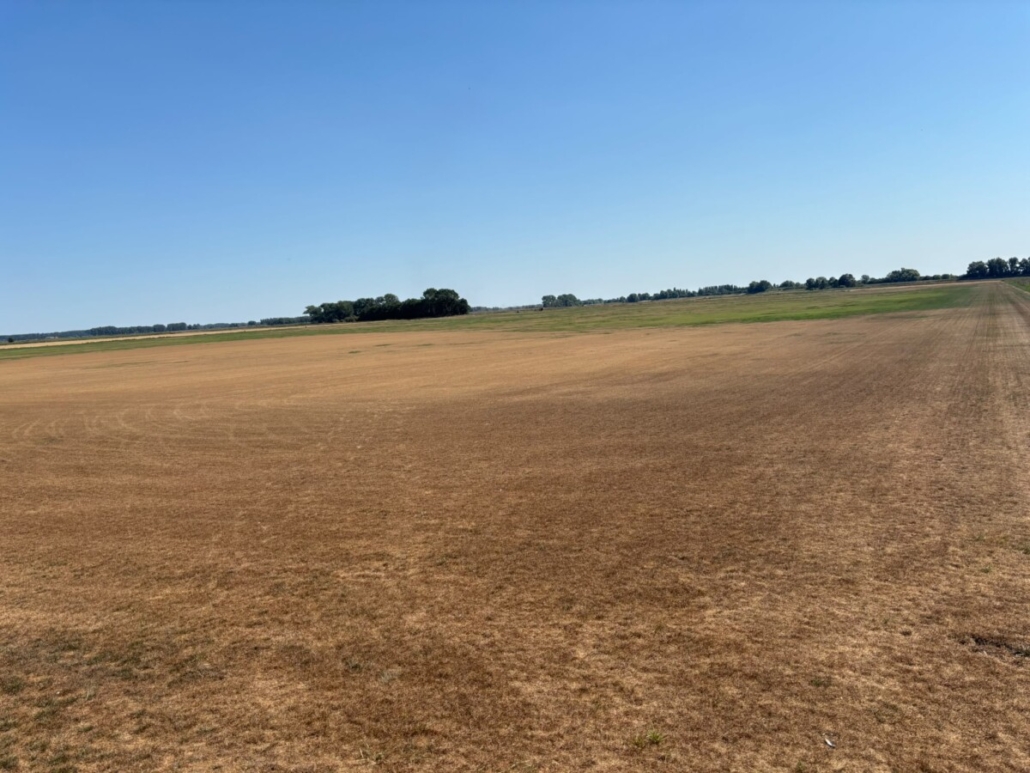
Perched on the Welsh coastline, Abersoch Golf Club has always lived at the mercy of the elements. Managing those ever-changing conditions for the last 37 years is Head Greenkeeper Arthur Evans who, in recent years, has found a combination of the right grass seed mixture and expert advice has transformed the condition and resilience of the 18-hole course – that combination being Johnsons J Sustain Fairway from DLF.

Abersoch weathers coastal challenges with Johnsons J Sustain Fairway

Abersoch weathers coastal challenges with Johnsons J Sustain Fairway

Expanded from a nine-hole course up to 18 in 1988, Abersoch offers its members a traditional links golf experience. The challenge of managing surfaces in such an exposed location without fairway irrigation is one relished by Arthur and a team of just three, made easier with the help and advice of trusted industry contacts – one of whom is DLF’s Stuart Yarwood. “I knew Stuart when he was greenkeeping and when he joined DLF, he came in to pay us a visit. Quite quickly the conversation moved beyond just products and into practical agronomic support” he explains.

For years, the club had struggled with ryegrass and fescue mixtures that germinated well but failed to retain coverage when drought conditions arrived. In an attempt to encourage the naturally occurring sheeps and hard fescue and bolster this with other hardwearing, resilient and top-ranking fescue cultivars, Arthur and the team opted to sow J Sustain Fairway from the Johnsons Sports Seed range.

“It was evident very quickly that the J Sustain Fairway mixture was able to thrive in our sandy soil environment and within a few months from the first sowing, the club and the players noticed significant improvements in both coverage and sward density.” Arthur continues, “Last year was our third year on this programme and, arguably, the most challenging with very prolonged, dry conditions. Thanks to the now established fescue populations, the fairways emerged relatively unscathed which also instils confidence that the course is in a much better position to survive these extremes in weather moving forwards.”

Designed to thrive under low-input management, J Sustain Fairway’s fine-turf fescue formulation delivers excellent playability, density and visual merit with reduced fertiliser, lower irrigation and less intensive maintenance. Introduced to the range in 2023, it performs particularly well on heathland and links courses and those exposed sites prone to environmental extremes.

Stuart has been keeping a close eye on the progress, together with DLF’s Ben Morgan and the STRI agronomy team. “Because we don’t have fairway irrigation, we only really get overseeding window every year in the autumn, which makes the performance of this mixture even more impressive.” He concludes, “The compliments we’ve received from the members are testament to the turnaround J Sustain Fairway has delivered.”

For the latest industry news visit turfmatters.co.uk/news

Get all of the big headlines, pictures, opinions and videos on stories that matter to you.

Follow us on Twitter and Instagram for fun, fresh and engaging content.

You can also find us on Facebook for more of your must-see news, features, videos and pictures from Turf Matters

Strengthen rootzones for better playing surfaces

Strengthen rootzones for better playing surfaces

Strengthen rootzones for better playing surfaces

Maintaining consistent playing surfaces has become one of the biggest challenges in sports turf. With increased usage and higher expectations, pitches are under constant pressure to perform and remain stable, resilient, and reliable week after week.

Strengthen rootzones for better playing surfaces

Strengthen rootzones for better playing surfaces

For many turf managers, that performance is increasingly linked to one key factor: the rootzone.

Kate Finlayson, research and development agronomist at Orion Future Technologies, believes that improving how the soil system functions is critical to delivering consistent pitch quality.

“If the rootzone is not performing, the surface won’t either,” she explains. “One measure is managing inputs and presentation, but if the soil structure and function are not right, there will always be inconsistency in how the pitch plays and recovers.”

One area gaining attention is the use of silicon within turf management programmes, not just for plant strength but for its influence on the soil system that underpins surface performance.

“Silicon has traditionally been seen as something that benefits the plant,” Kate says. “But what’s becoming more important is how it supports the soil where it can improve structure, stability, and the overall function of the rootzone.”

From a performance perspective, this translates into a more consistent and reliable surface.

“The aim is to help develop a rootzone that holds together under play, supports strong rooting, and doesn’t break down with use. Improving the structure and stability of that profile can help achieve a surface that performs more consistently,” she says.

Improvements in soil aggregation and pore structure can help create a more uniform profile, reducing variability across the pitch. This supports better root development and contributes to improved recovery following wear, particularly in high-traffic areas.

“It’s about giving the plant a better environment to anchor into. If roots are stronger and the soil is more stable, the surface is better able to cope with pressure and bounce back after use,” Kate explains.

There are also nutrient efficiency and biological activity benefits, both of which play a role in maintaining consistent turf performance over time.

“A more functional soil system supports more balanced growth and better recovery. Instead of constantly trying to correct issues, the focus shifts to making the surface work with improvements to the whole growing system,” she says.

As with any input, silicon is not a standalone solution. Its effectiveness depends on how it is integrated into a wider turf management programme, including aeration, appropriate nutrition, and practices that support soil health.

“Good agronomy still underpins everything. But where silicon fits in is helping to strengthen the system that everything else relies on.”

As demands on playing surfaces continue to increase, that system-based approach is becoming more important.

“Turf management is shifting. It’s less about reacting to problems on the surface and more about building a rootzone that can consistently deliver performance. That’s where the focus needs to be,” she concludes.

For the latest industry news visit turfmatters.co.uk/news

Get all of the big headlines, pictures, opinions and videos on stories that matter to you.

Follow us on Twitter and Instagram for fun, fresh and engaging content.

You can also find us on Facebook for more of your must-see news, features, videos and pictures from Turf Matters
Independent FAIR WATER II Trial Highlights Fairway Drought Performance

Independent FAIR WATER II Trial Highlights Fairway Drought Performance

Independent FAIR WATER II Trial Highlights Fairway Drought Performance

Independent research carried out at the NIBIO Turfgrass Research Center in Norway has highlighted ICL’s H2Pro TriSmart and Syngenta’s Qualibra among seven commercially available soil surfactant technologies evaluated under prolonged drought conditions.

Independent FAIR WATER II Trial Highlights Fairway Drought Performance

Independent FAIR WATER II Trial Highlights Fairway Drought Performance

The work forms part of the STERF-funded FAIR WATER II project, supported by The R&A Golf Course 2030 initiative and the German Greenkeepers Association (GVD), investigating practical drought management and water-use strategies for golf course fairways across Northern Europe.

During the severe 2024 drought period, untreated plots required 116 mm of irrigation water to maintain the intervention threshold, compared with 90 mm for plots treated with H2Pro TriSmart. This represented a statistically significant 22% reduction in irrigation water use versus untreated turf.

Alongside lower water use, H2Pro TriSmart maintained strong turf quality, green grass cover, and soil moisture performance throughout the drought period, with the trial paper describing it as delivering the “best all-round performance” under the conditions tested.

Within the same controlled rainout shelter trials at the NIBIO Turfgrass Research Center Landvik in Norway, Syngenta’s Qualibra was recognised for providing the “best overall visual appearance after prolonged drought”.

As golf courses continue to face increasing pressure around water availability, irrigation costs, and prolonged dry periods, the FAIR WATER II project is also assessing approaches including thatch management, deep aeration, and the use of brackish or recycled irrigation water.

Dr Andy Owen, International Technical Manager for ICL, said:

“Independent trial work like FAIR WATER II provides valuable practical insight into how different technologies perform under prolonged drought stress. It is encouraging to see H2Pro TriSmart recognised for reducing irrigation water requirement while maintaining turf performance, alongside the visual turf quality delivered through Qualibra.”

For more information on the trial findings, visit the ICL Turf & Landscape Knowledge Hub.

Please contact ICL on 01473 237100 or visit www.icl-growingsolutions.com

For the latest industry news visit turfmatters.co.uk/news

Get all of the big headlines, pictures, opinions and videos on stories that matter to you.

Follow us on Twitter and Instagram for fun, fresh and engaging content.

You can also find us on Facebook for more of your must-see news, features, videos and pictures from Turf Matters