Capillary Concrete & EcoBunker At Ryder Cup Venue

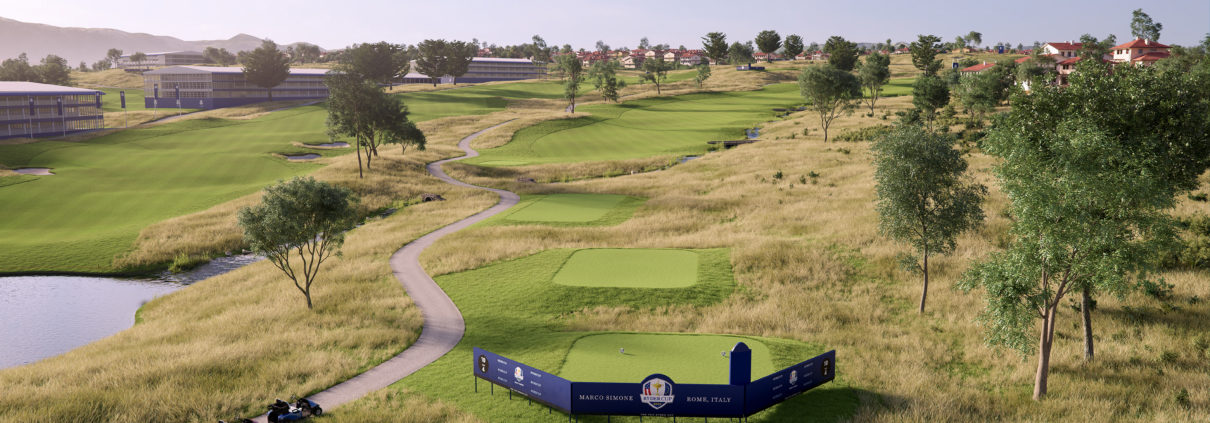
Capillary Concrete & EcoBunker At Ryder Cup Venue: The first phase of construction work has been completed on the rebuild of the Marco Simone Golf & Country Club course outside Rome, the venue for the 2022 Ryder Cup. This phase has seen the back nine of the golf course reconstructed, and the holes are now growing in. The front nine is to be rebuilt at a later date.

The construction crew provided by contractor SOL Golf, finished its work at the end of May. For the last three weeks of work, a specialist subcontract team from EcoBunker was on site installing about 500 metres of the company’s AquaEdge lake edging product on two separate ponds, one on the left of the home green, and the other to the front right of the sixteenth, with logistic and labour support from SOL. EcoBunker CEO Richard Allen, the creator of AquaEdge, says: “Dave Sampson, the course architect from European Golf Design, wanted to make the sixteenth into a feature hole, as he knows that more Ryder Cup matches end at the sixteenth than anywhere else. It’s a pretty drivable par four, downhill, with a huge spectator area around the green.”

Capillary Concrete & EcoBunker At Ryder Cup Venue

The bunkers of the back nine are shaped, but are planned to be finished in September, when they will be lined with the Capillary Concrete system and then filled with sand. Sampson himself specified Capillary Concrete for the course’s bunkers, having seen its performance elsewhere – including at Le Golf National in Paris, host to the recent 2018 Ryder Cup.

“The first phase of bunker works amounts to about 5,000 sq m of Capillary Concrete,” said the company’s European representative Kneale Diamond. “Construction of the second nine is expected to start as soon as the first nine holes are open – and to be finished by next May.”

For the latest industry news visit turfmatters.co.uk/news

Get all of the big headlines, pictures, opinions and videos on stories that matter to you.

Follow us on Twitter and Instagram for fun, fresh and engaging content.

You can also find us on Facebook for more of your must-see news, features, videos and pictures from Turf Matters.

Century Up At Gleneagles

Century Up At Gleneagles: Gleneagles in Perthshire, Scotland has recently celebrated the 100th birthday of its iconic King’s and Queen’s Courses, with a little help from local John Deere dealer Sandy Armit of Double A.

Designed by James Braid and created using nothing more than manual labour and horse and cart, both courses were officially opened on 1 May 1919 and have an illustrious history.

Century Up At Gleneagles

The King’s Course hosted a famous match between the ‘Big Three’ of Jack Nicklaus, Arnold Palmer and Gary Player in 1966, as well as the popular Bell’s Scottish Open on the European Tour from 1987 to 1994, the largest spectator event after The Open at the time. The Queen’s Course has also hosted great names from entertainment and sport, including Sean Connery and Alan Shepard, the only man to hit a golf shot on the moon!

In more recent times, and under Gleneagles’ new ownership by Ennismore, both courses have benefited from extensive renovation projects. These have seen them realigned to Braid’s original design vision with wider fairways, bringing strategically placed bunkers back in play, and the reintroduction of Scottish heather in key areas.

As part of the special centenary celebrations, Gleneagles staff recreated several historic archive photographs from the 1920s, including an image of a tractor pulling a set of gang mowers on a fairway. This was replicated with a 1941 John Deere Model B tractor, equipped with a set of trailed cylinder gang mowers. The tractor is owned by Sandy Armit and is usually on display at the dealership’s headquarters in Cupar, Fife.

Gleneagles signed an exclusive contract with John Deere in 2017 for the supply of golf course maintenance equipment and related technology to the three championship golf courses at the award winning hotel and golf resort.

Century Up At Gleneagles

John Deere also celebrated its own centenary last year, as March 14, 2018 marked the 100th anniversary of the day Deere & Company bought the Waterloo Gasoline Engine Company of Waterloo in Iowa and officially entered the tractor business for which it would become famous worldwide; tractors are still made at Waterloo to this day. The Model B tractor that was loaned to Gleneagles is still John Deere’s all-time bestselling model, with 300,000 sold from 1935 to 1953.

For more information, visit: www.JohnDeere.co.uk

For the latest industry news visit turfmatters.co.uk/news

Get all of the big headlines, pictures, opinions and videos on stories that matter to you.

Follow us on Twitter and Instagram for fun, fresh and engaging content.

You can also find us on Facebook for more of your must-see news, features, videos and pictures from Turf Matters.

Riptide Plays Key Role At JCB

Riptide Plays Key Role At JCB: ICL’s Riptide, the no1 ranked creeping bentgrass, has been a key player in the development of the greens at the stunning JCB Golf and Country Club.

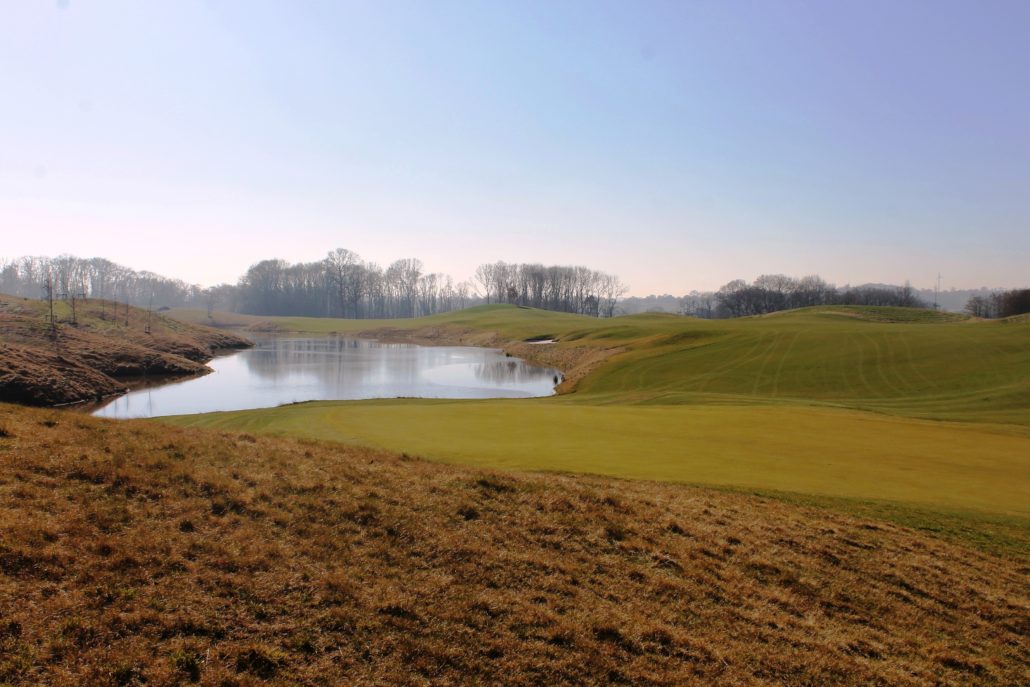
Set amid the lush green rolling countryside of Staffordshire lies one of the most exciting new golf courses to be built in the UK over the last decade. No stone has been left unturned in the creation of this remarkable 18-hole course designed by British architect Robin Hiseman of European Golf Design.

Riptide Plays Key Role At JCB

“This is a high end facility that people might only visit once a year or even just once in their lifetime. The whole experience has to be there and it is down to us to deliver that on the golf course,” said Callum Wark, Golf Course Manager.

No doubt those who play the course will be fully immersed in the experience and will marvel at the imaginative design concepts of the course. It is also inevitable that the course will provide the backdrop for compelling drama to unfold – history will be made and the finest players in the world will steal the limelight but the unsung heroes responsible for this magnificent course deserve every bit of credit.

The story that will not be told, is that throughout this four year journey, the greenkeeping team at the JCB Golf and Country Club have been involved in the whole construction process from start to finish.

“Myself and four senior greenkeepers were equally involved in all aspects of construction,” said Euan Grant, General Manager. “We had all been around constructions in the past but none of us had ever had direct construction experience. For greenkeepers to jump on excavators and dumpers, and to be ploughing and turning soils over is really quite remarkable. We have been fully engrossed in the project working seven days a week making the best of the weather when we can.

“It is a heavy clay site so we had to work when it was dry. If we got two days of rain then we couldn’t work for ten days and if that meant working at 8 o’clock on a Sunday night then we were working at 8 o’clock on a Sunday night.”

It is no wonder that Euan, Callum and the team speak about their involvement with an overwhelming sense of pride. After all, they have helped to create a world-class golf complex that will stand shoulder to shoulder with the very best. However, these modest greenkeepers are not allowing themselves to get that far ahead…yet.

Riptide Plays Key Role At JCB

“The tournaments will happen but first of all we need to achieve agronomic excellence,” said Euan.

“In order to achieve that, and in order to host tournaments, you have to be in that top percentile of golf course reputation and quality,” added Callum.

With the construction coming to an end, their attentions quickly turned to ensuring that they had the correct suppliers and products in place which would indeed help them to reach that top tier – and the greens were the first port of call.

In order to select the ideal grass seed for the greens, Euan created a trial area and split a nursery into five different rootzone amendments which consisted of a profile product – which was porous ceramic, a green waste product, two zeolite products and a straight sand. Six different grasses from six different suppliers were then applied to the rootzone plots.

“We monitored the germination rates, density, colour and disease to find out which product would be the best for our site,” said Euan. “We didn’t put any fungicides on them throughout winter because we wanted to know which diseases would be more prevalent. Based on all of the results, and also by looking closely at which was the strongest grass coming out of winter, we decided that we would go with ICL’s Riptide on a green waste compost / sand mix as per USGA specification.”

Exclusive to ICL, Riptide is the no1 ranked creeping bentgrass variety, it is ideal for seeding new areas or when used for interseeding as part of a course renovation programme. This fine-leaved, densely-shooting, creeping bentgrass establishes quickly, especially in spring, growing upright but low to the ground with high tiller shoot density and keeping its bright mid-green colour right through autumn and winter.

Riptide responds very well to lower nutritional inputs and less frequent watering, potentially significantly reducing costs involved in a higher maintenance programme and offering a more sustainable approach; less fertilizer, fungicide, scarification and verti-cutting.

Furthermore, Riptide was given top rankings for quality of appearance and disease resistance by the The Sports Turf Research Institute (STRI) and the United States based National Turfgrass Evaluation Program (NTEP).
Riptide Plays Key Role At JCB

Sowing at an application rate of between 6-8g/m², the team at the JCB Golf and Country Club used Riptide to seed and grow-in eleven greens in the first year and then nine the following year.

“We were germinating in five days and mowing in ten days,” said Euan. “Because it was our first year and it was a soft opening, we were under no pressure whatsoever to cut the grass down to achieve fast speeds. However, we were still getting 10.5ft without significantly chasing that. It is an incredibly fine grass.”

“We haven’t looked back,” added Callum. “The rooting has been amazing – we are 300mm of rootzone over 100mm gravel and even now, a year on from opening, the roots are way down into the gravel. They are incredibly strong roots.”

Commenting on the use of Riptide at the JCB Golf and Country Club, Emma Kilby, Technical Area Sales Manager for ICL, said: “I’m really proud that Riptide has played a big part in the greens here and the development of our seeds is growing all of the time – you just have to look at the new cultivars we’ve got which have a very high rating within the STRI.

“It has been incredible to be involved from the very start. From coming in here and just seeing clay to where they are now is a fantastic achievement. JCB is a great company to work with, in terms of their history, their ethos and their direction.”

Please contact ICL on 01473 237100 or visit www.icl-sf.co.uk or www.icl-sf.ie if you are in Ireland.

For more news and insightful views, you can follow ICL on Twitter @ICL_Turf

For the latest industry news visit turfmatters.co.uk/news

Get all of the big headlines, pictures, opinions and videos on stories that matter to you.

Follow us on Twitter and Instagram for fun, fresh and engaging content.

You can also find us on Facebook for more of your must-see news, features, videos and pictures from Turf Matters.

Hybrid Pitches To Transform Cricket

Hybrid Pitches To Transform Cricket: SIS Pitches has installed pioneering hybrid cricket pitches at County Cricket Clubs across the United Kingdom ahead of the 2019 cricket season.

The surface installation technology has been developed exclusively by industry experts SIS Pitches and comes as new research reveals it could have significant benefits for players and clubs.

Hybrid Pitches Set To Transform Cricket

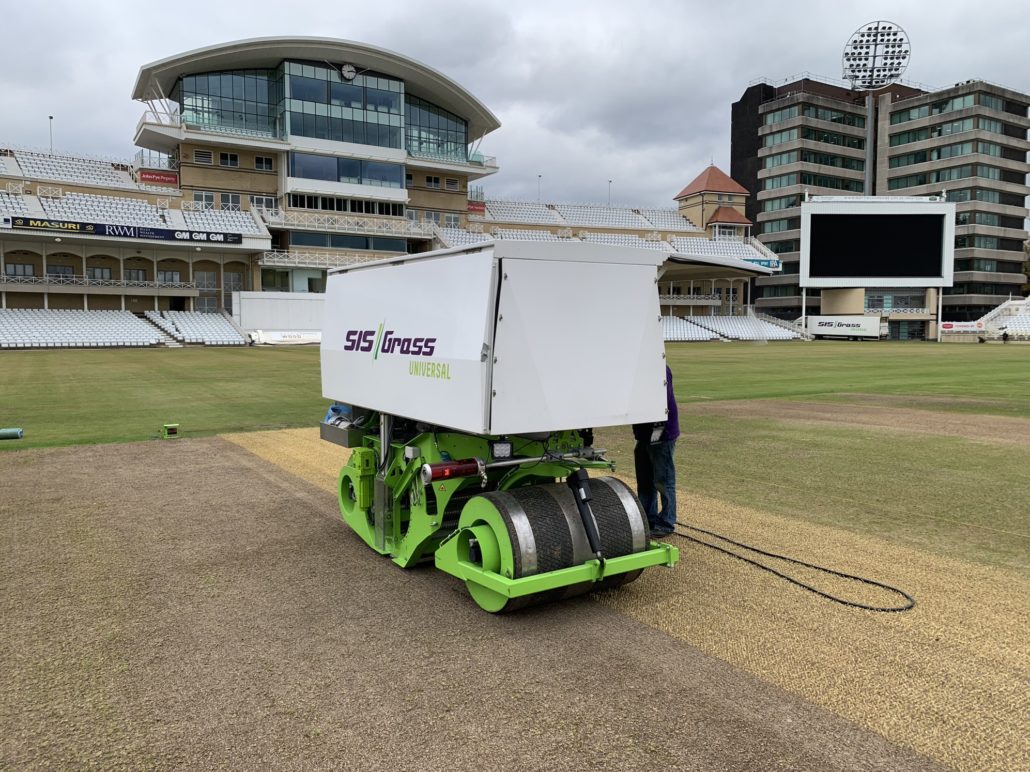
The breakthrough has been possible thanks to SISGrass Universal, a compact and 100% electric machine with patented fibre injection technology, which combines speed, mobility and laser precision to deliver high-quality hybrid turf surfaces.

SISGrass hybrid cricket pitches have been installed and trialled in practice net areas and on main ground squares at a number of County Cricket Clubs since 2017.

Together with the England and Wales Cricket Board (ECB), SIS Pitches commissioned research by Dr Iain James, cricket pitch specialist at TGMS Ltd, on SISGrass installed pitches at the Kia Oval, home to Surrey County Cricket Club, designed to provide insight into playability, durability, maintenance and renovation of hybrid wickets.

The report found that the pitches improved surface stability, reduced wear, reduced bowler foot holes and significantly extended hours of playing time. Futher research this summer will be carried out to ascertain whether there is increased pace and carry, and more consistent bounce from hybrid pitches.

The ECB became the first to install two trial wickets using SISGrass technology at the prestigious National Cricket Performance Centre in Loughborough and they have now approved hybrid pitches for use in the Royal London One Day Cup, Vitality Blast and all formats of second XI cricket for the 2019 season.

The pitches combine a majority of natural turf grass with less than 5% of uniquely engineered, soft polyethylene yarn, a system which has also been used to improve the quality of golf tees, goal areas, tennis courts and pitch surrounds.

Hybrid Pitches Set To Transform Cricket

In addition, repair works after play were reduced with a faster grass recovery time, while the surface remained more than 95% natural turf, meaning it will crucially still behave like a normal wicket.

Chris Wood, ECB’s Pitches Consultant, said: “The ECB is delighted with the incredibly positive results of these stitched, reinforced hybrid pitches to date and feedback from County Clubs has been most profound and encouraging.

“SIS Pitches have demonstrated their willingness through imaginative foresight, attention to detail and technological development towards converting a notion into reality which through the ongoing research since conception.

“This product has the potential to be a real gamechanger for the future of cricket, particularly in the lucrative, limited over, whiteball form of the game through increased usage and possible freeing up of central TV pitches, most importantly, without sacrificing quality over quantity.

“I’m aware that many clubs and indeed international governing bodies are viewing the ongoing progress with increasing interest.”

Weighing less than two tons and standing at 1.20m wide and 2m in length, the SISGrass Universal machine provides quick, accurate and flexible stitching, with different depths and spacing using precise laser guidance making it a practical solution for groundskeepers who are challenged to maintain uniform grass quality in high-wear areas.

One 10ft cricket pitch strip contains approximately 190,000 individual stitches of SISGrass fibre, made up of 46kg of yarn, totalling 38km, and can be installed in just five hours using SISGrass Universal.

After installation, pitches are maintained for a minimum of eight weeks to allow the profile to settle and for all holes to close and anchor the SISGrass fibres.

Phil Blackwell, SISGrass Director in the UK, said: “Some of the world’s biggest professional rugby and football teams have already seen significant benefits from the introduction of our hybrid pitch technology, and SISGrass Universal has the potential to transform the maintenance and durability of cricket pitches.

Hybrid Pitches Set To Transform Cricket

“We’re excited to see the impact it’s already having in the UK and anticipate demand from cricket clubs around the world.

“Our research and feedback from clubs and ground staff has been extremely positive so far, and our hope is that in the future hybrid pitches can be used as an alternative option to traditional wickets for practice and short formats of the game.”

Following successful trial installations, and positive feedback from players, coaches and ground staff, the demand for hybrid cricket pitches has increased with many of the top county cricket grounds choosing to have between two and six installed.

Hybrid cricket pitches have now been installed at Surrey, Lord’s, Lancashire, Nottinghamshire, Glamorgan, Somerset, Gloucestershire, Durham, Worcestershire, Warwickshire and at Loughborough University.

Watch the SISGrass Universal cricket pitch installation at The Oval, Surrey County Cricket Club

For the latest industry news visit turfmatters.co.uk/news

Get all of the big headlines, pictures, opinions and videos on stories that matter to you.

Follow us on Twitter and Instagram for fun, fresh and engaging content.

You can also find us on Facebook for more of your must-see news, features, videos and pictures from Turf Matters.

The Evolution Of Spurs

The Evolution Of Spurs: After almost two seasons of calling Wembley home, Tottenham Hotspur will finally play their first official game at their new ground on Wednesday 3rd April, hosting Crystal Palace in the Premier League.

The Tottenham Hotspur Stadium is jam-packed with endless aesthetic pleasures, from the revolutionary to the retro. The picturesque exterior to the sweeping curves of the stands, the stadium is a spectacular addition to the country’s capital.

Planning permission was submitted in 2009 for the new stadium, but it wasn’t until 2015 that the various hurdles were cleared and construction could finally begin. The opening fixture may have been delayed, but it’s safe to say it’ll be worth the wait!

The Evolution Of Spurs

Well, where to begin?

Let’s start with the largest statistic, the capacity. It was originally proposed that the stadium would hold 58,000, but the capacity gradually increased as the plans evolved. The final capacity was confirmed last year as 62,062 – a considerable increase on White Hart Lane’s 36,284. The stadium will become the seventh biggest in the United Kingdom, and the second largest in the PremierLeague, behind Old Trafford.

Spurs fans will be able to watch their goal replays on the highest quality screens, the largest of any ground in Europe, which stretch to a dazzling 325 sqm. There are also 1,800 smaller high definition televisions around the interior.

The Evolution Of Spurs

Now onto the playing surface (not just one pitch, but two!). The stadium will be the first of its kind in the United Kingdom to have two pitches inside the same bowl. The retractable, natural turf surface splits into three pitch-long steel trays. When the trays slide together, the join is invisible and imperceptible to the players.

The trays, weighing more than 3,000 tonnes each, can be rolled under the new South Stand to reveal the artificial surface in a process taking about 25 minutes. When the natural turf pitch is not required, it will live under the South Stand, for up to 10 days thanks to LED lighting, unique cooling and irrigation systems.

Tottenham have agreed a 10-year partnership with the NFL, making the new stadium a dedicated home for the sport in the United Kingdom. Alongside this, Saracens Rugby Club have a five-year partnership with Tottenham to play their annual showpiece fixture at the new stadium.

The Evolution Of Spurs

So, when did Harrod Sport get involved?

Harrod Sport and Tottenham Hotspur have a 25-year strong relationship, and with the obstacles surrounding Football, American Football and Rugby all being played at the stadium, it was important for Harrod Sport’s involvement in the early stages. So just how much went on behind the scenes with the design of the second largest stadium in the Premier League?

In October 2017, Mark Smith, Design Manager at Harrod Sport and Sales Manager, John Robinson met with the design engineers, the principal pitch contractor and Tottenham Hotspur’s Head of Playing Surfaces. The physical workings of Spurs state of the art, retractable pitch were viewed and discussed. The challenges faced as a company were extensive. Football, Rugby and American Football, all on a 0.5m deep framework pitch consisting of thousands of tonnes of steel framework! A challenge that Harrod Sport were excited and honoured to take head-on and deliver.

The Evolution Of Spurs

Challenges faced and how we overcome them

The distance between the single tier and the goal line is just five metres – meaning fans will be closer to the action than at any other newly developed Premier League stadium. This resulted in the pitch having a dramatically angled run-off. Due to this, advice was needed on net support locations to meet Tottenham’s net requirements with bespoke runback depths. The sockets were set into the steel framework and the run-off required specialist net supports to fit. Because of the angled run off, bespoke PVC foam wedges were also designed for the rear of the warm-up goals to sit on to create a level surface.

The NFL posed differing problems at both ends of the pitch. One was designed around the centre rail that the natural turf pitch rolls out over. To overcome this, the NFL foundation was designed exactingly to fit underneath the central rail with a removable hinge assembly attaching to the bottom section of the upright. The other end of the pitch proved just as challenging as this time the socket foundations needed to be mounted to a single capping beam located directly in front of the hydraulically raised goal line runoff.

Special sockets were also manufactured for the rugby posts to fit into pre-formed sleeves under the artificial pitch. For the natural turf pitch, the rugby post foundation needed to be mounted directly to the large metal structure making up the pitch tray and required bolt-down hinge adaptors and specialist turf trays.

To date, Harrod Sport has supplied their unique Stadium Pro Football Goals, NFL Posts, Millennium Rugby Posts, Turf Trays, Crowd Protection Ball Stop Systems, NFL & Rugby Lifting Devices, Goal Post Storage Trolleys, NFL & Rugby Post Protectors, Corner Poles, and Bespoke PVC Foam Wedges.

The Evolution Of Spurs

The club have without a doubt created one of the finest stadiums in the world for spectators and visitors, and in turn delivered a major new landmark for Tottenham and London. The extraordinary design will reset parameters surrounding what is achievable with multi-sport venues. Harrod Sport are honoured to have been involved in this amazing project and look forward to the opening game with excitement and pride.

Did you know that Harrod Sport are the suppliers of the bespoke Stadium Pro Football Goals to prestigious stadiums across the world? Learn more about Harrod Sport here.

For the latest industry news visit turfmatters.co.uk/news

Get all of the big headlines, pictures, opinions and videos on stories that matter to you.

Follow us on Twitter for fun, fresh and engaging content.

You can also find us on Facebook for more of your must-see news, features, videos and pictures from Turf Matters.