
ICL School Seminar A Success

ICL School Seminar A Success: In what proved to be the hottest day of the year, the 2019 ICL Independent School Seminar, hosted at the illustrious Cheltenham College, saw a record-breaking number of attendees soak up a memorable day of knowledge, networking and first-class cricket.

Over 70 turf professionals made their way to the historic spa town of Cheltenham to network and enhance their education on a variety of different turf management topics in a seminar tailor-made for those working within the Independent Schools sector.

ICL School Seminar A Success

The seminar was held in the College’s Thirlestaine House, which over the years has housed some of Cheltenham’s most creative and forward-thinking students. It was therefore an appropriate setting to discuss the future of turf care and explore new and innovative methods.

Christian Brain, Head of Grounds at Cheltenham College, was the first to take to the stage and proceeded to offer a wonderful glimpse into the College’s rich history in which he reflected on the years, the great changes that have taken place, and the significant marks that history has carved in its life.

It was then down to business as Henry Bechelet, ICL Technical Sales Manager UK & Ireland, delivered his thoughts on The Future of Fertilizer. After nearly two years of negotiations the European Parliament have agreed on a new regulation for fertilizers. Set to commence in 2022, many questions have been raised as to how the new regulations might affect the industry and Henry was on hand to clarify the situation.

“The whole point about the regulations is to protect the end user,” he said. “The other key aim of the legislation is to bring into play added transparency and more sustainable and circular economy ingredients. At ICL we view the new regulations as being progressive because we can always demonstrate the performance of our products, but they are going to have a big impact on how some companies sell their products. No longer will companies be able to falsely market their products – which is a step in the right direction because hopefully it will take out of the marketplace those companies that don’t have the evidence to support their product claims.”

After addressing the new forthcoming fertilizer regulations, Henry discussed the use of the new Pearl granules that ICL is incorporating into the renovator grades in the SierrablenPlus range.

“These are slow release forms of nitrogen but mainly phosphorus which have been proven in trial work to really encourage root development. We are very excited about these new materials because we feel that they will massively enhance renovations and encourage better rooted plants,” he said.

Attendees then got the opportunity to receive a tour of the grounds and Christian explained how he and his team prepare for the Cheltenham Cricket Festival. At over 140 years of age, Cheltenham is the world’s oldest cricket festival and has, over the years, witnessed some legends of the game such as Wally Hammond, Allan Border and WG Grace. Taking place every July, over a two-week period, the festival now features a selection of T20 Blast games – something which the delegates would later enjoy.

As everyone gathered back in Thirlestaine House and re-took their seats, student Tamsin Williams captivated the audience with an insight into ICL’s unique four-year research project which is exploring the effects of seaweed products on turfgrass plant parasitic nematodes.

The project, which is taking place at Royal Holloway, University of London, was founded due to the apparent rise of nematodes. As it stands, there are few options available for the turf manager who has a nematode problem but ICL is currently researching whether seaweed could offer a solution. Tamsin is of the opinion that when the right seaweed is applied to a grass plant it could change the resistance of the plant to disease and insect attack and she revealed her current findings.

“The research into the nematodes and how seaweed can be used as a preventative was very interesting,” said Matt Wharton, Grounds Manager at Reading Blue Coat School. “The technical detail was outstanding – Tamsin is working on something really special that will increase our knowledge and benefit the whole industry.”

At the 2018 ICL Independent School Seminar held at Edgbaston Stadium, Andy Richards, Grounds Manager at Shrewsbury School revealed how he uses data recorded from his weather station and moisture metres to improve playing conditions and to identify what equipment he needs in order to continue to make improvements. Inspired by Andy’s seminar, Glenn Kirby, Syngenta’s Technical Manager for UK Turf & Landscape unveiled a year’s worth of recorded data which undoubtedly piqued the delegates’ curiosity.

“The talk from Andy last year ignited my excitement to get out there and have a look for myself,” said Glenn. “It was an opportunity to talk to the delegates about the limitations I have found within some of the data and how I feel it could help people manage their turf moving forwards.

“Weather conditions are changing all the time and due to this turf managers are becoming under increasing pressure so having a really firm hand on exactly what is going on in the soil can only help them. It is going to be very challenging and will be very different to what they have seen before.”

Glenn’s presentation seemed to strike a chord with attendee Carl Reeves, who is enjoying his first role in a Head Groundsman position at Bradfield College. “I think the last seminar about climate change and how it’s continuing to adjust was a real eye opener because we have obviously affected the planet quite badly. Yes, we have some huge challenges ahead but this seminar demonstrated how to use certain technology to ensure that we are always that one step ahead.”

As the delegates reflected on yet another insightful ICL seminar, keeping on top of turf management and looking to the future in an ever-changing industry seemed to be the general consensus.

“I think that a lot of the research and the projects ICL are working on are key to how we change turf management in the next ten years,” said Charlie Seager, a Groundsman at Warwick Independent Schools Foundation. “You have got to be ahead of the times because of the way technology is changing so it is very beneficial to come to events like these.”

Charlie was one of four grounds staff from Warwick who attended and Duncan Toon, Grounds Manager, explained why it was so important to make the seminar a team outing.

“These seminars are essential because it isn’t just all about what we learn in the seminars – it’s also about networking and what you get from chatting to other groundsmen. I can guarantee that we will be sitting round the table on Monday and I’ll have twenty new ideas from everyone who attended and that is why I like to bring the whole team.”

Gary Austin, Deputy Head Groundsman at Radley College, praised the event for simplifying what can potentially be some incredibly overwhelming topics.

“What I like about these seminars are that you can tell that ICL are genuinely trying to help groundsmen like us – they are on our side. I also think ICL present all of their data and research in a non-scientific manner which general groundsmen can understand. They break the research data down really nicely for you, in an easy to understand way and you can then go ahead and put it into practice.”

The day was rounded off in style as the delegates joined a sell-out 5,000 strong attendance to watch Gloucestershire inflict a first defeat on Middlesex in this season’s Vitality Blast.

Organiser of the event, ICL’s Emma Kilby, first launched the Independent School Seminar back in 2011 and is pleased to see just how far it has come over the years.

“This is a huge sector and consists of a very particular group of people that look after schools which have a multitude of different surfaces – all of which require very different approaches.

When I first joined ICL eight years ago I just felt that they were not receiving the kind of support they needed. It was at that point I started discussing the idea of an event with various school groundsmen and we launched the first seminar in 2011 at Radley College.

“The event has run every year since at different venues and the bar is raised each time. These guys are real experts in lots of different disciplines and their requirements are quite individual so to actually focus on them and to get them along to an event where all the seminars are aimed at topics they are interested in is one thing but also the opportunity to get them all together so they can talk with one another and network is invaluable.”

Please contact ICL on 01473 237100 or visit www.icl-sf.co.uk or www.icl-sf.ie if you are in Ireland.

For more news and insightful views, you can follow ICL on Twitter @ICL_Turf

For the latest industry news visit turfmatters.co.uk/news

Get all of the big headlines, pictures, opinions and videos on stories that matter to you.

Follow us on Twitter and Instagram for fun, fresh and engaging content.

You can also find us on Facebook for more of your must-see news, features, videos and pictures from Turf Matters.

Groundsman Pleas To Dog Owners

Groundsman Pleas To Dog Owners: A football club groundsman has slammed irresponsible dog owners for not picking up their pets’ faeces, which has been left scattered across a village field which is used to host matches.

Long Ashton Football Club stalwart Davy McGimpsey believes the amount removed by players is ‘nothing short of disgraceful’ and it is a problem the club faces ‘every week’.

He said the issue at Long Ashton’s Community Centre, where the club plays and trains, is ‘major and dangerous’ and he is urging people to ‘clean-up their act’.

Davy said: “The problems with dog poo left on the pitch is worse now than it has ever been.

“It has become an issue before training and we have to pick up a lot of the waste before we can even attempt to play.

“We have had to stop matches due to faeces being left on the field, and I couldn’t count the amount we had to pick up on one hand before a game in July.

“Genuine dog walkers clean up, but this is an epidemic.

“We’ve invested in a shovel to get it all up and ‘no dog fouling’ signs have been installed at the centre to help tackle the problem.”

Davy first took to social media to address the issue in April, but some owners have paid scant regard to his plea.

This prompted Davy to question if dogs should be banned from the field.

The football club’s players, aged 16-60, compete with clubs from across the West Country, and members practice on Tuesday evenings at the centre during the summer.

He continues: “The other issue is dog poo is normally left right by the community centre’s play area.

“People need to understand how dangerous this is, especially if children end up picking it up.

“There are dog bins dotted around the centre, and, for whatever reason, some people don’t think about using them.

“It’s just not nice, and there are now people in the club who just refuse to pick it up.

“It annoys us, this group is something great which runs in the community, and it is not the centre’s problem to deal with.

“It’s simply unacceptable, and it begs the question, should dogs be allowed on the village field at all?”

In addition to its pleas to dog owners, the club has also put a ban on plastic bottles in an attempt to reduce waste on the pitch.

Click here to read the original article

For the latest industry news visit turfmatters.co.uk/news

Get all of the big headlines, pictures, opinions and videos on stories that matter to you.

Follow us on Twitter and Instagram for fun, fresh and engaging content.

You can also find us on Facebook for more of your must-see news, features, videos and pictures from Turf Matters.

Syn-Pro Thrives At Beaumont

Syn-Pro Thrives At Beaumont: A range of Syn-Pro equipment by SISIS is helping to keep the synthetic surfaces in impeccable condition at De Montfort University at Beaumont Park, according to head groundsman Cameron Flitten.

With the emergence of synthetic surfaces becoming more common over the years in a wide range of sports, the SISIS brand has continued to go from strength to strength with its impressive Syn-Pro portfolio. Today synthetic surfaces are playing such a large role in a groundsman’s overall responsibilities, many have turned to the reliable and efficient Syn-Pro range and Cameron is no exception.

Syn-Pro Thrives At Beaumont

Originally from New Zealand, Cameron’s career in sports turf started with an apprenticeship on a golf course before landing a role working on the cricket squares at Loughborough University and then progressing to being in charge of the rugby and football pitches.

Three years ago, he became the head groundsman for De Montfort University, which coincided with the university agreeing to lease the vast playing fields at Beaumont Park. The site received a multi-million pound investment and transformed the facilities into some of the best in the county. Along with seven other members of staff, Cameron maintains the wide array of sports surfaces at Beaumont Park which now includes two recently built all-weather 3G synthetic pitches.

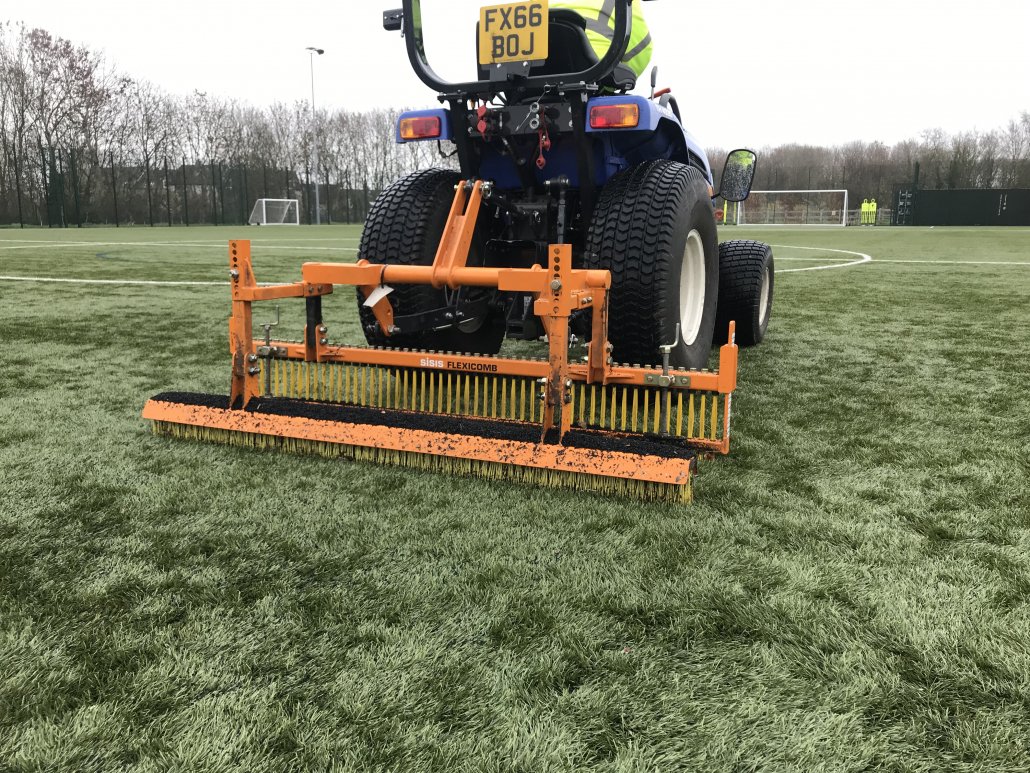
To maintain these two pitches, Cameron chooses to use the Litamina 1200 and a combination of the Flexicomb fitted with straight and zigzag brushes.

The Litamina 1200 is a compact sweeper for efficient collection for unwanted debris from sand filled or rubber crumb synthetic surfaces. With its spiral design brush helping to stand up the pile and improve collection, and a large capacity mesh hopper collecting debris but allowing infill to be returned to the surface, the Litamina 1200 is ideal for helping to keep surfaces free of contamination and harmful debris.

Designed primarily for use on synthetic surfaces, the Flexicomb ensures even distribution of infill materials and lifts the pile. The adjustable setting ensures the effect of a rake, but with the softness of a brush, reducing the risk of damage to the fibres. The bristle sections are replaceable and the Flexicomb is designed for a long working life with minimal maintenance. For greater results, Cameron attaches either the zigzag or straight brush to the Flexicomb which helps to even out the rubber crumb.

“We use the Flexicomb with the zigzag or straight brush three times a week, especially now with the high usage the pitches get. It helps to de-compact all of the rubber, levels it all off and stands all of the grass fibres back up.

“The Litamina is an essential piece of equipment and this is used at least once a month, sometimes more if there are a lot of leaves on the surface. It is perfect for removing all of the rubbish and debris from the surface.

“These two pieces of equipment are all I need for my synthetic surface maintenance and you can always rely on them to do a brilliant job. I like that they are solidly built but I also like the simplicity of them. You can tell that SISIS have thought a lot about the groundsmen using them because they are easy to set-up and are generally very user-friendly. They also never break down either.”

For further information or a no obligation demonstration, please contact SISIS on 01332 824 777 or visit www.synprobysisis.com

For more news, reviews and insightful views, you can follow SISIS on Twitter & Instagram @SISISMachinery and like the company’s Facebook page – www.facebook.com/SISISMachinery. You can also view the latest SISIS videos by visiting www.youtube.com/SISISMachinery

For the latest industry news visit turfmatters.co.uk/news

Get all of the big headlines, pictures, opinions and videos on stories that matter to you.

Follow us on Twitter and Instagram for fun, fresh and engaging content.

You can also find us on Facebook for more of your must-see news, features, videos and pictures from Turf Matters.

Farmers Tackle Giant Hogweed

Farmers Tackle Giant Hogweed: Bayer is supporting a community project in Scotland to tackle Giant Hogweed, with equipment and labour supplied free of charge by local farmers.

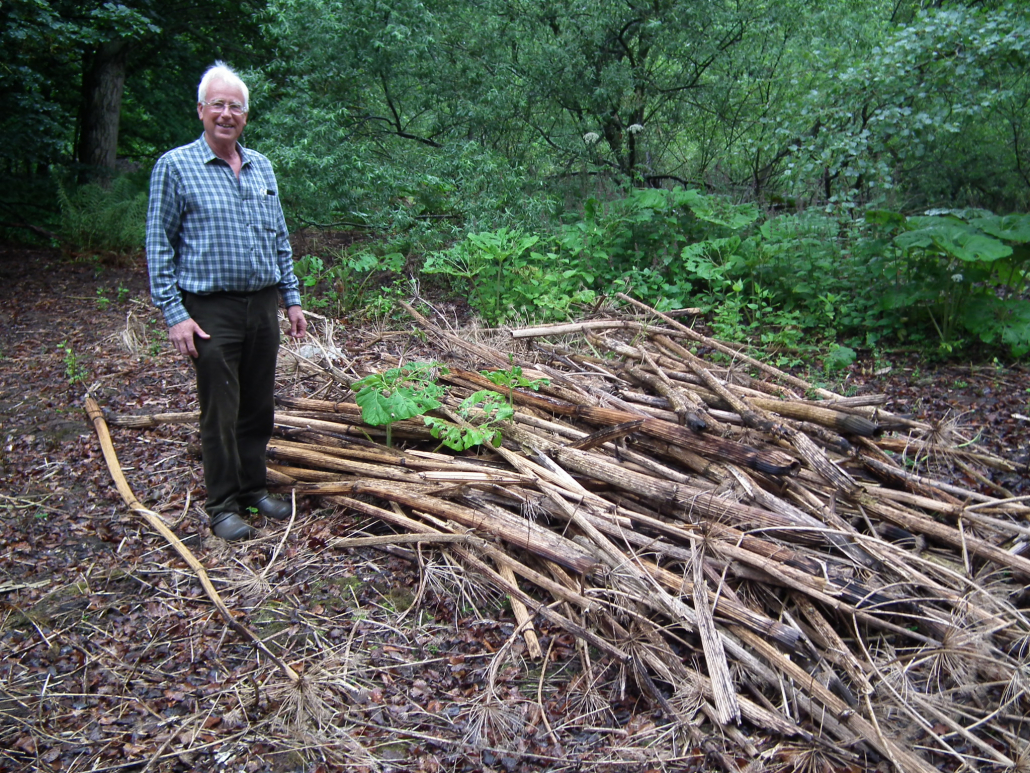
Giant Hogweed hits the headlines each summer as members of the public are injured by its poisonous sap, which can cause painful blisters and severe skin irritation when enjoying the great outdoors, but it is also an invasive plant which has a serious impact on the biodiversity of the riparian and aquatic environment.

Farmers Tackle Giant Hogweed

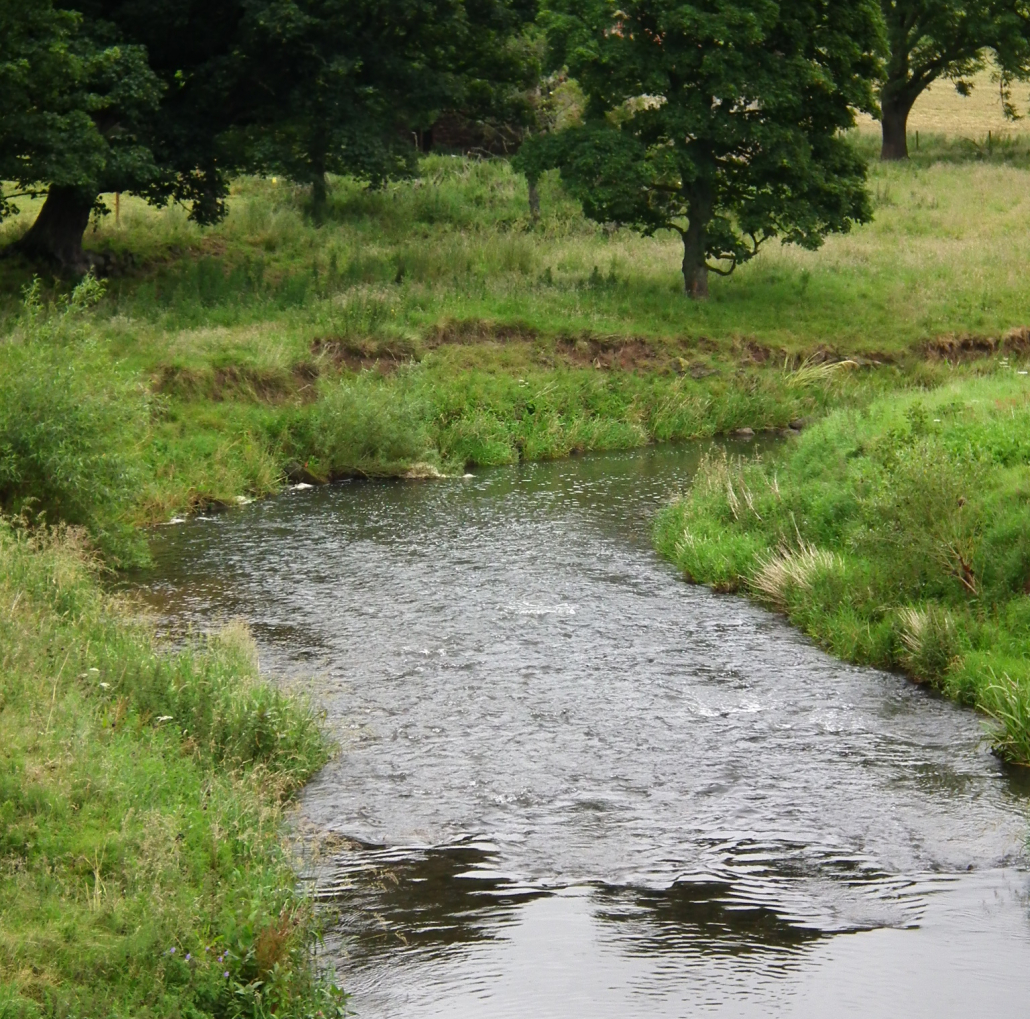
Managed by the East Lothian Countryside Volunteers (ELCV), the project is based at Haddington, East Lothian, at the centre of an area through which the River Tyne flows, with Giant Hogweed growing on its banks.

Local farmers have joined forces to combat the weed, using the highly effective glyphosate herbicide Roundup, some of which has been donated to the project by manufacturer Bayer.

Spraying started in March, with 50 qualified farmer operators using knapsack sprayers to apply Roundup alongside the river, with help from an online dynamic map created by the ELCV which pinpoints the worst affected areas using reports from volunteer spotters, and allows them to be ticked off as they are treated.

Local farmer James Wyllie was asked to co-ordinate the initiative, having previously led a campaign to control Giant Hogweed on an eight mile stretch of the Biel and Whittingehame Water in East Lothian.

He explained: “The original proposal was for 10 miles of the River Tyne, but there was such a high level of support from the landowners to participate in a project where all the riparian owners were acting together that it has expanded way beyond the original plan. It now covers about 48 miles of the River Tyne from A68 to the sea and including two major tributaries, Birns Water and Colstoun Water in an area with around 75 riparian landowners participating.”

While the main focus is on Giant Hogweed, Japanese Knotweed and Himalayan Balsam are also being targeted by operators as they spray.

Mr Wyllie added: “It’s going to take five years to see a real difference, due to Hogweed seeds which are embedded in the soil and will germinate in future years. We aim that no plant should be allowed to flower, as each can produce 10,000 seeds, and any flower heads that are produced need to be removed and disposed of safely.”

“The open access dynamic map is key because farmers can see exactly where plants have been observed along the river and when overlayed on a satellite map helps to pinpoint areas to inspect. Later in the season where there are no flowering plants left it is marked with a green tick.”

Farmers Tackle Giant Hogweed

In small areas of non-agricultural land, removal of any odd Giant Hogweed plants are tackled by the ELCV volunteers to ensure that there are no gaps.

Bayer’s Roundup Technical Development Manager Barrie Hunt explained: “This is a unique project in that it attempts to treat an almost complete river catchment area, which gives the best chance of tackling the weed. Where only part of the catchment is treated, there is always the risk of plant material being washed down river and Giant Hogweed re-establishing itself. We have been pleased to work with the ELCV and Mr Wyllie on such a worthwhile operation.”

As the growing season drew to a close at the end of July, Mr Wyllie commented that he has been overwhelmed with the positive response to the project. “Every farmer approached has offered to support the work – labour contributed by farmers free of charge will be worth around £100,000 over a 10 year period – and we are very grateful for the sponsorship from Bayer and backing from Scottish Natural Heritage.”

He added that Roundup has been key to the success of the project.

“I’ve used it for 25 years and it is one of very few products that is approved for aquatic use; there are no ground residues and it works by contact onto the leaves only. It’s also very effective on Japanese Knotweed and Himalayan Balsam.”

“This is a long term project on a large scale, which demonstrates East Lothian farmers and the local community working together to achieve a common goal.”

For the latest industry news visit turfmatters.co.uk/news

Get all of the big headlines, pictures, opinions and videos on stories that matter to you.

Follow us on Twitter and Instagram for fun, fresh and engaging content.

You can also find us on Facebook for more of your must-see news, features, videos and pictures from Turf Matters.
Bunker Washouts Destroying Morale

Bunker Washouts Destroying Morale: The greatest challenge that has faced golf course superintendents over the past several years has been the difficulty of recruiting and retaining staff.

All courses – regardless of budget – are impacted by this labor shortage, but those hit worst are struggling to simply keep up with mowing the entire golf course each week. Unfortunately, Mother Nature isn’t cutting them any breaks this summer.

Common pop-up thunderstorms throughout the Southeast are making it more difficult to complete daily maintenance with an undersized staff. These storms pack heavy winds and significant rain amounts in a short time span – washing out bunker sand, spreading debris throughout the golf course, knocking down trees, breaking irrigation pipe with lightning strikes, saturating soils and much more.

Out of all these challenges, repairing bunker washouts may be the most hated task among golf course superintendents and crew members. Repairing washouts is slow, back-breaking work and the staff could easily be out the next day repairing the very same bunker if another pop-up storm strikes. Simply put, frequent heavy rain events each summer can be a morale killer for a fully staffed maintenance crew and the straw that broke the camel’s back for undersized crews.

Bunker washouts also impact the consistency of bunker sand. The constant movement of sand can create overly soft conditions in the short term, and contamination from washouts can negatively impact playability and sand drainage in the long term. Perhaps the most significant impact to golfers is the logistical challenge that bunker washouts present to the maintenance team. Superintendents must choose which tasks will be performed each day. When bunkers get washed out by a storm, some other aspect of course management must be skipped to repair the bunkers.

What can golfers do to help? Every course’s design and available maintenance resources are different, which greatly impacts a maintenance team’s ability to address issues like washouts. It is important to understand that the maintenance team is doing their best to maintain the golf course with the resources available. Given the current labor shortage, being understanding, patient, and offering a quick “thank you” is the best way to support those who work hard maintaining our golf courses.

What can superintendents do? Document labor-hour allocation to communicate the impact of bunker washouts on course maintenance. This data can be used to communicate the need for a bunker renovation, higher wages or more employees. Also, temporary labor services are a good resource for washout repairs.

Click here to read the original article

For the latest industry news visit turfmatters.co.uk/news

Get all of the big headlines, pictures, opinions and videos on stories that matter to you.

Follow us on Twitter and Instagram for fun, fresh and engaging content.

You can also find us on Facebook for more of your must-see news, features, videos and pictures from Turf Matters.