Wolves Put Trust In ICL Granulars

Wolves Put Trust In ICL Granulars: Wayne Lumbard, Head Groundsman at Wolverhampton Wanderers FC has reason to celebrate. Not only has the team been promoted to the Premier League, but in his opinion the pitch is at the best it has ever been throughout his thirteen-year tenure at the club – with a little help from ICL.

It is safe to say that Wayne has experienced some highs and lows at the club. However, after being relegated twice, optimism at the club is now at an all-time high.

Wolves Put Trust In ICL Granulars

“Collectively, what everyone at the club has done has been the main ingredient behind our success,” he says. “The football has been the best I’ve ever seen here the pitch has been consistently great all season – everything on and off the pitch has just clicked.”

Wayne acknowledges that the relatively new owners have been instrumental in Wolves’ rise back to the highest heights of English football, and they have certainly signalled some substantial improvements.

Last year, a state-of-the-art Desso Grassmaster hybrid pitch was installed at the Molineux Stadium and after being hugely impressed, the owners sanctioned three more to be built at the Sir Jack Hayward Training Centre in Compton Park.

With a completely new stadium pitch to work with, Wayne chose to adhere to a granular fertilizer programme from ICL.

“It was our first season on the new pitch at the stadium so it was a case of testing the products but the programme worked so well. I am confident that we now have everything down to a tee,” he said.

“Straight from renovation and two weeks after seeding, I applied SierrablenPlus Renovator 20-20-8 as a base feed at a rate of 30 g/m² and continued to apply this all the way through the season until the final game of the season.

“After the initial base feed, it was a case of applying the spring and summer fertilizers at the correct time. We had huge success with Greenmaster Pro-Lite NK 12-0-12 which we applied at 30g/m2 before we moved into Autumn with Greenmaster Pro-Lite Double K at 30g/m2 because we needed more potassium than nitrogen at that time of year. Into winter, we decided to go with a Greenmaster Pro-Lite Invigorator 4-0-8 at 30g/m2 while still continuing with regular feeds of ProTurf 20-0-7 at 25g/m2 – which we had been applying since June.

“It is all about applying the right products at the right time and in the right place. Personally, I think what is more important than anything, is the overlap of the products so that you have that even line of consistency throughout the season.

“I’ve been using ICL products since 1983 and they give you everything you want, not just technically, but aesthetically as well. What I like is that there is something for whatever the problem, whatever the issue. Whatever you want, there is a product.

“With the pressures that groundsmen are under today with having to produce a pitch for match day, I want guarantees and that is what I get with ICL. Quite simply, they are products that I can trust and along with the back-up assistance I receive from Emma Kilby (ICL Technical Area Sales Manager) is as good as the products themselves.

“I sit down with Emma at the end of each season, we look at the iTurf programme we had in place and how the pitches at the stadium and training ground performed. At this stage, if we need to make any tweaks to our programme, then we will. Based on the last twelve months, I can’t see us making too many changes – the pitches have performed fantastically well and along with the grounds team, ICL products have played their part in our success.”

Please contact ICL on 01473 237100 or visit http://www.icl-sf.co.uk or http://www.icl-sf.ie if you are in Ireland.

For the latest industry news visit turfmatters.co.uk/news

Get all of the big headlines, pictures, opinions and videos on stories that matter to you.

Follow us on Twitter for fun, fresh and engaging content.

You can also find us on Facebook for more of your must-see news, features, videos and pictures from Turf Matters.

Innovation Through Renovation

Innovation Through Renovation: When Toro developed its irrigation strategy, one of the first thoughts was longevity, so it should therefore be no surprise that Toro sprinklers dating all the way back to the 1960s are easily updated when clubs look to renovate their irrigation.

The existing sprinkler body is simply fitted with the latest Toro head technology not just replacing new for old, but for more precision, accuracy, efficiency and economy.

Innovation Through Renovation

In the case of Toro pop-up sprinklers, the company’s 600 series that launched in the US back in 1967, and 700 series first seen in the 1990s, can be easily interchanged with Toro sprinkler head conversion assemblies, in as little as 60 seconds! The same applies to the more recent DT series and 835 series, too.

And most of the time, says Reesink Turfcare, an official distributor of Toro Irrigation in the UK, these upgrades can be made without the need for mini-excavators and massive disruption. Infinity sprinklers for example have been designed to be upgraded from the top down with the Smart Access feature allowing future upgrades to be faster, easier and cheaper.

Plus, it’s not just the sprinklers that can be upgraded, Turf Guard in-ground moisture sensors and Lynx control system software can be integrated into existing irrigation systems. Some have credited Toro’s Lynx control system for example with bringing industry buzzwords ‘interchangeable’ and ‘future-proof’ irrigation to life.

Upgrading with Toro brings true innovation to your irrigation: every replacement sprinkler head brings with it design improvements – you aren’t just replacing the casing, but addressing specific irrigation needs, such as arc retention to achieve a strict start-stop without unwanted movement, eliminating dwell points and subsequent pooling, ensuring even distribution.

A classic example of this comes in the form of Premier League football club Manchester City which upgraded its Etihad Stadium irrigation system in 2015 with the installation of 16 Toro R Series conversion assemblies. These were installed with new artificial turf covers around the perimeter of the pitch, alongside changing some of the nozzles in existing bodies to boost overall efficiency and optimise water use. A key point is that the original piping system was kept intact and that this cost-effective upgrade concentrated on the sprinklers and their internals.

The benefits this upgrade brought was the fact that there is now no dwell point at the end of each sprinkler arc, and the adjustable trajectories, which are particularly beneficial on a windy day, can be set to minimise drift from the spray.

Robert Jackson, irrigation field manager for Reesink Turfcare, says: “It is tempting to regard the updating of an irrigation system as something that can only be carried out by specialists, with disruption to play and revenues for months on end. In some instances that will be the case. An aging irrigation system could well be beyond economic upgrading, extension or repair. But what about a more recent system that is now starting to show its age; is a bit of an upgrade possible and worthwhile? With Toro, the short answer has always been a qualified yes.”

For more information, visit: reesinkturfcare.co.uk

For the latest industry news visit turfmatters.co.uk/news

Get all of the big headlines, pictures, opinions and videos on stories that matter to you.

Follow us on Twitter for fun, fresh and engaging content.

You can also find us on Facebook for more of your must-see news, features, videos and pictures from Turf Matters.
The Impact Of A Heatwave

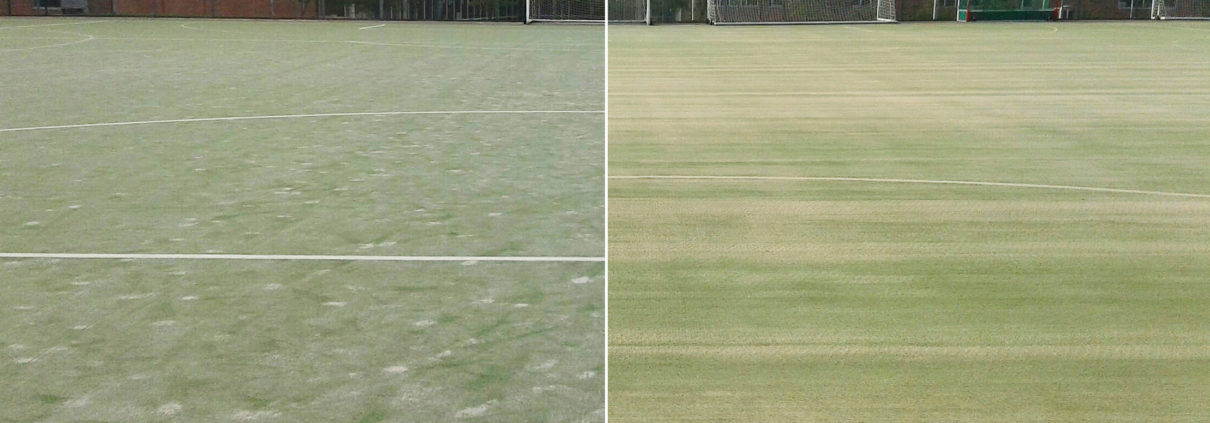
The Impact Of A Heatwave: Ten weeks of drought has posed a major challenge to Irish golf courses. Kevin Markham interviewed two greenkeepers to assess how course conditions have been impacted.

Listening to Met Éireann tell us we haven’t had weather like this since 1976 makes you realise how much we miss hot, dry summers.

Golf courses that were under three feet of snow in March are now burned brown by the long days of sun. If you’ve been on social media, you’ll have seen an unforgettable image of Ballybunion, which looks more like the Sahara than a golf course.

The heatwave may have cooled but the trouble is, 10 weeks passed without significant rainfall and greenkeepers have had their work cut out to maintain their courses.

Here are the views of two head greenkeepers: Paul Coleman (PC), Golf Course Superintendent at Dromoland Castle; and Dave Edmondson (DE), Links Superintendent at The Island.

What are the key challenges facing golf courses in a heatwave?

PC: “The main challenges facing parkland courses are trying to provide good quality playing surfaces in the face of intense and prolonged drought. The golfer’s expectation is still the same no matter the weather and we need to at least offer a product worth the money.

“As the majority of playing areas are comprised of sand for the purpose of better drainage, they obviously dry much faster and consequently wilt. Also, having staff working in this heat is not ideal as there is prolonged exposure to the sun.”

DE: “Dormant turfgrass is not growing or recovering from daily wear and tear, such as traffic patterns. Areas of The Island are also becoming hydrophobic (water repellent) due to lack of precipitation.”

Have you experienced anything like this in your career?

PC: “The last time I can remember a similar prolonged period of hot and dry weather was in the summer of ’95. I was working as a seasonal greenkeeper at Woodstock Golf Club, and there was no irrigation on the course. The only method of applying water was through a bulk tanker which drew from a nearby river.”

DE: “In my six years at The Island, 2013 was similar with prolonged dry conditions. I have also experienced similar low rainfall years in France and Belgium, although these were slightly easier to deal with due to lower traffic.”

How do you tackle these issues?

PC: “Irrigation. We have an automated system on tees and greens but it’s not as simple as just turning them on and forgetting about it. Moisture levels need to be constantly monitored as too much is worse than too little. Some members are amused when they see us out with hoses, knowing we have sprinklers.Without getting technical some areas on the greens become water repellent and will not wet with just water. They need to be treated with wetting agents.

“Unfortunately, it’s a logistics game and we do not have the capacity to water the entire golf course.”

DE: “We are targeting our water onto key areas: greens, tees, greens surrounds, and heavily divot-prone landing zones. As a classic links, based on sand, The Island is prone to drying quickly and we are utilising wetting agents for moisture retention and to avoid water repellancy issues.

We are also using traditional watering methods, i.e. hand-watering on putting surfaces, as much as possible. This allows us to target water onto the high parts of greens (slopes) and leave lower lying areas. This method has allowed us more uniformity of moisture throughout our putting surfaces with an improvement in playing characteristics.

“With all of our watering practices we utilise soil moisture probes daily to determine the needs of specific areas. This is deemed to be good practice, allows us to micromanage our greens and conserves water.

“The club recently purchased a pogo moisture meter that allows us to test moisture content in a given GPS location, sends the information to a cloud network, and creates a map which helps the greenkeeper handwatering for the next day to target dry areas or hotspots.”

How much time is spent dealing with the current challenges?

PC: “We have two guys each watering for approximately 50 hours per week. Mowing has decreased and so we can tackle other jobs we normally wouldn’t be able to get done.”

DE: “As turfgrass is presently mainly dormant, our mowing has reduced drastically so I have three guys hand-watering during the day. One of these will be collecting moisture content data to help us make key decisions regarding the next day’s watering.”

Are the grasses able to cope with these conditions?

PC: “Typically we go by transpiration rates of the grass plant and this can mean approximately 5mm to 10mm of water is required per night (in or around 8,000 to 12,000 litres).”

DE: “Native links grasses are Fescue and Browntop bent, and both species are native to links sites and are extremely drought resistant. They can withstand periods of stress. In many areas these species are predominantly dormant at present but will bounce back once the rain returns. From a sustainability perspective, these grasses require little to no pesticides, and limited fertiliser or water inputs.”

How serious a threat is a prolonged drought to the golf course?

PC: “It is serious as 90% of the course is burned out and in great water deficit. It will take a few weeks of rainfall to recover. No water means dead grass on greens and tees. This can make the course unplayable. There will also be a cost down the road in regressing some turf areas lost.”

DE: “I don’t see it as a major problem as long-term forecasts predict a break in the current weather. If we do get any thinning of turf coming out of the dry weather, we are due to overseed again in August with fescue throughout.”

What can golfers do to help the course and greens staff during these periods?

PC: “Members and guests can help by not driving golf buggies carelessly on fairways and where they don’t need to be. The wheel lines are being burned into the grass.”

DE: “Golfers should understand that greens teams throughout the country are doing there utmost to produce quality products for their members and guests. Patience is required through these challenging periods until we all return to normal weather conditions.”

Click here to read the original article

For the latest industry news visit turfmatters.co.uk/news

Get all of the big headlines, pictures, opinions and videos on stories that matter to you.

Follow us on Twitter for fun, fresh and engaging content.

You can also find us on Facebook for more of your must-see news, features, videos and pictures from Turf Matters.
Dennis & SISIS Confirm Cricket Day

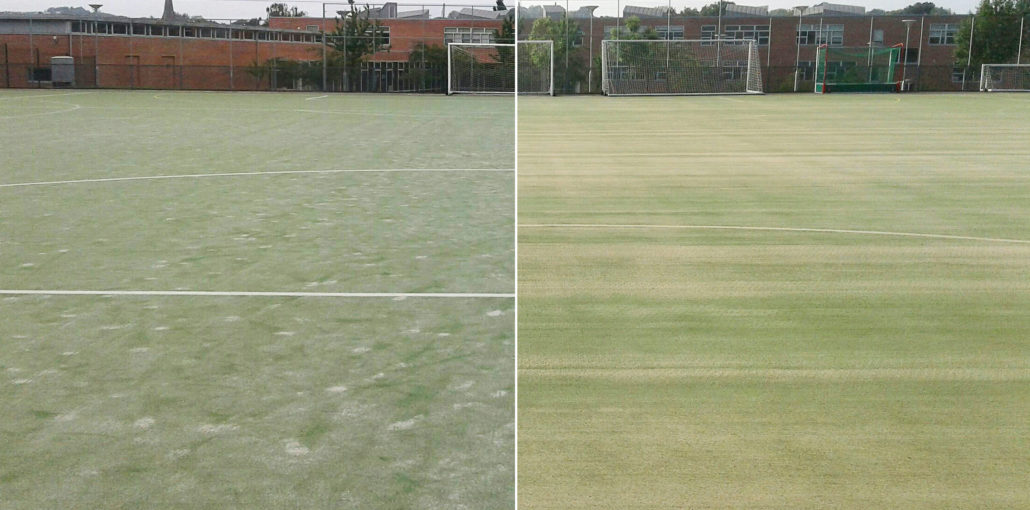
Dennis & SISIS Confirm Cricket Day: Dennis and SISIS have announced the date for their popular cricket renovation day for 2018. The event will take place at Cheltenham College on 7 August and those wishing to attend are encouraged to register soon to avoid disappointment.

Since 2011, the Dennis and SISIS series of seminars have seen over 1200 cricket groundsmen in attendance, bringing together volunteers and professionals representing test and 1st class venues, club cricket, schools, colleges and universities. High quality speakers and interesting topics has ensured these seminars quickly gained a reputation as a ‘not to miss event’ with groundstaff travelling considerable distances to be in attendance.

Dennis & SISIS Confirm Cricket Day

The August event at Cheltenham College, will be a mix of thought provoking indoor presentations and discussions with outside practical demonstrations – with plenty of time built into the programme for speaking with your fellow groundsmen. There will also be a number of high profile, well respected industry sponsors in attendance offering support and advice.

“Following the highly successful seminar held at The Brightside Ground, Bristol in 2017, the decision to return to Gloucestershire to continue our ‘For the groundsmen by the groundsmen’ series of educational seminars was a relatively straightforward one and we hope delegates find the event informative, but above all enjoyable,” commented Roger Moore, sales and marketing manager at Dennis and SISIS.

The day includes a talk on profile reading and autumn renovations from turf consultant Alex Vickers and an overview on renovations from contractor Keith Exton of Perfect Pitches.

The morning will finish with a soil core clinic led by Keith, Alex and Ian Smith, turf consultant from St Albans School.

After a complimentary lunch, groundsmen can attend two practical sessions; one on end of season renovations and the other on aeration. Cheltenham College head groundsman Christian Brain and Robert Jack (Dennis and SISIS) will join the delivery team for the first of those while Jason Briggs from Dennis and SISIS will lead the final session alongside Keith Exton.

The day will end with a question and answer session with the panel of experts.

Attendance to this informative seminar is free and seats are expected to be filled extremely fast.

To register your interest please contact Roger Moore at Dennis & SISIS on 01332 824777 or email Roger on roger.moore@dennisuk.com

For more information, visit www.dennisuk.com or www.sisis.com

For the latest industry news visit turfmatters.co.uk/news

Get all of the big headlines, pictures, opinions and videos on stories that matter to you.

Follow us on Twitter for fun, fresh and engaging content.

You can also find us on Facebook for more of your must-see news, features, videos and pictures from Turf Matters.

Ireland’s New Fungicide Launch

Ireland’s New Fungicide Launch: Ireland’s greenkeepers are now able to access the latest in turf fungicide technology, to tackle both Microdochium Patch and Dollar Spot on their greens this coming disease season.

Exteris® Stressgard® was launched by Bayer to the UK market in early 2017 and is now registered for use in Ireland.

Ireland's New Fungicide Launch

Greg Collins, from the Bayer Turf Solutions Team, explains that the product brings a totally new category of fungicide to the market. “It contains a third generation SDHI, and is the very first of its sort to be launched in the Irish turf industry, providing a new tool for the greenkeepers’ diminishing armoury.”

He explains it is the formulation of two active ingredients (AI) that makes the new fungicide so unique. “The SDHI – fluopyram, has a systemic action that moves up through the roots and leaves to prevent disease as the plant grows. The other AI – trifloxystrobin, is part of the strobilurin group, and acts as a ‘local penetrant’ that offers targeted disease control.

“There are very few curative fungicides still available on the market, following the loss of iprodione, so a transition to a preventative approach is required, and Exteris® Stressgard® can help greenkeepers do just that,” says Greg.

Irish Sports Turf Institute trial manager, Mark Sheridan, put Exteris® Stressgard® to the test using preventative applications for Microdochium Patch control, and saw a clear improvement in disease suppression, compared to untreated plots.

“Turf professionals once had the comfort of curative chemistry, but with the loss of iprodione and other similar products, the future of disease control lies with the use of preventative, integrated management programmes.

“When Exteris® Stressgard® is applied preventatively, and proactive cultural practices such as aeration, judicious use of fertiliser and irrigation, are teamed with appropriate biological control measures, it’s possible to achieve significant turf protection,” explains Mark.

Key benefits of Exteris® Stressgard®:

  • New chemical group to the turf market.
  • Developed with Stressgard formulation technology specially for turfgrass
  • Targeted Microdochium Patch prevention
  • Dual active formulation
  • Flexible water volumes
  • Quick dry time and absorption
  • Aids in resistance management

Reduces damage from harmful UV radiation

For more information please visit www.environmentalscience.bayer.co.uk/Turf-Management, email turfsolutions@bayer.com or contact Cropcare on 01-2874485

For the latest industry news visit turfmatters.co.uk/news

Get all of the big headlines, pictures, opinions and videos on stories that matter to you.

Follow us on Twitter for fun, fresh and engaging content.

You can also find us on Facebook for more of your must-see news, features, videos and pictures from Turf Matters.