Exeter City’s Problem Fox

Exeter City’s Problem Fox: Exeter City have had their fair share of fox in the box strikers over time, but currently, it is one of the feral variety that is causing them a huge headache at St James Park.

Head groundsman Clive Pring says he is being harassed by a young fox that is breaking into the ground and digging up the pitch, which the club spent thousands of pounds on over the summer.

When DevonLive visited St James Park earlier this week for an exclusive behind the scenes tour of the new stand, we were alarmed by several significant sizeable holes on the surface, which Pring says were created by his furry fiend.

“I reckon the fox now is about four or five years old because he’s been there for a little while and I would say once every two or three weeks, he will come in during the season and will literally dig a hole about a foot deep and two foot long,” Pring said.

“He will do that over the drain lines because they are sand and easier to dig but, during the pre-season, when we have a pitch that we are trying to grow in and the drain lines are exposed and less grass on them, he probably digs that hole in two or three places every night, so we are constantly having to deal with it every morning.

“We actually have a tool that digs out a section that allows us to dig it out and replace it with a better section of turf and that can confuse him because what he does is very scent-based. If we move his hole, then he can’t find it, so that sometimes helps.”

The likes of Darran Rowbotham, Jamie Cureton, Tony Kellow and Alan Banks made a career for themselves with City as fox in the box-type strikers. The Grecians even had a man by the name of Fox between the sticks as well, the goalkeeper and former manager Peter Fox.

“The goal mouth seems to be his favourite spot, possibly because the grass is weaker in the goal mouths and he can pull it out in seconds, but we are not even sure what he is doing,” Pring added.

“He doesn’t go in and use it as a toilet, maybe he is practicing making a burrow, but he has been adolescent for too many years now and needs to move on.

“We have a trap there that we sometimes bait, but he knows what he’s doing. He usually sets the trap off from outside and takes the bait through the bars! They are wily old things and very curious about everything.”

Perhaps the fox is trying to find Dido, the famous parrot that returned to Exeter with the party that toured south America in 1914 and provided the national Brazilian side with their first ever opponents.

Legend has it that the bird, unused to British conditions, didn’t last long here in old Blighty and after passing away, it was laid to rest in the goal mouth at St James’ Park.

City’s poor form in front of goal the following season was put down to Dido ‘cursing’ the Grecians, so he was dug up and buried elsewhere, although there is a different type of bird that is causing Pring and City another problem up at the Cliff Hill training ground.

They are feeding at a nearby waste plant before heading to the training ground to rest up, leaving Pring and his ground staff with plenty to clean up afterwards.

“The last thing you want on the new artificial surface is something that shouldn’t be there and bird poo isn’t what you want!” he said. “They seem to come in and rest there for a few hours in the evening and during that time, they obviously do their business on the surface.

“If you let it settle, it becomes an organic matter and things will start to grow within the surface, so we are constantly brushing it to make sure it doesn’t deteriorate and causing us a problem.

“We will get some bird scarers put in at some point, but they often get used to things like that. There can be 200-300 sat there and it isn’t beneficial for what we are after!”

Click here to read the original article

For the latest industry news visit turfmatters.co.uk/news

Get all of the big headlines, pictures, opinions and videos on stories that matter to you.

Follow us on Twitter for fun, fresh and engaging content.

You can also find us on Facebook for more of your must-see news, features, videos and pictures from Turf Matters.

Pitch Renovations At Wycombe

Pitch Renovations At Wycombe: Campey Turf Care Systems has assisted contractors Turf Tonics with the first in-house renovation of Wycombe Wanderers Football Club’s award-winning pitch at Adams Park.

 The Buckinghamshire club enjoyed success on two fronts on the pitch during the 2017/18 season, not only achieving automatic promotion to League One but also scooping the League Two Grounds Team of the Year for the work conducted by Turf Tonics, led by full-time groundsman Sean Woodley.

Pitch Renovations At Wycombe

Preparations are now underway for the Chairboys’ first campaign back in League One since the 2011/12 season, with the playing surface playing an integral part to the team’s aspirations of another successful year, as Wycombe Wanderers general manager Michael Davies explains:

“We aspire to have a pitch which complements the football team rather than inhibits them, and it worked extremely well for us last season. Naturally, the players and the management staff request the best possible pitch that we can provide with the resources available to us, and our long-standing partnership with Turf Tonics enables us to meet those requirements with an outstanding surface.

“It’s testament to Turf Tonics and their hard work, expertise and dedication that we won the League Two Grounds Team of the Year award. It’s a phenomenal achievement and it is something we will be striving for again in League One.

“Last season we staged 50 games on the pitch, including 28 of our own in league and cup fixtures, plus Reading Ladies and Reading Under 23s matches as well as tournaments after the season had finished.

“Our club president, Ivor Beeks, is effectively the custodian of the pitch and carefully manages its usage and availability to ensure it remains in the best possible condition. The pitch is a highly sought-after commodity, and we receive many requests for private hire for matches or commercial use, but football comes first and it’s vital that we strike the right balance,” he added.

Bringing in additional income via third party pitch usage is important to the club, and whilst it’s clear that they respect the limits of the surface, the recent success has led to expectation and for Steve Gardner, a managing partner of Turf Tonics, a successful first in-house renovation is vital for the club’s financial and football plans.

“We’ve seen the renovations Premier Pitches have done at Adams Park in the last two seasons and they used what I’d regard as the industry standard machines by Campey,” he said.

“Because it was our first in-house renovation, it was important to us that we used the best equipment and Ben Taylor at Campey has really helped us out. We used their new 1.6-meter Koro FTM with Universe Rotor because it’s a Desso Grassmaster pitch and that went one direction across the pitch yesterday and took a majority of the top off.

“We also used Campey’s Raycam TB 220 brush, Raycam Speedresser and Raycam Aeraseeder to complete the rest of the work. Our first game is on 14th July, we’re making excellent progress to be able to provide the highest quality of surface for the season ahead.”

As part of the renovation, groundsmen were invited to attend and view the machines in action to gain the first-hand experience of best practice and learn more about renovating a hybrid pitch as they continue to grow in popularity throughout all professional tiers of football and rugby.

For more information, visit: www.campeyturfcare.com

For the latest industry news visit turfmatters.co.uk/news

Get all of the big headlines, pictures, opinions and videos on stories that matter to you.

Follow us on Twitter for fun, fresh and engaging content.

You can also find us on Facebook for more of your must-see news, features, videos and pictures from Turf Matters.
Fertilisers Enhance Pitches In Russia

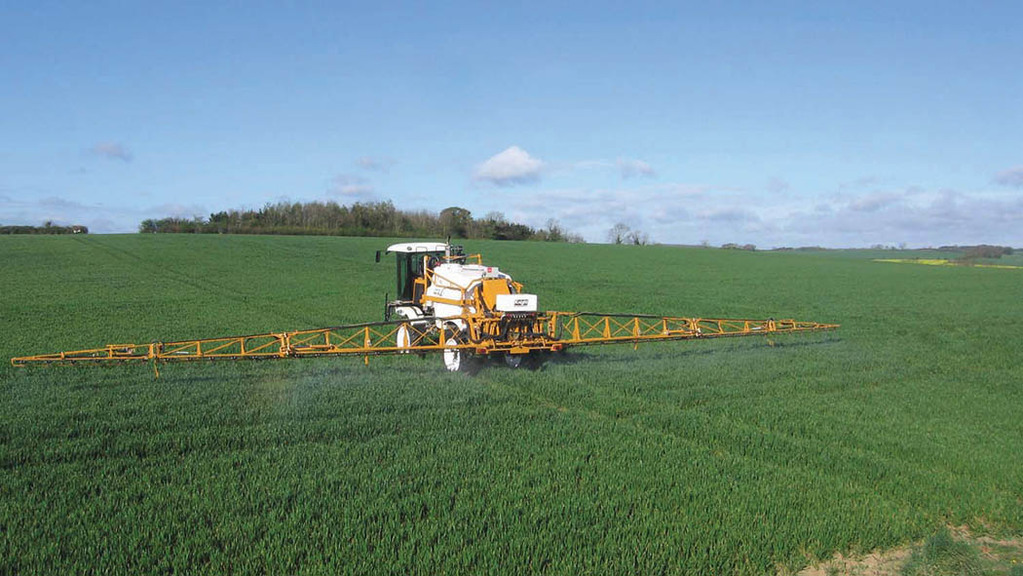
Fertilisers Enhance Pitches In Russia: A specialist range of phased-release granular fertilisers is being used at all 12 of the Russian stadiums hosting the current FIFA World Cup.  Designed specifically for use on all sports pitches where a consistent and long-acting supply of nutrients is required, the Floranid®TWIN range of fertilisers from COMPO EXPERT provides up to 16-weeks of nutrients from a single application.

Due to the high demands placed on a World Cup stadium pitch, and the hot, dry conditions which are symptomatic of a typical summer in Russia, most of the 12 stadia hosting the tournament are using hybrid turf pitches which contain a combination of artificial fibres and natural grasses to achieve improved root zone and sward stability, a consistently even surface and optimal functionality.

Fertilizers Enhance Pitches In Russia

Pitches of this type, and indeed any hard-working sports turf facility, require specialist nutritional products to keep the natural turf in prime condition, not just during the tournament itself, but in the run-up to the opening match and after the final game has been played on 15th July.  All 12 of the World Cup stadia are therefore using specialist FloranidTWIN phased-release fertilisers from COMPO EXPERT.

These fertilisers are specifically designed to provide a consistent and efficient source of nutrients to enable the pitches to perform well under difficult weather conditions.

“Floranid fertilisers have been used by the majority of Germany’s Bundesliga pitches for several years, where they are chosen for their ability to give a phased release of nutrients over a 16-week period,” explains Richard Brown of Germinal – COMPO EXPERT’s UK distributor.

Floranid fertilisers contain a proportion of fast-acting nitrogen in ammonium and nitrate forms, as well as a phased-release element based on the advanced isobutylidene diurea (IBDU) or ‘Isodur®’ molecule.  They also contain a second phased-release element in the form of crotonylidene urea or ‘Crotodur®’.

The inclusion of Crotodur raises the Activity Index of FloranidTWIN fertilisers from approximately 95% to over 98%.

“By comparison, the slow release fraction in conventional methylene urea (MU) fertilisers only contains around 40-60% of ‘true’ slow release N at best, whilst many contain less than half.  Put simply, that means the remaining nitrogen is either quick release, and therefore no more value than standard fertiliser, or so insoluble that it may take years to be released,” Mr Brown continues.

“In contrast, Isodur and Crotodur fertilisers have an efficiency rating of 98-99%, meaning that almost all of the N supplied will be slowly and steadily released into a form which can be taken up by the pitches over a period of around 16 weeks.”

In addition to supplying fertiliser to each of the 12 World Cup stadia, COMPO EXPERT has also invested a great deal of time and resource into ensuring that each pitch performs and looks as good as possible in the run up to and during the tournament.  “COMPO EXPERT has been working with the groundsmen at each stadium since 2016 to provide detailed sward nutrient advice via a programme of seminars,” Richard Brown adds.  “As anyone who has been watching the tournament will know, the pitches have performed perfectly as well as looking incredible, and are a credit to the hardworking groundstaff who have produced excellent playing surfaces for the world’s largest sporting event.”

The FloranidTWIN range of fertilisers is available in the UK via an exclusive distribution agreement with Germinal.  For more information visit www.germinalamenity.com

For the latest industry news visit turfmatters.co.uk/news

Get all of the big headlines, pictures, opinions and videos on stories that matter to you.

Follow us on Twitter for fun, fresh and engaging content.

You can also find us on Facebook for more of your must-see news, features, videos and pictures from Turf Matters.

Terra Float Air Delights in Lancashire

Terra Float Air Delights in Lancashire: In a previous life Stuart Hogg, Course Manager at The West Lancashire GC was among the first to own the Wiedenmann Terra Float & Terra Seed. Last year, more by coincidence than by design, he found himself back in the market for an overseeder just as the Terra Float Air was re-engineered and relaunched with an added computerised pneumatic unit.

“We bought one of the original launch Terra Float and Terra Seed combinations in autumn 2010 when I was Course Manager at St Anne’s Old Links, on the Fylde coast. They served extremely well. When I moved to The West Lancashire in April 2015, I inherited a more traditional type seeder. For the first couple of seasons we made do then we hired in equipment. Last winter a funding package allowed us to invest in a new machine. Darren Barker at dealers, Balmers GM, showed me some others but I liked that the three Wiedenmann drums are floating so cope well with undulations of a links green.  I knew I liked it before and the Air version was better again,” he said.

Terra Float Air Delights in Lancashire

Offering maximum accuracy at quantities as little as 1 g / m² the Terra Float Air, combines three units in one. A base unit aerates or loosens soil to 30 mm using either spikes or fine slits assuring a receptive seed bed either pre or post top dressing. Next the distribution of the seed is absolutely uniform via the air flow and deflector system.  Finally, a brush and roller combination incorporates top dressing materials to the ground before smoothing the surface.  With its very fine seed rollers exact calibration is achievable. Those with expensive or ‘rare seed’ can be confident of success while memory function on the control pad stores input and calibration data for the next use.

The West Lancashire GC is a proud host of R&A and England Golf competitions as well as featuring in the Top 100 Golf Courses in Great Britain.  It is one of England’s ten oldest clubs and will celebrate its 150th anniversary in 2023. The role earmarked for the Wiedenmann Terra Float Air has been well considered to help deliver incremental improvements to the quality of the course and take advantage of the machine’s versatility and potential.

“This purchase is not just about one area or one type of grass or indeed just limited to seeding,” said Stuart Hogg.  “We want to be able to do tees, greens, fairways and walkways with different grass species.  The fact that the seed delivery hoses are kept dry and clean with the airflow is a big plus. If we want we can brush the greens without overseeding or we can sarrel roll the greens. There is much that can be done. But for now we’re going with little and often; playing the long game. It will take a period of time before we see a change of any botanical composition in the grass but that’s where we want to be in seasons to come.

“So far the Air has had one outing around the pathways with dwarf rye fescue mix, a couple of passes on the tees and three passes on the greens both with a pure fescue mix but we’re on a break until after The R&A’s Open qualifying and the club championships.  During August, September and possibly October, weather dependant, I expect it to be constantly overseeding the greens every two to three weeks to let germination happen ahead of winter.”

Terra Float Air Delights in Lancashire

Where the Air comes into its own is its high performance air stream which effortlessly directs precise amounts of the seed to the prepared perforated holes A series of steel deflector plates ensures uniform depositing of the seeds from a short distance while lifting the unit automatically triggers a shut off.

“The in-cab control saves time and effort.  Our team really likes this. If one of the greens, or a specific area is a bit weaker there’s no requirement to get out and recalibrate the machine.  It’s a couple of presses of a button and the machine does it for you, storing the data for next time. You are far more in control of which green gets what and such versatility on a golf course makes the job a little bit easier,” concluded Stuart Hogg.

Stuart Hogg is one of a rare breed of course managers having spent his entire career on links courses.  He took up his Course Manager post at The West Lancashire GC after 11 years at St Anne’s Old Links and before that spells at two other links courses, Fortrose & Rosemarkie GC on the Black Isle and West Kilbride GC at Seamill in Ayrshire. At The West Lancashire he is supported by a team of seven full time plus three seasonal staff.

For the latest industry news visit turfmatters.co.uk/news

Get all of the big headlines, pictures, opinions and videos on stories that matter to you.

Follow us on Twitter for fun, fresh and engaging content.

You can also find us on Facebook for more of your must-see news, features, videos and pictures from Turf Matters.

Get More With Toro Cylinders

Get More With Toro Cylinders: Reesink Turfcare is reminding customers that replacing or upgrading to new Toro cylinders offers customers so much more than a perfect finish, among many other things they bring the best possible value, too.

Value, one of the most important factors determining purchasing decisions. Budget control is something all course managers and greenkeepers will feel the pressure from and getting value from what is spent is paramount. Which is what makes Toro cylinders such a sensible option. Here we look at the reasons why.

Get More With Toro Cylinders

With the workings of a cylinder mower so intricate, it would be unwise to upset the equilibrium by putting anything other than genuine parts in your Toro, and only genuine Toro cylinders balance with genuine Toro bedknives for the perfect fit.

Fitting an inferior ‘will-fit’ part against a genuine Toro bedknife removes the guarantee of a consistently accurate cut right down to 2.5mm, increasing the risk of turf damage. This means only genuine Toro cylinders give you the best fit and deliver the cleanest cut, promoting healthier turf and giving you an amazing after-cut appearance.

And because genuine Toro cylinders are built strong and fit in the cutting units so well, they wear less, so the need for constant cylinder grinding is less, meaning less maintenance and more efficient mowing operation.

Toro cylinders are also the only cylinders available in 5, 7, 8, 11 and 14-blade configurations to fit all cylinder mowers, including the Greensmaster and Reelmaster ranges.

Add to that Reesink’s parts backup is widely accepted as being second-to-none -15,000 Toro items, with performance parts delivered within 24 hours’ notice pretty much anywhere in the UK and 12,000 fast-moving lines are housed at the European distribution centre in Belgium with 48-hour availability. If all else fails, a 72-hour trans-Atlantic airfreight service comes into action calling on parts held at Toro’s Minneapolis manufacturing base. This is all at no extra cost to the customer and represents the kind of reassurance Reesink wants to give greenkeepers: minimum downtime, maximum productivity and more customer service.

In fact, it’s this approach, focusing on keeping the customer’s total cost of ownership as low as possible – a shared philosophy with The Toro Company, that has seen Reesink recognised by The Toro Company for outstanding performance in Parts, Service and Technical Training in the past.

 Contact distributor Reesink Turfcare’s Toro parts department on 01480 226800, email info@reesinkturfcare.co.uk or visit reesinkturfcare.co.uk

For the latest industry news visit turfmatters.co.uk/news

Get all of the big headlines, pictures, opinions and videos on stories that matter to you.

Follow us on Twitter for fun, fresh and engaging content.

You can also find us on Facebook for more of your must-see news, features, videos and pictures from Turf Matters.