Improve nutrient management in elite turf nutrition

Improve nutrient management in elite turf nutrition

Improve nutrient management in elite turf nutrition

Plant nutrition can be optimised by helping turf grass to utilise more from fertilisation. This, suggests Agronomist Kate Finlayson, can be achieved by incorporating silicon into grounds care maintenance routines.

Improve nutrient management in elite turf nutrition

Improve nutrient management in elite turf nutrition

“Silicon is not always discussed in the same way as nitrogen, potassium, calcium, magnesium or iron, but I think that is changing,” she says. “In elite turf, the question is not just what has been applied. It is whether the plant can actually use that nutrition effectively and turn it into performance.”

Granular fertilisers, foliar feeds and soil drenches all remain essential tools for professional grounds teams. Granular fertilisers provide the nutritional foundation, foliar nutrition allows more targeted support when a faster response is required, and soil drenches can focus activity in the rootzone.

Plant-available silicon sits alongside these approaches. Its role is not to replace existing nutrition, but to help strengthen the plant and support more efficient use of the programme already in place.

“A nutrition programme is only as effective as the plant’s ability to access and use the nutrients available to it,” says Kate. “If rooting is weak, uptake is restricted. If the plant is under stress, nutrient assimilation can be compromised. If photosynthesis is limited, the plant has less energy available for recovery and growth. That is particularly relevant in stadium turf, where light, temperature, wear and recovery windows are constantly changing,” she adds.

Plant-available silicon is associated with stronger cell walls, improved leaf rigidity and greater tolerance to wear and environmental stress. In practical turf terms, this can support a tougher plant that is better able to tolerate mowing, play, divoting and short recovery windows.

Recovery is where Kate believes silicon becomes especially relevant. “After play, the turf plant has to rebuild damaged tissue, maintain density, continue producing new roots and shoots, and restore surface integrity. Nutrition is central to that process, but the plant has to be in a position to use the nutrients being supplied. That is where plant-available silicon can add value,” she says.

Trial work carried out with the STRI, using Orion Future Technologies’ plant-available silicon, Fossil, showed improved uptake of several key nutrients. In the turf data, the most relevant responses were silicon, calcium, iron and magnesium. Kate says that profile matters because each nutrient links directly to turf performance.

“Silicon supports structural strength. A plant with stronger cell walls and improved rigidity is better equipped to tolerate wear and maintain leaf quality. Calcium is essential for actively growing tissue, particularly root tips, shoot tips and new leaf growth. In sports turf, that links directly to recovery because the plant needs to rebuild damaged tissue and keep producing new roots and shoots after play. Iron supports chlorophyll function, colour and plant performance, while magnesium sits at the centre of the chlorophyll molecule and is essential for photosynthesis. That is particularly relevant where light is restricted, such as shaded stadium environments or winter periods,” she says

She further suggests that silicon should not be treated as a standalone input and instead should be considered as part of the wider nutrition strategy.

“Traditional fertiliser planning often focuses on what is being applied: nitrogen levels, potassium balance, iron source, foliar mix or rootzone treatment. Those questions still matter, but the next question is how effectively the plant is using that nutrition,” she says.

For top-end venues, sustainability is also becoming a bigger part of the nutrition conversation. The focus is not simply on reducing fertiliser inputs, but on demonstrating that nutrition is being managed intelligently, with a clear link between inputs, plant response and surface performance.

“Silicon should not sit outside the nutrition programme, it should be built into it with a clear objective,” adds Kate.

She suggests potential outcomes could include improved recovery in high-wear areas, better rooting in restricted zones, support during periods of shade, or helping the plant cope when recovery windows are tight.

“The most effective approach is targeted and measurable. Using tissue analysis, visual assessment, recovery observations and surface performance data will help understand the response,” she says.

Plant-available silicon provides a way to strengthen the link between nutrition and performance. By supporting plant structure, nutrient uptake and recovery, it can help grounds teams get more value from granular fertilisers, foliar feeds and soil drenches.

“In modern sports turf management, nutrition is no longer just about feeding the plant, it’s about building a stronger, more resilient plant system,” she concludes.

For the latest industry news visit turfmatters.co.uk/news

Get all of the big headlines, pictures, opinions and videos on stories that matter to you.

Follow us on Twitter and Instagram for fun, fresh and engaging content.

You can also find us on Facebook for more of your must-see news, features, videos and pictures from Turf Matters
John Deere supports back-to-back championships at Birkdale and Lytham

John Deere supports back-to-back championships at Birkdale and Lytham

John Deere supports back-to-back championships at Birkdale and Lytham

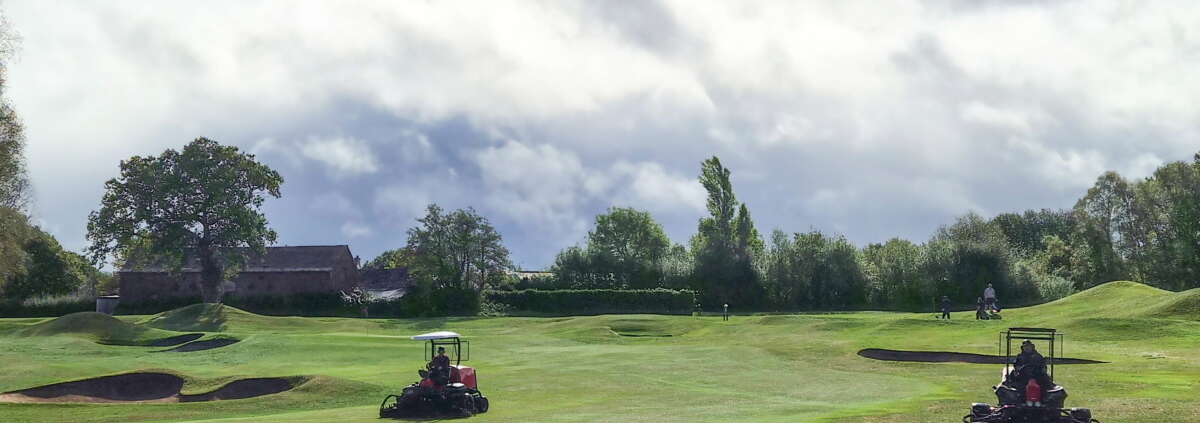
The course managers at Royal Birkdale and Royal Lytham & St Annes have praised the monumental effort from volunteers and staff in executing The Open Championship and the AIG Women’s Open over an intense fortnight.

John Deere supports back-to-back championships at Birkdale and Lytham

John Deere supports back-to-back championships at Birkdale and Lytham

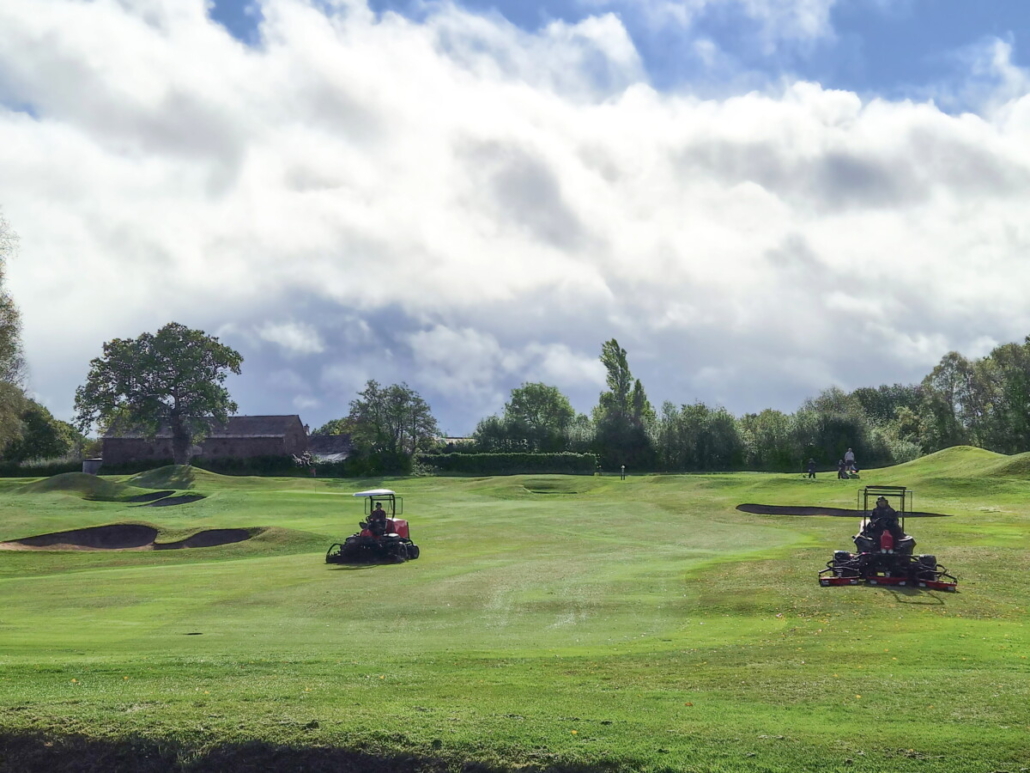
John Deere and local dealer Turner Groundscare provided additional machines, technicians, and training for the two courses to ensure preparations were perfect, while dozens of volunteer greenkeepers descended on the venues to support.

Both clubs are established John Deere customers, but for the strict timescales required for televised tournament golf, they benefitted from additional resources to prepare for the events.

The Open Championship – Royal Birkdale

Birkdale’s Course Manager, Sean McLean, has worked Opens before, but this was his first in charge.

“It’s been years in the planning with John Deere, talking about what machinery would be needed, how we were going to work it, and how many volunteers we needed,” he said.

For tournament week, Birkdale’s regular team of 16 swelled to around 45, with volunteers drawn from other Open venues, among others.

Tee times started at 6.30am on Thursday and Friday, so the crew was on course from 4am with seven John Deere 8000AE fairway mowers and seven 2775 E-cut greens mowers deployed simultaneously to get everything ready before the first drive.

The standout addition for Sean was the John Deere 2775 E-Cut. Birkdale took delivery of two of the new electric triple riding mowers just months before The Open, specifically to have them ready for championship week. They were cutting greens, tees and surrounds.

“The staff really enjoyed using the electric mowers,” Sean said. “It’s less noise, and the finish they provided was ideal for what we needed for The Open Championship.”

Dealer Turner Groundscare arrived on site around five weeks before the tournament to begin machine preparation alongside Birkdale’s own workshop team. They supported with key tasks such as servicing, sharpening, setting bottom blades, and dialling in roller settings. During championship week a dealer technician was present full-time.

“For the week before and the week of the tournament we had a Turner Groundscare technician here pretty much all day, every day. Even outside of tournaments, the dealer provides very good support for us,” he said.

John Deere’s own staff from its Langar headquarters in Nottinghamshire also arrived on site to work with the greenkeeping team and dozens of volunteers. They provided on-site training for anyone who was not familiar with John Deere machinery, ensuring everyone was up to speed before championship week began.

“It was invaluable to have help with training for all the volunteers that might not have seen these machines before. That support made a real difference,” Sean added.

Fresh from seeing New Zealander Ryan Fox close out his first major championship, the team moved up to Royal Lytham & St Annes for the AIG Women’s Open.

AIG Women’s Open

Royal Lytham’s Course Manager Paul Smith began preparations for hosting the Women’s Open years in advance, making sure the course is ready to host the world’s very best players.

“It takes a lot of planning, hard work, dedication, and professionalism to maintain and manage a well prepared and conditioned course all year round, which is never that far away from being the best it can be,” he said.

John Deere has been instrumental in supporting Royal Lytham & St Annes in hosting every major championship since 2001, over time proving to be a very beneficial relationship in helping the greenkeeping team plan, learn and develop from each competition.

“Having John Deere and Turner Groundscare present and supporting on site provided us with an added level of assurance, knowing that any problems would be addressed promptly, ensuring the continued smooth running of the operation throughout,” said Paul. “John Deere worked closely with the club’s mechanic and lead ensuring that we delivered the very best.”

An extensive fleet of John Deere machinery was deployed on all areas of the Championship course, made up of eleven 2775 greens mowers, six 8000AE fairway mowers, and eight TE Gators, with over 30 greenkeepers operating the machines – double the amount of Royal Lytham’s regular team.

“The feedback on the performance and quality of the John Deere machines was recognised widely from not just the professionals who operated the machinery, but also by the elite players testing their game on the surfaces that the machines helped refine.”

The extra machinery and dealer back up made the difference when combined with additional greenkeepers volunteering for the event.

“Delivering a modern-day championship is reliant on the support of an adequately sized, professional and skilled team,” said Paul. “The level of planning, organising, and directing is maintained at a high level throughout, with data collection and course preparation critique positively influencing informed decision making, helping to deliver the marginal gains in all areas for the course to be at its very best.

“A major championship is only ever achievable by having this high level of support, backup, and knowledge in all areas, but particularly the machinery element  that John Deere and Turner Groundscare provided.”

While hot and dry conditions made it an especially difficult year for greenkeeping in the build-up to the tournament – which was won by Japan’s Shiho Kuwaki – Paul praises his team and the support team for delivering a successful championship.

“The challenges were exacerbated by the difficult conditions but ensuring that the course and the competition was a success was the culmination of years of hard work, dedication, and professionalism by an outstanding team.

“Our support team were also fantastic and made the championship that bit more special.”

For the latest industry news visit turfmatters.co.uk/news

Get all of the big headlines, pictures, opinions and videos on stories that matter to you.

Follow us on Twitter and Instagram for fun, fresh and engaging content.

You can also find us on Facebook for more of your must-see news, features, videos and pictures from Turf Matters
More Than Mowing

More Than Mowing

More Than Mowing

As labour pressures and tighter maintenance windows continue to shape grounds care, getting more useful working hours from every machine is becoming increasingly important.

More Than Mowing

More Than Mowing

As autumn arrives and morning dew becomes a familiar sight across golf courses and sports pitches, grounds teams face a familiar challenge. Daylight hours become shorter, but the list of jobs rarely does.

Before the first tee time or match, dew may need clearing, grass needs cutting and driving ranges require ball collection. For teams already working with limited labour and narrow maintenance windows, fitting everything into the day can place considerable pressure on both people and equipment.

It also raises a simple question when facilities invest in automation: once an autonomous mower has finished cutting, what does it do next?

The FJD Rough Ranger has been developed around the idea that one robotic platform can remain productive beyond mowing. At its core, it is an autonomous mower designed for demanding turf environments, while interchangeable attachments allow the same machine to take on other routine jobs as priorities change.

That versatility starts with capable mowing. Golf course roughs and facility surrounds can present slopes, uneven ground, dense grass and obstacles. The Rough Ranger combines a front suspension chassis with a floating cutting deck, helping it remain stable on uneven terrain and follow ground contours for a more consistent cut with less turf scalping. It can operate on working slopes of up to 20°.

But its working day can begin before mowing starts.

On an autumn morning, the Rough Ranger can be fitted with a three-section dew brush spanning 2,930 mm. Working ahead of play, it can clear dew from the turf, while automatic lifting and folding allow the brush to retract during turns and manoeuvring around obstacles.

Dew brushing is a simple but repetitive and time-sensitive task. Moving it to an autonomous platform can free experienced staff to focus on work that requires more judgement and attention.

Once dew removal or mowing is complete, the same machine does not have to return to the shed. With the ball-picking attachment fitted, it can move to the driving range and collect up to 3,000 golf balls per hour, returning automatically to the unloading area when its basket is full.

In practical terms, one machine can begin work before golfers arrive, move on to mowing during the maintenance window and later continue working on the driving range.

That is the real value of a multi-functional robotic platform. The point is not simply how many attachments can be fitted to the same machine, but how much of the working day it can remain useful.

Other attachments can extend the platform into tasks such as sports-pitch line marking and the collection of grass clippings, leaves and light debris, giving facilities additional flexibility as requirements change.

Autonomous navigation uses RTK fused with LiDAR to build a 3D terrain map, helping the Rough Ranger operate in challenging areas such as under trees or around obstacles. Real-time LiDAR obstacle detection adds another layer of support for autonomous operation.

For grounds managers, this changes the conversation around automation. The question is no longer only how much labour an autonomous mower can save while cutting grass, but how much useful work the same machine can complete across the rest of the day.

For teams under pressure to maintain standards with limited time and resources, keeping one machine productive across different tasks can be as important as autonomy itself.

The thinking behind the FJD Rough Ranger is straightforward: rather than using robotics for one job at a time, make better use of the robotic platform already on site.

Doing more does not always mean having more machines. Sometimes, it simply means getting more from each one.

For the latest industry news visit turfmatters.co.uk/news

Get all of the big headlines, pictures, opinions and videos on stories that matter to you.

Follow us on Twitter and Instagram for fun, fresh and engaging content.

You can also find us on Facebook for more of your must-see news, features, videos and pictures from Turf Matters
Championship golf validates unmanned turf care

Championship golf validates unmanned turf care

Championship golf validates unmanned turf care

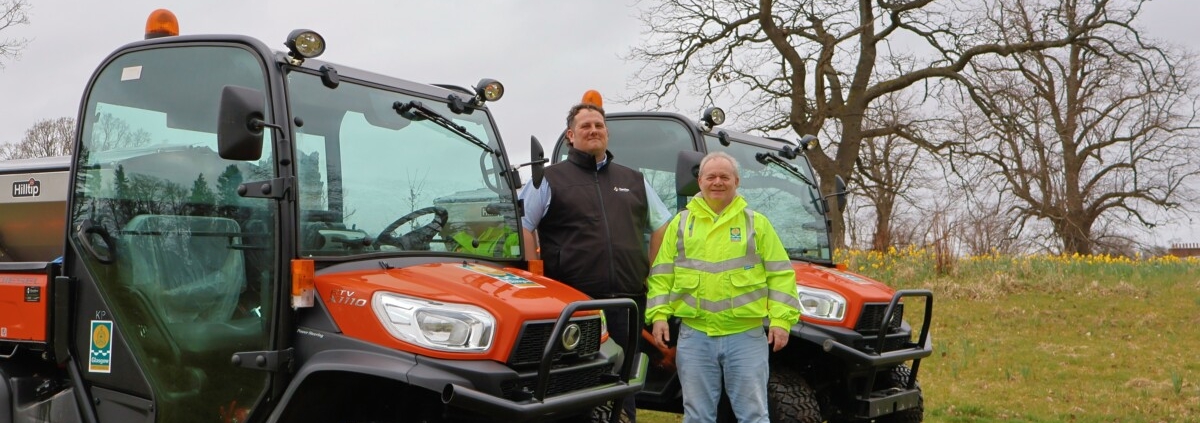
Championship golf leaves no room for compromise. That’s precisely why Kress chose the inaugural Portugal Invitational to demonstrate how unmanned mowing is becoming a practical solution for the world’s most demanding turf environments.

Championship golf validates unmanned turf care

Championship golf validates unmanned turf care

At the inaugural Portugal Invitational, Kress demonstrated that unmanned mowing is ready to become part of modern grounds maintenance. As an Official Partner, Kress used the tournament to showcase technology being deployed at selected courses elsewhere in the region. The tournament was not where Kress merely advertised unmanned mowing; it was where championship golf validated its maturity.

Across the week, 75 guests, including golf course superintendents, greenkeepers, course managers, owners, and spouses from Europe and North America joined Kress in Algarve. They came not only to experience a world-class tournament, but to examine how unmanned technology can support the teams responsible for achieving exceptional playing conditions.

“Golf is one of the most demanding environments in grounds maintenance, which is why it provides such a meaningful benchmark for our technology,” said Dario Alonso, CEO, Kress South Europe. “In Vilamoura, turf professionals could see that autonomy is no longer a distant concept. It is a working solution.”

From demonstration to daily operation

The Portugal Invitational provided the international stage. Nearby courses provided the operational evidence.

Alongside the Portugal Invitational, Kress deployed two robotic mowers at Old Course Vilamoura, managed by DETAILS, Portugal’s leading golf management company. The adoption of the technology at the Old Course Vilamoura demonstrates how unmanned mowing integrates into the daily management of a prestigious golf environment.

The technology is designed not to replace greenkeeping expertise, but to extend it. By taking responsibility for planned, repetitive mowing, autonomous equipment can help teams direct more time towards the work where specialist knowledge and human judgement matter most—from agronomy and irrigation to course presentation and the player experience.

Visitors were also introduced to the Kress MasterSeries robotic mower and Kress EyePilot 4×4, both engineered for the accuracy, coverage and varied terrain demanded by large and complex sites.

A visit to Quinta do Lago added the perspective of daily course management, with Superintendent Scott McLean giving guests an inside view of the expertise and attention required to maintain one of the Algarve’s most highly regarded golf destinations.

A benchmark beyond golf

Golf has always set the benchmark for professional turf care. If autonomous mowing can meet the expectations of championship golf—where every detail affects play—it becomes relevant to sports facilities, municipalities, universities, resorts and every organisation responsible for maintaining high-quality landscapes.

The Portugal Invitational provided the setting in which Kress demonstrated that unmanned mowing is no longer an emerging concept. It is becoming part of the operational toolkit of organisations responsible for maintaining some of the world’s most demanding landscapes.

The inaugural Portugal Invitational brought together legends of the game at The Els Club Vilamoura, where Zach Johnson claimed the title with a 19-under-par finish. For Kress and the turf professionals attending, the tournament’s significance extended beyond the competition: it demonstrated how unmanned mowing is becoming part of the future of championship course maintenance.

For more information, please visit https://www.kress.com/en-gb/

For the latest industry news visit turfmatters.co.uk/news

Get all of the big headlines, pictures, opinions and videos on stories that matter to you.

Follow us on Twitter and Instagram for fun, fresh and engaging content.

You can also find us on Facebook for more of your must-see news, features, videos and pictures from Turf Matters
Why CBRE Chose AS-Motor Once Again

Why CBRE Chose AS-Motor Once Again

Why CBRE Chose AS-Motor Once Again

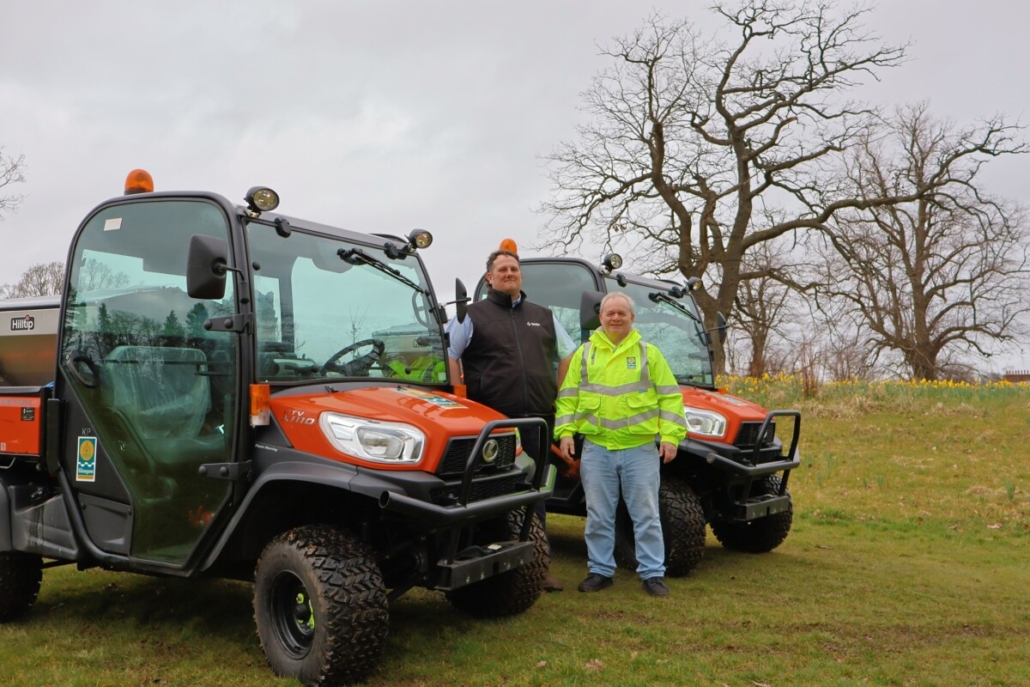
6,000 sites, highly diverse working environments and some of the most demanding vegetation management conditions imaginable. When CBRE, the world’s largest commercial real estate services and investment company, renewed its groundcare fleet across the UK, it left the decision to the people who use the machines every day. The outcome was clear: CBRE’s groundcare teams chose AS-Motor. Their decision was based on years of positive experience in daily operation, combined with the machines’ proven performance and reliability in the toughest working conditions.

Why CBRE Chose AS-Motor Once Again

Why CBRE Chose AS-Motor Once Again

With around 140,000 employees worldwide and revenue of approximately USD 35.8 billion in 2025, CBRE is one of the world’s leading real estate services companies. In the UK, the company manages around 6,000 commercial, industrial, technical and public sites. Its services include technical building maintenance and a wide range of property and facilities management services, including the maintenance of outdoor areas and green spaces.

When the time came to renew the groundcare fleet, CBRE deliberately chose to let the people who work with the machines every day make the decision, rather than management or procurement. “We asked the people who use the equipment every day to identify the best machines for the job. Our teams were instructed to assess the equipment solely on its suitability for the work they carry out every day. The outcome was unanimous. Time and again, our teams have chosen AS-Motor because of its proven capability, reliability and performance in demanding environments,” explains Paul Clark, National Grounds and Maintenance Manager, CBRE.

High Grass and Dense Vegetation Instead of Traditional Lawn Care

Many of the green spaces maintained by CBRE have little in common with traditional parks or amenity grass areas. Typical sites include telecommunications facilities, industrial premises and other technical locations. As these areas are generally cut only once a year, CBRE’s groundcare teams regularly face high grass, dense vegetation, brambles and the early stages of scrub encroachment. Conditions also vary considerably from site to site, ranging from steep banks and difficult terrain to large open areas. As a result, both operators and machines are subjected to demanding working conditions.

“Much of the work we undertake isn’t routine amenity grass cutting. We are often working on sites that haven’t been cut for many months. We need machinery that can cope with those conditions day after day while giving our operators the confidence to work safely and efficiently,” says Clark.

It is no coincidence that the teams once again selected AS-Motor. Machines from the southern German manufacturer have been part of CBRE’s fleet for many years, with some units still performing reliably after eight or nine years of service. This long-term positive experience played a key role in the latest fleet renewal.

Specialist Machines for Every Application

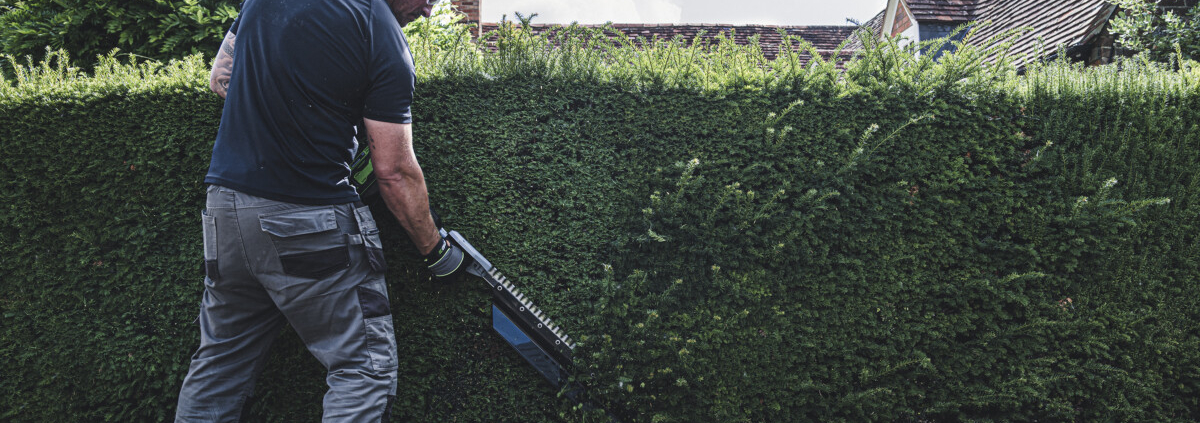
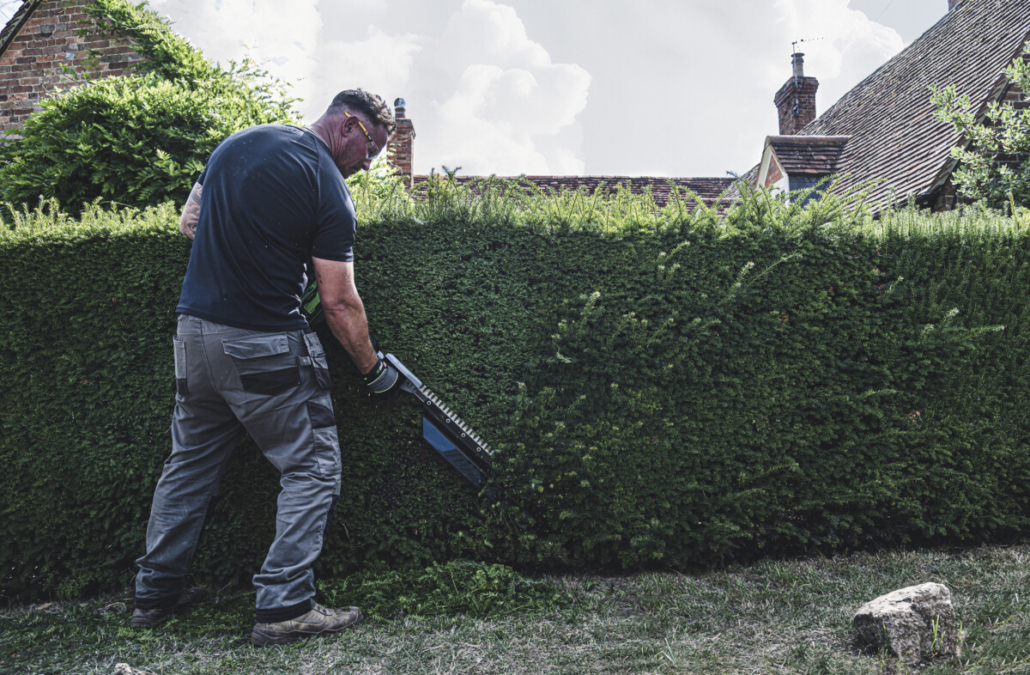
The new fleet has been tailored to meet the wide variety of applications encountered by CBRE’s groundcare teams. It includes the AS 940 Sherpa XL and AS 1040 YAK XL ride-on high grass mowers, complemented by pedestrian high grass mowers, flail mowers, mulching mowers and several AS 30 WeedHex brush weeders for mechanical weed control on hard surfaces.

For the first time, CBRE has also introduced the Ovis Evo 1000 RC remote-controlled flail mower. The company expects the machine to deliver significant improvements in both operator safety and productivity, particularly when working on steep slopes and difficult terrain.

“Introducing remote-controlled mowing is a significant step forward for us. This is the first time we’ve incorporated remote-control machines into our fleet, and we’re excited by the improvements they’ll bring in both operator safety and productivity when working on steep slopes and difficult terrain,” says Clark. “The comprehensive machine handover and operator training provided by AriensCo has given our teams the confidence to adopt this new technology safely and effectively from day one.”

Strong Partnerships Drive Success

A project of this scale can only succeed through close collaboration. Alongside selecting the machines, delivery, commissioning and operator training were all essential parts of the rollout. CBRE was supported throughout the project by AS-Motor dealer Lawncare Garden Machinery and AriensCo UK.

“We are delighted to support CBRE not only with the supply of their new AS-Motor fleet but also with the long-term service and aftersales support that will keep the machines performing at their best for years to come. This has been a real team effort involving many people across the UK,” says Barbara Green, Lawncare Garden Machinery.

Sam Lewis, General Manager of AriensCo UK, also sees the decision as a strong endorsement of AS-Motor: “What makes this project particularly rewarding is that the decision was made by the people who use the machines every day. The fact that they evaluated the equipment purely on its capability and once again selected AS-Motor demonstrates the confidence they have in our products under some of the most demanding working conditions.”

With its new groundcare fleet, CBRE is well equipped to continue maintaining around 6,000 sites across the UK safely, efficiently and to the highest professional standards.

For the latest industry news visit turfmatters.co.uk/news

Get all of the big headlines, pictures, opinions and videos on stories that matter to you.

Follow us on Twitter and Instagram for fun, fresh and engaging content.

You can also find us on Facebook for more of your must-see news, features, videos and pictures from Turf Matters