Makita new product launches prove three is the magic number

Makita new product launches prove three is the magic number

Makita new product launches prove three is the magic number

Makita has launched three new products that adopt its 40V max XGT battery – the UB003G Blower, the UB004G Backpack Blower and the UB005G Blower Vacuum. All three high-quality cordless machines have been designed for trade professionals that require reliable performance, powerful air velocity and ease of use.

Makita new product launches prove three is the magic number

Makita new product launches prove three is the magic number

The new brushless UB003G 40V Blower XGT can be used as both a blower and vacuum with an easy to disassemble suction pipe and nozzle, and a collection bag that is simple and hassle-free to empty. With variable speed options via a cruise control lever, it is ideal for efficiently tackling the job of blowing and collecting leaves.

Furthermore, the UB003G also comes with a range of practical accessories including a new vacuum kit that offers a 50L capacity, as well as a gutter nozzle set and a gutter nozzle adapter pipe.

Next in the series is the UB004G Backpack Blower, which offers power comparable to a 65 cc-class engine. Benefiting from two BL4080H batteries, it provides a run time of 38 minutes on low mode and 14 minutes on high mode.

Users will also appreciate it is comfortable and easy to use. The 8.8kg backpack blower is 40% lighter when compared to the previous model, designed to be comfortable for the user, with the batteries sitting towards the lower back, removing a lot of the weight and potential back ache experienced when using traditional backpack blowers. Features include a large control panel that offers excellent visibility and operability. Air volume can be adjusted and held by pressing the button at any trigger position, and a one-touch airflow lock via a push button provides cruise control. Two additional accessories are also available to further enhance comfort, which are the 1917R0-0 Battery Holder and the 1917R2-6 Cushion Belt Set.

Concluding the new trio is the lightweight UB005G Blower Vacuum XGT. Designed with a one touch lever, users can change easily between its low vacuum mode, suitable for collecting fallen leaves while avoiding small stones, and its high blowing mode for tackling large amounts of fallen leaves.

With a maximum air velocity in blower mode of 87.0m/s and a maximum vacuum mode of 150W, the UB005G delivers enhanced blowing and vacuuming performance. Available accessories include a handy wide nozzle and charger for the portable pack.

“Power, performance and ease of use are absolutely key when it comes to developing a high-quality blower and vacuum that can live up to the expectations of professional users,” said Kevin Brannigan, Marketing Manager at Makita UK. “The three latest Makita launches address all three areas; ensuring that the UB003G, UB004G and the UB005G from our XGT battery platform deliver on all fronts.”

For further information please visit: www.makitauk.com or contact a member of the Makita IOS team to arrange a local demonstration.

For the latest industry news visit turfmatters.co.uk/news

Get all of the big headlines, pictures, opinions and videos on stories that matter to you.

Follow us on Twitter and Instagram for fun, fresh and engaging content.

You can also find us on Facebook for more of your must-see news, features, videos and pictures from Turf Matters
The industry faces a challenge efficiency alone can't solve

The industry faces a challenge efficiency alone can’t solve

The industry faces a challenge efficiency alone can’t solve

The turf industry of today is almost unrecognisable from the one operating at the turn of the century.

The industry faces a challenge efficiency alone can't solve

The industry faces a challenge efficiency alone can’t solve

Harvesting that once required turf to be stacked by hand can now be highly automated. Modern machinery operates with far greater precision. GPS technology reduces unnecessary overlap. Irrigation can be informed by real-time weather and soil-moisture data, while soil testing and variable-rate spreading allow fertiliser to be applied according to actual crop requirements.

For more than 25 years, turf growers have invested, innovated and become significantly more efficient.

But the extreme growing conditions experienced during 2026 have exposed an uncomfortable reality. There are some challenges that greater efficiency alone cannot solve.

And as increasingly volatile weather changes the conditions in which turf is grown, we believe the next phase of innovation will increasingly be about something else: resilience.

25 years of increasing efficiency

The turf industry has not stood still. Advances in tractors and harvesting equipment have increased productivity and reduced many of the physical demands once placed on farm teams. Irrigation technology has evolved considerably.

At Harrowden, Raindancer technology is used on irrigation reels to control the timing and application of water more accurately. Sencrop weather stations, forecasts and soil-moisture probes help our teams understand when irrigation is actually required.

Soil testing and variable-rate spreading mean fertiliser can be applied according to crop requirements rather than treating every area in exactly the same way.

These developments have enabled growers to make increasingly intelligent use of water, fertiliser, fuel, machinery and people. So improving consistency and reducing unnecessary inputs and waste.

But there is another important consideration too. Modern turf production cannot simply respond to more challenging conditions by continually applying more water, more fertiliser or more inputs.

Growers have a responsibility to farm efficiently and responsibly. We must use resources according to what crops genuinely need and reduce unnecessary inputs wherever possible.

That means the challenge facing the industry is no longer simply how to produce more with less.

Increasingly, it is how to remain productive when some of the resources growers depend upon become less predictable.

When efficiency meets its limits

Water provides perhaps the clearest example. Turf farms can be equipped to irrigate crops on a rotational cycle across large growing areas. In normal conditions, that allows available water and equipment to be moved efficiently between fields.

But during prolonged periods of extreme heat and drought, the frequency with which crops require water can increase dramatically. A system capable of working across a farm on approximately a ten-day irrigation cycle may face conditions in which turf requires water every few days.

Building sufficient infrastructure to meet that level of peak demand across an entire farm would require enormous investment for conditions that may occur for only part of the year.

And infrastructure is only one side of the equation. Even with additional pumping and irrigation capacity, growers cannot apply water that simply isn’t available.

Access can be a challenge too. On farms which use ditch networks to move irrigation water around the site, falling water levels can make it considerably more difficult to get water to particular growing areas, requiring additional pipes, transfers and water management.

High temperatures can increase water demand at the same time as evaporation increases and available water resources come under greater pressure.

Analysis provided to Harrowden by MapleSky’s environmental data scientist Dr Tim Farewell shows the time between the start and end dates of the theoretical thermal growing season in Eastern England has increased by approximately seven days per decade.

It demonstrates the limit of even increasingly sophisticated technology: efficiency can help growers make the best possible use of a resource, but it cannot create more of that resource.

2026 – an exceptional year, or a sign of what’s ahead?

This is where the experience of 2026 becomes particularly important. The exceptionally hot and dry conditions experienced this summer placed significant pressure on turf production across the UK, but longer-term climate data suggests growers need to think beyond one difficult summer.

Average growing seasons have increased from around 222 days in the 1980s to approximately 244 days during the 2020s.

On paper, that sounds positive.

The reality on the ground is more complicated.

Over the same period, average summer temperatures have increased, spring and summer rainfall have fallen and the number of days experiencing significant summer soil-moisture deficits has risen considerably. Winters, meanwhile, have become wetter.

For turf growers, that creates a contradiction. Temperature is only one part of successful turf production. Soil conditions, water availability, machinery, labour and suitable access to the land all need to come together at the right time.

So while temperatures may theoretically allow grass to grow for longer, the windows in which conditions are actually suitable for successfully establishing and producing a crop can become harder to predict.

Dr Farewell said: “The UK climate is changing to one with an earlier start, and later end, of the theoretical grass growing season. But this does not necessarily mean easier growing conditions. With springs and summers both becoming much hotter and drier, this increases both soil moisture deficits and water demand.

At the same time, wetter winters create a different set of challenges. It is the increasing extremes of those conditions that growers will need to adapt to.”

Our own farm teams are already seeing those changing patterns first-hand.

Late-spring sowings can struggle to establish before high temperatures arrive, while drought followed by excessive autumn rainfall can compress the window in which conditions are suitable for sowing.

And when a crop fails to establish as expected or is damaged by difficult growing conditions, the consequence isn’t necessarily just a delay. It can mean additional renovation, greater waste and more work before that area is ready to produce turf again.

Warmer conditions also affect how turf is harvested. We typically move to night-time harvesting between early June and early September, depending on conditions, allowing turf to be loaded and delivered the same day to reduce the risk of turf heating once it has been stacked on pallets.

The economics of growing turf have changed too

All of this is happening against another changing backdrop. Many of the underlying costs associated with agricultural production have risen substantially over the past 25 years.

Data we have compiled using Office for National Statistics and Defra figures shows that between 2000 and 2025, wider agricultural input costs increased by around 131%, while red diesel rose by more than 200%, wages by around 230% and compound fertiliser by more than 300%.

Over approximately the same period, historic purchasing data from within the business shows that the ex-field price paid for turf increased by approximately 86%.

The comparison does not mean every turf grower has experienced identical cost or pricing movements. Prices vary according to supplier, customer and commercial model, while individual input costs can fluctuate considerably from year to year.

What it does illustrate is the wider economic environment in which the sector has spent decades driving greater efficiency.

For years, investment in technology, productivity and better growing methods has enabled turf businesses to respond to changing costs and market conditions.

But what happens when the variable that changes is the growing environment itself?

The next challenge is resilience

None of this means the industry’s drive for greater efficiency is over.

Better water management, increasingly precise irrigation, improved grass varieties, smarter use of data and further advances in machinery all have an important role to play.

But after decades of focusing on how to become more efficient, the experience of recent years suggests the next phase of innovation cannot be measured by productivity alone.

Efficiency is about doing more with the resources available. Resilience is about remaining productive when the availability and reliability of those resources change.

That means continuing to invest and innovate, but with an increasing focus on how turf production adapts to less predictable growing conditions – from the way water is managed and crops are established to the technology, data and expertise used to make decisions.

Stuart Ridd-Jones, Director at Harrowden, said: “Turf production has changed enormously over the last 25 years and the industry should be proud of how far it has come. It is more sophisticated, more precise and more efficient than it has ever been.

Efficiency alone is not enough

“But 2026 has shown us that there are some things efficiency alone cannot solve.

“We can invest in better machinery, use data to make smarter decisions and apply water and fertiliser with greater precision. We can continue improving the way we grow, and we absolutely will.

“What we can’t do is manufacture water that isn’t available or control the conditions in which our crops have to grow.

“The challenge now is not simply becoming more efficient. It’s making sure we’re adapting and building resilience into the way we grow for the conditions we’re increasingly likely to face.”

The summer of 2026 may eventually be remembered as an exceptionally challenging growing season.

But it may also prove to be the point at which a highly efficient industry was forced to confront a different question.

After 25 years of transforming how turf is grown, how does the sector adapt when the environment it’s growing in is transforming too?

For the latest industry news visit turfmatters.co.uk/news

Get all of the big headlines, pictures, opinions and videos on stories that matter to you.

Follow us on Twitter and Instagram for fun, fresh and engaging content.

You can also find us on Facebook for more of your must-see news, features, videos and pictures from Turf Matters
GroundsFest 2026 Proves Community is Driving the Industry Forward

GroundsFest 2026 Proves Community is Driving the Industry Forward

GroundsFest 2026 Proves Community is Driving the Industry Forward

GroundsFest 2026 has once again demonstrated why it has become the industry’s must-attend event, bringing together every corner of the groundscare, landscaping, amenities and outdoor industries for two unforgettable days at Stoneleigh Park.

GroundsFest 2026 Proves Community is Driving the Industry Forward

GroundsFest 2026 Proves Community is Driving the Industry Forward

A total of 10,664 unique visitors attended the fourth edition of GroundsFest, marking another significant milestone in the event’s remarkable growth. What began in 2023 across approximately 8,500 square metres has expanded to cover more than 42,000 square metres – a reflection of increasing demand from both exhibitors and visitors alike.

The growth was evident throughout the show. More exhibitors than ever before took part, many returning companies increased the size of their stands, and visitors were treated to the largest collection of brands and a record number of new product launches ever seen at GroundsFest.

Yet, while the figures tell one story, it was the atmosphere that became the biggest talking point.

Throughout the two days there was a genuine sense of positivity across the show.

Busy aisles, smiling faces and packed stands created an environment unlike any other industry event. This years event saw a substantial increase in local authorities and professional groundscare including football, rugby and golf clubs. Time and again, visitors and exhibitors commented on the welcoming, relaxed feel of GroundsFest and the strong sense of community that has become synonymous with the event.

Innovation remained at the heart of GroundsFest, with exhibitors unveiling a record number of new products and technologies. Live demonstrations gave visitors the opportunity to see machinery in action and try equipment for themselves, while manufacturers showcased the latest developments designed to improve productivity, sustainability and performance across the industry.

Education continued to play a major role, with free seminars taking place across four theatres throughout both days. Experts from across the industry shared practical advice, technical knowledge and business insights, while delegates were able to collect valuable CPD points.

Popular features including Machinery Nation LIVE, Lawn Mower Racing, sponsored by Kramp, and the Landscape Zone, in partnership with BALI, once again attracted large crowds, while the live music festival rounded off the first day with an evening of entertainment, food, drinks and networking in GroundsFest’s unique festival atmosphere.

Stoneleigh Park also continued to receive praise from exhibitors and visitors alike. Exhibitors highlighted the ease of setting up and operating at the venue, while visitors appreciated the free parking, easy access and complimentary shuttle coaches running between Leamington Spa railway station and the showground.

Christopher Bassett, Event Director of GroundsFest, said:

“When we launched GroundsFest in 2023, we wanted to create an event that truly reflected what the industry was looking for. Four years on, it’s incredibly rewarding to hear so many people say that GroundsFest feels different – it’s welcoming, it’s relaxed, it’s enjoyable and, above all, it brings the whole industry together.

“The growth has been phenomenal, but what makes us incredibly proud is the atmosphere. Everywhere you looked people were talking, learning, doing business and enjoying themselves. That’s exactly what GroundsFest is all about.

“The whole GroundsFest team would like to thank every exhibitor, visitor and partner for helping make this year’s event such a success. We’ll continue to listen, continue to invest and continue to evolve, ensuring GroundsFest remains an event the entire industry can be proud of.”

With record visitor numbers, unprecedented exhibitor growth and an atmosphere that continues to set it apart, GroundsFest has firmly established itself as one of the UK’s most important events for the groundscare and landscaping industries.

GroundsFest will return to Stoneleigh Park, Warwickshire, on 15 and 16 September 2027.

For more information, visit at www.groundsfest.com

For the latest industry news visit turfmatters.co.uk/news

Get all of the big headlines, pictures, opinions and videos on stories that matter to you.

Follow us on Twitter and Instagram for fun, fresh and engaging content.

You can also find us on Facebook for more of your must-see news, features, videos and pictures from Turf Matters

BIGGA Elevates launches new Women's Network

BIGGA Elevates launches new Women’s Network

BIGGA Elevates launches new Women’s Network

The British and International Golf Greenkeepers Association (BIGGA) is launching a new women’s network to help women working across the golf and turf industries build confidence, develop professional relationships and support one another throughout their careers.

BIGGA Elevates launches new Women's Network

BIGGA Elevates launches new Women’s Network

The BIGGA Elevates Women’s Network will begin with a five-session pilot programme led by qualified life and business coach and experienced facilitator Miriam Mooney.

Running from September 2026 to January 2027, the network will bring together a cohort of up to 20 women for a series of two-hour online sessions. The first session will take place on Tuesday 29 September, with further meetings scheduled for 20 October, 17 November, 8 December, and 12 January. Each will run from 7pm to 9pm.

Rather than following a fixed training programme, the sessions will respond to the priorities and experiences of the participants. They will provide a confidential and supportive environment in which members can speak openly, reflect on their experiences and learn from one another.

Miriam will act as an independent facilitator and coach, providing enough structure to give the sessions purpose and momentum while allowing conversations to develop around the needs of the group.

She has supported individuals and teams to build confidence, navigate change, and achieve personal and professional growth since 2014. She also brings more than 23 years of corporate leadership experience and has facilitated leadership programmes, workshops and stakeholder engagement sessions.

BIGGA Commercial Director Lauren Frazer said: “The response to the first BIGGA Elevates event at BTME showed there was a real appetite among women in the industry to connect, share their experiences and support each other. We wanted to build on that momentum and create something that continues throughout the year.

“This network will give participants a trusted space in which they can discuss the opportunities and challenges they encounter, learn from their peers and form relationships that can support them as their careers develop.

“Miriam’s coaching and facilitation experience will help the group establish that environment from the outset, while allowing its members to shape the conversations around what is most useful to them. This is an important next step for BIGGA Elevates and we are excited to see how the network develops.”

The Women’s Network follows the inaugural BIGGA Elevates event at BTME 2026, which attracted more than 50 attendees. Delivered in collaboration with The R&A and Syngenta, the session brought together women from a wide range of roles and career stages to discuss visibility, opportunity, confidence and progression within a traditionally male-dominated industry.

The pilot programme will culminate in an in-person BIGGA Elevates session at BTME 2027. Taking place in The R&A Clubhouse in Hall 3 at the Harrogate Convention Centre from 4pm to 5pm on Wednesday 27 January, the informal event will welcome women from across golf and turf.

Attendees will be able to meet fellow professionals, expand their networks and discover more about the Women’s Network. A panel of accomplished women will also discuss their career journeys, the lessons they have learned and their perspectives on building a successful career in the industry.

BIGGA hopes the pilot will provide the foundations for a recognised and valued community that continues to grow, creating lasting connections and meaningful opportunities for women across the sector.

For the latest industry news visit turfmatters.co.uk/news

Get all of the big headlines, pictures, opinions and videos on stories that matter to you.

Follow us on Twitter and Instagram for fun, fresh and engaging content.

You can also find us on Facebook for more of your must-see news, features, videos and pictures from Turf Matters

Ferris Mowers launches all-new Z1-P stand-on range

Ferris Mowers launches all-new Z1-P stand-on range

Ferris Mowers launches all-new Z1-P stand-on range

Ferris Mowers is introducing the all-new Z1-P stand-on mower for spring 2027, built from the ground up on a new platform and available in three deck sizes. The range is headlined by the new 81 cm (32in) Z1-P, which brings commercial stand-on productivity to narrow gates and tight landscaping where larger machines can’t go, alongside 91 cm (36in) and 122 cm (48in) Z1-PX editions that replace the outgoing SRS™ Z1 in those sizes.

Ferris Mowers launches all-new Z1-P stand-on range

Ferris Mowers launches all-new Z1-P stand-on range

Rebuilt from the ground up

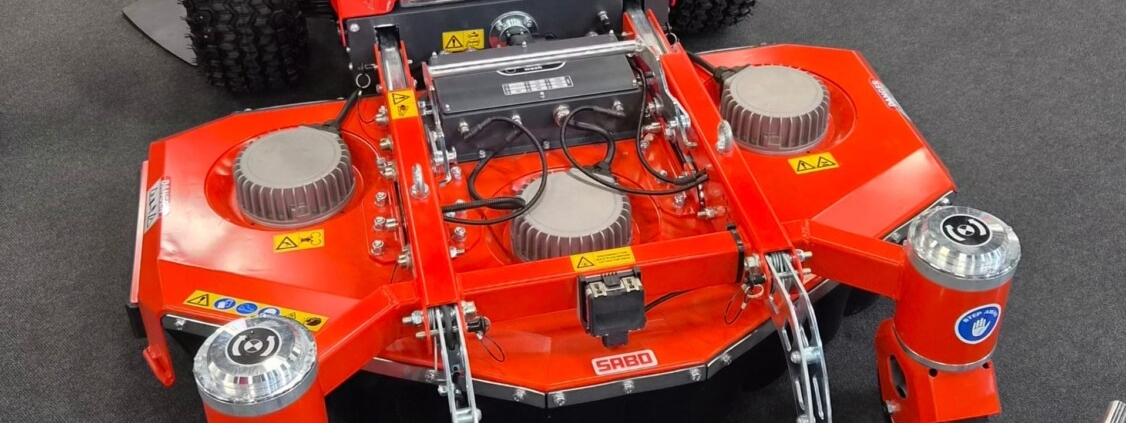
All three Z1-P models share the same new chassis and control layout, but it’s the deck that marks the biggest change. The new platform offers our patented, fully configurable Triple™ mower deck, which enables you to switch between rear discharge, side discharge and mulching as the job demands. The deck is built from 4.6 mm fabricated steel, with a reinforced spindle mounting area, metal scuff guards and a reinforced leading edge designed to withstand daily commercial use. The cutting height runs from 3.8 cm to 12.7 cm.

Kawasaki V-Twin engines power every edition: an 18.5 hp (13.8 kW) FS600V on the 81 cm Z1-P, a 19 hp (14.2 kW) FX600V on the 91 cm Z1-PX, and a 23.5 hp (17.5 kW) FX730V on the 122 cm Z1-PX. The 91 cm and 122 cm editions share a 30-litre fuel tank, while the 81 cm runs a 23-litre tank.

Despite the added capability, the range keeps a compact footprint designed to fit in the back of most standard-sized vans in Europe, with speeds of up to 12.8 km/h.

Comfort and control

Across all three deck sizes, the operator platform offers more room to stand and move than comparable units, even on the smallest, 81 cm model. At 41 cm wide, the platform provides stability and better control on slopes, while outboard cleated footrests give operators extra support when they need it. It’s suspended on a pivoting design supported by adjustable rubber isolators, tuned for a smoother ride across uneven ground.

The controls follow the same line of thought. A one-hand, three-position speed selector, a new linear dash and a magnetic height-of-cut pin keep adjustments quick and intuitive. An automatic PTO shutdown stops the blades the moment the operator steps off the platform, so obstacles can be cleared safely.

Built for less time in the shop

The new machine was built from the ground up with ease of maintenance in mind, knowing that during maintenance time landscape contractors aren’t out on the job. Simplified touchpoints and easy-to-access transaxles work to make maintenance and routine service quick and seamless.

Warranty

The Z1-P line carries a 4-year warranty, or 750 hours, whichever occurs first, with unlimited hours covered during the first two years. On the 91 cm and 122 cm editions, that’s an increase from the outgoing SRS™ Z1’s 500-hour limit within the same term. The Kawasaki engines are covered separately by a three-year manufacturer’s warranty.*

*See operator’s manual for full warranty details.

For the latest industry news visit turfmatters.co.uk/news

Get all of the big headlines, pictures, opinions and videos on stories that matter to you.

Follow us on Twitter and Instagram for fun, fresh and engaging content.

You can also find us on Facebook for more of your must-see news, features, videos and pictures from Turf Matters