Husqvarna Automower® Fairway Kit for Golf Courses

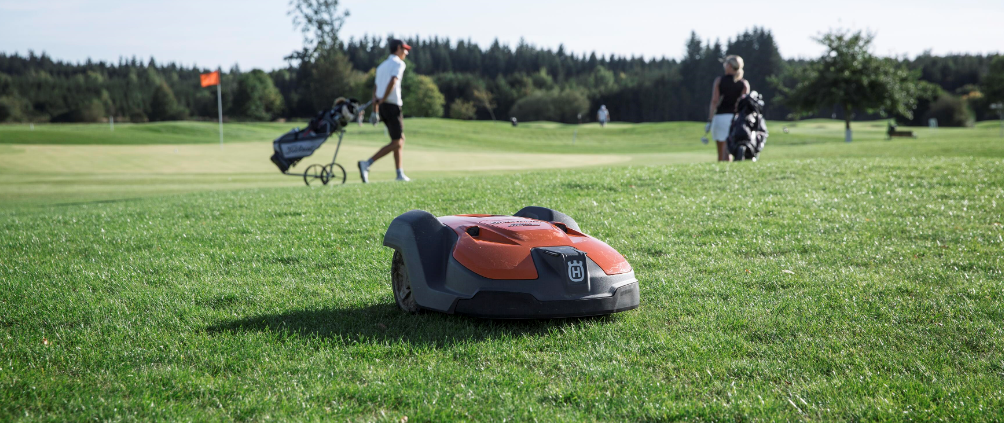
Husqvarna Automower® Fairway Kit for Golf Courses: Global market leader in outdoor solutions, Husqvarna, frees up time for golf courses thanks to its Fairway Kit, an innovative attachment for the brand’s widely used robotic mowers.

The kit lowers the cutting height of Husqvarna Automower® to a minimum of approximately 10mm, whilst also providing new cutting height steps of 12.5mm, 15mm and 17.5mm. The standard cutting height on all Husqvarna Automower® models excluding the AWD models is 20mm.

Husqvarna Automower® Fairway Kit for Golf Courses

Husqvarna Automower® Fairway Kit for Golf Courses

The kit ensures that the lower cutting heights required on areas such as fairways can be achieved using a Husqvarna robotic mower. The combination of Husqvarna Automower® and the new kit allows areas such as fairways to be maintained at a constant length throughout the year, creating consistency in the playing conditions experienced by golfers. The ultra-silent mowers are also extremely unobtrusive, ensuring that players are not disturbed, and allows additional night-time operation.

The use of robotic mowers on large and labour-intensive areas of grass which require regular maintenance also allows the redeployment of grounds staff on to more skilled tasks. The robotic mowers are designed to cut little and often, recycling the micro-clippings back into the soil improving grass quality whilst maintaining a consistent grass length throughout the growing season.

Worcestershire Golf Club are amongst a growing number of golf courses utilising Husqvarna Automower® as part of course maintenance. Steve Lloyd, Course Manager commented “It’s great because it means we can keep a consistent cut throughout the week. It also saves us time on a large area, allowing the team to focus on hard to reach and trickier areas. One of the best things is how the micro-clippings fertilise the grass. The quality of the grass has improved massively in a very short space of time.”

The kits are designed to be used on the following Automower® models: 420, 430X, 450X, 520 and 550.

For the latest industry news visit turfmatters.co.uk/news

Get all of the big headlines, pictures, opinions and videos on stories that matter to you.

Follow us on Twitter and Instagram for fun, fresh and engaging content.

You can also find us on Facebook for more of your must-see news, features, videos and pictures from Turf Matters.

Gathurst GC invests in new fleet

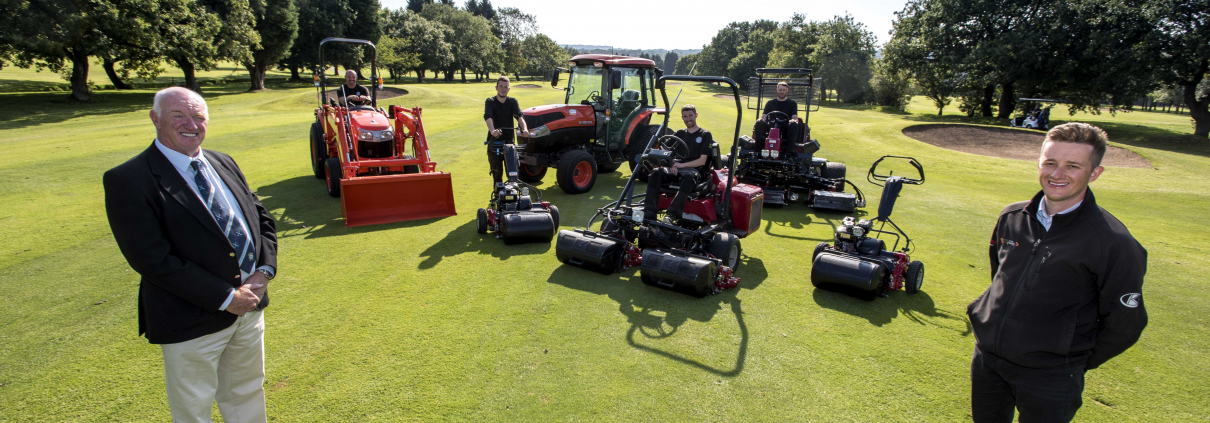
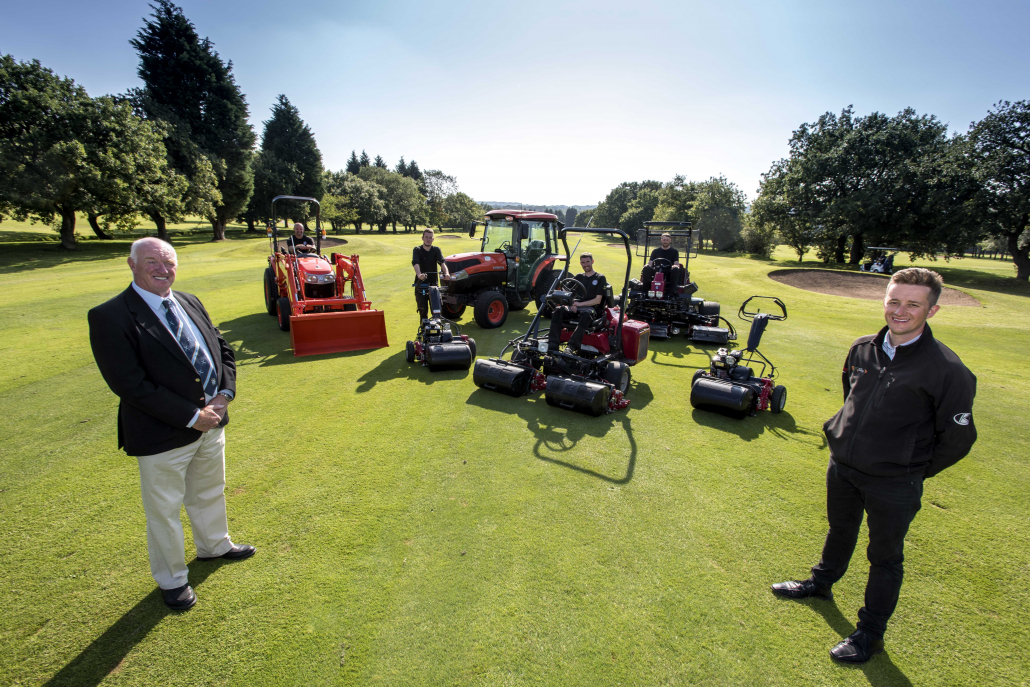
Gathurst GC invests in new fleet: North-West based Gathurst Golf Club have invested in a brand-new fleet of machinery with a retail value of circa £200k to futureproof the club.

The prestigious 18-hole parkland golf course, which boasts a variation of hole designs and superb putting surfaces to challenge golfers of all abilities, is a private members-owned club located in Shevington, Wigan. The club’s ultimate priority is to provide a highly professional course to enhance the enjoyment of all its members.

Gathurst GC invests in new fleet

Gathurst GC invests in new fleet

The club’s ageing fleet, with machines that were up to 20 years old, had started to become both  problematic and costly and were failing to deliver the standard required. The team realised that a sizeable investment in an entirely new fleet was essential.

Chairman of Greens Eddie Cunliffe called upon award winning fine-turf specialist supplier GGM Groundscare, having purchased a machine from the business two years ago and being very impressed with the service received. Several considerations had to be taken into account when selecting the best machinery for the job, with reliability and productivity of equipment being key. Being based in the North West of England, it was key for the machinery to perform well in all-weather conditions and operate well on clay surfaces. In addition, the 9th hole has a large dip which the previous machine was unable to get up, proving time consuming for the greenkeeping team to manage.

The club trialled a range of products from leading manufacturers Baroness and Kubota and the Greens team instantly saw the great results, with the machines staying on cut for longer and giving a precise finish, which is so important for maintaining the image of the course.

Mr Cunliffe was particularly impressed with the results from the Baroness LM2700 Fairway Mower, as the ability to switch from two to four-wheel drive offers the means to cut the entire fairway without any wheel spin, particularly on the tricky 9th hole.

“The new machines have been absolutely brilliant so far and our team have already noticed a huge difference in terms of ease of use and providing a truly outstanding quality of cut. More so, this new fleet is far more efficient and cost effective”.

He continued:

“It was a huge step for the club to move away from the previous manufacturer, and particularly when it came to making an investment of this size, however GGM Groundscare made the process so easy and we have already received outstanding after sales service care, carried out in a quick and effective manner. It’s fantastic to know that we’re heading into the future with the very best fleet for our club.”

Chris Gibson, Managing Director at GGM Groundscare said:

“We are absolutely delighted to supply this fleet of machinery to Gathurst Golf Club. It really is Japanese excellence working together with Kubota and Baroness as there are no better machines for golf clubs to use to maintain one of their biggest assets – their course”.

For the latest industry news visit turfmatters.co.uk/news

Get all of the big headlines, pictures, opinions and videos on stories that matter to you.

Follow us on Twitter and Instagram for fun, fresh and engaging content.

You can also find us on Facebook for more of your must-see news, features, videos and pictures from Turf Matters.

Vandals target Tumble RFC

Vandals target Tumble RFC: Welsh rugby club Tumble RFC have been hit by anti-social behaviour after seeing their training pitch and a surrounding area damaged by an act of vandalism.

Read the full article from Wales Online here

For the latest industry news visit turfmatters.co.uk/news

Get all of the big headlines, pictures, opinions and videos on stories that matter to you.

Follow us on Twitter and Instagram for fun, fresh and engaging content.

You can also find us on Facebook for more of your must-see news, features, videos and pictures from Turf Matters.

Data-driven sub-soil monitoring

Data-driven sub-soil monitoring: Greenkeeping is not a profession where cuts can be made if standards are to be maintained. If clubhouse revenues from restaurants, stores, and memberships continue to fall, smaller greenkeeping teams will have to work longer hours just to maintain the standards they have.

Cuts are a real threat – teams will be forced to do more with less – and still have to tackle sustainability targets brought on by climate change and water scarcity. The key – as always – is buried underground.

Data-driven sub-soil monitoring

Data-driven sub-soil monitoring

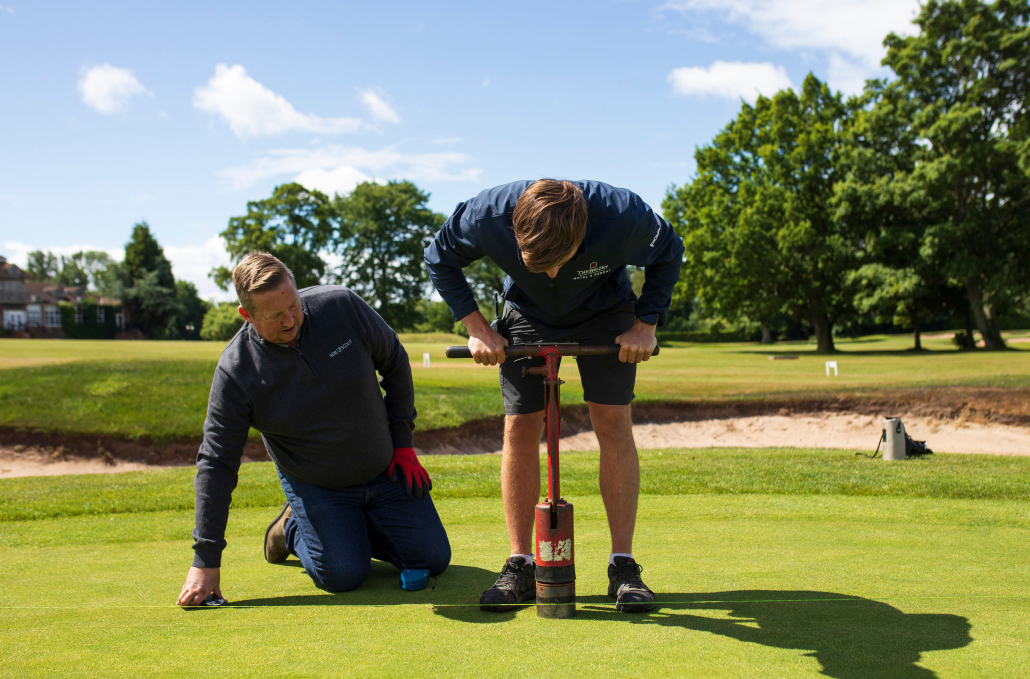
Manual sampling gives an understanding of what’s needed for a safe, durable, and high-performing surface for players, but an understaffed team will find it difficult to achieve high sample consistency over a large area.

Instead of going out to collect data, permanently positioned sub-soil monitoring systems can stream readings from multiple key locations across golf courses in real-time, collecting all the information needed to make a real-time assessment on where to allocate time and resources.

9 ways data-drive sub-soil monitoring can help greenkeepers tackle today’s challenges

1 – Water consumption

This is a sensitive issue in many markets. Greenkeepers with a detailed view of in-field course variation can precisely irrigate where needed according to live current levels.

2 – Salinity buildup

Over irrigation can also lead to increased salinity levels, making it more challenging for plants to take up moisture. Sub-soil salinity data gives greenkeepers the opportunity to proactively alleviate this potential issue, e.g., with the inclusion of salt-resistant grass varieties.

3 – Optimal nutrient usage

More precise irrigation will lead to reduced fertiliser leaching by preventing overwatering. Real-time soil temperature data will also help greenkeepers decide when to best apply fertiliser products to ensure better plant uptake.

4 – Proactive agronomic turf improvement

When data is streamed from across a course in real-time, proactive agronomic turf improvement can be achieved as predictions can be made for plant nutrient and moisture requirements. This will also help reduce disease incidence as peak turf disease activity can be forecasted.

5 – Black thatch

Saturated soils with low oxygen levels are prime black thatch locations, so accurate aeration and top dressing regimes are essential. Permanently positioned underground soil monitoring devices will allow greenkeepers to ensure their surfaces are supported by optimal sub-soil conditions.

6 – Maintenance efficiency

A true understanding of how to smartly allocate time and resources will improve work efficiency in maintenance, reduce labour costs, and allow you to devote more time to proactive turf development.

7 – Optimal irrigation and sub-surface air system usage

Real-time sub-soil data can be used to automate irrigation and sub-surface air systems, thus providing more accurate and timely usage and potential labour-saving benefits.

8 – Justifying expenditure

A data-driven way of working leads to an evidence-based approach to management that can be used to justify the applications of costly resources.

9 – Energy efficiency

Underground soil sensors can also lead to reduced energy consumption. By optimising irrigation, you can reduce pumping time, and consume less energy. Better management practices can reduce the number of above surface operations, including mowing, aeration, and the application of fertilisers and pesticides.

Finally…

Data-driven sports turf management is a real option for greenkeeping teams looking for ways to adapt to today’s world. Yet it is not a compromise. Instead of reacting to changes, a golf course that has collected several years of historical data can proactively work towards even greater efficiencies and improvements that will compound with each new year.

About Adam Sedgwick

Soil Scout VP of Global Sales Adam Sedgwick has accrued decades of experience working across several continents in a wide range of leadership roles. From turf and amenity to precision farming, machine control, machine automation and GPS, Adam has spent his career at the forefront of agricultural technology and processes. A Harper Adams graduate with Masters degrees in Agri-Business and Crop Science, Adam strongly believes in Soil Scout’s potential to contribute to a new era of sustainable agriculture and professional turf management.

For the latest industry news visit turfmatters.co.uk/news

Get all of the big headlines, pictures, opinions and videos on stories that matter to you.

Follow us on Twitter and Instagram for fun, fresh and engaging content.

You can also find us on Facebook for more of your must-see news, features, videos and pictures from Turf Matters.

New biocide gains momentum

New biocide gains momentum: Following its recent launch, new biocide Enclean has made a successful introduction into the amenity sector following positive reports from early adopters confirms agronomist Robert Bone, Amenity Specialist with Agrovista.

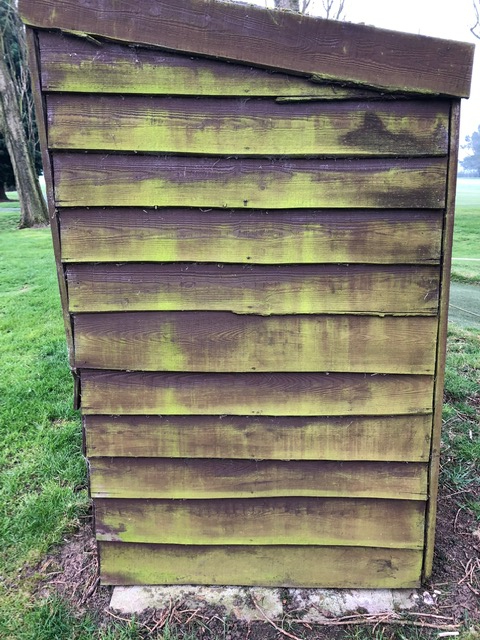
Mr Bone, who has over 35 years of industry experience, first saw the biocide in its development phase 18 months ago and was impressed with both its speed of action in eradicating algae and its positive effect on dealing with other green deposits that often build up on hard surfaces.
New biocide gains momentum

New biocide gains momentum

“I followed Enclean’s progress across a number of trials during 2019 and although it’s designed primarily to remove algae, trials have consistently shown the biocide’s main active ingredient, Nonanoic acid, also has a secondary effect on breaking down other green deposits that can accumulate on hard surfaces.

“Enclean is plant derived, safe to use, and it has no environmental hazard classification. It’s fast acting and, once applied, it quickly degrades into natural elements leaving behind no harmful residue,” he confirms.

Since the March launch Robert has been working with his customer base of ground maintenance contractors, county councils and local authorities conducting operator training courses to help them better understand the new biocide, its efficacy and level of control under different operating conditions and on different surfaces such as pavements, the outer surfaces of greenhouses, wooden decking and fence panels.

Despite the restrictions on face-to-face meetings due to Covid-19 he believes that Enclean has rapidly gained wide acceptance amongst his clients due to the success of the training courses and product demonstrations.

“Application advice is a key part of the agronomic service I provide to customers and the training courses are a good way of promoting best practice. Although there are a number of established biocides able to deal with algae, Enclean’s very low dilution requirement of 1L of product to 14L of water offering users over 550m2 of coverage is a potential game changer allowing the operator to apply the product using a small knapsack sprayer.

“Often, when there is a build up of algae, it occurs in narrow pathways that have limited access to sunlight or wind. Many biocides tend to require large water volumes and that can be a serious problem if the large tank on an ATV or UTV mounted sprayer can’t access the area you need to treat. If you’re working in a relatively remote place, far away from a water source, another potential issue is accessing significant volumes of water to be able to do the job. Using a biocide that requires a relatively small amount of water from a knapsack sprayer can be a major advantage,” he explains.

Colin Simpson, Estimating and Purchasing Manager with Ray Skelton (Harrogate) Limited, also sees a positive future for Enclean following extensive product trials this year across a number of the company’s school maintenance contracts.

“We’re one of the largest horticultural and ground maintenance service providers in North Yorkshire and, until recently, we had been struggling to find a really effective hard surface biocide. With many schools closed due to the Covid-19 pandemic earlier this year it had caused a build up of algae on pathways around many school buildings due to the simple fact that people weren’t using them as often.

New biocide gains momentum

New biocide gains momentum

“One of the key considerations when we apply any chemical is the safety aspect. Not only the safety of our operator, but the health and safety of children using the pathways and making sure we don’t harm the environment. Enclean’s very low environmental hazard classification combined with a high level of operator safety ticked both boxes.

“When we look at contracts where we are spraying large areas, time is also a factor so the fact that Enclean does not foam in the tank meaning it can be cleaned out quickly following use was another positive. Based on our experience it is best to apply the product in dry, sunny conditions. Try to find a 2-3 day window of dry weather after application if possible. In the right conditions surfaces were completely clear within 14-21 days of application and there was no requirement for a follow up spray,” he confirms.

Simon Race, Director of Sports Turf Services Limited  – a family run business based near York, also found that tank cleaning post application was both time consuming and problematic when using biocides that required large water volumes.

“We used to use Qualgex but, although it performed well enough, it foamed in the tank leaving a residue that required significant washing out of both the tank and pipes after the product was applied.  We wanted something that was both quicker to mix and easier to apply using smaller quantities of water. Enclean was the obvious answer.

     “As long as you apply at the advised rate in dry conditions you should see the correct visual signs of the algae and other green deposits beginning to turn brown and decay after just 2-3 days. Whilst 1 application will generally clear most surfaces we did find that when dealing with black algae engrained into older stone surfaces a follow up application will often be required to complete the job,” he concludes.

For the latest industry news visit turfmatters.co.uk/news

Get all of the big headlines, pictures, opinions and videos on stories that matter to you.

Follow us on Twitter and Instagram for fun, fresh and engaging content.

You can also find us on Facebook for more of your must-see news, features, videos and pictures from Turf Matters.