
Effective flood relief from AMS Contracting

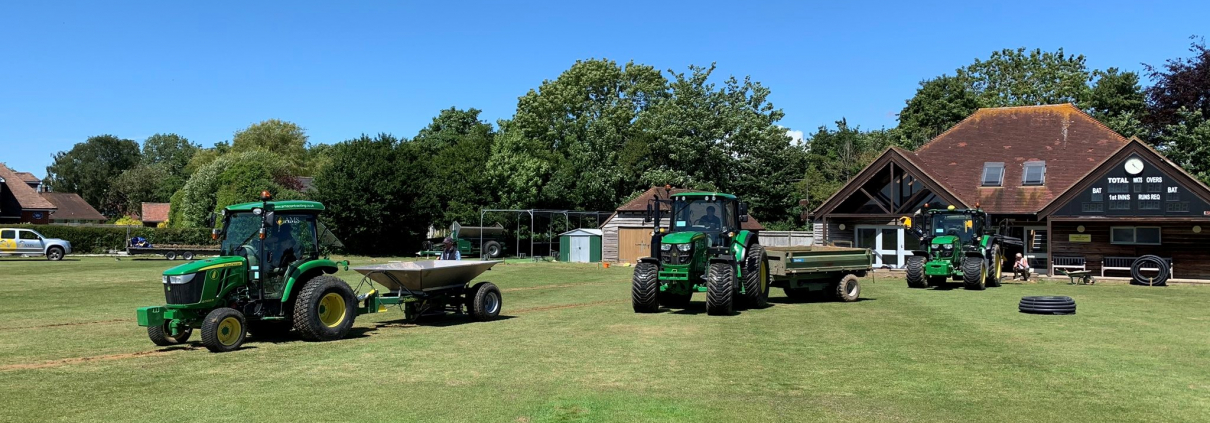
Effective flood relief from AMS Contracting: Stirlands Cricket Club aims to complete winter turf maintenance for the first time in years after the successful installation of a new drainage system by AMS Contracting.

Every winter the Sussex based cricket club would have a third of their outfield underwater between the pavilion and the square. This caused maintenance of the area to be delayed compared to other parts of the field and often meant it wasn’t ready for play. The flooding also prevented the club from cutting using their mower, instead having to hire in a contractor at a considerable cost each year.

Effective flood relief from AMS Contracting

Effective flood relief from AMS Contracting

The consistent delays to play and ongoing mowing costs led Stirlands Cricket Club president, Charles Hunt, to seek funding from the ECB’s Flood Relief Plan and use local Chichester company, AMS, to design and install the drainage.

AMS surveyed the site using Trimble drainage mapping software to build a 3D model that optimises the placement of drains. With the plan in place, 60m of main carrier drains were backfilled with gravel, and 10 lateral drains were connected into the main carrier drain, totalling 450m of lateral drainage for the whole project. To keep the system simple to maintain, three concrete chambers were installed for rodding and inspection purposes.

“The whole project took five days to complete, and they did a tremendous job very efficiently, very neatly and at a competitive price,” Charles explained. “They’ve gone above and beyond, they built steps into the clubhouse and did everything that we needed to make the project a success. Myles and Ashley are great people, and we’ve enjoyed having them work at the club.

“Our issue is that one side of our field falls away into a low spot towards the pavilion and because we’re on mastic clay the water would just sit there. It has been a persistent issue, and every winter half the field floods and we can’t get the mower on it, so we’re always behind time getting the outfield cut. Sometimes we can’t cut it with our mower, and we have to hire someone in, and it costs us quite a lot of money as a club.

“The ECB offered us flood relief funding, and after we got it, I began looking at companies who could do the work. AMS is local to us, and I’m glad we went with them because they have done such a fantastic job. The system won’t get tested until winter, but everything has gone as well as it can during the installation. I think it will mean that we can get on the field much sooner and get the grass cut, so we’re ready to play cricket with no delays.”

With two men’s teams in the Sussex League, a friendly side that play on Sunday’s and several boys and girls teams ranging from U10s to U19s using the site, being able to cut the pitch with their own machine and redistribute the funds saved elsewhere in the club will be a considerable advantage going forward.

AMS fulfil drainage, construction and maintenance projects all over the United Kingdom and use a process that always provides cost-effective results. For more information on AMS’ services or to receive a quote on your project, visit www.amscontracting.co.uk.

For the latest industry news visit turfmatters.co.uk/news

Get all of the big headlines, pictures, opinions and videos on stories that matter to you.

Follow us on Twitter and Instagram for fun, fresh and engaging content.

You can also find us on Facebook for more of your must-see news, features, videos and pictures from Turf Matters.
R&D investment adds red thread

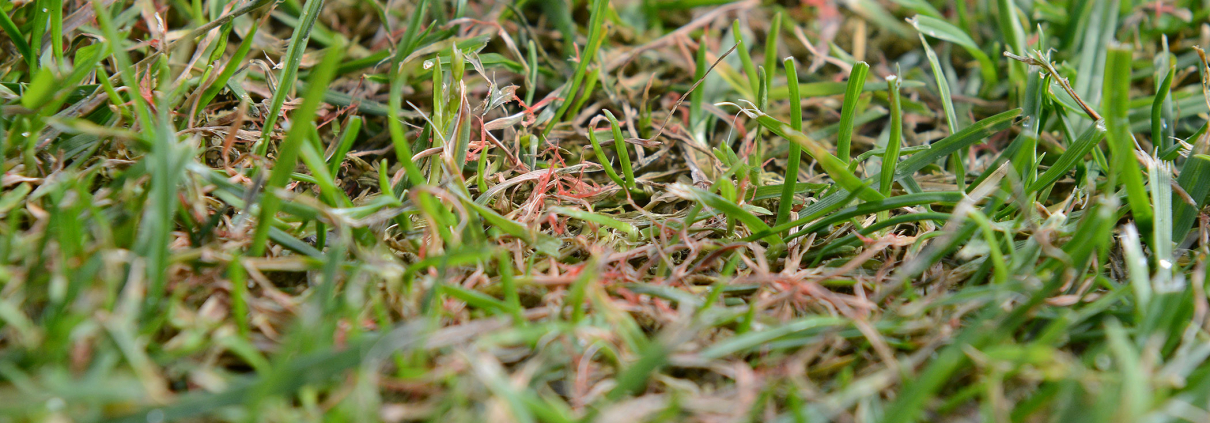
R&D investment adds red thread: A new approval for red thread on the Instrata Elite label has further extended the value of the important all-round Syngenta turf fungicide.

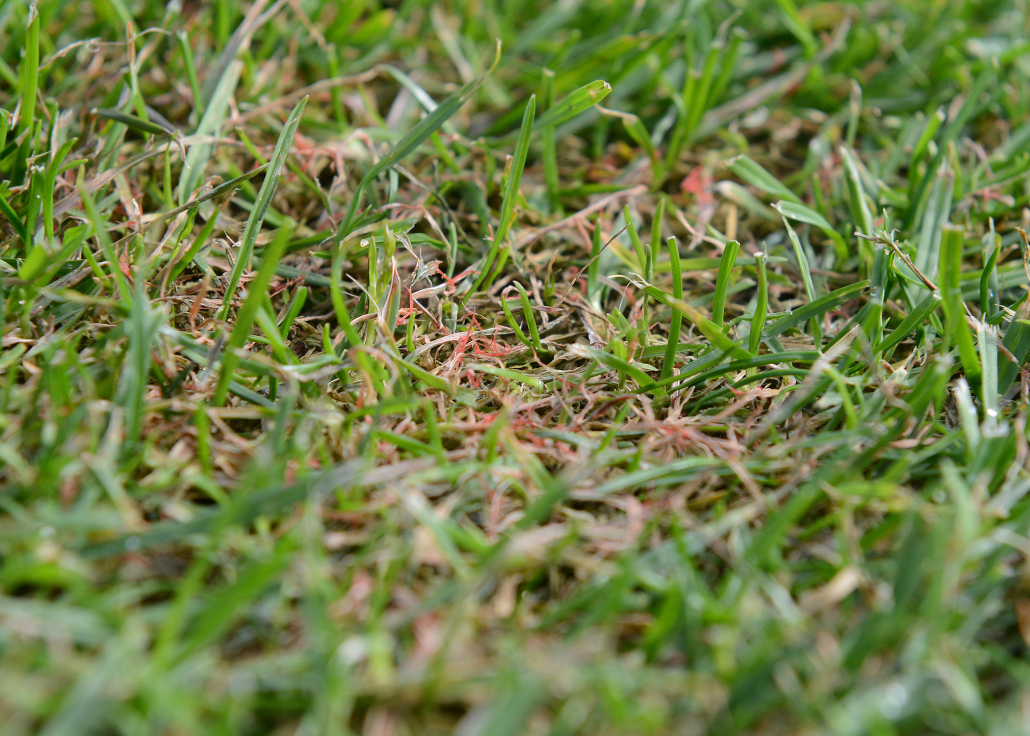
Whilst red thread would be considered of relatively minor and transient impact on most actively managed turf surfaces, where it does break out results can be extremely unsightly and create thin gaps where problem grasses and weeds could ingress.

R&D investment adds red thread

R&D investment adds red thread

The addition of red thread has required further supplementary trials to the original approval, which underlines Syngenta’s on-going commitment to R&D and providing effective integrated turf management solutions, according to the company’s Turf Technical Manager, Glenn Kirby.

“With the leading role of Instrata Elite in any proactive fungicide programme, turf managers would have seen the benefits in incidental control of red thread,” he pointed out. “However, for anyone specifically targeting red thread the disease has to specified on the label.

“Having supplied a comprehensive data set demonstrating the immense disease control efficacy of Instrata Elite, turf managers and agronomists now have the opportunity to make full use wherever required.”

Syngenta investment in supporting Instrata Elite required a minimum of six replicated trials, over two seasons, under representative conditions for regulatory authorities to add red thread to the label.

Red thread can occur on any turf surface, especially golf greens, tees and fairways, along with bowling greens and sports pitches. Warm and wet conditions are most conducive to infection, with fescue and perennial ryegrass surfaces most susceptible. Low fertility and moisture retentive surfaces increase the risk of outbreaks.

Registration trials have shown Instrata Elite application in the early phases of disease development is very effective.

The Instrata Elite label offers broad spectrum disease control, with both contact and systemic properties, to target microdochium patch, dollar spot, brown patch and anthracnose on managed amenity turf and golf courses.

For the latest industry news visit turfmatters.co.uk/news

Get all of the big headlines, pictures, opinions and videos on stories that matter to you.

Follow us on Twitter and Instagram for fun, fresh and engaging content.

You can also find us on Facebook for more of your must-see news, features, videos and pictures from Turf Matters.
Crail Golfing Society praises BLEC Multi-Seeder

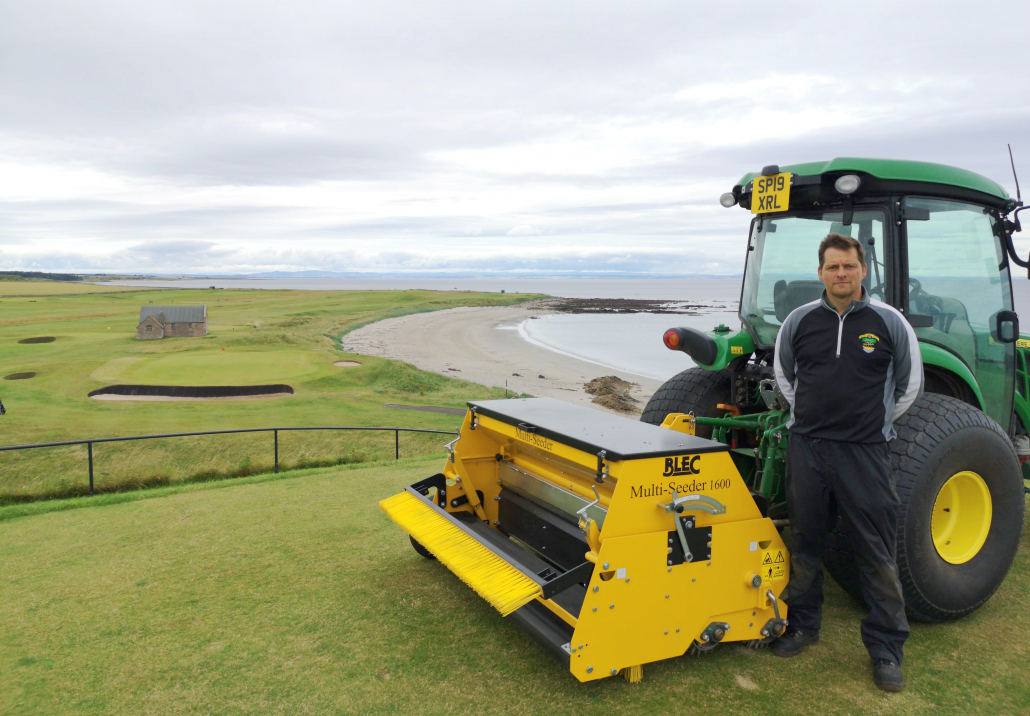
Crail Golfing Society praises BLEC Multi-Seeder: As play returns to Crail Golfing Society, a new BLEC Multi-Seeder 1600 is going to be key to delivering overseeding without disruption.

The two 18-hole links courses – Balcomie and Craighead – are notoriously firm and dry creating challenging conditions for effective seed to soil contact. However, Golf Course Manager Bob Meikle says the size and weight of the BLEC dimple seeder makes it the ideal solution for optimum site-wide seed delivery.

Crail Golfing Society praises BLEC Multi-Seeder

Crail Golfing Society praises BLEC Multi-Seeder

“We initially demonstrated the 1.2m width version of the Multi-Seeder and were impressed straight away at the efficiency and cleanliness with which holes were created, and the accurate seed delivery system” explains Bob, who has been at Crail for 28 years. “We figured that if we went to the next width up, we could overseed areas such as the greens with fewer passes as well as have additional weight to penetrate the firmer areas.”

“The Multi-Seeder being a dimple seeder was one of the biggest selling points” he explains. “It is critical that whatever we do now maintenance-wise, that we don’t cause any breaks in play and the Multi-Seeder is fantastic at leaving very little disruption in its wake. We can pass over a green, then follow over with a turf iron and you wouldn’t know anything has been done.”

Since taking delivery of the Multi-Seeder 1600 from Henderson Grass Machinery in March, Bob and his team have conducted some recovery work on some weaker greens and tees on the Craighead course – utilising the time during lockdown to thoroughly test it out. “We’ve been experimenting with different moisture levels and transferring the weight between the two spiked rollers to alter the size of the hole produced. We are trying to incorporate more fescues into our tees, so by transferring the weight onto one roller we were able to create a bigger hole, ready to accept the larger, fescue seed.”

With the Multi-Seeder offering a 1.6m working width and non-PTO drive, Bob can quickly and accurately overseed areas both large and small – meaning some fairway overseeding, along with further work on the greens and tees is scheduled for the autumn.

For the latest industry news visit turfmatters.co.uk/news

Get all of the big headlines, pictures, opinions and videos on stories that matter to you.

Follow us on Twitter and Instagram for fun, fresh and engaging content.

You can also find us on Facebook for more of your must-see news, features, videos and pictures from Turf Matters.

Farewell from Jim after decade of success

Farewell from Jim after decade of success: The man who has steered the UK’s first ever engineering academy to success over its first decade today retired – with tributes ringing in his ears.

Jim Wade became the first Principal of the JCB Academy in 2009, implementing the vision of JCB Chairman Lord Bamford to create a school dedicated to producing the engineers and business leaders of the future. When he joined, building work at the £22 million school in Rocester, Staffordshire, was only just getting under way. The following year, he was on hand to welcome the first 120 students through the doors of a unique establishment, which has gone on to be recognised nationally for its achievements.

Farwell from Jim after decade of success

Farwell from Jim after decade of success

Today Jim retired having played a major role in the education of around 2,500 young people at an academy which has been oversubscribed every single year since it opened in a Grade II listed Arkwright Mill dating from 1781.

Jim said: “The most satisfying aspect of the past decade is that so many of our learners have gone on to fulfil roles in engineering leadership, which is exactly what we set out to achieve with the JCB Academy. They have already begun to make an impression on the world, whether that is by starting their own company, going to work for the UK Space Agency or re-designing body parts through bio-medical engineering degrees or working on the next generation of engines for JCB and Rolls-Royce. It has been so satisfying to see learners come to us and get the opportunity to ‘re-set’ themselves and find a new direction in life by having a practical bias to their educational experience. None of these achievements would have been possible without the tremendous JCB Academy team.”

The JCB Academy was the brainchild of Lord Bamford, who in his 45 years as Chairman of JCB, has championed the cause of British manufacturing. In the years before the Academy opened, he voiced fears over the decline in manufacturing and the shortage of young people with engineering skills emerging from the education system.

Today Anthony Bamford said: “The idea for the JCB Academy was conceived in 2006 out of deep concern that we needed the right calibre of young people to ensure we continued to be a nation of makers and innovators. Over the past 10 years Jim Wade has done an absolutely tremendous job translating my vision into reality and has made a vast contribution to developing the engineers and business leaders of the future. In doing so, he has helped transform the lives of thousands of young people, which is a legacy he should be immensely proud of.”

Chair of Governors Max Jeffery said: “Jim has been the cornerstone of the JCB Academy’s success and he has developed and led a great team utterly focused on the success of young people. He has worked tirelessly and pioneered a new way of educating young people. We wish him all the very best for the future.”

The JCB Academy was the first school of its kind in the UK for the education of 13 to 19-year-olds with a core focus on engineering. It was equipped with more than £1 million worth modern engineering equipment to help pupils turn their design ideas into reality. It included the only plasma cutter – a machine tool commonly used in industry – to be based in a UK school. The engineering tasks completed by pupils are set by The JCB Academy’s partners who include JCB, Rolls-Royce, Toyota, Network Rail, Bentley and National Grid.

As well as educating around 2,500 students, the JCB Academy has expanded to provide training for around 600 apprentices since 2013.

When Essex-born father-of-two Jim completed his degree in 1982, he initially embarked on a career in banking. After two years he decided on a change in direction and became a teacher. He later joined the JCB Academy from South Molton Community College in Devon where he had been Principal.

In retirement he is moving from Uttoxeter to Somerset, where he is building a house. Jim added: “If I have made a difference to young people’s lives then that is the most precious thing that I will take into retirement and hopefully that is what I have done at the JCB Academy and throughout my career.”

For the latest industry news visit turfmatters.co.uk/news

Get all of the big headlines, pictures, opinions and videos on stories that matter to you.

Follow us on Twitter and Instagram for fun, fresh and engaging content.

You can also find us on Facebook for more of your must-see news, features, videos and pictures from Turf Matters.
Ventrac saving greenkeeping hours

Ventrac saving greenkeeping hours: Following Royal Ashdown Forest Golf Club’s purchase of Ventrac 4500, Course Manager Dominic Lewis is saving hundreds of greenkeeping hours at the 132-year old club.

Situated within Ashdown Forest in East Sussex, the club has two 18-hole courses, both over 100 years old and they are proud that no earth was moved, no ponds dug or streams diverted during their construction. They are entirely natural and rely on the uncontrived hazards of heather, narrow fairways, hollows and water to test the skill of the golfer.

Ventrac saving greenkeeping hours

Ventrac saving greenkeeping hours

Dominic Lewis has been in post for just over a year, having held similar positions at Hadley Wood, Harewood Downs, Oakland Park and Datchet golf clubs. Commenting on the Ventrac he said,

“I’ve been in my position since May last year and quickly discovered the huge amount of time the team were spending on strimming work, on the banks and in the ditches.  It was amazing the amount of time it took; it was a nightmare and, of course, it’s physical and extremely uncomfortable in hot weather. We looked for a solution and discovered the Ventrac. Our local dealer, Ernest Doe, sourced a machine, we had a demonstration and it was obvious it was what we needed. We chose four attachments; the Contour deck, Tough Cut deck, Trencher and Power Rake, so we have virtually four dedicated machines in one. At around £55K for the package, I would say it’s certainly value for money.”

Dave Wakeley, Deputy Course Manager, is the principal operator of the machine and is more impressed with it every time he takes it out.

“It’s a gamechanger for us and is saving us hours on some of the really time-intensive jobs around the courses. For instance, we have to strim the banks and ditches every three weeks and it used to take five of us up to three days to complete. With the Ventrac we have reduced strimming hours by at least 75%, maybe more.

“Following the very wet winter we took the opportunity to add some drainage bands to some particularly difficult areas on site. The Trencher attachment was great for this, very quick and it left a tidy finish, once we’d laid the pipes and inserted the gravel.

“It’s superb on banks and goes where no other machine can go. It takes a little time to get used to, to gain the confidence to go into steep areas, but you soon get to know where it can go. We have used all four attachments; the Power Rake has proved very useful in reinstating the cart paths and machinery tracks, agitating the compacted material, removing ruts and smoothing out the surface. I used it in both wet and dry conditions and would recommend doing this job when it’s wet!”

Dave Mitchell is the club’s long-serving mechanic, having been in the industry for over 45 years, and for the last 30 at Ashdown Forest. He knows a good machine when he sees one.

“This is a very good and well-built machine,” he said. “It’s made from heavy duty steel; the welding is good and it’s robust. The attachments are belt-driven and easy to maintain, there are a couple of grease nipples that are difficult to access, but that’s being very picky! The lift-up decks are a great feature, so there’s no excuse for not cleaning the machine after use. All-in-all, a good addition to our fleet.”

For the latest industry news visit turfmatters.co.uk/news

Get all of the big headlines, pictures, opinions and videos on stories that matter to you.

Follow us on Twitter and Instagram for fun, fresh and engaging content.

You can also find us on Facebook for more of your must-see news, features, videos and pictures from Turf Matters.